From the Business Mirror (Jul 26, 2019): Pinoy tribal leaders claim NPA ‘harassment’ while on US trip
A GROUP of tribal leaders from Mindanao who went on a monthlong tour to the United States reported on Thursday they were allegedly harassed by leftist groups for telling Filipino-American audiences there that their monetary contributions went not into educating or teaching indigenous students but for the purchase of arms to terrorize local communities into accepting the communist ideology.
The eight-member group who were dubbed “Ambassadors of Truth” of the “Telling the Truth Caravan” reported that they were able to relay to the various Fil-Am organizations the real intent of leftist groups who are part of a broad alliance organized by the National Democratic Front which is directly linked to the International League of Peoples’ Struggle (ILPS) led by Jose Ma. Sison.
The group’s spokesman, Datu Jake Lanes said five members of the group who went to Los Angeles, San Francisco, Chicago, New York and other places were former communist cadres like him.
“That is why we know what we are talking about when we spoke about the terrorism being employed against the Manobos and the Cordillera people and other indigenous groups,” Lanes said.
He said the aim of the various communist groups in the country, like the New People’s Army (NPA), “is to teach the young tribal communities to hate the government and eventually topple the government.”
Lanes said the leftist groups in the United States followed them wherever they went to try to disrupt their campaign, among which is to tell the Fil-Am associations to stop giving money to these groups.
“There are more than 4 million Filipinos in the United States, and even if some of them give $2 or $5, the total collection is a huge amount that is why they want to prevent us from telling the truth,” he said.
Lanes said they have listed 17 atrocities committed by the local communist groups against the tribal people, and many of them have fled their mountain redoubts to escape being terrorized, although many of them have already been allegedly killed by the NPAs.
“We who escape from out tribal communities are the original bakwet people,” Lanes said.
“The Philippine’s geography is composed of many islands and mountains and the NPA wanted to occupy these mountainous terrain far away from the police authorities,” Lanes added. He said those the NPA brainwashed through coercion were taught to accept the armed struggle which includes deception and assertion and for the young to accept the communist ideology with ultimate aim of bringing down the government.
“We thought that the Filipino leftists are only here in the Philippines; we were surprised there are many more of them in the US,”Lanes said.
The group, which stayed in the US for 24 days sometimes had more than one sessions in one day, telling the same story of NPA terrorism and abuse to the tribal communities and asking them to stop giving monetary contributions to these groups, which allegedly include Makabayan, Garbriela, Migrante, Anakbayan and Karapatan, among others.
Lanes said it is estimated that some 5.7 million hectares of mountainous terrains are occupied by the indigenous people across the country. He said the Philippines has 110 tribes, which consist of 14 percent of the 110 million Filipinos.
He added that 60 percent of the indigenous people are in Mindanao alone.
Lanes said they exposed that the alleged Lumad group that went to the United States in 2015 to lobby for the tribal groups were bogus and were denounced even by the Cordillera people.
Among their engagements in New York were meetings with the Patriotic Filipino Community, United Nations Permanent Forum on Indigenous Issues (UNPFII), United Nations Human Rights Council (UNHRC), the New York- based Media Networks, Philippine Consulate, New York and Fordham University.
In Chicago the group engaged with the Fil-Am Community in Skokie, Cook County, Illinois; visited the Chicago Field Museum and a Courtesy Call to Consul General Gina Jamoralin on July 5, 2019.
The next day, they were to the Midwest Fil-Am Community at Seafood City, Illinois; Fil-Am Community Forum, Milwaukee; Davao Association of the Midwest; Philippine-American Seniors Association of Chicago; Alpha Phi Omega of the Midwest and a press conference at the Philippine Consulate in Chicago in the presence of Chicago Philippine Reports TV.
The group also went to Los Angeles and San Francisco, meeting with LA Deputy Consul Ambrosio Bryan F. Enciso; the Filipino American Community of Los Angeles; the Philippine Consulate in Los Angeles with blogger/writer Maharlika, and then meeting with City of Cerritos Council Member and former Mayor Mark Pulido.
In Washington, they met with Rep. Terrance John Cox of 21st district California, went to the Philippine Embassy with US-Philippine Society; US Department of State; The Heritage Foundation and the The Migrant Heritage Commission.
https://businessmirror.com.ph/2019/07/26/pinoy-tribal-leaders-claim-npa-harassment-while-on-us-trip/

Thursday, July 25, 2019

Esperon: Peace zones up for review Gov’t looking at Cordillera as model in fight against communist rebels
From the Philippine Daily Inquirer (Jul 26, 2019): Esperon: Peace zones up for review
Gov’t looking at Cordillera as model in fight against communist rebels
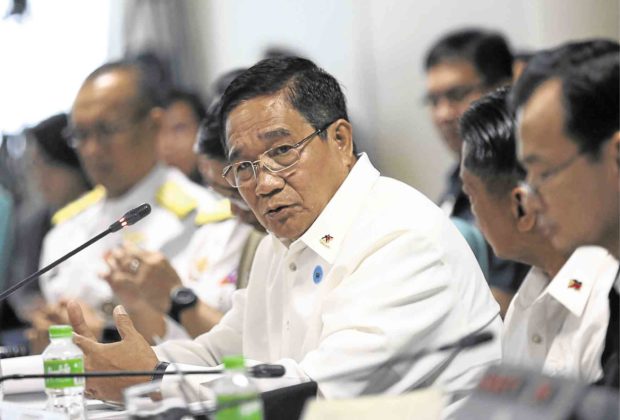
Hermogenes Esperon Jr.
BAGUIO CITY—Peace zones invoked by Cordillera elders will be honored as the government brings public services to interior communities whose poverty has been exploited by communist rebels, National Security Adviser Hermogenes Esperon Jr., said here on Thursday.
Within these areas, like in Sagada town, Mountain Province, armed clashes between the military and the New People’s Army (NPA) are prohibited.
But Esperon said these zones would be reviewed because some communities, especially those in Mindanao with similar arrangements, have barred the presence of police and military personnel.
The official talked to reporters on the sidelines of a summit of the National Task Force to End Local Communist Armed Conflict (NTF-ELCAC) here.
Esperon said elders in peace zones were able to stop uniformed personnel from entering but not rebels who conceal their identities and weapons.
In some cases, the zones allow relatives who join the NPA to hide from authorities, a police official said.
New rules sought
Esperon said new rules must be set in place so even the military’s engineering brigades could build roads or bridges near or within peace zones as part of the government’s plan to improve the lives of people in remote communities.
He said the NTF-ELCAC was not a police or military operation but a coordinated government drive to bring public services to poor communities.
Rebels have taken advantage of peace zones, but the government will continue to recognize these areas, said Maj. Gen. Pablo Lorenzo, head of the Army’s 5th Infantry Division.
The peace zone review could lead to “mechanisms for the efficient and effective delivery of services,” Lorenzo said.
The Cordillera is being considered an NTF-ELCAC model because rebel presence in the region has dwindled, said Vicente Agdamag, National Security Council deputy director general.
Rebel presence
About 170 armed rebels operate in Abra, Benguet, Ifugao and Mountain Province, according to recent estimates of security agencies.
The task force’s bigger challenge is putting up roads linking farms and markets, new crops or even sewage systems in remote villages “separated by vast distances and hazardous mountain roads,” said Police Brig. Gen. Israel Ephraim Dickson, Cordillera police director.
https://newsinfo.inquirer.net/1146451/esperon-peace-zones-up-for-review
Gov’t looking at Cordillera as model in fight against communist rebels
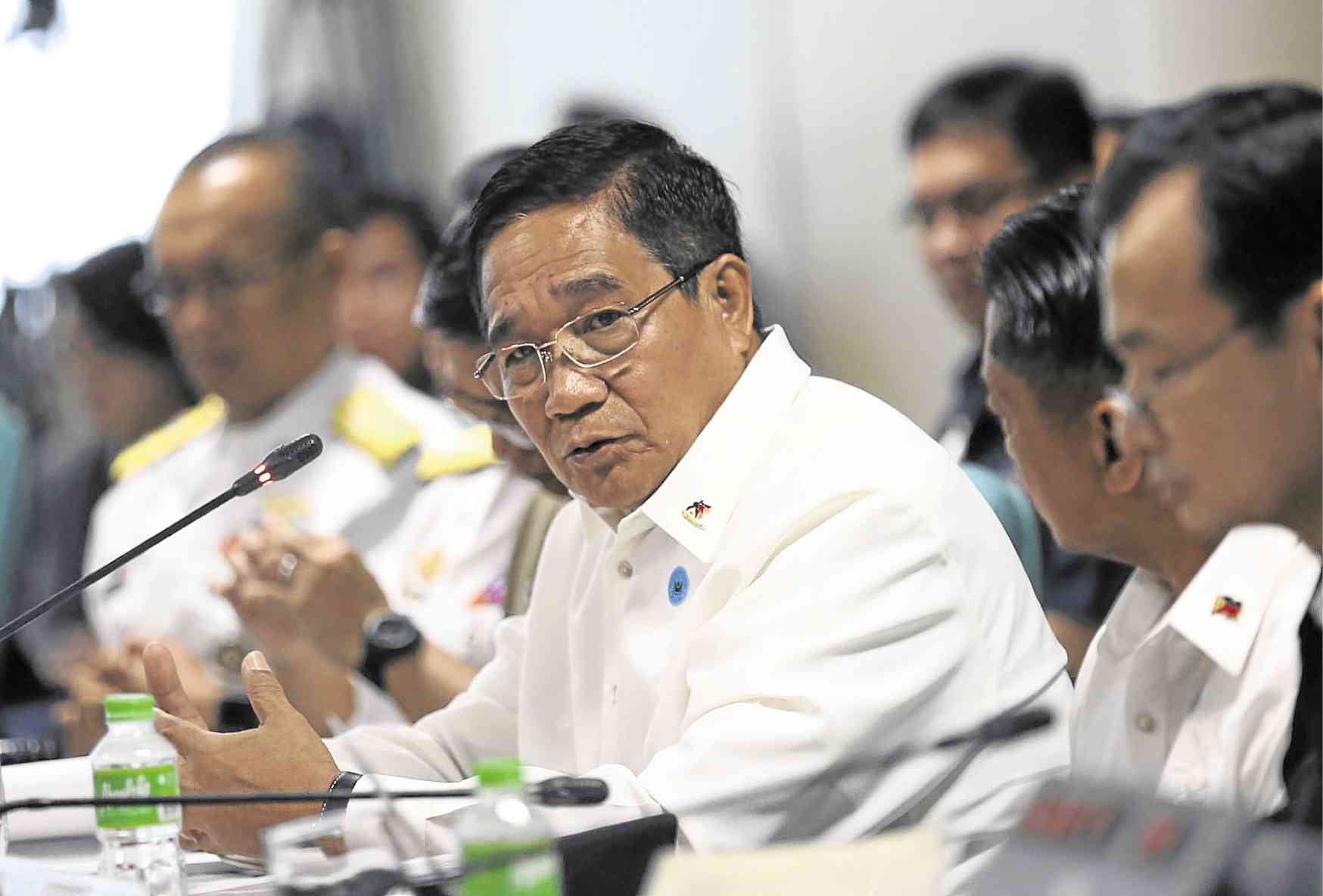
Hermogenes Esperon Jr.
BAGUIO CITY—Peace zones invoked by Cordillera elders will be honored as the government brings public services to interior communities whose poverty has been exploited by communist rebels, National Security Adviser Hermogenes Esperon Jr., said here on Thursday.
Within these areas, like in Sagada town, Mountain Province, armed clashes between the military and the New People’s Army (NPA) are prohibited.
But Esperon said these zones would be reviewed because some communities, especially those in Mindanao with similar arrangements, have barred the presence of police and military personnel.
The official talked to reporters on the sidelines of a summit of the National Task Force to End Local Communist Armed Conflict (NTF-ELCAC) here.
Esperon said elders in peace zones were able to stop uniformed personnel from entering but not rebels who conceal their identities and weapons.
In some cases, the zones allow relatives who join the NPA to hide from authorities, a police official said.
New rules sought
Esperon said new rules must be set in place so even the military’s engineering brigades could build roads or bridges near or within peace zones as part of the government’s plan to improve the lives of people in remote communities.
He said the NTF-ELCAC was not a police or military operation but a coordinated government drive to bring public services to poor communities.
Rebels have taken advantage of peace zones, but the government will continue to recognize these areas, said Maj. Gen. Pablo Lorenzo, head of the Army’s 5th Infantry Division.
The peace zone review could lead to “mechanisms for the efficient and effective delivery of services,” Lorenzo said.
The Cordillera is being considered an NTF-ELCAC model because rebel presence in the region has dwindled, said Vicente Agdamag, National Security Council deputy director general.
Rebel presence
About 170 armed rebels operate in Abra, Benguet, Ifugao and Mountain Province, according to recent estimates of security agencies.
The task force’s bigger challenge is putting up roads linking farms and markets, new crops or even sewage systems in remote villages “separated by vast distances and hazardous mountain roads,” said Police Brig. Gen. Israel Ephraim Dickson, Cordillera police director.
https://newsinfo.inquirer.net/1146451/esperon-peace-zones-up-for-review
P3-million bounty for capture of cops’ killer
From the Manila Standard (Jul 26, 2019): P3-million bounty for capture of cops’ killer
President Rodrigo Duterte on Thursday raised anew the reward money for either death or capture of the murderers of four police officers in Negros Oriental.
From P1.3 million, the Chief Executive has raised the bounty to P3 million for the immediate arrest of those behind the murders of police personnel in Ayungon town in Negros Oriental.
“Just bring to me the head of that s** ** * ***ch,” President Duterte said in his speech in Ilocos Sur during the inauguration of a major road in Candon City.
The slain policemen were Cpl. Relebert Beronio and patrolmen Raffy Callao, Ruel Cabellon, and Marquinto de Leon.
They served as intelligence personnel of the 704th Mobile Force Company of the Philippine National Police in Central Visayas.
They were shot in the head while hogtied on July 18, allegedly by rebels from the New People’s Army.
Ayungon Police Chief Capt. Romel Luga identified the suspects as Victoriano Bangala Anadon Jr., Jonathan Baldivino, Rengie Anadon Baluhabo, Gelie Anadon Ebedo, Joseph Torres Ogates, and Jelly Anadon Ebedo.
Duterte said that if the bounty has reached P15 million and the murderers were still at large, he will order the persecution of any NPA leader.
“If it has reached fifteen million, just bring to me any leader. Kill him,” Duterte said.
“Well, if they want killing, I told the military, ‘Give it to them. Give it. They want murders,’” he said.
http://manilastandard.net/news/national/300763/p3-million-bounty-for-capture-of-cops-killer.html
President Rodrigo Duterte on Thursday raised anew the reward money for either death or capture of the murderers of four police officers in Negros Oriental.
From P1.3 million, the Chief Executive has raised the bounty to P3 million for the immediate arrest of those behind the murders of police personnel in Ayungon town in Negros Oriental.
“Just bring to me the head of that s** ** * ***ch,” President Duterte said in his speech in Ilocos Sur during the inauguration of a major road in Candon City.
The slain policemen were Cpl. Relebert Beronio and patrolmen Raffy Callao, Ruel Cabellon, and Marquinto de Leon.
They served as intelligence personnel of the 704th Mobile Force Company of the Philippine National Police in Central Visayas.
They were shot in the head while hogtied on July 18, allegedly by rebels from the New People’s Army.
Ayungon Police Chief Capt. Romel Luga identified the suspects as Victoriano Bangala Anadon Jr., Jonathan Baldivino, Rengie Anadon Baluhabo, Gelie Anadon Ebedo, Joseph Torres Ogates, and Jelly Anadon Ebedo.
Duterte said that if the bounty has reached P15 million and the murderers were still at large, he will order the persecution of any NPA leader.
“If it has reached fifteen million, just bring to me any leader. Kill him,” Duterte said.
“Well, if they want killing, I told the military, ‘Give it to them. Give it. They want murders,’” he said.
http://manilastandard.net/news/national/300763/p3-million-bounty-for-capture-of-cops-killer.html
CPP denies torturing four Negrense cops: ‘Di namin gawain yan!
From Politiko Mindanao (Jul 26, 2019): CPP denies torturing four Negrense cops: ‘Di namin gawain yan!

The Communist Party of the Philippines (CPP) has denied accusations that they tortured the four policemen who were killed in an ambush in Ayungon town, Negros Oriental last July 18.
The cops died in a legitimate act of war, and were not tortured, said CPP.
“The NPA strictly prohibits the use of torture. It even prohibits lifting a finger against its captives or prisoners,” the group said in a statement.
The local police had claimed that Police Corporal Relebert Beronio, and Patrolmen Raffy Callao, Roel Cabellon, and Marquino de Leon were hogtied and executed while verifying the reported presence of the New People’s Army in Barangay Mabato.
The slain policemen, who were intelligence operatives of the Regional Mobile Force Battalion-7, were allegedly shot while on their knees.
The Communist Party of the Philippines (CPP) has denied accusations that they tortured the four policemen who were killed in an ambush in Ayungon town, Negros Oriental last July 18.
The cops died in a legitimate act of war, and were not tortured, said CPP.
“The NPA strictly prohibits the use of torture. It even prohibits lifting a finger against its captives or prisoners,” the group said in a statement.
The local police had claimed that Police Corporal Relebert Beronio, and Patrolmen Raffy Callao, Roel Cabellon, and Marquino de Leon were hogtied and executed while verifying the reported presence of the New People’s Army in Barangay Mabato.
The slain policemen, who were intelligence operatives of the Regional Mobile Force Battalion-7, were allegedly shot while on their knees.
Individual injured in IED blast is a BIFF member —military
From GMA News (Jul 26, 2019): Individual injured in IED blast is a BIFF member —military
The military has confirmed that the civilian injured during an operation in Maguindanao is a a member of the group of Bangsamoro Islamic Freedom Fighters (BIFF).
In a statement, AFP Westmincom Spokesperson Major John Arvin Encinas has identified the injured persons as Alimoden Masla and his 10-year-old son while the woman who died in the explosion was Misba Masla, his wife.
Encinas said that Masla is a member of the Bangsamoro Islamic Freedom Fighters under Abdul Haber Usman alias Edsgrapil, a key BIFF leader under the Bungos Faction.
Encinas added that Edsgrapil and his cohorts are in-charge of the transportation and dispatch of improvise explosive devices (IEDs) being kept at their houses in Sitio Butilen, Barangay Kabasalan, Pikit in North Cotabato.
"The established safehouses of the Bangsamoro Islamic Freedom Fighters in So Butilen, Brgy Kabasalan served as launching point of bombings being perpetrated by the BIFF and even the ISIS groups in North Cotabato and Sultan Kudarat posing an imminent threat to all residents in Central Mindanao and nearby regions," he added.
Encinas related that the explosion was a self-accident.
There were military operations conducted against the BIFF and ISIS groups in Barangay Dasawao, Sharif Saydona Mustapha, Maguindanao.
"Due to the carelessness of these lawless terrorists groups they accidentally triggered an explosion of the IEDs being kept in their houses," said Encinas.
"Informants in the area revealed that the explosion particularly occurred at the house of Alimoden Masla alias Alimoden killing his wife and critically wounding himself and his 10-year old son," he added.
https://www.gmanetwork.com/news/news/regions/702422/military-confirms-individual-injured-in-ied-blast-is-a-biff-member/story/
The military has confirmed that the civilian injured during an operation in Maguindanao is a a member of the group of Bangsamoro Islamic Freedom Fighters (BIFF).
In a statement, AFP Westmincom Spokesperson Major John Arvin Encinas has identified the injured persons as Alimoden Masla and his 10-year-old son while the woman who died in the explosion was Misba Masla, his wife.
Encinas said that Masla is a member of the Bangsamoro Islamic Freedom Fighters under Abdul Haber Usman alias Edsgrapil, a key BIFF leader under the Bungos Faction.
Encinas added that Edsgrapil and his cohorts are in-charge of the transportation and dispatch of improvise explosive devices (IEDs) being kept at their houses in Sitio Butilen, Barangay Kabasalan, Pikit in North Cotabato.
"The established safehouses of the Bangsamoro Islamic Freedom Fighters in So Butilen, Brgy Kabasalan served as launching point of bombings being perpetrated by the BIFF and even the ISIS groups in North Cotabato and Sultan Kudarat posing an imminent threat to all residents in Central Mindanao and nearby regions," he added.
Encinas related that the explosion was a self-accident.
There were military operations conducted against the BIFF and ISIS groups in Barangay Dasawao, Sharif Saydona Mustapha, Maguindanao.
"Due to the carelessness of these lawless terrorists groups they accidentally triggered an explosion of the IEDs being kept in their houses," said Encinas.
"Informants in the area revealed that the explosion particularly occurred at the house of Alimoden Masla alias Alimoden killing his wife and critically wounding himself and his 10-year old son," he added.
https://www.gmanetwork.com/news/news/regions/702422/military-confirms-individual-injured-in-ied-blast-is-a-biff-member/story/
Indonesian Suicide Bomber Started on Path to Radicalism Two Decades Ago
From BenarNews (Jul 25, 2019): Indonesian Suicide Bomber Started on Path to Radicalism Two Decades Ago

Police and soldiers stand outside the Our Lady of Mount Carmel Cathedral in Jolo, Philippines, after suicide bombers attacked it and killed nearly two dozen people, Jan. 27, 2019. AFP
An Indonesian who carried out a deadly suicide attack with his wife at a Philippine church was radicalized as a teenager, introduced to bomb making more than a decade ago, and underwent a brief rehabilitation stint, the nation’s top counterterrorism official told BenarNews.
Rullie Rian Zeke, 35, and spouse Ulfah Handayani Saleh, 32, were named by Indonesian police this week as the bombers who killed 23 people and injured more than 100 others during Sunday services at the Our Lady of Mount Carmel Cathedral in Jolo on Jan. 27 – one of the worst terrorist acts to strike the Philippines in years.
“He joined a radical group in 1999 and was taught bomb making in 2008,” National Counterterrorism Agency (BNPT) chief Suhardi Alius said of Rullie.
The couple who infiltrated the southern Philippines had been released in 2017 from a month-long Indonesian government rehabilitation program, which followed their deportation from Turkey, where they unsuccessfully tried to join the Islamic State (IS) extremist group in Syria, Indonesian police said.
The couple and their three children traveled to Turkey in March 2016. They were part of a group of 75 people – 17 men, 24 women and 34 children – who were expelled en masse by Turkish authorities in January 2017.
Suhardi said this group that returned to Indonesia was linked to people who would go on to perpetrate a series of deadly bombings in the city of Surabaya in May 2018, in which churches were also bombed.
“They were part of the group representing three generations, grandparents, parents and children,” he told BenarNews, adding, “the group influenced the East Java bombings.”
He said he met the couple after they returned with the others from Turkey.
Indonesian police said that Rullie and Ulfah were originally from South Sulawesi province.
In 2014, they both came under the tutelage of Khalid Abu Bakar, a member of the Jemaah Ansharut Daulah (JAD) militant network affiliated with IS, said security analyst Al Chaidar of Malikussalah University.
“In Surabaya, they expressed their desires to be suicide bombers,” Chaidar told BenarNews.
The suicide bombings in Surabaya, the capital of East Java province, were carried out by two families – including children – at three churches and a police station.
Khalid allegedly was the spiritual leader of Dita Oepriarto, who with his wife and their children blew themselves up in the East Java church attacks, according to Chaider. These attacks, along with one a day later at the Surabaya police headquarters, killed 29 people, including 13 suspects.
“The couple may have chosen to go to the Philippines to obey Khalid’s instruction. He once stated that: ‘If you cannot afford to go to Syria, go to the Philippines because it is considered a second IS caliphate,’” Chaidar said.
‘Who can guarantee they were de-radicalized?’
Until this year, Indonesians who returned or were deported after trying to join IS in Syria and Iraq were sent to a facility run by the social affairs ministry in Jakarta before being sent home.
But under revisions to the nation’s anti-terrorism laws that were passed in May 2018, in the wake of the Surabaya bombings, Indonesians who served as fighters or joined militant training overseas are now subject to prosecution.
“Before the anti-terrorism bill was revised, we were only able to have them join a one-month de-radicalization program before we could release them to society,” Suhardi said this week while delivering a speech in the U.S. capital. “Who can guarantee they were de-radicalized?”
“That is why I asked the foreign affairs minister to please identify these people and monitor them,” he said, adding he hoped the new regulation would allow BNPT to ensure that returnees are de-radicalized or charged if necessary.
Suhardi also said Jakarta would create a task force to determine the fate of the Indonesians linked to Middle East militants. The task force will be led by BNPT, foreign affairs representatives and officials from the National Intelligence Agency, the Ministry of Social Affairs and military officers, among others.
Explaining how the couple was able to leave the country without detection after returning from Turkey, Dedi Prasetyo, the national police spokesman in Jakarta, said, “It’s always been the case that police and terrorists play hide and seek.”
“We will strengthen monitoring in the future,” he told BenarNews on Thursday.
Chaidar and Sidney Jones, director of the Institute for Policy Analysis of Conflict (IPAC), a Jakarta think-tank, said the couple might have been considered low risk because they never were charged with any crime in Indonesia.
“Maybe because they were not believed to have entered Syria,” Chaidar said.
Philippine connection
Tuesday’s announcement by Indonesian police naming the couple marked the first time their identities were made public.
Days after the Jolo church bombings, Philippine officials stated that an unnamed Indonesian couple were behind the attack. Shortly after, Indonesian officials questioned Manila’s claim because police had not been able to match DNA from the bombers with family members.
Ulfah is believed to have entered the Philippines a few days before the attack to join Rullie, who appears to have been in that country since May 2018, according to Jones.
“There was a photo of him in a Jolo camp, as I recall, from around August 2018,” she told BenarNews, adding that both had entered the Philippines illegally.
Indonesian police allege that an Indonesian militant believed to be in the Philippines, Andi Baso, assisted them in getting into the neighboring country.
Andi allegedly was involved in the attack targeting a church in in East Kalimantan, a province in Indonesian Borneo, in November 2016. A 2-year-old was killed and three children younger than 5 were injured a Molotov cocktail was tossed outside the building.
Philippine police, meanwhile, said they were not sure how the couple entered the country, but five Filipinos who were captured recently said they had apparently sailed to Jolo from the nearby Philippine island of Lampinigan.
Philippine police sources said the couple met with Hatib Hajan Sawadjaan, a little-known Abu Sayyaf leader on Jolo island who is the new IS Philippine branch leader. He allegedly plotted and financed the attack on the church.
Chaidar said he was not surprised by the couple’s action.
“The materials at the rehabilitation center, as far as I’m aware, revolve around Pancasila (the state ideology) and nationalism. It had no effect on them,” he said.
In Washington, Suhardi said Indonesia was setting up a strategy to counter violent extremism, adding that IS “remains an eminent threat” in the Southeast Asian country.
Suhardi said his agency had developed a strategy combining both hard and soft measures, including engaging members of the local community and former militants, to defeat radicalism. Such measures include providing support for two Islamic boarding schools established by former terrorists in North Sumatra and in East Java provinces.
“If we counter radical ideology using violent means, it might seem that we’ve destroyed it, but actually it didn’t die and it could rekindle itself as new terrorist cells,” he said.
https://www.benarnews.org/english/news/indonesian/couple-update-07252019173539.html
Rullie Rian Zeke, 35, and spouse Ulfah Handayani Saleh, 32, were named by Indonesian police this week as the bombers who killed 23 people and injured more than 100 others during Sunday services at the Our Lady of Mount Carmel Cathedral in Jolo on Jan. 27 – one of the worst terrorist acts to strike the Philippines in years.
“He joined a radical group in 1999 and was taught bomb making in 2008,” National Counterterrorism Agency (BNPT) chief Suhardi Alius said of Rullie.
The couple who infiltrated the southern Philippines had been released in 2017 from a month-long Indonesian government rehabilitation program, which followed their deportation from Turkey, where they unsuccessfully tried to join the Islamic State (IS) extremist group in Syria, Indonesian police said.
The couple and their three children traveled to Turkey in March 2016. They were part of a group of 75 people – 17 men, 24 women and 34 children – who were expelled en masse by Turkish authorities in January 2017.
Suhardi said this group that returned to Indonesia was linked to people who would go on to perpetrate a series of deadly bombings in the city of Surabaya in May 2018, in which churches were also bombed.
“They were part of the group representing three generations, grandparents, parents and children,” he told BenarNews, adding, “the group influenced the East Java bombings.”
He said he met the couple after they returned with the others from Turkey.
Indonesian police said that Rullie and Ulfah were originally from South Sulawesi province.
In 2014, they both came under the tutelage of Khalid Abu Bakar, a member of the Jemaah Ansharut Daulah (JAD) militant network affiliated with IS, said security analyst Al Chaidar of Malikussalah University.
“In Surabaya, they expressed their desires to be suicide bombers,” Chaidar told BenarNews.
The suicide bombings in Surabaya, the capital of East Java province, were carried out by two families – including children – at three churches and a police station.
Khalid allegedly was the spiritual leader of Dita Oepriarto, who with his wife and their children blew themselves up in the East Java church attacks, according to Chaider. These attacks, along with one a day later at the Surabaya police headquarters, killed 29 people, including 13 suspects.
“The couple may have chosen to go to the Philippines to obey Khalid’s instruction. He once stated that: ‘If you cannot afford to go to Syria, go to the Philippines because it is considered a second IS caliphate,’” Chaidar said.
‘Who can guarantee they were de-radicalized?’
Until this year, Indonesians who returned or were deported after trying to join IS in Syria and Iraq were sent to a facility run by the social affairs ministry in Jakarta before being sent home.
But under revisions to the nation’s anti-terrorism laws that were passed in May 2018, in the wake of the Surabaya bombings, Indonesians who served as fighters or joined militant training overseas are now subject to prosecution.
“Before the anti-terrorism bill was revised, we were only able to have them join a one-month de-radicalization program before we could release them to society,” Suhardi said this week while delivering a speech in the U.S. capital. “Who can guarantee they were de-radicalized?”
“That is why I asked the foreign affairs minister to please identify these people and monitor them,” he said, adding he hoped the new regulation would allow BNPT to ensure that returnees are de-radicalized or charged if necessary.
Suhardi also said Jakarta would create a task force to determine the fate of the Indonesians linked to Middle East militants. The task force will be led by BNPT, foreign affairs representatives and officials from the National Intelligence Agency, the Ministry of Social Affairs and military officers, among others.
Explaining how the couple was able to leave the country without detection after returning from Turkey, Dedi Prasetyo, the national police spokesman in Jakarta, said, “It’s always been the case that police and terrorists play hide and seek.”
“We will strengthen monitoring in the future,” he told BenarNews on Thursday.
Chaidar and Sidney Jones, director of the Institute for Policy Analysis of Conflict (IPAC), a Jakarta think-tank, said the couple might have been considered low risk because they never were charged with any crime in Indonesia.
“Maybe because they were not believed to have entered Syria,” Chaidar said.
Philippine connection
Tuesday’s announcement by Indonesian police naming the couple marked the first time their identities were made public.
Days after the Jolo church bombings, Philippine officials stated that an unnamed Indonesian couple were behind the attack. Shortly after, Indonesian officials questioned Manila’s claim because police had not been able to match DNA from the bombers with family members.
Ulfah is believed to have entered the Philippines a few days before the attack to join Rullie, who appears to have been in that country since May 2018, according to Jones.
“There was a photo of him in a Jolo camp, as I recall, from around August 2018,” she told BenarNews, adding that both had entered the Philippines illegally.
Indonesian police allege that an Indonesian militant believed to be in the Philippines, Andi Baso, assisted them in getting into the neighboring country.
Andi allegedly was involved in the attack targeting a church in in East Kalimantan, a province in Indonesian Borneo, in November 2016. A 2-year-old was killed and three children younger than 5 were injured a Molotov cocktail was tossed outside the building.
Philippine police, meanwhile, said they were not sure how the couple entered the country, but five Filipinos who were captured recently said they had apparently sailed to Jolo from the nearby Philippine island of Lampinigan.
Philippine police sources said the couple met with Hatib Hajan Sawadjaan, a little-known Abu Sayyaf leader on Jolo island who is the new IS Philippine branch leader. He allegedly plotted and financed the attack on the church.
Chaidar said he was not surprised by the couple’s action.
“The materials at the rehabilitation center, as far as I’m aware, revolve around Pancasila (the state ideology) and nationalism. It had no effect on them,” he said.
In Washington, Suhardi said Indonesia was setting up a strategy to counter violent extremism, adding that IS “remains an eminent threat” in the Southeast Asian country.
Suhardi said his agency had developed a strategy combining both hard and soft measures, including engaging members of the local community and former militants, to defeat radicalism. Such measures include providing support for two Islamic boarding schools established by former terrorists in North Sumatra and in East Java provinces.
“If we counter radical ideology using violent means, it might seem that we’ve destroyed it, but actually it didn’t die and it could rekindle itself as new terrorist cells,” he said.
https://www.benarnews.org/english/news/indonesian/couple-update-07252019173539.html
DND verifying presence of 100 jihadists in Mindanao
From the Philippine Star (Jul 26, 2019): DND verifying presence of 100 jihadists in Mindanao
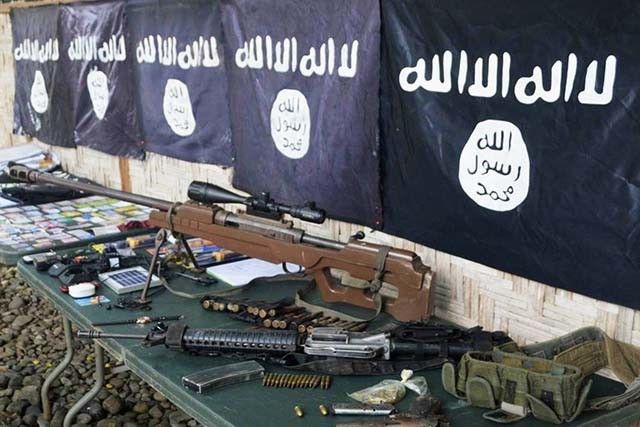
Lorenzana made the revelation after confirming the presence of seven Islamic State (IS) terrorists – reportedly nationals of Egypt, Malaysia, Indonesia and Singapore – who are operating with the Abu Sayyaf in the country.
MANILA, Philippines — Defense Secretary Delfin Lorenzana said government security forces are verifying reports that close to 100 foreign jihadists are operating in various areas of Mindanao.
Lorenzana made the revelation after confirming the presence of seven Islamic State (IS) terrorists – reportedly nationals of Egypt, Malaysia, Indonesia and Singapore – who are operating with the Abu Sayyaf in the country.
Other reports said close to 100 foreign jihadists that include those from Indonesia, the Middle East, Thailand, Bangladesh, Turkey and Morocco have also entered the country.
At least 40 of these terrorists are being tracked down by military and police forces.
“We can only confirm the seven foreign fighters who were identified already. On the 100 others, we also received that (information) before and that they are in Central Mindanao. We don’t know yet their nationalities and we cannot find them, so we consider this report as just information as it cannot be confirmed because we do not know if they are really there or not,” Lorenzana said.
Earlier, security analyst and Miriam College professor for International Studies Rommel Banlaoi bared that scores of foreign jihadists are already operating alongside Abu Sayyaf bandits in Sulu and in some areas of Central Mindanao.
Banlaoi said that these foreign IS terrorists were mostly “new arrivals” while the others are remnants of the pre-Marawi and post-Marawi siege.
At least two key sources within the government’s anti-terror agencies confirmed this information. They refused to give specifics, though.
“There’s already a lot of them in the country,” one of the sources said, adding that these foreign jihadists are currently engaged in recruitment activities in their continuing plan to organize local militants to become suicide bombers in Sulu and Basilan.
The influx of foreign jihadists, the second anti-terror official said, was triggered by the IS’s heavy losses in the Middle East.
He added these foreign jihadists are now heading towards Southeast Asia to reclaim an old caliphate with Mindanao as the center of the IS in the region.
https://www.philstar.com/headlines/2019/07/26/1937978/dnd-verifying-presence-100-jihadists-mindanao
Lorenzana made the revelation after confirming the presence of seven Islamic State (IS) terrorists – reportedly nationals of Egypt, Malaysia, Indonesia and Singapore – who are operating with the Abu Sayyaf in the country.
Other reports said close to 100 foreign jihadists that include those from Indonesia, the Middle East, Thailand, Bangladesh, Turkey and Morocco have also entered the country.
At least 40 of these terrorists are being tracked down by military and police forces.
“We can only confirm the seven foreign fighters who were identified already. On the 100 others, we also received that (information) before and that they are in Central Mindanao. We don’t know yet their nationalities and we cannot find them, so we consider this report as just information as it cannot be confirmed because we do not know if they are really there or not,” Lorenzana said.
Earlier, security analyst and Miriam College professor for International Studies Rommel Banlaoi bared that scores of foreign jihadists are already operating alongside Abu Sayyaf bandits in Sulu and in some areas of Central Mindanao.
Banlaoi said that these foreign IS terrorists were mostly “new arrivals” while the others are remnants of the pre-Marawi and post-Marawi siege.
At least two key sources within the government’s anti-terror agencies confirmed this information. They refused to give specifics, though.
“There’s already a lot of them in the country,” one of the sources said, adding that these foreign jihadists are currently engaged in recruitment activities in their continuing plan to organize local militants to become suicide bombers in Sulu and Basilan.
The influx of foreign jihadists, the second anti-terror official said, was triggered by the IS’s heavy losses in the Middle East.
He added these foreign jihadists are now heading towards Southeast Asia to reclaim an old caliphate with Mindanao as the center of the IS in the region.
https://www.philstar.com/headlines/2019/07/26/1937978/dnd-verifying-presence-100-jihadists-mindanao
Stryker troops prepped the first Filipino BCT before going to fight Abu Sayyaf militants
From the Army Times (Jul 25, 2019): Stryker troops prepped the first Filipino BCT before going to fight Abu Sayyaf militants
/arc-anglerfish-arc2-prod-mco.s3.amazonaws.com/public/TNIYJP3FKNHDVER4GGGKL2YGIM.jpg)
“They had a lot of challenges with synchronizing operations between mechanized forces, their special operations, infantry, et cetera," Graham said.
So when the Americans were on the ground with them for three months, the two partner forces rehearsed combined arms maneuvers utilizing their infantry, armored vehicles and fires support.
“I know my counterpart really found a lot of value in that,” said Col. Leo Wyszynski, the 1-2 Stryker BCT commander. “He was our biggest advocate for coming back for future training, not just at the brigade level, but at the division level."
Philippine Army divisions are operationally deployed throughout the country and therefore don’t spend as much time training and planning as American division headquarters, Wyszynski noted.
The two partner nations conducted various offensive and defensive training iterations, circumventing hot and humid daytime operations in favor of moving almost exclusively at night and practicing assaults in the early morning hours when the enemy’s vision would be degraded.
/arc-anglerfish-arc2-prod-mco.s3.amazonaws.com/public/MUO2DREX3BGB5C2NTNA4BZIPRA.jpg)
U.S. soldiers from 1-2 Stryker Brigade Combat Team, 7th Infantry Division, train with Filipino troops during Pacific Pathways 19. (Army)
U.S. and Filipino soldiers trained together earlier this year before the first Filipino brigade combat team deployed to fight Abu Sayyaf insurgents.
The training for U.S. soldiers from the 1-2 Stryker Brigade Combat Team included stealthy movements through the jungle, alternating between working in Stryker vehicles to living out of ruck sacks and learning how to move a logistics train across an austere Pacific island.
For the Filipino troops, the training was an opportunity to field test combined arms maneuvers for the Philippine Army’s 1st Brigade Combat Team, a new unit formed in December, before their deployment.
During the three-month training mission with U.S. forces, the Filipino troops were alerted that they would soon deploy to their nation’s turbulent southern province of Sulu to counter ISIS-aligned Abu Sayyaf militants.
“Very short notice deployment, so we adapted our training model quickly and part of that was on the machine gun range,” said Lt. Col. Douglas Graham, who serves as a battalion commander with the 1-2 Stryker BCT. “Most of their formation had never trained significantly on machine guns and we had a young staff sergeant who I think trained the majority of three battalions worth of Filipino machine gun teams. That was just incredible.”
“That same model held with our engineers who were teaching EOD and breaching, driver’s training and really any aspect you can imagine,” he added.
Many of the Filipino troops still had extensive combat experience to share with the Americans. One infantry battalion had fought the country’s communist insurgency in the north and another had fought Islamist groups in the south.
The mechanized battalion also had elements that were veterans of the Battle of Marawi in 2017. The origin of the Philippines’ first BCT was largely tied to the lessons Filipino troops learned from that engagement.
U.S. and Filipino soldiers trained together earlier this year before the first Filipino brigade combat team deployed to fight Abu Sayyaf insurgents.
The training for U.S. soldiers from the 1-2 Stryker Brigade Combat Team included stealthy movements through the jungle, alternating between working in Stryker vehicles to living out of ruck sacks and learning how to move a logistics train across an austere Pacific island.
For the Filipino troops, the training was an opportunity to field test combined arms maneuvers for the Philippine Army’s 1st Brigade Combat Team, a new unit formed in December, before their deployment.
During the three-month training mission with U.S. forces, the Filipino troops were alerted that they would soon deploy to their nation’s turbulent southern province of Sulu to counter ISIS-aligned Abu Sayyaf militants.
“Very short notice deployment, so we adapted our training model quickly and part of that was on the machine gun range,” said Lt. Col. Douglas Graham, who serves as a battalion commander with the 1-2 Stryker BCT. “Most of their formation had never trained significantly on machine guns and we had a young staff sergeant who I think trained the majority of three battalions worth of Filipino machine gun teams. That was just incredible.”
“That same model held with our engineers who were teaching EOD and breaching, driver’s training and really any aspect you can imagine,” he added.
Many of the Filipino troops still had extensive combat experience to share with the Americans. One infantry battalion had fought the country’s communist insurgency in the north and another had fought Islamist groups in the south.
The mechanized battalion also had elements that were veterans of the Battle of Marawi in 2017. The origin of the Philippines’ first BCT was largely tied to the lessons Filipino troops learned from that engagement.
“They had a lot of challenges with synchronizing operations between mechanized forces, their special operations, infantry, et cetera," Graham said.
So when the Americans were on the ground with them for three months, the two partner forces rehearsed combined arms maneuvers utilizing their infantry, armored vehicles and fires support.
“I know my counterpart really found a lot of value in that,” said Col. Leo Wyszynski, the 1-2 Stryker BCT commander. “He was our biggest advocate for coming back for future training, not just at the brigade level, but at the division level."
Philippine Army divisions are operationally deployed throughout the country and therefore don’t spend as much time training and planning as American division headquarters, Wyszynski noted.
The two partner nations conducted various offensive and defensive training iterations, circumventing hot and humid daytime operations in favor of moving almost exclusively at night and practicing assaults in the early morning hours when the enemy’s vision would be degraded.
Filipino troops received notice during their training mission that they were being tapped to deploy to Sulu province to fight Islamist militants. (Army)
U.S. troops received a master class in moving through jungle terrain, utilizing locals as early warning systems and taking advantage of bird calls and bamboo sticks for silent coordination, according to Sgt. 1st Class James Howard, who acted as the brigade operations sergeant major while deployed.
“They’re like a Swiss Army Knife,” Howard said of the Filipino combat veterans. “They are very resourceful with how they fight and how they communicate.”
The training culminated in a large-scale, complex live-fire exercise.
“One of the most complex live-fires I’ve ever done, to include in combat,” Wyszynski said. “The real value in this was the readiness training, the synergy, being able to work together in a multinational team.”
For the Filipino BCT, the training blended into what has become a months-long offensive against remnants of the Abu Sayyaf in Sulu by the Philippine Army.
In Sulu, Filipino soldiers have faced active combat, including a suicide attack that killed three Filipino soldiers at the headquarters of their first BCT in late June. Roughly a dozen other soldiers were wounded by militant gunfire during that attack
https://www.armytimes.com/news/your-army/2019/07/25/stryker-troops-prepped-the-first-filipino-bct-before-going-to-fight-abu-sayyaf-militants/
U.S. troops received a master class in moving through jungle terrain, utilizing locals as early warning systems and taking advantage of bird calls and bamboo sticks for silent coordination, according to Sgt. 1st Class James Howard, who acted as the brigade operations sergeant major while deployed.
“They’re like a Swiss Army Knife,” Howard said of the Filipino combat veterans. “They are very resourceful with how they fight and how they communicate.”
The training culminated in a large-scale, complex live-fire exercise.
“One of the most complex live-fires I’ve ever done, to include in combat,” Wyszynski said. “The real value in this was the readiness training, the synergy, being able to work together in a multinational team.”
For the Filipino BCT, the training blended into what has become a months-long offensive against remnants of the Abu Sayyaf in Sulu by the Philippine Army.
In Sulu, Filipino soldiers have faced active combat, including a suicide attack that killed three Filipino soldiers at the headquarters of their first BCT in late June. Roughly a dozen other soldiers were wounded by militant gunfire during that attack
https://www.armytimes.com/news/your-army/2019/07/25/stryker-troops-prepped-the-first-filipino-bct-before-going-to-fight-abu-sayyaf-militants/
Foreign Militants Working with New IS Leader in Philippines
From BenarNews (Jul 25, 2019): Foreign Militants Working with New IS Leader in Philippines

Philippine soldiers escort a hearse during the funeral procession for a victim of a bombing at a church in Jolo, southern Philippines, Jan. 30, 2019. [AFP]
Government forces are tracking down at least seven foreigners who are working with the new Islamic State militant leader in the volatile southern Philippines, the country’s defense chief said Thursday.
The seven are believed to be under the protection of Hatib Hajan Sawadjaan, a little-known commander of the Abu Sayyaf Group, officials said. He took the reins of the local Islamic State (IS) chapter after leader Isnilon Hapilon was killed in the 2017 battle of Marawi, according to Filipino and American officials.
Defense Secretary Delfin Lorenzana told reporters in Manila that the government was looking at raw information that at least a hundred foreign militants had entered the country and were operating in the south.
But of that total, he said, “we only confirmed seven foreign fighters” that were being tracked by the military’s Western Mindanao Command (WesMinCom), which is based in southern Zamboanga city.
“We cannot find them so we consider those as just information and it cannot be confirmed,” Lorenzana said of the 100 militants. “We do not know if they are really there or not.”
“According to the WesMinCom there are seven foreigners. I think the nationalities are Egyptian, Malaysian, Indonesian and Singaporean. So we have the names of a couple but we are not going to give (this) out yet until we get all the names of everybody,” Lorenzana said during a program launching new vessels for the coast guard.
“Initial reports say they are with the group of Sawadjaan in Jolo,” the defense secretary said.
Regional military chief Lt. Ge. Cirilito Sobejana said troops were already tracking down the militants, but he declined to give more information, saying it may jeopardize the operation.
“We are doing something about this report,” Sobejana told BenarNews, adding that authorities decided to reveal some of the militants’ alleged nationalities as part of the military’s increased awareness campaign in the south.
“We are doing something about it and [this] increases the vigilance level of our people so everybody should be observant now,” he said.
The revelation came shortly after police and military intelligence troops arrested three Pakistani nationals over the past two months.
One of those arrested, Waqar Ahmad, 36, was a suspected bomber with IS. He was arrested following an anti-terror blitz that also led to the capture of two Filipino terror operatives in Manila. Ahmad was deported and turned over to Pakistani authorities.
The two other Pakistanis, identified as Salid Ali, 28, and Rahim Zada, 42, were also captured in Zamboanga, where Ahmad was also arrested.
The two had entered the country illegally through the southern Sulu Islands, and apparently were among those being pursued by authorities.
They were arrested after two suicide bombers, one of them a Filipino, launched an attack that left three soldiers and three civilians outside a military camp in the island province of Sulu in late June. IS claimed responsibility for that attack.
In January, an Indonesian husband and wife team, blew themselves up at the Our Lady of Mount Carmel Cathedral Catholic on Jolo Island, which is part of Sulu, killing 23 people in one of the country’s worst attacks in years.
On Tuesday, Indonesian police named the couple as Rullie Rian Zeke and Ulfah Handayani Saleh, who were deported from Turkey in 2017 after they allegedly tried to cross its border to enter IS-controlled territory in Syria.
The two apparently left to join IS via Turkey in March 2016, taking their three children with them. But Turkish authorities caught them in January 2017 and deported them back to Indonesia, where government officials enrolled the couple in a short rehabilitation program before releasing them.
It was not clear, however, how the two managed to sneak into the Philippines, but local police earlier caught five Filipino accomplices who said that the Indonesian couple had apparently sailed to Jolo from the nearby island of Lampinigan.
The two met with Sawadjaan who plotted and financed the church bombing in Jolo, according to Philippine police sources.
The seven are believed to be under the protection of Hatib Hajan Sawadjaan, a little-known commander of the Abu Sayyaf Group, officials said. He took the reins of the local Islamic State (IS) chapter after leader Isnilon Hapilon was killed in the 2017 battle of Marawi, according to Filipino and American officials.
Defense Secretary Delfin Lorenzana told reporters in Manila that the government was looking at raw information that at least a hundred foreign militants had entered the country and were operating in the south.
But of that total, he said, “we only confirmed seven foreign fighters” that were being tracked by the military’s Western Mindanao Command (WesMinCom), which is based in southern Zamboanga city.
“We cannot find them so we consider those as just information and it cannot be confirmed,” Lorenzana said of the 100 militants. “We do not know if they are really there or not.”
“According to the WesMinCom there are seven foreigners. I think the nationalities are Egyptian, Malaysian, Indonesian and Singaporean. So we have the names of a couple but we are not going to give (this) out yet until we get all the names of everybody,” Lorenzana said during a program launching new vessels for the coast guard.
“Initial reports say they are with the group of Sawadjaan in Jolo,” the defense secretary said.
Regional military chief Lt. Ge. Cirilito Sobejana said troops were already tracking down the militants, but he declined to give more information, saying it may jeopardize the operation.
“We are doing something about this report,” Sobejana told BenarNews, adding that authorities decided to reveal some of the militants’ alleged nationalities as part of the military’s increased awareness campaign in the south.
“We are doing something about it and [this] increases the vigilance level of our people so everybody should be observant now,” he said.
The revelation came shortly after police and military intelligence troops arrested three Pakistani nationals over the past two months.
One of those arrested, Waqar Ahmad, 36, was a suspected bomber with IS. He was arrested following an anti-terror blitz that also led to the capture of two Filipino terror operatives in Manila. Ahmad was deported and turned over to Pakistani authorities.
The two other Pakistanis, identified as Salid Ali, 28, and Rahim Zada, 42, were also captured in Zamboanga, where Ahmad was also arrested.
The two had entered the country illegally through the southern Sulu Islands, and apparently were among those being pursued by authorities.
They were arrested after two suicide bombers, one of them a Filipino, launched an attack that left three soldiers and three civilians outside a military camp in the island province of Sulu in late June. IS claimed responsibility for that attack.
In January, an Indonesian husband and wife team, blew themselves up at the Our Lady of Mount Carmel Cathedral Catholic on Jolo Island, which is part of Sulu, killing 23 people in one of the country’s worst attacks in years.
On Tuesday, Indonesian police named the couple as Rullie Rian Zeke and Ulfah Handayani Saleh, who were deported from Turkey in 2017 after they allegedly tried to cross its border to enter IS-controlled territory in Syria.
The two apparently left to join IS via Turkey in March 2016, taking their three children with them. But Turkish authorities caught them in January 2017 and deported them back to Indonesia, where government officials enrolled the couple in a short rehabilitation program before releasing them.
It was not clear, however, how the two managed to sneak into the Philippines, but local police earlier caught five Filipino accomplices who said that the Indonesian couple had apparently sailed to Jolo from the nearby island of Lampinigan.
The two met with Sawadjaan who plotted and financed the church bombing in Jolo, according to Philippine police sources.
Austal PHL opens new Cebu facility, hopes to get Navy deal to make offshore patrol vessels
From the Business Mirror (Jul 25, 2019): Austal PHL opens new Cebu facility, hopes to get Navy deal to make offshore patrol vessels
BALAMBAN, Cebu—Regional shipbuilder Austal Philippines has improved its chances of securing the contract to assemble offshore patrol vessels (OPVs) for the Philippine Navy after completing the construction of its $20-million shipyard expansion.
Austal Philippines on Wednesday inaugurated here the John Rothwell Assembly Bay, which is designed to accommodate large vessel projects for hull assembly, final outfitting and painting capacity. The assembly bay is a massive structure standing 120 meters long, 43 meters wide and 41 meters tall.
As the shipyard has recently secured a license to build naval vessels, Austal Philippines can now deliver on major naval vessel projects, such as the OPVs required by the Navy.
Austal Philippines is bidding for the contract to assemble six OPVs for the Navy as part of the modernization program of the Armed Forces of the Philippines. The ships that the manufacturer can make are a larger variant of the Cape class patrol vessels used by the Royal Australian Navy and Australian Border Force.
Speaking before Defense Secretary Delfin N. Lorenzana and Trade Secretary Ramon M. Lopez, as well as Navy officials, Austal CEO David Singleton said the firm is hoping the government seriously considers its offer to build its patrol ships.
“I hope that what you see makes you think in the future, [that the] Philippine Navy [vessels] can be constructed in this country and [the Navy does] not need to go offshore for its needs. We have what you need,” Singleton said.
Executives argued the Navy should choose Austal as its OPV supplier, as it will be easier to maintain and service the units given the ship builder’s local presence. They added that securing the contract will result in generating more employment opportunities for Filipinos.
At present, over 900 Filipino engineers, design staff, skilled laborers and production tradesmen are employed at the Cebu shipyard. With the $20-million shipyard expansion completed, Austal Philippines is targeting to employ more locals to fill in the labor requirement of the John Rothwell Assembly Bay. According to Singleton, the expansion is part of Austal’s running program to make the Philippines its manufacturing base for commercial vessels in Southeast Asia. The shipyard here has so far delivered 17 ships to 10 operators in nine countries globally.
Expanding its capability, Austal Philippines recently signed a memorandum of agreement with Aboitiz Construction Inc. that will allow cooperation on steel fabrication between the two firms. The large vessels Austal Philippines will assemble over the next months will require steel hulls, which Aboitiz has the expertise to produce.
Austal Philippines on Wednesday inaugurated here the John Rothwell Assembly Bay, which is designed to accommodate large vessel projects for hull assembly, final outfitting and painting capacity. The assembly bay is a massive structure standing 120 meters long, 43 meters wide and 41 meters tall.
As the shipyard has recently secured a license to build naval vessels, Austal Philippines can now deliver on major naval vessel projects, such as the OPVs required by the Navy.
Austal Philippines is bidding for the contract to assemble six OPVs for the Navy as part of the modernization program of the Armed Forces of the Philippines. The ships that the manufacturer can make are a larger variant of the Cape class patrol vessels used by the Royal Australian Navy and Australian Border Force.
Speaking before Defense Secretary Delfin N. Lorenzana and Trade Secretary Ramon M. Lopez, as well as Navy officials, Austal CEO David Singleton said the firm is hoping the government seriously considers its offer to build its patrol ships.
“I hope that what you see makes you think in the future, [that the] Philippine Navy [vessels] can be constructed in this country and [the Navy does] not need to go offshore for its needs. We have what you need,” Singleton said.
Executives argued the Navy should choose Austal as its OPV supplier, as it will be easier to maintain and service the units given the ship builder’s local presence. They added that securing the contract will result in generating more employment opportunities for Filipinos.
At present, over 900 Filipino engineers, design staff, skilled laborers and production tradesmen are employed at the Cebu shipyard. With the $20-million shipyard expansion completed, Austal Philippines is targeting to employ more locals to fill in the labor requirement of the John Rothwell Assembly Bay. According to Singleton, the expansion is part of Austal’s running program to make the Philippines its manufacturing base for commercial vessels in Southeast Asia. The shipyard here has so far delivered 17 ships to 10 operators in nine countries globally.
Expanding its capability, Austal Philippines recently signed a memorandum of agreement with Aboitiz Construction Inc. that will allow cooperation on steel fabrication between the two firms. The large vessels Austal Philippines will assemble over the next months will require steel hulls, which Aboitiz has the expertise to produce.
https://businessmirror.com.ph/2019/07/25/austal-phl-opens-new-cebu-facility-hopes-to-get-navy-deal-to-make-offshore-patrol-vessels/
Army joins OPAPP info drive in former MILF camp
From the Philippine News Agency (Jul 24, 2019): Army joins OPAPP info drive in former MILF camp

CAMP CONVERSION DRIVE. Office of the Presidential Adviser on the Peace Process Undersecretary Gloria Jumalil-Mercado speaks during the information drive inside former Camp Rajah Muda of the Moro Islamic Liberation Front in Pikit, North Cotabato on Tuesday (July 23, 2019). The MILF camp is being transformed into a peaceful and productive community. (Photo courtesy of 602nd Infantry Brigade)
KIDAPAWAN CITY – The Army’s 602nd Infantry Brigade (602nd IBde), the Office of the Presidential Adviser on the Peace Process (OPAPP) and Government Peace Implementing Panel jointly conducted Tuesday an information drive inside the former Moro Islamic Liberation Front’s Camp Rajah Muda in Pikit, North Cotabato.
Just like other MILF camps, Rajah Muda is under the government's "Camp Transformation and Normalization" program that seeks to transform the former rebel strongholds into peaceful and developed communities.
Leading the gathering in Rajah Muda were OPAPP Undersecretary Gloria Jumamil-Mercado, retired Brig. Gen. Dickson Hermoso, a member of the government peace implementing panel, and 602nd IBde commander Brig. Gen. Alfredo del Rosario Jr.
The assembly sought to provide former MILF fighters the basic details on the implementation of socio-economic programs, confidence-building and amnesty, decommissioning of MILF combatants and creation of Joint Peace and Security Teams (JPST) to secure their communities until 2022.
Under the government's socioeconomic program, MILF members and their families will undergo processing to receive social protection (including health insurance), livelihood and educational assistance, and other development packages as part of the program.
"We are currently at the implementation (stage) on what has been agreed during the negotiation part of this peace process," Jumamil-Mercado said in a statement Tuesday.
“We had finished the negotiations part and our challenge now is the timely implementation of the agreement set forth," she added.
Hermoso, also minister of Transportation in the Bangsamoro Autonomous Region in Muslim Mindanao (BARMM), said the decommissioning process of about 40,000 MILF fighters will be done in three batches.
Under the agreement, Hermoso said, 12,000 combatants will be decommissioned this year, 14,000 by 2020, and the remaining 14,000 by 2021.
He also said that 200 JPSTs would be organized with each team composed of seven soldiers, eight police officers, and 15 MILF members.
JPST members will be trained starting July 27 inside the Army’s Camp Lucero in Carmen, North Cotabato.
"Now, we are with implementing panel after completing all the negotiations. We have no more discussions about the BOL but rather is the time to implement what has been agreed," said MILF field commander Jack Abas, who is also a member of the Bangsamoro Transition Authority.
The BOL refers to the Bangsamoro Organic Law that established the BARMM in recognition of the impartiality and legitimacy of the cause of the Bangsamoro people and their aspiration to chart their political future through a democratic process.
"We aspire for peace, and that peace is for all of us. This activity is to introduce the peace agreement for everyone to understand. This peace is for our people," Abas added.
Rosario vowed the military will continue to implement the guidance of President Rodrigo Roa Duterte as reiterated during his recent State of the Nation Address for them to fully support the peace process and ensure peace and order in the communities.
"We are now hand in hand in this peace process far from the 90's back then when we battle against each other,” said Rosario, who described the implementation of the peace process with the MILF as “historic”.
https://www.pna.gov.ph/articles/1075879
CAMP CONVERSION DRIVE. Office of the Presidential Adviser on the Peace Process Undersecretary Gloria Jumalil-Mercado speaks during the information drive inside former Camp Rajah Muda of the Moro Islamic Liberation Front in Pikit, North Cotabato on Tuesday (July 23, 2019). The MILF camp is being transformed into a peaceful and productive community. (Photo courtesy of 602nd Infantry Brigade)
KIDAPAWAN CITY – The Army’s 602nd Infantry Brigade (602nd IBde), the Office of the Presidential Adviser on the Peace Process (OPAPP) and Government Peace Implementing Panel jointly conducted Tuesday an information drive inside the former Moro Islamic Liberation Front’s Camp Rajah Muda in Pikit, North Cotabato.
Just like other MILF camps, Rajah Muda is under the government's "Camp Transformation and Normalization" program that seeks to transform the former rebel strongholds into peaceful and developed communities.
Leading the gathering in Rajah Muda were OPAPP Undersecretary Gloria Jumamil-Mercado, retired Brig. Gen. Dickson Hermoso, a member of the government peace implementing panel, and 602nd IBde commander Brig. Gen. Alfredo del Rosario Jr.
The assembly sought to provide former MILF fighters the basic details on the implementation of socio-economic programs, confidence-building and amnesty, decommissioning of MILF combatants and creation of Joint Peace and Security Teams (JPST) to secure their communities until 2022.
Under the government's socioeconomic program, MILF members and their families will undergo processing to receive social protection (including health insurance), livelihood and educational assistance, and other development packages as part of the program.
"We are currently at the implementation (stage) on what has been agreed during the negotiation part of this peace process," Jumamil-Mercado said in a statement Tuesday.
“We had finished the negotiations part and our challenge now is the timely implementation of the agreement set forth," she added.
Hermoso, also minister of Transportation in the Bangsamoro Autonomous Region in Muslim Mindanao (BARMM), said the decommissioning process of about 40,000 MILF fighters will be done in three batches.
Under the agreement, Hermoso said, 12,000 combatants will be decommissioned this year, 14,000 by 2020, and the remaining 14,000 by 2021.
He also said that 200 JPSTs would be organized with each team composed of seven soldiers, eight police officers, and 15 MILF members.
JPST members will be trained starting July 27 inside the Army’s Camp Lucero in Carmen, North Cotabato.
"Now, we are with implementing panel after completing all the negotiations. We have no more discussions about the BOL but rather is the time to implement what has been agreed," said MILF field commander Jack Abas, who is also a member of the Bangsamoro Transition Authority.
The BOL refers to the Bangsamoro Organic Law that established the BARMM in recognition of the impartiality and legitimacy of the cause of the Bangsamoro people and their aspiration to chart their political future through a democratic process.
"We aspire for peace, and that peace is for all of us. This activity is to introduce the peace agreement for everyone to understand. This peace is for our people," Abas added.
Rosario vowed the military will continue to implement the guidance of President Rodrigo Roa Duterte as reiterated during his recent State of the Nation Address for them to fully support the peace process and ensure peace and order in the communities.
"We are now hand in hand in this peace process far from the 90's back then when we battle against each other,” said Rosario, who described the implementation of the peace process with the MILF as “historic”.
https://www.pna.gov.ph/articles/1075879
24 soldiers get medals
From the Visayan Daily Star (Jul 25, 2019): 24 soldiers get medals
Twenty-four soldiers of the 62nd Infantry Battalion were conferred Military Commendation Medals on Tuesday by Brig. Gen. Benedict Arevalo, 303rd Infantry Brigade commander, for demonstrating exemplary performance of duties in combat operations on July 13, at the boundary of Kabankalan City and Ayungon in Negros Oriental.
1Lt. Revekka Roperos, 303rd Infantry Brigade Civil Military Operations Officer, said yesterday that the encounter of 62IB soldiers with a group of New People’s Army rebels led to the recovery of a homemade landmine, assorted explosives, M-16 assault rifle and ammunition, as well as medicines, and personal belongings.
A suspected NPA squad leader identified as a certain Joseph Pacheco, alias Emjay, of Brgy. Buenavista, Himamaylan City, Negros Occidental, died in the gunbattle.
“I will not stop recognizing the bravery of my men in the battlefield, because a person who is always appreciated will do more than what is expected,” Arevalo, who personally pinned the medals on the 62IB soldiers in Brgy. Libas, Isabela, said.
Arevalo already gave 249 medals to infantry units under the supervision of the 303rd Infantry Brigade for the 13 successful encounters against the NPA in Negros Occidental, since he assumed command on Oct. 29 last year.
http://www.visayandailystar.com/2019/July/25/topstory7.htm
Twenty-four soldiers of the 62nd Infantry Battalion were conferred Military Commendation Medals on Tuesday by Brig. Gen. Benedict Arevalo, 303rd Infantry Brigade commander, for demonstrating exemplary performance of duties in combat operations on July 13, at the boundary of Kabankalan City and Ayungon in Negros Oriental.
1Lt. Revekka Roperos, 303rd Infantry Brigade Civil Military Operations Officer, said yesterday that the encounter of 62IB soldiers with a group of New People’s Army rebels led to the recovery of a homemade landmine, assorted explosives, M-16 assault rifle and ammunition, as well as medicines, and personal belongings.
A suspected NPA squad leader identified as a certain Joseph Pacheco, alias Emjay, of Brgy. Buenavista, Himamaylan City, Negros Occidental, died in the gunbattle.
“I will not stop recognizing the bravery of my men in the battlefield, because a person who is always appreciated will do more than what is expected,” Arevalo, who personally pinned the medals on the 62IB soldiers in Brgy. Libas, Isabela, said.
Arevalo already gave 249 medals to infantry units under the supervision of the 303rd Infantry Brigade for the 13 successful encounters against the NPA in Negros Occidental, since he assumed command on Oct. 29 last year.
http://www.visayandailystar.com/2019/July/25/topstory7.htm
Rebels kill 2, burn equipment
From the Visayan Daily Star (Jul 25, 2019): Rebels kill 2, burn equipment
Four gunmen suspected to be New People’s Army rebels yesterday shot and killed a rebel returnee and a leader of a farmer’s group in Zamboaguita town, a day after alleged communist rebels also burned heavy equipment owned by a construction firm in Guihulngan City, all in Negros Oriental.
The Zamboanguita police as identified those killed on the spot Weny Alegre, a rebel returnee-turned farmer, and Felimino Janayan, also a farmer and president of the United Colango Farmers Association.
Police investigations showed that four suspects, who were wearing face masks and jackets, and riding in two yellow and orange motorcycles, were involved in the fatal shooting of Alegre and Janayan.
Both succumbed to multiple gunshot wounds, according to the police.
Quoting testimonies of a witness, the four suspects followed and shot several times the two victims, who were on their way home, on board a motorcycle, from a cockpit in the town.
The four rebel suspects shouted “Mabuhay ang NPA (Long Live the NPA)”, while withdrawing from the scene of incident, police said.
Eleven fired cartridges a.45 caliber pistol, two empty shells of 9mm pistol and two other fired slugs of unknown caliber of firearms were recovered at the scene of incident by the Zamboanguita police.
Barangay chairman Jesus Manuel Trinidad reported to the police yesterday that a backhoe owned by WTG Construction was burned and fired at by a group of suspected NPA rebels on Wednesday in Sitio Malinoy, Brgy. Magsaysay, Guihulngan City, also in Negros Oriental.
The armed men also opened fire at another heavy equipment, a payloader, the Guihulngan police also said.
Brig. Gen. Benedict Arevalo, 303rd Infantry Brigade commander, said yesterday that they are still determining if the suspects are indeed NPA members, and also the motive for the incident.
http://www.visayandailystar.com/2019/July/25/topstory6.htm
Four gunmen suspected to be New People’s Army rebels yesterday shot and killed a rebel returnee and a leader of a farmer’s group in Zamboaguita town, a day after alleged communist rebels also burned heavy equipment owned by a construction firm in Guihulngan City, all in Negros Oriental.
The Zamboanguita police as identified those killed on the spot Weny Alegre, a rebel returnee-turned farmer, and Felimino Janayan, also a farmer and president of the United Colango Farmers Association.
Police investigations showed that four suspects, who were wearing face masks and jackets, and riding in two yellow and orange motorcycles, were involved in the fatal shooting of Alegre and Janayan.
Both succumbed to multiple gunshot wounds, according to the police.
Quoting testimonies of a witness, the four suspects followed and shot several times the two victims, who were on their way home, on board a motorcycle, from a cockpit in the town.
The four rebel suspects shouted “Mabuhay ang NPA (Long Live the NPA)”, while withdrawing from the scene of incident, police said.
Eleven fired cartridges a.45 caliber pistol, two empty shells of 9mm pistol and two other fired slugs of unknown caliber of firearms were recovered at the scene of incident by the Zamboanguita police.
Barangay chairman Jesus Manuel Trinidad reported to the police yesterday that a backhoe owned by WTG Construction was burned and fired at by a group of suspected NPA rebels on Wednesday in Sitio Malinoy, Brgy. Magsaysay, Guihulngan City, also in Negros Oriental.
The armed men also opened fire at another heavy equipment, a payloader, the Guihulngan police also said.
Brig. Gen. Benedict Arevalo, 303rd Infantry Brigade commander, said yesterday that they are still determining if the suspects are indeed NPA members, and also the motive for the incident.
http://www.visayandailystar.com/2019/July/25/topstory6.htm
Coast Guard gets new high-speed boats, trucks to boost capabilities
From Rappler (Jul 25, 2019): Coast Guard gets new high-speed boats, trucks to boost capabilities
Other new assets include rubber boats and fully equipped ambulances useful in disaster response and rescue operations
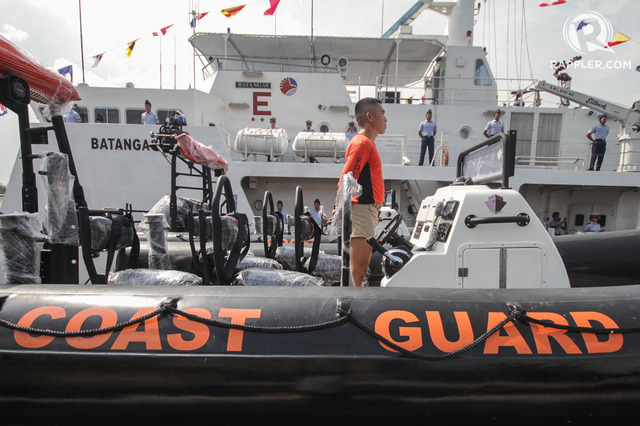
NEW ASSETS. Turnover and blessing ceremony of newly procured Philippine Coast Guard Assets at PCG headquarters in Manila on July 25, 2019. All photos by Lito Borras/Rappler
MANILA, Philippines – The Philippine Coast Guard (PCG) has acquired roughly P450 million worth of new assets to help boost its capability to patrol the country's waters and respond to natural disasters.
The PCG unveiled to the public 12 Rigid Hull Inflatable Boats (RHIB), 73 rubber boats, 90 4x4 pick-up trucks with trailer hitch ball and mount, 5 fully-equipped ambulances, and 7 buses, in a ceremony at its headquarters at the Port of Manila on Thursday, July 25.
The 4x4 Toyota Hilux pick-up trucks are able to transport rubber boats and other equipment that can help the PCG in rescue missions during typhoons and floods.
The RHIBs are high-speed boats with radar, radio, and Global Positioning System (GPS) equipment.
Other new assets include rubber boats and fully equipped ambulances useful in disaster response and rescue operations
MANILA, Philippines – The Philippine Coast Guard (PCG) has acquired roughly P450 million worth of new assets to help boost its capability to patrol the country's waters and respond to natural disasters.
The PCG unveiled to the public 12 Rigid Hull Inflatable Boats (RHIB), 73 rubber boats, 90 4x4 pick-up trucks with trailer hitch ball and mount, 5 fully-equipped ambulances, and 7 buses, in a ceremony at its headquarters at the Port of Manila on Thursday, July 25.
The 4x4 Toyota Hilux pick-up trucks are able to transport rubber boats and other equipment that can help the PCG in rescue missions during typhoons and floods.
The RHIBs are high-speed boats with radar, radio, and Global Positioning System (GPS) equipment.
The PCG said the boats will be deployed to the country's coastal waters, as well as to the West Philippine Sea and Sulu Sea, to guard against poachers, pirates, and other intruders including foreign extremists.
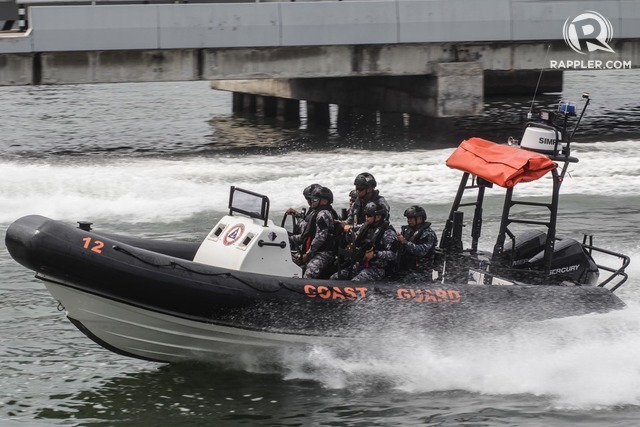
Photo by Lito Borras/Rappler
Poaching is a serious concern especially in the West Philippine Sea, where the PCG is far outnumbered by foreign fishing boats that venture into the country's exclusive economic zone.
Defense Secretary Delfin Lorenzana, who led the inaugural ceremony, said the country loses $2 billion (P102.14 billion) every year in fish caught by foreign poachers.
"I am happy to witness these developments that are significant, especially those with the mandate that intersects the DND. As stewards of these assets, let us utilize these properly to safeguard the lives of our people," Lorenzana said.
Transportation Secretary Arthur Tugade, meanwhile, said: "Mayroon na po tayong mga tao sa PCG na may puso, damdamin, at patriotismo. Pero ano ho 'yung mga tao, kung walang kagamitan na panlaban sa kaaway? Ngayon, 'yung mga nangangasiwa sa PCG ay magkakaroon na ng kagamitan para sa pagtatanggol ng ating kapaligiran at karagatan."
(We already have people in the PCG with heart, passion, and patriotism. But what are these people if they have no equipment to fend off the enemy? Now, those who run the PCG will have equipment to defend our environment and our seas.)
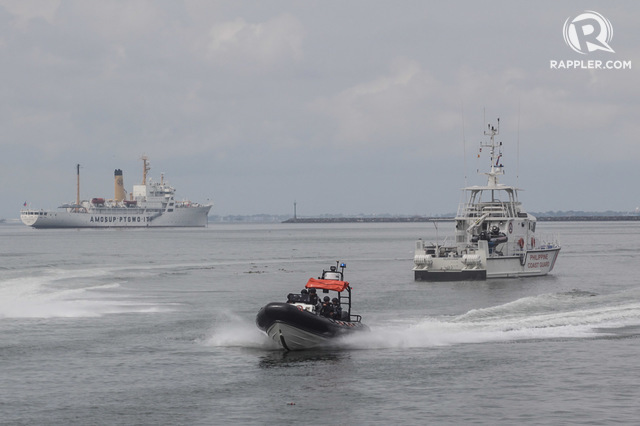
Photo by Lito Borras/Rappler
The PCG is supervised by the Department of Transportation.
Lorenzana and Tugade said they hope to further improve on the PCG's capabilities. This batch of assets followed a series of earlier acquisitions that included a rescue ship and speed boats from Japan, and an 83.6-meter Offshore Patrol Vessel from France.
Photo by Lito Borras/Rappler
Poaching is a serious concern especially in the West Philippine Sea, where the PCG is far outnumbered by foreign fishing boats that venture into the country's exclusive economic zone.
Defense Secretary Delfin Lorenzana, who led the inaugural ceremony, said the country loses $2 billion (P102.14 billion) every year in fish caught by foreign poachers.
"I am happy to witness these developments that are significant, especially those with the mandate that intersects the DND. As stewards of these assets, let us utilize these properly to safeguard the lives of our people," Lorenzana said.
Transportation Secretary Arthur Tugade, meanwhile, said: "Mayroon na po tayong mga tao sa PCG na may puso, damdamin, at patriotismo. Pero ano ho 'yung mga tao, kung walang kagamitan na panlaban sa kaaway? Ngayon, 'yung mga nangangasiwa sa PCG ay magkakaroon na ng kagamitan para sa pagtatanggol ng ating kapaligiran at karagatan."
(We already have people in the PCG with heart, passion, and patriotism. But what are these people if they have no equipment to fend off the enemy? Now, those who run the PCG will have equipment to defend our environment and our seas.)
Photo by Lito Borras/Rappler
The PCG is supervised by the Department of Transportation.
Lorenzana and Tugade said they hope to further improve on the PCG's capabilities. This batch of assets followed a series of earlier acquisitions that included a rescue ship and speed boats from Japan, and an 83.6-meter Offshore Patrol Vessel from France.
Army cites LGUs in high number of surrenderers
From the Mindanao Times (Jul 26, 2019): Army cites LGUs in high number of surrenderers
The Philippine Army said the collaboration of the local government units led to the surrender of 3,109 rebels and supporters to the different units of the 10th Infantry Division since June 2016.
Capt Jerry Lamosao, the chief of the 10th Infantry Division Public Affairs Office, said the assistance of local officials – from the mayors down to barangay chairs – has played a great factor in the surrender.
Based on the record, there were 1,467 regular members of the New People’s Army (NPA) who surrendered.
A total of 1,642 supporters – 1,185 militia ng bayan members, 363 for sangay ng partido sa lokalidad, and 94 left-leaning groups – also surrendered.
Lamosao also said 146 NPA members were killed in encounters during the period.
He said they recovered 804 Improvised Explosive Devices (IED) and 1,660 firearms.
Soldiers also discovered 550 enemy camps and hide outs.
Lamosao said the pronouncement of the President Rodrigo Duterte to help NPA surrenderers is also “big thing” that increases the number.
He attributed the Enhance-Comprehensive Local Integration Program (E-CLIP) that motivates relatives to encourage NPA members to give up.
“Of course, we can’t deny that the media has big role,” Lamosao said.
Capt Jerry Lamosao, the chief of the 10th Infantry Division Public Affairs Office, said the assistance of local officials – from the mayors down to barangay chairs – has played a great factor in the surrender.
Based on the record, there were 1,467 regular members of the New People’s Army (NPA) who surrendered.
A total of 1,642 supporters – 1,185 militia ng bayan members, 363 for sangay ng partido sa lokalidad, and 94 left-leaning groups – also surrendered.
Lamosao also said 146 NPA members were killed in encounters during the period.
He said they recovered 804 Improvised Explosive Devices (IED) and 1,660 firearms.
Soldiers also discovered 550 enemy camps and hide outs.
Lamosao said the pronouncement of the President Rodrigo Duterte to help NPA surrenderers is also “big thing” that increases the number.
He attributed the Enhance-Comprehensive Local Integration Program (E-CLIP) that motivates relatives to encourage NPA members to give up.
“Of course, we can’t deny that the media has big role,” Lamosao said.
Subscribe to:
Posts (Atom)