Saturday, May 25, 2019

Two cadets dropped from PMA graduation

From the Philippine Daily Inquirer (May 25, 2019): Two cadets dropped from PMA graduation


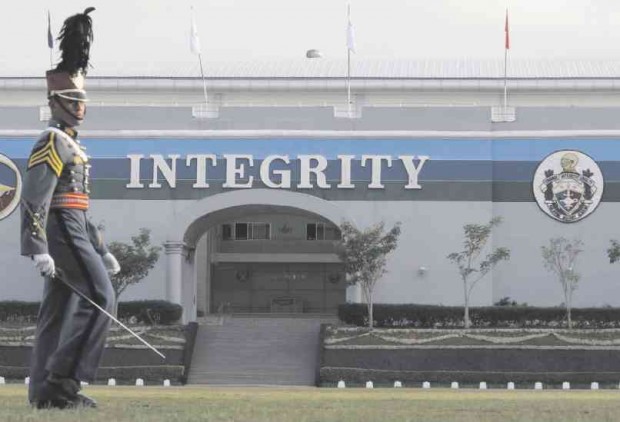
Philippine Military Academy (INQUIRER FILE PHOTO)

FORT DEL PILAR, Baguio City – Two male cadets will not be graduating today, Sunday, as members of the PMA Mabalasik Class of 2019 for violating regulations.

The cadets, who were not identified, were removed from the original 263 graduating cadets on Friday, May 24, two days before they would have been commissioned into junior officers of the Armed Forces of the Philippines, said Maj. Reynan Afan, PMA spokesman.

“If they are delayed for a year, they will already be part of the next graduating Class of 2020,” he said, although the two cadets may still catch up should they fulfill tasks meted as their punishment.

Because their infractions did not violate the Cadet Honor Code, the two were not suspended, Afan said.

The Honor Code is a set of rules which outline how cadets must behave inside and outside the academy.

“A cadet’s graduation always depends on his performance in all the aspects of training inside the academy,” Afan said.

In the past, graduating cadets who were delayed were accorded “special graduating rites” inside the Longayban Hall at PMA, he said.

The Mabalasik Class valedictorian is Cadet First Class Dionne Mae Umalla of Alilem town in Ilocos Sur province.

Lorenzana to PMA grads: Stay alive

From the Philippine Daily Inquirer (May 26, 2019): Lorenzana to PMA grads: Stay alive

FORT DEL PILAR, BAGUIO CITY, Philippines — The problems faced by cadets, who were immediately assigned to fight secessionists in Mindanao and communist rebels in the 1970s, are still the same confronting members of the “Mabalasik” Class of 2019 of the Philippine Military Academy (PMA) who will graduate on Sunday, Defense Secretary Delfin Lorenzana said here on Saturday.

So Lorenzana’s advice to them during a pregraduation ceremony here was: “Please stay alive.”

Mabalasik is an acronym for “Mandirigma ng Bayan, Iaalay ang Sarili, Lakas at Tapang, Para sa Kapayapaan.”

Lorenzana said the cadets, who will be commissioned as junior officers of the Armed Forces of the Philippines, will be better equipped than when he graduated from PMA in 1973.

He said his 1973 class composed of 61 members lost its first “mistah” (classmate), Jan Vincent Muyargas, within six months after they were sent to Mindanao to face the war triggered by the secessionist Moro National Liberation Front (MNLF).

More complex issues

But Mabalasik class has more complex issues to deal with such as the West Philippine Sea dispute, terrorism and climate change, Lorenzana said.

“All of us were sent to Mindanao as platoon leaders—even those assigned to the Air Force. Classmates who became members of the then Constabulary joined the [Philippine Constabulary] battalion there. The Navy joined the Marines,” he said.

“Earlier [in 1973], we almost lost Cotabato City to the MNLF had government troopers rallied under the late Gen. Fortunato Abat of PMA Class of 1951,” he said.

“Unfortunately, some of the challenges we faced before are still there… They remain and you will be facing them whether you are in the Army, Navy or Air Force,” he said, adding: “There are more challenges and these are more complicated.”

“The communist insurgency is still with us after 50 years. A lot of you in the Army will be facing the New People’s Army. Luckily, the secessionist problem in Mindanao is moving forward to its final resolution with the enactment of the law creating the Bangsamoro Autonomous Region,” he said.

Six Reds yield to PNP in Batangas

From the Manila Bulletin (May 25, 2019): Six Reds yield to PNP in Batangas

Six suspected members of the New People’s Army (NPA) have surrendered to police in Batangas City, the Batangas provincial director said Saturday.


New People’s Army (MANILA BULLETIN)

Police Colonel Edwin Quilates, director of the Batangas Provincial Police Office, said the six NPA suspects were urged by their relatives to lay down their arms and be reintegrated with the community.
Their relatives, according to Quilates, were recruited by the Batangas police to be their informants.

The suspects finally submitted themselves to the police around 10 a.m. Friday at the provincial police headquarters in Camp Miguel Malvar, Brgy. Kumintang Ilaya, Batangas City.

“You can read from the faces of these returnees the excitement on their new found freedom from the false hopes and promises of a crooked ideology, and the hope of a brighter future for them and their families,” Quilates said.

“We shook hands and embraced them to let them feel the care and protection of their motherland who have been yearning and waiting for them to return to the fold of the law,” he added.

The rebel-returnees underwent debriefing, processing and documentation facilitated by the Batangas City police.

They were also assisted in the application of the Enhanced Comprehensive Local Integration Program (E-CLIP), a government program that seeks to “contribute toward achieving the goal of permanent and peaceful closure of all armed conflicts with non-state armed group.”

https://news.mb.com.ph/2019/05/25/six-reds-yield-to-pnp-in-batangas/

Unseen Scars

From the Business Mirror (May 26, 2019): Unseen Scars

ICRC reports ‘frustration’ of displaced residents two years after Marawi siege


Relatives of soldiers who were killed in the siege of Marawi City in southern Philippines by the Islamic State group-aligned fighters prepare to lay white roses at the Marawi Memorial pylon to commemorate its second anniversary on May 23, 2019, at the Libingan ng mga Bayani in Taguig City. The May 23 siege that troops crushed in October 2017 killed more than 1,100 mostly militants and displaced hundreds of thousands of Muslim Filipinos.

DAVAO CITY—The government’s failure to hasten rehabilitation work in the war-damaged Marawi two years after terrorists laid siege to the once-majestic city has continued to fuel frustration among the survivors, made worse by the promise of President Duterte that they will be on the priority list of his administration, a neutral aid organization has said.

The International Committee of the Red Cross (ICRC) said more than 100,000 former residents “still have no homes to return to.”


Hijab-clad female soldiers prepare to lay flowers at the Marawi Memorial pylon at the Libingan ng mga Bayani in Taguig City on May 23, 2019.

“The deep scars left by the 2017 conflict in Marawi City, Lanao del Sur, in southern Philippines, continue to haunt over 100,000 people who still do not have a home to return to,” it said.

“Despite the numerous aid efforts that have truly helped those in need over the two years, the people of Marawi have grown tired and frustrated. They want to stand on their own feet again and stop depending on assistance,” said Martin Thalmann, head of the ICRC delegation in the Philippines.

The complications—whether they have been living with relatives, or are in evacuation centers and transition sites—would include the daily struggle for access to potable water, viable livelihood opportunities and most important, permanent shelters, the ICRC said.

Thalmann noted, though, that authorities “were trying to address complex issues so that the rehabilitation of the most affected area (MAA) could begin ”although organizations of evacuees and Maranao leaders have pointed out the visible inaction by the government to show that they were indeed combing the battle area for unexploded ordnances.”

The tall grasses alone in the MAA are proof enough that the area has not been checked or visited by any human, Maranao leaders said. Housing czar Eduardo del Rosario has cited the unexploded bombs as the main reason preventing former residents from returning to the MAA to rebuild homes.


Relatives and friends of fallen soldiers who saw action during the terrorist siege in Marawi two years ago offer flowers and candles at a wreath-laying ceremony at the Libingan ng mga Bayani led by Commander Joint Task Force Marawi Rolando Bautista and Lt. Gen. Macairog Alberto AFP (both not in photo).

Invisible scars

The conflict has left more vulnerable groups, such as families of missing people and victims of violence, with “invisible” scars, the ICRC said.

“The wounds that do not bleed are the wounds that become scars. And these are the most painful because they will always leave something to look at. Something that will always bring back memories of what happened. Nevertheless, it is still important because it is still a lesson,” recalled “Mel” (not his real name), a 34-year-old resident who was severely traumatized by the Marawi conflict.

The ICRC said it launched in October last year the mental health and psychosocial support (MHPSS) program and disclosed that it has reached close to 700 people. “Among them, 47 people were severely traumatized in the Marawi conflict, including Mel, who reported feeling relieved, comfortable, safe and understood after undergoing individual MHPSS sessions.”

“They need sustained support to recover mentally from the trauma caused by the conflict that has affected their overall well-being,” Thalmann said.

Thalmann said the ICRC would work on “strengthening the capacity of the public health system in the area of psychosocial support to victims of violence.”

The ICRC said its partnership with the Philippine Red Cross has supported displaced residents, with 63,000 of them from Marawi City and 11 other towns of Lanao del Sur provided with food and other essential household items.

Some 13,000 evacuees were given cash grants to start their livelihood and to cover basic family needs, and 3,000 evacuees were also provided with starter vegetable seed kits.

The ICRC said it also covered the cost of medical treatment of persons who were injured during the fighting, and those with physical disabilities as a result of injuries received prosthesis and physiotherapy. It has also been working with families whose loved ones went missing due to the conflict.

“We have been filling the gaps in the recovery response in coordination with the authorities and other aid organizations. But we can only do so much. The authorities still have the primary responsibility of providing sustainable solutions to help the people of Marawi,” Thalmann said.

PAF bomber plane crashes in Cavite

From Tempo (May 25, 2019): PAF bomber plane crashes in Cavite


A PHILIPPINE Air Force OV10 Bronco bomber plane in flight.

A bomber plane of the Philippine Air Force (PAF) crashed on the sea Friday while its two pilots were conducting proficiency training in Cavite, a military official said.

The two pilots safely ejected and were rescued by fishermen and brought to Banog area, according to a police report.

PAF spokesman Maj. Aristedes Galang said the crash of the OV10 aircraft resulted in the grounding of the five remaining bomber planes as part of the standard operating procedure for safety of pilots.

“There will be investigation on what really happened. So far, we still do not know what went wrong,” Galang said.

He said that the aircraft is yet to be located but the information they received is that it crashed some three nautical miles southwest of Sangley Point in Cavite.

In a police report reaching Camp Crame, the OV10 was reportedly being piloted by 1st Lt. Uriel Pangket and 1st Lt. Razelle Cerdenia when something went wrong on the aircraft.

“Duty guard in Banog area (end of Runway 25) heard a banging sound while the aircraft is going down and saw the pilots ejected,” a police report read.

“Fisherman onboard two civilian boats rescued the pilots and brought them to Banog area,” it added.

Galang said the two pilots suffered minor bruises.

“They are both experienced pilots. They are on proficiency training to further hone their skills,” said Galang.

The PAF has been upgrading its operational capability in the past years. A few years ago, it procured 12 fighter jets from South Korea, some of them were used in air raids during the Marawi City siege.

http://tempo.com.ph/2019/05/25/paf-bomber-plane-crashes-in-cavite/

Team to probe crash of military plane in Cavite —PAF

From GMA News (May 25, 2019): Team to probe crash of military plane in Cavite —PAF

A team has been activated to conduct a thorough investigation into the crash of an OV-10 aircraft into waters off Sangley Point in Cavite, the Philippine Air Force (PAF) said Saturday.

According to PAF spokesman Major Aristedes Galang, OV-10 aircraft #402 encountered a mishap while turning crosswind for landing on runway 25 of Sangley Point Airport during the scheduled proficiency flight on Friday.

The two pilots identified as 1st Lt. Uriel Pangket and 1st Lt. Razelle Cerdenia were safely ejected and were recovered by local fishermen 2.5 kilometers from the shoreline of Rosario, Cavite.

Galang said the pilots, who were brought to a hospital in Sangley Point, are both fine except for some bruises, contusions and soarness of muscles.

Galang added that security elements were dispatched to secure the aircraft and recovery efforts are ongoing.

At the same time, an investigation team has been activated to conduct a thorough investigation of the mishap.

https://www.gmanetwork.com/news/news/world/695637/team-to-probe-crash-of-military-plane-in-cavite-paf/story/

LOOK: Inside the CMS test site for Philippine Navy frigates

From the Philippine Daily Inquirer (May 25, 2019): LOOK: Inside the CMS test site for Philippine Navy frigates


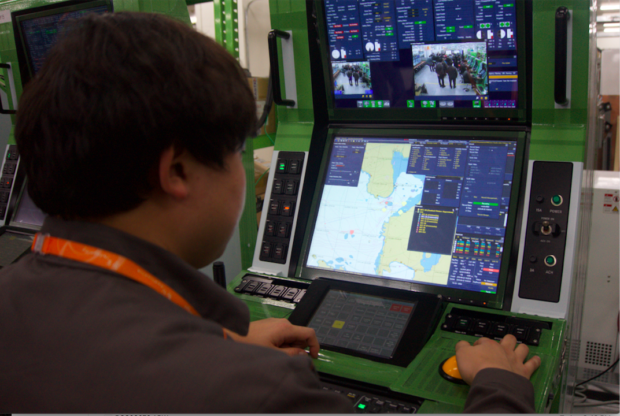
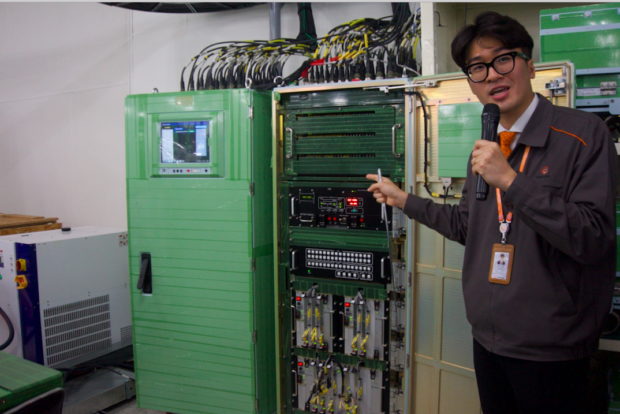
Manila-based reporters were given a chance to have a quick look at the integrated combat management systems’ test site for BRP Antonio Luna (FF-151). (Photo by FRANCES MANGOSING / INQUIRER.net)

GUMI, South Korea — Hanwha Systems, the chosen supplier of the combat management systems (CMS) for the Philippine Navy’s upcoming frigates, opened up its facilities to Philippine media recently.

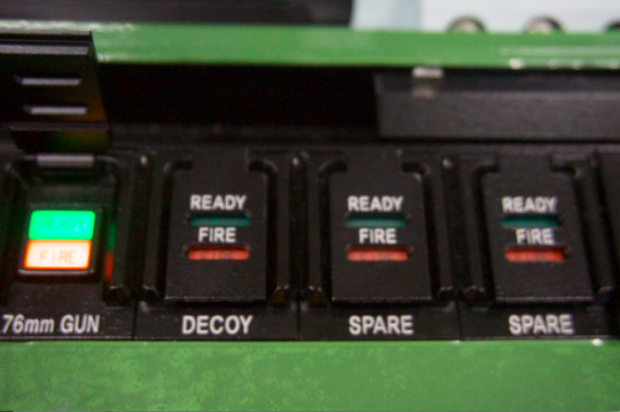
The CMS is considered the “brain” of warships, which integrates its weapons, communication and navigation, and sensors systems for naval combat.

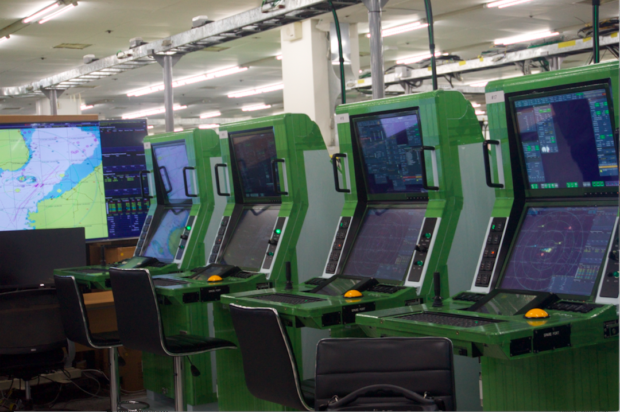
Manila-based reporters were given a chance to have a quick look at the integrated combat management systems’ test site for BRP Antonio Luna (FF-151), the second missile-capable frigate which formally started its construction this week.

The selection of the CMS for the first purposely-built missile-capable frigates of the Philippine Navy attracted public attention last year.

Then Navy chief Vice Adm. Ronald Joseph Mercado was unceremoniously relieved from his post in late December 2017 for insisting on Tacticos Thales as CMS, as the system has been branded as a proven technology and capable of data integration with other modern navies.

READ: Palace had special interest in Navy’s selection of weapons system supplier

Tacticos Thales is compatible with Tactical Data Link 16, a military data exchange network used by the navies of NATO, the United States, and other countries. Hanwha System’s Naval Shield compatibility with TDL 16 is still being developed.


The combat management system (CMS) is considered the “brains” of warships. (Photo by FRANCES MANGOSING / INQUIRER.net)

Shipbuilder Hyundai Heavy Industries recommended two brands of CMS for the Philippine ships — Tacticos Thales and Hanwha Systems. While it first offered Tacticos Thales to the Philippine Navy, it later switched to Naval Shield of Hanwha Systems.

Critics of the HHI contract accused MalacaƱang of intervening in the selection of the CMS, the software-intensive system flexible enough to operate in a complex naval battle environment, prompting the Senate and the House of Representatives to investigate into the matter.

At a Senate hearing last year, Navy chief Vice Adm. Robert Empedrad said Hanwha Systems committed itself to developing the TDL 16 compatibility by 2019. But it appears that this will have to wait until next year.

Hanwha Systems senior manager of overseas business support team Sam Soo Kim told reporters on Wednesday that their standard comprehensive testing for TDL 16 with the US had been delayed to late 2020 due to change of requirements in transmission by the Korean armed forces.


Shipbuilder Hyundai Heavy Industries first offered Tacticos Thales to the Philippine Navy, but it later switched to Naval Shield of Hanwha System. (Photo by FRANCES MANGOSING / INQUIRER.net)

According to Kim, it’s the US that conducts the final and official tests for the certification of TDL 16 compatibility.

But he said they had developed an exclusive tactical data link system called “Link P” for the two frigates of the Philippine Navy being built by HHI.

This can communicate with other similar tactical data link systems and has a 32-digit key code encryption to ensure data security.

“There is 32 digit key code for encrypting (‘Link P’) and we will give this freedom (to the PN) to change the key code. Normally the password has 10 digits. Hacking of this password takes millions of years. That’s the theory. Thirty-two digits is a very long password. Philippine Navy can randomly put in this system,” Kim said.

Empedrad said the TDL 16 compatibility for the Philippine frigates would require a different procurement activity for the government.

“TDL is not part of the contract. Wala naman nakalagay. It is provided with space but not (supplied) with. Pag binili yun, pwede agad isalpak,” he said.


Inside the integrated combat management systems’ test site for BRP Antonio Luna (FF-151). (Photo by FRANCES MANGOSING / INQUIRER.net)


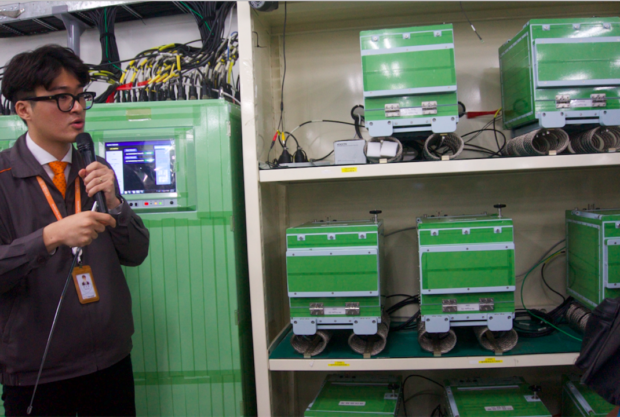
Hanwha Systems senior manager of overseas business support team Sam Soo Kim said they had developed an exclusive tactical data link system called “Link P” for the two frigates of the Philippine Navy being built by HHI. This can communicate with other similar tactical data link systems and has a 32-digit key code encryption to ensure data security. (Photo by FRANCES MANGOSING / INQUIRER.net)


“Normally the password has 10 digits. Hacking of this password takes millions of years. That’s the theory. Thirty-two digits is a very long password,” says Sam Soo Kim, Hanwha Systems senior manager of the overseas business support team. (Photo by FRANCES MANGOSING / INQUIRER.net)

https://newsinfo.inquirer.net/1123230/look-inside-the-cms-test-site-for-philippine-navy-frigates

Philippine Navy eyes acquisition of 25 to 30 warships in 10 years: report

From ABS-CBN (May 25, 2019): Philippine Navy eyes acquisition of 25 to 30 warships in 10 years: report


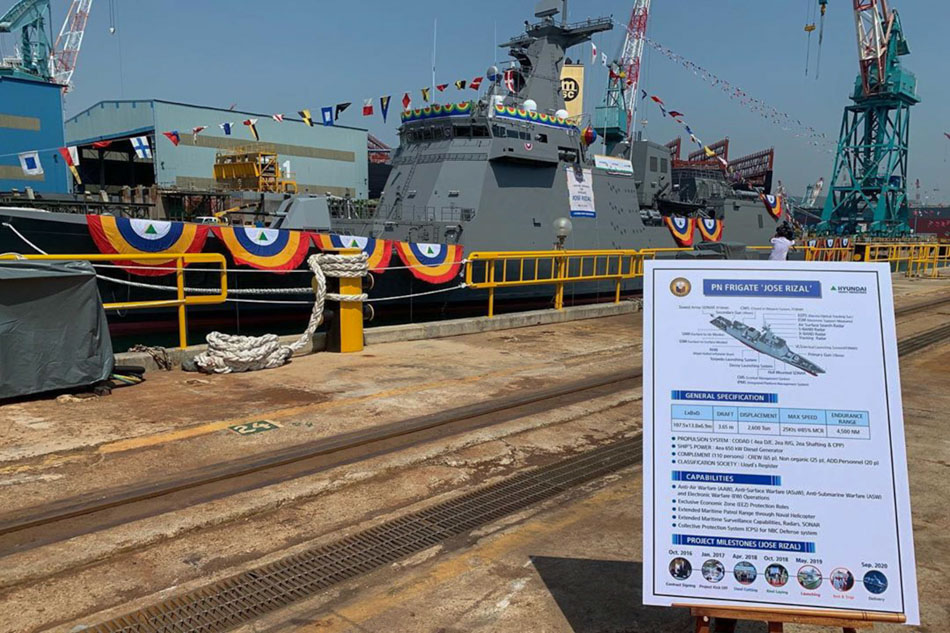
BRP Jose Rizal is the first combat ship designed and acquired for the Philippine Navy as part of the Frigate Acquisition Project, which started in May 2013, to modernize the Armed Forces of the Philippines. Jorge CariƱo, ABS-CBN News

MANILA—The Philippine Navy said it is set to acquire 25 to 30 warships in the next decade in a bid to strengthen maritime security.

Navy chief Vice Adm. Robert Empedrad on Thursday said the government plans to purchase offshore patrol vessels and submarines, according to a Philippine News Agency report posted Saturday.

"I think there is a need to beef up the Philippine Navy because we have vast maritime (territories) and we need to protect it," he told reporters in Ulsan city, South Korea.

Empedrad was in South Korea for the keel-laying ceremony for BRP Antonio Luna, the second missile frigate the country acquired after BRP Jose Rizal.

Isa sa pinakamodernong warship ng PH pinasinayaan

BRP Jose Rizal will be delivered in 2020, followed by BRP Antonio Luna in 2021.

Earlier this month, the Philippine Navy welcomed 2 new helicopters, which has the capability to "detect and destroy" submarines.

PH Navy's 2 new anti-submarine helicopters arrive in Manila

National Security Adviser Hermogenes Esperon Jr., meanwhile, said the Philippines will get a new imagery satellite in July as he stressed the need for new technology to protect the West Philippine Sea.

PH Navy ships equipped with ‘hard-to-hack’ system

From the Manila Times (May 26, 2019): PH Navy ships equipped with ‘hard-to-hack’ system

BUSAN, South Korea: The Hanwha Systems has developed a data link system for the two missile-armed frigates to be acquired by the Philippine Navy.

The tactical data link system that was exclusively installed for BRP Jose Rizal (FF-150) and BRP Antonio Luna (FF-151) is called “Link P,” according to Hanwha Systems overseas business support manager Samsoo Kim.


Hanwha Systems is a company in South Korea that has been developing products that can operate in future combat environment.

In an interview with reporters, Kim said Link P could communicate with other similar tactical data link systems.

The system also has a 32-digit key code encryption to ensure data security, he added.

Kim said hacking the password of the system “takes million years,” making it hard for cyberbandits.


“That’s the theory, 32 digits is a very long password. The Philippine Navy can randomly put in this system [the password],” Kim said.

The two frigates were fitted for but not supplied with Link 16, a military tactical data link used by the navies of countries belonging to the North Atlantic Treaty Organization.
Advertisements

But Hanwha Systems was able to install Link P, making the two Philippine warships communicate with similar data link systems.
Link P is being used by South Korea’s warships and submarines.

On Thursday, BRP Jose Rizal was formally launched in Ulsan, where Hyundai Heavy Industries’ (HHI) shipyard is located.

BRP Antonio Luna, meanwhile, had its keel laid.

Both events were attended by high-ranking HHI executives and top military and defense officials.

In October 2016, the Philippines and HHI signed a P16- billion contract for the two frigates with another P2 billion for its weapon systems and its munition.

Armed Forces chief Gen. Benjamin Madrigal Jr. and Philippine Navy chief Vice Admiral Robert Empedrad said the ships would be used for patrolling Philippine territories, especially the hotly contested South China Sea (West Philippine Sea).

Bulatlat: 800,000 rights abuses recorded in 2 years of Martial Law in Mindanao — rights group

Posted to the pro-Communist Party of the Philippines (CPP) online propaganda publication Bulatlat (May 25, 2019): 800,000 rights abuses recorded in 2 years of Martial Law in Mindanao — rights group


Groups stage Black Friday Protest on the second anniversary of martial law in Mindanao. (Photo by John Aaron Mark Macaraeg / Bulatlat)

Since May 23, 2017, when the entire island was placed under martial law, 93 activists have been killed while 136 have escaped death. More than 1,400 others were arrested and detained. Karapatan revealed there are 815,734 victims of civil and political rights violations.

By JOHN AARON MARK MACARAEG
Bulatlat.com

MANILA – With tubaw on his head and wearing a tribal vest, 43-year-old B’laan leader Kerlan Fanagel marched with fellow Lumad, rights activists and advocates toward the foot of Chino Roces (formerly Mendiola) bridge, May 24. They reiterated their call to end the martial law in Mindanao.

Fanagel, chairperson of Pasaka Confederation of Lumads, is one of those who have sought refuge in Metro Manila for quite some time now. Slapped with kidnapping and illegal detention charges, his face and name included in the military’s “Wanted” posters, Fanagel was forced to leave behind his wife and two children aged 17 and 15.


Lumad leader Kerlan Fanagel holds the Duterte administration accountable for human rights violations in Mindanao. (Photo by John Aaron Mark Macaraeg / Bulatlat)

“Until now I could not go home in Mindanao because the threat of being killed, the threat of being skinned alive remain. It is only just that we hold this administration accountable for all the injustices,” Fanagel said in Filipino.

His fears are not unsubstantiated. Since May 23, 2017, when the entire island was placed under martial law, 93 activists have been killed while 136 have escaped death. More than 1,400 others were arrested and detained, according to human rights alliance Karapatan.

Karapatan revealed there are 815,734 victims of civil and political rights violations since Martial Law took effect.


‘No substantial grounds’

The Duterte administration has not lifted the Proclamation 216, commonly known as Martial Law, in the entirety of Mindanao three years after the Marawi siege has ended.

The Philippine Constitution mandates that in order to proclaim Martial Law, there must be an actual rebellion occuring within the country. And since the military forces already declared “victory” against the rebel Maute Group, many have questioned if the it is truly and legally necessary.

Cristina Palabay, Karapatan secretary general said, “The Duterte government has perpetrated several myths about military rule and has intentionally propagated fear to justify the extension and passage of repressive policies.”

“Martial law did not bring about safety, but rather atrocities such as the Patikul massacre of of 7 youths in September 2018, the Jolo twin bombings, and corruption and abuses among ranks of security forces,” Palabay added.


Protesters light candles for the 93 killed in the past two years of martial law in Mindanao. (Photo by John Aaron Mark Macaraeg / Bulatlat)

For Anakpawis Rep. Ariel Casilao, Duterte “is more terrorist than Maute group” for the gross human rights violations perpetrated against thousands of civilians.

Impact on Lumad students

Among the most affected are the Lumad children.

According to Save Our Schools (SOS) Network, martial law had shut down 79 Lumad schools, affecting 2,728 teachers and students. Three Lumad students were killed by state forces and paramilitary groups.

Speaking at the protest action, Lumad student Rorelyn Mandacawan recalled how her cousin Obillo Bay-ao was killed and how soldiers fired their guns while they were holding their graduation rites in March 2017.

“We miss our home. We could no longer play with our schoolmates. We could not swim in the river,” Mandacawan said in Filipino.

Rius Valle, SOS Network spokesperson, lamented, “Instead of upholding the rights of Lumad people, the state forces in connivance with various government agencies and officials have been systematically attacking Lumad community schools.”

‘Martial law used to rig the midterm election’

The groups said the presence of state forces in Mindanao only brought intimidation instead of the promised security to the people of Mindanao.

“The red tagging and defamation of progressive personalities, organizations, and partylists instilled fear and a chilling effect among their members, constituents, and supporters,” Amirah Lidasan, a council member of Sandugo Movement of Moro and Indigenous Peoples for Self Determination said.

Rampant distribution of black propaganda materials against Makabayan partylists such as ACT Teachers, Anakpawis, Bayan Muna, Kabataan, and Gabriela Women’s Party was recorded.

“Even the presence of armed soldiers inside the polling precincts intimidated voters. How can they comfortably and freely vote when soldiers with high powered rifles are within sight?”Lidasan asked.

Despite the harassment and threats, the Makabayan bloc won six seats at the House of the Representatives.

Lidasan said, “The martial law and the repression only strengthened the people’s resolve to fight and struggle for a more peaceful nation.”

https://www.bulatlat.com/2019/05/25/800000-rights-abuses-recorded-in-2-years-of-martial-law-in-mindanao-rights-group/

OPAPP, AFP set rehab program for Maute surrenderees

From the Philippine Star (May 26, 2019): OPAPP, AFP set rehab program for Maute surrenderees


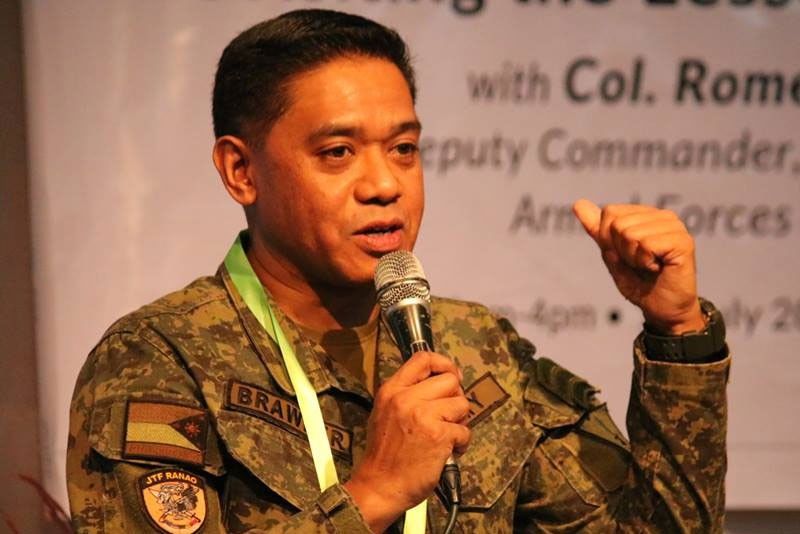
“We are looking at the Basilan model, wherein Abu Sayyaf members who surrendered were given proper interventions,” Col. Romeo Brawner, 103rd Infantry Brigade commander said.  PIA FB Page

MANILA, Philippines — The Office of the Presidential Adviser on the Peace Process (OPAPP) has partnered with the Armed Forces of the Philippines to rehabilitate former Maute militants.

Col. Romeo Brawner, 103rd Infantry Brigade commander, said the partnership aims to achieve a holistic approach in the healing process of those who were duped to join the Maute group.

“We are looking at the Basilan model, wherein Abu Sayyaf members who surrendered were given proper interventions,” he said.


Brawner said they would also tap reformed militants.

Presidential Adviser on the Peace Process Carlito Galvez said the OPAPP would help the military reduce the level of animosity between victims of the conflict and former militants.

“What we are looking at is the implementation of transitional justice and reconciliation,” Galvez said.

Galvez and other OPAPP personnel recently visited the Sarimanok evacuation center in Marawi to distribute relief goods to displaced residents. The activity is part of the annual program of the agency during the holy month of Ramadan.

Task Force Bangon Marawi chairman Eduardo del Rosario, Marawi Mayor Majul Gandamra, Galvez and Brawner also participated in a wreath-laying ceremony to commemorate the soldiers who helped liberate Marawi from Maute militants.

https://www.philstar.com/nation/2019/05/26/1920863/opapp-afp-set-rehab-program-maute-surrenderees

Former rebels among new Army privates

From the Manila Bulletin (May 25, 2019): Former rebels among new Army privates

MALAYBALAY CITY, Bukid­non — After months of rig­orous training, 275 candi­date soldiers graduated from the Army 4th Infantry Division Training School during a joint closing ceremony last Thursday in Malaybalay City, Bukidnon.


(PHOTO COURTESY OF 4TH INFANTRY DIAMOND DIVISION PHILIPPINE ARMY / FACEBOOK / MANILA BULLETIN)

The new privates graduated from two Candidate Soldier Courses.

Lt. Col. Jeff Villarosa, the training school commandant, said training began in the fourth quarter of last year and the Jungle Warfare Mountain Operation Course (JWMOC) began last April.

“The 4ID now have 275 trained, strong, brave, responsible and equipped soldiers ready to serve our people and secure our sovereignty,” Villarosa said.

He said 154 of the trainees are from the Manobo and Higaonon tribes, and 84 were former fighters of the communist New People’s Army (NPA).

One trainee, identified only as Mike, a 23-year-old Higaonon tribe member in Bukidnon, said, “I have always dreamt of becoming a soldier and be the one to protect my family, relatives and tribe in the mountains from the propaganda of the NPA terrorists.”

Rios, a vice commander in the NPA, thanked the government for giving him and other former rebels a chance to turn a new leaf. “I have never regretted my decision to return to the fold of the law and so, I call on to those who are still in the mountains, there’s a better life waiting for you here and the NPA will never be able to give you a peaceful life,” he said.

Also among the graduates were 38 former CAFGU militia members who for years have volunteered to protect their community.

Maj. Gen. Franco Nemesio M. Ga­cal, 4th ID commander, welcomed the new privates. “You are now officially soldiers, use the skills, knowledge and discipline which you have learned from DTS (division training school) to protect our fellow Filipinos. Let us uphold our honor, patriotism and duty to our beloved country,” Gacal said.

He also congratulated the 4DTS for a job well done in producing “world-class soldiers who have burning desires to fight for long-lasting peace in Mind­anao.”

154 IPs graduate as soldiers in Bukidnon

From the Sun Star-Cagayan de Oro (May 25, 2019): 154 IPs graduate as soldiers in Bukidnon

SOME 154 Indigenous Peoples (IPs) are now Army Privates after graduating from the 4th Division Training School (4DTS) in Malaybalay City, Bukidnon.

A total of 275 new Philippine Army Privates have graduated Thursday last week. Out of 275 new Privates, 154 are lumads, majority of them are from the Manobo and Higaonon tribes.


Meanwhile, 84 of the IP Privates are also former rebels.

Lieutenant Colonel Jeff Villarosa, Commander pf 4DTS, the soldiers entered the military training 4th quarter last year and started their Jungle Warfare Mountain Operation Course (JWMOC) in April 2019.
"The 4ID now have 275 trained, strong, brave, responsible and equipped soldiers ready to serve our people and secure our sovereignty," he said.

One of the graduates, Alyas Rios, is an alleged former Vice-Commander of the New People's Army (NPA).

Also among the graduates were 38 former CAFGU Active Auxiliary (CAA) members who, for years, have volunteered to protect their community.

Major General Franco Nemesio Gacal, Commander of the 4th Infantry Division (4ID), welcomed the new members of the Diamond Troopers.

"You are now officially soldiers, use the skills, knowledge and discipline which you have learned from DTS to protect our fellow Filipinos. Let us uphold our Honor, Patriotism and Duty to our beloved country," he said.

"I also congratulate the 4DTS to a job well done, let us continue to produce world-class soldiers who have burning desires to fight for long-lasting peace in Mindanao," Gacal added.

The 275 privates will be deployed to the different Infantry Units of the 4ID.

https://www.sunstar.com.ph/article/1807167

Troops overrun NPA camp in Mindoro

From the Manila Times (May 26, 2019): Troops overrun NPA camp in Mindoro

CAMP EFIGENIO Navarro, Calapan City: Troops of the 76th Infantry Battalion, 203rd Brigade and 405th Company, Regional Mobile Force Battalion of Mimaropa overran another New People’s Army (NPA) temporary encampment after an armed encounter in Sitio Pusog, Barangay Ligaya, Sablayan, Occidental Mindoro on Friday. 

Mimaropa is comprised of Mindoro, Marinduque, Romblon and Palawan. 

The troops launched the operation after they got a tip from residents that about 20 NPAs were extorting food and money in their community. 

Col. Marceliano Teofilo, 203rd brigade commander, said recovered from the rebels were one M16 rifle, three bandoleers, two cellular phones, four backpacks, one camouflage uniform, five improvised explosive devices, electrical wires, medical paraphernalia, food stuffs, personal belongings and documents with high intelligence value. 

While searching the area, troops discovered the abandoned temporary encampment, followed the rebels’ tracks and overtook them in another encampment where a five-minute fire broke out.

Council junks move to cite rebel group as persona non grata

From the Daily Guardian (May 25, 2019): Council junks move to cite rebel group as persona non grata


THE Sangguniang Panlungsod of Iloilo City refused to declare the Communist Party of the Philippines-New People’s Army (CPP-NPA) as persona non grata.

During their session on Friday, the SP junked the request of Police Colonel Martin Defensor, Iloilo City Police Office (ICPO) director, to declare the CPP-NPA “unwelcome persons” in the city.

According to Councilor Plaridel Nava, there are no reports of CPP-NPA presence in the city of Iloilo.

“Why would the City Council pass a resolution declaring the CPP-NPA as Persona Non-Grata particularly in Iloilo City. In fact, there are no reports that there are CPP-NPA in the city. There are also no incidents that would show that criminalities are actually committed by the CPP-NPA,” he said.


In a letter dated May 10, 2019, Defensor asked the help of Mayor Jose Espinosa III in their campaign against terrorism.

“Although our city was declared as a white area, meaning there is no internal security threat, there is persistent information that CPP-NPA uses the city as a rest and recreational area,” the letter said.

There are already some local government units (LGUs) in the area of Luzon, Visayas, and Mindanao that declared the CPP-NPA as persona non grata, according to Defensor.

“In this regard, we would like to solicit your support in our campaign against terrorism by requesting the city council to pass a resolution declaring the CPP-NPA as Persona-non-grata particularly in the city of Iloilo,” he said.


Nava said he couldn’t understand the motive of Defensor for asking such request.

“I don’t know which part of the law he is banking why he is asking for us to declare the CPP-NPA. The Congress would not even declare it as terrorists. I don’t know the motive of Defensor why he’s asking for that. On my part, as the floor leader I don’t want to recognize that,” he added.

The council merely noted Defensor’s letter.