Friday, May 19, 2023

AFP, PNP declare Bacolod as insurgency-free

From the Sun Star-Bacolod (May 20, 2023): AFP, PNP declare Bacolod as insurgency-free (By MERLINDA A. PEDROSA)


The officials of Regional Joint Peace and Security Coordinating Center (RJPSCC)-Western Visayas sign a resolution declaring Bacolod as insurgency free during its 2nd quarter meeting Friday, May 19, at the Bacolod City Government Center. (Merlinda Pedrosa photo)

BACOLOD City has been declared insurgency-free by the officials of the Regional Joint Peace and Security Coordinating Center (RJPSCC)-Western Visayas Friday, May 19, an official of the Philippine National Police (PNP)

Police Regional Office-6 officer-in-charge Brigadier General Archival Macala said the declaration was conducted during the 2nd quarter RJPSCC meeting held at the Bacolod City Government Center which was attended by the officials of the PNP, Armed Forces of the Philippines (AFP), Philippine Coast Guard (PCG) and the city government officials.

He said the officials signed a resolution declaring Bacolod as “insurgency free.”


“ It’s a collective involvement so that Western Visayas will remain peaceful and to ensure the safety of our constituents,” he added.

Macala noted that they also discussed the security preparation for the Barangay and Sangguniang Kabataan Elections in October.

“The election is fast approaching and we need to prepare so that here in Western Visayas, there will be no killings or casualties of the individuals who will run in the barangay elections,” Macala said.

In Negros Occidental, there’s no alarming situation including Bacolod City, he said.

Bacolod City Police Office (BCPO) acting director Colonel Noel Aliño said the insurgency problem was already resolved by the AFP and the PNP.

He said it’s the joint effort of the AFP, PNP as well as the PCG to end the communist insurgency.

“We will do our best to maintain an insurgency-free city and policemen were already deployed in various areas,” he added.

Aliño disclosed that the police will sustain the program of the PNP to ensure the safety of the public.*

https://www.sunstar.com.ph/article/1961783/bacolod/local-news/afp-pnp-declare-bacolod-as-insurgency-free

JTTM: Islamic State East Asia Province (ISEAP) Claims Attack Against Moro Islamic Liberation Front (MILF) Positions In Philippines

Posted to Jihad and Terrorism Threat Monitor (JTTM) Weekly (May 13-20, 2023): Islamic State East Asia Province (ISEAP) Claims Attack Against Moro Islamic Liberation Front (MILF) Positions In Philippines


On May 17, 2023, the Islamic State East Asia Province (ISEAP) claimed responsibility for a May 13 attack against Moro Islamic Liberation Front (MILF) positions with machine guns, in the village of Tuayan, in the area of Maguindanao, southern Philippines, causing MILF operatives to flee. Later, ISEAP fighters burned the positions and seized an RPG launcher.

[Subscription required to read full article]

https://www.memri.org/reports/jihad-and-terrorism-threat-monitor-jttm-weekly-may-13-20-2023

Isnairah 6 years after Marawi Siege: the “Little Mermaid” is now a “Superwoman”

 Posted to MindaNews (May 20, 2023): Isnairah 6 years after Marawi Siege: the “Little Mermaid” is now a “Superwoman” (By JULES L. BENITEZ)

MARAWI CITY (MindaNews / 19 May) — “Ayoko na sa kanya; break na kami (I do not want him in my life anymore; we have parted ways).”

With a pained laughter, this was her first reaction when asked to share her experience. She wanted to forget everything as recalling the experience brings back the horror, the pain, and the frustration. “I just want to move on,” Isnairah Cayongcat-Casan,48, said, as if she were talking about a failed romantic relationship.

But Isnairah’s story is not at all a love story. Hers is about an urban warfare

occurring in thickly populated Marawi (officially known as the Islamic City of Marawi) in Lanao del Sur, where she was caught in the crossfire.

Six years ago, on May 23, 2017, in what is now known as the Marawi Siege, Isnairah’s house in Basak Malutlut, a barangay within the city center of Marawi, was where the battle started. “The first government soldier who was killed in that siege was in my store on the ground floor of our house,” she said, as she slowly narrated her experience as if the event happened only recently.

Trapped at home

“It was about 2:00 in the afternoon when all of a sudden, the street leading to our neighborhood turned green,” Isnairah, a Meranaw, recalled the event as it unfolded before her eyes.

Speaking in Tagalog, Isnairah recalled that the “government soldiers filled the streets down to our block in a few minutes. One soldier who was positioned across the store was signaling me with hand gesture to pull down the roll-up closure of our store. I did not understand him at that time. I thought the military was just conducting a raid of a suspected drug den and the commotion will soon be over. Then the first shot was fired followed by several more. One soldier who was positioned in our store was hit and died there.”

Coming Back Stronger. Isnairah Cayongcat-Casan,48, did not waste time wallowing in misery after the 2017 Marawi Siege. She immediately re-established her convenience store within the first week that the evacuees of Barangay Basak Malutlut were allowed back to their homes in October 2013. MindaNews photo by JULES L. BENITEZ taken on May 4, 2023.

At this point, Isnairah lost the chance to close her store. She, her son, and her nephew hid themselves in the bathroom, leaving the entire house open. She thought the bathroom was the safest place in their three-story house as it was located on the ground floor. They would stay there until the firefight is over, she thought. But the fighting did not stop. “Lahat ng klase ng putok ay narinig na namin (We heard all kinds of gunshots.),” the mother of four children said.

It took hours before the shooting subsdided but Isnairah and the two children remained holed up in the bathroom. They could hear the soldiers talking, running up and down their house, and eating the food in the store. The three of them were hungry and thirsty. The children will not drink the stored water in the bathroom because they knew there were mosquito larvae in it. Isnairah filtered the water with her hijab (head scarf), collected it in the tabo (dipper), and drank from it. It was past dinner time and they had been trapped in the bathroom for five hours. Still, they did not dare make a sound, much less go out.

Sniper in the Bedroom

Close to midnight, the two children were chilling from the Marawi cold weather. They asked Isnairah if they could go to the second floor to get their jackets. By then, the house was quiet. Seemingly, the soldiers had moved out. Isnairah was not sure if it was safe to get out of their hiding place. So she asked the children to stay hidden while she ventured upstairs.

On her final ascend, she saw a lone soldier and she gasped and froze on the stairs.

The soldier sensed her presence and immediately pointed his long firearm towards her. “Huwag kang gumalaw! (Don’t move!),” the soldier ordered.

“Sino ka? (Who are you?),” the soldier demanded an answer.

Isnairah nervously but slowly explained that she is the owner of the house and was trapped by the firefight.

“Sino kasama mo? (Who are with you?), was the next question.

“Ang anak ko po at pamangkin, (My son and my nephew.),” Isnairah answered as politely as possible.

The soldier, without lowering his firearm pointed at Isnairah, asked her to call the children. She obeyed, and cautiously called on the two children to come upstairs and not to be afraid. When the two children came up, she immediately embraced them close to her bosom, shielding their sight from the soldier. In her mind, she did not want the children to panic. She thought that if the soldier would kill them, at the very least they will die together in her arms.

Isnairah kept praying until she saw the soldier lower his firearms.

She them asked if she can get the jacket from the closet, and if they can go back to the bathroom. The soldier said yes.

Isnairah and the two children were not allowed to leave the house util 2:00 in the afternoon, the next day. By that time, the running gunbattle had moved from Barangay Malutlut to the town center or what would be referred to as ‘Ground Zero,’ the main battle area between government forces and the armed groups. (After Marawi’s liberation, this area would be known as “Most Affected Area.”)

After they were allowed to leave the house, they went to the house of her mother, where she was reunited with her three other children, whom her mother rescued from the school the previous day. Together they sought refuge at their relatives’ house in Iligan City in Lanao del Norte, the nearest urban center from Marawi.

Terrorist in her neighborhood

Through the news and social media, Isnairah came to know that the armed firefight in her neighborhood was not an assault on a drug den, but a massive raid on the suspected hideout of the leader of Abu Sayyaf Group (ASG), Isnilon Hapilon.

Hapilon, according to the Armed Forces of the Philippines (AFP), was listed as among the world’s most wanted terrorist by the US State Department with a reward of up to US$5 million for his capture. He was reported to have pledged allegiance to the Islamic State of Iraq and Syria (ISIS). Published news reports in the Philippines quoted military sources as saying that Hapilon was chosen as the Emir to lead the ISIS in Southeast Asia.

The ASG was established in 1991 and operated in the island provinces of Basilan and Sulu, western part of Mindanao. The US State Department designated it as a foreign terrorist organization in 1997.

The raid against Hapilon’s hideout eventually led to a full-scale battle, as another local proscribed terror organization, the Maute Group, also known as Dawlah Islamiya (Islamic State), reinforced the embattled ASG. Within hours, the armed supporters of the Maute Group, led by Omar Maute, occupied several government and private buildings, mosques and villages in the town center, akin to an all-out siege of the city.

The Marawi Siege lasted for five months, leaving 1,200 dead, 47 of whom were civilians. Amnesty International reported nearly 360,000 displaced people at the height of the armed conflict.

The Task Force Bangon Marawi, on the other hand, estimated the damage to properties at PhP 11 billion and economic opportunity losses at P6.6 billion. It estimated the rehabilitation cost at Php 75 to 80 billion. As of the end of 2022, the task force reported 85% completion of the rehabilitation of government buildings and properties.

The Philippine Center for Investigative Journalism reported that by the end of 2022, out of the 17,793 households in the “most affected areas” only 100, or less than one percent of the displaced residents have returned.

Hapilon, along with Omar Maute, was killed in the firefight against government forces on October 16, 2017. Their death paved the way for the eventual end of the Marawi Siege.

“I did not know that Hapilon was our neighbor, hiding just few meters from our house,” Isnairah said.

Moving On, Rising

Her mother used to call Isnairah “sirena” (mermaid) because she was laggard, always lying down, and often given to anxiety attacks. “Sometimes, I find myself crawling on my way to the bathroom because I feel like falling down when anxiety strikes,” Isnairah said, describing her condition prior to the Marawi Siege.

“I do not know how, but my ordeal during the siege made me stronger,” said this Meranaw woman who is a holder of a bachelor’s degree in radiologic technology.

Isnairah was married off to her uncle at the age of 22, but with her degree, she worked in the Kingdom of Saudi Arabia for eight years before deciding to return home to take care of her children. Her mother, a public school teacher, raised her and her siblings through sheer hard work and the Meranaw concept of social obligation. It is with these values that she faced the challenges of recovering and re-building their lives after the siege.

Like many of her fellow siege survivors, rebuilding was not easy for this business woman. Her store was totally destroyed and her cash capital gone. But she is not one who would complain. With loan from a wholesaler in Iligan City, she re-opened her store in the first few days that the government allowed them to go back to their barangay.

“Left and right, in front of me and at the back, our (survivors) situation was the same,” Isnairah said. “So, who am I to complain?” she added.

Her husband, who was working abroad at the time of the siege, wanted to immediately come home to attend to the family. Isnairah prevailed upon him not to do so because they needed his income to rebuild what they have lost.

Anticipating the most basic commodity that families who were returning to the barangay will be needing, she opened her store selling “kandila (candle), posporo (matches), katol (mosquito repellant), and cellphone load.”

She said: “Hindi pwedeng umasa na lamang sa DSWD at LGU. Paano kung wala na silang maibibigay? (We should not just depend on the Department of Social Welfare and Development or the Local Government Unit for our recovery. What if they run out of relief goods to give to us?)

“Lakas ng loob ang kailangan; Bumangon ka, (Courage is what we need. Let us rise and rebuild our lives),” Isnairah said.

Six years after her Marawi Siege ordeal, Isnairah has been able to repair her house and re-establish her store. “I have learned to focus on the essentials and the important things, and not on whims and wants,” she said.

Resilient Women. Women of Barangay Basak Malutlut in Marawi City organized themselves into an association to help their community recover from the Marawi Siege. Photo taken on May 5, 2023 as Isnairah Cayongcat-Casan and other women leaders of the village discussed how to democratize the gender and development focal system of their barangay. MindaNews photo by JULES L. BENITEZ

On top of her own business, Isnairah is helping other women survivors of her village get back on their feet and bearing. They organized the Basak Malutlut Women’s Association and trained women on conflict resolution and livelihood development through the Women Engaged in Responsive Solutions to Conflicts and Violence in Mindanao (WE RESOLVE) project. Recently, the women’s association launched its food catering business. The peacebuilding project is funded by the German Federal Foreign Office (GFFO) and implemented by Relief International and the Balay Mindanaw Foundation in 40 barangays in Lanao del Sur and Maguindanao.

Smiling at the end of the retelling of her ordeal, the woman survivor of Marawi Siege said, “Hindi na ako isang sirena, ako si Superwoman (I am no longer a helpless little mermaid; I am Superwoman.” (Jules Benitez / MindaNews)

https://www.mindanews.com/top-stories/2023/05/isnairah-6-years-after-marawi-siege-the-little-mermaid-is-now-a-superwoman/

Philippines: China Closes

Posted to the Strategy Page (May 19, 2023): Philippines: China Closes In

May 19, 2023: The Philippines major organized threat is now external, in the form of Chinese claims on many small Filipino islands and large areas of the South China Sea that have long been under Filipino control and recognized as Filipino by treaty and reaffirmed by a 2016 international court ruling against recent Chinese claims. The Philippines is not alone because China claims to control most of the South China Sea.

The South China Sea is one of those ocean areas close to land that are called a “sea” because it is a distinct area. The South China Sea is actually part of the Western Pacific Ocean. The northern boundary is South China while the western boundary is the Indochinese Peninsula. The eastern boundary consists of Taiwan and northwestern Philippines (the islands of Luzon, Mindoro and Palawan). The southern boundary is Borneo, eastern Sumatra and the Bangka Belitung Islands. The Gulf of Thailand and the Gulf of Tonkin are also part of South China Sea.

This South China Sea covers an area of around 3,500,000 square kilometers (1,400,000 square miles). That’s about a third the size of China or the United States. The South China Sea has distinct outlets to the rest of the world. The principles ones are Taiwan Strait to the East China sea, the Luzon Strait to the Philippine Sea and the Strait of Malacca to the Indian Ocean. In the last half- century, the South China Sea has become a throughfare for most of the international commerce between the booming East Asian economies of China, South Korea and Japan and the Middle East and Europe via the Suez Canal. This is why China wants to control the South China Sea.

Filipino claims are not the only ones China has to deal with before they can actually claim and exercise control over the South China Sea. The Filipino opposition was considered the easiest to brush aside but that plan failed when the Philippines fell back on its mutual defense treaty with the United States and the Americans agreed to cooperate, even though Chinese forces were not actually attacking any of the main Filipino islands and population centers. The Philippines finds itself part of a growing anti-China coalition dedicated to preventing China from exercising control over the South China Sea. This coalition now includes South Korea, Japan, Taiwan, Indonesia and Vietnam as well as the United States, Australia and several NATO nations with navies and lots of trade passing through the South China Sea. To China this coalition is seen as an obstacle, not a defeat.

Domestic Disturbances

During the last year the decline in rebel (communist and Islamic) continued. These groups no longer make the headlines because there are only about a hundred of these rebels still active and their main activity is avoiding detection by the army and police. During the last two years t he NPA (New People’s Army) rapidly fell apart after several senior leaders killed or captured some of them with over fifty years’ NPA experience. Many were found because of tips from local civilians. Most of the political violence in the Philippines since World War II has come from communists, who were present but not very active before World War II. The communists became a major part of the armed opposition fighting the brutal 1942-45 Japanese occupation. After independence in 1946 leftist rebels continued fighting, trying to establish a communist dictatorship. That proved difficult to do. A major reorganization took place in the 1960s, resulting in the creation of the NPA in 1969. The new communist rebel organization adopted the Chinese “Maoist” long term strategy. That was not very successful despite lots of economic and social problems they could promise to fix if they were in charge. Enthusiasm for a "communist solution" went sharply downhill after the collapse of the Soviet Union and its East European communist allies between 1989 and 1991. That massive failure of communist states left the NPA much weaker ideologically and vulnerable to subsequent amnesty programs. A decade ago, NPA leaders admitted that they had only a small fraction of their peak (in the 1980s) strength of 26,000 armed members. There were some serious attempts to reverse the decline in popularity. NPA gunmen were instructed to behave better around civilians and the NPA were found giving some civilians, especially health or aid workers, cash compensation of a few hundred dollars each for wounds received during NPA attacks on soldiers or police. The government increased its efforts to provide medical care for such victims of NPA violence, the NPA tried to compete and found they couldn’t afford it. Many NPA members arrested recently were wanted for banditry and similar crimes.

Information on the location of NPA camps, weapons storage sites or covert supporters is now regularly obtained from local civilians or NPA members that surrendered. Because of that more NPA camps are being attacked, weapons storage sites seized and key supporters arrested or killed, even in traditional strongholds like Bukidnon and Negros Occidental provinces.

Philippine Islamic terrorist activity, mainly in the Moslem south, is rapidly disappearing. The autonomous Moslem regional government plays a role in that, encouraging Moslems to resist, not aid the remaining Islamic terror groups. The government offers amnesty to those who surrender and are not accused of serious crimes like murder or kidnapping. This has played a major role in reducing the number of Islamic terrorists still active to about fifty. Since the autonomous Moslem Bangasamoro area was created in 2014, diehard separatist groups like BIFF, ISIL (Islamic State in Iraq and the Levant) and Abu Sayyaf were treated as outlaws in Bangasamoro and continually lost support and members since 2014, but are still around though not nearly as actively as they were before 2014. Bangasamoro security forces cooperate with the army to find and shut down these outlaw groups. Since 2014 this joint effort has largely eliminated Abu Sayyaf, BIFF (Bangsamoro Islamic Freedom Fighters) rebels and several smaller Islamic terrorist groups. These groups have not disappeared, but have become much less active because of declining membership. With only a few dozen member left there are not enough to form active groups for carrying out attacks or kidnapping for ransom.

May 16, 2023: Near the northern border of the South China Sea (off Okinawa) a Chinese carrier task force carried out a live fire exercise employing a destroyers and frigate that were part of the carrier escort group. China has two operational aircraft carriers with a third on the way.

May 14, 2023: In the south (Surigao del Sur province) three NPA gunmen died when they encountered an army patrol and opened fire. There has been less NPA activity in the province during the last year. There aren’t many NPA members left in the province and they avoid encounters with the army. For over a year now the NPA tactics in the province concentrate on non-violent activities that restrict attacks to politicians seen as corrupt. In several cases armed NPA men raided homes of candidates and stole weapons. The homes raided are those of candidates that refused demands for extortion. This less-violent (than usual) NPA effort to influence the 2022 May elections. These NPA tactics are a result of declining membership and increasingly effective efforts by the military to defeat NPA violence. The NPA is trying to rebuild support in rural areas and reduce the number of tips sent via cell phones to security forces reporting NPA activity.

May 13, 2023: In order to make it clear to China and anyone else traveling through Filipino portions of the South China Sea, the Philippines is placing navigational buoys within its EEZ (Exclusive Economic Zone), starting with five buoys, each featuring a Filipino flag, in areas around the Spratly Islands.

May 9, 2023: At Clark Air Base Filipino and U.S. Air Force personnel underwent joint training for the 9th day. These exercises will continue for three more days. Another round of this training will take place in July.

May 8, 2023: The navy put two more Israeli-made FAIC (F ast-Attack Interdiction Craft) offshore patrol boats into service.

May 3, 2023: In the south (Negros Occidental province) soldiers sought to arrest a famer suspected of being an NPA member. The farmer was armed and fired on the soldiers before he was shot dead. Two soldiers and a civilian bystander were wounded. Several hundred other civilians temporarily left their homes until the fighting was over. Negros Occidental used to have several active NPA groups but losses to the army and declining popular support for the communist group have reduced NPA member ship to a few armed individuals who are holding out for a return of the group to active operations. Nationwide there are believed to be only two active NPA armed groups still active. Another twenty formerly active NPA groups are dormant, each with only a few individual members still armed but not active. NPA has lost popular support and, like communism in general, is seen as a failed cause.

https://www.strategypage.com/qnd/phillip/articles/20230519.aspx

NPA finance officer surrenders to authorities in OccMi

Posted to Maharlika TV (May 20, 2023): NPA finance officer surrenders to authorities in OccMi


A Scout Ranger soldier tries the power of an M16 rifle at a shooting range

MANILA — An individual associated with the New People’s Army (NPA) turned himself in along with a firearm in Magsaysay, Occidental Mindoro, on Wednesday, May 17, 2023.

The voluntary surrender of the person known by the aliases Paul/Andro/Crispin/Nanding was facilitated by the 203rd Infantry “Bantay Kapayapaan” Brigade and the Occidental Mindoro Philippine National Police (PNP).

They handed over an M16 Rifle, accompanied by a long magazine containing 23 rounds of ammunition, in Barangay Poblacion, Magsaysay, Occidental Mindoro.

Alias Paul allegedly held the position of finance officer within the Sub-Regional Military Area 4D of the Southern Tagalog Regional Party Committee.


“We are dedicated to continuing our peace initiatives alongside our partner stakeholders to put an end to insurgency in Occidental Mindoro. We encourage the remaining NPA rebels to emulate their former comrades and relinquish their weapons, as the government stands ready to provide the necessary support for them to start anew and rebuild their lives with their families,” stated Major General Roberto S. Capulong, the Commander of the 2nd Infantry “Jungle Fighter” Division.

https://maharlika.tv/2023/05/20/npa-finance-officer-surrenders-to-authorities-in-occmin/

Philippine army head sees China threat ‘every day in South China Sea’

From Breaking Defense (May 19, 2023): Philippine army head sees China threat ‘every day in South China Sea’ (By COLIN CLARK)

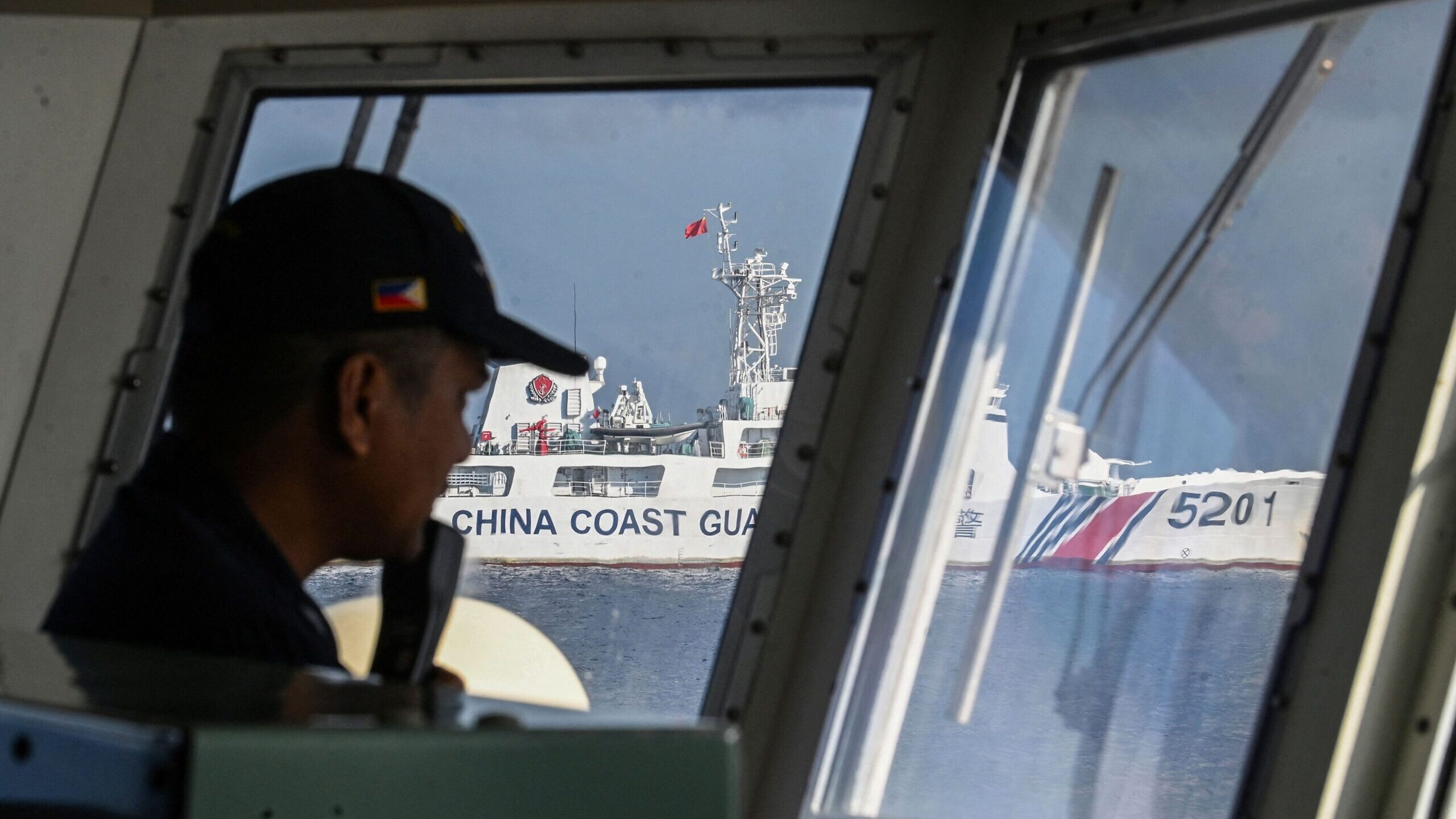
"Whenever we fly in our own territorial waters, we are challenged by the Chinese, challenged because they say we are in their territory, when in fact it is our territory," Lt. Gen. Romeo Browner, commanding general of the Philippine Army said.


This photo taken on April 23, 2023 shows a member of the Philippine coast guard vessel BRP Malabrigo manning his post while being shadowed by a Chinese coast guard ship at Second Thomas Shoal in the Spratly Islands in the disputed South China Sea. (Photo by TED ALJIBE/AFP via Getty Images)

LANPAC 2023 — While China was not officially a topic during the three-day conference in Honolulu on “emerging changes to warfare,” the people’s republic cast a very long shado.

“The Philippines is facing the threat every day in South China Sea. The threat is real for us, because every day our fishermen are pushed away from our Exclusive Economic Zone,” Lt. Gen. Romeo Browner, commanding general of the Philippine Army, told several hundred attendees. “Whenever we fly in our own territorial waters, we are challenged by the Chinese, challenged because they say we are in their territory, when in fact it is our territory.”

A key asset for the relatively small, if all too experienced, Philippine military in such cases to respond is the ability to use multilateral exercises for strategic messaging. The first two audiences for such displays are the Philippines’ own troops and then the broader community, whose support they need.

“The third audience,” Browner said, “would be, of course, the enemy. We are giving them the impression that we are united together as nations and, if push comes to shove, then we are ready. We are ready to fight them together.”

RELATED: US-Philippines discuss ‘roadmap’ for weapon buys, including potential multi-role fighter sale

That idea, messaging to adversaries that any fight would include a wide range of allies and partners, has been a theme for US officials of late, both from a strategic and tactical perspective. On the tactical side, Breaking Defense asked the head of Army Futures Command, Gen James Raimey, what two systems were most needed to improve Indo-Pacific deterrence.

“Since you asked me, the command and control system, right? We need to get going faster. Interoperability is great, but we need to be integrated. We need to be able to move information so we can take full advantage of the coalition partners and the joint force. And we’ll figure that out,” he said, emphasizing that his response was his opinion and not official Army position. “We are getting better at that but we couldn’t do it right now. But the unrealized potential of algorithmic warfare and leveraging technology at the speed of combat is probably the clear number one, and number two would be a tie between protection and sustainment.”

The protection element is not, Raimey said, “all about kinetics. It’s about deception. It’s about small groups who have the advantage of land-based fires, as it’s easier to move and hide than it is is in other domains.”

The sustainment and logistics issues were a regular topic of conversation throughout LANPAC, which seems natural given the vast distances of the Indo-Pacific.

The US Army’s aviation side just wrapped up an exercise explicitly designed to test data sharing with allies on the future battlefield. And during the next Talisman Saber exercise — the largest ever, held on its tenth anniversary — a key part of the exercise will be a new “joint logistics command,” Gen. Charles Flynn, head of US Army Pacific, said Tuesday. He said it will be the first one deployed and it will be used to test “new and innovative ways to sustain the joint force across the vast distances of the Pacific.”

The exercise, to be held in July and August, will boast almost double the number of troops involved in 2021, with approximately 30,000 military personnel. Fiji, Indonesia, Japan, South Korea, New Zealand, Papua New Guinea, Tonga, France, United Kingdom, Canada and Germany and, of course, the United States, will take part. The Philippines, Singapore and Thailand plan to attend as observers.

https://breakingdefense.com/2023/05/philippine-army-head-sees-china-threat-every-day-in-south-china-sea/

Protection for kin of victims, suspects in NegOr killings vowed

From the Philippine News Agency (May 19, 2023): Protection for kin of victims, suspects in NegOr killings vowed (By Mary Judaline Partlow)


COMMAND TURNOVER. Maj. Gen. Marion Sison (center), 3rd Infantry Division commander, leads the turnover of command ceremony of the 11th Infantry Battalion on Thursday (May 18, 2023) in Siaton, Negros Oriental. Lt. Col. Michael Aquino (right) is named acting battalion commanding officer, replacing Lt. Col. Roderick Salayo, who has served in the unit for two years. (Photo by Judy Flores Partlow)

DUMAGUETE CITY – The commanding general of the Philippine Army’s 3rd Infantry Division (3ID) has vowed protection not just for victims and families of atrocities but for next-of-kin of suspected assailants in the Degamo assassination and other Negros Oriental killings.

Major Gen. Marion Sison, 3ID commander, gave the reassurance on Thursday afternoon during the turnover of command of the Army’s 11th Infantry Battalion at its headquarters in Barangay Salag, Siaton town in Negros Oriental.

Sison said this is part of the continued efforts of the military and police to regain the trust and confidence of the people and restore peace and order in the province, which was shaken following the March 4 assassination of Governor Roel Degamo and nine others.

“We will not abandon Negros Oriental, especially now that we have a very challenging task ahead. We will continue with our operations, checkpoints, and the security of victims as well as the families of the assailants until such time that the situation here in the province normalizes,” Sison said.

Sison heads the Joint Task Force Negros, comprising the Armed Forces of the Philippines and the Philippine National Police, which was created soon after the Pamplona massacre.


Following their surrender, some suspects in the Pamplona massacre had appealed to the military and the police for the safety of their families as they vowed to cooperate in the investigation.

Some families have already been secured by law enforcement agencies.

Sison reiterated that they would protect both the families of victims and suspects caught in the middle of the conflict.

Sison’s statement also comes as the Senate Committee on Public Order and Dangerous Drugs has wrapped up its inquiry into the brazen attack against the late governor at his Pamplona residence where he was distributing government aid to beneficiaries.

The Senate hearings also looked into many other killings in Negros Oriental in previous years that are still unsolved to this day.

Meanwhile, the Army general presided over the turnover of command of the 11th IB from outgoing commanding officer, Lt. Col. Roderick Salayo, to his successor, Lt. Col. Michael Aquino.

Sison commended Salayo for the battalion's accomplishments during his two-year stint, noting among other things the surrender of Communist insurgents who have already been reintegrated into mainstream society and are enjoying the benefits of the government's Enhanced Comprehensive Local Integration Program.

On the other hand, he challenged Aquino to continue the gains of his predecessor in running after the remaining New People’s Army rebels, especially in the dismantled Southeast Front operating in southern Negros.

https://www.pna.gov.ph/articles/1201811

PBBM inks law amending AFP officers' fixed term

From the Philippine News Agency (May 18, 2023): PBBM inks law amending AFP officers' fixed term (By Ruth Abbey Gita-Carlos)


NEW AFP OFFICIALS. Senators greet the newly promoted officers of the Armed Forces of the Philippines. The Commission on Appointments confirmed the ad interim appointments of 49 generals and colonels on Wednesday (May 17, 2023). (PNA photo by Avito Dalan)

MANILA – President Ferdinand R. Marcos Jr. has signed Republic Act (RA) 11939 amending RA 11709 which prescribes fixed terms for the key officials of the Armed Forces of the Philippines (AFP).

RA 11939, signed by Marcos on May 17, particularly amends Sections 2, 6, 9, 10, and 15 of RA 11709, in a bid to strengthen professionalism and promote the continuity of policies and modernization initiatives in the AFP.

Under RA 11939, the AFP chief of staff will have a maximum tour of duty for three consecutive years, while the service commanders of the Philippine Army (PA), Philippine Air Force (PAF), Philippine Navy (PN), and the Philippine Military Academy (PMA) will have a two-year term of office "unless sooner terminated by the President."

The new law removes the vice chief of staff, the deputy chief of staff, unified command commanders, and the inspector general from the roster of officials with a fixed term of three years.

The PA, PAF, PN, and PMA chiefs are ineligible for any position in the AFP unless promoted to the position of chief of staff.

To be eligible for appointment or promotion to the grade of brigadier general, commodore or higher rank, the military officers must have at least a year remaining active service before compulsory retirement.

RA 11939 states that the AFP chief of staff and heads of PA, PAF, PN, and PMA will compulsory retire upon completion of a tour of duty or upon relief by the President.


The second lieutenant or ensign, lieutenant general or vice general and any enlisted personnel will reach the mandatory retirement at the age of 57 or upon accumulation of 30 years of satisfactory active duty.

Those commissioned under Presidential Decree 1908 and appointed in the Corps of Professors will retire upon reaching the age of 60 years old or upon accumulation of 20 years of satisfactory active duty.

RA 11939 also provides that the maximum tenure of military officers with the rank of brigadier general or commodore will increase from three to five years, while those who are holding the rank of colonel or captain will now have a maximum tenure of 10 years from the current eight years.

"The President may lengthen the tenure-in-grade of officers in the permanent grades of captain, major, and lieutenant colonel, or their equivalent, up to two promotional cycles when necessary, to maintain the desirable officer rank structure and uphold the progressive professional development of the officer corps," the law read.

The new law also modifies the officer grade distribution, adjusting the number of officers for general or flag officers to 1.25 percent from the current one percent, and for officers in the grades of first lieutenant junior grade and second lieutenant or ensign to 42.75 percent from the current 43 percent.

RA 11939 applies to the officers, enlisted personnel, and those promoted under RA 11709 and other pertinent laws.

The Department of National Defense is instructed to formulate the rules and regulations necessary to implement the provisions of RA 11939 within 30 days from its effectivity.

RA 11939 also repeals Sections 3 and 11 of RA 11709.

The new law takes effect 15 days after its publication in the Official Gazette or a newspaper of general circulation.

Meanwhile, the Armed Forces of the Philippines(AFP) on Thursday said it welcomes Marcos' signing of the amendments to Republic Act 11939.

"The AFP welcomes President Ferdinand Marcos Jr's approval of RA 11939, which provides the much-needed amendments to RA 11709," AFP spokesperson Col. Medel Aguilar said in a statement.

He also stressed that these amendments will further professionalize the military.

"We believe that the changes will further strengthen professionalism in the military and ensure the continuity of programs while maintaining the AFP's dynamic and progressive promotion system," he said.

https://www.pna.gov.ph/articles/1201738

PNP chief hails SAF on 40th year, highlights civilian rights

From the Philippine News Agency (May 18, 2023): PNP chief hails SAF on 40th year, highlights civilian rights (By Christopher Lloyd Caliwan)


SAF ANNIVERSARY. Philippine National Police chief, Gen. Benjamin Acorda Jr., extols the Special Action Force (SAF) for their bravery and heroism as the service celebrated its 40th anniversary on Wednesday (May 17, 2023). In his speech, Acorda also emphasized the importance of complying with the principles of International Humanitarian Law during armed conflicts. (Photo courtesy of PNP)

MANILA – The Philippine National Police Special Action Force (PNP-SAF) celebrated its 40th founding anniversary on Wednesday at the NCRPO Grandstand, Camp Bagong Diwa, Bicutan,6 Taguig City.

PNP chief Gen. Benjamin Acorda Jr., the guest of honor and speaker, highlighted the SAF's commitment to upholding the highest standards of service and staying true to its mandate in protecting the nation against terrorism, lawlessness, and insurgency.

“The SAF is the police force's elite unit, in charge of counter-terrorism, high-risk law enforcement, and special operations. It is a challenging task that demands extraordinary courage, skill, and dedication from each SAF member. And over the years, SAF has proven to be a highly effective and efficient force in carrying out its mission. Indeed, SAF has grown to become one of the most respected and admired special force units not only in the Philippines but also around the world," Acorda said.


"By skills and virtue, we triumph, encapsulating the values and principles that guide SAF members as they fulfill their sacred mandate," he added.

Acorda also acknowledged the exceptional courage, skill, and dedication exhibited by SAF personnel, honed through years of training and experience, which he said enabled them to triumph over the most challenging situations.

Acorda emphasized the importance of complying with the principles of International Humanitarian Law during armed conflicts.

“As law enforcement officers, we have a duty to respect and protect human rights, even in the most challenging and dangerous situations. This means ensuring that the rights of civilians are protected at all times, and that all actions are carried out in accordance with the principles of necessity, proportionality and distinction, among others. As members of SAF, it is our duty to ensure that our actions do not cause unnecessary harm to innocent civilians," he added.

PNP spokesperson Brig.Gen. Redrico Maranan, in a statement Thursday, said this year's celebration, "40 Years of Excellence and Professionalism in Serving God, Country, and People," aptly acknowledges the SAF's significant milestones and achievements since its inception.

Former SAF directors, high-ranking officials from the police and military services, government officials, and other distinguished guests attended the celebration.

https://www.pna.gov.ph/articles/1201743

Australia to help boost PH maritime security; provide drones

From the Philippine News Agency (May 18, 2023): Australia to help boost PH maritime security; provide drones (By Joyce Ann L. Rocamora)


VISITING OFFICIAL. Australian Foreign Minister Penny Wong holds a joint press conference with Foreign Affairs Secretary Enrique Manalo in Makati City on Thursday (May 18, 2023). The presser was held following their bilateral meeting. (PNA photo by Avito Dalan)

MANILA – Australia is open to providing drones, skills training, and other technology to improve the Philippines' maritime domain awareness activities in its waters, Australian Foreign Minister Penny Wong said Thursday.

Wong made the statement as she announced a package of maritime cooperation initiatives between the two states during her bilateral meeting with Foreign Affairs Secretary Enrique Manalo in Makati City.

“We discussed today ways in which we will enhance our cooperation (and) this includes Australia providing drone equipment, training and other technology to strengthen your Coast Guard in maritime domain awareness and protection capabilities,” she said in a press conference.

Wong said Canberra regards Manila as a long-standing “important security partner” in the region and is committed to elevating its bilateral relationship to “strategic partnership”.


Apart from technical assistance, Australia also opened its doors to possible trilateral partnerships with the Philippines and other like-minded nations for joint patrols against the backdrop of changing security environment in the South China Sea.

Wong said both the Department of Foreign Affairs (DFA) and the Australian Foreign Ministry are discussing the “best pathway to take this forward”.

“We are committed to continuing Australia's long-standing presence in the region including in the West Philippine Sea, the South China Sea (and) we are open to cooperating with all our partners to exercise freedom of navigation and overflight,” she said.

Manalo confirmed that “various trilateral modes of cooperation” are under Manila's consideration.

“We look forward to discussing with Australia and our other partner Japan, and even with perhaps the United States on possible modes of cooperation. We are certainly planning to take forward these discussions in the very near future,” he said.

In a separate statement, the DFA said both officials agreed on the importance of securing a region that is open, stable and prosperous, where sovereignty is respected and where states operate in accordance with agreed rules and norms.

The two welcomed the Quad’s commitment to support a peaceful and stable, rules-based region with the Association of Southeast Asian Nations at the center.

Quad or the Quadrilateral Security Dialogue is a strategic security dialogue among the governments of Australia, India, Japan and the US.

Both officials also look forward to continued transparent discussion on AUKUS (Australia, UK, US), particularly on its objective to promote peace and stability in the Indo-Pacific region.

https://www.pna.gov.ph/articles/1201764

Marcos hopes to strengthen ties with Australia on trade, security

From the Philippine News Agency (May 18, 2023): Marcos hopes to strengthen ties with Australia on trade, security (By Filane Mikee Cervantes)


TOP DIPLOMAT VISIT. President Ferdinand R. Marcos Jr. welcomes Australian Foreign Minister Penny Wong at the Malacañang Palace on Thursday (May 18, 2023). Wong is on a four-day official visit to Manila to further enhance the Australia-Philippines partnerships on trade, security and defense. (Photo from PCO FB page)

MANILA – President Ferdinand R. Marcos Jr. on Thursday expressed hope that Australian Foreign Minister Penny Wong's four-day official visit to Manila would further enhance the partnerships between Australia and the Philippines in terms of trade, security and defense.

During the Australian official's courtesy call in Malacañang, Marcos said the two countries should continue the efforts to sustain relationships, partnerships, alliances in response to the rapidly changing geopolitical situation.


“And therefore, we have to stay in very close communication so that we present a common plan to meet not only with ASEAN but all member states around the Indo-Pacific,” Marcos told Wong.

Marcos stressed the importance of building partnerships to maintain peace not only in the Asia Pacific but the Indo-Pacific region.

He expressed readiness to work closely with Australia and other regional partners to respond to the current geopolitical situation.

“And that I think is probably the key element in many of the relationships that we have not only between Australia and the Philippines but also of the countries around the Indo-Pacific region," he said.

Marcos also underscored the need to ensure economic security cooperation with Australia particularly as the Philippines undergoes transformation.

“The very important partner in the transformation of our economy is the private sector. And therefore, we welcome any contact with the private sector because we feel that it is impossible for the government to do it all alone,” Marcos said.

He highlighted that the government has reformed several laws and regulations to encourage private partnerships with the government, joint venture partnerships with corporations, and "every other possible combination of those elements.”

Following his bilateral with Australian Prime Minister Anthony Albanese during the Asia Pacific Economic Cooperation (APEC) meeting last year, Marcos said he expects to have another opportunity to meet him in September.

Wong, for her part, conveyed Albanese’s message to the Philippine leader, highlighting the need to further strengthen the two countries' strategic partnership.

“We want to work with you for our mutual benefit recognizing the importance of economic strength,” Wong told the President.

The President also expressed gratitude to Australia for hosting Filipinos.

“We are very appreciative of the hospitality and kindness that you have shown our nationals,” Marcos said.

https://www.pna.gov.ph/articles/1201798

USMC War College delegation briefed on PH’s security concerns

From the Philippine News Agency (May 19, 2023): USMC War College delegation briefed on PH’s security concerns (By Priam Nepomuceno)


VISIT TO PH NAVY. Philippine Navy Vice Commander, Rear Adm. Caesar Bernard Valencia (standing), receives US Marine Corps War College (MCWAR) chair, Col. Ryan Murata, during a visit of MCWAR students to the Philippine Navy headquarters in Manila on May 17, 2023. The MCWAR delegation, during the visit, got a briefing on regional security concerns affecting the Philippines. (Photo courtesy of Philippine Navy)

MANILA – The Philippine Navy (PN) briefed a delegation from the US Marine Corps War College (MCWAR) on regional security concerns affecting the country, during its visit to the Naval Station Jose Andrada on May 17.

In a statement late Thursday, PN spokesperson Capt. Benjo Negranza said the US delegation was headed by Col. Ryan Murata, MCWAR chair, and received by Navy vice commander Rear Adm. Caesar Bernard Valencia who discussed with them "some matters about regional security".

These issues were not elaborated nor identified.

"Said visit aimed to strengthen the MCWAR curriculum by exposing students to the Philippine perspective on regional security concerns through discussions with Philippine national security decision-makers and military officials," Negranza said.

Earlier reports said the increasing engagements between the Philippine and US militaries aim to maintain a free Indo-Pacific region.

Armed Forces of the Philippines (AFP) Chief of Staff, Gen. Andres Centino, and US Army Chief, Gen. James McConville, made this commitment during their meeting at Camp Aguinaldo in Quezon City on May 10.

"The two affirmed that the increase in engagements is geared towards preventing conflict, advancing rules-based international order, and maintaining a free and open Indo-Pacific region," AFP public affairs office chief Col. Jorry Baclor said.

He said Centino and McConville also discussed the growing bilateral relationship between the Philippines and the US, which was highlighted by the recent visit of President Ferdinand R. Marcos Jr. to the United States.

https://www.pna.gov.ph/articles/1201804

BRP Antonio Luna showcases anti-ship missile capabilities

From the Philippine News Agency (May 19, 2023): BRP Antonio Luna showcases anti-ship missile capabilities (By Priam Nepomuceno and Ruth Abbey Gita-Carlos)


ANTI-AIR WARFARE CAPABILITY. The Philippine Navy’s missile frigate BRP Antonio Luna (FF-151) fires its newly acquired "Bullfighter" chaff anti-missile decoys off the coast of San Antonio, Zambales on Friday (May 19, 2023). President Ferdinand R. Marcos Jr., Armed Forces of the Philippines (AFP) Chief Gen. Andres Centino, Philippine Navy chief Vice Adm. Toribio Adaci Jr., and other ranking defense and military officials witnessed the activity aboard the landing dock BRP Davao Del Sur. (PNA photo by Joey Razon)

MANILA – The Philippine Navy’s missile frigate BRP Antonio Luna (FF-151) on Friday demonstrated its capability to protect itself against hostile missile attack by firing its newly acquired "Bullfighter" chaff anti-missile decoys off the coast of San Antonio, Zambales.

Chaff works by distracting radar-guided missiles from their targets by spreading or dispensing a small cloud of aluminum, metalized glass fiber, or plastic, which appears as clusters of targets in radar screens.

"The 'Bullfighter' is a new generation of 130mm decoys for Super Rapid Bloom Offboard Chaff (SRBOC) and other 130mm launcher systems to protect naval vessels up to the size of frigates against anti-ship missiles," PN spokesperson, Capt. Benjo Negranza, said in a statement.

This defensive weaponry was fitted aboard the BRP Jose Rizal (FF-150) and BRP Antonio Luna early this year and was first tested and fired last March.

The PN's AgustaWestland (now Leonardo) AW-159 "Wildcat" anti-submarine warfare helicopter also launched a dummy Blue Shark torpedo simulating an attack against a hostile submarine.


The South Korean-made LIG Nex1 "Blue Shark" lightweight torpedoes served as the "Wildcat" helicopters' anti-submarine weapon and are capable of shallow and deep-water operations and can run off to a speed of 45 knots.

These activities were witnessed by President Ferdinand R. Marcos Jr., Armed Forces of the Philippines (AFP) Chief Gen. Andres Centino, Philippine Navy (PN) chief Vice Adm. Toribio Adaci Jr., and a host of other ranking defense and military officials aboard the landing dock BRP Davao Del Sur (LD-602).

Initially, the PN was supposed to fire its Mistral 3 surface-to-air missile (SAM) and demonstrate to the Chief Executive its capability to destroy hostile aerial targets.

However, this did not materialize as the target drone contracted for the purpose failed to take off due to still unidentified reasons.


"We should have fired one, one missile, (at) one target. We really prepared for it because we have to test also our system and sayang naman yung napakamahal na buong system kung hindi natin ma-testing kung gumagana (it would be a waste of a very expensive system if we cannot test it to see if it is functioning)," Adaci told reporters shortly after the event.

The missile was supposed to be launched in the scenario where the BRP Antonio Luna detected an "unmanned aerial hostile" target.

Adaci said they would meet with the provider of the target drone to determine what went wrong.

The drone was working fine during the rehearsals, he said, adding that they were surprised upon learning that it cannot fly during the actual event.

The Mistral 3 SAM is the anti-air missile arming BRP Antonio Luna and its sister ship, the BRP Jose Rizal (FF-150).

It has 90mm explosive warheads with a range of more than 3 nautical miles and a speed of Mach 2.7.

The Mistral 3 SAMs were delivered to the PN in October 2021 and subsequently fitted to the surface-to-air launchers of the BRP Jose Rizal (FF-150) and the BRP Antonio Luna.

Then AFP spokesperson, Army Col. Ramon Zagala, said the Mistral 3 is the first ever SAM procured by the AFP that would bolster the military's capability to defend the country's territory.

"With Republic Act 10349 or the Revised AFP Modernization Program signed in 2012, the AFP was able to acquire new assets that are vital in the performance of our mandate as protector of the people and the state," Zagala said.

The procurement of missile systems, he said, is cost-effective and a reliable addition to a layered defense system, capable of denying enemy intrusion and deterring future attacks by external threats.

The procurement and delivery of the Mistral 3 SAMs are part of the PN Frigate Acquisition Project Lot 2B, which was awarded to the MBDA Missile Systems based in France.

The Mistral 3 SAM contract is worth PHP670 million.

"Surface-to-air missiles are among the primary weapons of FF-150 and FF-151 that bolsters the PN’s anti-air warfare capability. The arrival of these missiles will greatly capacitate our JRC (Jose Rizal-Class) frigates in the conduct of their maritime operations," Negranza said.

The BRP Jose Rizal and BRP Antonio Luna are modern warships capable of surface, sub-surface, air, and electronic warfare.

These ships are armed with a 76mm Super Rapid Oto Melara automatic cannon, an Aselsan 30mm secondary gun, and LIG Nex1 C-Star surface-to-surface missile, triple torpedo tubes for anti-submarine warfare, along with .50 caliber machine guns.

The BRP Jose Rizal was delivered to the Philippines in May 2020 and commissioned in July that year, while the BRP Antonio Luna was commissioned on March 19, 2021.

The contract for the two ships was placed at PHP16 billion with another PHP2 billion for weapon systems and munitions.

PBBM in attendance

The President was on board the viewing ship BRP Davao del Sur (LD-602) when the PN unlocked its anti-air warfare capabilities.


(PNA photo by Joey Razon)

The live capability demonstration was among the PN's major events, in line with the commemoration of its 125th founding anniversary on May 20.

Carrying an anniversary theme "Guardians of the Seas: Ensuring National Sovereignty, Security, and Stability," the landmark activity represents the PN's resolve to protect the country and ensure the security of the Filipino people.

In his speech, Marcos urged the PN to continue fulfilling its mandate of serving and protecting the country.

“I am very happy to be able to join the brave men and women of our Philippine Navy on this important day as we conduct our test fire, our country’s first surface-to-air missile system, the Mistral 3, and the other weapon systems that we have seen demonstrated here this morning,” Marcos said, noting that the latest acquisition of the surface-to-air missile system would further boost the PN's warfare capabilities.

“I urge the entire rank of the Philippine Navy to keep up the good work continually guided by the national interest and the democratic ideals of the Republic of the Philippines,” he added.

Marcos assured that his administration is exhausting all efforts to strengthen the armed forces' capabilities, adding that similar naval exercises would continue under his watch.

“With the fluid security situation in our region, it is imperative that the Armed Forces of the Philippines and of course the Navy is substantially equipped, trained, and always on alert to respond to any and all exigencies that may confront our nation," he said.

Marcos said the government is completing and eventually commissioning the rest of the Navy’s projects in the pipeline.

“We are now working on Horizon 3 of the AFP modernization program. As we do so, let us likewise ensure parallel training and capacity building for our personnel, especially for those who would actually operate, and maneuver these major naval as sets and with the backing of their highly technical training,” he said.

https://www.pna.gov.ph/articles/1201807

Law amending key officers' fixed term to professionalize AFP: DND

From the Philippine News Agency (May 19, 2023): Law amending key officers' fixed term to professionalize AFP: DND (By Priam Nepomuceno)


(File photo)

MANILA – The new law that amended some parts of the law prescribing fixed terms for key positions in the Armed Forces of the Philippines (AFP) will further professionalize the institution, the Department of National Defense (DND) said Friday.

"The DND welcomes the signing of RA No. 11939, which will further strengthen the professionalism in the Armed Forces of the Philippines (AFP) and amend certain provisions of RA 11709. RA 11939 reflects our efforts to ensure continuity in policies and programs, while also strengthening meritocracy in the military," DND spokesperson Arsenio Andolong said in a statement.


He added that the DND is grateful for the support and consideration of the Commander in Chief, President Ferdinand R. Marcos Jr. for the welfare and betterment of the AFP.

"As the AFP is a very dynamic organization, RA 11939 aims to prevent stagnation in the promotion cycle and address the attendant reported demoralization among our military officers stemming from the previous law," Andolong said.

He added that the DND is also thankful to lawmakers led by House Speaker Ferdinand Martin Romualdez and Senate President Juan Miguel F. Zubiri, House Committee on National Defense chairperson Rep. Raul Tupas; and Senate Committee on National Defense and Security, Peace, Unification and Reconciliation chair Sen. Jinggoy Estrada, for their support in its pursuit of an AFP that is more effective and responsive to the needs of the nation.

RA 11939 amends the tour of duty for key military officials, with only the AFP chief of staff having a maximum tour of duty for three years, unless sooner terminated by the President.

The commanding generals of the Philippine Army and Philippine Air Force, the Flag Officer in Command of the Philippine Navy, and the superintendent of the Philippine Military Academy will have a maximum tour of duty of two years, unless sooner terminated, with no one-year prohibition for promotion.

These officials will not be eligible for any position in the AFP unless promoted to chief of staff. The maximum tenure-in-grade for officers also increased under the new law.

Officers with the rank of brigadier general/commodore may hold their positions for five years instead of three years, and 10 years for colonel/captain for the Navy instead of eight years.

"RA 11939 puts in place a one-year prohibition for promotion to the rank of brigadier general or higher, except for the aforementioned key positions. Meanwhile, RA 11939 stipulates that the number of generals in the AFP will be 1.25 percent of total officer strength under the AFP Table of Organization," Andolong said.

RA 11939 likewise increases the compulsory retirement age for officers, from 56 years old to 57, or upon accumulation of 30 years of satisfactory active duty, whichever comes later.

Compulsory retirement for those commissioned under Presidential Decree No. 1908, and those appointed in the Corps of Professors will be upon reaching 60 years old or completion of 20 years of satisfactory active duty, whichever comes later.

The law repeals the provision of RA 11709 for forced attrition of enlisted personnel, with matters concerning enlisted personnel to be governed by AFP issuances under the new law.

"The DND hopes the new law, approved and signed on 17 May 2023, will address the concerns of the men and women of the AFP. A technical working group to develop the Implementing Rules and Regulations (IRR) of RA 11939 has been convened, with the draft to be finalized by the Department as required by the law," Andolong said.

https://www.pna.gov.ph/articles/1201835

PBBM eyes ‘self-regenerating’ pension plans for AFP, PNP

From the Philippine News Agency (May 18, 2023): PBBM eyes ‘self-regenerating’ pension plans for AFP, PNP (By Ruth Abbey Gita-Carlos)


(File photo)

MANILA – The government intends to come up with “self-regenerating” pension plans for both the Armed Forces of the Philippines (AFP) and the Philippine National Police (PNP), President Ferdinand R. Marcos Jr. said on Friday.

Marcos bared the plan in an interview with reporters on the sidelines of the inauguration of the 160-megawatt wind farm in Pagudpud, Ilocos Norte.

“We are still in the midst of putting together the pension plans so that it would be self-regenerating,” he said.

“Now, we’re working hard on making sure that we have a pension plan both for the AFP and for the police,” Marcos added.

Citing a possible scenario of experiencing shortage of funds in the next six years, Marcos said he wants to make sure that both the military and the police will have a self-sustaining pension plan.

He said the government is reevaluating the pension system for the AFP and the PNP to avert a possible fiscal collapse.


“So, bago pa mangyari ‘yun, inuunahan na natin (We are doing everything before that possible scenario happens). We are designing a better system,” Marcos said.

In a Senate hearing on Monday, Defense officer-in-charge Carlito Galvez Jr. said Marcos is “very concerned” with the potential impact of the proposed reform to the pension system of military and uniformed personnel (MUP).

Marcos, Galvez said, is seeking a “continuous discussion to have a common ground.”

In March, Finance Secretary Benjamin Diokno pushed to overhaul the MUP pension system as he cautioned that the situation is “not sustainable.”

Housing program for uniformed personnel

Meantime, Marcos said his administration is also eyeing a housing program not only for the AFP and the PNP but also for other uniformed personnel.

“We are also putting together a program for housing for uniformed services, the police and the AFP… I think we will be able to do it at kasama na rin (and perhaps), maybe we can tie it up with the pension,” he said.

“There are many measures para hindi masyadong mabigat para dun sa sundalo at sa mga police (that we could implement so we could not burden the soldiers and the police),” he added.

On Wednesday, Marcos signed Republic Act 11939 which makes changes in the fixed terms of key AFP officials, to address some of the concerns raised by younger military officers.

https://www.pna.gov.ph/articles/1201874