Excerpt from the Sun Star-Tacloban (Jul 11, 2021): Rebel killed in clash with soldiers in Eastern Samar (By RONALD O. REYES)
AN alleged member of the New People’s Army was killed in an encounter with soldiers in Borongan City Sunday, July 11, 2021.
https://www.sunstar.com.ph/article/1900480/Tacloban/Local-News/Rebel-killed-in-clash-with-soldiers-in-Eastern-Samar

Sunday, July 11, 2021

Opinion: When children are forced to join the NPA
Opinion piece in the Manila Times (Jul 12, 2021): When children are forced to join the NPA (By Marit Stinus-Cabugon)
NATIONAL democratic organization Karapatan is calling for the compassionate release from jail of 66-year-old "political prisoner" Antonio Molina who has been detained at the Puerto Princesa City Jail since late 2019. Molina, identified by authorities as New People's Army (NPA) leader Domingo "Ka Tino" Ritas, has been diagnosed with cancer in addition to numerous other existing ailments. The court recently granted his request for a five-day medical confinement.Molina and six companions were arrested at a checkpoint in Puerto Princesa on Oct. 4, 2019. At the time of the arrest, Karapatan referred to all seven as "human rights workers" or "volunteers" without disclosing their identities except for one: Glendhyl Malabanan. She was, prior to her arrest, known as the former Karapatan Southern Tagalog secretary general. But we have seen the video of a uniform-clad Malabanan participating in a firearms drill in an NPA camp in Palawan in 2016. Four of the others arrested, including Molina/Ritas, are seen in other video clips from NPA camps. Among the seven arrested "human rights workers" was the wife of Alimar Toting, the NPA Palawan commander who surrendered a month later.
Karapatan insists that Molina, a member of the Katipunan ng Samahang Magbubukid-Timog Katagalugan (Kasama-TK), is not Ritas who is charged with murder. Of course, there have been too many cases of mistaken identity where innocent people have suffered. Molina is unlikely to be one of them. Shin, 19 years old when she presented herself to the military in November 2019 after having appeared as No. 14 wanted NPA personality in Palawan, used to take care of Molina. She was only 14 years old when she became an NPA member on probation as a personal aide to Molina or Ka Tino as he is called by his comrades. Shin told Palawan News in a November 2019 interview that one of her tasks was to remind Tino to take his medicines as he was already then suffering from many ailments.

Shin also had something to say about Glendhyl Malabanan or Ate Glen as she referred to the Karapatan official. It was Malabanan who took Shin, her mother and two brothers from Luzon to Palawan in 2008 where they would live under assumed identities. Two older sisters, a brother and a stepbrother were left behind in Luzon (the family is from General Nakar, Quezon province). Shin's late father was chairman of Kasama-TK, the same organization that Karapatan says Molina belonged to, until his death in April 2003. The father and Karapatan Southern Tagalog Secretary General Eden Marcellana were abducted and brutally murdered in Oriental Mindoro in April 2003. While the Palawan News article doesn't mention the name, Shin's father could be no other than Eddie Gumanoy.
This is what I could piece together: In 2008, Shin's two sisters decided to leave the movement. Rose Ann, 21, had been wounded and captured in an encounter in General Nakar in April that year. She was operated on and treated at V. Luna, the Armed Forces of the Philippines (AFP) hospital. She faced rebellion charges but Karapatan put up the bail in late May. She and Fatima, 17, then stayed at a Karapatan safe house. However, by July, they made a decision to leave the movement. They contacted AFP personnel whom they had met at the V. Luna Hospital. On the day the two sisters were supposed to meet up with their mother, they defected.
Their mother, through Karapatan, tried to compel the AFP to produce Fatima who at 17 was still a minor. But the daughters made it clear that it was their choice to leave the NPA and the movement that had been a part of their lives since birth.
Their decision also meant painful separation. Karapatan, through Malabanan, took Shin, her mother and two brothers to Port Barton in Taytay, Palawan. "This was to pressure us to return to the NPA," the eldest daughter told Palawan News. It also effectively prevented their mother from following their example, should she ever have considered it.
It took 11 years before the sisters were reunited. Sadly, their mother died in 2012.
Shin was three when her father was murdered, eight when separated from her older siblings and a younger stepbrother. At 14, two years after her mother died, she was made to become an aide to an NPA commander. She was brave and ran away three years later. What happened to her father in 2003 was a crime and that it was perpetrated by state forces seems undisputed. However, that does not in any way justify what Karapatan and their associates did to Shin and her family. We have to ask how many other families have gone through similar suffering. How many children have been forced to join the NPA because the adults in whose care they were, chose it for them?
https://www.manilatimes.net/2021/07/12/opinion/columns/when-children-are-forced-to-join-the-npa/1806679
Suspected NPA rebels shoot dead soldier, village chief in Northern Samar town
From the Philippine Daily Inquirer (Jul 11, 2021): Suspected NPA rebels shoot dead soldier, village chief in Northern Samar town (By: Joey Gabieta, Robert Dejon)

A soldier and a village chief were shot dead by suspected members of the New People’s Army (NPA) in separate shooting incidents in Las Navas town in Northern Samar.
Private First Class John Vincent Bocaboc was killed after he and his team engaged at least 10 NPA rebels in a shootout in Barangay Victory, Las Navas town at past 8 p.m. last Friday, July 9.
Bocaboc, 31, was in the village as part of a community support program that aims to help clear the area of NPA control, said Lt. Sarah Jean Escubio, the civil-military officer of the 20th Infantry Battalion.
Village watchman Arnil Bantilo was hit on the foot while a bullet grazed a six-year-old girl’s head.
Both were treated at the Northern Samar Provincial Hospital in Catarman, Northern Samar.
The following day, July 10, Barangay San Andres Captain Crispin Nali Mordido was killed in a shootout with suspected NPA rebels in Barangay Lourdes, Las Navas town.
According to Lt. Ariel Baldoza, Las Navas Police chief, Mordido was reportedly invited by the communist rebels to a dialogue.
Mordido, 37, agreed to talk to the rebels, police said.
However, arriving at the area, Mordido noticed that the rebels had set him up, prompting the village chief to get his gun that was tucked in his waist.
Baldoza said a firefight then ensued which resulted in Mordido’s death.
The police chief said at least two wounded rebels were carried by their comrades while fleeing the scene.
Mordido, meabwhile, was rushed to a rural health unit but was declared dead on arrival.
Las Navas is among the towns in Northern Samar with an alleged strong NPA presence.
https://newsinfo.inquirer.net/1458371/suspected-npa-rebels-shoot-dead-soldier-village-chief-in-northern-samar-town
Bohol farmers, fisherfolk, ex-rebels get aid from gov’t
From the Philippine News Agency (Jul 11, 2021): Bohol farmers, fisherfolk, ex-rebels get aid from gov’t (By John Rey Saavedra)
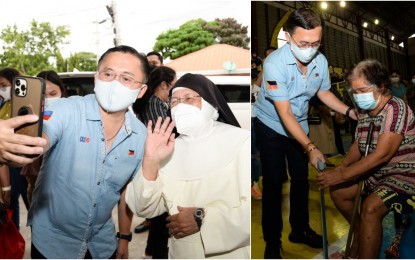
AID FOR BOHOLANOS. Senator Christopher Lawrence "Bong" Go is seen interacting with Boholanos during an assistance distribution activity in the town of Dauis on Friday (July 9, 2021). At least 200 farmers and fisherfolk as well as 30 former NPA members received assistance from Go and other agencies of the national government. (Contributed photos)
At least 200 farmers and fisherfolk, as well as 30 former rebels, have benefited from a joint relief operation conducted by several government agencies for struggling communities in Bohol, a statement from the office of Senator Christopher Lawrence “Bong” Go said on Sunday.
Go personally led the distribution of meals, food packs, vitamins, face masks and face shields to the beneficiaries as he visited Dauis town, southeast of Bohol province on Friday.
He assured that support from the government would continue for vulnerable sectors, particularly farmers and fisherfolk affected by the coronavirus disease 2019 (Covid-19) pandemic.
“To our countrymen here in Bohol, we and President Rodrigo Duterte are ready to serve you… don't be shy to come to us if we can help because it is our job,” Go said in the statement.
He thanked the Boholanos for giving them the opportunity to serve, pledging not to waste the same opportunity by doing everything for service until the last day of their term.
The activity was held in batches at the municipal gym in compliance with the necessary health and safety protocols against Covid-19.
Some of the beneficiaries also received new pairs of shoes while others were provided bicycles for their daily commuting needs.
Others were given computer tablets to help their children study and access educational materials at home.
Meanwhile, 30 former members of the New People's Army who received the aid have been listed as beneficiaries under the Barangay Development Program of the National Task Force to End Local Communist Armed Conflict, a whole of nation approach of fighting against the five decades of rebellion in the country.
Also, personnel from the Department of Agriculture turned over new fishing boats and nets as part of an ongoing effort to assist vulnerable sectors impacted by Covid-19.
The Department of Social Welfare and Development (DSWD) provided each beneficiary with financial assistance in a separate distribution.
The Department of Health (DOH), in turn, handed out assorted medicines and assistive walking devices to those in need.
On the other hand, the Department of Trade and Industry and the Technical Education and Skills Development Authority conducted assessments for their respective assistance programs.
Generoso Tubio, 56, one of the recipients of the aid, thanked Go for sending help to the fishermen who are reeling from dwindling catches.
To further ensure their health and well-being, the senator also assured that his office is ready to help any beneficiary with medical concerns so they can get the treatment they need.
He advised them to seek medical assistance from the Malasakit Center at the Governor Celestino Gallares Memorial Hospital in Tagbilaran City or the Don Emilio del Valle Memorial Hospital in Ubay.
The center is a one-stop shop that brings together the desk representatives of the DOH, DSWD, Philippine Health Insurance Corporation, and Philippine Charity Sweepstakes Office.
The Malasakit Center program, which Go initiated in 2019, has assisted more than two million poor and indigent patients nationwide.
https://www.pna.gov.ph/articles/1146684
How once insurgency-inflicted barangays rose from ‘hell’
From the Philippine Information Agency (Jul 1, 2021): How once insurgency-inflicted barangays rose from ‘hell’ (By GENE BAQUIRAN)
For how many years, they lived in fear, poverty, lack of freedom, and insurgency.
The simple dream of sleeping at night peacefully was turned into nightmare as they hear gun fights and explosions from just nearby.
For Mang Goryo, now 57 years old and a former barangay official of Balanni in Sto. Nino, Cagayan, he witnessed how his barangay lived in poverty – they inherited poverty ever since and they never experienced having a good life because of the communist insurgency.
“Hindi na kami umunlad at naka-recover. Nahirapan kaming kumilos at nahirapan kaming ilapit ang mga tao sa gobyerno,” he said as he put the blame on the New Peoples Army.
(We never knew what progress is. We were unable to mobilize and convince my constituents to draw closer to our government.)
As a former official, they often climb the mountains to retrieve corpses of NPA members or the military who died during encounters. It is one of the hardest, he revealed.
IT'S DIFFERENT NOW
Thanks to President Duterte who dared to end once and for all the local communist armed conflict, as Mang Goryo said, now they will also have a chance to live in peace and experience a better life for their children.
Soon, priority projects in the six insurgency-cleared barangays namely Brgy. Apayao and Villa Reyno in Piat; Barangay Annurturu, Liuan, and Minanga in Rizal; and Barangay Balanni in Sto. Nino, will commence after the Department of Budget and Management (DBM) has released the P20 million funding each for the barangays.
For Flordeliza Casinos, they will no longer have to carry sacks of their crops and produce on their backs and walk miles just to bring them from the foot of the mountains where their fields are. The farm-to-market roads which will be constructed soon will mean a lot for them.
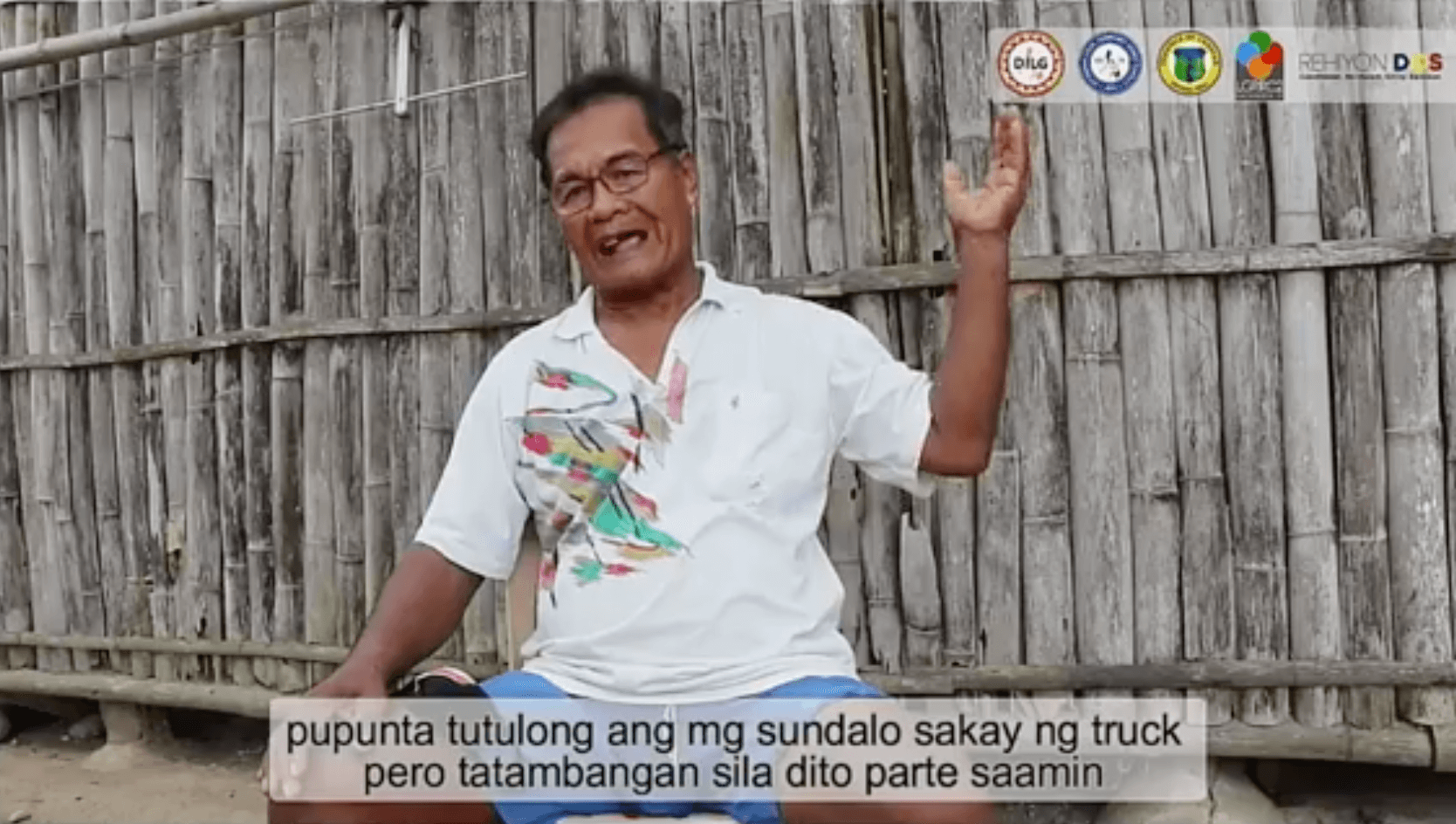
73-year old Mang Dencio from Sto. Niño, Cagayan shares their situation back in 1980s where NPA terorrist members would prevent soldiers from helping them by initiating an encounter.
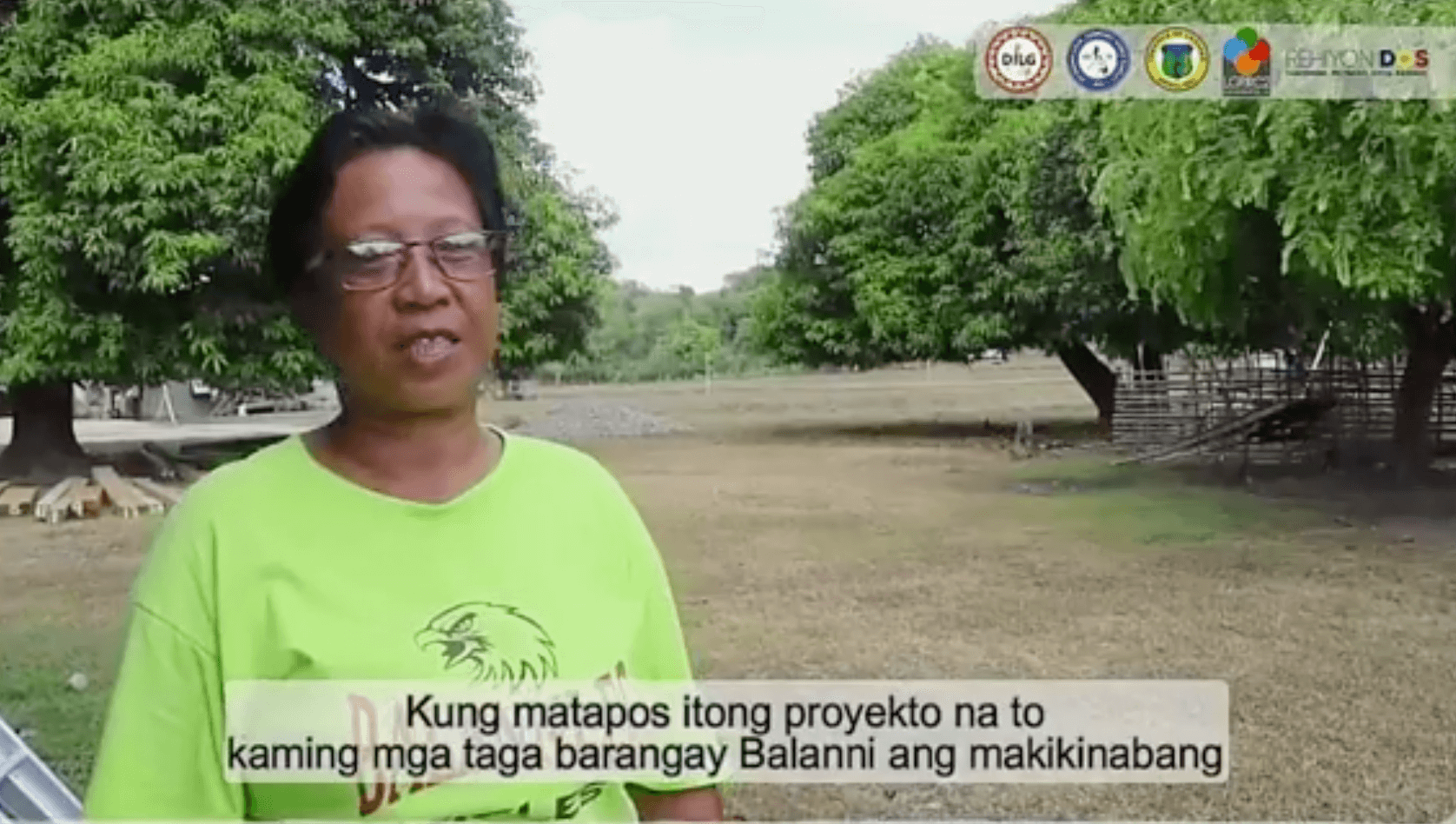
A resident of Balanni in Sto. Niño, Cagayan extends her gratitude to President Duterte for all the infrastructure projects that are being and will be implemented in their barangay.
For Mang Recto of Liuan, Rizal, the upcoming health center will mean better health services for the community. With this, they need not go to the neighboring town of Tuao to just to avail health services.
School head Angely Saludo of Liuan Elementary School cannot hold her tears as she recalled how hard she tried to convince parents to bring their children to school. But, with Barangay Liuan now being declared as insurgency-free and now a beneficiary of a three-classroom school, she cannot contain her happiness as she sees a more comfortable education for her pupils.
Potable water system, farm-to-market roads, health facilities, and livelihoods are just a few of the projects the people will enjoy soon.
For how many years, they lived in fear, poverty, lack of freedom, and insurgency.
The simple dream of sleeping at night peacefully was turned into nightmare as they hear gun fights and explosions from just nearby.
For Mang Goryo, now 57 years old and a former barangay official of Balanni in Sto. Nino, Cagayan, he witnessed how his barangay lived in poverty – they inherited poverty ever since and they never experienced having a good life because of the communist insurgency.
“Hindi na kami umunlad at naka-recover. Nahirapan kaming kumilos at nahirapan kaming ilapit ang mga tao sa gobyerno,” he said as he put the blame on the New Peoples Army.
(We never knew what progress is. We were unable to mobilize and convince my constituents to draw closer to our government.)
As a former official, they often climb the mountains to retrieve corpses of NPA members or the military who died during encounters. It is one of the hardest, he revealed.
IT'S DIFFERENT NOW
Thanks to President Duterte who dared to end once and for all the local communist armed conflict, as Mang Goryo said, now they will also have a chance to live in peace and experience a better life for their children.
Soon, priority projects in the six insurgency-cleared barangays namely Brgy. Apayao and Villa Reyno in Piat; Barangay Annurturu, Liuan, and Minanga in Rizal; and Barangay Balanni in Sto. Nino, will commence after the Department of Budget and Management (DBM) has released the P20 million funding each for the barangays.
For Flordeliza Casinos, they will no longer have to carry sacks of their crops and produce on their backs and walk miles just to bring them from the foot of the mountains where their fields are. The farm-to-market roads which will be constructed soon will mean a lot for them.
73-year old Mang Dencio from Sto. Niño, Cagayan shares their situation back in 1980s where NPA terorrist members would prevent soldiers from helping them by initiating an encounter.
A resident of Balanni in Sto. Niño, Cagayan extends her gratitude to President Duterte for all the infrastructure projects that are being and will be implemented in their barangay.
For Mang Recto of Liuan, Rizal, the upcoming health center will mean better health services for the community. With this, they need not go to the neighboring town of Tuao to just to avail health services.
School head Angely Saludo of Liuan Elementary School cannot hold her tears as she recalled how hard she tried to convince parents to bring their children to school. But, with Barangay Liuan now being declared as insurgency-free and now a beneficiary of a three-classroom school, she cannot contain her happiness as she sees a more comfortable education for her pupils.
Potable water system, farm-to-market roads, health facilities, and livelihoods are just a few of the projects the people will enjoy soon.
Members of the Cagayan Valley RTF-ELCAC conduct a service and information caravan in barangay Manauan in Rizal, Cagayan on June 12.
"For sure, when we have good roads and when vehicles start to come and go in our barangay, the NPA will no longer come to disturb us," Mang Gaudencio said.
Imelda Rosales, chief of the Regional Project Development and Management Unit of the Department of the Interior and Local Government (DILG) in the region, said that the Support to Barangay Development Program (SBDP) is one of the newest programs of the National Task Force - Ending Local Communist Armed Conflict (NTF-ELCAC) which was lodged through DILG under the localization of the Executive Order No. 70. This, she said, aims to institutionalize the whole-of-the-nation approach in attaining inclusive and sustainable peace and directing the adoption of a national peace framework.
Cagayan is lucky to have the first six barangays mentioned to receive financial support. They are now part of the 822 barangays nationwide identified by the Armed Forces of the Philippines (AFP) as “insurgency-free barangays”.
Today, 52 more barangays in the region are awaiting for the AFP’s declaration to be insurgency-free so that they will also become beneficiaries of P20-million worth of community projects.
Now, 73-year old Mang Dencio will have an opportunity to see his grandchildren live a life far better than his generation. The thought of having the next generations inherit the same hell life he had lived was now a thing of the past. Fear has now tuned to cheer as he envisions his grandchildren enjoying a peaceful and better life. No more fear, no more poverty, no more nightmares. (MDCT/JCK/GVB/PIA Cagayan)
https://pia.gov.ph/features/2021/07/11/how-once-insurgency-inflicted-barangays-rose-from-hell
"For sure, when we have good roads and when vehicles start to come and go in our barangay, the NPA will no longer come to disturb us," Mang Gaudencio said.
Imelda Rosales, chief of the Regional Project Development and Management Unit of the Department of the Interior and Local Government (DILG) in the region, said that the Support to Barangay Development Program (SBDP) is one of the newest programs of the National Task Force - Ending Local Communist Armed Conflict (NTF-ELCAC) which was lodged through DILG under the localization of the Executive Order No. 70. This, she said, aims to institutionalize the whole-of-the-nation approach in attaining inclusive and sustainable peace and directing the adoption of a national peace framework.
Cagayan is lucky to have the first six barangays mentioned to receive financial support. They are now part of the 822 barangays nationwide identified by the Armed Forces of the Philippines (AFP) as “insurgency-free barangays”.
Today, 52 more barangays in the region are awaiting for the AFP’s declaration to be insurgency-free so that they will also become beneficiaries of P20-million worth of community projects.
Now, 73-year old Mang Dencio will have an opportunity to see his grandchildren live a life far better than his generation. The thought of having the next generations inherit the same hell life he had lived was now a thing of the past. Fear has now tuned to cheer as he envisions his grandchildren enjoying a peaceful and better life. No more fear, no more poverty, no more nightmares. (MDCT/JCK/GVB/PIA Cagayan)
https://pia.gov.ph/features/2021/07/11/how-once-insurgency-inflicted-barangays-rose-from-hell
Saturday, July 10, 2021
NPA member yields
From the Mindanao Times (Jul 9, 2021): NPA member yields (BY RHODA GRACE SARON)

AN ALLEGED member of the New People’s Army surrendered to the Revitalized Pulis Sa Barangay (RPSB) in Jose Abad, Santos, Davao Occidental on Wednesday ( July 7).
Police identified him only as alias Jay-jay legal age, married, and a resident of Sitio Proper, Barangay Culaman, Jose Abad Santos.
Alias Jay-jay surrendered to the RPSB team headed by Lt. Billy Owen Burgos through the coordination with the Davao Occidental Provincial Mobile Force Company lntelligence operatives.
He also turned over his issued firearms consist of US carbine .30 caliber M1 with defaced serial number, two magazine clip with seven .30 cal ammunitions, and an improvised M203 grenade launcher with three live cartridges, and 40mm high explosive to the operatives.
According to him, he surrendered and decided to return to the fold of law because of the scarcity of food in the mountain and his realization on the false ideologies of the communist terrorist groups against the government.
He is now under the custody of Davao Occidental Provincial Mobile Force Company headquarters for proper disposition and documentation for him to avail the Enhanced -Comprehensive Local Integrated Program of the government.
Police identified him only as alias Jay-jay legal age, married, and a resident of Sitio Proper, Barangay Culaman, Jose Abad Santos.
Alias Jay-jay surrendered to the RPSB team headed by Lt. Billy Owen Burgos through the coordination with the Davao Occidental Provincial Mobile Force Company lntelligence operatives.
He also turned over his issued firearms consist of US carbine .30 caliber M1 with defaced serial number, two magazine clip with seven .30 cal ammunitions, and an improvised M203 grenade launcher with three live cartridges, and 40mm high explosive to the operatives.
According to him, he surrendered and decided to return to the fold of law because of the scarcity of food in the mountain and his realization on the false ideologies of the communist terrorist groups against the government.
He is now under the custody of Davao Occidental Provincial Mobile Force Company headquarters for proper disposition and documentation for him to avail the Enhanced -Comprehensive Local Integrated Program of the government.
https://mindanaotimes.com.ph/2021/07/09/npa-member-yields/
Surrender of top NPA leaders a blow to reds
From the Mindanao Times (Jul 10, 2021): Surrender of top NPA leaders a blow to reds (BY RHODA GRACE SARON)
THE SURRENDER of seven leaders of the New People’s Army in June was seen as a major blow to the decades-old communist insurgency, according to the Eastern Mindanao Command.
They were identified as Pedro Arnado, chairperson of Kilusang Magbubukid ng Pilipinas-Southern Mindanao Regional Committee (KMP-SMRC) and national treasurer; Ruel Dum-ogan alias Regan, commanding officer of HQ Force Neo, North Central Mindanao Regional Committee (NCMRC) and his wife DN Saritao, Platoon Medic of Platoon 1 of the same unit; Marvin Magrano alias Loloy, former provincial coordinator of Bayan Muna in Sarangani Province and also the vice-chairman of the now defunct Guerrilla Front Tala’s Pambansa-Demokratikong Paaralan and Regional Headquarters, SMRC; Eping Iligan Salahay alias John, commanding officer and Milisyang Bayan of GF21C, NEMRC; Romeo Bontulan, team leader of Squad Abe, RHQ, SMRC; and alias Dala, a former commanding officer of SYP Gabon, Guerrilla Front 88.
Pedro Arnado was the first to surrender among the seven on June 22 in Barangay Sto. Nino, Arakan, North Cotabato, and was followed by Dum-ogan and his wife on June 24 at Sitio Saluringan, Barangay Canangaan, Cabanglasan, Bukidnon.
Magrano surrendered on June 26 at Sitio Loot, Barangay Poblacion, Malapatan, Sarangani Province.
Also, Salahay surrendered on June 26 in Barangay Kulambugan, Sibagat, Agusan del Sur. Buntolan surrendered on June 27 at Purok 8, Barangay Nueva Visayas, Mawab, Davao de Oro; and alias Dala on June 29 at Jamboree Site, Purok 6, Barangay Alubihid, Buenavista, Agusan del Norte.
Magrano and Regan presented their weapons, anti-personnel mines, rifle grenades, and ammunition to the troops during their surrender. They cited physical exhaustion, weakened party leadership, and weakening of mass bases as the reasons for their surrender.
Lt. Gen. Greg T. Almerol, EastMinCom commander, said this latest development would likely snowball into more surrenders.
“The surrender of these CPP-NPA leaders speaks volumes of how many of their comrades have grown aversed to the violent means by which the communist ideology is being carried out by the reds. Corruption and internal politics within their rotten system also further led others to abandon their cause,” Almerol said.
Apart from this, the EastMinCom also recorded six NPA members were killed, another eight were arrested, and 31 surrendered in June 2021. A total of 58 firearms were captured and recovered by the troops in the same period.
They were identified as Pedro Arnado, chairperson of Kilusang Magbubukid ng Pilipinas-Southern Mindanao Regional Committee (KMP-SMRC) and national treasurer; Ruel Dum-ogan alias Regan, commanding officer of HQ Force Neo, North Central Mindanao Regional Committee (NCMRC) and his wife DN Saritao, Platoon Medic of Platoon 1 of the same unit; Marvin Magrano alias Loloy, former provincial coordinator of Bayan Muna in Sarangani Province and also the vice-chairman of the now defunct Guerrilla Front Tala’s Pambansa-Demokratikong Paaralan and Regional Headquarters, SMRC; Eping Iligan Salahay alias John, commanding officer and Milisyang Bayan of GF21C, NEMRC; Romeo Bontulan, team leader of Squad Abe, RHQ, SMRC; and alias Dala, a former commanding officer of SYP Gabon, Guerrilla Front 88.
Pedro Arnado was the first to surrender among the seven on June 22 in Barangay Sto. Nino, Arakan, North Cotabato, and was followed by Dum-ogan and his wife on June 24 at Sitio Saluringan, Barangay Canangaan, Cabanglasan, Bukidnon.
Magrano surrendered on June 26 at Sitio Loot, Barangay Poblacion, Malapatan, Sarangani Province.
Also, Salahay surrendered on June 26 in Barangay Kulambugan, Sibagat, Agusan del Sur. Buntolan surrendered on June 27 at Purok 8, Barangay Nueva Visayas, Mawab, Davao de Oro; and alias Dala on June 29 at Jamboree Site, Purok 6, Barangay Alubihid, Buenavista, Agusan del Norte.
Magrano and Regan presented their weapons, anti-personnel mines, rifle grenades, and ammunition to the troops during their surrender. They cited physical exhaustion, weakened party leadership, and weakening of mass bases as the reasons for their surrender.
Lt. Gen. Greg T. Almerol, EastMinCom commander, said this latest development would likely snowball into more surrenders.
“The surrender of these CPP-NPA leaders speaks volumes of how many of their comrades have grown aversed to the violent means by which the communist ideology is being carried out by the reds. Corruption and internal politics within their rotten system also further led others to abandon their cause,” Almerol said.
Apart from this, the EastMinCom also recorded six NPA members were killed, another eight were arrested, and 31 surrendered in June 2021. A total of 58 firearms were captured and recovered by the troops in the same period.
https://mindanaotimes.com.ph/2021/07/10/surrender-of-top-npa-leaders-a-blow-to-reds/
Red fighter yields in Lope de Vega town
Excerpt from the Sun Star-Tacloban (Jul 10, 2021): Red fighter yields in Lope de Vega town (By RONALD O. REYES)
A BARANGAY kagawad who was said to be a member of the New People’s Army voluntarily surrendered in Lope De Vega, Northern Samar Saturday, July 10, 2021.
A BARANGAY kagawad who was said to be a member of the New People’s Army voluntarily surrendered in Lope De Vega, Northern Samar Saturday, July 10, 2021.
https://www.sunstar.com.ph/article/1900396/Tacloban/Local-News/Red-fighter-yields-in-Lope-de-Vega-town
4 BIFF men held for guns
From the Philippine Star (Jul 11, 2021): 4 BIFF men held for guns (By John Unson)
Police detained four suspected members of the Bangsamoro Islamic Freedom Fighters (BIFF) in Datu Abdullah Sangki town on Friday after an inspection of their vehicle yielded high-powered firearms.Town police chief Lt. Judith Ambong said two rifles and a grenade launcher were recovered from Taib Guimbalangan, 55; Mercipol Zainudin, 27; Ali Mohammad, 25, and Farhan Saludin, 20, when their Hyundai Accent was pulled over at a checkpoint in Barangay Dimaampao.
“We received tips... that a vehicle carrying four armed men was to pass by Barangay Dimaampao from Radja Buayan,” Ambong said.
Six others were recently arrested for carrying assorted guns and 6,000 rounds of ammunition for a 5.56-caliber rifle in neighboring Shariff Saidona Mustapha and Mamasapano.
There is a strong presence of BIFF bandits in the areas.
https://www.philstar.com/nation/2021/07/11/2111631/4-biff-men-held-guns
Abu Sayyaf bomber killed in Sulu
From the Philippine Star (Jul 11, 2021): Abu Sayyaf bomber killed in Sulu (By Roel Pareño)
A suspected Abu Sayyaf bomber was killed while two other bandits were wounded in a military offensive in Patikul, Sulu on Friday.
Maj. Gen. William Gonzales, Joint Task Force Sulu and 11th Infantry Division commander, said troops from the 5th Scout Ranger Battalion launched the operation in the jungles of Bud Daho at around 12:20 p.m.Around 20 militants under Mundi Sawadjaan clashed with the soldiers.
Brig. Gen. Antonio Bautista Jr., 1101st Infantry Brigade commander, said the body of the slain bandit was recovered.
Soldiers also overran an encampment of the bandits. They seized 14 hammocks, eight ponchos, three pairs of boots and food items.
“A tracking unit was locating the fleeing Abu Sayyaf group... We believed two other terrorists were wounded in the assault,” Bautista said.
Gonzales dedicated the accomplishment of the troops to the victims of the C-130 plane crash on July 4, who were supposed to reinforce the soldiers in the campaign against terrorists in the area.
“Troops in Sulu are still mourning the death of our comrades who died on the C-130 mishap, but we have no choice but to keep on with our mandate.... We honor them by striving to achieve that mission,” Gonzales said.
https://www.philstar.com/nation/2021/07/11/2111630/abu-sayyaf-bomber-killed-sulu
Countering terrorism on Malaysia’s borders
Posted to East Asia Forum (Jul 10, 2021): Countering terrorism on Malaysia’s borders (By Piya Raj Sukhani, NTU)
Internal threats have hampered the overall effectiveness of Malaysia’s border security in the past. Given that the threat of violent extremism in Southeast Asia has not abated, the Malaysian government and its security agencies, while they combat another wave of COVID-19 infections, cannot afford to leave gaps that may be exploited by opportunistic militant groups.
On 17 May 2021, five members of the terrorist Abu Sayyaf Group (ASG) were gunned down by police in the eastern Malaysian state of Sabah.
The Sabah incident comes after two recent terror incidents in Indonesia. In March 2021, there was a suicide bombing at a Catholic cathedral in Makassar as well as a shootout at police headquarters in Jakarta.
One of the factors that may compromise border security in the Malaysia and hence facilitate the movement of militants is corruption and radicalisation among border and security officials.
In 2015, 70 Malaysian army personnel were discovered to have ties to the so-called Islamic State (IS) terrorist group. In 2016, a Malaysian immigration scandal captured global media attention after 37 immigration officers were found guilty of meddling with the Malaysian immigration system.
‘Corrupt officials and syndicates’ were still exploiting the Immigration Department’s passport issuance system in 2019.
In response, the Malaysian Anti-Corruption Commission conducted a nationwide operation in 2020 codenamed Ops Selat. Subsequently, 39 immigration officers were arrested for receiving bribes to certify the entry and exit of foreigners.
These ‘insider’ threats — the security apparatus being linked to militant groups and bribery among civil servants — exhibit the vulnerability of Malaysian border security.
Militant groups are now leveraging the inequalities exacerbated by COVID-19 to spread extremist ideologies and gain recruits. Such groups use online propaganda to reach people who are spending more time online.
Despite its territorial losses, there has been a spike in IS’s online activities and several Southeast Asian countries, including Malaysia, have reported an increase in IS recruitment efforts.
A Malaysian woman captured the attention of Indonesian security in April 2021 for propagating IS ideology over WhatsApp and Facebook. Since the suicide bombing in Makassar, members of her WhatsApp group have been deliberating on plans for future attacks.
In 2019, Malaysian counter-terrorism authorities noted the new trend of women being used as suicide bombers in Southeast Asia. This came after the arrest of a Malaysian housewife who plotted an IS suicide bombing during the 2018 Malaysian general election. While her operation was foiled, she communicated with over 600 people on social media prior to her arrest.
In September 2020, another Malaysian was sentenced to imprisonment for spreading extremist propaganda. This propaganda included videos that reportedly urged Malaysians to ‘wage war against the Royal Malaysian Police and the Malaysian government’. This and other selected cases illustrate that IS continues to radicalise individuals and attract lone-wolf attackers through its online content.
Those Malaysians who are currently seeking to join IS but cannot travel to Syria are considering going to Mindanao in the Philippines. Malaysian militants have strong connections with the ASG, an IS-linked faction based in and around Jolo and Basilan. The 2017 siege of Marawi alone involved 30 Malaysian fighters.
The ASG has launched some of the Philippines’ most devastating terror attacks, operating from their stronghold in the Muslim-majority southern Philippines since the 1990s. They also frequently operate in inadequately policed sea areas bordering Malaysia and Indonesia. The close geographical proximity between the southern Philippines and East Malaysia has long provided Malaysian militants with the opportunity to pursue regional jihad.
This problem of insufficiently policed maritime areas is not exclusive to the state of Sabah. Several ‘rat trails’ have been recently detected along the coastal areas of Johor through Malaysia’s Ops Benteng, an integrated operation involving several border control agencies launched in 2020. Sea areas are challenging to patrol, so analysts believe that illegal border crossings via Johor’s waterways are conducted through hidden routes.
Furthermore, several Malaysian immigration officers (in Johor among other states) were charged under Ops Selat for corruption, money laundering and bribery to secure the passage of foreign nationals in 2021.
The growing ideological threat from religious extremist groups in Indonesia makes Johor a precarious crossroads for the spread of extremist ideology, as radicalised Malaysians can easily move to Indonesia or Singapore via Johor.
A recent case which illustrated this was of a Malaysian working in Singapore who was arrested for planning to travel to Syria with his Singaporean wife to take up armed violence for IS in July 2020. He actively propagated IS ideology on social media and radicalised his wife, who had been conducting religious classes with an accreditation from the Islamic Religious Council of Singapore.
In January 2021, Malaysian Counterterrorism Chief Normah Ishak declared that COVID-19 movement restrictions had ‘flattened the curve of terrorism in Malaysia’. But Malaysia cannot afford to lower its guard. The country is an ongoing ‘source, transit point and destination country for terrorist groups’ including IS, ASG, al-Qaeda, and Jemaah Islamiya.
Given the porousness of the tri-border region in Sabah and the vulnerable waters of Johor, Malaysia, Indonesia and the Philippines need to ramp up measures to counter the infiltration of their state agencies by militant groups. Regional cooperation and security depend on continued vigilance and cooperation among all countries involved.
[Piya Raj Sukhani is a research analyst at the S Rajaratnam School of International Studies, Nanyang Technological University, Singapore.]
https://www.eastasiaforum.org/2021/07/10/countering-terrorism-on-malaysias-borders/
Troops seize Abu Sayyaf lair in Sulu
From the Philippine News Agency (Jul 10, 2021): Troops seize Abu Sayyaf lair in Sulu (By Teofilo Garcia, Jr.)
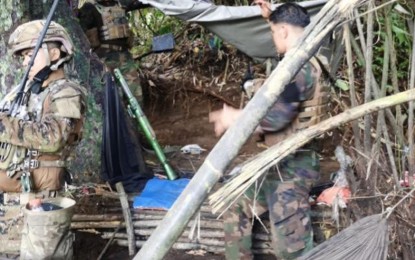
FALLEN ENCAMPMENT. Troops of the 5th Scout Ranger Battalion inspect the encampment of the Abu Sayyaf Group (ASG) bandits they seized following a 20-minute clash in Bud Daho, Barangay Lumping Pigi Daho, Talipao, Sulu on Friday (July 9, 2021). An ASG member was killed during the clash. (Photo courtesy of the 11th Infantry Division Public Affairs Office)
A member of the Abu Sayyaf Group (ASG) was killed as Army elite forces overran an encampment of the terror group in the hinterlands of Sulu, the military reported on Saturday.
Maj. Gen. William Gonzales, Joint Task Force (JTF)-Sulu commander, said the troops overran the encampment following a clash that broke out at about 12:20 p.m. Friday while they were checking on the reported presence of ASG bandits in Bud Daho, Barangay Lumping Pigi Daho, Talipao.
“Immediately, troops of (the) 5th Scout Ranger Battalion who are operating nearby proceeded to the location. Then and there, they fought with more or less 20 Abu Sayyaf bandits under sub-leaders Mundi Sawadjaan and Ellam Nasirin,” he said.
Gonzales, also 11th Infantry Division commander, said the troops found the remains of a slain ASG bandit while clearing the bandit’s encampment as the rest of the ASG bandits scampered in different directions.
Brig. Gen. Antonio Bautista Jr., commander of the 1101st Infantry Brigade, said the troops recovered from the fallen ASG encampment 14 hammocks, eight ponchos, three pairs of boots, and food items.
Bautista said some of the fleeing ASG bandits were wounded during the 20-minute firefight as bloodstains were found in their former encampment site.
“Our combat trackers are doing their best to locate this group. Bloodstains were found at the encampment (of the bandits),” he said.
Meanwhile, Gonzales dedicated Friday’s accomplishment to the casualties of the July 4 plane crash in Patikul, Sulu.
“I commend the 5th Scout Ranger Battalion for this extraordinary feat. Troops here in Sulu are still mourning the death of our comrades who died on the C-130 mishap, but we have no choice (but) to keep on with our mandate. They came here to join us in our campaign for peace in Sulu. We honor them by striving to achieve that mission,” Gonzales said.
Most of the 96 passengers aboard the ill-fated C-130 plane were new enlisted personnel of the Army sent to fight the ASG bandits in Sulu.
https://www.pna.gov.ph/articles/1146618
Karapatan claim on BDP beneficiaries ‘unfounded’: DILG
From the Philippine News Agency (Jul 10, 2021): Karapatan claim on BDP beneficiaries ‘unfounded’: DILG (By Christopher Lloyd Caliwan)
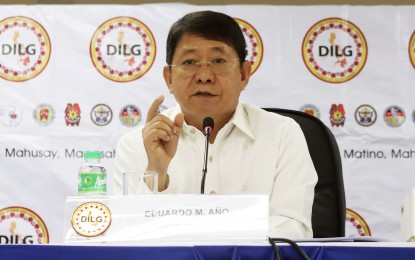
Interior Secretary Eduardo Año (File photo)
The Department of the Interior and Local Government (DILG) assured Friday that villages that have received funds under the Barangay Development Program (BDP) after being cleared of communist insurgency have undergone a rigorous selection process.
“The selection of 822 barangays to receive BDP funds underwent a thorough validation process participated by different stakeholders, particularly the people from the concerned barangays. These barangays share a common history, being exploited or subjected to abuses and deception by the CPP-NPA (Communist Party of the Philippines - New People’s Army),” Interior Secretary Eduardo Año said in a message to the Philippine News Agency (PNA).
Año’s remarks came in response to a Philippine Daily Inquirer report quoting human rights group Karapatan as saying that the areas that received these funds were in regions that logged the highest number of extrajudicial killings (EJK) and incidents of human rights violations.
“The claims of Karapatan are mere allegations and speculations that had never been substantiated in any judicial court or in any official investigation. This so-called EJK has never been a policy of this government. It is not surprising for Karapatan to make these unfounded allegations because everyone knows the true color of Karapatan,” he added.
Based on data from the DILG, the Department of Budget and Management (DBM) has approved the funding of 812 barangays, covering 2,276 projects, through the issuance of Special Allotment Release Order (SARO) and the Notice of Cash Allocation (NCA) amounting to PHP16.24 billion as of June 30.
Meanwhile, Año said the funds allocated to the remaining 10 villages have yet to be released as these are still completing documentary project requirements, as prescribed in the policies and procedures under the local budget circulars issued by the DBM.
The top five regions that received the biggest fund allocation are Western Mindanao, Northern Mindanao, Davao region, Soccsksargen, and Caraga.
Earlier, Año said the majority of the projects identified by the recipient barangays are infrastructure projects, which compose the biggest bulk of the funds with 926 farm-to-market roads; 516 water and sanitation projects; 156 health stations; and 135 school buildings.
He said PHP11.61 billion has been earmarked for farm-to-market road projects; PHP2.38 billion for water and sanitation systems; PHP569 million for school buildings; PHP491 million for health stations; PHP482 million for rural electrification; and PHP328 million for agricultural, livelihood, and technical vocational projects.
He added that PHP125.8 million are for other infrastructure projects; PHP110 million for the cost of assistance to indigent individuals and families; PHP87 million for the cost of reconstruction, rehabilitation, repair, and similar projects; PHP22.4 million for housing; and PHP22.5 million for the coronavirus disease 2019 (Covid-19) response projects.
“These projects are tangible proof of the government’s desire to bring development to far-flung areas that have not seen government projects in a very long time,” Año said.
Meanwhile, DILG Undersecretary Jonathan Malaya, also the National Task Force to End Local Communist Armed Conflict (NTF ELCAC) spokesperson on BDP, assured the department would conduct strict monitoring of the BDP projects to ensure its progress and adherence to guidelines and standards set by the law.
Malaya said the DILG would use a portion of its budget for third-party monitoring to be conducted by an accredited non-government entity.
He also urged the public to monitor the progress of these projects by regularly visiting https://www.ntfelcac.org/bdp-dashboard.
The BDP is a hallmark initiative of the NTF ELCAC, with the end goal of bringing development and delivering various government programs in conflict-afflicted and geographically isolated villages that have been considered "cleared" of the influence of communist rebels.
The CPP-NPA is listed as a terrorist organization by the United States, the European Union, the United Kingdom, Australia, Canada, New Zealand, and the Philippines.
https://www.pna.gov.ph/articles/1146609
CPP/Ang Bayan: Satiating the avarice of the dictator’s monsters
Propaganda article from the English language edition of Ang Bayan posted to the Communist Party of the Philippines (CPP) Website (Jul 7, 2021): Satiating the avarice of the dictator’s monsters

Even with a few months left in Duterte’s official term, he continues to give huge favors to his armed agents, especially to the Armed Forces of the Philippines (AFP). He often calls them “my soldiers” when he visits their camps, when he incites them to kill or rape, and when he prioritized them to be inoculated. Duterte favored them primarily by lining up their pockets and giving them power.
Serving as foundation of Duterte’s terrorist reign, the military and police are continuously being beefed-up and strengthened. There are now approximately 400,000 soldiers and other state security forces, way more than the 347,000 when his presidency began. The regime also increased the number of CAFGU elements, which it targeted to bring to 79,000 last 2020. In 2015, there were only 56,000 paramilitary elements in the country. The AFP currently has 190 generals while the Philippine National Police (PNP) has 146.
Duterte is increasing the number of military personnel in a desperate attempt to end the armed revolution. In 2016, the Philippine Army which is the biggest branch of the AFP only had 81,000 personnel distributed in 87 maneuver battalions. The 88th IB was deployed in October 2017 as the first among 20-35 battalions which Duterte sought to establish. The 99th IB, one of the newest battalions, is currently stationed at Fort Magsaysay in Nueva Ecija
US funds and control
It was easy for Duterte to carry out his plans as these were funded by the US. From 2016-2019, the regime received a total of ₱27.2 billion in military aid. This included the ₱13.1 billion worth of weapons and military equipment. The regime is set to receive an additional ₱9.8 billion in aid this year.
Among those funded by the US was the establishment of the 11th ID in 2018 which currently covers the islands and seas of Sulu and is targeted to be filled with 4,500 personnel. Part of this is the 1st Brigade Combat Team (BCT) of the Philippine Army which was patterned after the military structure of the US and is directly funded by it. It operates with complete aerial support, cannons, armored personnel carrier, and others. The 11th ID and BCTs are directed by the US under the pretext of conducting military exercises.
The regime also established a Cyber Battalion of the army which focuses on attacks using the internet.
In line with Duterte’s aligning with China, the AFP also received Chinese military aid. This includes 6,000 Norinco rifles which the regime received in 2016. As part of its rivalry with the US, China is exerting efforts to influence AFP officials to counter the US’ control over the military. It is evident that there is now a pro-China faction in the AFP which believes in the growing power of China in the region, or benefits from kickbacks from anomalous public contracts and receives favor from Chinese drug and smuggling syndicates.
Rewarding the butchers
Since 2016, Duterte has pushed salary increases for his soldiers and police. He was able to gain their loyalty by doubling the monthly salary of regular troops up to generals. The basic salary of new soldiers (₱29,668) is higher by ₱6,000 compared to the entry-level salary of public school teachers. Meanwhile, the monthly basic pay of nurses remain at ₱22,000-₱24,000. The increase was implemented to attract more recruits. However, AFP branches have yet to achieve their recruitment targets.
On top of this, soldiers and police receive various allowances and benefits for food, clothing, housing and others. Those who participate in operations and combat receive additional allowances. Their take home pay is relatively higher as they are not obliged to contribute to national pension funds unlike other government employees.
Officials receive separate allowances. Captains receive an additional ₱7,000 while the highest ranking general receives ₱35,000. This excludes rewards given to soldiers who are decorated with medals which can reach up to ₱100,000 monthly.
These are still minimal compared to huge rewards given by the regime to generals in exchange for their support. Duterte placed military officials in key government positions after retiring, favoring particularly generals who were previously deployed in Davao. Retired military officials occupy at least 12 positions in his cabinet, in addition to those with lower positions.
Generals aggrandize themselves with public funds. In his attempt to control the flow of illegal drugs and contrabands into the country, he immediately placed a retired military official to head Bureau of Customs (BOC) when he sat in power. When the attempt of former BOC chief Nicanor Faeldon to smuggle ₱6.5 billion worth of shabu was botched, Duterte replaced him with two other former generals.
He also appointed three former military and police officials to successively head the Bureau of Corrections to control the operations of druglords inside prison compounds.
In 2017, millions of pesos are believed to have been pocketed by Duterte’s generals by securing the procurement of the warships for the Philippine Navy. Even Duterte himself is involved in the anomalous ₱16-billion contract. His generals have also benefited from Duterte’s termination of rival government officials under the pretext of the “war on corruption” and “war on drugs.”
(The second part of the article will be published in the next issue.)
[Ang Bayan is the official news organ of the Communist Party of the Philippines and is issued by the CPP Central Committee. It provides news about the work of the Party as well as its analysis of and views on current issues. Ang Bayan comes out fortnightly and is published in Pilipino, Bisaya, Ilokano, Waray, Hiligaynon and English.]
https://cpp.ph/2021/07/07/satiating-the-avarice-of-the-dictators-monsters/
CPP/Ang Bayan: Philippines relisted in money laundering grey list
Propaganda article from the English language edition of Ang Bayan posted to the Communist Party of the Philippines (CPP) Website (Jul 7, 2021): Philippines relisted in money laundering grey list

The Financial Action Task Force (FATF) once again placed the Philippines in its “grey list” last June 24. This means the FATF will put the country’s bank and financial transactions under closer scrutiny.
Money laundering is “cleaning” illegally obtained dirty money through transfers involving banks or investments in legitimate businesses. The FATF is an international watchdog created by the G7 to monitor money laundering. The Philippines was blacklisted in 2000 and grey-listed in 2012.
The FATF placed the country on the list despite amendments done by Rodrigo Duterte to the Anti-Money Laundering Act last February and the passage of the Anti-Terror Law in June 2020 supposedly to counter “terror financing.” This is because both laws did not target the main sources of dirty money in the country—drug trafficking and corruption.
In 2019, the Anti-Money Laundering Council (AMLC) investigated 161,650 suspicious transaction reports (STR) from January 2013 to December 2017 worth ₱17.9 trillion. The agency discovered that 12,508 STRs worth ₱10 trillion involves drug trafficking and related crimes. Half (₱5 trillion) was reported during the Duterte regime’s first year of “war against drugs.” Between 2015 and 2016, the value of STR involving illegal drug trade rose by 200% . Despite dropping in 2017, suspicious transactions involving drugs remained higher compared to 2014. STRs are submitted to the AMLC for transactions suspected of involving dirty money.
Almost all transactions went through local banks. Some (29%) disappeared to the US, Costa Rica, Malaysia and Nigeria but bulk of the funds circulated inside the country.
In another more extensive study released by the AMLC in 2020, suspicious transactions rose by 11 times from 2013 to 2020. Between 2019 and 2020, it estimated that STRs increased by 68%, from 623,000 to 1.01 million.
Since 2012, international agencies monitoring international drug trafficking have put money laundering in the Philippines as a “serious concern.” In its 2021 International Narcotics Strategy Report released in March, the US said that Chinese syndicates have been using the Philippines as a regional transit country for illegal drugs and dirty money. These syndicates also supply the bulk of illegal drugs that are locally circulated and consumed. An AMLC report said 54% of the STRs submitted from January 1 to September 2020 are related to drug trafficking.
Other than the international operations of drug syndicates, corruption by government officials and human trafficking—both predicate crimes to money laundering—are also high in the Philippines. The inflow and outflow of dirty money is made easier when coupled with high volumes of remittances from migrant Filipinos. In addition to local banks, money is also laundered through private businesses, notably casinos. (One of the biggest casino owners in the Philippines is Duterte’s mega-crony Enrique Razon. His other crony, Dennis Uy, is set to build a giant casino in Cebu.)
In a separate report, the Securities Exchange Commission identified corruption as the main source of dirty money entering the country’s financial sector from 2017 to 2019. Most of the funds are from local politicians, though some were suspected to be from China. According to the SEC report, “terror financing” is “extremely low or nil.”
[Ang Bayan is the official news organ of the Communist Party of the Philippines and is issued by the CPP Central Committee. It provides news about the work of the Party as well as its analysis of and views on current issues. Ang Bayan comes out fortnightly and is published in Pilipino, Bisaya, Ilokano, Waray, Hiligaynon and English.]
https://cpp.ph/2021/07/07/philippines-relisted-in-money-laundering-grey-list/
Subscribe to:
Posts (Atom)