Saturday, September 7, 2019

4 hurt as blast rocks Sultan Kudarat town

From the Philippine News Agency (Sep 7, 2019): 4 hurt as blast rocks Sultan Kudarat town


BOMB BLAST. The site of a bombing on in Isulan, Sultan Kudarat that injured at least four persons on Saturday (Sept. 7, 2019). (Photo courtesy of Isulan MPS)

ISULAN, Sultan Kudarat – Unidentified men set off an improvised explosive device in front of the public market here Saturday morning, leaving at least four persons injured, police said.

Lt. Col. Junie Buenacosa, Isulan police director, said the blast occurred shortly before 7 a.m. in front of the public market, which is along the national highway.

“The suspected IED was placed at a terminal for motorcycles in front of the public market,” Buenacosa said, referring to a row of motorcycles for hire, locally called “habal-habal”.

"We do not have the exact number of victims yet,” Buenacosa said, adding that no lawless group has claimed responsibility yet to the attack. However, at least four persons were hurt based on initial reports.

He said a traffic enforcer was seen lying at the blast site. Responding police rushed him to the hospital. Three others were reported injured in the blast.

“Parked motorbikes were in total disarray,” Buenacosa said.

Last year, two successive bombings hit the town that left five persons dead and 45 others hurt.

In April this year, another IED went off in front of a chicken barbecue stall also in the same stretch of the national highway. Police and military authorities have blamed the Islamic State-linked Bangsamoro Islamic Freedom Fighters (BIFF) for the past bombing attacks.

Isulan is the provincial capital of Sultan Kudarat province.

https://www.pna.gov.ph/articles/1079824

OPAPP, MILF ink deal for TESDA training of ex-rebels

From the Philippine News Agency (Sep 7, 2019): OPAPP, MILF ink deal for TESDA training of ex-rebels


MILF TESDA TRAINING. Presidential Peace Adviser Carlito Galvez Jr. (center right), and Technical Education Skills Development Authority (TESDA) Director-General Sec. Isidro Lapeña (center left), led other representatives Friday (Aug. 6) in signing a memorandum of agreement (inset) that would hone the technical skills of former MILF combatants under a TESDA socio-economic package. (Photo courtesy of Noel Punzalan/PNA-Cotabato)

SHARIFF KABUNSUAN COMPLEX, Cotabato City - The Office of the Presidential Adviser on the Peace Process and Moro Islamic Liberation Front (MILF) inked a Memorandum of Agreement (OPAPP), will transform former MILF combatants to peaceful and productive civilians under a technical skills education program, here on Friday.

Present during the signing ceremony were Presidential Adviser on Peace, Reconciliation and Unity Carlito Galvez Jr., Technical Education Skills Development Authority (TESDA) Director-General Isidro Lapeña, and OPAPP Assistant Secretary for Normalization David Diciano.

The TESDA is targeting initial 7,500 MILF members to enroll this year to various TESDA courses ranging from agriculture, baking, carpentry, food processing, welding, machinery, agri-crop production, and mechanics, among others.

At present, the MILF is running the affairs of the Bangsamoro Autonomous Region in Muslim Mindanao (BARMM), a product of more than two decades of peace overture by the former rebel group with the government.

“On Sept. 7, the decommissioning process of 1,060 combatants of the MILF with their 920 weapons and about 20 heavy weapons including a number of rocket-propelled grenades will begin," said BARMM Chief Minister Ahod “Murad” Ebrahim in his statement before a press briefing that followed the MOA signing activity.

“This is just part of the more than 2,100 weapons and 12,000 combatants to be decommissioned in the (Sept. 7) phase of decommissioning,” he said.

Ebrahim noted that the decommissioning demonstrate their sincere and full commitment to the peace agreement to achieve the goal of development for the Bangsamoro.

“Let me reiterate that we are not surrendering. Decommissioning is not tantamount to surrendering,” clarified Ebrahim, adding that their firearms will be handed over to an Independent Decommissioning Body (IDB) comprising the third neutral party of representatives from Turkey, Brunei Darussalam, and Norway, among others.

Each of the decommissioned combatants will receive initial assistance socio-economic from the government amounting to PHP100, 000.

Other benefits amounting to some PHP950,000 include health benefits, scholarships for their kids, housing and livelihood projects per MILF member.

At least six government-acknowledged MILF camps are currently being transformed into peaceful, productive and resilient communities.

“Through these interventions, our combatants will be able to return to mainstream society,” Ebrahim said.

Galvez, meanwhile, said the MOA signing sealed their deeper partnership with the MILF conducted in the peace process.

“The TESDA package furthered the promotion of the peace apparatus and strengthened its mechanism that would support the MILF members through the creation of a TESDA skills education group,” he said.

Lapeña, meanwhile, said that all TESDA packages for the MILF are in place.

The MOA signing came a day before the scheduled visit of President Rodrigo Duterte at the old Maguindanao Capitol grounds in Sultan Kudarat, Maguindanao to witness the decommissioning of 1,060 MILF members and some 940 firearms.

https://www.pna.gov.ph/articles/1079820

Less fighting in Mindanao because of BOL: PRRD

From the Philippine News Agency (Sep 7, 2019): Less fighting in Mindanao because of BOL: PRRD


DAVAO CITY -- President Rodrigo Duterte on Friday night cited the passage of Bangsamoro Organic Law (BOL) for the decrease in number of clashes in Mindanao.

The Chief Executive lauded the almost zero incidents of fighting in Central Mindanao. "We have been able to strike a solution in central Mindanao. There is less fighting now because of the BOL," he said.

Last January 21, BOL was ratified, which gave the Muslims full autonomy in Mindanao through the creation of Bangsamoro Autonomous Region in Muslim Mindanao, which is the last step in the 2014 peace agreement between the government and the Moro Islamic Liberation Front.

With BOL's success in the Muslim community, the President, however, admitted the presence of the New People's Army remained to be a big problem in the region.

Duterte, who lead the inauguration and opening of DusitD2 Hotel Davao and Dusit Thani ballroom, said there are reported activities of the members of the Communist Party of the Philippines in Mindanao, particularly in Compostela Valley Province.

"You have to consider the law and order of Mindanao. I do not recommend any new economic activity or investment on the western side, especially in the islands there. I do not think that it would be prudent for you to consider it," he stressed.

However, Duterte vowed to do something about the problem before his term ends.

"Maybe, in the fullness of God’s time, we’d be able to come up with something that’s a workable solution for all," he said.

https://www.pna.gov.ph/articles/1079823

Eastmincom, M'nao media org agree to work on journalist safety

From the Philippine News Agency (Sep 7, 2019): Eastmincom, M'nao media org agree to work on journalist safety


JOURNALIST SAFETY. Officers of the Mindanao Independent Press Council, led by president Editha Z. Caduaya, and top Eastern Mindanao Command officials pose for posterity following a two-hour dialogue to tackle the “red-tagging” of several media personalities in the island. Both parties agree to implement concrete measures to ensure the safety of threatened journalists. (Contributed photo)

DAVAO CITY— Open communication lines, security provision for threatened journalists.

These are among the courses of action that key military officials of the Eastern Mindanao Command (Eastmincom) and journalists representing the Mindanao Independent Press Council (MIPC) have agreed Sept. 2, following a two-hour dialogue to tackle the “red-tagging” of several media personalities.

Led by its president, Editha Z. Caduaya, MIPC requested the dialogue to clarify the perceived role of government security forces—especially the military—in “red-tagging” and to forge concrete steps that will ensure the safety of journalists in Mindanao who are unfairly labeled as enemy combatants or supporters of any armed rebel group.

“Mindanao journalists are caught in the scare tactics and propaganda war between the government and the rebel movement.

But both sides need to understand that we just want to do our work, and we try to do our best to bring accurate and balanced information as neutral participants,” Caduaya told Eastmincom officials.

No “red-tag” policy

In response, the military officials headed by Eastmincom chief, Lt. Gen. Felimon Santos Jr.; Brig. Gen. Ernesto Torres Jr., Eastmincom deputy commander; and Brig. Gen. Franco Nemesio Gacal of the Cagayan de Oro-based 4th Infantry Division, assured that military units under Eastmincom do not maintain a list of journalists being suspected as supporters or combatants of any armed rebel group.

“What we have is a black and white list — it’s either you are a member or a platoon leader of the NPA (New People’s Army) or not. We only keep a list of active NPA combatants so that we can engage and talk about peace with them, and explore possibilities for their surrender,” Gacal said.

Gacal described the two “red-tagged” Cagayan de Oro-based journalists, Leonardo Corrales and Froilan Gallardo, as “friends”, and assured that none of them is suspected of being an NPA supporter or a member.

He added that Gallardo is even a member of a multisectoral body that regularly reviews the plans and programs of the 4ID.

“It’s illogical for us to resort to this so-called red-tagging--or the scare tactics associated with individuals who are being red-tagged--because we know that the other side will blame it on us. It’s cheap propaganda and it’s very counterproductive for us,” he said.

Journalist safety

The major “actionable items” that the MIPC and Eastmincom officials have initially agreed are:

* For Eastmincom to help law enforcement authorities investigate the cases of “red-tagging”, and to inform MIPC on the findings of any such investigation;
* For Eastmincom to provide security for any threatened journalist, as may be coordinated by MIPC or any media organization;
* That Eastmincom guarantees that all its units comply with the “no red-tagging” policy for journalists, including all related acts that may put the lives of journalists in danger; and
* For Eastmincom to coordinate with MIPC should any journalist within its jurisdiction be suspected for being an active combatant of any armed rebel group.

Santos said the “path of actions” agreed by MIPC and Eastmincom demonstrated the importance of the media in the government’s peace-building initiatives.

“You are the bridge that connects us to the communities that we want to have meaningful engagement with, as we work towards lasting peace. We have always viewed the media to be an important partner in the whole-of-nation approach to ending the communist insurgency,” he said.

Objective, fair
Torres, Eastmincom deputy chief, also appealed to the media to remain “objective and fair”.

“We understand your role as journalists, and rest assured that we will not interfere with your job nor begrudge you with your editorial decisions. We just need you to remain impartial in your editorial work,” he said.

Caduaya agreed, emphasizing the need for journalists to maintain their independence, and reminding them of their watchdog role.

“We can’t be effective, reliable watchdogs if our independence is compromised; if there is ideological bias in our work. We have to remember that our first obligation is to the truth and our oath is to people. We work for the public good and no one else,” she said.

Caduaya assured that MIPC will work to ensure that journalists in Mindanao are not victimized by scare tactics of any group, “be it the government or the communist rebels.” (PR)

https://www.pna.gov.ph/articles/1079778

19 unlicensed guns surrendered in Lanao Norte

From the Philippine News Agency (Sep 7, 2019): 19 unlicensed guns surrendered in Lanao Norte


Google map of Munai town, Lanao del Norte.

ZAMBOANGA CITY – A total of 19 high-powered loose firearms with ammunition were turned over to the military by the municipal government of Munai, Lanao del Norte, an official said Saturday.

Lt. Col. Bernardo Taqueban, Army’s 4th Mechanized Infantry Battalion commander, said the firearms were turned over to his command in a ceremony 10 a.m. Friday at the town hall of Munai.

The loose firearms included a cal. 50 Barrett, an M14 sniper rifle, 11 M-16 “baby Armalite” rifles, two carbines, and four Garand rifles.

“The successful surrender was the result of concerted effort and intensified collaboration among local government units, stakeholders and our forces,” Taqueban said.

Col. Facundo Palafox, the newly installed commander of the Army’s 2nd Mechanized Infantry Brigade, witnessed the ceremonial turned-over of the loose firearms.

“The support of the local government units in our area of operation to our campaign against loose firearms manifests their desire for lasting peace and prosperity in the province,” Palafox said.

“We encourage not only the local government units but also other stakeholders especially the local populace of Lanao del Norte, to trust and support our campaign against loose firearms for us to be able to attain a peaceful and secured province towards its faster development,” Palafox added.

Meanwhile, Maj. Gen. Roberto Ancan, commander of the Army’s 1st Infantry Division and Joint Task Force Zampelan (the Zamboanga Peninsula and Lanao Provinces), commended the troops and the local government unit of Munai for the convergence of efforts, which led to the successful hand over of the loose firearms.

“Your 1st Infantry (TABAK) Division, in collaboration with the LGUs and other stakeholders, remains steadfast in its commitment to attain just and lasting peace in our area of operation thru our campaign against loose firearms,” Ancan said.

https://www.pna.gov.ph/articles/1079837

NPA bomb-making materials, food supplies seized in SurSur clash

From the Philippine News Agency (Sep 7, 2019): NPA bomb-making materials, food supplies seized in SurSur clash


RECOVERED. Army troopers recover bomb-making materials, documents, and other materials following a 15-minute firefight in the Surigao del Sur town of Lanuza on Friday. (Contributed photo)

TAGO, Surigao del Sur – Government troops seized bomb-making materials, food supplies, and documents with high intelligence value following a 15-minute firefight with communist rebels in Lanuza town, Surigao del Sur, on Friday.

A statement by the Army's 36th Infantry Battalion on Saturday said the encounter in a hinterland area in Lanuza occurred after the troops received information from locals about the presence of New People's Army (NPA) rebels in the area.

The rebels withdrew to different directions after the gunbattle, leaving backpacks, medical supplies, cellphones, anti-personnel mine switch, electrical wires, and other documents, said 1Lt. Jonald Romorosa, 36IB civil-military operations officer.

Romorosa said the troops also found batteries used for anti-personnel mine, food supplies, and personal belongings.

Lt. Colonel Xerxes Trinidad, 36IB commander, said the operation was a result of the residents' commitment to end the communist insurgency in their area.

"The support of the community to the government and the Philippine Army is a manifestation that they want to live in peace and harmony," the Army official said.

"We will protect the peace-loving people of Surigao del Sur for them to feel the peace and security that they are longing for. To the remaining CTG (communist terrorist group), lay down your arms and return to the folds of the law. Avail the ECLIP of the government, and live together with your family," Trinidad said.

The NPA, the armed wing of the Communist Party of the Philippines, is listed as a terrorist organization by the United States, the European Union, the United Kingdom, Australia, Canada, New Zealand, and the Philippines.

https://www.pna.gov.ph/articles/1079862

Widows of soldiers slain in Basilan get cash aid

From the Philippine News Agency (Sep 7, 2019): Widows of soldiers slain in Basilan get cash aid

The Department of Social Welfare and Development (DSWD) released on Friday some PHP5.4 million in livelihood assistance to the widows of 18 soldiers killed in action in Basilan province three years ago.

DSWD Secretary Rolando Joselito Bautista, who led the distribution of the livelihood aid, said the beneficiaries were the widows of the troops of the Army’s 44th Infantry Battalion, who died in a clash with the Abu Sayyaf bandits on April 9, 2016.

The battalion was under the then 104th Infantry Brigade--renamed this year the as 101st Infantry Brigade--when Bautista was its commanding officer.

DSWD regional director Nestor Ramos told the Philippine News Agency (PNA) that each of the beneficiaries received PHP300,000 in cash assistance to start their own business.

Ramos said the businesses identified by the beneficiaries included liquefied petroleum gas and rice dealership, mini grocery, convenience store, eatery, boarding house, apartment, poultry, buy and sell, among others.

Ramos said the funds for the financial aid came from the national government through the Presidential Management Staff.

https://www.pna.gov.ph/articles/1079856

AFP elated over arrest warrant vs. Joma

From the Philippine News Agency (Sep 7, 2019): AFP elated over arrest warrant vs. Joma


AFP spokesperson, Marine Brig. Gen. Edgard Arevalo. (File photo)

The Armed Forces of the Philippines (AFP) has expressed its elation over the decision of a Manila court to order the arrest of Communist Party of the Philippines (CPP) founder, Jose Maria "Joma" Sison, and 37 other individuals for their alleged involvement in the so-called Inopacan Massacre in Leyte on September 2, 1985.

"We are elated as the victims’ families are for the issue of arrest warrant by the court against Mr. Jose Ma. Sison, his wife, and 36 others for the mass murder by the NPA of people who were suspected of being government spies that claimed the lives of about 300 residents in Leyte province in a purging activity infamously dubbed by the NPA as 'Oplan Venereal Disease',"
said AFP spokesperson, Marine Brig. Gen. Edgard Arevalo, in a message to reporters Friday.


While it is still early yet to claim victory, the military official said the AFP is happy as the wheels of justice have started to turn.

Arevalo also called the incident a "crime against humanity".

"We are, as ever, firm in our resolve to hunt down these terrorists who perpetrated this dastardly, cowardly, and devilish acts to serve the warrant and arrest them," he added.

Arevalo said the AFP is as devoted as other agencies of government to bringing Sison and his companions to the courts so that they can answer for the crime.

"As for those who are, like Mr. Sison, outside the country, we may not be able to serve the warrant right away as they are outside our jurisdiction. But we are not without recourse," the AFP spokesperson added.

In line with this, Arevalo said the military coordinate with the Department of Foreign Affairs, the Department of Justice, the International Police and other relevant agencies for the service of the warrant of arrest or other legal recourse available.

"We are sure that the long arm of the law will soon catch up on Mr. Sison and his cohorts," he added. Presiding Judge Thelma Bunyi-Medina, of the Regional Trial Court Branch 32 in Manila, issued the Warrant of Arrest dated August 28, 2019, against Sison with aliases Joma, Armando Guerrero, Armando Liwanag, and his wife Juliet, former National Democratic Front of the Philippines (NDFP) peace negotiator, among others.

The arrest warrant came following an order issued by Medina on August 22, 2019, after finding probable cause that the “accused committed the offense as charged in the amended information”. No bail was recommended for the 38 accused.

Based on estimates of former rebels and the victims’ relatives, the Inopacan massacre or mass purging, dubbed by the NPA as “Oplan Venereal Disease”, claimed the lives of about 300 residents in Leyte province.

The families of purging victims, during the 12th commemoration of the massacre on September 2, continue to cry for justice for their loved ones who were summarily executed by communist rebels on the suspicion of their ties with the military.

Charges were filed in 2006 after the skeletal remains of 67 victims were exhumed from shallow graves in Subang Daku village, Inopacan town, Leyte on August 28, 2006.

The CPP-NPA is listed as a terrorist organization by the United States, the European Union, the United Kingdom, Australia, Canada, New Zealand, and the Philippines.

https://www.pna.gov.ph/articles/1079818

Capiz-based NPA member surrenders

From Panay News (Sep 6, 2019): Capiz-based NPA member surrenders

ILOILO City –A suspected member of the New People’s Army (NPA) has voluntarily surrendered to government troops in Barangay Supanga, Calinog, Iloilo.

The rebel – resident of Barangay Sia, Tapaz, Capiz –
was known in the aliases “Rico”, “Ben” and “Ranger.”


He surrendered to the operatives of 606th Company of the Regional Mobile Force Battalion-6 (RMFB-6) on Sept. 3.

According to 606th company intelligence personnel, “Rico” is a member of Kaloy Squad, Igabon Platoon, under the Central Front under the leadership of Francisco Balois Alias “Ka Tonying.”

According to Rico, he surrendered because they do not get the food and salary promised to them. His relatives also pushed him to surrender.

The NPA surrenderer was held under the custody of 606th company for proper disposition.

https://www.panaynews.net/capiz-based-npa-member-surrenders/

NPA recruits ‘as young as 12’ in Northern Mindanao, Caraga – military

From the Philippine Daily Inquirer (Sep 6, 2019): NPA recruits ‘as young as 12’ in Northern Mindanao, Caraga – military

Communist rebels engage and recruit children as young as 12 years old in Northern Mindanao and Caraga region, the military said Friday.

Quoting records from the Army’s 4th Infantry Division’s Custodial Debriefing Reports between 2016 and 2019, the average age recruited by the New People’s Army (NPA) is 17 years old, 4ID public affairs chief Maj. Regie Go said in a statement.

But the most “alarming” for them was the supposed recruitment of minors as young as 12.

The average age of communist rebels killed in encounters is 21 years old.

Maj. Gen. Franco Nemesio Gacal, commander of 4ID, urged citizens to “protect the future generation.”

“We need to create a better future so that we will be able to preserve the precious lives of our children,” he said.

Gacal said the recruitment of minors by NPA is a clear violation of the international humanitarian law.

As of August 2019, the 4ID said a total of 34 regular NPA were killed while seven were arrested and 214 have surrendered.

Russia offers to modernize AFP

From the Business Mirror (Sep 5, 2019): Russia offers to modernize AFP

Russia is offering to help modernize the Armed Forces of the Philippines (AFP) and boost its standing as a military force by supplying it with state-of-the-art military assets and equipment.

“We are ready to supply sophisticated arms and weapons in order [to] improve the capabilities of the Philippine armed forces. We are open for joint training sessions, for joint drills and military exercises,”
said Russian Ambassador to the Philippines Igor Khovaev.

The offer was made by the ambassador at the sidelines of the opening of the office of the Russian Defense Attaché in Manila on Tuesday, setting the course to a more strengthened military-to-military cooperation between Moscow and the Philippines.


Khovaev said that unlike the country’s other sources of weapons in its ongoing modernization program, Russia does not give “poorly rated” and secondhand assets and equipment. Instead, he said, they sell the best available products in the market, which are unmatched.

“We, Russians, we never offer, we never supply second hand, outdated arms and weapons. We offer the advanced defense equipment. And if we say that we are ready and want to help your country, to improve your defense capabilities, it means in particular that we are ready to supply sophisticated arms and weapons,” he said.

“And I would like to stress that if your armed forces have advanced arms and weapons, it would help your servicemen and servicewomen to eliminate enemies on battlefield, and it would help to save the lives of many servicemen and servicewomen,” he added.

Khovaev and Russia’s foremost arms exporter Rosoboronexport recently went to Malacañang to explore ways on how Moscow could help in the equipage of the military, and overall, in improving the defense cooperation between the Russia and the Philippines.

The ambassador said that one of the issues that were discussed during the meeting with President Duterte was how Russia could help Manila in dealing with extremism and international terrorism.

“Russia suffered a lot from terrorism. So we know very well what it means. We have a lot of experience and we are ready to share our experience with our Philippine partners and friends,” he said.

Khovaev said Russia is willing to “use all ways and means” in order to strengthen its military and defense ties with Manila because it is in the best “strategic national interests” of both countries to cooperate and work together. “We are ready to discuss any form, any option of our defense cooperation,” he said.

The putting up of the Russian defense attaché office was viewed by Khovaev as a meaningful step in the bilateral relations between the two countries, especially that it covers the “most sensitive field” which is defense and national security.

“And the opening of the first-ever Office of Russian defense attaché in Manila means that Russia is extending the hand of help to our Philippine partners in mutual defense and security. So it really shows that we want, and we are ready to become a reliable partner and close friend for Filipinos,”
he added.


In saying that it is in the best interest of Russia and the Philippines if they work together, the ambassador highlighted the fact that security is no longer confined to a single country, but it cuts through boundaries.

“We are now living in a world where all of us depend on each other. No country, big or small, is able to ensure its security and defense on its own. Simply, because the current challenges and threats are transboundary. So there is only one way to efficiently cope with these challenges and threats. We need to combine our efforts,” Khovaev said.

“And this will be the aim, the purpose, the main objective of the Office of the Russian Defense Attaché here, namely: to combine, to improve; to combine the efforts of Filipinos and the Russians, to improve; our defense cooperation in order to provide peace and stability to the Russian Federation, to the Republic of the Philippines, and to all other countries in the region,” he added.

The Russian ambassador said Moscow is also concerned with the tension between China and the United States over the South China Sea since it also affects the stability not only of the region, but the whole world.

“We are concerned about any tensions simply because all of us depend on each other. It’s not possible to provide just one or a few countries with security. Security must be for all,” he said.

Rody ready to go to war in defense of Sulu Sea but...

From the Manila Standard (Sep 5, 2019): Rody ready to go to war in defense of Sulu Sea but...

President Rodrigo Duterte said he is ready to go to war if any country should claim the Sulu Sea, but admitted he cannot do the same with China over maritime disputes in the West Philippine Sea.

“I have plans also of my own. The Sulu Sea is ours. I will never budge also. When the time comes, we will also patrol that area to show that is mine. I will not compromise—we can go to war over that. Sulu Sea is ours. That will really be contentious because I am ready to form a blockade [if other countries claim Sulu Sea],” he said in a press briefing Wednesday evening.

President Duterte, however, acknowledged that going to war with Beijing is not an option despite the repeated incursions by Chinese vessels.

He said he raised the arbitral decision that favored Manila against Beijing’s nine-dash-line claim over the entire South China Sea in his bilateral meeting with Chinese President Xi Jinping last week.

“I told him, Mr. President I am here and the most important purpose of my visit is I am reiterating the arbitral award that was in our favor. I am here to reiterate it because your response in our previous meeting was we will do it peacefully. Now I am asking you, how do we do it peacefully?”

“He said, ‘You know our statement was we will not budge.’ He said we do not want to talk because that property is ours—he said as much, but almost in a whisper.”

“I said it will remain a problem. It will be a thorn, a sore thumb that sticks out painfully everyday,” Duterte said.

He, however, did not pursue the discussion, saying Xi was “under stress” due to the unrest in Hong Kong.

“He shifted [the discussion]. And out of courtesy, I said I will not insist on your answer now. I am not satisfied with your answer but I will not ask for any other answer. He has a problem so naturally, he is irritated, so you have to time it—that’s the art of diplomacy,” he said.

Asked for his next step, Duterte said, “Quo vadis, Philippines? If I go to war, you must all agree with me that we will go to war. It will be the end of our civilization. If we go to war, we go to war. If we die, then we all die.”

“If I shoot down one of their [Chinese] vessels, their missiles will rain on us. If I go now to Spratly islands and tell the Navy, attack one of the Chinese coast guard vessels, and I ask the US if they are ready to send their missiles like rain to China—is America ready to help us?”

“They are claiming it as their historical right and they have control over the property. That is our problem. Have you heard of any other sane solution short of going to war? So what is next? Seize the property? With what means? On bended knees? ...Might is right. I cannot go to war because we will all get killed,” Duterte added.

He also blamed former Foreign Affairs Secretary Albert del Rosario for the problem, citing the US-brokered deal to end a maritime standoff between Manila and Beijing over ownership of Panatag Shoal in 2012. The Philippines withdrew its vessels but China did not.

“Who’s problem is this? Who withdrew? That son of a bitch Del Rosario. There was a standoff then the US acted like a lawyer—we withdrew but China did not,” the President said.

The Philippines has filed about 60 protests against Chinese incursions in the West Philippine Sea since 2016, Foreign Affairs Secretary Teodoro Locsin Jr. told a Senate budget hearing Wednesday.

“We have filed diplomatic protests at every turn. When they tell me there is an incursion… I fire off a diplomatic protest,” he said. “I have changed the language of our diplomatic protest from the usual niceties to direct protests, no nice words anymore.”

Locsin declined a request for copies of the protests, however, saying they were “exclusively executive communications.”

The Duterte administration has come under fire for its soft stance toward China, which claims almost the entire South China Sea, through which some $3.4 trillion in trade passes each year.

READ: Xi jilts Duterte on sea claim

READ: Rody gets Xi OK on sea code

READ: Ex-DFA chief slams Duterte 'betrayal'


READ: Duterte-Xi gab: Shouting match ruled out

http://manilastandard.net/news/top-stories/304135/rody-ready-to-go-to-war-in-defense-of-sulu-sea-but-.html

COVERED IN ASH//At Clark Air Base in the Philippines, Ghosts of U.S. Power

From the Daily Beast (Sep 5, 2019): COVERED IN ASH//At Clark Air Base in the Philippines, Ghosts of U.S. Power

Clark Air Base and Subic Bay were symbols of America’s global might. Then the Cold War ended. Mt. Pinatubo erupted. They closed. Now China is the unassailable power in these seas.


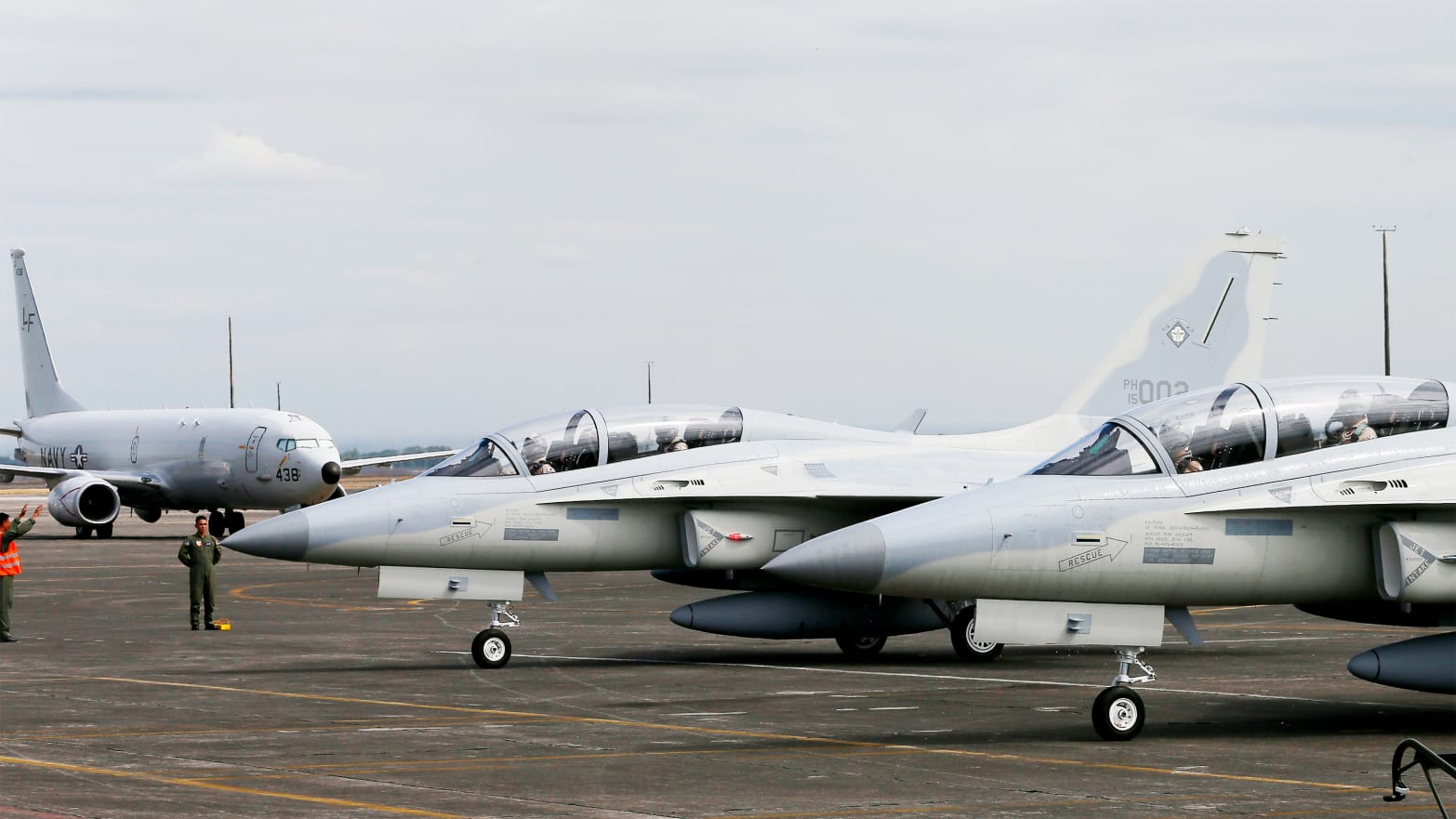
Bullit Marquez/AP

CLARK FREEPORT, Philippines—The tarnished carcasses of old fighter planes litter the landscape here, relics of what once was the biggest American air base outside the United States. In the Cold War days, combat aircraft and transports would take off in their hundreds, heading for targets from the Middle East to Vietnam to Korea. But these days, as new Cold Wars loom on the horizon with Russia and especially China, this historic former base is a symbol of emptiness in American defense policy.

The storied parade ground is still here, an expanse of greensward over which generals once presided as the base grew from an old Spanish cavalry post in 1898 to a symbol of global U.S. power.

As tremors in mid-June 1991 shook Mount Pinatubo, looming ominously 10 miles to the west, a U.S. Geological Survey team warned of one of history’s most dramatic volcanic blasts. The American commander, Air Force Major General William Studer, ordered the withdrawal of all 14,500 troops and civilians along with almost all the planes two days before the first of 42 eruptions in three days coughed up a firestorm of lava, mud and dust.

The Americans would never return—but not because the base, covered by ash and volcanic mud was beyond repair. The reason was rejection three months later of a new bases treaty by a Philippine senate eager to defy the “imperial power” that had ruled the Philippines as successor to the Spanish until the Japanese in 1942 inflicted one of the most humiliating defeats in U.S. military history.

True, the Americans, having recovered the country in terrible battles with the Japanese in 1945, granted independence to the Philippines in 1946, appropriately on July 4. But over the years Philippine “nationalists,” as they called themselves, resented the close ties between the Americans and Philippine leaders, notably the long-ruling Ferdinand Marcos, deposed in 1986 in a bloodless “People Power” revolution. In 1991 the senate president, Jovito Salonga, proudly cast the deciding ballot as the senate spurned the treaty, 12 to 11, a triumph recounted by Salonga in his book, The Senate that Said No.

THE CHINESE SEA

The Americans were gone for good—and not only from Clark but from Subic Bay, their biggest overseas naval base, on the other side of Pinatubo, 47 miles southwest in the South China Sea.

Today, the Chinese Communist Party is claiming more of those waters as its own. And this place that is now a tawdry Philippine Air Force base is a sad symbol of misplaced nationalism at a time when officials in Manila watch with consternation as Beijing marauds.

China purports to rule virtually all the South China Sea, menacing Philippine forces still clinging to tiny enclaves in the Spratly Islands where the Chinese have built an air strip and facilities for warships. As if that weren’t enough, Chinese boats, buoys and a floating chain keep Philippine fishermen from the fish-rich Scarborough Shoal, long claimed by the Philippines, 165 miles west of Subic.

President Rodrigo Duterte, best known for his brutal crackdown on drug dealers and users, has been trying to curry favor with China’s President Xi Jinping, whom he saw last week on his fifth trip to Beijing since his election three years ago.

Talk of a revival of the old relationship between the U.S. and the Philippines, still bound by a mutual defense treaty with the United States dating from 1951, has faded since Duterte stopped American warships from paying courtesy calls at Subic. Several thousand U.S. and Philippine troops do stage annual Balikatan—“shoulder to shoulder”—exercises but stay clear of the Chinese, a force the Americans are in no position to challenge without their historic bases.

Reminders of a bygone era are visible around the Clark Freeport in the form of old buildings that once served the Americans. Some are hollow shells, others rebuilt after a wave of looting in which Filipinos, with the connivance of high-ranking military officers, stripped the base of just about anything that might be sold on the open market, including copper wiring, pipes, and plumbing, as well as weapons and expensive electronic gadgetry. That era of massive thievery, an epidemic that officials prefer not to discuss, appears forgotten while planners welcome new investment, and headlines proclaim the dangers posed by the Chinese.

ANGELES CITY

The contrast between old and new times is nowhere so clear as in the transition of Clark Field from a strategic military base to a civilian airport. The Philippine Air Force, reduced to a handful of helicopters, old transports and jet trainers, manages only occasional flights off a single strip serving a dozen airliners packed with hard-charging passengers in pursuit of all the fun on offer at both Clark and in adjacent Angeles City.

“We say there’s not just life after the bases,” says Noel Tulabut, communications manager of the Clark Development Corporation, “There’s new life, period.” That includes factories and shops on the base, two 18-hole and two 9-hole golf courses and four casinos.

In a society said to have emerged from 400 years in a convent and 50 years in Hollywood, beyond the guarded entries to Clark the city of Angeles throbs to the beat of one of Asia’s most raucous, wide-open entertainment districts.

Young women, clad in brief but not overly revealing attire, as required by law, prance and dance on stages while still more women saunter up and down Fields Avenue and nearby streets ogled by men from around the world. Lingerie shops and massage parlors are interspersed among the nightclubs while drugs are available on back streets and narrow alleys despite Duterte’s war on dealers, said to have cost 10,000 lives in police raids and vengeance killings.

U.S. military people who once lit up “the red light district,” as it’s widely known, may no longer be around, but greying retirees, most of them living with Filipinas, hang out in the bars and clubs. Some of them congregate at Margarita Station, a legendary restaurant and pool hall run by a retired U.S. air force officer near what was once the main gate to the former base.

Old-timers at Margarita Station complain authorities are imposing new rules for the gaudy clubs, but visitors from South Korea and other Asian countries, plus Europe, Australia and the U.S., keep the place humming. The district flourishes decades after American GIs crowded the strip, rivalled only by the wild nightclubs of Olongapo by Subic Bay, a 90-minute drive to the west.

“The three G’s of golf, gambling and girls lure so many visitors that the airport is adding another terminal and two more strips.”

These days the goal is “to make Clark the main airport for the Philippines,” says Augusto Sanchez at the Clark International Airport Corporation. By the time Duterte steps down when his six-year term ends in 2022, says Sanchez, “a whole new infrastructure will be in place, all part of the Clark Freeport managed by the Clark Development Corporation.”

Now the most numerous visitors to Clark are Koreans, who fill the flights from South Korea in pursuit of all Clark and Angeles City have to offer. The three G’s of golf, gambling and girls lure so many visitors that the airport is adding another terminal and two more strips.

After all that’s done, maybe by next year, Clark should be poised to surpass Manila’s Ninoy Aquino International Airport as the Philippines’ main gateway. Befitting its rising stature, it’s even getting a new name, Lipad, which means “fly” in Tagalog and also is the acronym for Luzon International Premier Airport Development—Luzon being the name of the Philippines’ main island.

A PRETENSE OF DEFENSE

If Clark is already a center for business plus entertainment, what’s left of the Philippine Air Force shows the futility of standing up to Chinese claims to the entire South China Sea.

The weakness of the Philippines militarily was evident in the rhetoric of the Philippines foreign affairs secretary, Teodoro Locsin Jr., as he protested the encroachment of a Chinese vessel among Philippine islands far to the south.

“Fire diplomatic protests over the Chinese warship,” Locsin inveighed before an indignant Philippine senate committee. “Drop the diplomatic crap. Say it is ours, period. Say they are trespassing.”

Sure, as if the big talk would have the slightest impact on the Chinese, building new bases of their own on the Spratly Islands in defiance of claims by not only the Philippines but also Vietnam, Malaysia and even the small sultanate of Brunei, on the southern fringe of the sea.

Such remarks appear all the more absurd considering that President Duterte has assiduously cozied up to China. He’s repeatedly implied that China may be a more reliable friend than the U.S. as a result of the withdrawal of U.S. forces in 1991 and 1992 from Clark and Subic

Duterte, sensitive to criticism that he’s been overly friendly to Beijing, believes the latter-day Americans simply won’t do much, if anything, to defend the Philippines in a showdown. In a commentary dripping with sarcasm he told a local TV audience, “I would like America to gather all their Seventh Fleet in front of China.” Were that to happen, he said, “I will join them.”

More seriously, in Beijing last week, Duterte raised the issue of Chinese poaching in Philippine waters with President Xi—and even dared to say a ruling in 2016 by a U.N.-backed panel in The Hague rejecting China’s claim to sovereignty over the entire South China Sea was “binding,” not subject to appeal.

Good luck with that. Xi brushed aside Duterte’s claim, restating the oft-repeated Chinese position that the panel has no jurisdiction over anything China does. Rather, said the New China News Agency, reporting not a word about the ruling, the two preferred to “set aside disputes, eliminate external interference, and concentrate on conducting cooperation, making pragmatic efforts and seeking development.”

“Watch Out for Low-Flying Golf Balls”
— Sign in Air Force City

For Duterte, the payoff might lie in a deal for sharing the bounty of the sea, perhaps agreeing to a code of conduct for all competing claimants. But there’s a lot more at stake than fishing rights.

“I’m most interested in the extraction of the natural resources,” oil and natural gas, Duterte told reporters. In another rhetorical flourish, a spokesperson said bravely, “Either we get a compliance in a friendly manner or we enforce it in an unfriendly manner.”

In fact, the weakness of the Philippine armed forces is manifest. Its 170,000 troops have to defend the country’s 8,000 or so islands against not only external threats but also twin Muslim and communist revolts.

Among Duterte’s foes is the country’s vice president, Leni Robredo, a lawyer whose husband, a former cabinet minister, died in a plane crash seven years ago. The winner in a separate vote for vice president in the 2016 elections, Robredo accuses Duterte of “selling out” to China.

“The president has made a lot of statements which give a sense we are acquiescing to what China wants,” she said in an interview with Bloomberg. “We might wake up one day, and many of our territories are no longer ours.”

At Clark, such dire verbiage causes little concern. The civilian airport here passed a milestone of two million passengers in the first half of this year, and Texas Instruments and Samsung Electronics spin out semiconductors and other electronic products inside the zone. Three hours from Manila by a congested expressway and teeming city streets, the airport will in a few years be connected by a railroad, bringing it within an hour of the swarming capital.

Robert Brady, a pilot for FedEx who spent five years living on Clark while his father was based here in the 1970s, recalls the good old days with mixed feelings. “There used to be houses here,” he says, taking pictures by the old parade ground in between flights. “My old house was destroyed.” But he’s hopeful about the future: “The base is looking better. I wish them well. The Koreans are investing. The Koreans are everything.”

As for the danger posed by the Chinese in the South China Sea, that’s a bad dream on a distant horizon. In Air Force City, a corner of the sprawling former base still dedicated to the armed forces, decrepit cement barracks still show signs of the damage inflicted by Pinatubo’s cinder and ash. On the grass outside, signs warn, “Watch Out for Low-Flying Golf Balls,” nothing about enemy planes or missiles.

https://www.thedailybeast.com/as-china-closes-in-at-clark-air-base-in-the-philippines-nothing-but-ghosts-of-us-power

Opinion: Filipino West Pointers advise a new graduate

Opinion piece from A Point of Awareness column by Preciosa S. Soliven in the Philippine Star (Sep 5, 2019): Filipino West Pointers advise a new graduate

My oldest daughter, Rachelle is a registered nurse living in New Jersey with her three daughters. Several times that I saw her, I made sure to visit the famous West Point, the United States Military Academy (USMA). This included meeting the last three Filipino West Point graduates in 1993: 1st Lt. Rene Jose Jarque, 2nd Lt. Julius Tomines and 2nd Lt. Dennis Eclarin.

The Phl-Am Mutual Defense Treaty provided West Point scholarships

In 1993, Colonel Dennis Eclarin, our Filipino scholar, graduated among 1,000 US Military Academy seniors at West Point, located by the Hudson River, upstate New York. Four years of rigid but superior academic and military training worth $200,000 has been concluded. With the ending of the Mutual Defense Treaty between America and the Philippines that same year, the annual West Point scholarship grant for Filipinos was cut off. From then on the Philippines, with all the other Asian countries must vie for one of 10 scholarships available.

Two months after his graduation, from the US Military Academy, then 2nd Lt. Eclarin was welcomed to the Philippine Society of West Pointers. Members of this society are closely linked to the Philippine Military Academy where they do part of the yearling freshman year before leaving for West Point. Historically, both the USMA and PMA are strongly related since West Point heroes Gen. Douglas Mac Arthur and Gen. Dwight Eisenhower helped establish the PMA during the Commonwealth period. About 12 alumni members of the West Point Society met at the Officers’ Club of Camp Aguinaldo to welcome 2nd Lt. Eclarin, the 73rd scholar.

The ‘Duty, Honor, Country Pledge’ of the Philippine West Point Society

Society president Col. Ted Sanchez (ret.), Class ’54, one of the best instructors PMA has ever had and the general manager of the National Electrification Administration, said, “Duty, Honor, Country. This should be our pledge forever, Dennis. During our Career, as we raise a family simultaneously, until after we resign or retire. On the onset, you are a marked man – by your PMA classmates who vied for the West Point scholarship but did not make it, by your platoon soldiers who will expect much from you, and by the enemy who will be on the lookout for the prize victim. You will have to perform and prove yourself. At the same time, this certain illusion of a West Pointer, you must put in the right context – or you may yet destroy.”

Major Joe Dado, Class ’55, head of the Philippine National Railways, said, “You are ‘kuya’ to your men. Listen to them. You will learn a lot from them. Learn to blend with your community yet keep the right distance to avoid familiarity.”

BGen. Louie San Andres, Class ’57, a Meralco board member at that time told Eclarin “The first impression you make as a West Point Graduate is that you are ‘God’-like. People will say, ‘Let’s not mix with him. He knows too much.’ Instead, you must mix with them—to let them see you are human like them.”

PNP Chief Inspector Cris Acosta, Class ’82, a nuclear physicist and former Special Assistant at the Office of the President said, “you have had too much of US history, US culture. Review your Philippine history. Review Philippine current events.”

General George Washington referred to West Point as the “Gibraltar of America.” Right after the defeat of the British forces in Saratoga, he directed Colonel Kosciuszko to set up on this granite promontory up in the Appalachian Mountains a permanent garrison in 1778. This would thwart the British efforts to control navigation and split the colonies. In spite of the American colonial soldiers’ daring, Washington noted that they were simply a disunited ragged army, mostly illiterates. He proposed to the US Congress the establishment of a training school for military professionals.

Mr. A.L. Palomar, Class ’67, businessman of Ayala Company said, “You will make three major decisions when you get your commission. First, choosing the unit to be assigned and your field of specialization: army, marines or air force combat or non-combat field, Scout Rangers or Special Forces. You will earn P3,000 plus another P3,000 allowance. Second, you will eventually get married and raise a family. As your family grows, expenses of child-rearing and child education will increase. Unless your wife works, too, the pressure will be too much. You will be in a dilemma—career or family. Third, after 10 to 15 years, you may resign. Big companies are likely to hire you. This often becomes the final choice, rather than get compromised in your military career, ending in dishonor or negligence of duty.”

Mr. E.Q. Abesamis, Class 65, an executive of the International Cargo Terminal said, “West Point has molded you, shaped your ideals. These are likely to clash with the ways of the Philippine Army today. Thus, you will be puzzled, discouraged, and frustrated like we were.”

Major Romy Posadas, Class ’75, now working with Ayala Corporation said, “Promotions, Philippine-style, is ‘palakasan’. There will come a day when your West Point training which stresses that every rise in the rank must be merited will be shattered. Unfortunately, the power system of family influence and ‘utang na loob’ prevails more in our culture, overriding the professional way of earning promotions every step of the way.”

USMA established after18 years of deliberation by US Congress

It took 18 years for the US Congress to legislate Washington’s proposal to establish the US Military Academy. Its opponents attacked it on the basis that it was unnecessary, insufficient and a “wasteful retreat for the sons of the rich.” It took a combination of domestic revolt, Indian wars, clashes with Barbary pirates, a naval war with France as well as the pen of Alexander Hamilton and persuasion of General Knox to convince Congress of the necessity to action.

Best Scout Ranger Company of the Year 1999

After graduating from West Point, 2nd Lieutenant Dennis Eclarin joined the Scout Rangers, following in the footsteps of his mentor, General Rafael Ileto, West Point graduate of 1943. At the height of the Moro wars in Mindanao, Capt. Eclarin commanded the 4th Scout Ranger Company. He was instrumental in the recapture of the infamous MILF stronghold, Camp Abubakar. For this exploit he and his men were awarded “Best Scout Ranger Company of the Year 1999” for having only two wounded and no casualty. This was during President Estrada’s governance.

https://www.philstar.com/other-sections/education-and-home/2019/09/05/1949093/filipino-west-pointers-advise-new-graduate

SPECIAL REPORT//Hidden war wounds: PTSD in PH military (Pt. 1)

From the Philippine Daily Inquirer (Sep 7, 2019): SPECIAL REPORT//Hidden war wounds: PTSD in PH military

(Editor’s Note: The identities and assignments of the soldiers in this report are kept vague in order to protect their privacy. –Ed.)
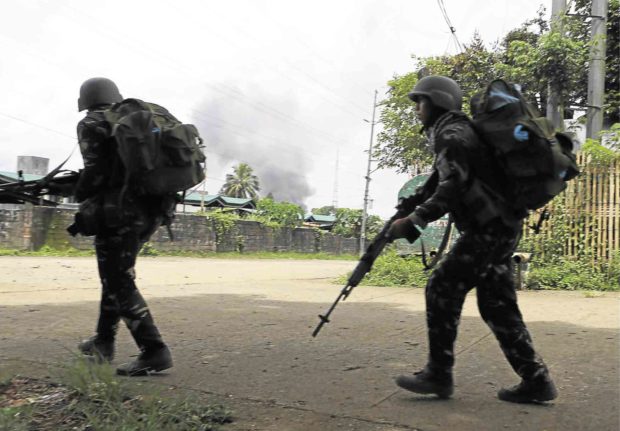


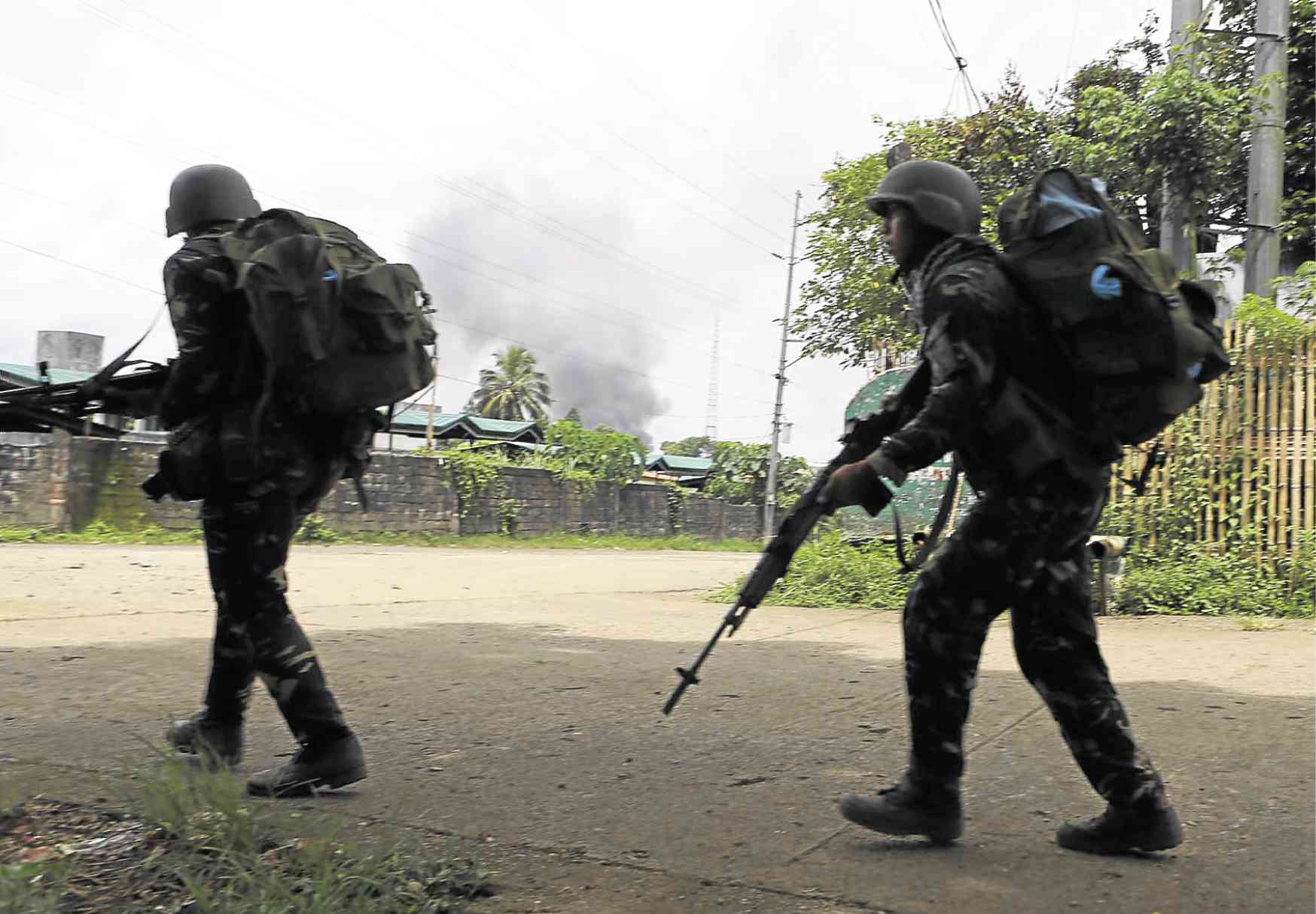
MARAWI NIGHTMARES The Army General Hospital recorded “between 10 and 12 clear-cut cases” of Army soldiers with PTSD after the five-month battle to regain Marawi City from Maute fighters in 2017. –INQUIRER FILE PHOTO

(First of two parts)

Soldier X decided to play dead when the Abu Sayyaf bandits reached the area where he and several other members of the Philippine Army lay wounded by enemy fire.

Motionless on the ground, he sensed that his buddy next to him had drawn the attention of the bandits. Behead him first, he heard someone ordering the others.

As the bandits prepared for the execution, his buddy’s screams forced Soldier X to take a peek. His buddy was looking at him and begging for his help: “Bok, tulungan mo ako!”

The Abu Sayyaf fighters left shortly. Soldier X survived his wounds, but his life became a living hell.

“He was killed beside me,” Soldier X later told Maj. Christine de Jesus, chief of the neuropsychiatric service of the Army General Hospital (AGH). “I didn’t know what to do. I was next, so I played dead.”

According to De Jesus, Soldier X’s postencounter condition showed classic symptoms of a person with PTSD, or post-traumatic stress disorder.

There were nightmares about the incident. Flashbacks occurred at any time of the day.

“In his dreams, Soldier X would hear his buddy’s voice, asking for help,” De Jesus said. “He refused to confide in anyone, thinking it was an unmanly thing to do. Eventually he resorted to alcohol, palakas nang palakas ang inom, cigarette smoking, and although I am not saying this is justified, there really are instances when sufferers resort to womanizing—those risk-taking behaviors that we classify as negative coping.”

“I wanted to forget” was how Soldier X explained it.

Only the threat of running out of funds after paying huge fees to a private psychologist forced him to turn to AGH. By then, his family had endured the effects of his undisclosed trauma for five years.
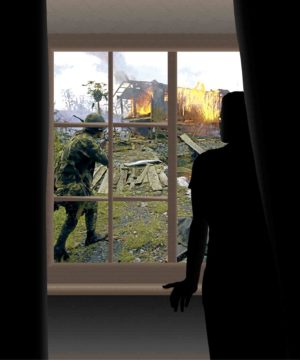


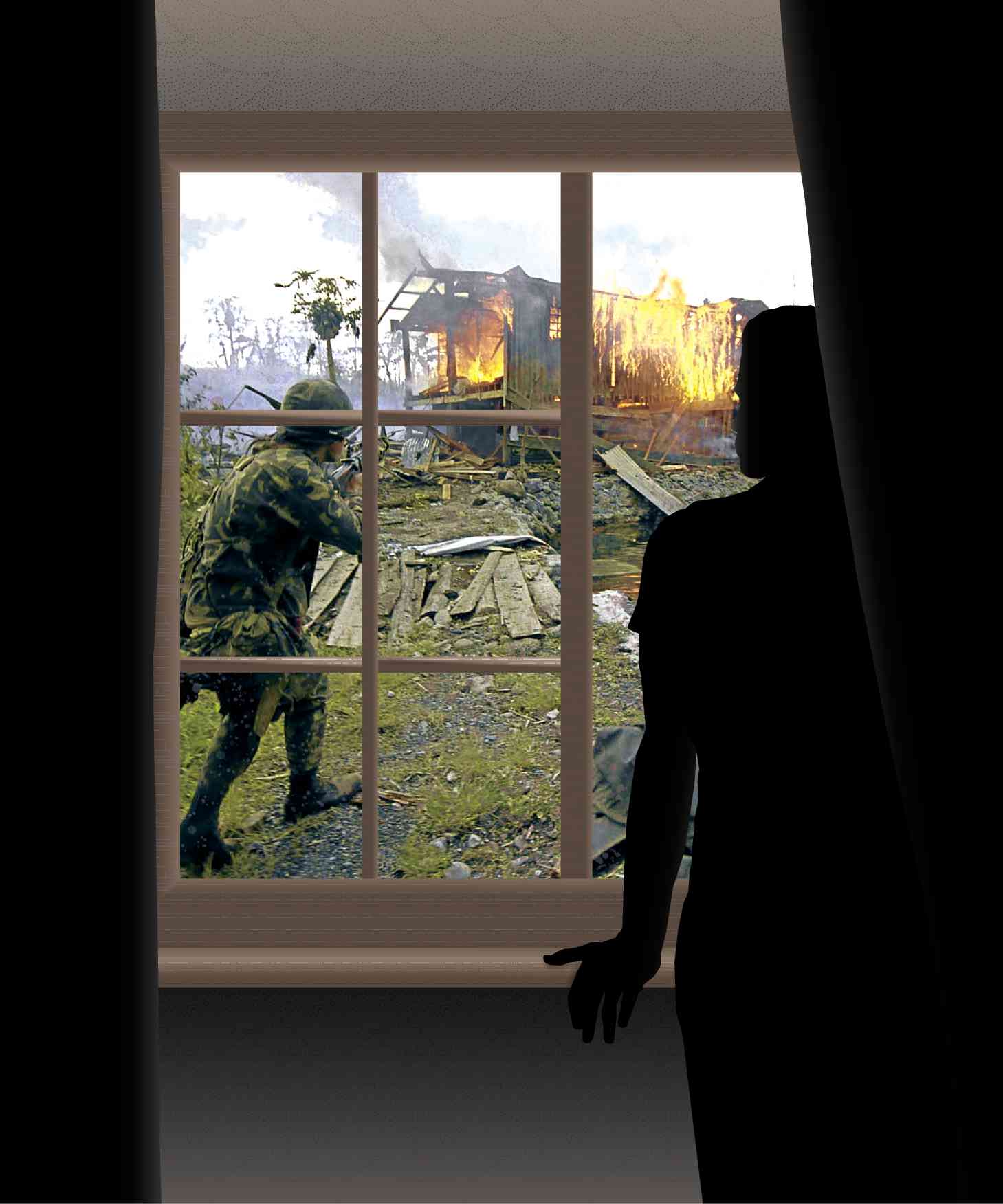
INQGRAPHICS BY JAKE SECO

Inability to recover

PTSD is a chronic condition that occurs when a person who has experienced or witnessed a traumatic event is unable to recover from the resulting distress. In the fifth edition of the Diagnostic and Statistical Manual of Mental Disorders (or DSM-5) used by the American Psychiatric Association, PTSD is considered if symptoms last more than a month.

The condition renders a person isolated and disempowered. And it could get worse if left untreated.

The Armed Forces of the Philippines acknowledges PTSD among soldiers, especially those who have survived brutal encounters with groups like the Abu Sayyaf in Mindanao.

For years now, the military has held stress debriefing programs for soldiers in an effort to reduce the risk of PTSD. The condition, while avoidable if detected early, can occur as long as soldiers are sent to combat zones.

AGH offers out-patient counseling sessions for recovering soldiers. The AFP Medical Center, more commonly known as the V. Luna General Hospital in Quezon City, handles the more serious cases of PTSD.

De Jesus said AGH recorded “between 10 and 12 clear-cut cases” of Army soldiers with PTSD after the five-month battle to regain Marawi City from Maute fighters in 2017. (More than 1,000 military men were wounded and 165 soldiers from the AFP’s various units were killed at that time.)

All Army personnel diagnosed with PTSD are referred immediately to V. Luna General Hospital, she said.

De Jesus had her residency training as a psychiatrist at V. Luna from 2007 to 2014. Army soldiers comprise the biggest number of PTSD patients there, she said.

“The Army has 86,000 soldiers. Of all Army men confined [in V. Luna] now, only a handful are PTSD cases, followed by those from the Air Force and the Navy. This is because those from the Army are the first to be sent to battle,” she said.

(The Air Force website shows it has 16,000 personnel. The Navy website reflects 24,000 “active personnel, including 7,500 Marines.”)

Shell shock

Maj. Jose Lorenzo P. Rollo MC, a psychiatrist at V. Luna, said the hospital admitted 23 soldiers for PTSD at the height of the Marawi crisis.

“Out of the thousands of soldiers sent to battle, less than 10 percent of those who fought there came back with PTSD,” he said.

Clinical psychologist Ma. Lourdes Carandang of the privately funded Mindfulness, Love And Compassion Institute for Psychosocial Services Inc. (MLAC) headed a team of psychologists invited by a nonprofit group to assist in the debriefing of soldiers who fought in Marawi.

“PTSD is a scientific label,” Carandang said. “In earlier times, they called it shell shock to refer to those who suffered trauma during the two world wars, also during the Vietnam War.”

Rollo said PTSD was also given “other names, like ‘Soldier’s Heart’ and ‘battle stress fatigue.’”

“The terms used have evolved. The current name, PTSD, was the term used [by the American Psychiatric Association] when I started here in V. Luna,” he said.

While it is the soldiers who are afflicted with PTSD, those who are constantly with them, such as family members, are often the ones who have to deal with its effects, Carandang noted.

The symptoms commonly observed among PTSD sufferers include hypervigilance—when the person is always ultrasensitive and on guard. Flashbacks, nightmares and uninvited mental images of the traumatic event are another red flag.

The soldiers debriefed by the MLAC team group after the Marawi siege constantly saw images of mosques and other buildings destroyed during battle.

Said Carandang: “Seeing Marawi in ruins was already traumatizing. Imagine taking part in destroying it. That is very disturbing. Their stories were about flashbacks of destroyed buildings. Eh, sacred place pa. Even if they were not Muslim, they knew they were violating the mosques’ sacredness. The words that always arose during the debriefings were ‘sacred’ and ‘beautiful city.’”

Frightened children

Carandang led another team of MLAC psychologists that helped debrief soldiers in another military operation in Mindanao in 2013.

She refused to offer details other than that the soldiers could not sleep because of recurring nightmares of children running away in fright as they fired their guns.

Some soldiers asked her if they were “going crazy, because the images always came back,” she said. “They cannot prevent it.”

AGH’s De Jesus cited the startled reflex in describing a soldier surprised by a sudden noise like the sound of fireworks and hiding under a table.

Rollo said he saw this reaction among soldiers who were being treated at V. Luna on New Year’s Eve just a little over two months after the Marawi crisis ended: “Residents just outside the hospital were celebrating with fireworks. The patients had flashbacks and hid under their beds. I witnessed it. Nurses also reported seeing patients cowering under their beds. Later that night, some soldiers said they had nightmares. They dreamt about Marawi. Many said they thought they would die.”

Patients with advanced PTSD become paranoid and experience tremors while telling their stories. One soldier, De Jesus recalled, could not let go of his gun and had to be disarmed by hospital personnel.

Social withdrawal is not a surprising consequence, she added.

Carandang mentioned “constriction” as another symptom: when the sufferer goes numb or avoids places, topics and even forms of media that remind him of his experience.

De Jesus recalled a patient who avoided people in red “because members of the New People’s Army wear that color.”

The case of soldiers with PTSD is considered more complicated than that of other trauma victims “because they obeyed a command that may be against their inner values…” Carandang said. “You don’t want to kill but you’re supposed to. That’s violating your inner core.”

Guilt

In the case of the Marawi fighters, the MLAC psychologists had to coax them to acknowledge the guilt they felt afterward, she said, adding:
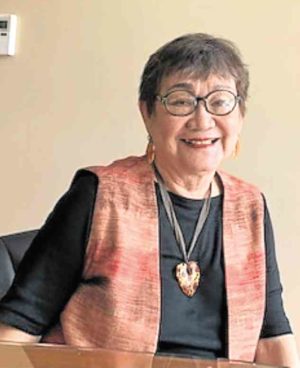


“Seeing Marawi in ruins was already traumatizing . . . Their stories were about flashbacks of destroyed buildings . . . Even if they were not Muslim, they knew they were violating the mosques’ sacredness”  Ma. Lourdes Carandang  Clinical Psychologist

“They could not even mention the word ‘guilt.’ We were the ones who had to ask. Maybe they were unaware, or maybe too traumatized, and they could not spell it out. Looking at the city, seeing it in ruins, was traumatizing already. Imagine taking part in destroying it.”

Carandang warned of the dangers of undiagnosed PTSD, “especially if the [patient] exercises power as an authority. He can victimize people without knowing. It can lead to many, many consequences. They can be violent toward others, be always angry, have uncontrolled outbursts, and they don’t know why they are doing these.”

She said there were instances when the man became abusive to his spouse, “unaware it is all because of the trauma that remains unhealed.”

De Jesus used the phrase “macho image” to explain why many PTSD sufferers refused to consult with military health professionals.

“Once they are admitted to a psychiatric facility [in the military], their condition is recorded in a system of profiles ranging from P1 to P4,” she said.

A soldier who earns a P3 category is automatically taken out of the war zone and admitted to a hospital, De Jesus said without elaborating. Full recovery means the soldier has earned a P1 category and is allowed to return to the field.

Occasionally, when a soldier is returned to his unit, he has to contend with ribbing that he was once confined in the ward for PTSD patients, De Jesus observed. Also, the P3 classification, even if it no longer applies, stays recorded in his files.

Rather than endure that experience, some combatants like Soldier X choose to see private practitioners, De Jesus said.

“But all of this is beginning to change,” said AGH’s lone psychiatrist. “The Army, for example, has begun programs that would allow soldiers to detect the symptoms in themselves and in their friends. We have a buddy system where soldiers check on each other as a first aid measure.”

(To be concluded)

https://newsinfo.inquirer.net/1161867/hidden-war-wounds-ptsd-in-ph-military