Thursday, August 29, 2019

Ex-Salugpungan learners get makeshift classroom

From the Philippine News Agency (Aug 29, 2019): Ex-Salugpungan learners get makeshift classroom


MAKESHIFT CLASSROOM. The makeshift classroom established by the Department of Education to respond to the needs of the 51 primary pupils in Sitio Gatungon, Barangay Tapak, Paquibato District. (Photo courtesy of Davao City Information Office)

DAVAO CITY -- A makeshift classroom has been built for former pupils of the controversial Salugpungan Ta Tanu Igkanungon Community Learning Center, Inc. (STICLCI) in a far-flung area in this city, an official said.

Col. Nolasco Mempin, commander of the Army's 3rd Infantry Brigade, said the classroom in Paquibato District was completed on Tuesday (August 27) to cater to the elementary pupils of the STICLCI-run school in the area that was among the 55 tribal schools suspended by the Department of Education (DepEd).

DepEd-Region 11 suspended the operations of STICLCI schools in the region following allegations of the school system's ties with the communist rebel movement.

Mempin said the temporary classroom was funded by DepEd and its partners to "bridge the education needs of the 51 primary pupils in Sitio Gatungon, Barangay Tapak, Paquibato District."

“This temporary school donated by some of our partner stakeholders like UBI (Ulticon Builders Inc.), Peace 911 and DepEd will surely address the lack of classrooms in far-flung areas,” he said.

He said the classroom also eased the pupils' burden of walking for hours to go to the nearest DepEd school in the area.

STICLCI's operations were suspended on July 12 after National Security Adviser Secretary Hermogenes Esperon accused the school system of promoting the "violent" ideology of the New People’s Army (NPA), the armed wing of the Communist Party of the Philippines (CPP).

Based on the testimonies of former students and teachers, Esperon alleged that STICLCI-run schools were being used as training and recruitment centers for the NPA.

The NPA-CPP has been listed as a terrorist organization by the United States, the European Union, the United Kingdom, Australia, Canada, New Zealand, and the Philippines.

“The CPP-NPA-NDF targets the communities for their exploitation and recruitment in their extremism and struggles to topple existing and change it with their Marxist-Leninist-Maoist socialism form of government through the Salugpongan schools,” Mempin said. He was referring to the National Democratic Front, the political arm of the CPP-NPA.

DepEd has earlier said that learners of schools that do not have permits or have not been accredited or recognized by the government could not proceed to the next higher grade level.

https://www.pna.gov.ph/articles/1078942

PNP: More leftist leaders hiding in Metro Manila

From the Philippine Star (Aug 29, 2019): PNP: More leftist leaders hiding in Metro Manila

Several leaders of the Communist Party of the Philippines (CPP) who are fugitives from justice are believed to be hiding in Metro Manila, according to the Philippine National Police (PNP).

“Of course meron. Remember that Metro Manila is a wide area,” PNP chief Gen. Oscar Albayalde told reporters on Tuesday.

Albayalde said Metro Manila is a viable place for leftist leaders to hide from the authorities.

He said the rebels include those who have standing warrants of arrest and those recuperating from injuries they suffered in encounters with government security forces in the mountains.

Albayalde did not give names, but said the rebels include ranking CPP officials.


“Malilikot ang mga iyan. They go from one place to another to evade arrest,” he said.

Among them is 60-year-old Esterlita Suaybaguio who was arrested at her safehouse in Escalades Condominium Tower 5 in Cubao, Quezon City on Monday.

Authorities said Suaybaguio is the CPP’s regional party secretary in Metro Manila, who allegedly led the recruitment of students for the communist movement.

Albayalde said they are monitoring the movements of these communist rebels, including couple Benito and Wilma Tiamzon, who were given temporary liberty in 2016 for the peace talks with the government.

President Duterte has ordered the couple’s arrest along with other rebel leaders after the peace negotiations bogged down.

Albayalde said they have no information if the Tiamzons are staying in Metro Manila.

“Kung minsan nasa ibang province sila based on our monitoring,” he said.

https://www.philstar.com/nation/2019/08/29/1947217/pnp-more-leftist-leaders-hiding-metro-manila

Aussie firm, Aboitiz unit team up for AFP deal bid

From the Philippine Daily Inquirer (Aug 29, 2019): Aussie firm, Aboitiz unit team up for AFP deal bid

The local unit of Australian shipbuilding giant Austal is partnering with Aboitiz Construction Inc. to build new vessels for the Armed Forces of the Philippines.

Aboitiz Construction, a subsidiary of Aboitiz & Co., said it had signed a memorandum of agreement (MOA) with Austal Philippines Pty Ltd. ahead of the tender of six new offer shore patrol vessels (OPVs) of the AFP.

Aboitiz Construction earlier designed, developed, and built six assembly bays in Austal’s expanded shipbuilding facility in Balamban, Cebu. The newly expanded assembly bays will allow OPVs to be constructed right here in the country.

“In the MOA, Austal has identified Aboitiz Construction as the potential local subcontractor in the event that it succeeds in its bid,” the company said in a statement.

“Aboitiz Construction offers a competitive advantage because it operates a fabrication shop beside the Austal shipyard within the Balamban economic zone in West Cebu,” it added.

Aboitiz Construction said it would undertake the cutting and fabrication of the vessel’s steel hulls.

“Our record of repeat international orders throughout these years will show the quality and competitiveness of our fabrication services,” Alberto A. Ignacio Jr., Aboitiz Construction president and COO, said in the statement.

“We are equally optimistic about this partnership as we further demonstrate our growing capability as a trusted local contractor for international customers, further enhancing our brand promise to advance business and communities,” he added.

Aboitiz Construction has long years of experience in shipbuilding. One of its largest customers is Tsuneishi Heavy Industries (Cebu) Inc., a venture between Japan’s Tsuneishi Group and Aboitiz & Co.

What Does the New Philippines Defense Budget Say About Future Military Modernization Under Duterte?

From the Diplomat (Aug 28, 2019): What Does the New Philippines Defense Budget Say About Future Military Modernization Under Duterte? (By Prashanth Parameswaran)

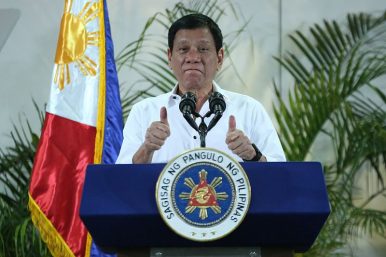
What Does the New Philippines Defense Budget Say About Future Military Modernization Under Duterte?

Image Credit: Presidential Communications Office of the Philippines

Last week, numbers were disclosed for the Philippines’ initial defense budget. While these numbers are still preliminary, they nonetheless warrant analysis to get a sense of what they say and do not say about the Southeast Asian state’s defense outlook for 2020 and beyond under Philippine President Rodrigo Duterte.

As I have noted before in these pages, though the Philippine military has long faced a range of internal and external challenges – including insurgencies, natural disasters, and unresolved territorial and sovereignty issues with neighboring states – it has also suffered from anemic and at at times astrategic investment in past periods. While the country has been trying to make up for this through advancing a phased Armed Forces Modernization Act over the next few decades – with three horizons or phases initially out to 2028 – the defense budget every year tends to be scrutinized for continuity and change with respect to that longer-term trajectory.

Last week, we saw the revelation of Philippine budget numbers sought by the Duterte administration from Congress, which included those for the Department of National Defense (DND). Per the budget announced on August 21, the proposed defense budget for the Philippine military, known as the Armed Forces of the Philippines (AFP) is 188.6 billion pesos ($3.6 billion) for 2020. This initial amount constitutes a slight 3 percent increase compared to the amount for 2019.

The composition of the defense budget and DND budget more generally reflects some structural realities in Philippine defense spending that are evident in some other Southeast Asian countries as well. For instance, while the budget for the AFP constitutes an increase, of the overall budget of 258 billion pesos for the DND – which also administers other institutions, including veteran services – around a quarter of 69.7 billion pesos went to pensions, a 24 percent increase from the previous year despite ongoing efforts by policymakers to control rising costs in this area.

In addition, within the defense budget itself more specifically, despite rising maritime security challenges for the Philippines – Defense Secretary Delfin Lorenzana told Congress when asked about Chinese infringements into Philippine waters that Manila had “very small capability to react to these intrusions” – the bulk of Philippine defense spending is still going to the army. The service distribution proposed has 91.5 billion pesos for the Philippine Army – nearly half of the overall budget – with 29 billion pesos for the Philippine Navy, 25.9 billion pesos for the Philippine Air Force, and 36.8 billion pesos for General Headquarters, most of which is allocated for the AFP’s military modernization efforts.

Each of the services did see minor increases. But for perspective, and in line with the priorities of the Duterte administration, these numbers paled in comparison to, for instance, the Philippine National Police (PNP), which saw around a 30 percent increase in its current budget with the focus on winning the so-called war on drugs. That emphasis reflects more broadly the Duterte administration’s greater emphasis on more internal threats – such as terrorism, criminality, and insurgency – rather than external threats such as China’s maritime assertiveness.

To be sure, these numbers constitute proposed allocations, rather than finalized ones, and as is often the case for defense budgets in the Philippines, the funding will be supplemented by other sources as well. In addition and more generally, for all the focus on topline defense budget numbers, a more granular assessment of Philippine defense spending and military modernization will have to take into account specifics such as how this affects particular line items in the Second Horizon and Third Horizon of the phased Revised Armed Forces of the Philippines Modernization Program. Nonetheless, as these numbers are disclosed, it will continue to be important to assess what they say and don’t say about the Southeast Asian state’s future defense outlook.

[Dr. Prashanth Parameswaran is Senior Editor at The Diplomat based in Washington, D.C., where he produces analysis on Southeast Asian political and security issues, Asian defense affairs, and U.S. foreign policy in the Asia-Pacific. Previously, he worked on Asian affairs at several think tanks, including the Center for Strategic and International Studies. He holds a PhD and an MA in international relations from the Fletcher School of Law and Diplomacy at Tufts University, and a BA in foreign affairs and peace and conflict studies from the University of Virginia.]

PH Navy open to crafting ‘navigational arrangement’ with China

From the Manila Bulletin (Aug 28, 2019): PH Navy open to crafting ‘navigational arrangement’ with China

The Philippine Navy (PN) on Wednesday expressed openness to proposals suggesting the creation of a “navigational arrangement” with China amid the increased presence of their vessels in the Philippine waters.


Philippine Navy (MANILA BULLETIN)

Vice Admiral Robert Empedrad, Flag-Officer-in Command of the PH Navy, said this will help the Philippines establish rules when Chinese vessels enter the country’s territory.

“Kung mayroon tayong (If we have a) system that will improve our relations with China in matters of intrusions, especially in the West Philippine Sea, bakit naman hindi (why not?),” Empedrad told defense reporters at the PH Navy headquarters in Manila.

Earlier, maritime law expert Jay Batongbacal suggested that the Philippines and China should establish a navigational arrangement, just like what the government has with the United States.

Batongbacal, director of the University of the Philippines (UP) Institute for Maritime Affairs and Law of the Sea, said US and the Philippines have reached an agreement that American vessels must send prior notification to the Philippine military before they can enter our territorial waters.

He said there were mechanisms that enabled such arrangement because of the Mutual Defense Treaty (MDT) and the Visiting Forces Agreement (VFA) between the two countries.

China has its own policy requiring foreign vessels to seek clearance from its Navy before one can enter their territorial waters, Batongbacal said.

Meanwhile, President Duterte earlier issued a directive similar to China’s policy.

According to Presidential spokesperson Salvador Panelo, the foreign vessels need to comply in a friendly way or the Philippine government will have to enforce it in an “unfriendly manner.”

But Empedrad believes that a navigational arrangement between the Philippines and China will further help improve the ties between the two countries.

“Maa-avoid ang mga alitan (Conflicts will be avoided) and the passage will be friendly. We will even help to draft policies,” he said.

‘Unfriendly’ manner

The PH Navy Chief also clarified their “rules of engagement” in dealing with ship intrusions in an attempt to come up with an explanation on what the President could possibly mean when he said the government will enforce his order in an “unfriendly manner.

Empedrad said that if a ship intrusion happens, the Navy’s littoral monitoring stations (LMS) will immediately alert them so that a military ship will be deployed to either “shadow” the foreign vessel or to shoot “across its bow.”

“Once the LMS monitors a ship entering our territorial waters, we deploy our own ship if there’s available one. We direct it to shadow or accompany the ship assuming na hindi sila nagpaalam (they did not coordinate with us),” he explained.

“Kapag hindi siya sumagot or nagpatay siya ng (If it didn’t respond or turned off its) AIS [automatic information system], probably we can send an aircraft to shadow it. We take pictures of the ship, determine its location in our territory,” he continued.

If the ship still fails to identify itself, that’s the time that the military will shoot “across its bow,” which means it will cut in front of the vessel’s path or blow a horn to announce the PH military’s presence.

“Not necessarily provocative kasi ang provocative it means your ship is ready for war. We will not be doing that. We just maneuver to tell them that they are passing through our territorial waters,” Empedrad noted.

Caraga RTF-ELCAC clusters present action plans vs insurgency

From the Philippine Information Agency (Aug 29, 2019): Caraga RTF-ELCAC clusters present action plans vs insurgency


BUTUAN CITY -- After days of tedious formulation of action plans by the different clusters under the Regional Task Force To End Local Communist Armed Conflict (RTF-ELCAC) held here, all have been ironed out and presented during the joint during the 2nd RTF-ELCAC meeting on Tuesday, August 27 in Surigao City.

“Members of the different clusters convened to firm up their respective action plans and these were presented during the 2nd RTF-ELCAC meeting with Cabinet Secretary Karlo Nograles,” bared Director Lilibeth Famacion of the Department of the Interior and Local Government (DILG)-Caraga.

Undersecretary Joann Burgos of the Office of Cabinet Secretary, stressed the need for member-agencies to fully understand their respective functions and responsibilities in the task force to attain its common goal and that is to end the insurgency in Caraga region and attain sustainable peace and development.

She said Caraga is one of the most challenged areas in the country when it comes to peace and order.


“Cabinet Secretary Nograles is looking forward to be working with the different clusters in Caraga to address the insurgency concerns in the region and for a more peaceful and developed Caraga,” Burgos said.

According to Assistant Regional Director Roy Kantuna of the National Economic and Development Authority (NEDA) Caraga, this initiative of finalizing the actions plans for a comprehensive implementation of the Executive Order (EO) No. 70 is very timely, as these will also be used in the updating of the regional development plan, wherein the conflict-affected areas in the region are identified and given due attention for the establishments of investment programs.

It can be recalled that EO No. 70 was signed by President Rodrigo Roa Duterte on December 4, 2018, and since then, government agencies have conducted various strategies to address the problem on insurgency in the country. (JPG/PIA-Caraga)

https://pia.gov.ph/news/articles/1026432

Tagalog News: RTF-ELCAC sa Caraga puspusan sa pagsakatuparan sa mga programang tutugon sa problema ng insurhensiya

From the Philippine Information Agency (Aug 29, 2019): Tagalog News: RTF-ELCAC sa Caraga puspusan sa pagsakatuparan sa mga programang tutugon sa problema ng insurhensiya


LUNGSOD NG BUTUAN -- Mas pinaiigting pa ng pamahalaan ang pagsagawa ng ibat-ibang aktibidad na tumutugon sa problema ng insurhensiya sa rehiyon ng Caraga.

Kabilang na dito ang pagsasaayos at pagpapatayo ng mga proyekto pangkaunlaran para mas maramdaman ng mga Caraganon ang malasakit ng gobyerno at hindi na malinlang at makumbinse ng New People’s Army na sumali sa kanilang grupo at lumaban sa pamahalaan.

Sa isinagawang 2nd Regional Task Force to End Communist Armed Conflict (RTF-ELCAC) Meeting sa Surigao City kasama si Cabinet Secretary Karlo Nograles, Cabinet Officer for Regional Development and Security at Chairperson ng RTF-ELCAC sa Caraga, hinimay-himay ng bawat cluster ang action plans na tumutugon sa implementasyon ng Executive Order No. (EO) 70 o ang 'whole-of-nation' approach sa pagkamit ng pangmatagalang kapayapaan sa rehiyon.

Napag-usapan din ang mga ginagawang hakbang ng Task Force Siargao, Task Force Socorro, at updates sa Surigao City Airport Upgrading Project, Sayak Airport Development, Tandag City Airport Development, Surigao del Norte Nautical Highway, at Leyte-Surigao Bridge.

Sa kanyang report, ibinahagi ni Atty. Felix Alicer, direktor ng Department of Environment and Natural Resources, na nagsagawa ng inspeksyon ang Task Force Siargao sa mahigit 1,000 establisyemento sa ilang barangay sa General Luna, Surigao Del Norte at 671 nito ay tourism-related establishments.


Pinuri ni Cabinet Secretary Nograles ang mga lokal na opisyal lalo na ang naging host sa nasabing meeting, ang local government unit ng Surigao del Norte at Surigao City sa kanilang ipinakitang interes at suporta sa mga inisyatibo ng RTF-ELCAC at sa pakikiisa sa hangarin nito na sugpuin ang insurgency sa rehiyon.

Binigyang-diin ni Surigao del Norte Gob. Francisco Matugas na bagamat malaking hamon ang pagresolba sa patuloy na problema sa insurgency, kung may pagtutulungan at pagkakaisa ay walang imposible.

Ito rin ang paniniwala ni Surigao City Mayor Ernesto Matugas, Jr. na hindi magtatagal at mararanasan din ng mga Caraganon ang payapa at matiwasay na pamumuhay sa rehiyon. Mas palalawakin pa nila pagsagawa ng medical at dental mission; basic social services; at iba pang programa na bahagi rin sa kanilang tinututukan ngayon. (JPG/PIA-Caraga)

https://pia.gov.ph/news/articles/1026545

PNP backs move to review 1989 UP-DND agreement

From the Philippine Information Agency (Aug 29, 2019): PNP backs move to review 1989 UP-DND agreement


Socmed card courtesy of PNP PIO

QUEZON CITY -- Philippine National Police Chief, Police General Oscar D. Albayalde supports the opinion of Commission on Higher Education Chairman, Dr. Prospero De Vera on the need to review the 30-year old agreement between the Department of National Defense and University of the Philippines that sets rigid conditions for access of government security forces into UP campuses.

The Chief PNP particularly agreed with the CHED Chair who cited the “prevalence of the drug problem” in the state university and its police force’s inability to handle crime and extremism in campus.

“We should not expect those in the academe to become policemen. They don’t have the skills, they don’t have the training and maybe what the media should investigate is what is the capability really of the UP Police to handle the drug problem inside the campus because there are portions of the UP campus identified as areas where there is a prevalence of drugs,” De Vera was quoted as saying on Tuesday.

Emerging from an informal exploratory dialogue among the security sector and academe in Camp Crame yesterday, Abayalde said the meeting sought “to usher a series of dialogues and consultation to explore common ground where government and the academe can fulfill its respective mandates”.

Albayalde said the PNP “seeks to build stronger collaboration among stakeholders to protect campuses against criminal activities, drug syndicates, and shadowy organizations that promote and espouse Local Communist Armed Conflict against government thru force and violence.”

For his part, De Vera said both parties wanted to “find common ground on how we can work together,” as part of the CHED’s campaign for safe and healthy campuses, safe from crime and extremism.

"The relationship between the PNP, the Armed Forces of the Philippines, and the universities is very, very close. There is no problem in terms of coordination. There is no problem in sharing of information, in sharing of crime statistics and helping each other," Dr. De Vera said.

In 1989, UP President Jose Nemenzo and then Secretary of the National Defense, Fidel Ramos forged an agreement limiting the capacity and presence of police and military force in its major campuses and regional units. (PIA InfoComm/PNP PIO)

In addition, the 1989 accord specifically provides that "no member of police may conduct operations on UP campuses without prior coordination with, or as requested by UP authorities".

“We only have the best interest of the youth backing our pure good intention to establish police presence in schools against crime, exploitation and abuse,” the Chief PNP said.

“We want to increase police visibility enough to deter criminal or drug syndicates from preying on students, all for the greater good of national priorities to enforce the law, ensure student and public safety which are the mandated duties of the police,” he added. (PIA InfoComm/PNP-PIO)

Caraga stakeholders vow support for EO 70

From the Philippine Information Agency (Aug 29, 2019): Caraga stakeholders vow support for EO 70


SURIGAO CITY, Surigao del Norte -- Advancing inclusive and sustainable peace through ‘whole-of-nation’ approach, this is the focus of the pledge of commitment among the members of the Caraga Regional Task Force to End Local Communist Armed Conflict (RTF-ELCAC) during the 2nd Caraga RTF-ELCAC meeting presided by Cabinet Secretary Karlo Nograles, Cabinet Officer for Regional Development and Security and Caraga RTF-ELCAC Chairperson.

The problem on insurgency and other armed conflict were given priority as mandated in the Executive Order No. 70 of President Rodrigo Duterte.

“Ang Caraga region naman ay isa mga priority regions pagdating dito sa national task force natin. Isa ito sa mga rehiyon na binabantayan talaga ni Pangulo dahil sa insurgency problem. At may mga direktiba galing sa national task force kung kaya ginagawa natin na regular ang pagmimeeting natin dito sa rehiyon (Caraga region is one of the priority regions as considered by the national task force. President Rodrigo Duterte himself gave special attention due insurgency problem. There are specific directives from the national task force that is why we are conducting regular meetings here in the region),” said Nograles.

The twelve clusters of the Caraga RTF-ELCAC also presented the programs, projects and activities, including the budgetary requirement, as contained in the action plan crafted by cluster members.


According to Manuel OrduƱa, Regional Director of the National Intelligence Coordinating Council Region 10, the government agencies, local government units and other stakeholders in Caraga are extending full cooperation and providing positive contributions.

He said that the task force is currently amplifying the established Peace and Development Zones or PDZs, a peace-building initiative which promotes the establishment of durable peace by addressing the root causes of conflict in Caraga region.

“All the efforts here in Caraga region are remarkable. The ongoing focused-military operations are proving to be successful against the New People's Army (NPA) rebels. The peace and development zones are already identified where all the government’s resources and efforts will be concentrated,” said OrduƱa.

Meanwhile, Department of Science and Technology (DOST) - Caraga Regional Director Dominga Mallonga shared how the agency could contribute in finding solutions to the communist armed conflict.

“There are significant Science and Technology research and innovations that will be beneficial to the Caraganons. In fact, we are set to launch a new project which will be piloted in five high schools,” Mallonga said.

She added that the theme, “Science for the People: Enabling Technologies for Sustainable Development,” of this year’s Science and Technology Week celebration really fits to support the efforts under the EO No. 70 in order to ultimately achieve the goal for sustainable peace and development.


Technical Education and Skills Development Authority (TESDA)-Caraga Regional Director Ashary Banto also pointed out the importance of the Technical Vocational Education and Training (TVET) offered by TESDA.

“We will ensure that we will be bringing the trainings to the barangays. So they don’t need to go to the provincial offices. They can easily inquire about their preferred TESDA courses and enrol or avail it for free,” said Banto.

Office of Civil Defense Caraga Regional Director Liza Mazo also mentioned the agency’s role of building capacity for resilience especially among the vulnerable sectors.

“It’s a mandate of the OCD to conduct capacity-building trainings. We already have our local DRRM councils down to the barangays. As such, we are committed to empower the locals, especially in the PDZs, through community-based disaster risk reduction management (CBDRM),” Mazo said.

Nograles urged the RTF-ELCAC members to be more sensitive to the needs and aspirations of conflict-affected communities by finding solutions through the use of retooled community support program (RCSP). (VLG/PIA-Surigao del Norte)

Caraga RTF-ELCAC boosts implementation of concrete PPAs that address insurgency problem

From the Philippine Information Agency (Aug 29, 2019): Caraga RTF-ELCAC boosts implementation of concrete PPAs that address insurgency problem


The government through the Regional Task Force to End Local Communist Armed Conflict (RTF-ELCAC) has leveled up the implementation of concrete plans, programs and activities (PPAs) that would address the problem on insurgency in Caraga region.

Among these initiatives include the rehabilitation and establishment of long-term developmental projects for Caraganons to feel the concern and care of the government and to prevent people from the deceptions and recruitment of the New People’s Army to join the terrorist group and fight against the government.

Featured Image

During the 2nd RTF-ELCAC Meeting held in Surigao City with the presence of Cabinet Secretary Karlo Nograles, Cabinet Officer for Regional Development and Security and Chairperson of RTF-ELCAC in Caraga, each cluster thoroughly assessed the formulated action plans for the implementation of Executive Order No. 70 or the whole of nation approach to attain lasting peace in the region.

The RTF-ELCAC has also discussed the ongoing activities of the Task Force Siargao, Task Force Socorro and updates of Surigao City Airport Upgrading Project, Sayak Airport Development, Tandag City Airport Development, Surigao del Norte Nautical Highway, and Leyte-Surigao Bridge.

In his report, regional director Atty. Felix Alicer of the Department of Environment and Natural Resources (DENR) Caraga bared that the Task Force Siargao conducted an inspection to more than 1,000 establishments in several barangays of General Luna, Surigao del Norte and 671 of these are tourism-related establishments.


Meanwhile, CabSec. Nograles lauded the local officials of Surigao del Norte and Surigao City, who served as hosts of the meeting and acknowledged them for their support and active participation in all the initiatives and efforts of the RTF-ELCAC and for doing its best to stop the insurgency in the region.

Surigao del Norte governor Francisco Matugas said that despite of the great challenge in resolving the problem on insurgency, he is still positive that nothing is impossible when people unite and work together towards a common goal.

Also, Surigao City Mayor Ernesto Matugas, Jr. expressed that Caraganons will soon experience sustained peace and development in Caraga region. The government would further intensify the conduct of medical/dental mission; basic social services and other programs, which have been part of their priorities. (JPG/PIA-Caraga)

https://pia.gov.ph/news/articles/1026600

Union of efforts key to solving security woes: Army official

From the Philippine News Agency (Aug 29, 2019): Union of efforts key to solving security woes: Army official


CHANGE OF COMMAND. Col. Noel T. Baluyan, former chief of the Task Group Cebu, receives the unit heraldry from Maj. Gen. Dinoh Dolina, commander of the 3rd Infantry "Spearhead" Division, as he assumes post as new commander of the 302nd Infantry "Achiever" Brigade in a change of command ceremony at the Camp Leon Kilat in Tanjay, Negros Oriental on Tuesday (Aug. 27. 2019). Baluyan vowed to work aggressively with the stakeholders in addressing security concerns in his area of jurisdiction. (Photo contributed by Capt. Daffy Tawantawan)

CEBU CITY – The former chief of the Task Group Cebu of the Armed Forces of the Philippines (AFP), who is now the new commander of 302nd Infantry “Achiever” Brigade of the Philippine Army based in Tanjay City, Negros Oriental, on Thursday said “convergence of efforts is the key” in solving security concerns in Central Visayas.

Col. Noel T. Baluyan, former deputy commander of Achiever Brigade formerly based in Carmen, Bohol and head of Cebu task group, took the helm as its commander, replacing Brig. Gen. Ignacio Madriaga who will be assigned to the General Headquarters of the AFP in Camp Emilio Aguinaldo in Quezon City.

The change of command ceremony on Tuesday was presided by Maj. Gen. Dinoh Dolina, commander of the 3rd Infantry "Spearhead" Division, at Camp Leon Kilat in Tanjay City.


Baluyan vowed to work with the various stakeholders in addressing security issues in his jurisdiction.

“I emphasized in my message to my colleagues in the Brigade during the change of command that we will aggressively engage the stakeholders, our counterpart with the PNP (Philippine National Police), the local government units, other government agencies and the community in the pursuit of our shared goal,” he said in a message sent to the Philippine News Agency (PNA).

Baluyan said he is “fully aware of the herculean tasks placed on my shoulders”.

“Given the complexity of the security environment in our area of responsibility, we must not lose sight of the fact that the military solution is not enough to solve this multi-faceted insurgency problem. There are political, social and economic dimensions. Indeed, there are more issues than meets the eye,” he said.

He noted of the task of the military in the region in solving insurgency, particularly in Negros Oriental area, through the Regional Task Force on Ending Local Communist Armed Conflict, in line with President Rodrigo Duterte’s proclamation on Executive Order No. 70.

The executive order signed by the President last Dec. 28, 2018 institutionalizes the whole of nation approach in ending insurgency and the creation of National Task Force on Ending Local Communist Armed Conflict.

https://www.pna.gov.ph/articles/1079054

BARMM flies new regional flag

From the Philippine News Agency (Aug 29, 2019): BARMM flies new regional flag


The official flag of the Bangsamoro Autonomous Region in Muslim Mindanao (Photo courtesy of BARMM Chief Minister’s Office)

Interim Chief Minister Ahod “Murad” Ebrahim of the Bangsamoro Autonomous Region in Muslim Mindanao (BARMM) on Wednesday signed into law the creation of the region’s official flag.

On the same day, the BARMM unveiled its official flag and allowed it to fly first in front of the BARMM executive building in this city.


“It was historic because it was the first legislation that became (a) law under Minister Ebrahim’s leadership,” lawyer Naguib Sinarimbo, BARMM’s interior minister and concurrent regional spokesperson, said.

Ebrahim signed the Bangsamoro Autonomy Act No. 1 that adopted the official flag of the BARMM, following an enabling measure passed by the interim 80-member Bangsamoro Transition Authority (BTA).

On Aug. 23, the BTA handed its first-ever ever decree -- “An act adopting the official flag of the BARMM” -- which was subsequently approved by Murad.

“The flag reflects the Bangsamoro’s identity, history, and struggles,” Sinarimbo said.

The Bangsamoro flag, the size of a standard banner, has the colors of green on top that reflects Islamic teachings and principles; white in the middle (peace, tranquility, and righteousness); red in the bottom (recognition of identity and self-determination).

The middle of the white section also contains the golden yellow crescent moon and a seven-rayed star representing the provinces of Maguindanao, Sulu, Tawi-Tawi, Basilan, Lanao del Sur; the cities therein of Lamitan and Marawi; and the added city of Cotabato and 63 villages in North Cotabato that opted to join the BARMM during a plebiscite held earlier this year.

Also, the center of the red portion bears a white “Kris” (ridged winding blade) that symbolizes the protection and resistance of the BARMM against oppression, tyranny, and injustice.


The edict said the Bangsamoro flag should be regarded with utmost respect and admiration, and should always be displayed alongside the Philippine flag - pursuant to Section 2, Article 2 of Republic Act 11054, the organic law that created the BARMM.

Moreover, all Bangsamoro public offices, public and private schools, colleges and universities, government-owned and controlled corporations and other government instrumentalities under the region are required to use and display the flag.

“When necessary, the Bangsamoro flag may also be used in ceremonial and symbolic activities. The same may likewise be reproduced in small sizes for similar purposes,” the edict said.

https://www.pna.gov.ph/articles/1079007

More parents join awareness drive vs. NPA recruitment of minors

From the Philippine News Agency (Aug 29, 2019): More parents join awareness drive vs. NPA recruitment of minors


AWARENESS DRIVE. Around 300 participants stage a peaceful rally to spread awareness on the deceptive recruitment being done by alleged communist front groups in Manila on Thursday (Aug. 29, 2019). (PNA photo)

Around 300 participants, mostly parents, staged a peaceful rally in Manila on Thursday to spread awareness on the deceptive recruitments of minors by alleged communist front groups.

Parents whose children were taken away by youth organizations Anakbayan and Kabataan backed up the mothers who previously appeared in public to share their struggles and seek help to claim their daughters recruited by the leftist groups.

Elvie Caalaman said her daughter, who graduated from the Polytechnic University of the Philippines, shared the same fate as the mothers whom she watched during a recent Senate hearing.

Caalaman was accompanied by other parents from Hands Off our Children and League of Parents in the Philippines (LPP) during the rally, which started in front of the University of Santo Tomas and ended at the Mendiola Bridge.

Relissa Lucena, who was among the first mothers who sought help from authorities to have her daughter, Alicia, back, is also part of the group.

“Pumunta talaga kami doon sa hearing para maghanap ng tulong at para maglakas loob din ang ibang mga magulang na umapela para sa kaligtasan at seguridad ng kanilang mga anak (We went to the hearing to seek help and at the same time, encourage other parents who lost their children as well to show up),” she said.

Meanwhile, a bystander who was accompanying his first-year senior high school son attending Far Eastern University (FEU) shared in an interview that he supports the participants' call to spread awareness to other parents and students.

“I support them but at the same time, I think it is our responsibility as parents to guide and protect our children from these elements,” the parent, who requested not to be named said, adding that he is familiar with the issue because he was involved with student activism before as well.

“In my time as student, I too, joined these activist groups because may mga gawain din ang gobyerno na hindi ako pabor pero tumigil din ako kasi nakita ko (na) walang patutunguhan, hindi nakakatulong (there are things that I am not in favor that the government does but I eventually quit because it’s going nowhere),” he explained.

The parents' group, however, clarified that they are aware that activism is not a crime, but expressed dismay on how some activist groups led students to join the communist armed rebellion.

"Magsisimula silang magpukaw ng damdamin sa pamamagitan ng mga issues na malalapit sa kabataan gaya ng tuition hike, away sa pamilya. Kakaibiganin nila sila. Kalaunan, gagawin nilang mga pambansang usapin at ang pinakadulo nito ay paglatag sa armadong pakikibaka at pagsapi sa NPA na s’yang tanging solusyon sa pambansang krisis (They will get their attention with smaller issues like tuition (fee) hike, family misunderstandings. They bond with them as friends then scale up the discussion to bigger, of national concern issues. Then, they introduce issues on armed conflict, joining the NPA)," LPP Secretary General Grace Ibona said.

https://www.pna.gov.ph/articles/1079049

Lack of law allows unannounced passage of ships in PH waters

From the Philippine News Agency (Aug 29, 2019): Lack of law allows unannounced passage of ships in PH waters


Philippine map

MANILA -- Foreign vessels and warships will continue passing through Philippine waters unannounced as it did in the past, with the absence of a domestic law requiring them to notify the government first, a ranking Philippine official bared Thursday.

MalacaƱang had recently ordered all foreign vessels passing through the country's waters to acquire clearance in response to the reported passage of five Chinese warships through the Sibutu Strait in July and August 2019.

Philippine Ambassador to China Jose Santiago Sta. Romana said this "call to all" issued by the chief executive stands but further discussion on the subject is called for.

"It's a matter again for the maritime experts and legal experts to deal with because it seems there is a need for an archipelagic passage bill because under the law if you don't have that, then they will pass through (as) what is done in the past and apparently these passageways were open to commercial traffic as well as warships in the past," he told reporters during a press briefing in Beijing.

Sta. Romana said the question boils down to whether there is any hostile intent with the Chinese vessels' passage. Recalling the position made by the Chinese side, the envoy said the foreign state maintained the passage as "innocent".

"They say it's an innocent passage, no hostile intent, and they say if there are any concerns on the part of the Philippines, we can discuss it through diplomatic channels and also between military to military so as to clear the air," he said.

“If it's done through consultations, I think we can clear the air,” he added.

But the Philippine government, for its part, will continue verifying information related to the issue, he assured. "You know, as the saying goes in diplomacy, trust but verify."

Foreign Affairs Secretary Teodoro Locsin Jr. had earlier confirmed that a diplomatic note was sent to the Chinese government over the issue.

According to Sta. Romana, the document contained calls on the Chinese side for "clarification" on where did the vessels came from, the reason for its passage, and why their Automatic Identification Systems were inactive.

https://www.pna.gov.ph/articles/1079066

Duterte, Xi to have ‘friendly, honest’ talks: Sta. Romana

From the Philippine News Agency (Aug 29, 2019): Duterte, Xi to have ‘friendly, honest’ talks: Sta. Romana


CHINA VISIT. President Rodrigo Roa Duterte receives a warm welcome from Chinese Ambassador to the Philippines Zhao Jianhua upon his arrival at the Beijing Capital International Airport in the People's Republic of China Wednesday (Aug. 28, 2019). Duterte embarked on his fifth visit to China upon invitation of Chinese President Xi Jinping. (Presidential photo)

BEIJING -- Philippine Ambassador to China Jose Santiago Sta. Romana said President Rodrigo Duterte and Chinese President Xi Jinping have already developed friendship and rapport for the two leaders to have a friendly and honest discussion on the disputed waters.

Duterte and Xi are set to meet for the eighth time Thursday evening in Beijing.

Sta. Romana said Duterte included in his diplomatic agenda sensitive issues such as the West Philippine Sea and the arbitration award.

“I think the President has made it clear that from his point of view the time has come. I think the first three years he has exerted a lot of the diplomatic capital to build a reservoir of goodwill and friendship with President Xi,” he said.

“[H]e is not coming here to impose it on China. He is not coming here to provoke the Chinese. He is coming here to exchange views, to understand where the differences lie. And to have a deeper understanding, and to see where there are areas where the gaps can be bridged,” the envoy added.

He said with the previous meetings between the two leaders, the Chinese government has been reassured that the Philippines will move forward in a friendly and cooperative manner.

“He (Duterte) is here to build bridges, not to burn bridges with China,” Sta. Romana stressed.

“President Xi, I think, has a good measure of the President. So I think he expects an honest discussion, direct but friendly -- in a friendly and cordial atmosphere,” he added.

Recently, the owner of the Chinese ship that was involved in the incident with a Filipino fishing boat in the Recto Bank in the West Philippine Sea has made a public apology.

“The issuance of the public apology by the ship owner is a welcome development. It helps clear the air for the bilateral talks that will happen tonight,” Sta. Romana said.

He also mentioned that Chinese fisheries officials also expressed a verbal apology and gave a verbal report, which the embassy here transmitted to authorities.

“This apology, of course, represents the ship owner. But in a sense, I think through diplomatic discussions with the Chinese side, we have made it clear that this had a negative impact, had an adverse impact on the bilateral relations particularly on China’s image,” the envoy said.

“And that one way to correct this was through what you’ve seen: the public explanation, the investigation, and the apology,” he added.

Sta. Romana said the Philippine government welcomes this apology from the Chinese side, but it will be the fishermen involved in the incident who will acknowledge the apology.

https://www.pna.gov.ph/articles/1079075