From the Philippine News Agency (Oct 25): NPA unit in ComVal destroyed: military
DAVAO CITY – The communist New People’s Army (NPA) operating in Compostela Valley province suffered another setback after government troops destroyed one of its biggest guerrilla fronts in the region.
Capt. Jerry Lamosao, spokesperson of the Army's 10th Infantry Division, said Wednesday that the 66th Infantry Battalion troops dismantled the NPA's Guerilla Front (GF) 25 belonging to the Sub-Regional Committee (SRC) 1, Southern Mindanao Regional Committee.
GF 25 is the second NPA front declared dissolved by the Armed Forces of the Philippines (AFP) and the Philippine National Police (PNP) following continued military operations that forced the rebels to surrender, Lamosao said.
The first NPA front declared dissolved was GF 27.
Lamosao said GF 25 suffered losses since January when 24 of its regular members surrendered to the 66th IB, as well as the death of two fighters and the wounding of several others in a series of military operations.
In mid-June, Lamosao said GF 25 was left with nine members and failed to recruit more.
According to Lamosao, the NPA’s SRC 1 failed to revive the GF 25, which also lost its mass base Komiteng Rebolusyonaryo sa Munisipalidad (KRM) and the Komiteng Rebolusyonaryo sa Baryo. This also includes the Compostela Farmer’s Association, the NPA’s legal front, he added.
Brig. General Reuben Basiao, commander of the Army's 701st Infantry Brigade based in Compostela Valley, said GF 25's dismantling was "another proof that the NPA continues to lose tactically.”
With this development, Basiao called on the NPA members and supporters to surrender.
“You are at the losing end, fight the government and you will surely perish. Surrender now while peaceful ends are being offered to you,” Basiao said.
http://www.pna.gov.ph/articles/1052035

Wednesday, October 24, 2018

NegOcc massacre part of 'Red October' plot: AFP chief
From the Philippine News Agency (Oct 25): NegOcc massacre part of 'Red October' plot: AFP chief

The country’s military chief has linked the massacre of nine workers in a sugar farm in Sagay City, Negros Occidental last Oct. 20 to the Communist Party of the Philippines' (CPP) "Red October" ouster plot that security forces earlier exposed.
"It is obvious that there is a sinister plot, there is some orchestration. We see that this is well-orchestrated and there is indeed a plot. Meaning, when they put the nine poor civilians in the farm, they know that incident will already happen," Armed Forces of the Philippines (AFP) Chief-of-Staff Carlito Galvez Jr. said in a press briefing in Camp Aguinaldo, Quezon City on Wednesday.
Galvez said the incident was aimed at putting President Rodrigo Duterte and the government in a bad light.
The killings in Negros Occidental and other areas in the country, he said, are connected to the documents they have gathered and are willing to declassify if necessary.
"This is what we saw and this is what we are afraid of. Had we not revealed their plans (to the media), it might have been bigger. (In Camarines Sur), they ambushed a non-combatant secretary of FDA (Food and Drugs Administration). They are trying to sow fear (and show) that they are still around and they are a force to reckon (with). What PNP (Philippine National Police) Chief Oscar Albayalde said about their acts as part of 'Red October' is here. We called it 'Red October' because they will make this October bloody," Galvez said.
The military chief earlier said that a thorough investigation is already ongoing to establish the identities and motives of the suspects behind the crime.
"Various government agencies, including the Philippine National Police, National Bureau of Investigation, and the Department of Agrarian Reform (DAR) are jointly working on the investigation," he said, adding that what is known as of this time is that the victims were all recruits of the National Federation of Sugar Workers (NFSW), a front organization of the CPP-New People’s Army (NPA).
"In fact, they were recruited, after paying PHP500 for one hectare of land, less than two days before the incident," Galvez added.
And according to the families, residents, and authorities in the area, the victims were not workers in the farm or claimants to the land.
"DAR has also claimed that the victims are not entitled beneficiaries. They were brought there by their recruiters from the NFSW who left just before the shooting happened," Galvez said.
This incident, he said, confirms earlier reports that the CPP has been hatching plans to oust the Duterte Administration by rousing civil unrest and discrediting the government.
Oplan Bungkalan
Galvez explained that this is part of the CPP's "Oplan Bungkalan", a nationwide campaign to mobilize farm workers to rally for the cause of the communists marketed as a struggle for agrarian reform, and is to take advantage of farmers and use them as bait.
"By manipulating, deceiving, and exploiting the needs of these farmers, the NFSW has put the lives of these farmers in grave danger by pitting them against the landowner and other land claimants in the area, with the end of jumpstarting an orchestrated nationwide protest by leftist groups," he said.
The AFP chief said he is convinced that when the conclusive findings of the investigation have been released, the CPP-NPA and its puppet organization, the NFSW, would have blood in their hands.
"As to the alleged involvement of the AFP in the killing of nine farmers, DAR Secretary John Castriciones has already categorically denied the AFP and the police’s involvement in the killings and clarified that the incident is a land conflict," he added.
Galvez called on leftist groups to substantiate their allegations and give the families some reprieve and consolation by not propagandizing and politicizing the incident.
"While the investigation is ongoing, we have extended our sincerest condolences to the victims’ families and we have committed to provide any assistance to ensure that justice will be served and the perpetrators will be put behind bars," he said.
Galvez said the AFP, DAR, Department of Social Welfare and Development, and local government units of Negros Occidental are working together to give immediate and long-term aid to the victims’ families and to ensure that justice is served.
"The government and its security forces will work together to resolve the social cancer and land conflict in the area. The AFP is one with the farming communities of Negros and the whole country in these trying times,” Galvez said.
“We call on all workers to be more perceptive and vigilant in order to protect their interests from being exploited by front organizations of the CPP-NPA and by personalities who may use the incident as leverage for their political ambitions," he added.
http://www.pna.gov.ph/articles/1052069
The country’s military chief has linked the massacre of nine workers in a sugar farm in Sagay City, Negros Occidental last Oct. 20 to the Communist Party of the Philippines' (CPP) "Red October" ouster plot that security forces earlier exposed.
"It is obvious that there is a sinister plot, there is some orchestration. We see that this is well-orchestrated and there is indeed a plot. Meaning, when they put the nine poor civilians in the farm, they know that incident will already happen," Armed Forces of the Philippines (AFP) Chief-of-Staff Carlito Galvez Jr. said in a press briefing in Camp Aguinaldo, Quezon City on Wednesday.
Galvez said the incident was aimed at putting President Rodrigo Duterte and the government in a bad light.
The killings in Negros Occidental and other areas in the country, he said, are connected to the documents they have gathered and are willing to declassify if necessary.
"This is what we saw and this is what we are afraid of. Had we not revealed their plans (to the media), it might have been bigger. (In Camarines Sur), they ambushed a non-combatant secretary of FDA (Food and Drugs Administration). They are trying to sow fear (and show) that they are still around and they are a force to reckon (with). What PNP (Philippine National Police) Chief Oscar Albayalde said about their acts as part of 'Red October' is here. We called it 'Red October' because they will make this October bloody," Galvez said.
The military chief earlier said that a thorough investigation is already ongoing to establish the identities and motives of the suspects behind the crime.
"Various government agencies, including the Philippine National Police, National Bureau of Investigation, and the Department of Agrarian Reform (DAR) are jointly working on the investigation," he said, adding that what is known as of this time is that the victims were all recruits of the National Federation of Sugar Workers (NFSW), a front organization of the CPP-New People’s Army (NPA).
"In fact, they were recruited, after paying PHP500 for one hectare of land, less than two days before the incident," Galvez added.
And according to the families, residents, and authorities in the area, the victims were not workers in the farm or claimants to the land.
"DAR has also claimed that the victims are not entitled beneficiaries. They were brought there by their recruiters from the NFSW who left just before the shooting happened," Galvez said.
This incident, he said, confirms earlier reports that the CPP has been hatching plans to oust the Duterte Administration by rousing civil unrest and discrediting the government.
Oplan Bungkalan
Galvez explained that this is part of the CPP's "Oplan Bungkalan", a nationwide campaign to mobilize farm workers to rally for the cause of the communists marketed as a struggle for agrarian reform, and is to take advantage of farmers and use them as bait.
"By manipulating, deceiving, and exploiting the needs of these farmers, the NFSW has put the lives of these farmers in grave danger by pitting them against the landowner and other land claimants in the area, with the end of jumpstarting an orchestrated nationwide protest by leftist groups," he said.
The AFP chief said he is convinced that when the conclusive findings of the investigation have been released, the CPP-NPA and its puppet organization, the NFSW, would have blood in their hands.
"As to the alleged involvement of the AFP in the killing of nine farmers, DAR Secretary John Castriciones has already categorically denied the AFP and the police’s involvement in the killings and clarified that the incident is a land conflict," he added.
Galvez called on leftist groups to substantiate their allegations and give the families some reprieve and consolation by not propagandizing and politicizing the incident.
"While the investigation is ongoing, we have extended our sincerest condolences to the victims’ families and we have committed to provide any assistance to ensure that justice will be served and the perpetrators will be put behind bars," he said.
Galvez said the AFP, DAR, Department of Social Welfare and Development, and local government units of Negros Occidental are working together to give immediate and long-term aid to the victims’ families and to ensure that justice is served.
"The government and its security forces will work together to resolve the social cancer and land conflict in the area. The AFP is one with the farming communities of Negros and the whole country in these trying times,” Galvez said.
“We call on all workers to be more perceptive and vigilant in order to protect their interests from being exploited by front organizations of the CPP-NPA and by personalities who may use the incident as leverage for their political ambitions," he added.
http://www.pna.gov.ph/articles/1052069
Too early to call for ML extension in Mindanao: AFP
From the Philippine News Agency (Oct 25): Too early to call for ML extension in Mindanao: AFP

It is still premature to recommend the extension of martial law in Mindanao, Armed Forces of the Philippines (AFP) chief-of-staff Gen. Carlito Galvez Jr. said Wednesday.
"Sa ngayon, ongoing assessment natin (For now, our assessment is ongoing). We will visit Western Mindanao and Eastern Mindanao in the next few weeks (as part of the assessment)," Galvez stressed.
While noting that it is still too early to make any sort of recommendation, the AFP chief said he is happy with the support given by various sectors regarding the issue.
"But I’m so happy that Sen. (Sherwin) Gatchalian, the PNP and also even the religious are recommending for the extension of martial law. We are very happy considering that it means that our soldiers are very professional. We are also very happy that our stakeholders are satisfied that we are implementing martial law to the fullest of our capability as a professional Armed Forces," Galvez noted.
Earlier, Malacañang said it would depend on the recommendation of the AFP whether or not martial law will be extended after the end of the year.
Martial law in Mindanao was declared on May 23, 2017 following attacks launched by the Maute Group in Marawi City.
The House of Representatives, in a special joint session in July last year, granted the extension of martial law until Dec. 31, 2017 at the President's request.
The Senate and House of Representatives, convening in a joint session early December, granted the Chief Executive's request for the extension of martial law and the suspension of the privilege of the writ of habeas corpus for a period of one year from Jan. 1 to Dec. 31, 2018.
http://www.pna.gov.ph/articles/1052063
It is still premature to recommend the extension of martial law in Mindanao, Armed Forces of the Philippines (AFP) chief-of-staff Gen. Carlito Galvez Jr. said Wednesday.
"Sa ngayon, ongoing assessment natin (For now, our assessment is ongoing). We will visit Western Mindanao and Eastern Mindanao in the next few weeks (as part of the assessment)," Galvez stressed.
While noting that it is still too early to make any sort of recommendation, the AFP chief said he is happy with the support given by various sectors regarding the issue.
"But I’m so happy that Sen. (Sherwin) Gatchalian, the PNP and also even the religious are recommending for the extension of martial law. We are very happy considering that it means that our soldiers are very professional. We are also very happy that our stakeholders are satisfied that we are implementing martial law to the fullest of our capability as a professional Armed Forces," Galvez noted.
Earlier, Malacañang said it would depend on the recommendation of the AFP whether or not martial law will be extended after the end of the year.
Martial law in Mindanao was declared on May 23, 2017 following attacks launched by the Maute Group in Marawi City.
The House of Representatives, in a special joint session in July last year, granted the extension of martial law until Dec. 31, 2017 at the President's request.
The Senate and House of Representatives, convening in a joint session early December, granted the Chief Executive's request for the extension of martial law and the suspension of the privilege of the writ of habeas corpus for a period of one year from Jan. 1 to Dec. 31, 2018.
http://www.pna.gov.ph/articles/1052063
Opinion: Abrigo - The KMU frustration
Opinion piece by Danny Abrigo posted to the Sun Star-Davao (Oct 21): Abrigo: The KMU frustration
IN MY previous article, I mentioned that the Communist Party of the Philippines adopted the Euro-Communism theories to grab the capitalists’ bonanza from our resources.
Communism penetrates through the labor sector by presenting labor unions as fronts, supposing to negotiate the company’s management in a form of a Collective Bargaining Agreement (CBA), to demand more benefits on top of the employees’ regular remuneration.
Often these labor unions demands astronomically high figure, under prejudice conditions that will force the investors to shut down.
During president Gloria Arroyo’s time, as an economist, she ruled that when a holiday falls on weekdays, the observance must be moved near to the weekend to conserve the momentum of productivity on working days, except May 1 the Labor Day that was not moved, because there is a compelling annual march, labeled “celebration” of the Kilusang Mayo Uno (KMU).
In her administration, KMU touched the pinnacle of status as the most dreadful labor union.
How have you been KMU after the recent dispersal against your protesting members in ComVal?
Instead of going through a normal process of selecting a labor union to serve Sumifru, the Nagkahihusang Mamumuo sa Suyapa Farm – National Federation of Labor Unions – Kilusang Mayo Uno (Namasufa-Naflu-KMU) boycotted the Department of Labor and Employment (DOLE) supervised election. Later, the group held a picket line thinking that their demand for an increase of wages to P750 be served.
Sumifru Philippines Corporation is a Japanese multinational company with about 4,700 workers. The company rather closes than to compromise to the asymmetrical demand. If each of the affected workers has three children, how many dependents will be starved with the impending stoppage of Sumifru operations?
Thanks to the Civil Relations Service of the Armed Forces of the Philippines who have done their share in educating the affected workers to fight back against the communist-driven KMU labor union. (abrigodann@gmail.com)
https://www.sunstar.com.ph/article/1770298
IN MY previous article, I mentioned that the Communist Party of the Philippines adopted the Euro-Communism theories to grab the capitalists’ bonanza from our resources.
Communism penetrates through the labor sector by presenting labor unions as fronts, supposing to negotiate the company’s management in a form of a Collective Bargaining Agreement (CBA), to demand more benefits on top of the employees’ regular remuneration.
Often these labor unions demands astronomically high figure, under prejudice conditions that will force the investors to shut down.
During president Gloria Arroyo’s time, as an economist, she ruled that when a holiday falls on weekdays, the observance must be moved near to the weekend to conserve the momentum of productivity on working days, except May 1 the Labor Day that was not moved, because there is a compelling annual march, labeled “celebration” of the Kilusang Mayo Uno (KMU).
In her administration, KMU touched the pinnacle of status as the most dreadful labor union.
How have you been KMU after the recent dispersal against your protesting members in ComVal?
Instead of going through a normal process of selecting a labor union to serve Sumifru, the Nagkahihusang Mamumuo sa Suyapa Farm – National Federation of Labor Unions – Kilusang Mayo Uno (Namasufa-Naflu-KMU) boycotted the Department of Labor and Employment (DOLE) supervised election. Later, the group held a picket line thinking that their demand for an increase of wages to P750 be served.
Sumifru Philippines Corporation is a Japanese multinational company with about 4,700 workers. The company rather closes than to compromise to the asymmetrical demand. If each of the affected workers has three children, how many dependents will be starved with the impending stoppage of Sumifru operations?
Thanks to the Civil Relations Service of the Armed Forces of the Philippines who have done their share in educating the affected workers to fight back against the communist-driven KMU labor union. (abrigodann@gmail.com)
https://www.sunstar.com.ph/article/1770298
ASEAN must adapt its approach to Marawi
Posted to the East Asia Forum (Oct 23): ASEAN must adapt its approach to Marawi (By Joseph Franco)
Manila continues to grapple with the challenges of countering violent extremism. Nearly a year after the battle for Marawi, Philippine President Rodrigo Duterte’s declaration of martial law over Mindanao is yet to address fully the threat posed by groups linked to the so-called Islamic State (IS). Winning the war against violent extremism in Southeast Asia will require greater cooperation among ASEAN states.

ASEAN was quick to act when the fighting erupted in Marawi. Singapore was one of the first countries to send humanitarian supplies to the beleaguered city. Indonesia, Malaysia and the Philippines established joint trilateral border patrols to prevent the movement of terrorists.
Southeast Asian countries also cooperated closely in knowledge-sharing to confront violent extremist groups following the siege. ASEAN defence ministers are now discussing the establishment of the ‘Our Eyes’ Initiative, which seeks to further institutionalise pre-existing intelligence-sharing mechanisms.
Information operations by the Philippine military complemented its combat operations during the battle for Marawi. Partnerships with major social media companies and other states led to the systematic takedown of harmful content. Confronting terrorist ideologies online denied IS-linked groups full control of the informational space.
But the military defeat of the Maute Group and its IS-linked allies in Marawi is only the first step in rebuilding the city.
The ruins of what was once the commercial heart of Marawi stand testament to the long-term disruption posed by violent extremism. The razing of dozens of mosques and madrasahs (educational institutions) in Marawi imperils the city’s status as the Philippines’ centre for Islamic learning. Delayed reconstruction of the city would only lead to resentment and create a wellspring for terrorist narratives in the future.
Growing polarisation within states can lead to the emergence of other potential ‘extremisms’ besides the brand of violence associated with IS and other resurgent groups such as al-Qaeda. This is apparent in ASEAN, which has witnessed the continuation of sectarian violence. Violence has come from a broad range of actors, from inchoate nationalist movements to secessionist groups.
There is an emerging consensus that countering violent extremism can be more effective through the implementation of non-securitised digital literacy and public education programs than the promotion of counter-narratives. Southeast Asian youths remain vulnerable to recruitment by violent extremist groups.
Unfortunately, the distribution of government capacities among ASEAN member-states is too uneven to pursue a holistic counter-extremism effort. One way to level the playing field is to identify capacity gaps and share lessons learned through events such as the regional counter-terrorism symposium that was held in Singapore in October 2018.
As ASEAN pushes to create a resilient and networked community of peoples, states should act to enable joint initiatives on counter extremism. ASEAN’s long record of fostering both governmental and non-governmental diplomatic initiatives would make it unnecessary to reinvent the wheel in this regard.
Beyond upstream efforts to inoculate vulnerable populations from violent extremism, ASEAN can help improve the quality of life in Mindanao. The Bangsamoro Organic Law is expected to bring meaningful political and economic autonomy to Filipino Muslims. But its success rests on the ability of local elected officials to take the lead in bringing progress to their communities. ASEAN can help balance uneven levels of local governance in Mindanao by focussing on capacity-building programs.
Addressing the socioeconomic roots of conflict in Mindanao is a long-term project. But its benefits go beyond dissipating the sources of rage that violent extremists tap into for their radicalisation activities. Gaining valuable experience in promoting good governance could pay dividends even in non-security issues across Southeast Asia. Economic and political development forges stronger communal bonds. This could help stem the increasing appeal of populist politics and the intolerance it breeds within states.
Multilateral security mechanisms should only be the start of a holistic counter-extremism effort in Southeast Asia. National-level best practices can be found across ASEAN, whether involving states or non-state entities. The challenge lies in taking what works from one country and adapting it to suit local conditions in another country.
Adversaries like IS are continually evolving, seeking to exploit emerging technologies and build their own illicit networks. States and their partners, whether technology firms or civil society organisations, need to adapt quicker. The destruction wrought by IS-linked militants in Marawi is a cautionary example of what happens when drivers of conflict are not systematically addressed and security services become complacent.
Joseph Franco is a Research Fellow with the Centre of Excellence for National Security, S Rajaratnam School of International Studies (RSIS), Nanyang Technological University, Singapore.
http://www.eastasiaforum.org/2018/10/23/asean-must-adapt-its-approach-to-marawi/
Manila continues to grapple with the challenges of countering violent extremism. Nearly a year after the battle for Marawi, Philippine President Rodrigo Duterte’s declaration of martial law over Mindanao is yet to address fully the threat posed by groups linked to the so-called Islamic State (IS). Winning the war against violent extremism in Southeast Asia will require greater cooperation among ASEAN states.
ASEAN was quick to act when the fighting erupted in Marawi. Singapore was one of the first countries to send humanitarian supplies to the beleaguered city. Indonesia, Malaysia and the Philippines established joint trilateral border patrols to prevent the movement of terrorists.
Southeast Asian countries also cooperated closely in knowledge-sharing to confront violent extremist groups following the siege. ASEAN defence ministers are now discussing the establishment of the ‘Our Eyes’ Initiative, which seeks to further institutionalise pre-existing intelligence-sharing mechanisms.
Information operations by the Philippine military complemented its combat operations during the battle for Marawi. Partnerships with major social media companies and other states led to the systematic takedown of harmful content. Confronting terrorist ideologies online denied IS-linked groups full control of the informational space.
But the military defeat of the Maute Group and its IS-linked allies in Marawi is only the first step in rebuilding the city.
The ruins of what was once the commercial heart of Marawi stand testament to the long-term disruption posed by violent extremism. The razing of dozens of mosques and madrasahs (educational institutions) in Marawi imperils the city’s status as the Philippines’ centre for Islamic learning. Delayed reconstruction of the city would only lead to resentment and create a wellspring for terrorist narratives in the future.
Growing polarisation within states can lead to the emergence of other potential ‘extremisms’ besides the brand of violence associated with IS and other resurgent groups such as al-Qaeda. This is apparent in ASEAN, which has witnessed the continuation of sectarian violence. Violence has come from a broad range of actors, from inchoate nationalist movements to secessionist groups.
There is an emerging consensus that countering violent extremism can be more effective through the implementation of non-securitised digital literacy and public education programs than the promotion of counter-narratives. Southeast Asian youths remain vulnerable to recruitment by violent extremist groups.
Unfortunately, the distribution of government capacities among ASEAN member-states is too uneven to pursue a holistic counter-extremism effort. One way to level the playing field is to identify capacity gaps and share lessons learned through events such as the regional counter-terrorism symposium that was held in Singapore in October 2018.
As ASEAN pushes to create a resilient and networked community of peoples, states should act to enable joint initiatives on counter extremism. ASEAN’s long record of fostering both governmental and non-governmental diplomatic initiatives would make it unnecessary to reinvent the wheel in this regard.
Beyond upstream efforts to inoculate vulnerable populations from violent extremism, ASEAN can help improve the quality of life in Mindanao. The Bangsamoro Organic Law is expected to bring meaningful political and economic autonomy to Filipino Muslims. But its success rests on the ability of local elected officials to take the lead in bringing progress to their communities. ASEAN can help balance uneven levels of local governance in Mindanao by focussing on capacity-building programs.
Addressing the socioeconomic roots of conflict in Mindanao is a long-term project. But its benefits go beyond dissipating the sources of rage that violent extremists tap into for their radicalisation activities. Gaining valuable experience in promoting good governance could pay dividends even in non-security issues across Southeast Asia. Economic and political development forges stronger communal bonds. This could help stem the increasing appeal of populist politics and the intolerance it breeds within states.
Multilateral security mechanisms should only be the start of a holistic counter-extremism effort in Southeast Asia. National-level best practices can be found across ASEAN, whether involving states or non-state entities. The challenge lies in taking what works from one country and adapting it to suit local conditions in another country.
Adversaries like IS are continually evolving, seeking to exploit emerging technologies and build their own illicit networks. States and their partners, whether technology firms or civil society organisations, need to adapt quicker. The destruction wrought by IS-linked militants in Marawi is a cautionary example of what happens when drivers of conflict are not systematically addressed and security services become complacent.
Joseph Franco is a Research Fellow with the Centre of Excellence for National Security, S Rajaratnam School of International Studies (RSIS), Nanyang Technological University, Singapore.
http://www.eastasiaforum.org/2018/10/23/asean-must-adapt-its-approach-to-marawi/
Misinformation and intelligence failures: How the Philippines underestimates ISIS
From The Defense Post (Oct 22): Misinformation and intelligence failures: How the Philippines underestimates ISIS (By Robert Postings)
Despite the presence of multiple militant groups in the Philippines who have made pledges of allegiance, or bayah, to Islamic State, the Philippine’ government and Armed Forces (AFP) have downplayed this threat. The statements they’ve made continuously ignore the reality of ISIS in the Philippines. This is partially due to the AFP deliberately downplaying the threat from ISIS by making false statements, something they’ve admitted to. At the same time, the Philippine government and the AFP have also managed to genuinely underestimate ISIS, likely in part due to the public downplaying of the threat as well as systematic intelligence failures.
Underestimating ISIS gave it the opportunity to stage major attacks that should have been preventable.
The Philippines has seen decades of conflict in the southern region of Mindanao, where the majority of the country’s Muslim minority live. Successive militant groups have fought the AFP in an attempt to form an independent state, and two major separatist militant groups have signed peace treaties with the government, agreeing to end fighting in return for various levels of autonomy.
However, splinter factions and other more recently founded organizations have led to a patchwork of extremist groups that continue to fight. Some of the most notable of these groups are the Bangsamoro Islamic Freedom Fighters, various Abu Sayyef Group battalions, and the Maute group.

Militants in the Philippines pledging allegiance to ISIS Philippine groups pledge allegiance to al-Baghdadi
In 2014 some Philippine groups began to give bayah to ISIS leader Abu Bakr al-Baghdadi, including senior Abu Sayyef commander Isnilon Hapilon, and BIFF. In the following years, more groups pledged allegiance to ISIS, including the Maute group.
ISIS later discussed the Philippines through various parts of their media apparatus. In 2014, the fifth edition of the group’s Dabiq magazine stated that groups in the Philippines had pledged allegiance to Baghdadi, and “announced the acceptance of the bay’āt from all of these groups and individuals.” Both the group’s spokesperson Abu Muhammad al-Adnani and Baghdadi himself made appeals to Filipinos to resist the “crusaders” and “rise against the apostate.”
In February and March 2016 ISIS’s official Al Furat Media released videos of Hapilon and commanders from several other groups pledging allegiance to Baghdadi. It should have been clear that these groups were now part of ISIS.
The Philippine government and AFP responded by stating that ISIS did not exist in the Philippines, with the then president Benigno Aquino saying, “It’s difficult to call them Islamic State groups.”
Philippine officials would for years treat Abu Sayyef, Maute, BIFF and other militant groups as if nothing had changed, seemingly failing to understand that they were now part of ISIS because they had pledged allegiance and it had been recognized.
In an effort to justify this position, officials made the distinction that, while the various militant groups in the southern Philippines may be ISIS-inspired, they were not ISIS-directed. They argued that while some individuals within Philippine groups, or even entire groups may be inspired by the extremist ideas of ISIS, they were not directed by ISIS in any way, implying there was no communication with ISIS and that groups did not receive orders from them.
This argument was flawed, as it ignored known communications between ISIS in the Philippines and its core in Iraq and Syria.
Videos and statements about groups in the Philippines were released by official ISIS outlets, suggesting a line of communication.
Filipinos had been known to travel to fight for ISIS in Iraq and Syria, often facilitated by communication with ISIS members. Communication with ISIS by militant groups in the Philippines is believed to have occurred as early as 2014, while certain militants, often Malaysians, enabled lines of communication between Philippine groups and ISIS in Iraq and Syria. Connections would deepen over time, with ISIS encouraging fighters to travel to the Philippines, giving direct orders to Filipino commanders, and even sending funds to support the activities of groups that had pledged allegiance to ISIS.
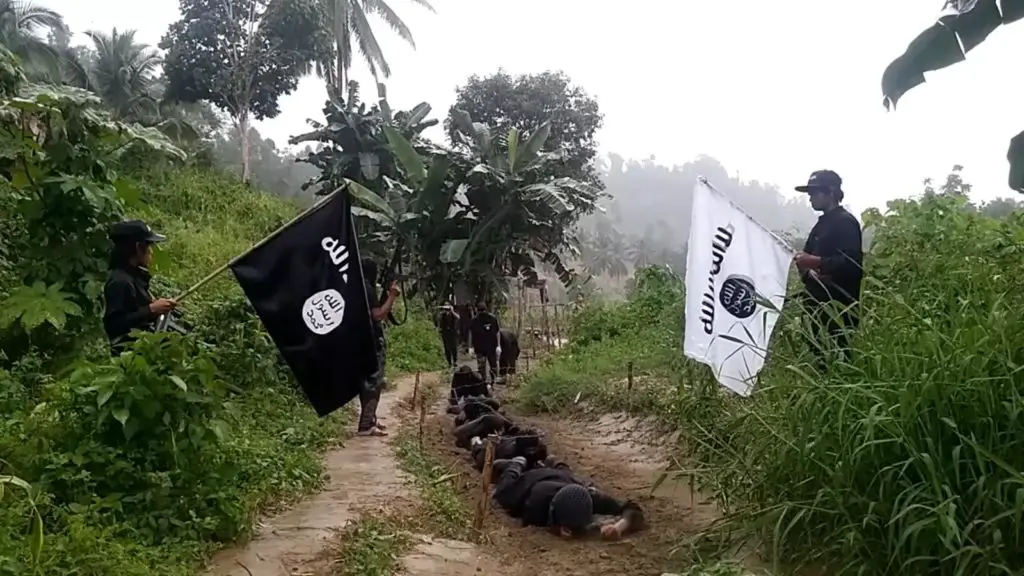
An ISIS training camp in the Philippines, taken from a video released in December 2015. Image: Long War Journal
Deepening connections
Even if this inspired-versus-directed distinction wasn’t false, it risked a dangerous complacency. The fact that these groups had all pledged allegiance to ISIS made them potentially more dangerous than before. It risked greater cooperation amongst historically fragmented groups with their support of ISIS overpowering geographic, clan, and ethnic divisions. There was also the risk of groups emulating the more extreme tactics of ISIS. Finally, in an attempt to win approval and recognition from ISIS, militant groups may have attempted to stage more significant attacks.
All of these things would later happen in the Philippines.
As deepening connections became more apparent, the Philippine government and the AFP continued to deny the presence of ISIS. In 2015, a video surfaced online showing what was described as a Philippines ISIS training camp.
In response, the Philippine National Security Adviser Cesar Garcia said, “ISIS has no training camps in the Philippines.”
This ignored evidence in the video itself, and in other videos and pictures showing militants training in the Philippines which were often uploaded to social media. In the minds of government officials, these were not ISIS camps because they did not view the militants operating them as part of ISIS. While the government denied the presence of ISIS, the camps were used to train new militants, people preparing to stage terror attacks, and even foreigners who had traveled to the Philippines for training before returning to their home countries.
The 2016 Basilan attack
In April 2016, a particularly bloody clash between militants and the AFP on the island of Basilan in the southern Philippines led to more denials about the role of ISIS. While attempting to target Hapilon and another commander, Furiji Indama, soldiers were ambushed, which led to a 10-hour gunfight that left 18 soldiers dead and more than 50 wounded, the worst losses in a single day for Philippine security forces that year.
ISIS claimed the incident through their Amaq news agency shortly afterwards, and a May 2016 edition of Al Naba reported on clashes in the Philippines over the previous few weeks, including the one in Basilan. Finally, an infographic released that June by Amaq talked about soldiers killed by ISIS forces, including those in the ambush.
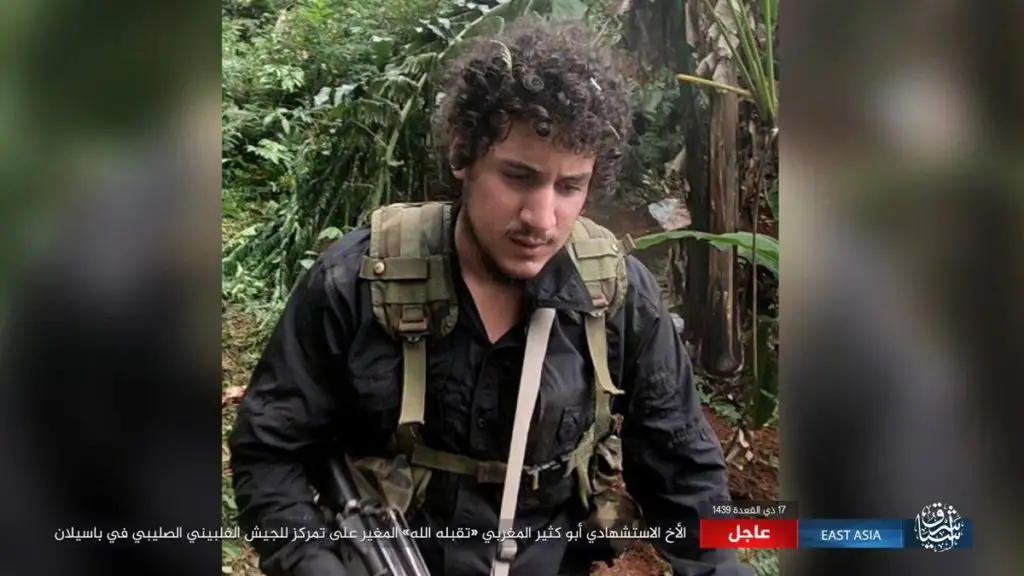
Photo released by ISIS showing the Moroccan man responsible for a suicide vehicle bomb attack in Basilan, the Philippines.
In response, the AFP denied ISIS had any role, saying that it was mere propaganda and that Abu Sayyef was responsible, again, seemingly ignoring that the group was by then part of ISIS. The fighting had been led by Hapilon himself, who that month ISIS publicly named as emir of all their forces in the Philippines. In addition, one of the slain militants was a Moroccan named Mohammad Khattab, who was reportedly building links between Abu Sayyef and ISIS.
Further indications of the connections between ISIS and groups in the Philippines came two months later when a video released by ISIS showed a Filipino, a Malaysian, and an Indonesian beheading three men in Syria. In the video they again recognized Hapilon as emir and called on jihadist groups in the Philippines to unify under him. They also urged people who could not travel to Syria to travel to the Philippines to fight for ISIS.
In response, military spokesperson Brigadier-General Restituto Padilla described the video as “propaganda.”
“People should not be bothered by this,” Padilla added.
The Battle of Marawi begins
Terrorist incidents continued through late 2016 and early 2017, the most notable being the September 2016 Davao city bombing and the brief takeover of the town of Butig two months later by the Maute group. These bolder attacks, sometimes involving multiple groups, in hindsight predicted what was to come.
On May 23, 2017, the AFP launched a raid to arrest Hapilon, who had been spotted in the city of Marawi, on Mindanao. Security forces stumbled into a city full of militants, triggering long-made plans by ISIS to seize the city. The botched raid by Filipino security forces had kicked off the Battle of Marawi.
An AFP statement released a day after the start of fighting said: “The situation in Marawi has stabilized,” and that “security forces are in full control of the situation.”
As the AFP denied the presences of ISIS, the group’s Amaq news agency released pictures from within Marawi showing ISIS fighters in broad daylight standing on streets, raising flags, and manning checkpoints unmolested by Philippine security forces.
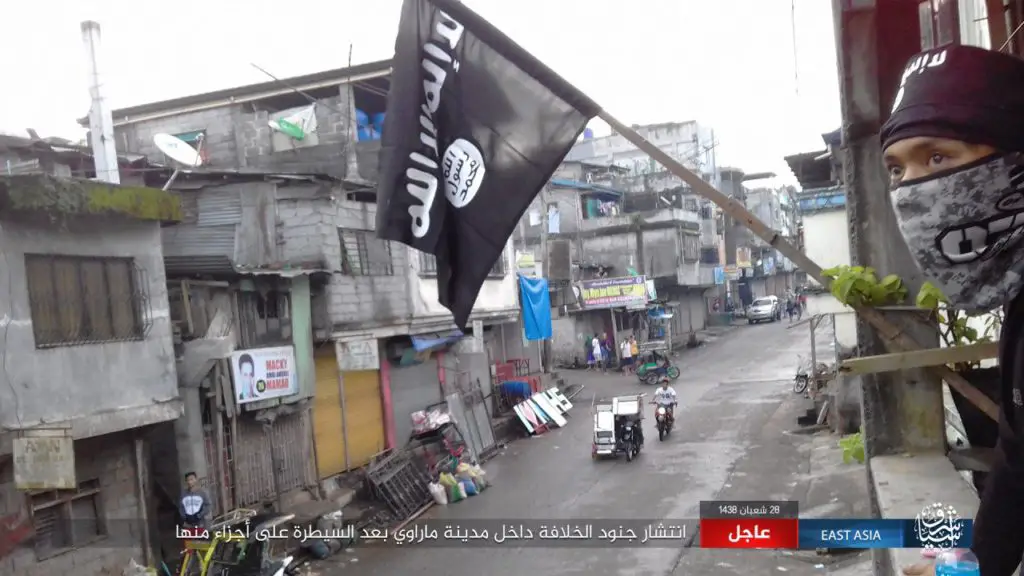
A screenshot from a video released by Amaq showing the ISIS presence in Marawi on May 24, 2017, a day after the Armed Forces of the Philippines said the security forces were in “full control.” Image: @abraxasspa/Twitter
The military claimed that there were only “sporadic clashes” from “harassment actions by terrorist sympathizers.” Most erroneously it was claimed that the militants in Marawi were “not members of the ISIS, but members of a local terrorist group.”
Two days later Secretary of National Defense Delfin Lorenzana said in a statement that the fighting would be over in a week at most, while AFP Chief of Staff General Eduardo Año said there were fewer than 100 militants in the city.
Throughout the battle similar false claims about the number of ISIS militants and how long until the city would be captured were repeated. There were even several instances when the military claimed the recapture of locations within the city despite them remaining firmly under ISIS control.
It would be five months of hard fighting before Marawi was recaptured, defying claims made by the government and security forces throughout. The battle saw the deaths of Hapilon and the leaders of the Maute group along with over 900 of their men, according to the government.
But victory came at a price. The city was left in ruins, 165 AFP soldiers were killed, more than 1,000 wounded, and ISIS achieved a significant propaganda victory.
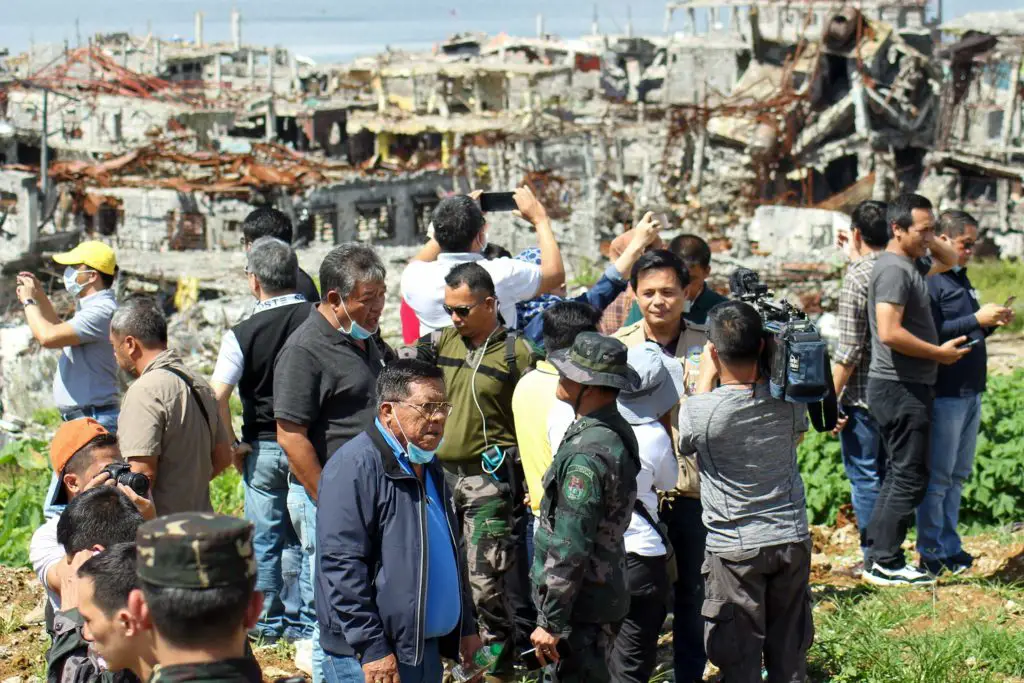
Local officials of Lanao del Sur province visit Ground Zero – also known as the Main Battle Area – in Marawi for the first time after the Battle of Marawi, November 14 2017. Image: Philippine Information Agency
Philippine military ordered to downplay ISIS threat
Due to the Battle of Marawi, President Rodrigo Duterte declared martial law across all of Mindanao. Documents submitted to the Supreme Court of the Philippines justifying the declaration revealed one reason why the AFP continuously made these false claims about ISIS.
It had been deliberate.
In a memorandum submitted to the Supreme Court on June 19, 2017, Año was quoted as saying the threat of ISIS was deliberately downplayed, and that “despite the actual threat of ISIS in the Philippines,” the AFP had been ordered to “downplay any news or information” relating to ISIS. The memo also said statements made about ISIS by the AFP were “propaganda.”
The justification for this was to not “give them recognition and fan the flames of rebellion” as well as to “encourage foreign investments and maintain confidence in the Philippine economy.”
Deliberately misleading the public about the threat from ISIS is a concerning prospect on its own, but worse, it doesn’t work as a full justification. Statements made by police and other officials appeared to show that the government also underestimated ISIS.
It is unknown if similar orders to those given to the AFP were given to police and other members of the government, but these statements also spanned two administrations as well as many departments.
That the government was not fully aware of the threat from ISIS is evident in private statements by Philippine officials that repeatedly ignored intelligence warnings; the AFP so often being wrong-footed against them; and multiple officials admitting to underestimating ISIS.
Duterte himself said officials were aware of the build-up of militants before the Battle of Marawi but “underestimated” the threat.
Major-General Carlito Galvez, head of the West Mindanao Command, said: “We knew this was coming,” and he has reportedly implied that Manila downplayed the threat.
Lorenzana, the defense secretary, said the government was “in denial” over the involvement of foreign ISIS fighters and that the army was unprepared.
While factors such as poor intelligence led the Philippine government and AFP to underestimate ISIS, publicly downplaying the threat likely reinforced this. Downplaying the threat was part of AFP’s psychological operations with the stated intentions to “mislead” and “influence the perceptions” of a group. These psychological operations were not targeted in any way, being made publicly and widely repeated by the media, often at face value.
This could have had the effect of making it harder for lower-level officials and members of the security services to take the threat seriously, while the inaccurate statements downplaying ISIS could also reinforce the poor intelligence members of the government and security officials received suggesting the group wasn’t as serious a threat as in reality.
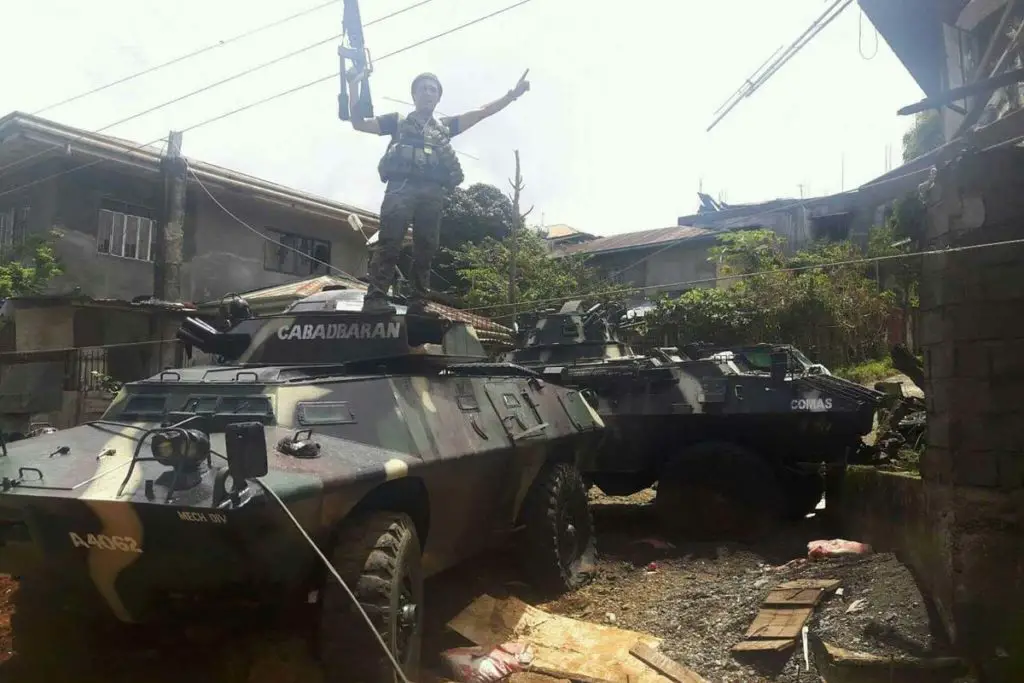
ISIS militants with captured armored vehicles in Marawi, the Philippines. Image: @Terror_Monitor/Twitter
Poor intelligence gathering and assessment
The poor gathering and assessment of intelligence was a key reason for the Philippines underestimating ISIS.
Indonesia’s Defense Minister Ryamizard Ryacudu recently described an exchange he had when he traveled to the Philippines on June 6, 2017, shortly after the start of the Battle of Marawi.
He said he was told by unnamed Philippine officials that there were only 50 militants in Marawi, supported by up to 500 men from drug cartel networks. After the battle, Philippine officials said more than 900 militants had been killed, highlighting that they were clearly underestimating the strength of ISIS both in public and in private.
Not only did Philippine officials not have the intelligence information to more accurately assess the strength of militants in Marawi, but they completely misjudged their nature. They were not men from “drug cartel networks” but loyal ISIS militants, willing to fight to the death for their cause.
Shortly before this meeting, Ryacudu said that Indonesia estimated there were 1,000 to 1,200 ISIS militants in the Philippines. Considering that over 900 fighters were apparently killed in Marawi, and that multiple other groups were not active in the battle, this estimate seems broadly accurate.
In response to that statement, Philippine Defense Undersecretary Ricardo David said the number was new to him.
“I really don’t know, my figure is about 250-400, a lot less,” David said.
Not only does this illustrate the apparent inability of the government to accurately assess the threat from ISIS, but it showcases that even foreign countries had managed to achieve a more accurate assessment.
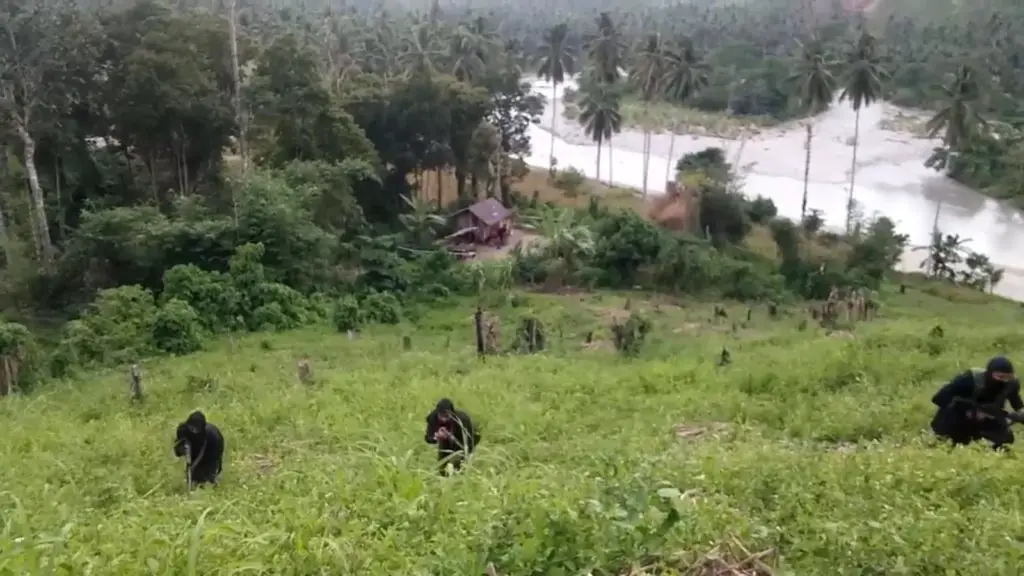
An ISIS training camp in the Philippines, taken from a video released in December 2015. Image: Long War Journal
Intelligence failures
Speaking more generally, Ryacudu also expressed disappointment in Philippine intelligence-gathering and sharing as well as country’s assessment of the threat from ISIS. He said he believed that that “governments underestimated the extent of the IS threat in our region.”
Even more damningly, Ryacudu said that with better use of intelligence the Battle of Marawi “could have been prevented or pre-empted.”
In the aftermath of major terrorist incidents it would repeatedly be revealed that the Philippines had failed to act on intelligence that should have prevented or prepared them for attacks. There was a pattern of failing to assess intelligence, suggesting officials underestimated the actual danger.
In fact, there had been repeated intelligence pointing towards an attack in Marawi in the month leading up to the battle.
The AFP’s Año has stated that intelligence had been received about armed men entering the city. He also said that commanders on the ground had failed to assess intelligence. Major General Rolando Bautista, commander of forces in Marawi, said the military had even received information saying that terrorists would seize the city.
It was only when following up on both this intelligence and reports that the leaders of the Maute group were in Marawi that they discovered Hapilon, the most important ISIS commander in the Philippines, was also there. Bautista immediately decided to capture him, ordering the failed raid that triggered the seizure of the city.
While Marawi is the most prominent example of the Philippines underestimating ISIS and having issues with gathering and following up on intelligence, it is not the only one.
The April 2016 Basilan clash that killed 18 soldiers was a well-prepared ambush. Militants attacked from high ground and all sides using various weapons, including mortars and grenade launchers. The soldiers also had to contend with improvised explosive devices planted by militants. As well as inflicting high casualties, militants beheaded some of the dead soldiers and captured an unconfirmed quantity of weaponry.
Concerns were raised in the aftermath about the handling of the operation and the AFP’s failure to address the ISIS threat. Two generals speaking anonymously called for a probe and suggested there were serious failings in how the operation was carried out.
“What happened was a failure of leadership from top to bottom” as well as a “failure of intelligence,” one general said.
Officials should have addressed their failings on multiple occasions, but the Battle of Marawi should have been a clear wakeup call.
Marawi did force the Philippine government and security forces to admit some of their failings, but there has been no attempt to rectify them. Both continue to downplay the threat from ISIS, and there are still apparent intelligence failings, with Ryacudu stating on October 4 that since Marawi the flow of intelligence has not been effective and has even become “less accurate.”
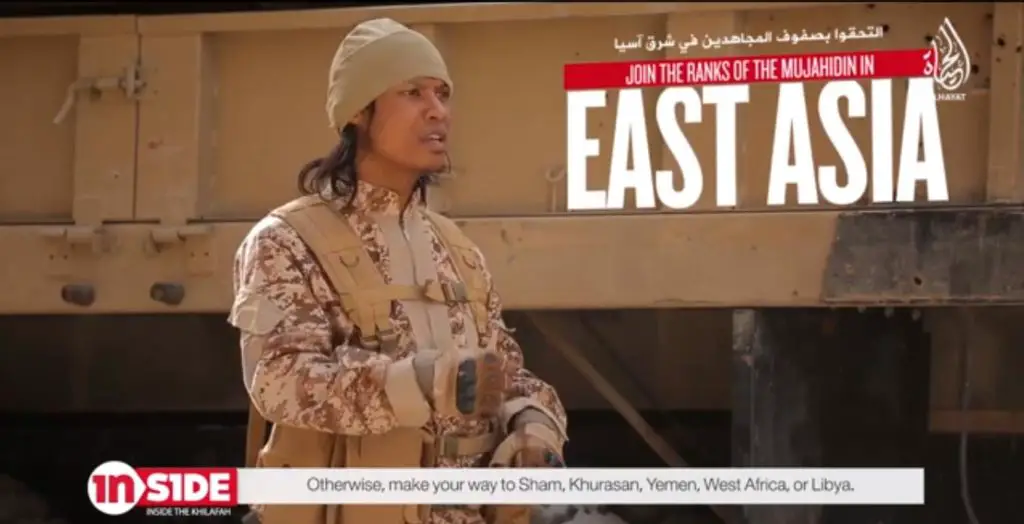
A still from an ISIS propaganda video, calling on people to travel to East Asia to join the group.
‘There is no ISIS-Philippines’
In February the United States designated ISIS-Philippines as a terrorist organization. While the effect of such a designation was welcomed, as it criminalizes providing support and resources to the group and denies access to U.S. financial systems, the concept of an “ISIS-Philippines” was discounted by some Philippine officials.
“There is no ISIS-Philippines,” Defense Secretary Delfin Lorenzana said in March.
Duterte’s spokesperson Harry Roque did acknowledge the presence of ISIS but limited it to just the Maute group.
“That’s ISIS-Maute. I think it’s specific since Maute is known to be the local ISIS,” he said in a statement.
The U.S. designation referred to the whole of the ISIS-affiliated organization in the Philippines. The description referenced the June 2016 ISIS video that featured Hapilon and several other Abu Sayyef militants belonging pledging allegiance to ISIS, and called Maute an “integral part of ISIS-Philippines.”
This July saw arguably the most significant attack by ISIS in the Philippines since Marawi, when a suicide car bomb was detonated at a military checkpoint on Basilan, killing 11 people.
ISIS claimed the attack via their Amaq news agency. The claim stated that it was a suicide attack and named the perpetrator as Abu Khatir Al-Maghribi, a Moroccan. A picture was also released showing the attacker.
In response, AFP spokesperson Colonel Edgardo Arevalo said that there was no indication that ISIS was involved. He said intelligence pointed to Abu Sayyef, and that there was no indication the attacker was a foreigner. He also said there was “no indication that the Basilan blast was a suicide bombing.”
These denials came despite the photographic evidence released by ISIS as well as witnesses who said the driver was a foreigner, and the group responsible was also behind the 2016 Basilan clashes.
Almost two weeks after the attack Lorenzana finally stated that it was believed the attacker was Moroccan, but he still downplayed the possibility of it being a suicide attack and denied that ISIS was involved.
There had also been reports that intelligence had warned about the bombing before it occurred.
A government intelligence report reportedly stated that as early as June 19 officials were aware of a plan to carry out a bombing at any time in Lamitan, the area of Basilan where the attack took place. The day before the bombing there were reports of Malaysian militants arriving on the island, who are now believed to be connected to the attack. Finally, the AFP had intelligence reports that a van containing explosives would pass by Lamitan City.
Like Marawi, despite receiving intelligence pointing towards an imminent attack, authorities had been unable to prevent it.
It has also become common for ISIS groups in the Philippines to be discussed as “remnants” following the Battle of Marawi. This is despite it being over a year since the start of the battle, with the groups involved actively recruiting since. Other ISIS factions – such as BIFF – also had minimal involvement in the battle, meaning their operational strength was not significantly affected by the fighting. Meanwhile, ISIS has upgraded their East Asia region including the Philippines to an official Wilayat, or province, and increased propaganda releases about the Philippines.
The Philippine government and security forces knowingly released inaccurate statements about the threat from ISIS, downplaying the dangers in an attempt to not legitimize the group and to maintain foreign investment and faith in the Philippine economy. The Battle of Marawi and the declaration of martial law that followed shattered both of those justifications.
Yet this downplaying continues to be a tactic used by the Philippine government and the AFP despite its ineffectiveness and role in leading to the genuine underestimation of ISIS’s true strength. The repeated intelligence failings that plagued operations against the group were and still are a key factor in that inaccurate assessment.
Like many instances before it, the Battle of Marawi should have seen the Philippine government and security forces address their failings in the interest of preventing another such attack, yet they appear to continue to make those same mistakes.
Those mistakes come at the expense of security personnel and civilians caught up in the next preventable ISIS attack.
[See also Passport to jihad: European foreign fighters joining ISIS in the Philippines
https://thedefensepost.com/2018/09/12/philippines-isis-foreign-fighters-europe/]
https://thedefensepost.com/2018/10/22/how-the-philippines-underestimates-isis/
Despite the presence of multiple militant groups in the Philippines who have made pledges of allegiance, or bayah, to Islamic State, the Philippine’ government and Armed Forces (AFP) have downplayed this threat. The statements they’ve made continuously ignore the reality of ISIS in the Philippines. This is partially due to the AFP deliberately downplaying the threat from ISIS by making false statements, something they’ve admitted to. At the same time, the Philippine government and the AFP have also managed to genuinely underestimate ISIS, likely in part due to the public downplaying of the threat as well as systematic intelligence failures.
Underestimating ISIS gave it the opportunity to stage major attacks that should have been preventable.
The Philippines has seen decades of conflict in the southern region of Mindanao, where the majority of the country’s Muslim minority live. Successive militant groups have fought the AFP in an attempt to form an independent state, and two major separatist militant groups have signed peace treaties with the government, agreeing to end fighting in return for various levels of autonomy.
However, splinter factions and other more recently founded organizations have led to a patchwork of extremist groups that continue to fight. Some of the most notable of these groups are the Bangsamoro Islamic Freedom Fighters, various Abu Sayyef Group battalions, and the Maute group.
Militants in the Philippines pledging allegiance to ISIS Philippine groups pledge allegiance to al-Baghdadi
In 2014 some Philippine groups began to give bayah to ISIS leader Abu Bakr al-Baghdadi, including senior Abu Sayyef commander Isnilon Hapilon, and BIFF. In the following years, more groups pledged allegiance to ISIS, including the Maute group.
ISIS later discussed the Philippines through various parts of their media apparatus. In 2014, the fifth edition of the group’s Dabiq magazine stated that groups in the Philippines had pledged allegiance to Baghdadi, and “announced the acceptance of the bay’āt from all of these groups and individuals.” Both the group’s spokesperson Abu Muhammad al-Adnani and Baghdadi himself made appeals to Filipinos to resist the “crusaders” and “rise against the apostate.”
In February and March 2016 ISIS’s official Al Furat Media released videos of Hapilon and commanders from several other groups pledging allegiance to Baghdadi. It should have been clear that these groups were now part of ISIS.
The Philippine government and AFP responded by stating that ISIS did not exist in the Philippines, with the then president Benigno Aquino saying, “It’s difficult to call them Islamic State groups.”
Philippine officials would for years treat Abu Sayyef, Maute, BIFF and other militant groups as if nothing had changed, seemingly failing to understand that they were now part of ISIS because they had pledged allegiance and it had been recognized.
In an effort to justify this position, officials made the distinction that, while the various militant groups in the southern Philippines may be ISIS-inspired, they were not ISIS-directed. They argued that while some individuals within Philippine groups, or even entire groups may be inspired by the extremist ideas of ISIS, they were not directed by ISIS in any way, implying there was no communication with ISIS and that groups did not receive orders from them.
This argument was flawed, as it ignored known communications between ISIS in the Philippines and its core in Iraq and Syria.
Videos and statements about groups in the Philippines were released by official ISIS outlets, suggesting a line of communication.
Filipinos had been known to travel to fight for ISIS in Iraq and Syria, often facilitated by communication with ISIS members. Communication with ISIS by militant groups in the Philippines is believed to have occurred as early as 2014, while certain militants, often Malaysians, enabled lines of communication between Philippine groups and ISIS in Iraq and Syria. Connections would deepen over time, with ISIS encouraging fighters to travel to the Philippines, giving direct orders to Filipino commanders, and even sending funds to support the activities of groups that had pledged allegiance to ISIS.
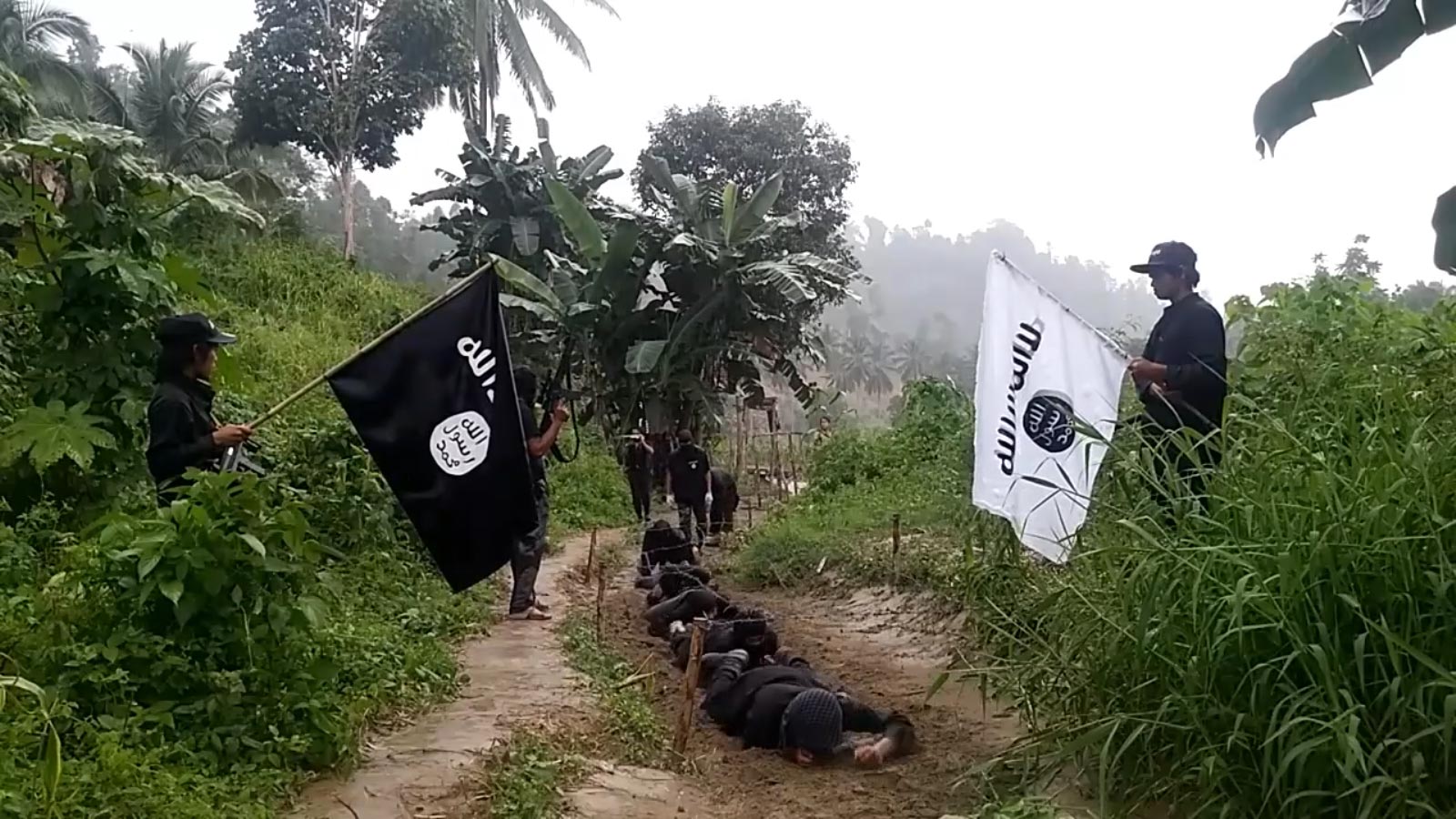
An ISIS training camp in the Philippines, taken from a video released in December 2015. Image: Long War Journal
Deepening connections
Even if this inspired-versus-directed distinction wasn’t false, it risked a dangerous complacency. The fact that these groups had all pledged allegiance to ISIS made them potentially more dangerous than before. It risked greater cooperation amongst historically fragmented groups with their support of ISIS overpowering geographic, clan, and ethnic divisions. There was also the risk of groups emulating the more extreme tactics of ISIS. Finally, in an attempt to win approval and recognition from ISIS, militant groups may have attempted to stage more significant attacks.
All of these things would later happen in the Philippines.
As deepening connections became more apparent, the Philippine government and the AFP continued to deny the presence of ISIS. In 2015, a video surfaced online showing what was described as a Philippines ISIS training camp.
In response, the Philippine National Security Adviser Cesar Garcia said, “ISIS has no training camps in the Philippines.”
This ignored evidence in the video itself, and in other videos and pictures showing militants training in the Philippines which were often uploaded to social media. In the minds of government officials, these were not ISIS camps because they did not view the militants operating them as part of ISIS. While the government denied the presence of ISIS, the camps were used to train new militants, people preparing to stage terror attacks, and even foreigners who had traveled to the Philippines for training before returning to their home countries.
The 2016 Basilan attack
In April 2016, a particularly bloody clash between militants and the AFP on the island of Basilan in the southern Philippines led to more denials about the role of ISIS. While attempting to target Hapilon and another commander, Furiji Indama, soldiers were ambushed, which led to a 10-hour gunfight that left 18 soldiers dead and more than 50 wounded, the worst losses in a single day for Philippine security forces that year.
ISIS claimed the incident through their Amaq news agency shortly afterwards, and a May 2016 edition of Al Naba reported on clashes in the Philippines over the previous few weeks, including the one in Basilan. Finally, an infographic released that June by Amaq talked about soldiers killed by ISIS forces, including those in the ambush.
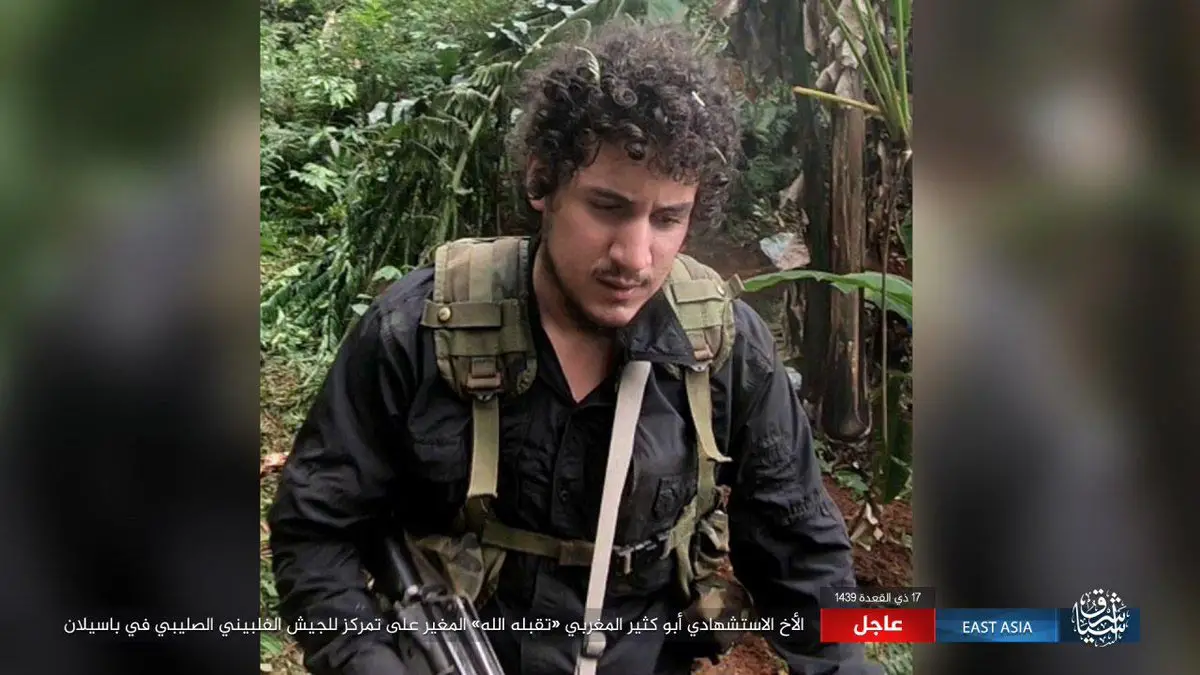
Photo released by ISIS showing the Moroccan man responsible for a suicide vehicle bomb attack in Basilan, the Philippines.
In response, the AFP denied ISIS had any role, saying that it was mere propaganda and that Abu Sayyef was responsible, again, seemingly ignoring that the group was by then part of ISIS. The fighting had been led by Hapilon himself, who that month ISIS publicly named as emir of all their forces in the Philippines. In addition, one of the slain militants was a Moroccan named Mohammad Khattab, who was reportedly building links between Abu Sayyef and ISIS.
Further indications of the connections between ISIS and groups in the Philippines came two months later when a video released by ISIS showed a Filipino, a Malaysian, and an Indonesian beheading three men in Syria. In the video they again recognized Hapilon as emir and called on jihadist groups in the Philippines to unify under him. They also urged people who could not travel to Syria to travel to the Philippines to fight for ISIS.
In response, military spokesperson Brigadier-General Restituto Padilla described the video as “propaganda.”
“People should not be bothered by this,” Padilla added.
The Battle of Marawi begins
Terrorist incidents continued through late 2016 and early 2017, the most notable being the September 2016 Davao city bombing and the brief takeover of the town of Butig two months later by the Maute group. These bolder attacks, sometimes involving multiple groups, in hindsight predicted what was to come.
On May 23, 2017, the AFP launched a raid to arrest Hapilon, who had been spotted in the city of Marawi, on Mindanao. Security forces stumbled into a city full of militants, triggering long-made plans by ISIS to seize the city. The botched raid by Filipino security forces had kicked off the Battle of Marawi.
An AFP statement released a day after the start of fighting said: “The situation in Marawi has stabilized,” and that “security forces are in full control of the situation.”
As the AFP denied the presences of ISIS, the group’s Amaq news agency released pictures from within Marawi showing ISIS fighters in broad daylight standing on streets, raising flags, and manning checkpoints unmolested by Philippine security forces.

A screenshot from a video released by Amaq showing the ISIS presence in Marawi on May 24, 2017, a day after the Armed Forces of the Philippines said the security forces were in “full control.” Image: @abraxasspa/Twitter
The military claimed that there were only “sporadic clashes” from “harassment actions by terrorist sympathizers.” Most erroneously it was claimed that the militants in Marawi were “not members of the ISIS, but members of a local terrorist group.”
Two days later Secretary of National Defense Delfin Lorenzana said in a statement that the fighting would be over in a week at most, while AFP Chief of Staff General Eduardo Año said there were fewer than 100 militants in the city.
Throughout the battle similar false claims about the number of ISIS militants and how long until the city would be captured were repeated. There were even several instances when the military claimed the recapture of locations within the city despite them remaining firmly under ISIS control.
It would be five months of hard fighting before Marawi was recaptured, defying claims made by the government and security forces throughout. The battle saw the deaths of Hapilon and the leaders of the Maute group along with over 900 of their men, according to the government.
But victory came at a price. The city was left in ruins, 165 AFP soldiers were killed, more than 1,000 wounded, and ISIS achieved a significant propaganda victory.
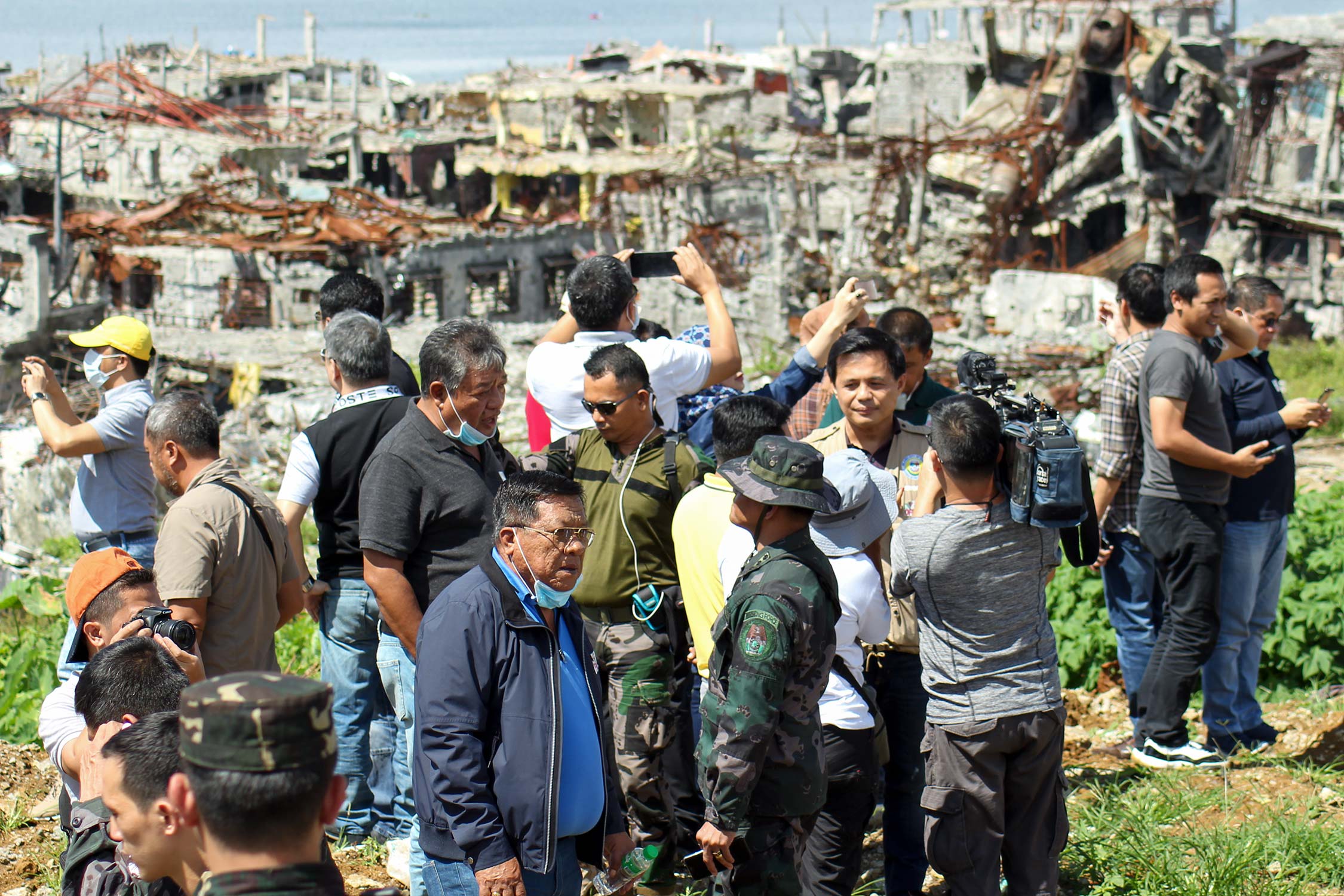
Local officials of Lanao del Sur province visit Ground Zero – also known as the Main Battle Area – in Marawi for the first time after the Battle of Marawi, November 14 2017. Image: Philippine Information Agency
Philippine military ordered to downplay ISIS threat
Due to the Battle of Marawi, President Rodrigo Duterte declared martial law across all of Mindanao. Documents submitted to the Supreme Court of the Philippines justifying the declaration revealed one reason why the AFP continuously made these false claims about ISIS.
It had been deliberate.
In a memorandum submitted to the Supreme Court on June 19, 2017, Año was quoted as saying the threat of ISIS was deliberately downplayed, and that “despite the actual threat of ISIS in the Philippines,” the AFP had been ordered to “downplay any news or information” relating to ISIS. The memo also said statements made about ISIS by the AFP were “propaganda.”
The justification for this was to not “give them recognition and fan the flames of rebellion” as well as to “encourage foreign investments and maintain confidence in the Philippine economy.”
Deliberately misleading the public about the threat from ISIS is a concerning prospect on its own, but worse, it doesn’t work as a full justification. Statements made by police and other officials appeared to show that the government also underestimated ISIS.
It is unknown if similar orders to those given to the AFP were given to police and other members of the government, but these statements also spanned two administrations as well as many departments.
That the government was not fully aware of the threat from ISIS is evident in private statements by Philippine officials that repeatedly ignored intelligence warnings; the AFP so often being wrong-footed against them; and multiple officials admitting to underestimating ISIS.
Duterte himself said officials were aware of the build-up of militants before the Battle of Marawi but “underestimated” the threat.
Major-General Carlito Galvez, head of the West Mindanao Command, said: “We knew this was coming,” and he has reportedly implied that Manila downplayed the threat.
Lorenzana, the defense secretary, said the government was “in denial” over the involvement of foreign ISIS fighters and that the army was unprepared.
While factors such as poor intelligence led the Philippine government and AFP to underestimate ISIS, publicly downplaying the threat likely reinforced this. Downplaying the threat was part of AFP’s psychological operations with the stated intentions to “mislead” and “influence the perceptions” of a group. These psychological operations were not targeted in any way, being made publicly and widely repeated by the media, often at face value.
This could have had the effect of making it harder for lower-level officials and members of the security services to take the threat seriously, while the inaccurate statements downplaying ISIS could also reinforce the poor intelligence members of the government and security officials received suggesting the group wasn’t as serious a threat as in reality.
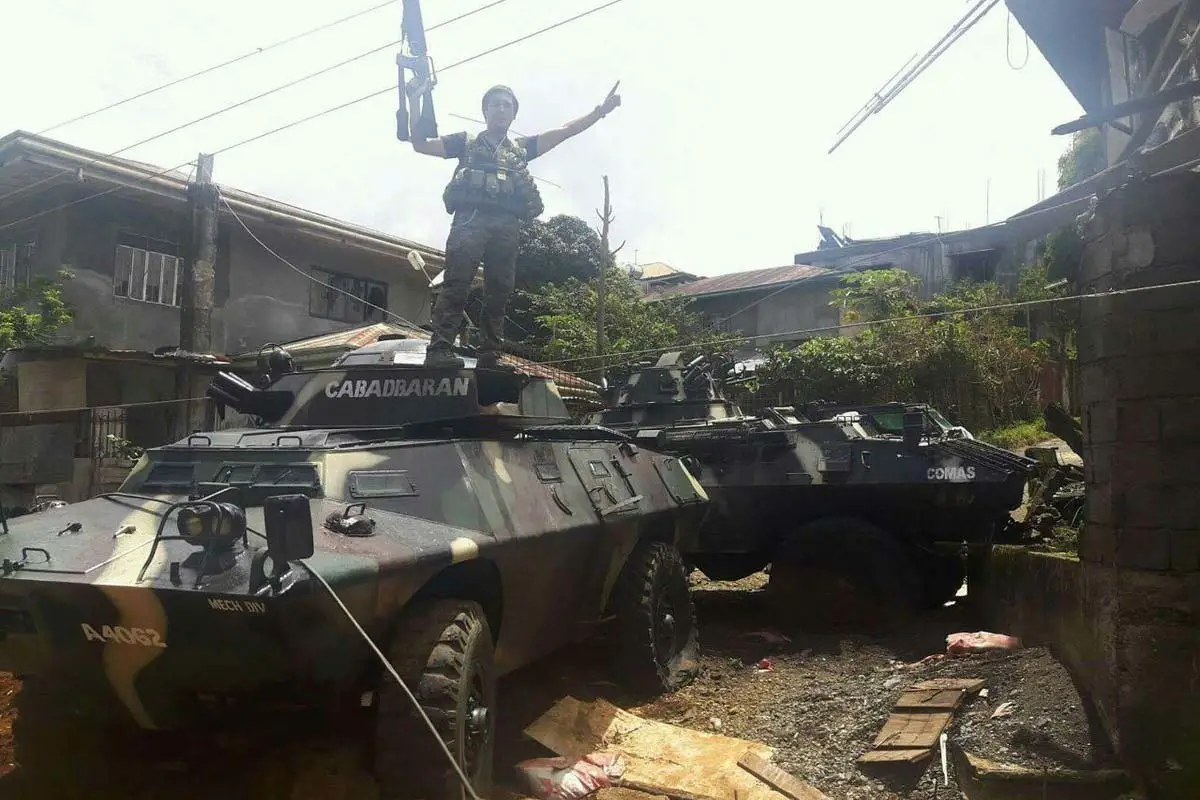
ISIS militants with captured armored vehicles in Marawi, the Philippines. Image: @Terror_Monitor/Twitter
Poor intelligence gathering and assessment
The poor gathering and assessment of intelligence was a key reason for the Philippines underestimating ISIS.
Indonesia’s Defense Minister Ryamizard Ryacudu recently described an exchange he had when he traveled to the Philippines on June 6, 2017, shortly after the start of the Battle of Marawi.
He said he was told by unnamed Philippine officials that there were only 50 militants in Marawi, supported by up to 500 men from drug cartel networks. After the battle, Philippine officials said more than 900 militants had been killed, highlighting that they were clearly underestimating the strength of ISIS both in public and in private.
Not only did Philippine officials not have the intelligence information to more accurately assess the strength of militants in Marawi, but they completely misjudged their nature. They were not men from “drug cartel networks” but loyal ISIS militants, willing to fight to the death for their cause.
Shortly before this meeting, Ryacudu said that Indonesia estimated there were 1,000 to 1,200 ISIS militants in the Philippines. Considering that over 900 fighters were apparently killed in Marawi, and that multiple other groups were not active in the battle, this estimate seems broadly accurate.
In response to that statement, Philippine Defense Undersecretary Ricardo David said the number was new to him.
“I really don’t know, my figure is about 250-400, a lot less,” David said.
Not only does this illustrate the apparent inability of the government to accurately assess the threat from ISIS, but it showcases that even foreign countries had managed to achieve a more accurate assessment.
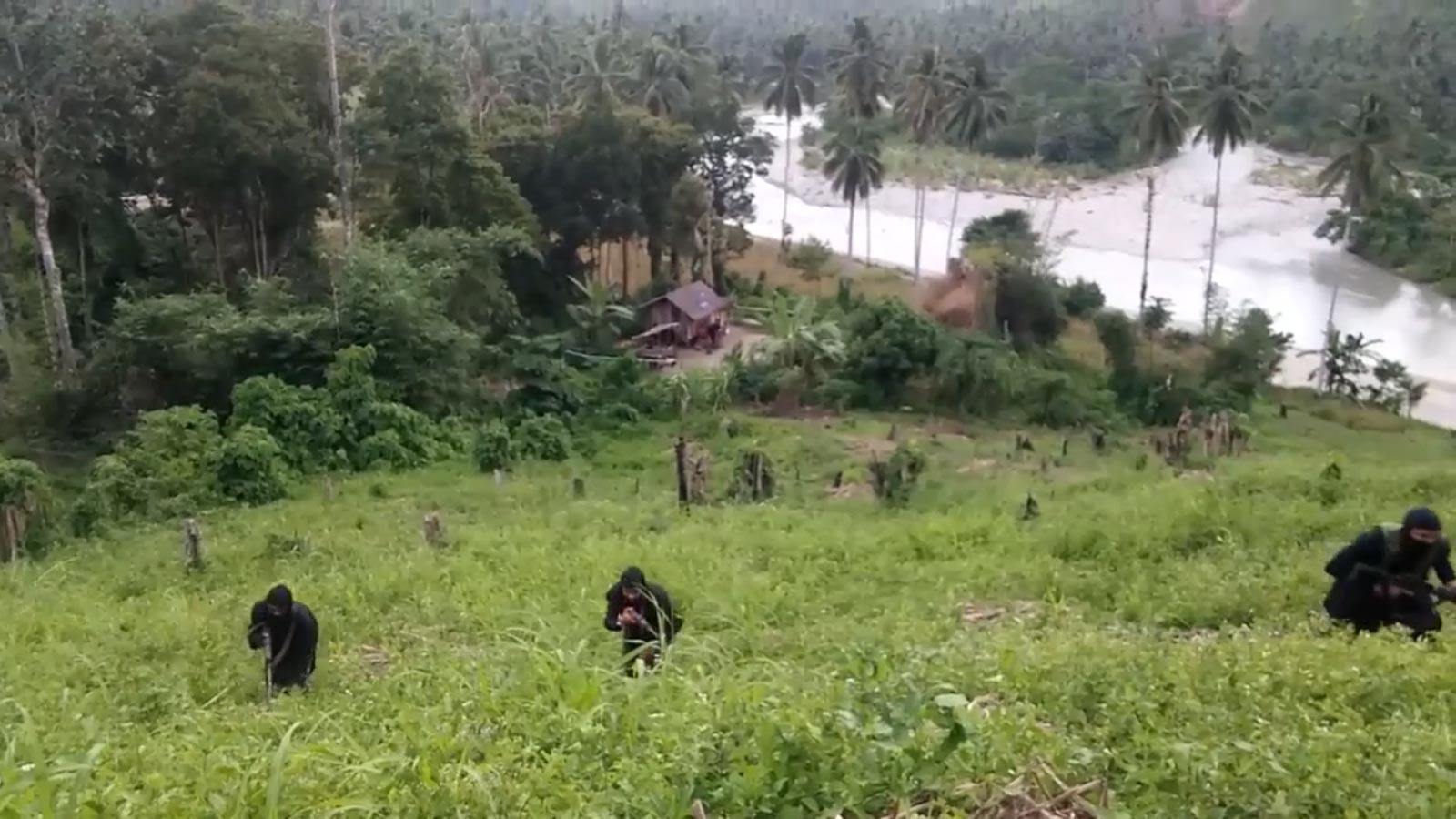
An ISIS training camp in the Philippines, taken from a video released in December 2015. Image: Long War Journal
Intelligence failures
Speaking more generally, Ryacudu also expressed disappointment in Philippine intelligence-gathering and sharing as well as country’s assessment of the threat from ISIS. He said he believed that that “governments underestimated the extent of the IS threat in our region.”
Even more damningly, Ryacudu said that with better use of intelligence the Battle of Marawi “could have been prevented or pre-empted.”
In the aftermath of major terrorist incidents it would repeatedly be revealed that the Philippines had failed to act on intelligence that should have prevented or prepared them for attacks. There was a pattern of failing to assess intelligence, suggesting officials underestimated the actual danger.
In fact, there had been repeated intelligence pointing towards an attack in Marawi in the month leading up to the battle.
The AFP’s Año has stated that intelligence had been received about armed men entering the city. He also said that commanders on the ground had failed to assess intelligence. Major General Rolando Bautista, commander of forces in Marawi, said the military had even received information saying that terrorists would seize the city.
It was only when following up on both this intelligence and reports that the leaders of the Maute group were in Marawi that they discovered Hapilon, the most important ISIS commander in the Philippines, was also there. Bautista immediately decided to capture him, ordering the failed raid that triggered the seizure of the city.
While Marawi is the most prominent example of the Philippines underestimating ISIS and having issues with gathering and following up on intelligence, it is not the only one.
The April 2016 Basilan clash that killed 18 soldiers was a well-prepared ambush. Militants attacked from high ground and all sides using various weapons, including mortars and grenade launchers. The soldiers also had to contend with improvised explosive devices planted by militants. As well as inflicting high casualties, militants beheaded some of the dead soldiers and captured an unconfirmed quantity of weaponry.
Concerns were raised in the aftermath about the handling of the operation and the AFP’s failure to address the ISIS threat. Two generals speaking anonymously called for a probe and suggested there were serious failings in how the operation was carried out.
“What happened was a failure of leadership from top to bottom” as well as a “failure of intelligence,” one general said.
Officials should have addressed their failings on multiple occasions, but the Battle of Marawi should have been a clear wakeup call.
Marawi did force the Philippine government and security forces to admit some of their failings, but there has been no attempt to rectify them. Both continue to downplay the threat from ISIS, and there are still apparent intelligence failings, with Ryacudu stating on October 4 that since Marawi the flow of intelligence has not been effective and has even become “less accurate.”

A still from an ISIS propaganda video, calling on people to travel to East Asia to join the group.
‘There is no ISIS-Philippines’
In February the United States designated ISIS-Philippines as a terrorist organization. While the effect of such a designation was welcomed, as it criminalizes providing support and resources to the group and denies access to U.S. financial systems, the concept of an “ISIS-Philippines” was discounted by some Philippine officials.
“There is no ISIS-Philippines,” Defense Secretary Delfin Lorenzana said in March.
Duterte’s spokesperson Harry Roque did acknowledge the presence of ISIS but limited it to just the Maute group.
“That’s ISIS-Maute. I think it’s specific since Maute is known to be the local ISIS,” he said in a statement.
The U.S. designation referred to the whole of the ISIS-affiliated organization in the Philippines. The description referenced the June 2016 ISIS video that featured Hapilon and several other Abu Sayyef militants belonging pledging allegiance to ISIS, and called Maute an “integral part of ISIS-Philippines.”
This July saw arguably the most significant attack by ISIS in the Philippines since Marawi, when a suicide car bomb was detonated at a military checkpoint on Basilan, killing 11 people.
ISIS claimed the attack via their Amaq news agency. The claim stated that it was a suicide attack and named the perpetrator as Abu Khatir Al-Maghribi, a Moroccan. A picture was also released showing the attacker.
In response, AFP spokesperson Colonel Edgardo Arevalo said that there was no indication that ISIS was involved. He said intelligence pointed to Abu Sayyef, and that there was no indication the attacker was a foreigner. He also said there was “no indication that the Basilan blast was a suicide bombing.”
These denials came despite the photographic evidence released by ISIS as well as witnesses who said the driver was a foreigner, and the group responsible was also behind the 2016 Basilan clashes.
Almost two weeks after the attack Lorenzana finally stated that it was believed the attacker was Moroccan, but he still downplayed the possibility of it being a suicide attack and denied that ISIS was involved.
There had also been reports that intelligence had warned about the bombing before it occurred.
A government intelligence report reportedly stated that as early as June 19 officials were aware of a plan to carry out a bombing at any time in Lamitan, the area of Basilan where the attack took place. The day before the bombing there were reports of Malaysian militants arriving on the island, who are now believed to be connected to the attack. Finally, the AFP had intelligence reports that a van containing explosives would pass by Lamitan City.
Like Marawi, despite receiving intelligence pointing towards an imminent attack, authorities had been unable to prevent it.
It has also become common for ISIS groups in the Philippines to be discussed as “remnants” following the Battle of Marawi. This is despite it being over a year since the start of the battle, with the groups involved actively recruiting since. Other ISIS factions – such as BIFF – also had minimal involvement in the battle, meaning their operational strength was not significantly affected by the fighting. Meanwhile, ISIS has upgraded their East Asia region including the Philippines to an official Wilayat, or province, and increased propaganda releases about the Philippines.
The Philippine government and security forces knowingly released inaccurate statements about the threat from ISIS, downplaying the dangers in an attempt to not legitimize the group and to maintain foreign investment and faith in the Philippine economy. The Battle of Marawi and the declaration of martial law that followed shattered both of those justifications.
Yet this downplaying continues to be a tactic used by the Philippine government and the AFP despite its ineffectiveness and role in leading to the genuine underestimation of ISIS’s true strength. The repeated intelligence failings that plagued operations against the group were and still are a key factor in that inaccurate assessment.
Like many instances before it, the Battle of Marawi should have seen the Philippine government and security forces address their failings in the interest of preventing another such attack, yet they appear to continue to make those same mistakes.
Those mistakes come at the expense of security personnel and civilians caught up in the next preventable ISIS attack.
[See also Passport to jihad: European foreign fighters joining ISIS in the Philippines
https://thedefensepost.com/2018/09/12/philippines-isis-foreign-fighters-europe/]
https://thedefensepost.com/2018/10/22/how-the-philippines-underestimates-isis/
Sugar workers' group hits PNP for 'NPA legal front' tag
From the Philippine Star (Oct 23): Sugar workers' group hits PNP for 'NPA legal front' tag
AFP says Maute group recruitment slowing down due to surrender of remaining members
From the Manila Bulletin (Oct 24): AFP says Maute group recruitment slowing down due to surrender of remaining members
A military official Wednesday said recruitment to the Maute-IS (Islamic State) group has slowed down following the surrender of Maute-IS remnants in recent months due to intense military operations.

Joint Task Force Ranao (JTFR) Deputy Commander Colonel Romeo Brawner, Jr. of the Armed Forces of the Philippines (AFP)
(PCOO / MANILA BULLETIN)
This developed as an ISIS-inspired terrorist leader belonging to the Ansar Al-Khilafah Philippines (AKP) was killed following an encounter with government troops in Sarangani on Monday.
In a statement, Colonel Romeo S. Brawner Jr., spokesperson of the Armed Forces of the Philippines-Joint Task Force (JTF) Ranao, said 60 more Maute-IS remnants have surrendered in the past months due to intense military operations to hunt and neutralize them. “Certain conditions indicate that the enemy’s recruitment has significantly slowed down following the surrender of Maute-IS remnants,” Brawner said.
“According to the surrenderers, most of the remnants have been isolated and have lost their will to fight following the series of military operations conducted by the 103rd Brigade in Lanao del Sur,” he added. He said security forces are postured to thwart possible attacks by the Maute remnants to protect communities.
Militants of the Maute group who pledged allegiance to the Islamic State sieged Marawi City, the Islamic capital of the Philippines, on May 23, 2017, then took over parts of the city using civilians as human shields.
President Rodrigo Duterte and security analysts said the militants were trying to establish a Southeast Asian caliphate in Marawi.
The ensuing US-backed military campaign to evict the militants claimed more than 1,000 lives, displaced 400,000 residents and left large parts of Marawi in ruins.
Citing data, Brawner said 168 government troops (military and police) and 978 Maute-ISIS were killed in the five-month war, including 47 civilians.
https://news.mb.com.ph/2018/10/24/afp-says-maute-group-recruitment-slowing-down-due-to-surrender-of-remaining-members/
A military official Wednesday said recruitment to the Maute-IS (Islamic State) group has slowed down following the surrender of Maute-IS remnants in recent months due to intense military operations.
Joint Task Force Ranao (JTFR) Deputy Commander Colonel Romeo Brawner, Jr. of the Armed Forces of the Philippines (AFP)
(PCOO / MANILA BULLETIN)
This developed as an ISIS-inspired terrorist leader belonging to the Ansar Al-Khilafah Philippines (AKP) was killed following an encounter with government troops in Sarangani on Monday.
In a statement, Colonel Romeo S. Brawner Jr., spokesperson of the Armed Forces of the Philippines-Joint Task Force (JTF) Ranao, said 60 more Maute-IS remnants have surrendered in the past months due to intense military operations to hunt and neutralize them. “Certain conditions indicate that the enemy’s recruitment has significantly slowed down following the surrender of Maute-IS remnants,” Brawner said.
“According to the surrenderers, most of the remnants have been isolated and have lost their will to fight following the series of military operations conducted by the 103rd Brigade in Lanao del Sur,” he added. He said security forces are postured to thwart possible attacks by the Maute remnants to protect communities.
Militants of the Maute group who pledged allegiance to the Islamic State sieged Marawi City, the Islamic capital of the Philippines, on May 23, 2017, then took over parts of the city using civilians as human shields.
President Rodrigo Duterte and security analysts said the militants were trying to establish a Southeast Asian caliphate in Marawi.
The ensuing US-backed military campaign to evict the militants claimed more than 1,000 lives, displaced 400,000 residents and left large parts of Marawi in ruins.
Citing data, Brawner said 168 government troops (military and police) and 978 Maute-ISIS were killed in the five-month war, including 47 civilians.
https://news.mb.com.ph/2018/10/24/afp-says-maute-group-recruitment-slowing-down-due-to-surrender-of-remaining-members/
Progress steady in construction of PH Navy's first missile frigate
From the Philippine News Agency (Oct 24): Progress steady in construction of PH Navy's first missile frigate

The Philippine Navy said the construction of the country's first missile-armed frigate is steadily progressing.
"(The construction of) our (first) frigate is moving forward. It will arrive in February (or) March of 2020. All systems go and we should be happy for our country," Navy flag-officer-in-command, Vice Admiral Robert Empedrad, said during an interview with reporters late Monday.The keel-laying for the frigate took place in Ulsan, South Korea last October 16.
The Philippines and Hyundai Heavy Industries (HHI) signed a PHP16 billion contract for two missile-armed frigates, with another PHP2 billion set aside for its weapon systems and munition.
The projected delivery date for the first frigate is in 2020 and the second in 2021.
“The ceremony was conducted at Building Dock No. 6 of the Special and Naval Shipbuilding Division of HHI. Three blocks of the first PN frigate (with HHI Project No. 159) was installed on the dock,” Capt. Sergio Bartolome, the Navy officer supervising the project, earlier said.
Keel-laying signals the start of the ship's construction and is among the four highlights of a vessel's life, the other three being the launch, commissioning and decommissioning.
The keel is considered the backbone of any ship and breaking or destroying it will result in the destruction and sinking of any water craft. The steel-cutting for the first frigate took place last April.
http://www.pna.gov.ph/articles/1051963
The Philippine Navy said the construction of the country's first missile-armed frigate is steadily progressing.
"(The construction of) our (first) frigate is moving forward. It will arrive in February (or) March of 2020. All systems go and we should be happy for our country," Navy flag-officer-in-command, Vice Admiral Robert Empedrad, said during an interview with reporters late Monday.The keel-laying for the frigate took place in Ulsan, South Korea last October 16.
The Philippines and Hyundai Heavy Industries (HHI) signed a PHP16 billion contract for two missile-armed frigates, with another PHP2 billion set aside for its weapon systems and munition.
The projected delivery date for the first frigate is in 2020 and the second in 2021.
“The ceremony was conducted at Building Dock No. 6 of the Special and Naval Shipbuilding Division of HHI. Three blocks of the first PN frigate (with HHI Project No. 159) was installed on the dock,” Capt. Sergio Bartolome, the Navy officer supervising the project, earlier said.
Keel-laying signals the start of the ship's construction and is among the four highlights of a vessel's life, the other three being the launch, commissioning and decommissioning.
The keel is considered the backbone of any ship and breaking or destroying it will result in the destruction and sinking of any water craft. The steel-cutting for the first frigate took place last April.
http://www.pna.gov.ph/articles/1051963
7 PH Navy ships capable of long-range sailing: Empedrad
From the Philippine News Agency (Oct 24): 7 PH Navy ships capable of long-range sailing: Empedrad

Should the Philippine Navy (PN) get another invitation to send its ships overseas for any training or multi-lateral engagements, it has seven vessels in its fleet capable of sailing long distance.
"We have the capability. We have seven capable ships that can go to China, can go to Russia, can go to Hawaii (United States), so if invited by the Russian Federation (again), we will surely send ships anytime," Navy flag-officer-in-command, Vice Admiral Robert Empedrad, said during the welcome ceremony for the strategic sealift vessel, BRP Tarlac (LD-601), at Pier 13, Manila South Harbor on Monday.
BRP Tarlac, along with her 300-man contingent, is flushed with success over its first-ever port call in Russia and South Korea early this month.
The ships capable of long-distance patrolling and travel in the PN inventory are the three Gregorio del Pilar-class frigates, two Tarlac-class strategic sealift vessels, and the two Bacolod City-class logistic vessels.
BRP Tarlac and the military personnel aboard her made PN history for their successful port visit to Vladivostok, Russia on Oct. 1-6 and Jeju Island, South Korea on October 12-16.
"The successful overseas mission is a manifestation that the Navy is steadily improving and modernizing. This is another big leap in enhancing the organization’s core competency to further improve its readiness to engage in multilateral maritime activities and contribute to preserving regional maritime security," PN spokesperson Commander Jonathan Zata earlier said.
During the visit to Russia, the contingent's members participated in several activities that enhanced their relationship with their Russian counterparts. Aside from this, PN personnel also got a chance to tour the Kilo-class diesel-electric submarine "Komsomolskna-Amure 877" and Russian Marine Firing Range.
Russian Marines also conducted a capability demonstration and had their Philippine Marine Corps counterparts run obstacle courses and join pistol-firing exercises.
Meanwhile, the visit to Jeju Island, South Korea strengthened the ties of the PN and its others counterparts through the conduct of different confidence-building activities in line with the Western Pacific Naval Symposium (WPNS) 2018 hosted by Republic of Korea Navy.
The International Fleet Review held during that time marked the 70th anniversary of the Republic of Korea Armed Forces. Empedrad, who was present at the WPNS 2018, said the country will host the same event in 2020.
http://www.pna.gov.ph/articles/1051962
Should the Philippine Navy (PN) get another invitation to send its ships overseas for any training or multi-lateral engagements, it has seven vessels in its fleet capable of sailing long distance.
"We have the capability. We have seven capable ships that can go to China, can go to Russia, can go to Hawaii (United States), so if invited by the Russian Federation (again), we will surely send ships anytime," Navy flag-officer-in-command, Vice Admiral Robert Empedrad, said during the welcome ceremony for the strategic sealift vessel, BRP Tarlac (LD-601), at Pier 13, Manila South Harbor on Monday.
BRP Tarlac, along with her 300-man contingent, is flushed with success over its first-ever port call in Russia and South Korea early this month.
The ships capable of long-distance patrolling and travel in the PN inventory are the three Gregorio del Pilar-class frigates, two Tarlac-class strategic sealift vessels, and the two Bacolod City-class logistic vessels.
BRP Tarlac and the military personnel aboard her made PN history for their successful port visit to Vladivostok, Russia on Oct. 1-6 and Jeju Island, South Korea on October 12-16.
"The successful overseas mission is a manifestation that the Navy is steadily improving and modernizing. This is another big leap in enhancing the organization’s core competency to further improve its readiness to engage in multilateral maritime activities and contribute to preserving regional maritime security," PN spokesperson Commander Jonathan Zata earlier said.
During the visit to Russia, the contingent's members participated in several activities that enhanced their relationship with their Russian counterparts. Aside from this, PN personnel also got a chance to tour the Kilo-class diesel-electric submarine "Komsomolskna-Amure 877" and Russian Marine Firing Range.
Russian Marines also conducted a capability demonstration and had their Philippine Marine Corps counterparts run obstacle courses and join pistol-firing exercises.
Meanwhile, the visit to Jeju Island, South Korea strengthened the ties of the PN and its others counterparts through the conduct of different confidence-building activities in line with the Western Pacific Naval Symposium (WPNS) 2018 hosted by Republic of Korea Navy.
The International Fleet Review held during that time marked the 70th anniversary of the Republic of Korea Armed Forces. Empedrad, who was present at the WPNS 2018, said the country will host the same event in 2020.
http://www.pna.gov.ph/articles/1051962
AFP not ruling out CPP hand in NegOCC massacre
From the Philippine News Agency (Oct 24): AFP not ruling out CPP hand in NegOCC massacre
The Armed Forces of the Philippines (AFP) is not discounting the involvement of the Communist Party of the Philippines-New People's Army (CPP-NPA) in the massacre of nine people in Sagay City, Negros Occidental last October 20.
AFP chief-of-staff Gen. Carlito Galvez, Jr. said this during a press briefing held in Camp Aguinaldo, Quezon City Wednesday afternoon.
"Results of the initial investigation revealed three possible scenarios that may have led to the incident. Authorities are looking at the involvement of other land claimants, the landowner’s private army, and the CPP-NPA," Galvez said.
Galvez said a thorough investigation is already ongoing to establish the identities and motives of the suspects behind the crime.
"Various government agencies including the Philippine National Police (PNP), National Bureau of Investigation (NBI), and the Department of Agrarian Reform (DAR) are jointly working in the probe," he added.
What is known as of this time is that the victims are all recruits of the National Federation of Sugar Workers (NFSW), a front organization of the CPP-NPA, the AFP chief said.
"In fact, they were recruited, after paying PHP500 for one hectare of land, less than two days before the incident," Galvez added.
According to the families, residents, and local authorities in the area, the victims are not workers in the farm or claimants to the land.
"The DAR also claimed the victims are not entitled beneficiaries. They were brought there by their recruiters from the NFSW who left just before the shooting happened," Galvez said.
He added this incident highlights earlier reports the CPP has been hatching plans to oust the Duterte Administration along with rebel efforts to spark civil unrest and discredit the government.
This is part of the CPP's "Oplan Bungkalan", a nationwide campaign to mobilize farm workers to rally for the cause of the communists alleged as a struggle for agrarian reform, is taking advantage of farmers and using them as bait, Galvez pointed out.
"By manipulating, deceiving, and exploiting the needs of these farmers, the NFSW endangered the lives of these farmers by pitting them against the landowner and other land claimants in the area, with the end of jumpstarting an orchestrated nationwide protest by leftist groups," he added.
Also, the AFP chief said he is convinced that when the conclusive findings of the investigation have been released, the CPP-NPA and its puppet organization NFSW will have blood on their hands.
"As to the alleged involvement of the AFP in the killing of nine farmers, DAR Secretary John Castriciones has already categorically denied the AFP and the police’s involvement in the killings and clarified the incident is a land conflict," he added.
Galvez also called on leftist groups to substantiate their allegations and refrain from politicizing the incident to give the families reprieve.
"While the investigation is ongoing, we have extended our sincerest condolences to the victims’ families and we have committed to provide any assistance to ensure that justice will be served, and perpetrators will be put behind bars," he added.
Galvez said the AFP, DAR, Department of Social Welfare and Development, and the Sagay City government are now working together to give immediate and long-term aid for the victims’ families and to ensure that justice will be served.
"The government and its security forces will work together to resolve the social cancer and land conflict in the area. The AFP is one with the farming communities of Negros and the whole country in these trying times. We call on all workers to be more perceptive and vigilant to protect their interests from being exploited by front organizations of the CPP-NPA and by personalities who may use the incident as leverage for their political ambitions," the AFP chief said.
http://www.pna.gov.ph/articles/1052010
The Armed Forces of the Philippines (AFP) is not discounting the involvement of the Communist Party of the Philippines-New People's Army (CPP-NPA) in the massacre of nine people in Sagay City, Negros Occidental last October 20.
AFP chief-of-staff Gen. Carlito Galvez, Jr. said this during a press briefing held in Camp Aguinaldo, Quezon City Wednesday afternoon.
"Results of the initial investigation revealed three possible scenarios that may have led to the incident. Authorities are looking at the involvement of other land claimants, the landowner’s private army, and the CPP-NPA," Galvez said.
Galvez said a thorough investigation is already ongoing to establish the identities and motives of the suspects behind the crime.
"Various government agencies including the Philippine National Police (PNP), National Bureau of Investigation (NBI), and the Department of Agrarian Reform (DAR) are jointly working in the probe," he added.
What is known as of this time is that the victims are all recruits of the National Federation of Sugar Workers (NFSW), a front organization of the CPP-NPA, the AFP chief said.
"In fact, they were recruited, after paying PHP500 for one hectare of land, less than two days before the incident," Galvez added.
According to the families, residents, and local authorities in the area, the victims are not workers in the farm or claimants to the land.
"The DAR also claimed the victims are not entitled beneficiaries. They were brought there by their recruiters from the NFSW who left just before the shooting happened," Galvez said.
He added this incident highlights earlier reports the CPP has been hatching plans to oust the Duterte Administration along with rebel efforts to spark civil unrest and discredit the government.
This is part of the CPP's "Oplan Bungkalan", a nationwide campaign to mobilize farm workers to rally for the cause of the communists alleged as a struggle for agrarian reform, is taking advantage of farmers and using them as bait, Galvez pointed out.
"By manipulating, deceiving, and exploiting the needs of these farmers, the NFSW endangered the lives of these farmers by pitting them against the landowner and other land claimants in the area, with the end of jumpstarting an orchestrated nationwide protest by leftist groups," he added.
Also, the AFP chief said he is convinced that when the conclusive findings of the investigation have been released, the CPP-NPA and its puppet organization NFSW will have blood on their hands.
"As to the alleged involvement of the AFP in the killing of nine farmers, DAR Secretary John Castriciones has already categorically denied the AFP and the police’s involvement in the killings and clarified the incident is a land conflict," he added.
Galvez also called on leftist groups to substantiate their allegations and refrain from politicizing the incident to give the families reprieve.
"While the investigation is ongoing, we have extended our sincerest condolences to the victims’ families and we have committed to provide any assistance to ensure that justice will be served, and perpetrators will be put behind bars," he added.
Galvez said the AFP, DAR, Department of Social Welfare and Development, and the Sagay City government are now working together to give immediate and long-term aid for the victims’ families and to ensure that justice will be served.
"The government and its security forces will work together to resolve the social cancer and land conflict in the area. The AFP is one with the farming communities of Negros and the whole country in these trying times. We call on all workers to be more perceptive and vigilant to protect their interests from being exploited by front organizations of the CPP-NPA and by personalities who may use the incident as leverage for their political ambitions," the AFP chief said.
http://www.pna.gov.ph/articles/1052010
6 Abu Sayyaf men surrender in Sulu
From the Philippine News Agency (Oct 24): 6 Abu Sayyaf men surrender in Sulu

The number of Abu Sayyaf Group (ASG) surrenderees climbed to 129 as six more ASG members have surrendered in the province of Sulu, the military said Tuesday.
Lt. Gen. Arnel dela Vega, Western Mindanao Command (Westmincom) chief, said the latest batch of ASG surrenderers were Mohammad Boyhe; Rojimar Dahim; Abdu Amidol; Kandang Abduhalim Jumadil; Tader Odong Asdure; and, Matar Hajarani Saliling.
Dela Vega said they surrendered to the troops of the Joint Task Force Sulu on Friday in Maimbung, Sulu, through the efforts of Maimbung Mayor Samier Tan and Captain Rico Tagure of the Army’s 2nd Special Forces Battalion.
The surrenderers turned over six high-power firearms consisting of an M-16 “Baby Armalite” rifle; one M-14 rifle; one M-203 Grenade Launcher; one M-79; and, two caliber .30 M1 U.S. Garand rifles.
Dela Vega said during the custodial debriefing and documentation, the surrenders bared that they decided to yield after hearing the government's programs for rebel returnees.
“They believe that they will soon be given the chance of a new life with their families,” the military official said.
The ASG surrenderees were taken to Camp General Teodulfo Bautista Station hospital for medical check-up.
“We continue to urge the remaining bandits to lay down their arms, return to the folds of the law, and enjoy the benefits that the Duterte Administration through the Task Force Balik-loob offers to all rebel returnees,” Dela Vega said.
http://www.pna.gov.ph/articles/1051923
The number of Abu Sayyaf Group (ASG) surrenderees climbed to 129 as six more ASG members have surrendered in the province of Sulu, the military said Tuesday.
Lt. Gen. Arnel dela Vega, Western Mindanao Command (Westmincom) chief, said the latest batch of ASG surrenderers were Mohammad Boyhe; Rojimar Dahim; Abdu Amidol; Kandang Abduhalim Jumadil; Tader Odong Asdure; and, Matar Hajarani Saliling.
Dela Vega said they surrendered to the troops of the Joint Task Force Sulu on Friday in Maimbung, Sulu, through the efforts of Maimbung Mayor Samier Tan and Captain Rico Tagure of the Army’s 2nd Special Forces Battalion.
The surrenderers turned over six high-power firearms consisting of an M-16 “Baby Armalite” rifle; one M-14 rifle; one M-203 Grenade Launcher; one M-79; and, two caliber .30 M1 U.S. Garand rifles.
Dela Vega said during the custodial debriefing and documentation, the surrenders bared that they decided to yield after hearing the government's programs for rebel returnees.
“They believe that they will soon be given the chance of a new life with their families,” the military official said.
The ASG surrenderees were taken to Camp General Teodulfo Bautista Station hospital for medical check-up.
“We continue to urge the remaining bandits to lay down their arms, return to the folds of the law, and enjoy the benefits that the Duterte Administration through the Task Force Balik-loob offers to all rebel returnees,” Dela Vega said.
http://www.pna.gov.ph/articles/1051923
6 more Maute remnants surrender in Lanao
From the Philippine News Agency (Oct 24): 6 more Maute remnants surrender in Lanao

The number of surrenderers from the Islamic State for Iraq and Syria (ISIS)-linked Maute group climbed to 19 as another six members have surrendered to military authorities in Lanao del Sur, a top military official said Wednesday.
Maj. Gen. Roseller Murillo, Army’s 1st Infantry Division commander, said the six ISIS-linked Maute group members surrendered on Monday to the Joint Task Force Ranao in Sultan Dumalondong, Lanao del Sur.
Murillo said they surrendered to the Army’s 49th Infantry Battalion through the efforts of Sultan Dumalondong Mayor Jamel Kurangking, Malalis Barangay Chairperson Saber Solaiman and the police.
The surrenderers, whose names were withheld, turned over five high-powered firearms consisting of a 50-caliber Barret rifle, three M-79 grenade launchers and a Carbine rifle.
All six were placed under custodial debriefing, Murillo said.
Lt. Col. Edgar Allan Villanueva, the Army's 49th Infantry Battalion commander, said the surrenderers were followers of Maute group sub-leader Mubarak Manalo.
Villanueva said they were involved in the attack of a military detachment in September last year while the main group of Maute members fought in Marawi City.
The attack on the detachment was a diversionary move as the military were closing in on the main group of Maute followers in the main battle areas, the military official said.
Murillo, who is also the Joint Task Force Zampelan commander, commended the troops, policemen and local officials who facilitated the surrender of the Maute group remnants.
“The continuous surrender of Maute ISIS remnants were the effects of dwindling of their organization, leadership and capabilities,” Murillo added.
http://www.pna.gov.ph/articles/1051985
The number of surrenderers from the Islamic State for Iraq and Syria (ISIS)-linked Maute group climbed to 19 as another six members have surrendered to military authorities in Lanao del Sur, a top military official said Wednesday.
Maj. Gen. Roseller Murillo, Army’s 1st Infantry Division commander, said the six ISIS-linked Maute group members surrendered on Monday to the Joint Task Force Ranao in Sultan Dumalondong, Lanao del Sur.
Murillo said they surrendered to the Army’s 49th Infantry Battalion through the efforts of Sultan Dumalondong Mayor Jamel Kurangking, Malalis Barangay Chairperson Saber Solaiman and the police.
The surrenderers, whose names were withheld, turned over five high-powered firearms consisting of a 50-caliber Barret rifle, three M-79 grenade launchers and a Carbine rifle.
All six were placed under custodial debriefing, Murillo said.
Lt. Col. Edgar Allan Villanueva, the Army's 49th Infantry Battalion commander, said the surrenderers were followers of Maute group sub-leader Mubarak Manalo.
Villanueva said they were involved in the attack of a military detachment in September last year while the main group of Maute members fought in Marawi City.
The attack on the detachment was a diversionary move as the military were closing in on the main group of Maute followers in the main battle areas, the military official said.
Murillo, who is also the Joint Task Force Zampelan commander, commended the troops, policemen and local officials who facilitated the surrender of the Maute group remnants.
“The continuous surrender of Maute ISIS remnants were the effects of dwindling of their organization, leadership and capabilities,” Murillo added.
http://www.pna.gov.ph/articles/1051985
Marine Corps to recruit 300 men in Zamboanga
From the Philippine News Agency (Oct 24): Marine Corps to recruit 300 men in Zamboanga
ZAMBOANGA CITY -- The Philippine Marine Corps (PMC) is conducting mobile recruitment targeting 300 recruits in this city.
Capt. Jieve Ajijul, PMC recruitment officer, said aspirants have until Nov. 4 to register and undergo screening. They can register at the administrative office of the PMC at the Naval Forces Western Mindanao (Navforwem) headquarters in Barangay Calarian.
Ajijul said they can also email at recruitmentpmc@yahoo.com or contact through cellular phone number 0956-087-4591 or check out the Facebook page: Pilipinong Marino (Philippine Marine Corps Recruitment).
“Applicants must first secure an examinee number by logging in at afpsat.afp.mil.ph before proceeding to the Navforwem headquarters to submit their application forms” he said.
He described the recruitment drive as an "opportunity that aspiring applicants should avail of, as the Marine Corps offers competitive pay and allowances."
"They are also entitled to insurance and health care benefits, billeting and housing privileges, leadership and other skills training, free medical and dental service (including dependents), job security, opportunity for career advancement, opportunity for post graduate studies both within the country and abroad as well as the opportunity to lead the marines," the Marine official said.
http://www.pna.gov.ph/articles/1051999
ZAMBOANGA CITY -- The Philippine Marine Corps (PMC) is conducting mobile recruitment targeting 300 recruits in this city.
Capt. Jieve Ajijul, PMC recruitment officer, said aspirants have until Nov. 4 to register and undergo screening. They can register at the administrative office of the PMC at the Naval Forces Western Mindanao (Navforwem) headquarters in Barangay Calarian.
Ajijul said they can also email at recruitmentpmc@yahoo.com or contact through cellular phone number 0956-087-4591 or check out the Facebook page: Pilipinong Marino (Philippine Marine Corps Recruitment).
“Applicants must first secure an examinee number by logging in at afpsat.afp.mil.ph before proceeding to the Navforwem headquarters to submit their application forms” he said.
He described the recruitment drive as an "opportunity that aspiring applicants should avail of, as the Marine Corps offers competitive pay and allowances."
"They are also entitled to insurance and health care benefits, billeting and housing privileges, leadership and other skills training, free medical and dental service (including dependents), job security, opportunity for career advancement, opportunity for post graduate studies both within the country and abroad as well as the opportunity to lead the marines," the Marine official said.
http://www.pna.gov.ph/articles/1051999
Davao City police mulls charges vs. militant leaders
From the Philippine News Agency (Oct 24): Davao City police mulls charges vs. militant leaders
The Davao City Police Office (DCPO) is mulling charges against two militant leaders for allegedly luring students into joining protest rallies at the Freedom Park on Tuesday and in Lasang on Monday.
Both rallies obstructed the flow of goods and people for more than three hours which earned the ire of Mayor Sara Z. Duterte.
Senior Insp. Ma Theresita Gaspan, DCPO spokesperson, told reporters during the AFP-PNP press briefing at the Royal Mandaya Hotel on Wednesday local police authorities are preparing possible charges against Antonio Tinio of the Alliance of Concerned Teachers (ACT-Teachers) and Ariel Casilao of Anakpawis.
"Sila ang atong giandaman karon ug possible case (We are preparing a case against them)," Gaspan said.
For the Freedom Park rally, Gaspan said, DCPO is eyeing a case of child exploitation, and illegal public assembly for the Lasang incident.
Gaspan said police authorities are still looking into the result of the investigation prior to filing of cases against the two militant leaders.
On Tuesday, Mayor Sara lambasted Tinio and Casilao on social media for allegedly luring young people --some of whom are said to be minors -- to join the disruptive mass actions.
She said Casilao does not deserve to be in Congress and called on the House Ethics Committee for his expulsion.
The mayor also slammed Tinio for recruiting students to join the protest on a school day.
Duterte said the lawmakers should have the basic decency of putting children in schools instead of "exploiting their situation and luring them into joining demonstrations."
A police report said that at around 9:45 a.m. on Tuesday, some 150 members of left-leaning groups coming from different parts of the Davao Region held a protest rally at the Freedom Park here.
The rally was organized by Anak Pawis, ACT-Teachers, Kadamay, Kilusang Mayo Uno and Gabriela, and led by Tinio and Casilao.
For his part, Casilao said students should be aware of social issues that he said were too important to be left to adults alone.
http://www.pna.gov.ph/articles/1052039
The Davao City Police Office (DCPO) is mulling charges against two militant leaders for allegedly luring students into joining protest rallies at the Freedom Park on Tuesday and in Lasang on Monday.
Both rallies obstructed the flow of goods and people for more than three hours which earned the ire of Mayor Sara Z. Duterte.
Senior Insp. Ma Theresita Gaspan, DCPO spokesperson, told reporters during the AFP-PNP press briefing at the Royal Mandaya Hotel on Wednesday local police authorities are preparing possible charges against Antonio Tinio of the Alliance of Concerned Teachers (ACT-Teachers) and Ariel Casilao of Anakpawis.
"Sila ang atong giandaman karon ug possible case (We are preparing a case against them)," Gaspan said.
For the Freedom Park rally, Gaspan said, DCPO is eyeing a case of child exploitation, and illegal public assembly for the Lasang incident.
Gaspan said police authorities are still looking into the result of the investigation prior to filing of cases against the two militant leaders.
On Tuesday, Mayor Sara lambasted Tinio and Casilao on social media for allegedly luring young people --some of whom are said to be minors -- to join the disruptive mass actions.
She said Casilao does not deserve to be in Congress and called on the House Ethics Committee for his expulsion.
The mayor also slammed Tinio for recruiting students to join the protest on a school day.
Duterte said the lawmakers should have the basic decency of putting children in schools instead of "exploiting their situation and luring them into joining demonstrations."
A police report said that at around 9:45 a.m. on Tuesday, some 150 members of left-leaning groups coming from different parts of the Davao Region held a protest rally at the Freedom Park here.
The rally was organized by Anak Pawis, ACT-Teachers, Kadamay, Kilusang Mayo Uno and Gabriela, and led by Tinio and Casilao.
For his part, Casilao said students should be aware of social issues that he said were too important to be left to adults alone.
http://www.pna.gov.ph/articles/1052039
Subscribe to:
Posts (Atom)