From the Philippine Information Agency (Nov 9): Former NPA bomb expert killed in Surigao del Sur
A former rebel identified as Caleb Rebrtchie Labanan was shot to death early morning on Monday at Sitio Greenfield, Sta Juana, Tagbina, Surigao del Sur.
Accordingly, the victim was in his farm when five unidentified armed men wearing bonnets approached and shot him several times. The victim sustained three gunshot wounds in his body particularly in his head, chest and shoulder causing his tragic demise.
The perpetrators allegedly withdrew immediately after the crime was committed towards Sitio, Katipunan, Bunawan Brooks, Bunawan, Agusan del Sur.
The victim was known to have served as peace advocate and has performed counterinsurgency efforts in Caraga region as he finally sided the government after his growing realization of the dreadful communist terrorist activities he was into and being the skilled human asset in making explosive devices of the rebel group, it was learned. These made him become one of the targets for liquidation of the Communist Party of the Philippines-New People's Army-National Democratic Front (CPP-NPA-NDF) or CNN.
The incident was allegedly perpetrated or sanctioned by the CNN specifically the GFC 14, NEMRC considering that said group has just concluded the recruitment of Milisya ng Bayan (MBs) in Bunawan Brooks, Bunawan, Agusan del Sur, and that the incident seemed to be a test mission of the newly recruited MBs.
The Philippine Army immediately coordinated with the Bunawan local government unit and Philippine National Police.
http://news.pia.gov.ph/article/view/2761478588172/former-npa-bomb-expert-killed-in-surigao-del-sur

Sunday, November 13, 2016

Calabarzon’s new military chief named
From the Manila Times (Nov 10): Calabarzon’s new military chief named
BRIGADIER Gen. Robert Parayno on Thursday took over the helm of the Army’s 2nd Infantry Division that is in charge of internal peace and security operations in Calabarzon (Cavite, Laguna, Batangas, Rizal and Quezon) area.
Army commander Lt. Gen. Eduardo Año presided the change of command of Parayno replacing Maj. Gen. Romeo Gan, who retired from the service on Thursday upon reaching the mandatory retirement age of 56. Known as the home of jungle fighters, the division headquarters are located in Camp Capinpin in Tanay, Rizal.
Parayno served as the brigade commander of the Army’s 201st Brigade and implemented various campaigns against the communist New People’s Army; internal peace and security operations in his area; Bayanihan Team Activities; and peace and development programs.
His most recent duties were: Commanding Officer of the 73rd IB; Operations Officer of 2nd ID; Assistant Chief of Unified Command Staff for CMO of the AFP’s Southern Luzon Command; Combat Arms School of the Army’s Training and Doctrine Command; and Chief of AFP Human Rights Office.
http://www.manilatimes.net/calabarzons-new-military-chief-named/295848/
BRIGADIER Gen. Robert Parayno on Thursday took over the helm of the Army’s 2nd Infantry Division that is in charge of internal peace and security operations in Calabarzon (Cavite, Laguna, Batangas, Rizal and Quezon) area.
Army commander Lt. Gen. Eduardo Año presided the change of command of Parayno replacing Maj. Gen. Romeo Gan, who retired from the service on Thursday upon reaching the mandatory retirement age of 56. Known as the home of jungle fighters, the division headquarters are located in Camp Capinpin in Tanay, Rizal.
Parayno served as the brigade commander of the Army’s 201st Brigade and implemented various campaigns against the communist New People’s Army; internal peace and security operations in his area; Bayanihan Team Activities; and peace and development programs.
His most recent duties were: Commanding Officer of the 73rd IB; Operations Officer of 2nd ID; Assistant Chief of Unified Command Staff for CMO of the AFP’s Southern Luzon Command; Combat Arms School of the Army’s Training and Doctrine Command; and Chief of AFP Human Rights Office.
http://www.manilatimes.net/calabarzons-new-military-chief-named/295848/
Army’s 2nd ID has new chief
From Malaya Business Insight (Nov 11): Army’s 2nd ID has new chief
PRESIDENT Duterte has named the chief of the AFP’s Civil Relations Service, the military’s psychological warfare arm, as new commander of the Army’s 2nd Infantry Division which supervises operations in the Calabarzon region.
Brig. Gen. Rhoderick Parayno assumed his new post yesterday in rites at the headquarters of the 2nd ID in Camp Capinpin in Tanay, Rizal.
Parayno, a member of the Philippine Military Academy Class of 1985, replaced Maj. Gen. Romeo Gan, of PMA Class 1983, who reached the mandatory retirement age of 56 yesterday.
Parayno assumed the post of CRS chief last April. The CRS is in charge of the military’s psychological operations against the various threat groups, including the communist New People’s Army.
In his new post, Parayno will lead the conduct of internal peace and security operations in Cavite, Laguna, Batangas, Rizal and Quezon provinces.
Before becoming the CRS chief, Parayno was commander of the Army’s 201st Brigade based in Calauag town in Quezon. He also served as chief of the AFP’s Human Rights Office.
The military has yet to announce the new CRS chief.
http://www.malaya.com.ph/business-news/news/army%E2%80%99s-2nd-id-has-new-chief
PRESIDENT Duterte has named the chief of the AFP’s Civil Relations Service, the military’s psychological warfare arm, as new commander of the Army’s 2nd Infantry Division which supervises operations in the Calabarzon region.
Brig. Gen. Rhoderick Parayno assumed his new post yesterday in rites at the headquarters of the 2nd ID in Camp Capinpin in Tanay, Rizal.
Parayno, a member of the Philippine Military Academy Class of 1985, replaced Maj. Gen. Romeo Gan, of PMA Class 1983, who reached the mandatory retirement age of 56 yesterday.
Parayno assumed the post of CRS chief last April. The CRS is in charge of the military’s psychological operations against the various threat groups, including the communist New People’s Army.
In his new post, Parayno will lead the conduct of internal peace and security operations in Cavite, Laguna, Batangas, Rizal and Quezon provinces.
Before becoming the CRS chief, Parayno was commander of the Army’s 201st Brigade based in Calauag town in Quezon. He also served as chief of the AFP’s Human Rights Office.
The military has yet to announce the new CRS chief.
http://www.malaya.com.ph/business-news/news/army%E2%80%99s-2nd-id-has-new-chief
Joint ceasefire deal urgent as PH military, NPA report complaints
From Rappler (Nov 12): Joint ceasefire deal urgent as PH military, NPA report complaints
The National Democratic Front floats a scenario where peace talks continue without a ceasefire

CEASEFIRE IN DANGER? File photo shows NDF negotiators signing a joint statement with government negotiators after the 2nd round of talks in Oslo, Norway on October 9, 2016. Photo courtesy of OPAPP
Tension between the military and the communist New People's Army (NPA) highlights the urgency of a bilateral ceasefire agreement that will put in place common rules needed to make the ceasefire more stable.
"We had to postpone the signing. Hindi pa nagkakaroon ng consensus sa several terms like, for example, 'yung monitoring. (There has been no consensus on several terms like, for example, monitoring.) What do you consider as hostile acts? What are the buffer zones?" said government chief negotiator Silvestre Bello III.
The peace talks aim to institute social, economic, and political reforms to address widespread poverty in the country that the communist rebels blame on policies that, they said, were imposed by the country’s longest treaty ally, the US.
The National Democratic Front floats a scenario where peace talks continue without a ceasefire
CEASEFIRE IN DANGER? File photo shows NDF negotiators signing a joint statement with government negotiators after the 2nd round of talks in Oslo, Norway on October 9, 2016. Photo courtesy of OPAPP
Tension between the military and the communist New People's Army (NPA) highlights the urgency of a bilateral ceasefire agreement that will put in place common rules needed to make the ceasefire more stable.
The government seeks to get the joint ceasefire deal signed before yearend, after failing to meet the original October 27 deadline.
As they define common rules, the National Democratic Front of the Philippines (NDF) floated the possibility of its armed group NPA ending its ceasefire amid alleged violations by the military, singling out the Eastern Mindanao Command which is responsible for areas where the insurgency is strongest.
Eastern Mindanao Command chief Lieutenant General Rey Leonardo Guerrero denied they violated the ceasefire and reiterated the military's commitment to the peace process.
"We fully support the peace process as we hope that the NPA will finally abandon its armed struggle and join the rest of society in nation building," Guerrero told Rappler on Friday, November 11.
Military officers Rappler talked to claimed the NPA had violated the ceasefire, but the military are not reporting them to avoid fanning flames of distrust.
NDF: AFP clearing NPA areas
NDF negotiator Benito Tiamzon, tagged by the military as the “center of gravity” of NPA operations until his arrest in February 2014, claimed the ceasefire is only holding because the NPA is able to control its combatants.
Tiamzon claimed Guerrero has been asking military partners to continue "supporting our efforts to clear the remaining 156 NPA affected barangays by yearend."
“Kahit nagtitimpi at umiiwas sa engkwentro ang NPA, may hangganan ang pasensiya ng NDFP at NPA. Kung magpapatuloy ang makapal na ulat ng paglabag sa ceasefire at ang agresibong pagliligalig ng AFP sa mga magsasaka at komunidad na pinagdududahang sumusuporta o sumisimpatya sa NPA – lalo pa't kaalinsabay ay walang makabuluhang pag-abante sa usapin ng pagpapalaya at amnestiya sa mga political prisoners – hindi malayong wakasan ng NPA ang kanyang unilateral ceasefire at mas mabutihin ng NDFP ang pagpapatuloy ng peace talks na walang ceasefire gaya ng naging kalakaran sa nakaraan,” Tiamzon said in a recent peace forum. (Even if the NPA is trying its best to avoid an encounter, there is a limit to the patience of the NDFP and the NPA. If persistent reports continue on the military’s ceasefire violations and aggressive activities against farmers and communities accused of supporting or being sympathetic to the NPA – along with the absence of significant developments in the releases and grant of amnesty to political prisoners – it is not far-fetched for the NPA to end its unilateral ceasefire, and the NDFP will choose to pursue peace talks without a ceasefire, as was done in the past.)
It’s not the first time that Tiamzon has warned the NPA could end the ceasefire.
AFP: Operations 'non-combat' in nature
Eastmincom chief Lieutenant General Rey Leonardo Guerrero said the operations are "non-combat" in nature.
"Consistent with the ongoing ceasefire, our remaining barangay immersions are non-combat in nature and are intended to support LGU development programs. They are being done in partnership and coordination with the LGUs. We are about to finish our barangay immersion soon," Guerrero said.
AFP spokesman Brigadier General Restituto Padilla said the military has "strictly" implemented the suspension of operations against the NPA.
"The other side must understand that we have a constitutionally-mandated set of tasks that we need to continuously perform. We cannot renege on that. We are also duty- bound to support law enforcement," Padilla said.
"AFP has been very sincere and remains committed to the peace process. We have a proven positive track record supporting various peace initiatives and this will stay," he added.
The NPA declared an unprecedented indefinite ceasefire in August, following the 1st round of talks that formally resumed, after years of impasse in the peace talks.
The peace talks also prompted the release of 22 NDF consultants that the military tagged as NPA commanders. The peace panel argued that their participation is key to making sure the talks are successful.
Gunmen torch bus in South Cotabato
From the Philippine Daily Inquirer (Nov 13): Gunmen torch bus in South Cotabato

INQUIRER FILE PHOTO
Armed men claiming to be communist rebels torched a passenger bus in Tupi, South Cotabato, before dawn Sunday, police said.
Senior Superintendent Franklin Alvero, South Cotabato police director, said five armed men hailed and boarded the Yellow Bus Line unit along the national highway in Barangay Polonuling at about 4 a.m.
After announcing they were members of the New People’s Army (NPA), the gunmen ordered the driver to take the bus to a secluded area, about 100 meters from the highway, where more armed men were waiting.
They told the crew and passengers to alight before dousing the vehicle with gasoline and torching it, he said.
“No one was hurt and the perpetrators immediately left after setting the bus on fire,” Alvero said.
Supt. Romeo Galgo, spokesperson of the Central Mindanao Police Office, said the bus, with body no. 77, was on its way to General Santos City when intercepted by the armed men.
Police and soldiers of the Army’s 27th Infantry Battalion were pursuing the suspects, who fled toward Mt. Matutum, Galgo said.
http://newsinfo.inquirer.net/843766/gunmen-torch-bus-in-south-cotabato
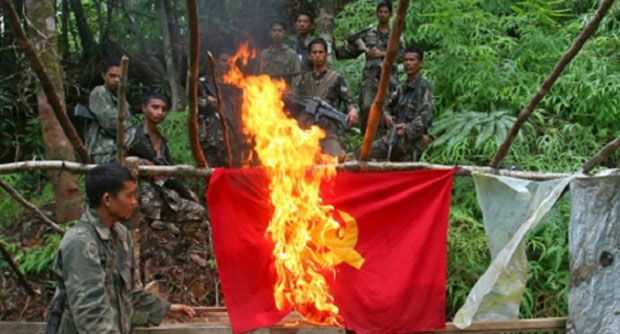
INQUIRER FILE PHOTO
Armed men claiming to be communist rebels torched a passenger bus in Tupi, South Cotabato, before dawn Sunday, police said.
Senior Superintendent Franklin Alvero, South Cotabato police director, said five armed men hailed and boarded the Yellow Bus Line unit along the national highway in Barangay Polonuling at about 4 a.m.
After announcing they were members of the New People’s Army (NPA), the gunmen ordered the driver to take the bus to a secluded area, about 100 meters from the highway, where more armed men were waiting.
They told the crew and passengers to alight before dousing the vehicle with gasoline and torching it, he said.
“No one was hurt and the perpetrators immediately left after setting the bus on fire,” Alvero said.
Supt. Romeo Galgo, spokesperson of the Central Mindanao Police Office, said the bus, with body no. 77, was on its way to General Santos City when intercepted by the armed men.
Police and soldiers of the Army’s 27th Infantry Battalion were pursuing the suspects, who fled toward Mt. Matutum, Galgo said.
http://newsinfo.inquirer.net/843766/gunmen-torch-bus-in-south-cotabato
Commentary: Red flag in Misuari’s return
Commentary by Raul J. Palabrica in the Philippine Daily Inquirer (Nov 12): Commentary: Red flag in Misuari’s return
The residents of Zamboanga City have reason to be concerned about the special treatment being given to Moro National Liberation Front founder Nur Misuari by President Duterte.
Upon the government’s request, the Pasig City court that is hearing the rebellion and crimes against humanity cases filed against Misuari and several MNLF rebels in connection with the 2013 attack of Zamboanga City by the MNLF temporarily lifted his arrest warrant. Then he was flown to Manila from Sulu in a private airplane by Presidential Peace Adviser Jesus Dureza for a meeting with Mr. Duterte in Malacañang.
In the presence of top government officials, Mr. Duterte warmly welcomed Misuari and exchanged, Arab-style, cheek kisses with him. For his part, Misuari thanked the President for his temporary liberty and expressed support for his efforts to bring peace to Mindanao.
A day after Misuari’s “resurrection,” the President signed an executive order giving the MNLF representation in the committee that will lay the groundwork for a Bangsamoro region.
To allay the apprehension of Zamboanga City officials about the effect of these events on their quest for justice for the victims of the MNLF attack of their city, the President’s spokesperson Ernesto Abella said “at the right time, all of those issues will be answered and addressed.”
This assurance is cold comfort to the people who suffered the horrors of a three-week fight between government soldiers and MNLF rebels that resulted in mayhem and the destruction of communities.
From the way it looks, the public’s mind is being conditioned into treating Misuari as an indispensable element in the resolution of decades-old peace and order problems in Mindanao.
Apparently, the administration is working on the premise that the proposed Bangsamoro concept will not be workable unless the MNLF is actively involved in its organization. Despite criticisms against Misuari for his self-centered style of leadership, he continues to be held in high esteem by MNLF members.
If a new Bangsamoro structure is agreed to by the MNLF, the Moro Islamic Liberation Front, the lumad and other stakeholders in the proposed areas, and passes muster in Congress, it is reasonable to expect Misuari to ask—nay, demand—that he be given the opportunity to participate in its formation and operation.
In this scenario, the criminal cases filed against Misuari in connection with the Zamboanga siege will bar him from freely participating in the Bangsamoro region.
The temporary reprieve from arrest extended to him by the Pasig City court has to end at some point. The criminal cases cannot be suspended indefinitely; sooner or later, they have to be tried and resolved in accordance with existing judicial rules.
To enable Misuari to play a meaningful role in the proposed political entity, the cases will either have to be withdrawn by the complainants or dismissed by the court.
It is doubtful, however, if the complainants will agree to withdraw the cases, or put the tragic event behind them, without the responsible parties being punished. It will not be easy to convince them to look at that action as a small price to pay to obtain lasting peace (which may be a big question mark) in their region.
To get around this “problem,” the government may have to reduce the criminal cases to simple rebellion and drop the “crimes against humanity” portion.
Under Philippine laws, rebellion is considered a political crime and therefore can be forgiven or absolved by way of a grant of amnesty by Congress without need for the accused to admit to or deny the accusation.
Thus, if President Duterte’s peace overtures to the MNLF, MILF and National Democratic Front succeed and Congress agrees to grant amnesty to their members as part of the agreement, the victims of the Zamboanga siege may wind up as collateral damage.
http://opinion.inquirer.net/99163/red-flag-in-misuaris-return
The residents of Zamboanga City have reason to be concerned about the special treatment being given to Moro National Liberation Front founder Nur Misuari by President Duterte.
Upon the government’s request, the Pasig City court that is hearing the rebellion and crimes against humanity cases filed against Misuari and several MNLF rebels in connection with the 2013 attack of Zamboanga City by the MNLF temporarily lifted his arrest warrant. Then he was flown to Manila from Sulu in a private airplane by Presidential Peace Adviser Jesus Dureza for a meeting with Mr. Duterte in Malacañang.
In the presence of top government officials, Mr. Duterte warmly welcomed Misuari and exchanged, Arab-style, cheek kisses with him. For his part, Misuari thanked the President for his temporary liberty and expressed support for his efforts to bring peace to Mindanao.
A day after Misuari’s “resurrection,” the President signed an executive order giving the MNLF representation in the committee that will lay the groundwork for a Bangsamoro region.
To allay the apprehension of Zamboanga City officials about the effect of these events on their quest for justice for the victims of the MNLF attack of their city, the President’s spokesperson Ernesto Abella said “at the right time, all of those issues will be answered and addressed.”
This assurance is cold comfort to the people who suffered the horrors of a three-week fight between government soldiers and MNLF rebels that resulted in mayhem and the destruction of communities.
From the way it looks, the public’s mind is being conditioned into treating Misuari as an indispensable element in the resolution of decades-old peace and order problems in Mindanao.
Apparently, the administration is working on the premise that the proposed Bangsamoro concept will not be workable unless the MNLF is actively involved in its organization. Despite criticisms against Misuari for his self-centered style of leadership, he continues to be held in high esteem by MNLF members.
If a new Bangsamoro structure is agreed to by the MNLF, the Moro Islamic Liberation Front, the lumad and other stakeholders in the proposed areas, and passes muster in Congress, it is reasonable to expect Misuari to ask—nay, demand—that he be given the opportunity to participate in its formation and operation.
In this scenario, the criminal cases filed against Misuari in connection with the Zamboanga siege will bar him from freely participating in the Bangsamoro region.
The temporary reprieve from arrest extended to him by the Pasig City court has to end at some point. The criminal cases cannot be suspended indefinitely; sooner or later, they have to be tried and resolved in accordance with existing judicial rules.
To enable Misuari to play a meaningful role in the proposed political entity, the cases will either have to be withdrawn by the complainants or dismissed by the court.
It is doubtful, however, if the complainants will agree to withdraw the cases, or put the tragic event behind them, without the responsible parties being punished. It will not be easy to convince them to look at that action as a small price to pay to obtain lasting peace (which may be a big question mark) in their region.
To get around this “problem,” the government may have to reduce the criminal cases to simple rebellion and drop the “crimes against humanity” portion.
Under Philippine laws, rebellion is considered a political crime and therefore can be forgiven or absolved by way of a grant of amnesty by Congress without need for the accused to admit to or deny the accusation.
Thus, if President Duterte’s peace overtures to the MNLF, MILF and National Democratic Front succeed and Congress agrees to grant amnesty to their members as part of the agreement, the victims of the Zamboanga siege may wind up as collateral damage.
http://opinion.inquirer.net/99163/red-flag-in-misuaris-return
Editorial: Misuari’s resurrection
Editorial from the Philippine Daily Inquirer (Nov 12): Editorial: Misuari’s resurrection
If the climate change issue is any indication, President Duterte appears to be inclined lately to include the consensus of his Cabinet in his official decision-making. He had previously declared his dislike for the Philippines to commit to the Paris Agreement on Climate Change and help in the international effort to reduce greenhouse gas emissions, saying this was a lopsided, onerous and even hypocritical imposition on a poor country by developed nations. But he has since changed his mind and announced that the government would ratify the agreement, and crediting his Cabinet’s recommendation for the shift in policy.
He may want to consult his official family again, especially his national security cluster, on the wisdom of his forceful embrace of the discredited Nur Misuari. The former governor of the Autonomous Region in Muslim Mindanao and founder of the once-secessionist Moro National Liberation Front has been a fugitive from the law since 2013, when a faction of the MNLF loyal to him laid siege to Zamboanga City.
The reason? Misuari was furious at having been excluded from the peace talks that the administration of President Benigno Aquino III had initiated with the Moro Islamic Liberation Front—talks that appeared to be going swimmingly for a period that the contours of a new Bangsamoro political entity replacing the ARMM was under serious discussion. Misuari threw a tantrum at what he felt was his enforced irrelevance by sanctioning his followers’ rampage in Zamboanga. After 18 days of tension and violence, Zamboanga, a major economic hub in the South, lay bleeding from the enormous damage—parts of it in rubble, a number of civilians dead, more than 100,000 people displaced.
A warrant was issued for Misuari’s arrest but he disappeared, reportedly hiding out in Malaysia. But early this year, sensing the political winds shifting with the elections near and a sympathetic Mindanaoan candidate, Mayor Duterte of Davao, bidding fair to become the Philippines’ next president, he emerged from his jungle fastness and preened before his followers in an MNLF “plenum” in Sulu.
Despite his wanted status, Misuari was apparently confident that his political exile was about to end. True enough, among the first things the newly inaugurated President Duterte signaled was his willingness to set aside the law and reinstate Misuari as a serious partner in the peace process he envisioned for Mindanao. Soon he called for the suspension of the warrant for Misuari’s arrest and invited the MNLF leader to visit Malacañang.
That visit came to pass a week ago, with Misuari flying out of Jolo in a private plane and meeting the President in the Palace. Mr. Duterte even allowed him to make his statement from the presidential podium—an unprecedented breach of protocol, but one that Misuari lapped up as he expressed profuse thanks for the political resurrection granted him by the administration.
Mr. Duterte may know something about Misuari that the public doesn’t, hence his fulsome accommodation of the former rebel. But there is the public record: Aside from the Zamboanga carnage for which he still has to account, Misuari was a failure as ARMM governor, frittering away the billions of pesos poured into the region and basically botching the job that was given him as a virtual reward for forging a peace agreement with the Ramos administration in 1996.
In other words, he had his chance, and he blew it. Why is the Duterte administration now rehabilitating someone who has, at the very least, failed his own people? If Mr. Duterte’s aim is to be inclusive in his Mindanao peace campaign, where are the similar overtures to the MILF and other stakeholders in the region? How come Misuari appears to enjoy the favored ear—as if the country hasn’t learned its painful lesson from his track record?
http://opinion.inquirer.net/99169/misuaris-resurrection
If the climate change issue is any indication, President Duterte appears to be inclined lately to include the consensus of his Cabinet in his official decision-making. He had previously declared his dislike for the Philippines to commit to the Paris Agreement on Climate Change and help in the international effort to reduce greenhouse gas emissions, saying this was a lopsided, onerous and even hypocritical imposition on a poor country by developed nations. But he has since changed his mind and announced that the government would ratify the agreement, and crediting his Cabinet’s recommendation for the shift in policy.
He may want to consult his official family again, especially his national security cluster, on the wisdom of his forceful embrace of the discredited Nur Misuari. The former governor of the Autonomous Region in Muslim Mindanao and founder of the once-secessionist Moro National Liberation Front has been a fugitive from the law since 2013, when a faction of the MNLF loyal to him laid siege to Zamboanga City.
The reason? Misuari was furious at having been excluded from the peace talks that the administration of President Benigno Aquino III had initiated with the Moro Islamic Liberation Front—talks that appeared to be going swimmingly for a period that the contours of a new Bangsamoro political entity replacing the ARMM was under serious discussion. Misuari threw a tantrum at what he felt was his enforced irrelevance by sanctioning his followers’ rampage in Zamboanga. After 18 days of tension and violence, Zamboanga, a major economic hub in the South, lay bleeding from the enormous damage—parts of it in rubble, a number of civilians dead, more than 100,000 people displaced.
A warrant was issued for Misuari’s arrest but he disappeared, reportedly hiding out in Malaysia. But early this year, sensing the political winds shifting with the elections near and a sympathetic Mindanaoan candidate, Mayor Duterte of Davao, bidding fair to become the Philippines’ next president, he emerged from his jungle fastness and preened before his followers in an MNLF “plenum” in Sulu.
Despite his wanted status, Misuari was apparently confident that his political exile was about to end. True enough, among the first things the newly inaugurated President Duterte signaled was his willingness to set aside the law and reinstate Misuari as a serious partner in the peace process he envisioned for Mindanao. Soon he called for the suspension of the warrant for Misuari’s arrest and invited the MNLF leader to visit Malacañang.
That visit came to pass a week ago, with Misuari flying out of Jolo in a private plane and meeting the President in the Palace. Mr. Duterte even allowed him to make his statement from the presidential podium—an unprecedented breach of protocol, but one that Misuari lapped up as he expressed profuse thanks for the political resurrection granted him by the administration.
Mr. Duterte may know something about Misuari that the public doesn’t, hence his fulsome accommodation of the former rebel. But there is the public record: Aside from the Zamboanga carnage for which he still has to account, Misuari was a failure as ARMM governor, frittering away the billions of pesos poured into the region and basically botching the job that was given him as a virtual reward for forging a peace agreement with the Ramos administration in 1996.
In other words, he had his chance, and he blew it. Why is the Duterte administration now rehabilitating someone who has, at the very least, failed his own people? If Mr. Duterte’s aim is to be inclusive in his Mindanao peace campaign, where are the similar overtures to the MILF and other stakeholders in the region? How come Misuari appears to enjoy the favored ear—as if the country hasn’t learned its painful lesson from his track record?
http://opinion.inquirer.net/99169/misuaris-resurrection
Saturday, November 12, 2016
Alleged Abu Sayyaf cohort village head nabbed in S. Philippines
From the Global Times (Nov 6): Alleged Abu Sayyaf cohort village head nabbed in S. Philippines
A female village chieftain who allegedly aided the Abu Sayyaf bandit group (ASG) in the kidnapping of some foreigners was arrested in southern Philippine province of Sulu, military said Sunday.
The suspect was identified as Chairwoman Fauzia Abdulla of Niyog Sangahan village, Talipao, Sulu, who was nabbed Saturday by the joint members of the Philippine National Police and the Armed Forces of the Philippines.
A lower court had issued a warrant of arrest against Abdulla for her alleged involvement in the abduction of Canadians John Ridsdel and Robert Hall, Norwegian Kjartan Sekkingstad and Filipina Marites Flor from a resort in Samal Island in southern province of Davao del Norte in September 2015.
The Abu Sayyaf kept the four victims in Sulu. Ridsdel and Hall were later beheaded separately after failing to pay ransom, while Flor and Sekkingstad were released in June and September this year, respectively.
"The village Chair was reportedly coddling ASG members by providing sanctuary, information network and food, and most often involved in managing and providing leadership especially in decision making inside the ASG," the miltiary said.
The Abu Sayyaf, formed in the early 1990s, is a local militant group involved in high-profile kidnapping of foreigners and Filipinos. They are still holding around 14 foreign and Filipino hostages in Sulu.
http://www.globaltimes.cn/content/1016210.shtml
A female village chieftain who allegedly aided the Abu Sayyaf bandit group (ASG) in the kidnapping of some foreigners was arrested in southern Philippine province of Sulu, military said Sunday.
The suspect was identified as Chairwoman Fauzia Abdulla of Niyog Sangahan village, Talipao, Sulu, who was nabbed Saturday by the joint members of the Philippine National Police and the Armed Forces of the Philippines.
A lower court had issued a warrant of arrest against Abdulla for her alleged involvement in the abduction of Canadians John Ridsdel and Robert Hall, Norwegian Kjartan Sekkingstad and Filipina Marites Flor from a resort in Samal Island in southern province of Davao del Norte in September 2015.
The Abu Sayyaf kept the four victims in Sulu. Ridsdel and Hall were later beheaded separately after failing to pay ransom, while Flor and Sekkingstad were released in June and September this year, respectively.
"The village Chair was reportedly coddling ASG members by providing sanctuary, information network and food, and most often involved in managing and providing leadership especially in decision making inside the ASG," the miltiary said.
The Abu Sayyaf, formed in the early 1990s, is a local militant group involved in high-profile kidnapping of foreigners and Filipinos. They are still holding around 14 foreign and Filipino hostages in Sulu.
http://www.globaltimes.cn/content/1016210.shtml
Abus say German still alive, being held in Sulu
From the Philippine Star (Nov 9): Abus say German still alive, being held in Sulu

The terrorist group is holding captive Jurgen Kantner, 70, in Sulu, Abu Sayyaf spokesman Muamar Askali, alias Abu Rami, confirmed yesterday. Jurgen Kantner, who was allowed by his captors to talk to reporters over the phone, was not aware that his partner, Sabine Isne Merz, 59, had been killed. File photo
The partner of a German woman killed by Abu Sayyaf bandits after they were kidnapped Sunday off Sabah near Tawi-Tawi Island is still alive.
The terrorist group is holding captive Jurgen Kantner, 70, in Sulu, Abu Sayyaf spokesman Muamar Askali, alias Abu Rami, confirmed yesterday.
Kantner, who was allowed by his captors to talk to reporters over the phone, was not aware that his partner, Sabine Isne Merz, 59, had been killed.
The remains of Merz will be turned over to the German embassy, the Armed Forces of the Philippines (AFP) said.
Col. Edgardo Arevalo, chief of the AFP public affairs office, said efforts are underway to locate Kantner.
The German couple was cruising on a private yacht in the vicinity of Tanjong Luuk Pisuk in Sabah when they were kidnapped by Abu Sayyaf gunmen, whom Kantner described as pirates.
“The pirates kidnapped me. I don’t know where Sabine is. Maybe she is alive. Sabine was left behind when the pirates brought me to their boat. Minutes later, I heard shots,” Kantner said.
Askali said Merz was killed after she tried to shoot the Abu Sayyaf bandits. A shotgun was recovered beside her body.
Residents discovered the naked body of Merz on the yacht, which was flying a German flag and drifting off Laparan Island, Pangutaran town in Sulu at around 6 a.m. on Sunday.
The Abu Sayyaf has not issued any demand for the safe release of Kantner.
http://www.philstar.com/headlines/2016/11/09/1642009/abus-say-german-still-alive-being-held-sulu
The terrorist group is holding captive Jurgen Kantner, 70, in Sulu, Abu Sayyaf spokesman Muamar Askali, alias Abu Rami, confirmed yesterday. Jurgen Kantner, who was allowed by his captors to talk to reporters over the phone, was not aware that his partner, Sabine Isne Merz, 59, had been killed. File photo
The partner of a German woman killed by Abu Sayyaf bandits after they were kidnapped Sunday off Sabah near Tawi-Tawi Island is still alive.
The terrorist group is holding captive Jurgen Kantner, 70, in Sulu, Abu Sayyaf spokesman Muamar Askali, alias Abu Rami, confirmed yesterday.
Kantner, who was allowed by his captors to talk to reporters over the phone, was not aware that his partner, Sabine Isne Merz, 59, had been killed.
The remains of Merz will be turned over to the German embassy, the Armed Forces of the Philippines (AFP) said.
Col. Edgardo Arevalo, chief of the AFP public affairs office, said efforts are underway to locate Kantner.
The German couple was cruising on a private yacht in the vicinity of Tanjong Luuk Pisuk in Sabah when they were kidnapped by Abu Sayyaf gunmen, whom Kantner described as pirates.
“The pirates kidnapped me. I don’t know where Sabine is. Maybe she is alive. Sabine was left behind when the pirates brought me to their boat. Minutes later, I heard shots,” Kantner said.
Askali said Merz was killed after she tried to shoot the Abu Sayyaf bandits. A shotgun was recovered beside her body.
Residents discovered the naked body of Merz on the yacht, which was flying a German flag and drifting off Laparan Island, Pangutaran town in Sulu at around 6 a.m. on Sunday.
The Abu Sayyaf has not issued any demand for the safe release of Kantner.
http://www.philstar.com/headlines/2016/11/09/1642009/abus-say-german-still-alive-being-held-sulu
Yachting Couple Attacked by Abu Sayyaf in Sulu Sea
From the Maritime Executive (Nov 8): Yachting Couple Attacked by Abu Sayyaf in Sulu Sea

Abu Sayyaf fighters (file image)
A German couple kidnapped by Somali pirates eight years ago has been attacked at sea again – by Abu Sayyaf.
Jurgen Kantner, 70, and his partner Sabine Merz were sailing off of Sabah, Malaysia when their yacht was boarded by gunmen. Philippine media report that Merz was shot and killed while resisting the attack and Kantner was taken captive. Abu Sayyaf spokesman Abu Rami said the terrorist group was responsible for the abduction.
On Sunday, Philippine armed forces found the couple's sailing yacht, the Rockall, adrift off of Sulu. Merz's remains were on board and a shotgun was by her side, Army spokesman Maj. Filemon Tan Jr. told the Philippine Star.
The attack was the couple's second run-in with kidnappers at sea: they had been abducted and held by Somali pirates in 2008. They were ransomed after two months at an estimated cost of about $600,000.
Kantner returned to the Somali pirate base of Berbera shortly after gaining his freedom, defying warnings about the danger in order to retake possession of his sailboat.
"My boat is my life and I don't want to lose her, nothing more. I don't care about pirates and governments," Kantner told AFP in 2009. "[Local Somalis] think that I'm insane, they call me the crazy white guy or the mad German sailor but they don't know how important my boat is to me."
Latest attack fits a long-running pattern.
Somali piracy has abated over the intervening years, but Abu Sayyaf has been particularly active in maritime kidnappings in recent months. The group has focused its criminal activities on vulnerable, slow-moving vessels like tugs and trawlers, and it has abducted over 30 seafarers so far this year.
Analysts estimate that it garnered about $7 million in ransom payments over the six months ending in June.
In addition to the attack on Kantner and Merz, Abu Sayyaf militants kidnapped two Indonesian fishermen in two raids off of Sabah, Malaysia on Saturday. They also abducted a South Korean captain and a Philippine crewmember from the heavy lift ship Dongbang Giant in late October.
The kidnappings continue despite a sustained Philippine military campaign against Abu Sayyaf on the islands of Sulu and Basilan, the group's main bases of operation.
Philippine president Rodrigo Duterte has called for cooperation between his nation, Malaysia and Indonesia to jointly combat the threat of Abu Sayyaf piracy. He recently said that the kidnappings threaten to paralyze trade in the region; the Philippines is heavily dependent on barge shipments of coal from Indonesia for power generation, and Energy Secretary Zenaida Monsada said in June that a persistent run of attacks on tugs threatened to reduce the supply.
http://www.maritime-executive.com/article/yachting-couple-attacked-by-abu-sayyaf-in-sulu-sea
Abu Sayyaf fighters (file image)
A German couple kidnapped by Somali pirates eight years ago has been attacked at sea again – by Abu Sayyaf.
Jurgen Kantner, 70, and his partner Sabine Merz were sailing off of Sabah, Malaysia when their yacht was boarded by gunmen. Philippine media report that Merz was shot and killed while resisting the attack and Kantner was taken captive. Abu Sayyaf spokesman Abu Rami said the terrorist group was responsible for the abduction.
On Sunday, Philippine armed forces found the couple's sailing yacht, the Rockall, adrift off of Sulu. Merz's remains were on board and a shotgun was by her side, Army spokesman Maj. Filemon Tan Jr. told the Philippine Star.
The attack was the couple's second run-in with kidnappers at sea: they had been abducted and held by Somali pirates in 2008. They were ransomed after two months at an estimated cost of about $600,000.
Kantner returned to the Somali pirate base of Berbera shortly after gaining his freedom, defying warnings about the danger in order to retake possession of his sailboat.
"My boat is my life and I don't want to lose her, nothing more. I don't care about pirates and governments," Kantner told AFP in 2009. "[Local Somalis] think that I'm insane, they call me the crazy white guy or the mad German sailor but they don't know how important my boat is to me."
Latest attack fits a long-running pattern.
Somali piracy has abated over the intervening years, but Abu Sayyaf has been particularly active in maritime kidnappings in recent months. The group has focused its criminal activities on vulnerable, slow-moving vessels like tugs and trawlers, and it has abducted over 30 seafarers so far this year.
Analysts estimate that it garnered about $7 million in ransom payments over the six months ending in June.
In addition to the attack on Kantner and Merz, Abu Sayyaf militants kidnapped two Indonesian fishermen in two raids off of Sabah, Malaysia on Saturday. They also abducted a South Korean captain and a Philippine crewmember from the heavy lift ship Dongbang Giant in late October.
The kidnappings continue despite a sustained Philippine military campaign against Abu Sayyaf on the islands of Sulu and Basilan, the group's main bases of operation.
Philippine president Rodrigo Duterte has called for cooperation between his nation, Malaysia and Indonesia to jointly combat the threat of Abu Sayyaf piracy. He recently said that the kidnappings threaten to paralyze trade in the region; the Philippines is heavily dependent on barge shipments of coal from Indonesia for power generation, and Energy Secretary Zenaida Monsada said in June that a persistent run of attacks on tugs threatened to reduce the supply.
http://www.maritime-executive.com/article/yachting-couple-attacked-by-abu-sayyaf-in-sulu-sea
Abu Sayyaf hostile to engineer overseeing ARMM's Basilan projects
From the Philippine Star (Nov 11): Abu Sayyaf hostile to engineer overseeing ARMM's Basilan projects

Authorities on Thursday confirmed Basilan’s district engineer, Soler Undug (left), is under threat from the Abu Sayyaf for his infrastructure projects in former enclaves of the militant group. Philstar.com/File photo
Islamic militants opposing the massive implementation of infrastructure projects in Basilan were behind the bombing Thursday of a warehouse owned by the district engineer in the province, officials said Friday.
No one was reported hurt in the powerful explosion beside the warehouse in Isabela City of engineer Soler Undug but the incident caused panic among villagers residing nearby.
Undug is a multi-awarded chief of the Basilan District Engineering Office (DEO) overseeing all infrastructure projects in the province of Gov. Mujiv Hataman of the Autonomous Region in Muslim Mindanao (ARMM).
Undug is popular in Basilan for his role in the completion in the past four years of more than P3 billion worth of ARMM-funded infrastructures there and for his hands-on management of some P5 billion worth more of current projects in the province.
Reports reaching the Police Regional Office-ARMM in Parang town in Maguindanao indicated that the bomb that exploded Thursday night near the warehouse of Undug in Barangay Aguada in Isabela City, the former capital of Basilan, was set off from a distance using a mobile phone.
The attack came about a month after thousands of displaced Yakan villagers were returned by local officials to their farming enclaves in Basilan’s hostile Albarka town government forces had recently liberated from control of the Abu Sayyaf.
The ARMM government is implementing about P100 million worth of infrastructure projects in Albarka, designed to generate livelihood opportunities needed to improve the lives of local residents.
The symbolic return of the displaced Albarka residents was facilitated by Hataman and his older brother, Jim, who is incumbent governor of the province, and personnel of the Basilan DEO led by Undug.
Officials of the Department of Education-ARMM on Friday said the Abu Sayyaf is also hostile to the Basilan DEO for having built dozens of new schools in far-flung areas where the group is espousing militancy among children using underdevelopment as pitch to stoke hatred to government.
Soler received last October a special citation from the Civil Service Commission for his exemplary performance of his duties as chief of the Basilan DEO.
The Basilan DEO and Hataman’s office, through the Department of Public Works and Highways-ARMM, is currently constructing the P1 billion worth “Basilan Transcentral Road.”
The overland artery will connect Lamitan City, the new provincial capital, to far-flung towns cutting through mountain ranges in the center of the island province the Abu Sayyaf often use as sanctuary when evading military offensives in the lowlands.
Two local executives in Basilan also confirmed that the Abu Sayyaf is rabidly against the ongoing expansion of the Lamitan City Port, funded with a P150-million grant from the ARMM government, and the ongoing construction of the Buli-Buli Port in Sumisip town west of the island province.
“These projects will improve tremendously the business climate in Basilan and that is something extremists do not want because they will lose control of impoverished communities,” said one of them.
Talks have also been circulating since last October purporting that the Abu Sayyaf is not in favor of the two wharf projects of the Hataman administration, fearing the facilities can be used as berthing sites for naval watercrafts that can be used for government pacification maneuvers.
The provincial police office in Basilan said Thursday’s incident was preceded by two attempts in the past 12 months to set off powerful improvised explosive devices (IEDs) near Undug’s residential yard.
The IEDs were promptly deactivated by responding ordnance disposal experts.
Hataman, chairman of ARMM’s inter-agency regional peace and order council, said he had asked the Army’s 104th Brigade based in Isabela City to help the police identity the culprits in Thursday night’s IED attack.
Superintendent Jerome Afuyog, chief of the Isabela municipal police office, said investigators are still gathering information to determine the exact identities of the bombers.
http://www.philstar.com/nation/2016/11/11/1642758/abu-sayyaf-hostile-engineer-overseeing-armms-basilan-projects
Authorities on Thursday confirmed Basilan’s district engineer, Soler Undug (left), is under threat from the Abu Sayyaf for his infrastructure projects in former enclaves of the militant group. Philstar.com/File photo
Islamic militants opposing the massive implementation of infrastructure projects in Basilan were behind the bombing Thursday of a warehouse owned by the district engineer in the province, officials said Friday.
No one was reported hurt in the powerful explosion beside the warehouse in Isabela City of engineer Soler Undug but the incident caused panic among villagers residing nearby.
Undug is a multi-awarded chief of the Basilan District Engineering Office (DEO) overseeing all infrastructure projects in the province of Gov. Mujiv Hataman of the Autonomous Region in Muslim Mindanao (ARMM).
Undug is popular in Basilan for his role in the completion in the past four years of more than P3 billion worth of ARMM-funded infrastructures there and for his hands-on management of some P5 billion worth more of current projects in the province.
Reports reaching the Police Regional Office-ARMM in Parang town in Maguindanao indicated that the bomb that exploded Thursday night near the warehouse of Undug in Barangay Aguada in Isabela City, the former capital of Basilan, was set off from a distance using a mobile phone.
The attack came about a month after thousands of displaced Yakan villagers were returned by local officials to their farming enclaves in Basilan’s hostile Albarka town government forces had recently liberated from control of the Abu Sayyaf.
The ARMM government is implementing about P100 million worth of infrastructure projects in Albarka, designed to generate livelihood opportunities needed to improve the lives of local residents.
The symbolic return of the displaced Albarka residents was facilitated by Hataman and his older brother, Jim, who is incumbent governor of the province, and personnel of the Basilan DEO led by Undug.
Officials of the Department of Education-ARMM on Friday said the Abu Sayyaf is also hostile to the Basilan DEO for having built dozens of new schools in far-flung areas where the group is espousing militancy among children using underdevelopment as pitch to stoke hatred to government.
Soler received last October a special citation from the Civil Service Commission for his exemplary performance of his duties as chief of the Basilan DEO.
The Basilan DEO and Hataman’s office, through the Department of Public Works and Highways-ARMM, is currently constructing the P1 billion worth “Basilan Transcentral Road.”
The overland artery will connect Lamitan City, the new provincial capital, to far-flung towns cutting through mountain ranges in the center of the island province the Abu Sayyaf often use as sanctuary when evading military offensives in the lowlands.
Two local executives in Basilan also confirmed that the Abu Sayyaf is rabidly against the ongoing expansion of the Lamitan City Port, funded with a P150-million grant from the ARMM government, and the ongoing construction of the Buli-Buli Port in Sumisip town west of the island province.
“These projects will improve tremendously the business climate in Basilan and that is something extremists do not want because they will lose control of impoverished communities,” said one of them.
Talks have also been circulating since last October purporting that the Abu Sayyaf is not in favor of the two wharf projects of the Hataman administration, fearing the facilities can be used as berthing sites for naval watercrafts that can be used for government pacification maneuvers.
The provincial police office in Basilan said Thursday’s incident was preceded by two attempts in the past 12 months to set off powerful improvised explosive devices (IEDs) near Undug’s residential yard.
The IEDs were promptly deactivated by responding ordnance disposal experts.
Hataman, chairman of ARMM’s inter-agency regional peace and order council, said he had asked the Army’s 104th Brigade based in Isabela City to help the police identity the culprits in Thursday night’s IED attack.
Superintendent Jerome Afuyog, chief of the Isabela municipal police office, said investigators are still gathering information to determine the exact identities of the bombers.
http://www.philstar.com/nation/2016/11/11/1642758/abu-sayyaf-hostile-engineer-overseeing-armms-basilan-projects
Vietnamese bulk carrier Royal 16 was hijacked by Abu Sayyaf terrorists
From the Maritime Herald (Nov 11): Vietnamese bulk carrier Royal 16 was hijacked by Abu Sayyaf terrorists

The Vietnamese bulk carrier Royal 16 was hijacked by Abu Sayyaf terrorists near the Philippine island of Basilian. The vessel, which was en route from Hai Phong in Vietnam towards Davao, on 8.3 nautical miles southeast off Coco Island in Basilan Strait was approached by fast skiff with heavy armed men. The pirates opened fire against the vessel and succeeded to take control. Six from the crew on board of the Vietnamese bulk carrier, including include Master, Chief Mate, Second Officer, Third Officer, Bosun and Assistant Bosun, were kidnapped and taken as hostages. The pirates and kidnapped seamen fled in a speed boat in unknown direction. The remaining 13 crew was left on board of bulk carrier Royal 16 and reported about the accident.
The accident was transferred to the Vietnam Maritime Security Information Center and Regional Cooperation Agreement on Combating Piracy. The investigation for the root cause was started, but there is no details if the hijackers contacted local authorities with ransom request. The Malaysia Maritime Enforcement Agency, Philippine Coast Guard Vietnam Coast Guard are working together to resolve the situation with the six hostages. The vessel proceeded to Zamboanga port under the escort of the local navy.
The hijacking of the bulk carrier comes a few days after Regional Cooperation Agreement on Combating Piracy and Armed Robbery against Ships in Asia warning that slow moving ships with low freeboard should reroute away from the southern Philippines, if possible, as attacks in the area spike.
The Vietnamese bulk carrier Royal 16 (IMO: 9600011) has overall length of 90.00 m, moulded beam of 15.60 m and maximum draft of 4.50 m. The vessel was built in 2011 by Hoang Gia Shipbuilding Industry in their shipyard in Nam Dinh, Vietnam. The owner and operator of the Vietnamese company Quysang Trading Shipping.
http://www.maritimeherald.com/2016/vietnamese-bulk-carrier-royal-16-was-hijacked-by-abu-sayyaf-terrorists/
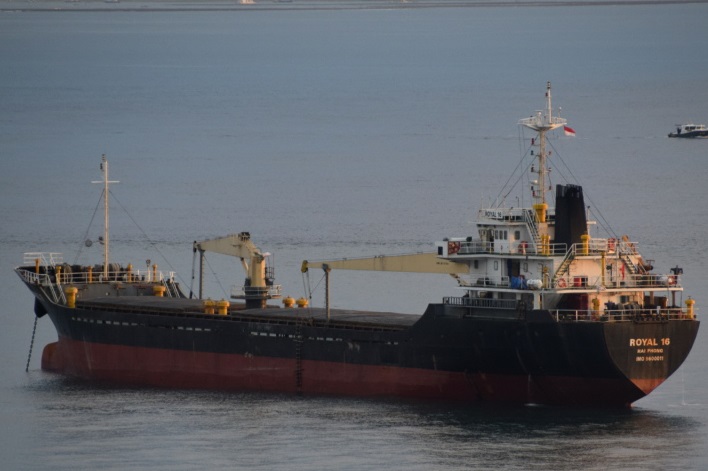
The Vietnamese bulk carrier Royal 16 was hijacked by Abu Sayyaf terrorists near the Philippine island of Basilian. The vessel, which was en route from Hai Phong in Vietnam towards Davao, on 8.3 nautical miles southeast off Coco Island in Basilan Strait was approached by fast skiff with heavy armed men. The pirates opened fire against the vessel and succeeded to take control. Six from the crew on board of the Vietnamese bulk carrier, including include Master, Chief Mate, Second Officer, Third Officer, Bosun and Assistant Bosun, were kidnapped and taken as hostages. The pirates and kidnapped seamen fled in a speed boat in unknown direction. The remaining 13 crew was left on board of bulk carrier Royal 16 and reported about the accident.
The accident was transferred to the Vietnam Maritime Security Information Center and Regional Cooperation Agreement on Combating Piracy. The investigation for the root cause was started, but there is no details if the hijackers contacted local authorities with ransom request. The Malaysia Maritime Enforcement Agency, Philippine Coast Guard Vietnam Coast Guard are working together to resolve the situation with the six hostages. The vessel proceeded to Zamboanga port under the escort of the local navy.
The hijacking of the bulk carrier comes a few days after Regional Cooperation Agreement on Combating Piracy and Armed Robbery against Ships in Asia warning that slow moving ships with low freeboard should reroute away from the southern Philippines, if possible, as attacks in the area spike.
The Vietnamese bulk carrier Royal 16 (IMO: 9600011) has overall length of 90.00 m, moulded beam of 15.60 m and maximum draft of 4.50 m. The vessel was built in 2011 by Hoang Gia Shipbuilding Industry in their shipyard in Nam Dinh, Vietnam. The owner and operator of the Vietnamese company Quysang Trading Shipping.
http://www.maritimeherald.com/2016/vietnamese-bulk-carrier-royal-16-was-hijacked-by-abu-sayyaf-terrorists/
Esscom releases list of 23 wanted Filipinos
From The Star (Nov 11): Esscom releases list of 23 wanted Filipinos

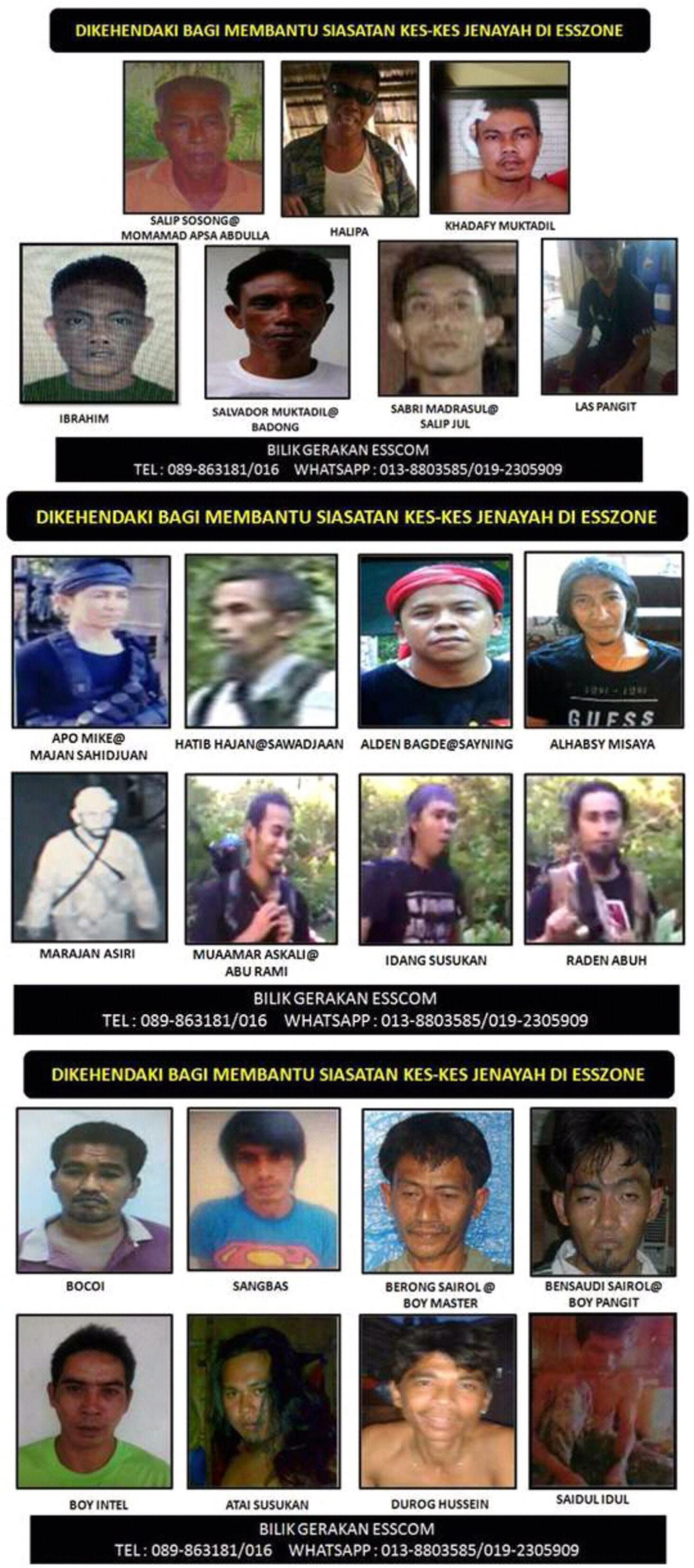
A list of 23 Filipinos, including the notorious leaders of the Abu Sayyaf militant movement, have been placed on the the Eastern Sabah Security Command's (Esscom) wanted list.
The suspects' known names and pictures were made public Friday in a bid by the authorities to capture the criminals believed to be behind a series of cross-border kidnappings in Sabah's east coast.
"They are wanted for mostly kidnappings,'' Esscom commander Datuk Wan Abdul Bari Wan Abdul Khalid (pic) said.

Among those wanted are known Abu Sayyaf commanders and sub-commanders involved in holding hostages in Jolo, where they negotiated for large ransoms for their freedom.
Among the Abu Sayyaf commanders listed are Alhabsy Misaya, Idang Susukan, Apo Mike @ Majan Sahidjuan and Hatib Hajan @ Sawadjaan, and their spokesman Muaamar Askali @ Abu Rami.
Also in the list are the neutralised Muktadil brothers Khadafy and Salvador @ Badong.
Others in the list are those believed to be members of gangs that raided Sabah's east coast, including Salip Sosong @ Mohamad Apsa Abdulla, Saidul Idul, Halipa, Ibrahim, Sabri Madrasul @ Salip Jul, Las Pangit, Hatib Hajan @ Sawadjaan, Alden Bagde @ Sayning, Marajan Asiri, Raden Abuh, Bocoi, Sangbas, Berong Sairol @ Boy Master, Bensaudi Sairol @ Boy Pangit, Boy Intel, Atai Susukan and Durog Hussein.
The public can channel information to Esscom's operational centre at 089-863 181/ 016- or 013-880 3585/ 019-230 5909.

A list of 23 Filipinos, including the notorious leaders of the Abu Sayyaf militant movement, have been placed on the the Eastern Sabah Security Command's (Esscom) wanted list.
The suspects' known names and pictures were made public Friday in a bid by the authorities to capture the criminals believed to be behind a series of cross-border kidnappings in Sabah's east coast.
"They are wanted for mostly kidnappings,'' Esscom commander Datuk Wan Abdul Bari Wan Abdul Khalid (pic) said.
Among those wanted are known Abu Sayyaf commanders and sub-commanders involved in holding hostages in Jolo, where they negotiated for large ransoms for their freedom.
Among the Abu Sayyaf commanders listed are Alhabsy Misaya, Idang Susukan, Apo Mike @ Majan Sahidjuan and Hatib Hajan @ Sawadjaan, and their spokesman Muaamar Askali @ Abu Rami.
Also in the list are the neutralised Muktadil brothers Khadafy and Salvador @ Badong.
Others in the list are those believed to be members of gangs that raided Sabah's east coast, including Salip Sosong @ Mohamad Apsa Abdulla, Saidul Idul, Halipa, Ibrahim, Sabri Madrasul @ Salip Jul, Las Pangit, Hatib Hajan @ Sawadjaan, Alden Bagde @ Sayning, Marajan Asiri, Raden Abuh, Bocoi, Sangbas, Berong Sairol @ Boy Master, Bensaudi Sairol @ Boy Pangit, Boy Intel, Atai Susukan and Durog Hussein.
The public can channel information to Esscom's operational centre at 089-863 181/ 016- or 013-880 3585/ 019-230 5909.
Abu Sayyaf hijacks Vietnam vessel, abducts 6 crew
From The Gulf Today (Nov 11): Abu Sayyaf hijacks Vietnam vessel, abducts 6 crew
About 10 members of the Al Qaeda-linked Abu Sayyaf terror group hijacked a Vietnamese flagged cargo vessel and abducted the captain and five other crewmen in the high seas off the island province of Basilan in restive Mindanao, the Philippine Coast Guard (PCG) reported on Friday.
Commander Jerome Cayabyab, the PCG head in Zamboanga City, said the heavily-armed militants who were aboard a speedboat shot and wounded a Vietnamese sailor who attempted to escape during the hijacking of the MV Royale 16 that occurred off Basilan on Friday morning.
Cayabyab said the PCG learned of the hijacking from another cargo vessel passing through the same area, which immediately responded to a distress call from the Vietnamese ship.
According to Cayabyab, they have yet to ascertain where the Vietnamese vessel was found for, explaining that the wounded crewman who has been confined in a local hospital did not speak English.
The incident occurred exactly four days after the militants killed the wife of a German national aboard a yacht they hijacked off Sabah state in Malaysia, according to the military.
Major Filemon Tan, the spokesman of the military’s Western Mindanao Command, quoted an Abu Sayyaf spokesman as saying they brought the vessel after killing the woman who resisted and tried to fight them off with a shotgun.
Tan confirmed the militants brought their 70-year-old German hostage identified as Juergen Kantner to Sulu where government forces have launched an intensified “search and destroy” operation against them.
In a related development, Malaysian Prime Minister Najib Razak on Friday announced the Philippine agreed to allow Malaysian and Indonesian security forces to conduct “hot pursuit” operations even in Philippine waters against the Abu Sayyaf and other criminal groups preying on vessels plying their common maritime borders.
Najib told a press conference in Kuala Lumpur he reached the agreement with President Rodrigo “Rody” Duterte who made a two-day state-visit to Malaysia where they discussed, among others, the major problem of piracy perpetrated in particular by the Abu Sayyaf.
Najib pointed out that Duterte also had the same agreement with Indonesian President Joko Widodo during a recent similar state visit to that country.
http://gulftoday.ae/portal/11239af1-7256-4c95-834e-9ebc031bd00b.aspx
About 10 members of the Al Qaeda-linked Abu Sayyaf terror group hijacked a Vietnamese flagged cargo vessel and abducted the captain and five other crewmen in the high seas off the island province of Basilan in restive Mindanao, the Philippine Coast Guard (PCG) reported on Friday.
Commander Jerome Cayabyab, the PCG head in Zamboanga City, said the heavily-armed militants who were aboard a speedboat shot and wounded a Vietnamese sailor who attempted to escape during the hijacking of the MV Royale 16 that occurred off Basilan on Friday morning.
Cayabyab said the PCG learned of the hijacking from another cargo vessel passing through the same area, which immediately responded to a distress call from the Vietnamese ship.
According to Cayabyab, they have yet to ascertain where the Vietnamese vessel was found for, explaining that the wounded crewman who has been confined in a local hospital did not speak English.
The incident occurred exactly four days after the militants killed the wife of a German national aboard a yacht they hijacked off Sabah state in Malaysia, according to the military.
Major Filemon Tan, the spokesman of the military’s Western Mindanao Command, quoted an Abu Sayyaf spokesman as saying they brought the vessel after killing the woman who resisted and tried to fight them off with a shotgun.
Tan confirmed the militants brought their 70-year-old German hostage identified as Juergen Kantner to Sulu where government forces have launched an intensified “search and destroy” operation against them.
In a related development, Malaysian Prime Minister Najib Razak on Friday announced the Philippine agreed to allow Malaysian and Indonesian security forces to conduct “hot pursuit” operations even in Philippine waters against the Abu Sayyaf and other criminal groups preying on vessels plying their common maritime borders.
Najib told a press conference in Kuala Lumpur he reached the agreement with President Rodrigo “Rody” Duterte who made a two-day state-visit to Malaysia where they discussed, among others, the major problem of piracy perpetrated in particular by the Abu Sayyaf.
Najib pointed out that Duterte also had the same agreement with Indonesian President Joko Widodo during a recent similar state visit to that country.
http://gulftoday.ae/portal/11239af1-7256-4c95-834e-9ebc031bd00b.aspx
Another kidnapping in Philippine waters
From the Straits Times (Nov 11): Another kidnapping in Philippine waters
At least five crew members aboard Vietnamese cargo ship taken by gunmen

Navy personnel on board the Rockall after it was recovered near Laparan island in Sulu province in Mindanao. Militants claim to have kidnapped the yacht's German sailor and killed his wife.PHOTO: AGENCE FRANCE-PRESSE
Gunmen have abducted at least five crewmen from a Vietnamese cargo vessel in southern Philippine waters, an area where militants are on a kidnapping-for-ransom spree.
The attack brings to at least eight the number of people abducted from vessels in the region over the past week, including an elderly German sailor, raising fears that the authorities are unable to control the worsening piracy problem.
The MV Royal 16 was sailing less than 20km from Basilan Island, a stronghold of Abu Sayyaf militants, when it was attacked yesterday morning.
Two crew members, one of whom was wounded, escaped and were rescued by a local cargo ship in the area, the authorities said.
"Sea and naval assets (were) already deployed to search and rescue the said kidnap victims," said regional military spokesman Filemon Tan.
In recent months, the Abu Sayyaf has been accused of kidnapping dozens of Indonesian and Malaysian sailors in waters off the southern Philippines.
Last weekend, an Abu Sayyaf commander claimed responsibility for abducting the 70-year-old German sailor and murdering his wife. Her naked body was found on their yacht, Rockall, when it was recovered by Philippine military forces.
And in what maritime experts described as a landmark incident, the captain of a South Korean cargo ship and a Filipino crewman were abducted, marking the first such attack on a large merchant vessel.
Abu Sayyaf militants this year beheaded two Canadian hostages after demands for millions of dollars were not met. Most of the Indonesian and Malaysian sailors were released after ransoms were reportedly paid.
The Abu Sayyaf is a loose network of militants formed in the 1990s with seed money from Osama bin Laden's Al-Qaeda network. It has made millions of dollars from kidnappings for ransom.
Philippine President Rodrigo Duterte has launched a military offensive to "destroy" the Abu Sayyaf.
But the militants have defied more than a decade of similar US-backed offensives, surviving in their mountainous and jungle-clad southern island strongholds, where they have support from local Muslim communities.
The Abu Sayyaf is not the only threat, with those near-lawless islands home to other armed gangs and people whose families have been involved in piracy for generations, according to security analysts.
The Philippines has agreed to allow Malaysian and Indonesian maritime forces to pursue kidnappers into its waters to contain the threat, Malaysian Prime Minister Najib Razak said on Thursday.
http://www.straitstimes.com/asia/se-asia/another-kidnapping-in-philippine-waters
At least five crew members aboard Vietnamese cargo ship taken by gunmen
Navy personnel on board the Rockall after it was recovered near Laparan island in Sulu province in Mindanao. Militants claim to have kidnapped the yacht's German sailor and killed his wife.PHOTO: AGENCE FRANCE-PRESSE
Gunmen have abducted at least five crewmen from a Vietnamese cargo vessel in southern Philippine waters, an area where militants are on a kidnapping-for-ransom spree.
The attack brings to at least eight the number of people abducted from vessels in the region over the past week, including an elderly German sailor, raising fears that the authorities are unable to control the worsening piracy problem.
The MV Royal 16 was sailing less than 20km from Basilan Island, a stronghold of Abu Sayyaf militants, when it was attacked yesterday morning.
Two crew members, one of whom was wounded, escaped and were rescued by a local cargo ship in the area, the authorities said.
"Sea and naval assets (were) already deployed to search and rescue the said kidnap victims," said regional military spokesman Filemon Tan.
The nationalities of the abducted crewmen and the identity of the kidnappers were still unknown.
Last weekend, an Abu Sayyaf commander claimed responsibility for abducting the 70-year-old German sailor and murdering his wife. Her naked body was found on their yacht, Rockall, when it was recovered by Philippine military forces.
And in what maritime experts described as a landmark incident, the captain of a South Korean cargo ship and a Filipino crewman were abducted, marking the first such attack on a large merchant vessel.
Abu Sayyaf militants this year beheaded two Canadian hostages after demands for millions of dollars were not met. Most of the Indonesian and Malaysian sailors were released after ransoms were reportedly paid.
The Abu Sayyaf is a loose network of militants formed in the 1990s with seed money from Osama bin Laden's Al-Qaeda network. It has made millions of dollars from kidnappings for ransom.
Philippine President Rodrigo Duterte has launched a military offensive to "destroy" the Abu Sayyaf.
But the militants have defied more than a decade of similar US-backed offensives, surviving in their mountainous and jungle-clad southern island strongholds, where they have support from local Muslim communities.
The Abu Sayyaf is not the only threat, with those near-lawless islands home to other armed gangs and people whose families have been involved in piracy for generations, according to security analysts.
The Philippines has agreed to allow Malaysian and Indonesian maritime forces to pursue kidnappers into its waters to contain the threat, Malaysian Prime Minister Najib Razak said on Thursday.
http://www.straitstimes.com/asia/se-asia/another-kidnapping-in-philippine-waters
Subscribe to:
Posts (Atom)