Thursday, August 29, 2019

SOLCOM: Governor of Pampanga declares CPPNPA 'Persona Non Grata'

Posted to the Southern Luzon Command (SOLCOM) Facebook Page (Aug 27, 2019):

Image may contain: 1 person, text

https://www.facebook.com/SouthernLuzonCommandAFP/photos/a.1503968379863230/2337320776527982/?type=3&theater

https://www.facebook.com/SouthernLuzonCommandAFP/

SOLCOM: Colonel Lastimado Change-of-Command Ceremony

Posted to the Southern Luzon Command (SOLCOM) Facebook Page (Aug 27, 2019): Colonel Lasimado Change-of-Command Ceremony

BRIGADIER GENERAL ARNULFO MARCELO B BURGOS Jr, AFP Commander, 2nd Infantry (Jungle Fighter) Division, presided the formal transfer of authority, responsibility and accountability from BRIGADIER GENERAL MARCELIANO TEOFILO AFP to COLONEL ANTONIO R LASTIMADO PA at Brgy Pag-asa, Bansud, Oriental Mindoro.

BGEN BURGOS commended BGEN TEOFILO for the “headways which his troops and units recorded during his almost 10-month tour of duty” brought about by the “decisive engagements, NPA mass surrender and neutralization of key terrorist personalities.”

He congratulated the former commander and expressed his belief “that MIMAROPA is over the hump and RTF ELCAC is ready to take the lead in bringing peace, prosperity and development not only for the people of Mindoro and Romblon, but for the entire region".

A “Military Merit Medal Interim to Distinguished Service Star” was conferred to BGen Teofilo for meritorious achievements in a position of major responsibility.

BGen Teofilo expressed his “utmost gratitude to the men and women of the 203rd Brigade as well as to our stakeholders for the unwavering dedication to duty and unparalleled support” which they extended upon him during his stint as Brigade Commander.

He attributed his success as Commander to his “hardworking battalion commanders and troops in the frontlines” whose commitment to duty “made things happen in this part of the country” while also recognizing the iron-clad partnership which his unit has forged with the local government officials, PNP, NGOs and the general public.

COL LASTIMADO, a native of Leyte, served as the 203rd Brigade's Deputy Commander prior to his assignment as Brigade Commander.

He graduated from the Army’s Officer Candidate School in 1988 and went up the ladder of Philippine Army from being a Company Commander of 6th Special Forces Company. After completing his Command and General Staff Course in the AFP Command and General Staff College, he led the 21st Infantry Battalion of 5th Infantry Division.

COL LASTIMADO vowed to continue to support the initiatives of the local government units and to closely collaborate with the stakeholders in line with the AFP Development Support and Security Plan “KAPAYAPAAN” and promised to "sustain what the 203rd Brigade has so far achieved toward fully winning the peace in the provinces of MIMARO."

BGEN BURGOS reminded the new commander that he is now “responsible in ensuring that RTF ELCAC MIMAROPA will continue to flourish and attain its desired end-state by facilitating the whole of nation approach in our identified convergence areas” while urging him to aspire for excellence by saying that “your fellow Jungle Fighters and the people of MIMARO are expecting a lot from you.”

Image may contain: 2 people, people standing


Image may contain: 2 people, people standing


Image may contain: 3 people, people smiling, people standing and indoor


Image may contain: 3 people, people smiling, outdoor


WESTMINCOM: LTG supporter yields, turns over firearm in Lanao del Sur

Posted to the Western Mindanao Command (WESTMINCOM) Website (Aug 29, 2019): LTG supporter yields, turns over firearm in Lanao del Sur


A local terrorist group supporter yielded to the troops of the 49th Infantry Battalion in Butig, Lanao del Sur at 3pm yesterday, August 28.


Hadji Soaib Ander also turned over 1 US KG9 Semi-auto Pistol and 2 9mm Magazines Long with 29 rounds of ammunition.

Ander was a supporter of a group led by Ali Amintao a.k.a White Lawaan during their series of encounters with the Philippine Army’s 103rd Brigade troopers in Butig last 2016. He was the group’s provider of firearms, ammunitions, and food.


“Hadji Soaib had a son named Hadip who was recruited by the Maute brothers and was unfortunately killed in a firefight on September 23, 2017,” said Brig. Gen. Romeo Brawner, Commander of the 103rd Brigade.

“We are delighted by his decision to return to the mainstream of society and we will provide the necessary assistance to help him start a new life,” Brig. Gen. Brawner added.

The successful surrender of said LTG supporter was facilitated by the troops of the Charlie Company of the 49IB led by 1st Lieutenant Rodriguez, and the municipal government of Butig led by Mayor Dimnatang Pansar.

Subject surrenderor is currently undergoing debriefing at the headquarters of 49IB in Camp Darul-iman, Barangay Sandab, Butig.

“Convergence is all we need in our quest for peace and sustainable development here in Mindanao,” said Lieutenant General Cirilito Sobejana, Commander of the Western Mindanao Command.

“Rest assured that we will remain relentless in our efforts against the different threat groups as we accustom the whole-of-nation approach in ending terrorism and radicalism,” added Lt. Gen. Sobejana.

PNP to purge all CPP-NPA fronts

From the Manila Times (Aug 30, 2019): PNP to purge all CPP-NPA fronts

The Philippine National Police will end the communist insurgency by engaging all fronts of the Communist Party of the Philippines (CPP) and its armed wing, the New People’s Army (NPA), PNP chief Oscar Albayalde said on Thursday.


Members of the League of Parents of the Philippines hold a rally to denounce the recruitment of their children by progressive groups suspected as fronts of the Communist Party of the Philippines- New People’s Army. PHOTO BY JOHN ORVEN VERDOTE

The statement came as President Rodrigo Duterte said he would crush the communist insurgency “now.”
“We will engage them in all their fronts [in] agriculture, [in] labor, even the health [sector], even sa (in) academe, which we started already,” Albayalde told reporters.

Religious groups and people sitting in the government are also targets of the PNP.

“Engage natin ‘yan in all their legal fronts, kasi may mga fronts ‘yung mga ‘yan, sinasabi marami ‘yan sila even sa political side, although hindi natin ‘yun saklaw kasi nasa armed sector tayo (We will engage them, in all their legal fronts because there are many of them even in the political side, although we can’t do anything about it because we are an armed sector),” the police chief said.

But with the PNP’s National Task Force to End Local Communist Armed Conflict (NTF-ELCAC), he added, they could go after the legal fronts with leftist affiliation.

“May haharap diyan, kasi we have [the] National Task Force-ELCAC. This is a whole-nation approach, not only whole-government approach (Someone will face them because we have the National Task Force-ELCAC. This is a whole-nation approach, not only whole-government approach),” Albayalde said.

He cited the importance of a bigger intelligence fund to curb terrorism and the communist insurgency, as requested by Duterte for 2020.

“We have to invest in counter-terrorism equipment, counter-terrorism effort [and] counter-terrorism intervention. Napakaimportante po nito at makukuha lang natin ito (This is very important and we will only realize this objective) when we enhance our intelligence effort),” Albayalde said.

Based on the National Expenditure Program for 2020, the Office of the President is requesting P4.5 billion for intelligence, which is higher than the P2.5 billion confidential and intelligence fund of the office in 2018 and 2019.

Earlier, Bayan Muna Rep. Carlos Zarate said increasing the intelligence fund and amendments to the Human Security Act could lead to a “de facto police state.”

Albayalde thanked President Duterte for raising the PNP budget from 2019’s P173.5 billion to 2020’s P184.9 billion.

https://www.manilatimes.net/2019/08/30/news/top-stories/pnp-to-purge-all-cpp-npa-fronts/608147/

Joma belittles Duterte’s threat of wiping out insurgency

From the Philippine Daily Inquirer (Aug 28, 2019): Joma belittles Duterte’s threat of wiping out insurgency

LUCENA CITY – Communist Party of the Philippines (CPP) founder Jose Maria “Joma” Sison scoffed at President Duterte’s renewed threat to wipe out the communist insurgents in the coming months.

“Duterte has threatened so many times to wipe out the CPP and the New People’s Army. But his threats have always been futile,” Sison said in a statement from Utrecht, the Netherlands on Wednesday.

Instead of being defeated, “the armed revolutionary movement has become stronger from year to year,” he claimed.


Sison said the CPP-NPA belittled Duterte’s threat.

“The CPP-NPA have even far lower regard for Duterte. They always recall that the 14-year fascist dictatorship of Marcos could not wipe them out but served only to incite more people to join the revolutionary movement,” he said.

On Tuesday, President Duterte renewed his order to government forces to put an end to more than 50 years of communist insurgency.

Defense seeks Congress approval of proposed P258 billion budget

From ABS-CBN (Aug 27, 2019): Defense seeks Congress approval of proposed P258 billion budget

The Department of National Defense (DND) is asking Congress to approve its proposed P258 billion budget for 2020, which also covers the funds for the Armed Forces of the Philippines (AFP).

Based on the National Expenditure Program (NEP) for next year, P68.70 billion will go to retired servicemen's pensions, if the proposed budget is approved, leaving about P188.6 billion for the regular budget.

The Philippine Army will get P90 billion, General Headquarters (GHQ) will have P36.83 billion, the Philippine Navy will get P29.02 billion, and the Philippine Air Force will be allotted P25.9 billion.

Of the GHQ’s budget, P25 billion will be allotted for the AFP Modernization Program, such as buying new weapons and equipment, while P1.18 billion will be alloted for its intelligence funds.

The intelligence funds of the DND and the AFP are broken down are as follows: 

Office of the Secretary - P10 million
Philippine Army - P444 million
Philippine Air Force - P17 million
Philippine Navy - P39.7 million
General Headquarters - P1.18 billion

Also, Veterans Memorial Medical Center will be allotted P1.6 billion, the Government Arsenal will get P1.28 billion, the Office of Civil Defense will have P1.21 billion, the Philippine Veterans Affairs Office gets P567.45 million, the Office of the Secretary gets P517.21 million, and the National Defense College of the Philippines will have P10.75 million.

The DND ranks 4th in the top 10 government departments with the highest allocations in the 2020 budget.

Ex-Salugpungan learners get makeshift classroom

From the Philippine News Agency (Aug 29, 2019): Ex-Salugpungan learners get makeshift classroom


MAKESHIFT CLASSROOM. The makeshift classroom established by the Department of Education to respond to the needs of the 51 primary pupils in Sitio Gatungon, Barangay Tapak, Paquibato District. (Photo courtesy of Davao City Information Office)

DAVAO CITY -- A makeshift classroom has been built for former pupils of the controversial Salugpungan Ta Tanu Igkanungon Community Learning Center, Inc. (STICLCI) in a far-flung area in this city, an official said.

Col. Nolasco Mempin, commander of the Army's 3rd Infantry Brigade, said the classroom in Paquibato District was completed on Tuesday (August 27) to cater to the elementary pupils of the STICLCI-run school in the area that was among the 55 tribal schools suspended by the Department of Education (DepEd).

DepEd-Region 11 suspended the operations of STICLCI schools in the region following allegations of the school system's ties with the communist rebel movement.

Mempin said the temporary classroom was funded by DepEd and its partners to "bridge the education needs of the 51 primary pupils in Sitio Gatungon, Barangay Tapak, Paquibato District."

“This temporary school donated by some of our partner stakeholders like UBI (Ulticon Builders Inc.), Peace 911 and DepEd will surely address the lack of classrooms in far-flung areas,” he said.

He said the classroom also eased the pupils' burden of walking for hours to go to the nearest DepEd school in the area.

STICLCI's operations were suspended on July 12 after National Security Adviser Secretary Hermogenes Esperon accused the school system of promoting the "violent" ideology of the New People’s Army (NPA), the armed wing of the Communist Party of the Philippines (CPP).

Based on the testimonies of former students and teachers, Esperon alleged that STICLCI-run schools were being used as training and recruitment centers for the NPA.

The NPA-CPP has been listed as a terrorist organization by the United States, the European Union, the United Kingdom, Australia, Canada, New Zealand, and the Philippines.

“The CPP-NPA-NDF targets the communities for their exploitation and recruitment in their extremism and struggles to topple existing and change it with their Marxist-Leninist-Maoist socialism form of government through the Salugpongan schools,” Mempin said. He was referring to the National Democratic Front, the political arm of the CPP-NPA.

DepEd has earlier said that learners of schools that do not have permits or have not been accredited or recognized by the government could not proceed to the next higher grade level.

https://www.pna.gov.ph/articles/1078942

PNP: More leftist leaders hiding in Metro Manila

From the Philippine Star (Aug 29, 2019): PNP: More leftist leaders hiding in Metro Manila

Several leaders of the Communist Party of the Philippines (CPP) who are fugitives from justice are believed to be hiding in Metro Manila, according to the Philippine National Police (PNP).

“Of course meron. Remember that Metro Manila is a wide area,” PNP chief Gen. Oscar Albayalde told reporters on Tuesday.

Albayalde said Metro Manila is a viable place for leftist leaders to hide from the authorities.

He said the rebels include those who have standing warrants of arrest and those recuperating from injuries they suffered in encounters with government security forces in the mountains.

Albayalde did not give names, but said the rebels include ranking CPP officials.


“Malilikot ang mga iyan. They go from one place to another to evade arrest,” he said.

Among them is 60-year-old Esterlita Suaybaguio who was arrested at her safehouse in Escalades Condominium Tower 5 in Cubao, Quezon City on Monday.

Authorities said Suaybaguio is the CPP’s regional party secretary in Metro Manila, who allegedly led the recruitment of students for the communist movement.

Albayalde said they are monitoring the movements of these communist rebels, including couple Benito and Wilma Tiamzon, who were given temporary liberty in 2016 for the peace talks with the government.

President Duterte has ordered the couple’s arrest along with other rebel leaders after the peace negotiations bogged down.

Albayalde said they have no information if the Tiamzons are staying in Metro Manila.

“Kung minsan nasa ibang province sila based on our monitoring,” he said.

https://www.philstar.com/nation/2019/08/29/1947217/pnp-more-leftist-leaders-hiding-metro-manila

Aussie firm, Aboitiz unit team up for AFP deal bid

From the Philippine Daily Inquirer (Aug 29, 2019): Aussie firm, Aboitiz unit team up for AFP deal bid

The local unit of Australian shipbuilding giant Austal is partnering with Aboitiz Construction Inc. to build new vessels for the Armed Forces of the Philippines.

Aboitiz Construction, a subsidiary of Aboitiz & Co., said it had signed a memorandum of agreement (MOA) with Austal Philippines Pty Ltd. ahead of the tender of six new offer shore patrol vessels (OPVs) of the AFP.

Aboitiz Construction earlier designed, developed, and built six assembly bays in Austal’s expanded shipbuilding facility in Balamban, Cebu. The newly expanded assembly bays will allow OPVs to be constructed right here in the country.

“In the MOA, Austal has identified Aboitiz Construction as the potential local subcontractor in the event that it succeeds in its bid,” the company said in a statement.

“Aboitiz Construction offers a competitive advantage because it operates a fabrication shop beside the Austal shipyard within the Balamban economic zone in West Cebu,” it added.

Aboitiz Construction said it would undertake the cutting and fabrication of the vessel’s steel hulls.

“Our record of repeat international orders throughout these years will show the quality and competitiveness of our fabrication services,” Alberto A. Ignacio Jr., Aboitiz Construction president and COO, said in the statement.

“We are equally optimistic about this partnership as we further demonstrate our growing capability as a trusted local contractor for international customers, further enhancing our brand promise to advance business and communities,” he added.

Aboitiz Construction has long years of experience in shipbuilding. One of its largest customers is Tsuneishi Heavy Industries (Cebu) Inc., a venture between Japan’s Tsuneishi Group and Aboitiz & Co.

What Does the New Philippines Defense Budget Say About Future Military Modernization Under Duterte?

From the Diplomat (Aug 28, 2019): What Does the New Philippines Defense Budget Say About Future Military Modernization Under Duterte? (By Prashanth Parameswaran)

What Does the New Philippines Defense Budget Say About Future Military Modernization Under Duterte?

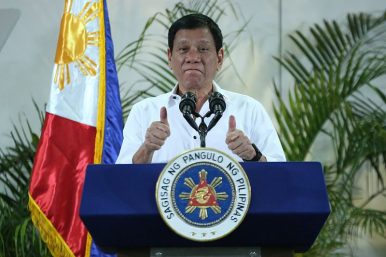
Image Credit: Presidential Communications Office of the Philippines

Last week, numbers were disclosed for the Philippines’ initial defense budget. While these numbers are still preliminary, they nonetheless warrant analysis to get a sense of what they say and do not say about the Southeast Asian state’s defense outlook for 2020 and beyond under Philippine President Rodrigo Duterte.

As I have noted before in these pages, though the Philippine military has long faced a range of internal and external challenges – including insurgencies, natural disasters, and unresolved territorial and sovereignty issues with neighboring states – it has also suffered from anemic and at at times astrategic investment in past periods. While the country has been trying to make up for this through advancing a phased Armed Forces Modernization Act over the next few decades – with three horizons or phases initially out to 2028 – the defense budget every year tends to be scrutinized for continuity and change with respect to that longer-term trajectory.

Last week, we saw the revelation of Philippine budget numbers sought by the Duterte administration from Congress, which included those for the Department of National Defense (DND). Per the budget announced on August 21, the proposed defense budget for the Philippine military, known as the Armed Forces of the Philippines (AFP) is 188.6 billion pesos ($3.6 billion) for 2020. This initial amount constitutes a slight 3 percent increase compared to the amount for 2019.

The composition of the defense budget and DND budget more generally reflects some structural realities in Philippine defense spending that are evident in some other Southeast Asian countries as well. For instance, while the budget for the AFP constitutes an increase, of the overall budget of 258 billion pesos for the DND – which also administers other institutions, including veteran services – around a quarter of 69.7 billion pesos went to pensions, a 24 percent increase from the previous year despite ongoing efforts by policymakers to control rising costs in this area.

In addition, within the defense budget itself more specifically, despite rising maritime security challenges for the Philippines – Defense Secretary Delfin Lorenzana told Congress when asked about Chinese infringements into Philippine waters that Manila had “very small capability to react to these intrusions” – the bulk of Philippine defense spending is still going to the army. The service distribution proposed has 91.5 billion pesos for the Philippine Army – nearly half of the overall budget – with 29 billion pesos for the Philippine Navy, 25.9 billion pesos for the Philippine Air Force, and 36.8 billion pesos for General Headquarters, most of which is allocated for the AFP’s military modernization efforts.

Each of the services did see minor increases. But for perspective, and in line with the priorities of the Duterte administration, these numbers paled in comparison to, for instance, the Philippine National Police (PNP), which saw around a 30 percent increase in its current budget with the focus on winning the so-called war on drugs. That emphasis reflects more broadly the Duterte administration’s greater emphasis on more internal threats – such as terrorism, criminality, and insurgency – rather than external threats such as China’s maritime assertiveness.

To be sure, these numbers constitute proposed allocations, rather than finalized ones, and as is often the case for defense budgets in the Philippines, the funding will be supplemented by other sources as well. In addition and more generally, for all the focus on topline defense budget numbers, a more granular assessment of Philippine defense spending and military modernization will have to take into account specifics such as how this affects particular line items in the Second Horizon and Third Horizon of the phased Revised Armed Forces of the Philippines Modernization Program. Nonetheless, as these numbers are disclosed, it will continue to be important to assess what they say and don’t say about the Southeast Asian state’s future defense outlook.

[Dr. Prashanth Parameswaran is Senior Editor at The Diplomat based in Washington, D.C., where he produces analysis on Southeast Asian political and security issues, Asian defense affairs, and U.S. foreign policy in the Asia-Pacific. Previously, he worked on Asian affairs at several think tanks, including the Center for Strategic and International Studies. He holds a PhD and an MA in international relations from the Fletcher School of Law and Diplomacy at Tufts University, and a BA in foreign affairs and peace and conflict studies from the University of Virginia.]

PH Navy open to crafting ‘navigational arrangement’ with China

From the Manila Bulletin (Aug 28, 2019): PH Navy open to crafting ‘navigational arrangement’ with China

The Philippine Navy (PN) on Wednesday expressed openness to proposals suggesting the creation of a “navigational arrangement” with China amid the increased presence of their vessels in the Philippine waters.


Philippine Navy (MANILA BULLETIN)

Vice Admiral Robert Empedrad, Flag-Officer-in Command of the PH Navy, said this will help the Philippines establish rules when Chinese vessels enter the country’s territory.

“Kung mayroon tayong (If we have a) system that will improve our relations with China in matters of intrusions, especially in the West Philippine Sea, bakit naman hindi (why not?),” Empedrad told defense reporters at the PH Navy headquarters in Manila.

Earlier, maritime law expert Jay Batongbacal suggested that the Philippines and China should establish a navigational arrangement, just like what the government has with the United States.

Batongbacal, director of the University of the Philippines (UP) Institute for Maritime Affairs and Law of the Sea, said US and the Philippines have reached an agreement that American vessels must send prior notification to the Philippine military before they can enter our territorial waters.

He said there were mechanisms that enabled such arrangement because of the Mutual Defense Treaty (MDT) and the Visiting Forces Agreement (VFA) between the two countries.

China has its own policy requiring foreign vessels to seek clearance from its Navy before one can enter their territorial waters, Batongbacal said.

Meanwhile, President Duterte earlier issued a directive similar to China’s policy.

According to Presidential spokesperson Salvador Panelo, the foreign vessels need to comply in a friendly way or the Philippine government will have to enforce it in an “unfriendly manner.”

But Empedrad believes that a navigational arrangement between the Philippines and China will further help improve the ties between the two countries.

“Maa-avoid ang mga alitan (Conflicts will be avoided) and the passage will be friendly. We will even help to draft policies,” he said.

‘Unfriendly’ manner

The PH Navy Chief also clarified their “rules of engagement” in dealing with ship intrusions in an attempt to come up with an explanation on what the President could possibly mean when he said the government will enforce his order in an “unfriendly manner.

Empedrad said that if a ship intrusion happens, the Navy’s littoral monitoring stations (LMS) will immediately alert them so that a military ship will be deployed to either “shadow” the foreign vessel or to shoot “across its bow.”

“Once the LMS monitors a ship entering our territorial waters, we deploy our own ship if there’s available one. We direct it to shadow or accompany the ship assuming na hindi sila nagpaalam (they did not coordinate with us),” he explained.

“Kapag hindi siya sumagot or nagpatay siya ng (If it didn’t respond or turned off its) AIS [automatic information system], probably we can send an aircraft to shadow it. We take pictures of the ship, determine its location in our territory,” he continued.

If the ship still fails to identify itself, that’s the time that the military will shoot “across its bow,” which means it will cut in front of the vessel’s path or blow a horn to announce the PH military’s presence.

“Not necessarily provocative kasi ang provocative it means your ship is ready for war. We will not be doing that. We just maneuver to tell them that they are passing through our territorial waters,” Empedrad noted.

Caraga RTF-ELCAC clusters present action plans vs insurgency

From the Philippine Information Agency (Aug 29, 2019): Caraga RTF-ELCAC clusters present action plans vs insurgency


BUTUAN CITY -- After days of tedious formulation of action plans by the different clusters under the Regional Task Force To End Local Communist Armed Conflict (RTF-ELCAC) held here, all have been ironed out and presented during the joint during the 2nd RTF-ELCAC meeting on Tuesday, August 27 in Surigao City.

“Members of the different clusters convened to firm up their respective action plans and these were presented during the 2nd RTF-ELCAC meeting with Cabinet Secretary Karlo Nograles,” bared Director Lilibeth Famacion of the Department of the Interior and Local Government (DILG)-Caraga.

Undersecretary Joann Burgos of the Office of Cabinet Secretary, stressed the need for member-agencies to fully understand their respective functions and responsibilities in the task force to attain its common goal and that is to end the insurgency in Caraga region and attain sustainable peace and development.

She said Caraga is one of the most challenged areas in the country when it comes to peace and order.


“Cabinet Secretary Nograles is looking forward to be working with the different clusters in Caraga to address the insurgency concerns in the region and for a more peaceful and developed Caraga,” Burgos said.

According to Assistant Regional Director Roy Kantuna of the National Economic and Development Authority (NEDA) Caraga, this initiative of finalizing the actions plans for a comprehensive implementation of the Executive Order (EO) No. 70 is very timely, as these will also be used in the updating of the regional development plan, wherein the conflict-affected areas in the region are identified and given due attention for the establishments of investment programs.

It can be recalled that EO No. 70 was signed by President Rodrigo Roa Duterte on December 4, 2018, and since then, government agencies have conducted various strategies to address the problem on insurgency in the country. (JPG/PIA-Caraga)

https://pia.gov.ph/news/articles/1026432

Tagalog News: RTF-ELCAC sa Caraga puspusan sa pagsakatuparan sa mga programang tutugon sa problema ng insurhensiya

From the Philippine Information Agency (Aug 29, 2019): Tagalog News: RTF-ELCAC sa Caraga puspusan sa pagsakatuparan sa mga programang tutugon sa problema ng insurhensiya


LUNGSOD NG BUTUAN -- Mas pinaiigting pa ng pamahalaan ang pagsagawa ng ibat-ibang aktibidad na tumutugon sa problema ng insurhensiya sa rehiyon ng Caraga.

Kabilang na dito ang pagsasaayos at pagpapatayo ng mga proyekto pangkaunlaran para mas maramdaman ng mga Caraganon ang malasakit ng gobyerno at hindi na malinlang at makumbinse ng New People’s Army na sumali sa kanilang grupo at lumaban sa pamahalaan.

Sa isinagawang 2nd Regional Task Force to End Communist Armed Conflict (RTF-ELCAC) Meeting sa Surigao City kasama si Cabinet Secretary Karlo Nograles, Cabinet Officer for Regional Development and Security at Chairperson ng RTF-ELCAC sa Caraga, hinimay-himay ng bawat cluster ang action plans na tumutugon sa implementasyon ng Executive Order No. (EO) 70 o ang 'whole-of-nation' approach sa pagkamit ng pangmatagalang kapayapaan sa rehiyon.

Napag-usapan din ang mga ginagawang hakbang ng Task Force Siargao, Task Force Socorro, at updates sa Surigao City Airport Upgrading Project, Sayak Airport Development, Tandag City Airport Development, Surigao del Norte Nautical Highway, at Leyte-Surigao Bridge.

Sa kanyang report, ibinahagi ni Atty. Felix Alicer, direktor ng Department of Environment and Natural Resources, na nagsagawa ng inspeksyon ang Task Force Siargao sa mahigit 1,000 establisyemento sa ilang barangay sa General Luna, Surigao Del Norte at 671 nito ay tourism-related establishments.


Pinuri ni Cabinet Secretary Nograles ang mga lokal na opisyal lalo na ang naging host sa nasabing meeting, ang local government unit ng Surigao del Norte at Surigao City sa kanilang ipinakitang interes at suporta sa mga inisyatibo ng RTF-ELCAC at sa pakikiisa sa hangarin nito na sugpuin ang insurgency sa rehiyon.

Binigyang-diin ni Surigao del Norte Gob. Francisco Matugas na bagamat malaking hamon ang pagresolba sa patuloy na problema sa insurgency, kung may pagtutulungan at pagkakaisa ay walang imposible.

Ito rin ang paniniwala ni Surigao City Mayor Ernesto Matugas, Jr. na hindi magtatagal at mararanasan din ng mga Caraganon ang payapa at matiwasay na pamumuhay sa rehiyon. Mas palalawakin pa nila pagsagawa ng medical at dental mission; basic social services; at iba pang programa na bahagi rin sa kanilang tinututukan ngayon. (JPG/PIA-Caraga)

https://pia.gov.ph/news/articles/1026545

PNP backs move to review 1989 UP-DND agreement

From the Philippine Information Agency (Aug 29, 2019): PNP backs move to review 1989 UP-DND agreement


Socmed card courtesy of PNP PIO

QUEZON CITY -- Philippine National Police Chief, Police General Oscar D. Albayalde supports the opinion of Commission on Higher Education Chairman, Dr. Prospero De Vera on the need to review the 30-year old agreement between the Department of National Defense and University of the Philippines that sets rigid conditions for access of government security forces into UP campuses.

The Chief PNP particularly agreed with the CHED Chair who cited the “prevalence of the drug problem” in the state university and its police force’s inability to handle crime and extremism in campus.

“We should not expect those in the academe to become policemen. They don’t have the skills, they don’t have the training and maybe what the media should investigate is what is the capability really of the UP Police to handle the drug problem inside the campus because there are portions of the UP campus identified as areas where there is a prevalence of drugs,” De Vera was quoted as saying on Tuesday.

Emerging from an informal exploratory dialogue among the security sector and academe in Camp Crame yesterday, Abayalde said the meeting sought “to usher a series of dialogues and consultation to explore common ground where government and the academe can fulfill its respective mandates”.

Albayalde said the PNP “seeks to build stronger collaboration among stakeholders to protect campuses against criminal activities, drug syndicates, and shadowy organizations that promote and espouse Local Communist Armed Conflict against government thru force and violence.”

For his part, De Vera said both parties wanted to “find common ground on how we can work together,” as part of the CHED’s campaign for safe and healthy campuses, safe from crime and extremism.

"The relationship between the PNP, the Armed Forces of the Philippines, and the universities is very, very close. There is no problem in terms of coordination. There is no problem in sharing of information, in sharing of crime statistics and helping each other," Dr. De Vera said.

In 1989, UP President Jose Nemenzo and then Secretary of the National Defense, Fidel Ramos forged an agreement limiting the capacity and presence of police and military force in its major campuses and regional units. (PIA InfoComm/PNP PIO)

In addition, the 1989 accord specifically provides that "no member of police may conduct operations on UP campuses without prior coordination with, or as requested by UP authorities".

“We only have the best interest of the youth backing our pure good intention to establish police presence in schools against crime, exploitation and abuse,” the Chief PNP said.

“We want to increase police visibility enough to deter criminal or drug syndicates from preying on students, all for the greater good of national priorities to enforce the law, ensure student and public safety which are the mandated duties of the police,” he added. (PIA InfoComm/PNP-PIO)

Caraga stakeholders vow support for EO 70

From the Philippine Information Agency (Aug 29, 2019): Caraga stakeholders vow support for EO 70


SURIGAO CITY, Surigao del Norte -- Advancing inclusive and sustainable peace through ‘whole-of-nation’ approach, this is the focus of the pledge of commitment among the members of the Caraga Regional Task Force to End Local Communist Armed Conflict (RTF-ELCAC) during the 2nd Caraga RTF-ELCAC meeting presided by Cabinet Secretary Karlo Nograles, Cabinet Officer for Regional Development and Security and Caraga RTF-ELCAC Chairperson.

The problem on insurgency and other armed conflict were given priority as mandated in the Executive Order No. 70 of President Rodrigo Duterte.

“Ang Caraga region naman ay isa mga priority regions pagdating dito sa national task force natin. Isa ito sa mga rehiyon na binabantayan talaga ni Pangulo dahil sa insurgency problem. At may mga direktiba galing sa national task force kung kaya ginagawa natin na regular ang pagmimeeting natin dito sa rehiyon (Caraga region is one of the priority regions as considered by the national task force. President Rodrigo Duterte himself gave special attention due insurgency problem. There are specific directives from the national task force that is why we are conducting regular meetings here in the region),” said Nograles.

The twelve clusters of the Caraga RTF-ELCAC also presented the programs, projects and activities, including the budgetary requirement, as contained in the action plan crafted by cluster members.


According to Manuel Orduña, Regional Director of the National Intelligence Coordinating Council Region 10, the government agencies, local government units and other stakeholders in Caraga are extending full cooperation and providing positive contributions.

He said that the task force is currently amplifying the established Peace and Development Zones or PDZs, a peace-building initiative which promotes the establishment of durable peace by addressing the root causes of conflict in Caraga region.

“All the efforts here in Caraga region are remarkable. The ongoing focused-military operations are proving to be successful against the New People's Army (NPA) rebels. The peace and development zones are already identified where all the government’s resources and efforts will be concentrated,” said Orduña.

Meanwhile, Department of Science and Technology (DOST) - Caraga Regional Director Dominga Mallonga shared how the agency could contribute in finding solutions to the communist armed conflict.

“There are significant Science and Technology research and innovations that will be beneficial to the Caraganons. In fact, we are set to launch a new project which will be piloted in five high schools,” Mallonga said.

She added that the theme, “Science for the People: Enabling Technologies for Sustainable Development,” of this year’s Science and Technology Week celebration really fits to support the efforts under the EO No. 70 in order to ultimately achieve the goal for sustainable peace and development.


Technical Education and Skills Development Authority (TESDA)-Caraga Regional Director Ashary Banto also pointed out the importance of the Technical Vocational Education and Training (TVET) offered by TESDA.

“We will ensure that we will be bringing the trainings to the barangays. So they don’t need to go to the provincial offices. They can easily inquire about their preferred TESDA courses and enrol or avail it for free,” said Banto.

Office of Civil Defense Caraga Regional Director Liza Mazo also mentioned the agency’s role of building capacity for resilience especially among the vulnerable sectors.

“It’s a mandate of the OCD to conduct capacity-building trainings. We already have our local DRRM councils down to the barangays. As such, we are committed to empower the locals, especially in the PDZs, through community-based disaster risk reduction management (CBDRM),” Mazo said.

Nograles urged the RTF-ELCAC members to be more sensitive to the needs and aspirations of conflict-affected communities by finding solutions through the use of retooled community support program (RCSP). (VLG/PIA-Surigao del Norte)