From the Philippine News Agency (Aug 8): Security forces hold simulation exercise for Kadayawan
Government security forces rolled out a surprise simulation exercise on Wednesday morning to test their readiness and capability to implement the security measures for the Kadayawan Festival next week.
Benito De Leon, chief of the Public Safety and Security Command Center (PSSCC), said the simulation exercise conducted in two areas of the city showed that local security forces are prepared for any "eventuality."
“The assessment for the bomb drill simulation exercise in the city is successful, as we have tested the preparedness of the PNP (Philippine National Police) and the AFP (Armed Forces of the Philippines) and emergency medical services to respond to incidents in the city,” de Leon said.
De Leon said holding the surprise simulation exercise primarily aims to test the capability of the city in dealing with real-life security situations. He thanked the public for their cooperation and understanding, noting that it caused traffic in the areas near the public market and City Hall.
“I would say we are successful. We have achieved the readiness and will improve on the observed weaknesses,” de Leon said, adding they obtained valuable insight based on the "responses and cooperation of the public”.
In a separate interview, Col. Nolasco Mempin, commander of Task Force Davao, said the simulation exercise involved an “explosive device blast” at the Bankerohan Public Market that “killed three and injured three others.”
After 20 minutes, Mempin said, another “IED” was reported at Quezon Park in front of the City Hall.
Mempin said the simulation exercise aims to further enhance safety, security and emergency medical service clusters inter-operability, as well as to measure the response time of first responders.
The simulation exercise was participated in by the PSSCC, Task Force Davao, Davao City Police Office, Central 911, Bureau of Fire and Protection-11 and City Transport and Traffic Management Office.
http://www.pna.gov.ph/articles/1044213

Wednesday, August 8, 2018

37 NPA ‘guerillas,’ supporters yield in Cordillera
From the Philippine News Agency (Aug 8): 37 NPA ‘guerillas,’ supporters yield in Cordillera

PEACE CARAVAN. Thirty-seven former NPA guerrillas and supporters take their oath of allegiance to the government after surrendering to government troops in Ifugao and Mountain Province within the first week of August. Philippine Army soldiers held peace caravans in the areas to encourage NPA members to lay down arms and return to the fold of the law. (Photo courtesy of 54th IB)
BAGUIO CITY -- A total of 37 ‘guerrillas’ and supporters of the communist New People’s Army (NPA) have surrendered to government troops in Ifugao and Mountain Province just within the first week of August, authorities reported Wednesday.
On Aug. 4, 14 NPA full-fledged “militia ng bayan” (MB) and six supporters surfaced in Barangay Namal, Asipulo, Ifugao. MB refers to individuals who have been indoctrinated and may or may not be directly involved in armed struggle and they provide mass support to the movement.
On Aug. 7, six more MBs and 11 local supporters from the villages of Tinoc town also came forward, bringing to 37 the total number of surrenderers in less than a week.
The first batch of surrenderers handed over to the government soldiers an M-16 rifle.
The surrenderers came out as government soldiers stationed in Cordillera held peace caravans in those areas on Aug. 4.
“The CNT-MB (Communist NPA Terrorist Militia ng Bayan) and their supporters voluntarily surrendered to our teams facilitating the Community Support Program (CSP), after having dialogue with the community about the Enhanced Comprehensive Local Integration Program (E-CLIP) in the said towns,” Capt. Jefferson Somera, chief of the Philippine Army's 5th Infantry Division Public Affairs Office quoted 54th Infantry Battalion Commander Lt. Col. Narciso Nabulneg Jr. as saying on Wednesday.
The 54th IB operates in the provinces of Ifugao, Mountain Province, Benguet, and Baguio.
“These personalities were long-time supporters of the enemy that played a vital role in the survival of the CNT group, and by having them on our side we can now paralyze the enemies' activities in their traditional abode. We will soon reach the desired peace and development in this part of the country,” Somera relayed in a telephone interview with the Philippine News Agency (PNA).
Somera said the left-leaning surrenderers also had their oath of allegiance to the government and denounced their former groups in front of their families, friends, and local elected officials in a short program during the peace caravan in Sagada, Mountain Province.
Locals, tribal elders, youths, and staff of the Philippine National Police and of the 54th Infantry Battalion also witnessed the event.
“The attendees were holding placards declaring that the people of Sagada are peace loving people,” Somera said.
The peace caravans, he said, were aimed at bringing various government services to the communities, especially in far-flung areas.
Joining the peace caravans were people from the Department of Public Works and Highways, who took the chance to visit the area to conduct a survey for various infrastructure projects; from the Municipal Social Work Office, who distributed food packages; from the Santiago City Seventh Day Adventist Hospital, who lead a medical outreach activity; Philippine Red Cross, and from the Provincial Environment and Natural Resources Office in Ifugao.
The Bureau of Fire Protection and the PNP also held an information drive during the event.
Major Gen. Perfecto Rimando Jr., commander of the Army's 5ID, said teams under the 54IB's Community Support Program (CSP) would continue to work hard to convince left-leaning people to return to the fold of the law.
“Truly, if we put premium on the rights and welfare of our ‘kababayans’ in our activities, our jobs become easy," Rimando said. "These former CNT supporters have seen the sincerity of our soldiers that is why they surrendered. If we continue to become professional in our dealing with the locals, we will achieve the desired peace the soonest possible time.”
On the localized peace talks, Rimando said: “As we express our support for the localized peace talks, we will unrelentingly pursue the enemies of the Filipino People -- the CNT -- until they voluntarily surrender or the hands of justice will be served to them.”
Meanwhile, Somera said the surrenderers would receive Immediate Assistance, Reintegration Assistance, and Remuneration for the Firearm Surrendered under E-CLIP.
http://www.pna.gov.ph/articles/1044136
PEACE CARAVAN. Thirty-seven former NPA guerrillas and supporters take their oath of allegiance to the government after surrendering to government troops in Ifugao and Mountain Province within the first week of August. Philippine Army soldiers held peace caravans in the areas to encourage NPA members to lay down arms and return to the fold of the law. (Photo courtesy of 54th IB)
BAGUIO CITY -- A total of 37 ‘guerrillas’ and supporters of the communist New People’s Army (NPA) have surrendered to government troops in Ifugao and Mountain Province just within the first week of August, authorities reported Wednesday.
On Aug. 4, 14 NPA full-fledged “militia ng bayan” (MB) and six supporters surfaced in Barangay Namal, Asipulo, Ifugao. MB refers to individuals who have been indoctrinated and may or may not be directly involved in armed struggle and they provide mass support to the movement.
On Aug. 7, six more MBs and 11 local supporters from the villages of Tinoc town also came forward, bringing to 37 the total number of surrenderers in less than a week.
The first batch of surrenderers handed over to the government soldiers an M-16 rifle.
The surrenderers came out as government soldiers stationed in Cordillera held peace caravans in those areas on Aug. 4.
“The CNT-MB (Communist NPA Terrorist Militia ng Bayan) and their supporters voluntarily surrendered to our teams facilitating the Community Support Program (CSP), after having dialogue with the community about the Enhanced Comprehensive Local Integration Program (E-CLIP) in the said towns,” Capt. Jefferson Somera, chief of the Philippine Army's 5th Infantry Division Public Affairs Office quoted 54th Infantry Battalion Commander Lt. Col. Narciso Nabulneg Jr. as saying on Wednesday.
The 54th IB operates in the provinces of Ifugao, Mountain Province, Benguet, and Baguio.
“These personalities were long-time supporters of the enemy that played a vital role in the survival of the CNT group, and by having them on our side we can now paralyze the enemies' activities in their traditional abode. We will soon reach the desired peace and development in this part of the country,” Somera relayed in a telephone interview with the Philippine News Agency (PNA).
Somera said the left-leaning surrenderers also had their oath of allegiance to the government and denounced their former groups in front of their families, friends, and local elected officials in a short program during the peace caravan in Sagada, Mountain Province.
Locals, tribal elders, youths, and staff of the Philippine National Police and of the 54th Infantry Battalion also witnessed the event.
“The attendees were holding placards declaring that the people of Sagada are peace loving people,” Somera said.
The peace caravans, he said, were aimed at bringing various government services to the communities, especially in far-flung areas.
Joining the peace caravans were people from the Department of Public Works and Highways, who took the chance to visit the area to conduct a survey for various infrastructure projects; from the Municipal Social Work Office, who distributed food packages; from the Santiago City Seventh Day Adventist Hospital, who lead a medical outreach activity; Philippine Red Cross, and from the Provincial Environment and Natural Resources Office in Ifugao.
The Bureau of Fire Protection and the PNP also held an information drive during the event.
Major Gen. Perfecto Rimando Jr., commander of the Army's 5ID, said teams under the 54IB's Community Support Program (CSP) would continue to work hard to convince left-leaning people to return to the fold of the law.
“Truly, if we put premium on the rights and welfare of our ‘kababayans’ in our activities, our jobs become easy," Rimando said. "These former CNT supporters have seen the sincerity of our soldiers that is why they surrendered. If we continue to become professional in our dealing with the locals, we will achieve the desired peace the soonest possible time.”
On the localized peace talks, Rimando said: “As we express our support for the localized peace talks, we will unrelentingly pursue the enemies of the Filipino People -- the CNT -- until they voluntarily surrender or the hands of justice will be served to them.”
Meanwhile, Somera said the surrenderers would receive Immediate Assistance, Reintegration Assistance, and Remuneration for the Firearm Surrendered under E-CLIP.
http://www.pna.gov.ph/articles/1044136
CPP/CPP-IB: Unite to oppose the National ID system
CPP Information Bureau propaganda statement posted to the Communist Party of the Philippines Website (Aug 7): Unite to oppose the National ID system

Information Bureau
Communist Party of the Philippines
Information Bureau
Communist Party of the Philippines
August 07, 2018
With the Senate leadership recently usurped by Duterte apologist and minion Tito
Sotto, with the Supreme Court, now free of Duterte arch-critic Chief Justice Ma.
Lourdes Sereno, and with the rubber-stamp lower house of Congress, the enactment
of the National ID system by the fascist Duterte now seems to be imminent. This
totalitarian measure was first proposed more than two decades ago and has long
been fiercely resisted by democratic sectors.
Wielding his new unbound powers, Duterte is now testing the waters with his push
to enact the fascist National ID system. If he could get away with this, it is
likely that he will push with far more insidious measures such as the plan for
charter change to give Duterte greater authority, including less restrictions on
his power to declare martial law, and pave the way for perpetuating himself in
power under one or another pretext.
The National ID system will practically be reviving the detested “cedula” system
which the Spanish colonial power used to control the movement of people and
suppress their democratic rights. In the hands of Duterte, the National ID
system is bound to be a weapon of suppression, a weapon of mass monitoring and
surveillance to track everyone’s movement, and to bribe and arm-twist,
especially against Duterte’s political critics and dissenters.
The Party urges all democratic sectors to unite firmly and oppose vigorously the
National ID system, advance their resistance against Duterte’s various
dictatorial schemes and his fascist abuses under Oplan Kapayapaan and Mindanao
martial law, fight the regime’s anti-people and burdensome policies especially
against the workers, peasants and oppressed economic classes, and put an end to
widespread and large-scale corruption, surrender of the country’s sovereignty
and subservience to foreign imperialist interests.
Please read further below the slightly edited statement by the CPP Information
Bureau first issued on September 5, 2017.
**National ID system in the hands of murderous strongman will have dreadful
results**
Duterte’s feverish push to implement a National ID system is part of his
machinations to establish a totalitarian state of mass surveillance, population
control, social, political and criminal profiling and mass murder.
The draft law of the National ID system has been bulldozed by Duterte’s
supermajority of political allies in the House of Representatives. Will the GRP
Senate pass the proposed ID system with similar dispatch and prove itself to be
no more than a rubberstamp than the lower house is?
The Party joins the Filipino people in opposing the National ID system. In the
hands of the Duterte regime, especially its security, military and police
agencies, the National ID system will serve as an additional weapon for fascist
suppression. There will be dreadful results once such a weapon is placed in the
hands of a strong-man tyrant as Duterte who is obsessed with summary killings
and mass murder as “solution” to social problems, to silence his political
opponents and suppress people’s resistance.
Such a system has long been proposed by the AFP and PNP and US military and
security advisers to facilitate mass surveillance through the centralization of
the collection and storage (or databasing) of personal information. Past regimes
have failed to push the National ID system confronted with popular opposition.
The US imperialists will congratulate Duterte if he succeeds on ramming the
repressive system.
Duterte’s proposed system aims to collect an inclusive list of personal
information in violation of civil rights. Duterte’s National ID system will be a
deathblow to privacy rights. In the hands of a repressive and oppressive state,
the collection of such information will surely be weaponized and used as a tool
for mass surveillance, social, political and criminal profiling.
In many capitalist countries, centralized databases of personal information
collected officially as well as illegally have been used by military and
security agencies for mass surveillance and “terrorist profiling” leading to
stigmatizing of social, religious and political groups and false accusations
against individuals.
To conceal its insidious aims and dupe the people to support the proposed
identification system, the Duterte regime makes false claims that the National
ID will serve to expedite the delivery of government service. Such claims are
put to dispute by the fact that the Duterte regime continues to cut the budget
for public education and public health and other important social services.
How can a National ID system help facilitate the provision of public health when
government hospitals are, in fact, being commercialized and privatized in whole
and in part? If the priority of government is to provide everyone with free
public health, free education, free public housing, public transportation and so
on, there is no need for a National ID system for the people to benefit from
these. A national system of identification has nothing to do with the efficiency
in the provision of public service.
Neither does computerization make a clean government. This is starkly
demonstrated by continuing widespread corruption in government agencies which
has computerized its record-keeping and processing. Manipulation of election
results in the Philippines have become more widespread, albeit less obvious,
through automation.
https://www.philippinerevolution.info/2018/08/07/unite-to-oppose-the-national-id-system-2/
Sotto, with the Supreme Court, now free of Duterte arch-critic Chief Justice Ma.
Lourdes Sereno, and with the rubber-stamp lower house of Congress, the enactment
of the National ID system by the fascist Duterte now seems to be imminent. This
totalitarian measure was first proposed more than two decades ago and has long
been fiercely resisted by democratic sectors.
Wielding his new unbound powers, Duterte is now testing the waters with his push
to enact the fascist National ID system. If he could get away with this, it is
likely that he will push with far more insidious measures such as the plan for
charter change to give Duterte greater authority, including less restrictions on
his power to declare martial law, and pave the way for perpetuating himself in
power under one or another pretext.
The National ID system will practically be reviving the detested “cedula” system
which the Spanish colonial power used to control the movement of people and
suppress their democratic rights. In the hands of Duterte, the National ID
system is bound to be a weapon of suppression, a weapon of mass monitoring and
surveillance to track everyone’s movement, and to bribe and arm-twist,
especially against Duterte’s political critics and dissenters.
The Party urges all democratic sectors to unite firmly and oppose vigorously the
National ID system, advance their resistance against Duterte’s various
dictatorial schemes and his fascist abuses under Oplan Kapayapaan and Mindanao
martial law, fight the regime’s anti-people and burdensome policies especially
against the workers, peasants and oppressed economic classes, and put an end to
widespread and large-scale corruption, surrender of the country’s sovereignty
and subservience to foreign imperialist interests.
Please read further below the slightly edited statement by the CPP Information
Bureau first issued on September 5, 2017.
**National ID system in the hands of murderous strongman will have dreadful
results**
Duterte’s feverish push to implement a National ID system is part of his
machinations to establish a totalitarian state of mass surveillance, population
control, social, political and criminal profiling and mass murder.
The draft law of the National ID system has been bulldozed by Duterte’s
supermajority of political allies in the House of Representatives. Will the GRP
Senate pass the proposed ID system with similar dispatch and prove itself to be
no more than a rubberstamp than the lower house is?
The Party joins the Filipino people in opposing the National ID system. In the
hands of the Duterte regime, especially its security, military and police
agencies, the National ID system will serve as an additional weapon for fascist
suppression. There will be dreadful results once such a weapon is placed in the
hands of a strong-man tyrant as Duterte who is obsessed with summary killings
and mass murder as “solution” to social problems, to silence his political
opponents and suppress people’s resistance.
Such a system has long been proposed by the AFP and PNP and US military and
security advisers to facilitate mass surveillance through the centralization of
the collection and storage (or databasing) of personal information. Past regimes
have failed to push the National ID system confronted with popular opposition.
The US imperialists will congratulate Duterte if he succeeds on ramming the
repressive system.
Duterte’s proposed system aims to collect an inclusive list of personal
information in violation of civil rights. Duterte’s National ID system will be a
deathblow to privacy rights. In the hands of a repressive and oppressive state,
the collection of such information will surely be weaponized and used as a tool
for mass surveillance, social, political and criminal profiling.
In many capitalist countries, centralized databases of personal information
collected officially as well as illegally have been used by military and
security agencies for mass surveillance and “terrorist profiling” leading to
stigmatizing of social, religious and political groups and false accusations
against individuals.
To conceal its insidious aims and dupe the people to support the proposed
identification system, the Duterte regime makes false claims that the National
ID will serve to expedite the delivery of government service. Such claims are
put to dispute by the fact that the Duterte regime continues to cut the budget
for public education and public health and other important social services.
How can a National ID system help facilitate the provision of public health when
government hospitals are, in fact, being commercialized and privatized in whole
and in part? If the priority of government is to provide everyone with free
public health, free education, free public housing, public transportation and so
on, there is no need for a National ID system for the people to benefit from
these. A national system of identification has nothing to do with the efficiency
in the provision of public service.
Neither does computerization make a clean government. This is starkly
demonstrated by continuing widespread corruption in government agencies which
has computerized its record-keeping and processing. Manipulation of election
results in the Philippines have become more widespread, albeit less obvious,
through automation.
https://www.philippinerevolution.info/2018/08/07/unite-to-oppose-the-national-id-system-2/
CPP/NDF-Mindanao: Mindanaoans must fight against the proliferation of military/CAFGU detachments in Mindanao
NDF-Mindanao propaganda statement posted to the Communist Party of the Philippines Website (Aug 7): Mindanaoans must fight against the proliferation of military/CAFGU detachments in Mindanao

Ka Joaquin Jacinto
NDF-Mindanao
Ka Joaquin Jacinto
NDF-Mindanao
August 07, 2018
The NDFP-Mindanao and the entire revolutionary forces in the island strongly condemn the renewed and intensified effort of the US-Duterte regime and the AFP to put up army/CAFGU detachments in very close proximity to numerous civilian communities in Mindanao. As a key component of the US-Duterte regime’s bloody encirclement and suppression campaign Oplan Kapayapaan and Martial Law, these detachments are used to spy on, intimidate and harass civilians in several barrios, placing civilian communities under grave duress.
Immediately after scuttling the NDFP-GRP formal peace talks, Duterte directed the fascist AFP to launch an all-out attack against the New People’s Army (NPA), revolutionary forces and the masses, most significantly in the island of Mindanao, where 44 of the AFP’s 75 maneuver battalions deployed in the island are in NPA areas.
Army/CAFGU detachments serve to guard and regularly patrol areas where imperialist businesses operate, or their targeted areas of operation. These businesses, such as large- scale mining, agri-plantation and logging, have, for years, exploited the local peoples in Mindanao and have ravaged, almost irreparably, the country’s environment.
The AFP boasts that ever since these detachments “safeguard and ensure development,” which is absolutely false. Detachments, which have spread like a virus since the Marcos and Cory eras until today, are antithetical to genuine development, as they are instruments of the reactionary state and fascist forces in maintaining the backward feudal order of the country, protecting the land and other properties of the landlord class while keeping the peasantry, the Lumad and Moro landless. They only protect the profit-making interests of imperialist companies at the expense of the lives and livelihood of the poor, as well as that of the natural environment.
These detachments also facilitate CAFGU recruitment, which is usually carried out forcibly and in a deceitful manner. Regular AFP elements carry with them a pre-listed set of names of certain civilians who are not even consulted on the matter. Then they apply undue pressure on these individuals so that they will not refuse conscription. A quota of CAFGU recruits are also imposed by the AFP on barangay officials; non-compliance is penalized.
CAFGU recruits are often promised allowance, however, more often than not, this comes delayed if it comes at all; and if it does, it is already slashed by their officers or cadreman. CAFGU allowances are subjected to graft and corruption. At times, their allowances are lent out by their officers under usurious schemes, such as 5/6 (20% interest).
While they suffer from meagre pay, CAFGU recruits labor away like slaves in detachment camps, performing various menial work at the beck and call of their officials who are regular members of the Philippine Army. These recruits are exploited to no end. They, including members of the paramilitary, Bagani forces and others are also used as hapless pawns and human shield during combat operations.
These army detachments serve as forward deployed forces in areas the AFP perceives as NPA bases. Thus, these detachments cater to the needs of full combat operations a well as during deceptive Community Organizing for Peace and Development (COPD) or Peace and Development Teams (PDT).
The AFP claims that these detachments are “requested” by the people in the communities themselves, while, they claim further, barangay units or LGU’s have “penned” such “resolutions” to support the same. But, given the vile nature of these detachments, barangays, especially the ones in the hinterlands, do not commonly request for these, because they establish their own security system to defend themselves. These so-called “resolutions” are written by the military themselves and imposed upon officials of barangays or towns and have them ratified under duress, browbeating them to create a semblance of a “democratic process.”
In areas where these detachments are active, there is a high incidence of human rights abuses, intimidation and harassment of civilians in communities. These detachments serve as conduit for illicit drugs and other illegal substances, and are often the site of cases of sexual abuse, and even rape. Commonplace are teenage girls who, all of a sudden, become pregnant. AFP troops and CAFGU/paramilitary forces in these detachments are in fact the number one promoter of anti-social activities, such as gambling and thievery; as well as the proliferation of despicable lumpen culture, including adulterous relationships, and promoting harmful penile implants among young boys in many communities.
These detachments are used to closely monitor civilian communities or spy on certain civilians the AFP suspects to be supportive of the revolutionary movement. They aid in the conduct of AFP psychological operations, such as forcing innocent civilians to appear as “NPA surrenderees.”
They foist restrictions upon peasants and Lumad communities (curfew, limit the mobility of the masses and impose food blockade). The imminent threat posed by these army/CAFGU detachments against people’s lives, livelihood, rights and general welfare have resulted in the massive forcible dislocation and evacuation of whole communities. Clearly the AFP’s repeated vilification of the NPA as a “violator of CARHRIHL” is done not just to spread a vicious lie in mainstream and social media but to desperately conceal the truth that the AFP/PNP/CAFGU/paramilitary troops are the foremost violators of human rights, International Humanitarian Laws, the Geneva Conventions and other International protocols and laws.
Having borne the brunt for a long time, many civilian communities have strongly lodged petitions to immediately remove these detachments from their communities and call for the stoppage of the building of new ones.
People of Mindanao – Lumad, Moro and majority peoples, stand united and vigorously fight against the continued operations and proliferation of these army/CAFGU detachments; strongly demand for their immediate removal from communities by way of militant protests, lobbying, media expose, press conferences and other such means. Fight against the continuing combat and psychological operations of the AFP under Oplan Kapayapaan! Down with the US-Duterte regime!
Immediately after scuttling the NDFP-GRP formal peace talks, Duterte directed the fascist AFP to launch an all-out attack against the New People’s Army (NPA), revolutionary forces and the masses, most significantly in the island of Mindanao, where 44 of the AFP’s 75 maneuver battalions deployed in the island are in NPA areas.
Army/CAFGU detachments serve to guard and regularly patrol areas where imperialist businesses operate, or their targeted areas of operation. These businesses, such as large- scale mining, agri-plantation and logging, have, for years, exploited the local peoples in Mindanao and have ravaged, almost irreparably, the country’s environment.
The AFP boasts that ever since these detachments “safeguard and ensure development,” which is absolutely false. Detachments, which have spread like a virus since the Marcos and Cory eras until today, are antithetical to genuine development, as they are instruments of the reactionary state and fascist forces in maintaining the backward feudal order of the country, protecting the land and other properties of the landlord class while keeping the peasantry, the Lumad and Moro landless. They only protect the profit-making interests of imperialist companies at the expense of the lives and livelihood of the poor, as well as that of the natural environment.
These detachments also facilitate CAFGU recruitment, which is usually carried out forcibly and in a deceitful manner. Regular AFP elements carry with them a pre-listed set of names of certain civilians who are not even consulted on the matter. Then they apply undue pressure on these individuals so that they will not refuse conscription. A quota of CAFGU recruits are also imposed by the AFP on barangay officials; non-compliance is penalized.
CAFGU recruits are often promised allowance, however, more often than not, this comes delayed if it comes at all; and if it does, it is already slashed by their officers or cadreman. CAFGU allowances are subjected to graft and corruption. At times, their allowances are lent out by their officers under usurious schemes, such as 5/6 (20% interest).
While they suffer from meagre pay, CAFGU recruits labor away like slaves in detachment camps, performing various menial work at the beck and call of their officials who are regular members of the Philippine Army. These recruits are exploited to no end. They, including members of the paramilitary, Bagani forces and others are also used as hapless pawns and human shield during combat operations.
These army detachments serve as forward deployed forces in areas the AFP perceives as NPA bases. Thus, these detachments cater to the needs of full combat operations a well as during deceptive Community Organizing for Peace and Development (COPD) or Peace and Development Teams (PDT).
The AFP claims that these detachments are “requested” by the people in the communities themselves, while, they claim further, barangay units or LGU’s have “penned” such “resolutions” to support the same. But, given the vile nature of these detachments, barangays, especially the ones in the hinterlands, do not commonly request for these, because they establish their own security system to defend themselves. These so-called “resolutions” are written by the military themselves and imposed upon officials of barangays or towns and have them ratified under duress, browbeating them to create a semblance of a “democratic process.”
In areas where these detachments are active, there is a high incidence of human rights abuses, intimidation and harassment of civilians in communities. These detachments serve as conduit for illicit drugs and other illegal substances, and are often the site of cases of sexual abuse, and even rape. Commonplace are teenage girls who, all of a sudden, become pregnant. AFP troops and CAFGU/paramilitary forces in these detachments are in fact the number one promoter of anti-social activities, such as gambling and thievery; as well as the proliferation of despicable lumpen culture, including adulterous relationships, and promoting harmful penile implants among young boys in many communities.
These detachments are used to closely monitor civilian communities or spy on certain civilians the AFP suspects to be supportive of the revolutionary movement. They aid in the conduct of AFP psychological operations, such as forcing innocent civilians to appear as “NPA surrenderees.”
They foist restrictions upon peasants and Lumad communities (curfew, limit the mobility of the masses and impose food blockade). The imminent threat posed by these army/CAFGU detachments against people’s lives, livelihood, rights and general welfare have resulted in the massive forcible dislocation and evacuation of whole communities. Clearly the AFP’s repeated vilification of the NPA as a “violator of CARHRIHL” is done not just to spread a vicious lie in mainstream and social media but to desperately conceal the truth that the AFP/PNP/CAFGU/paramilitary troops are the foremost violators of human rights, International Humanitarian Laws, the Geneva Conventions and other International protocols and laws.
Having borne the brunt for a long time, many civilian communities have strongly lodged petitions to immediately remove these detachments from their communities and call for the stoppage of the building of new ones.
People of Mindanao – Lumad, Moro and majority peoples, stand united and vigorously fight against the continued operations and proliferation of these army/CAFGU detachments; strongly demand for their immediate removal from communities by way of militant protests, lobbying, media expose, press conferences and other such means. Fight against the continuing combat and psychological operations of the AFP under Oplan Kapayapaan! Down with the US-Duterte regime!
Tuesday, August 7, 2018
Military says it didn’t drop bombs in Makilala village
From MindaNews (Aug 7): Military says it didn’t drop bombs in Makilala village
The Army in Makilala in North Cotabato has denied reports that bombs were dropped in a rebel-influenced barangay on Tuesday.
Lt. Col. Rhodjun Rosales, commanding officer of the 39thInfantry Battalion, said the attack helicopter that residents saw in Barangay Batasan in Makilala never dropped any bomb when it hovered at around 3:30 a.m.
Rosales said the MG-520 attack helicopter just wanted to monitor the movement of an armed group led by a certain Gregorio Magbanua, also known as Kumander Greg, of the New Peoples’ Army (NPA) Front Guerilla 51.
He accused Magbanua’s group of extorting money from farmers and residents in the area.
Eldy Pangilinan, a tribal leader in Barangay Batasan, said they heard loud explosions and hinted it was the helicopter that dropped the bombs.
“Our sleep was disturbed by these loud blasts. We thought there were heavy encounters on the ground but there was none. What we heard were explosions not gunfire,” said Pangilinan who appealed to the government “not to bomb our barangay” for the sake of the civilians.
Rosales said that as early as 3 a.m. Tuesday, he sent troops to Purok-6, Barangay Batasan to run after the rebels but were attacked before they could reach the area.
“Pinuntahan ng ating tropa ang erya kung saan na-monitor ang grupo ni Ka Greg. E, kaso, pinaputukan nila tayo. Madilim pa, at that time, kaya nag-request tayo ng helicopter” (Our troops went to the area to monitor the group of Ka Greg. But they fired at us. It was still dark at that time that’s why we requested for a helicopter), Rosales told radio station DXND.
The Eastern Mindanao Command in Davao City sent the helicopter to drive the rebels away and also to keep an eye on the rebels’ movements, he said.
http://www.mindanews.com/top-stories/2018/08/military-says-it-didnt-drop-bombs-in-makilala-village/
The Army in Makilala in North Cotabato has denied reports that bombs were dropped in a rebel-influenced barangay on Tuesday.
Lt. Col. Rhodjun Rosales, commanding officer of the 39thInfantry Battalion, said the attack helicopter that residents saw in Barangay Batasan in Makilala never dropped any bomb when it hovered at around 3:30 a.m.
Rosales said the MG-520 attack helicopter just wanted to monitor the movement of an armed group led by a certain Gregorio Magbanua, also known as Kumander Greg, of the New Peoples’ Army (NPA) Front Guerilla 51.
He accused Magbanua’s group of extorting money from farmers and residents in the area.
Eldy Pangilinan, a tribal leader in Barangay Batasan, said they heard loud explosions and hinted it was the helicopter that dropped the bombs.
“Our sleep was disturbed by these loud blasts. We thought there were heavy encounters on the ground but there was none. What we heard were explosions not gunfire,” said Pangilinan who appealed to the government “not to bomb our barangay” for the sake of the civilians.
Rosales said that as early as 3 a.m. Tuesday, he sent troops to Purok-6, Barangay Batasan to run after the rebels but were attacked before they could reach the area.
“Pinuntahan ng ating tropa ang erya kung saan na-monitor ang grupo ni Ka Greg. E, kaso, pinaputukan nila tayo. Madilim pa, at that time, kaya nag-request tayo ng helicopter” (Our troops went to the area to monitor the group of Ka Greg. But they fired at us. It was still dark at that time that’s why we requested for a helicopter), Rosales told radio station DXND.
The Eastern Mindanao Command in Davao City sent the helicopter to drive the rebels away and also to keep an eye on the rebels’ movements, he said.
http://www.mindanews.com/top-stories/2018/08/military-says-it-didnt-drop-bombs-in-makilala-village/
Army seeks aid for CAFGUs from provincial peace and order council
From the Philippine Information Agency (Aug 8): Army seeks aid for CAFGUs from provincial peace and order council

Lt. Colonel Thomas Dominic Baluga, commanding officer of the army’s 70 Infantry Batallion based in Nueva Ecija says CAFGUs are still serving as guardians of peace and order despite meager support.
BAYOMBONG, Nueva Vizcaya – An official of the Philippine Army has sought the help of the Provincial Peace and Order Council (PPOC) here to support the deployment of Citizens Armed Forces Geographical Unit (CAFGUs) to complement the presence of government forces in remote areas.
Lt. Colonel Thomas Dominic Baluga, commanding officer of the army’s 70 Infantry Batallion based in Nueva Ecija said despite meager support, CAFGUs are still serving as guardians of peace and order in areas frequented by the New People’s Army (NPA) rebels.
“We have CAFGUs in Nueva Vizcaya who are being supported with P4,500.00 monthly subsistence allowance. We are also asking other assistance so that they can continue as frontline armed forces in remote areas especially in remote areas,” he said.
Baluga said over the years, CAFGUs have transformed from merely an armed force into a multi-disciplinary force that supports the army in its various peacekeeping initiatives in areas being visited by NPA rebels.
He said CAFGUs at present are also given proper training, livelihood opportunities and involved in civic military activities such as rescue operations during disasters and calamities and medical services for the poor, among others.
Baluga said they manage and support CAFGUs in their areas of responsibilities through partnerships with concerned local government units and other sectors of the society.
“We continue to provide them with their allowances and food with the help of various sectors of the community. We should do something so that they will continue to provide us additional security against terrorism,” he added.
http://pia.gov.ph/news/articles/1011316
BAYOMBONG, Nueva Vizcaya – An official of the Philippine Army has sought the help of the Provincial Peace and Order Council (PPOC) here to support the deployment of Citizens Armed Forces Geographical Unit (CAFGUs) to complement the presence of government forces in remote areas.
Lt. Colonel Thomas Dominic Baluga, commanding officer of the army’s 70 Infantry Batallion based in Nueva Ecija said despite meager support, CAFGUs are still serving as guardians of peace and order in areas frequented by the New People’s Army (NPA) rebels.
“We have CAFGUs in Nueva Vizcaya who are being supported with P4,500.00 monthly subsistence allowance. We are also asking other assistance so that they can continue as frontline armed forces in remote areas especially in remote areas,” he said.
Baluga said over the years, CAFGUs have transformed from merely an armed force into a multi-disciplinary force that supports the army in its various peacekeeping initiatives in areas being visited by NPA rebels.
He said CAFGUs at present are also given proper training, livelihood opportunities and involved in civic military activities such as rescue operations during disasters and calamities and medical services for the poor, among others.
Baluga said they manage and support CAFGUs in their areas of responsibilities through partnerships with concerned local government units and other sectors of the society.
“We continue to provide them with their allowances and food with the help of various sectors of the community. We should do something so that they will continue to provide us additional security against terrorism,” he added.
Cops kill 2 bomb couriers in NoCot
From the Philippine News Agency (Aug 8): Cops kill 2 bomb couriers in NoCot

DEFUSED. Remains of the deactivated improvised explosive device recovered from the suspected slain bomb couriers in M'lang, North Cotabato, around 3:00 a.m. Wednesday (Aug. 8). Two of three bomb couriers onboard a motorbike were killed in an esuing shootout after evading a police-military checkpoint in Barangay Sangat near the Magpet town center while the third one managed to escape. (Photo courtesy of Joseph Ballejera of M'lang, North Cotabato)
Government forces shot dead two bomb couriers suspected of planning to carry out a bombing mission in the town of M’lang, North Cotabato province before dawn Wednesday.
A team of local policemen and personnel of the Army’s 7th Infantry Battalion manning a checkpoint in Barangay Sangat, M’lang, flagged down at about 3 a.m. three men on board a motorbike for routine inspection, North Cotabato police spokesperson, Supt. Bernard Tayong, told the Philippine News Agency (PNA) here.
However, authorities said the three men refused to stop and sped off past the checkpoint, prompting a pursuit that ended in a shootout that killed two of them.
“The one driving the motorbike managed to escape,” Tayong said.
It took more than an hour for lawmen to get closer to the slain suspects as they were carrying a black sling bag that was later found to contain an improvised bomb.
Tayong noted that the bomb was incomplete as it has no triggering mechanism, saying he believed the bombers were to put the triggering device once they leave the bomb in the target area.
Crime scene investigators identified the slain men through personal documents found in their wallets as Patrick Ali Saligan, 30, of Buluan, Maguindanao, and Nholds Saibo Ali, 29, of Datu Paglas, also in Maguindanao.
In a radio interview, M’lang Vice Mayor Lito Piñol said authorities were double-checking the identification documents recovered from the slain suspects.
“I would like to commend our police and the military for their vigilance,” Tayong said referring to authorities manning the Sangat checkpoint.
The discovery of the improvised explosive device (IED) in Barangay Sangat was the fourth bombing attempt in North Cotabato, three of which were in M’lang and the other in Kidapawan City.
On Sunday, an IED was found at 1 p.m. at the roadside in Barangay Poblacion, M’lang, which was later deactivated by police and military bomb experts.
An IED was also found on Monday morning in front of a variety store in Barangay Bagontapay, also in M’lang, by residents who said that two men on a motorbike left the black bag and hurriedly left.
In Kidapawan City, workers of the Gaisano Grand Mall found two grenades at the mall’s main entrance-exit door at about 7 p.m. Monday. Bomb experts safely recovered the explosives.
Supt. Ramel Hojilla, acting Kidapawan City police director, linked the discovery of explosives at the mall to a conflict involving two agencies providing security services for the mall.
“There appears to be a misunderstanding between the two groups over who should take the lead role in securing the mall,” Hojilla said.
On the M’lang bombing attempts, military and police officials believe the Islamic State-linked Bangsamoro Islamic Freedom Fighters (BIFF) was behind the incidents.
“All the IEDs found and deactivated in M’lang had the signature of the BIFF,” Tayong said.
http://www.pna.gov.ph/articles/1044106
Government forces shot dead two bomb couriers suspected of planning to carry out a bombing mission in the town of M’lang, North Cotabato province before dawn Wednesday.
A team of local policemen and personnel of the Army’s 7th Infantry Battalion manning a checkpoint in Barangay Sangat, M’lang, flagged down at about 3 a.m. three men on board a motorbike for routine inspection, North Cotabato police spokesperson, Supt. Bernard Tayong, told the Philippine News Agency (PNA) here.
However, authorities said the three men refused to stop and sped off past the checkpoint, prompting a pursuit that ended in a shootout that killed two of them.
“The one driving the motorbike managed to escape,” Tayong said.
It took more than an hour for lawmen to get closer to the slain suspects as they were carrying a black sling bag that was later found to contain an improvised bomb.
Tayong noted that the bomb was incomplete as it has no triggering mechanism, saying he believed the bombers were to put the triggering device once they leave the bomb in the target area.
Crime scene investigators identified the slain men through personal documents found in their wallets as Patrick Ali Saligan, 30, of Buluan, Maguindanao, and Nholds Saibo Ali, 29, of Datu Paglas, also in Maguindanao.
In a radio interview, M’lang Vice Mayor Lito Piñol said authorities were double-checking the identification documents recovered from the slain suspects.
“I would like to commend our police and the military for their vigilance,” Tayong said referring to authorities manning the Sangat checkpoint.
The discovery of the improvised explosive device (IED) in Barangay Sangat was the fourth bombing attempt in North Cotabato, three of which were in M’lang and the other in Kidapawan City.
On Sunday, an IED was found at 1 p.m. at the roadside in Barangay Poblacion, M’lang, which was later deactivated by police and military bomb experts.
An IED was also found on Monday morning in front of a variety store in Barangay Bagontapay, also in M’lang, by residents who said that two men on a motorbike left the black bag and hurriedly left.
In Kidapawan City, workers of the Gaisano Grand Mall found two grenades at the mall’s main entrance-exit door at about 7 p.m. Monday. Bomb experts safely recovered the explosives.
Supt. Ramel Hojilla, acting Kidapawan City police director, linked the discovery of explosives at the mall to a conflict involving two agencies providing security services for the mall.
“There appears to be a misunderstanding between the two groups over who should take the lead role in securing the mall,” Hojilla said.
On the M’lang bombing attempts, military and police officials believe the Islamic State-linked Bangsamoro Islamic Freedom Fighters (BIFF) was behind the incidents.
“All the IEDs found and deactivated in M’lang had the signature of the BIFF,” Tayong said.
http://www.pna.gov.ph/articles/1044106
Rebel killed, several others hurt in Isabela clashes
From the Philippine News Agency (Aug 8): Rebel killed, several others hurt in Isabela clashes
CAMP MELCHOR DELA CRUZ, Gamu, Isabela -- A suspected New People’s Army (NPA) rebel was killed and a still undetermined number of communist guerrillas were wounded in two separate clashes in San Guillermo and Echague towns in Isabela on Tuesday.
Army Captain Jefferson Somera, 5th Infantry Division spokesperson, told the Philippine News Agency on Wednesday that Army soldiers engaged some 20 rebels in a two-hour gunfight in San Miguel, Echague town, while another team fought against insurgents in Rizal, San Guillermo town, resulting in the death of a guerrilla.
Government soldiers from the 95th Infantry Battalion seized five high-powered guns in Echague and found the rebel’s body in San Guillermo town.
Also seized were two bandoliers with magazines for M-16 rifle, two rifle grenades, three improvised explosive devices, four detonating cords, seven blasting caps, a handheld radio, a chain saw, seven backpacks with personal belongings, two mobile phones, assorted medicines, medical paraphernalia and anti-government documents.
Lt. Col. Nolito Quemi, 95th Infantry Battalion commander, said a rebel camp was spotted in San Miguel, Echague town.
“Our troops were approaching the target area when fired upon by the (communist rebels). We managed to outflank the (rebels) and eventually overrun their encampment,” the Army colonel said.
Brig. Gen. Bartolome Vicente Bacarro Jr., 502nd Infantry Brigade commander who supervised the operations, said that the people had tipped off the military about the location of the rebels.
Maj. Gen. Perfecto Rimando Jr., 5th Infantry Division commander, lauded the soldiers for their professionalism, which led to the “successful operation.”
“We also appeal to the rebels and their supporters in the area to help us help their wounded comrades. Our differences in ideologies should not prevent us from helping each other. Just send message to our troops and we will help your comrades get necessary medical attention. We are all Filipinos, remember that,” the Army general said.
http://www.pna.gov.ph/articles/1044115
CAMP MELCHOR DELA CRUZ, Gamu, Isabela -- A suspected New People’s Army (NPA) rebel was killed and a still undetermined number of communist guerrillas were wounded in two separate clashes in San Guillermo and Echague towns in Isabela on Tuesday.
Army Captain Jefferson Somera, 5th Infantry Division spokesperson, told the Philippine News Agency on Wednesday that Army soldiers engaged some 20 rebels in a two-hour gunfight in San Miguel, Echague town, while another team fought against insurgents in Rizal, San Guillermo town, resulting in the death of a guerrilla.
Government soldiers from the 95th Infantry Battalion seized five high-powered guns in Echague and found the rebel’s body in San Guillermo town.
Also seized were two bandoliers with magazines for M-16 rifle, two rifle grenades, three improvised explosive devices, four detonating cords, seven blasting caps, a handheld radio, a chain saw, seven backpacks with personal belongings, two mobile phones, assorted medicines, medical paraphernalia and anti-government documents.
Lt. Col. Nolito Quemi, 95th Infantry Battalion commander, said a rebel camp was spotted in San Miguel, Echague town.
“Our troops were approaching the target area when fired upon by the (communist rebels). We managed to outflank the (rebels) and eventually overrun their encampment,” the Army colonel said.
Brig. Gen. Bartolome Vicente Bacarro Jr., 502nd Infantry Brigade commander who supervised the operations, said that the people had tipped off the military about the location of the rebels.
Maj. Gen. Perfecto Rimando Jr., 5th Infantry Division commander, lauded the soldiers for their professionalism, which led to the “successful operation.”
“We also appeal to the rebels and their supporters in the area to help us help their wounded comrades. Our differences in ideologies should not prevent us from helping each other. Just send message to our troops and we will help your comrades get necessary medical attention. We are all Filipinos, remember that,” the Army general said.
http://www.pna.gov.ph/articles/1044115
Army overruns NPA camp in Isabela
From ABS-CBN (Aug 8): Army overruns NPA camp in Isabela
ECHAGUE, Isabela – Government troops overran an encampment of the New People’s Army in this town on Tuesday.
The 95th Infantry Battalion of the Philippine Army received information that a rebel camp was located in Barangay San Miguel and was guarded by around 20 people.
A firefight ensued between rebels and government forces which lasted for about 2 hours. There were no confirmed casualties.
Five M16 rifles, 2 bandoleers with magazines for M16, 2 rifle grenades, 3 improvised explosive device, 4 detonating cords and 7 blasting caps were recovered from the scene.
Also seized from the camp were a handheld radio, a chain saw, 7 backpacks with personal belongings, 2 cell phones and assorted medicines.
On Saturday, troops from the 86th Infantry Battalion also discovered a temporary rebel camp in Sitio Dimalungog, Jones town. The army also encountered rebel forces in Barangay Dicamay 2 in the same town.
http://news.abs-cbn.com/news/08/08/18/army-overruns-npa-camp-in-isabela
ECHAGUE, Isabela – Government troops overran an encampment of the New People’s Army in this town on Tuesday.
The 95th Infantry Battalion of the Philippine Army received information that a rebel camp was located in Barangay San Miguel and was guarded by around 20 people.
A firefight ensued between rebels and government forces which lasted for about 2 hours. There were no confirmed casualties.
Five M16 rifles, 2 bandoleers with magazines for M16, 2 rifle grenades, 3 improvised explosive device, 4 detonating cords and 7 blasting caps were recovered from the scene.
Also seized from the camp were a handheld radio, a chain saw, 7 backpacks with personal belongings, 2 cell phones and assorted medicines.
On Saturday, troops from the 86th Infantry Battalion also discovered a temporary rebel camp in Sitio Dimalungog, Jones town. The army also encountered rebel forces in Barangay Dicamay 2 in the same town.
http://news.abs-cbn.com/news/08/08/18/army-overruns-npa-camp-in-isabela
Duterte greenlights local peace talks with Reds
From the Philippine Star (Aug 8): Duterte greenlights local peace talks with Reds
The Cabinet has approved President Duterte’s call for localized peace talks with the communist New People’s Army (NPA) rebels, presidential spokesman Harry Roque said yesterday.
“It was approved in the Cabinet meeting, so it is forthcoming,” Roque announced a day after the Cabinet meeting.
Duterte is also to preside over a joint command conference with top security officials to discuss the national threat board, including the recent militant attacks in Mindanao and developments in the campaign against terrorism.
The approval of the localized peace talks came after backchannel efforts for peace with the National Democratic Front (NDF) stalled last June.
The NDF is representing the Communist Party of the Philippines and the NPA in peace talks with the government.
Last month, Malacañang released its guidelines that the talks be nationally orchestrated, centrally directed and locally supervised and implemented; constitutional integrity and sovereignty will not be compromised; there will be complete and genuine resolution of the local armed conflict covering the NPA.
If there is a ceasefire, the constitutional mandate of the state to protect public safety, civilian welfare, critical infrastructure and private properties; and the guarantee of rule of law and order will not be compromised at all times; provision of a full amnesty package based on disarmament, demobilization, rehabilitation and reintegration to mainstream society.
Roque added localized peace talks should include no coalition government or power sharing; no revolutionary taxation, extortion and other violent activities.
https://www.philstar.com/headlines/2018/08/08/1840639/duterte-greenlights-local-peace-talks-reds
The Cabinet has approved President Duterte’s call for localized peace talks with the communist New People’s Army (NPA) rebels, presidential spokesman Harry Roque said yesterday.
“It was approved in the Cabinet meeting, so it is forthcoming,” Roque announced a day after the Cabinet meeting.
Duterte is also to preside over a joint command conference with top security officials to discuss the national threat board, including the recent militant attacks in Mindanao and developments in the campaign against terrorism.
The approval of the localized peace talks came after backchannel efforts for peace with the National Democratic Front (NDF) stalled last June.
The NDF is representing the Communist Party of the Philippines and the NPA in peace talks with the government.
Last month, Malacañang released its guidelines that the talks be nationally orchestrated, centrally directed and locally supervised and implemented; constitutional integrity and sovereignty will not be compromised; there will be complete and genuine resolution of the local armed conflict covering the NPA.
If there is a ceasefire, the constitutional mandate of the state to protect public safety, civilian welfare, critical infrastructure and private properties; and the guarantee of rule of law and order will not be compromised at all times; provision of a full amnesty package based on disarmament, demobilization, rehabilitation and reintegration to mainstream society.
Roque added localized peace talks should include no coalition government or power sharing; no revolutionary taxation, extortion and other violent activities.
https://www.philstar.com/headlines/2018/08/08/1840639/duterte-greenlights-local-peace-talks-reds
OIC to hold seminars on BARMM
From the Manila Bulletin (Aug 5): OIC to hold seminars on BARMM
The Organization of the Islamic Conference (OIC) will be holding some workshops and seminars in Manila and other key cities in Mindanao as a show of support for the law that was recently signed by President Rodrigo Roa Duterte, creating the Bangsamoro Autonomous Region in Muslim Mindanao (BARMM).

This file photo shows President Rodrigo Roa Duterte meeting with the officials of the Bangsamoro Transition Commission (BTC) in Malacañan Palace on September 14, 2017. (ALBERT ALCAIN/PRESIDENTIAL PHOTO / MANILA BULLETIN)
Moro National Liberation Front (MNLF) Chair Yusop Jikiri said Saidu Mohammed Dodo, of the Department of Political Affairs of the OIC will be conducting a seminar workshop in Manila and in key cities in Mindanao in support of the Bangsamoro Organic Law (BOL).
Jikiri said the OIC will be inviting to the seminar and workshops the main parties to the peace process, the government peace panel (GPH), Moro Islamic Liberation Front (MILF) and the MNLF.
It is expected that top leaders of the two major fronts, the MILF and the MNLF, will attend the seminar which will be conducted by the OIC, Department of Political Affairs.
In a message sent to Jikiri, Dodo said “this is to let you know that in its continued efforts to the peace process in the southern Philippines, the OIC is will organize some workshops and seminars in Manila and other cities in Mindanao region in order to support the successful passage of the Bangsamoro Basic Law.”
Dado also said in his letter to Jikiri “The OIC wishes to reiterates our solidarity with the Bangsamoro people in their just cause.”
Dado told Jikiri that “the OIC would appreciate it much if you could provide us with your views on the organization of the seminars, advise us on the timing of the Secretary General’s visit to the Philippines.”
Your views would guide the OIC regarding its programmed on the peace process, according to the communication sent to Jikiri by Dado.
https://news.mb.com.ph/2018/08/05/oic-to-hold-seminars-on-barmm/
The Organization of the Islamic Conference (OIC) will be holding some workshops and seminars in Manila and other key cities in Mindanao as a show of support for the law that was recently signed by President Rodrigo Roa Duterte, creating the Bangsamoro Autonomous Region in Muslim Mindanao (BARMM).
This file photo shows President Rodrigo Roa Duterte meeting with the officials of the Bangsamoro Transition Commission (BTC) in Malacañan Palace on September 14, 2017. (ALBERT ALCAIN/PRESIDENTIAL PHOTO / MANILA BULLETIN)
Moro National Liberation Front (MNLF) Chair Yusop Jikiri said Saidu Mohammed Dodo, of the Department of Political Affairs of the OIC will be conducting a seminar workshop in Manila and in key cities in Mindanao in support of the Bangsamoro Organic Law (BOL).
Jikiri said the OIC will be inviting to the seminar and workshops the main parties to the peace process, the government peace panel (GPH), Moro Islamic Liberation Front (MILF) and the MNLF.
It is expected that top leaders of the two major fronts, the MILF and the MNLF, will attend the seminar which will be conducted by the OIC, Department of Political Affairs.
In a message sent to Jikiri, Dodo said “this is to let you know that in its continued efforts to the peace process in the southern Philippines, the OIC is will organize some workshops and seminars in Manila and other cities in Mindanao region in order to support the successful passage of the Bangsamoro Basic Law.”
Dado also said in his letter to Jikiri “The OIC wishes to reiterates our solidarity with the Bangsamoro people in their just cause.”
Dado told Jikiri that “the OIC would appreciate it much if you could provide us with your views on the organization of the seminars, advise us on the timing of the Secretary General’s visit to the Philippines.”
Your views would guide the OIC regarding its programmed on the peace process, according to the communication sent to Jikiri by Dado.
https://news.mb.com.ph/2018/08/05/oic-to-hold-seminars-on-barmm/
Murad: Leading figure behind Moro Muslims peace process
From Anadolu Agency (Aug 7): Murad: Leading figure behind Moro Muslims peace process
Moro Islamic Liberation Front leader inked peace deal with Philippines government to end decades-long conflict
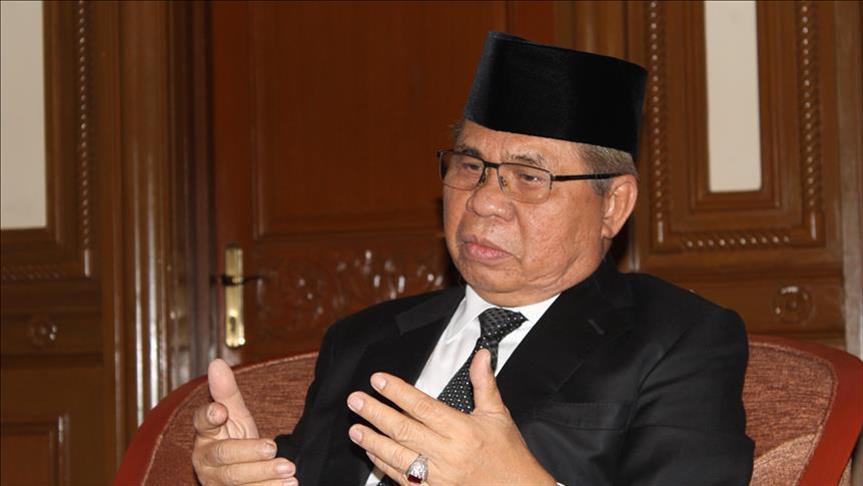
Moro Islamic Liberation Front (MILF) chairman Murad Ebrahim
Moro Islamic Liberation Front leader inked peace deal with Philippines government to end decades-long conflict
Moro Islamic Liberation Front (MILF) chairman Murad Ebrahim
As Moro Muslims inked a peace deal with the Manila government to end a decades-long armed conflict in the southern Philippines, the leader of Moro Islamic Liberation Front (MILF) has played a significant role in the peace process.
Al-Hajj Murad Ebrahim, one of the MILF founders, has been leading the group since 2003. He is the most important figure behind the Bangsamoro Organic Law.
Al-Hajj Murad Ebrahim, one of the MILF founders, has been leading the group since 2003. He is the most important figure behind the Bangsamoro Organic Law.
Born on May 2, 1948, in Maguindanao province of the Autonomous Region in the Muslim Mindanao (ARMM) region in the southern Philippines, Ebrahim started studying in a family-operated madrasa (Muslim school) in the Barangay Katidtuan village of the Kabacan municipality in the province of Cotabato.
While continuing his Koranic studies at the madrasa, Ebrahim went to a regular high school in the region.
At the age of 13, Ebrahim lost his father and mother but he continued his study with the help of some well-to-do relatives.
He enrolled at the Catholic-run Notre Dame University in Cotabato to study civil engineering.
Quits university study and joins MNLF
At university, Ebrahim became involved in the Moro Muslims' independence movement and met Nur Misuari and Hashim Salamat, the leaders of the Moro National Liberation Front (MNLF).
At the age of 22, he left university one semester short of getting his civil engineering degree and became actively involved in the MNLF.
Shortly thereafter, Ebrahim was designated as the MNLF’s zonal field commander and became known as Murad.
He undertook several important positions in the MNLF before he formed of a breakaway group, with Salamat, in 1977.
Salamat became the leader of the New MNLF formation that was founded on the motivation of independence of the Bangsamoro region.
Forms MILF and becomes head of the group
In 1984, the group officially changed its name to the Moro Islamic Liberation Front (MILF) in order to distinguish itself completely from the MNLF.
After Salamat died in 2003 of natural causes, Al Haj Murad Ebrahim became the MILF’s leader.
Ebrahim is seen as a more moderate figure than Salamat, and under his leadership, the peace negotiations in the region progressed significantly.
After a long-term negotiation, the MILF and the government signed the Memorandum of Agreement for Ancestral Domain (MOA-AD), which would have extended the 1996 ARMM boundaries and eventually replaced the ARMM completely.
The MILF officially dropped its demand for full independence in 2010, seeking regional autonomy instead.
In 2012, then President Benigno Aquino III and MILF leader Ebrahim signed the Framework Agreement on the Bangsamoro (FAB) constituting a roadmap to a final settlement which would allow for an autonomous region administered by minority Muslims in the south of this predominantly Catholic country.
The MILF, under the leadership of Ebrahim, and the Manila government also signed the Comprehensive Agreement on the Bangsamoro (CAB) in 2014.
The 2014 deal brought to a close 17 years of negotiations and ended a decades-old armed conflict in the country’s south.
On July 26, 2018, President Rodrigo Duterte signed the landmark Bangsamoro Organic Law, the latest significant attempt by MILF leader Ebrahim and the Philippines government to end to nearly half a century of on-and-off conflict that has left more than 120,000 people dead and hampered development in the region.
While continuing his Koranic studies at the madrasa, Ebrahim went to a regular high school in the region.
At the age of 13, Ebrahim lost his father and mother but he continued his study with the help of some well-to-do relatives.
He enrolled at the Catholic-run Notre Dame University in Cotabato to study civil engineering.
Quits university study and joins MNLF
At university, Ebrahim became involved in the Moro Muslims' independence movement and met Nur Misuari and Hashim Salamat, the leaders of the Moro National Liberation Front (MNLF).
At the age of 22, he left university one semester short of getting his civil engineering degree and became actively involved in the MNLF.
Shortly thereafter, Ebrahim was designated as the MNLF’s zonal field commander and became known as Murad.
He undertook several important positions in the MNLF before he formed of a breakaway group, with Salamat, in 1977.
Salamat became the leader of the New MNLF formation that was founded on the motivation of independence of the Bangsamoro region.
Forms MILF and becomes head of the group
In 1984, the group officially changed its name to the Moro Islamic Liberation Front (MILF) in order to distinguish itself completely from the MNLF.
After Salamat died in 2003 of natural causes, Al Haj Murad Ebrahim became the MILF’s leader.
Ebrahim is seen as a more moderate figure than Salamat, and under his leadership, the peace negotiations in the region progressed significantly.
After a long-term negotiation, the MILF and the government signed the Memorandum of Agreement for Ancestral Domain (MOA-AD), which would have extended the 1996 ARMM boundaries and eventually replaced the ARMM completely.
The MILF officially dropped its demand for full independence in 2010, seeking regional autonomy instead.
In 2012, then President Benigno Aquino III and MILF leader Ebrahim signed the Framework Agreement on the Bangsamoro (FAB) constituting a roadmap to a final settlement which would allow for an autonomous region administered by minority Muslims in the south of this predominantly Catholic country.
The MILF, under the leadership of Ebrahim, and the Manila government also signed the Comprehensive Agreement on the Bangsamoro (CAB) in 2014.
The 2014 deal brought to a close 17 years of negotiations and ended a decades-old armed conflict in the country’s south.
On July 26, 2018, President Rodrigo Duterte signed the landmark Bangsamoro Organic Law, the latest significant attempt by MILF leader Ebrahim and the Philippines government to end to nearly half a century of on-and-off conflict that has left more than 120,000 people dead and hampered development in the region.
Army, Police on alert after 2 foiled bombing attempts in NoCot
From the Philippine News Agency (Aug 7): Army, Police on alert after 2 foiled bombing attempts in NoCot
Police authorities in North Cotabato have been placed on heightened alert following the foiled twin bombing try by suspected members of the Islamic State-linked Bangsamoro Islamic Freedom Fighters (BIFF) in M’lang town over the past two days.
North Cotabato police spokesperson, Supt. Bernard Tayong, said all police units across the province were directed to implement checkpoints and mobile chokepoints to prevent peace saboteurs from sowing violence and terror.
The Army in Central Mindanao also alerted all its units following the twin bombing attempts in the town of M’lang, in North Cotabato, about 20 km. west of this city.
“All police units and officials were directed to take precautionary measures to prevent terrorism in the province,” Tayong told the Philippine News Agency (PNA) in a phone interview.
In addition, elements of the Army’s 7th Infantry Battalion have been directed by Brig. Gen. Cirilito Sobejana, commander of the 6th Infantry Division, to increase their alert status as he appealed for the public to be cooperative with authorities.
“We are seeking the continued support and cooperation of the people by being highly vigilant and immediately report to the authorities any suspicious item or person to prevent bombing plots here in Central Mindanao,” Sobejana said.
On Monday, an improvised explosive device was planted by still unidentified men in front of Arcylyn Store in Barangay Bagontapay, M’lang. It was discovered by alert civilians at about 10:30 a.m.
“The bomb was deactivated an hour later,” Tayong said.
Tayong said passersby noticed a black bag left in front of the store.
Suspecting it was a bomb, they alerted village officials who in turn called the authorities. The bag contained a canister wrapped in electrical tape, with black powder, and cut nails and broken bottles serving as shrapnel. It also contained two live M16 rifle bullets.
Police and military ordnance experts later deactivated the IED.
The bomb discovery on Monday was the second in M’lang in a span of two days.
On Sunday, at about 1 p.m., passengers waiting for rides found a pink bag left in front of a store along the national highway in Barangay Poblacion, M’lang, and alerted the police.
Bomb experts deactivated the suspected bomb that also contained black powder, metals sheets, and cut nails as shrapnel and had a mobile phone as the trigger device. Authorities said both discovered bombs bore the signature style of the BIFF.
http://www.pna.gov.ph/articles/1043952
Police authorities in North Cotabato have been placed on heightened alert following the foiled twin bombing try by suspected members of the Islamic State-linked Bangsamoro Islamic Freedom Fighters (BIFF) in M’lang town over the past two days.
North Cotabato police spokesperson, Supt. Bernard Tayong, said all police units across the province were directed to implement checkpoints and mobile chokepoints to prevent peace saboteurs from sowing violence and terror.
The Army in Central Mindanao also alerted all its units following the twin bombing attempts in the town of M’lang, in North Cotabato, about 20 km. west of this city.
“All police units and officials were directed to take precautionary measures to prevent terrorism in the province,” Tayong told the Philippine News Agency (PNA) in a phone interview.
In addition, elements of the Army’s 7th Infantry Battalion have been directed by Brig. Gen. Cirilito Sobejana, commander of the 6th Infantry Division, to increase their alert status as he appealed for the public to be cooperative with authorities.
“We are seeking the continued support and cooperation of the people by being highly vigilant and immediately report to the authorities any suspicious item or person to prevent bombing plots here in Central Mindanao,” Sobejana said.
On Monday, an improvised explosive device was planted by still unidentified men in front of Arcylyn Store in Barangay Bagontapay, M’lang. It was discovered by alert civilians at about 10:30 a.m.
“The bomb was deactivated an hour later,” Tayong said.
Tayong said passersby noticed a black bag left in front of the store.
Suspecting it was a bomb, they alerted village officials who in turn called the authorities. The bag contained a canister wrapped in electrical tape, with black powder, and cut nails and broken bottles serving as shrapnel. It also contained two live M16 rifle bullets.
Police and military ordnance experts later deactivated the IED.
The bomb discovery on Monday was the second in M’lang in a span of two days.
On Sunday, at about 1 p.m., passengers waiting for rides found a pink bag left in front of a store along the national highway in Barangay Poblacion, M’lang, and alerted the police.
Bomb experts deactivated the suspected bomb that also contained black powder, metals sheets, and cut nails as shrapnel and had a mobile phone as the trigger device. Authorities said both discovered bombs bore the signature style of the BIFF.
http://www.pna.gov.ph/articles/1043952
PH Air Force to get 4 more OV-10 bombers
From the Philippine News Agency (Aug 7): PH Air Force to get 4 more OV-10 bombers

The Philippine Air Force (PAF) will be accepting four North American Rockwell OV-10 "Bronco" light-attack planes from the United States either by this year or in 2019, Defense Secretary Delfin Lorenzana said Monday.
The Philippine government will shoulder the cost of transportation and shipment of the planes to the country, the defense chief said quoting a message from PAF head Lt. Gen. Galileo Gerard Kintanar.
These OV-10s will augment the existing six to eight units currently in service with the PAF.
The above-mentioned aircraft served as the country's premier ground-attack aircraft and was extensively used in the Marawi-conflict last year along with the SIAI-Marchetti SF-260 and Korea Aerospace Industries FA-50s in attacking terrorist targets and strongholds in the five-month campaign which started May and ended on October of that year.
PAF is the sole remaining operator of the OV-10 "Bronco" light-attack plane.
"Meron pa tayong (We still have) remaining OV 10s that we used in Marawi. They will augment these existing ones to support ground operations," Lorenzana said.
http://www.pna.gov.ph/articles/1043955
The Philippine Air Force (PAF) will be accepting four North American Rockwell OV-10 "Bronco" light-attack planes from the United States either by this year or in 2019, Defense Secretary Delfin Lorenzana said Monday.
The Philippine government will shoulder the cost of transportation and shipment of the planes to the country, the defense chief said quoting a message from PAF head Lt. Gen. Galileo Gerard Kintanar.
These OV-10s will augment the existing six to eight units currently in service with the PAF.
The above-mentioned aircraft served as the country's premier ground-attack aircraft and was extensively used in the Marawi-conflict last year along with the SIAI-Marchetti SF-260 and Korea Aerospace Industries FA-50s in attacking terrorist targets and strongholds in the five-month campaign which started May and ended on October of that year.
PAF is the sole remaining operator of the OV-10 "Bronco" light-attack plane.
"Meron pa tayong (We still have) remaining OV 10s that we used in Marawi. They will augment these existing ones to support ground operations," Lorenzana said.
http://www.pna.gov.ph/articles/1043955
Nat'l ID system to deter illegal activities of rebels, criminals: AFP
From the Philippine News Agency (Aug 7): Nat'l ID system to deter illegal activities of rebels, criminals: AFP
A national ID system will greatly help in restricting the illegal activities of insurgents and criminals.
This was stressed by Armed Forces of the Philippines (AFP) public affairs office chief Col. Noel Detoyato in a message to reporters Tuesday.
"The national ID (system) is a very important aspect of national security. It removes the insurgents' and criminals' advantage of anonymity," he added. Also, it will also restrict the latters' movement and will have an effect on their recruitment and extortion activities, Detoyato pointed out.
President Rodrigo Duterte signed Republic Act 11055 or the Philippine Identification System Act into law in Malacañang on Monday.
Under the measure, a foundational ID system, dubbed PhilSys, will be in place. It will have three components: the PhilSys Number (PSN), PhilID and PhilSys Registry.
PSN is a randomly generated, unique and permanent identification number for each individual, to be incorporated in all identification systems of government agencies. It will remain with the person even after death. PhilID is a non-transferable card with the PSN and basic information.
The Philippine Statistics Authority is mandated to act as the PhilSys Registry. Under the national ID law, the PSA will collate the full name, sex, birthdate, address, citizenship and blood type of Filipino citizens and encode them in a centralized database.
The law ensures that the individual's right to privacy is protected.
As provided under the new law, information may only be released when the registered person has given his or her consent, specific to the purpose prior to the processing; when the compelling interest of public health or safety so requires, provided the risk of significant harm to the public is established and the owner of the information is notified within 72 hours of the fact of such disclosure; upon order of any competent court; and when a registered person requests from the PSA access to his or her registered information and record history, subject to the guidelines and regulations to be issued by the PSA.
AFP spokesperson Col. Edgard Arevalo, meanwhile, echoed Detoyato’s remarks.
“We believe it will promote a peaceful and secure environment where terrorists, criminals, and other unscrupulous individuals will have a difficulty coping to pursue their evil designs and nefarious activities,” Arevalo said in a statement.
Arevalo believes the law will prevent lawless elements from obtaining false and multiple identities to carry out illegal activities.
He also added that the measure will greatly help law enforcers in distinguishing criminals from law-abiding citizens.
“They (criminals) will remain in hiding and cannot avail of the mandated identification card lest they be exposed to arrest and prosecution. They will lose their freedom of movement; their ability to transact business will be divested with no ID cards to present when demanded,” the military spokesperson noted.
“We also believe that the ID system shall facilitate government transactions and programs like census, promote transparency, and likewise spare our people from the burden of bringing with them several identification cards to establish their identities,” he added.
http://www.pna.gov.ph/articles/1043990
A national ID system will greatly help in restricting the illegal activities of insurgents and criminals.
This was stressed by Armed Forces of the Philippines (AFP) public affairs office chief Col. Noel Detoyato in a message to reporters Tuesday.
"The national ID (system) is a very important aspect of national security. It removes the insurgents' and criminals' advantage of anonymity," he added. Also, it will also restrict the latters' movement and will have an effect on their recruitment and extortion activities, Detoyato pointed out.
President Rodrigo Duterte signed Republic Act 11055 or the Philippine Identification System Act into law in Malacañang on Monday.
Under the measure, a foundational ID system, dubbed PhilSys, will be in place. It will have three components: the PhilSys Number (PSN), PhilID and PhilSys Registry.
PSN is a randomly generated, unique and permanent identification number for each individual, to be incorporated in all identification systems of government agencies. It will remain with the person even after death. PhilID is a non-transferable card with the PSN and basic information.
The Philippine Statistics Authority is mandated to act as the PhilSys Registry. Under the national ID law, the PSA will collate the full name, sex, birthdate, address, citizenship and blood type of Filipino citizens and encode them in a centralized database.
The law ensures that the individual's right to privacy is protected.
As provided under the new law, information may only be released when the registered person has given his or her consent, specific to the purpose prior to the processing; when the compelling interest of public health or safety so requires, provided the risk of significant harm to the public is established and the owner of the information is notified within 72 hours of the fact of such disclosure; upon order of any competent court; and when a registered person requests from the PSA access to his or her registered information and record history, subject to the guidelines and regulations to be issued by the PSA.
AFP spokesperson Col. Edgard Arevalo, meanwhile, echoed Detoyato’s remarks.
“We believe it will promote a peaceful and secure environment where terrorists, criminals, and other unscrupulous individuals will have a difficulty coping to pursue their evil designs and nefarious activities,” Arevalo said in a statement.
Arevalo believes the law will prevent lawless elements from obtaining false and multiple identities to carry out illegal activities.
He also added that the measure will greatly help law enforcers in distinguishing criminals from law-abiding citizens.
“They (criminals) will remain in hiding and cannot avail of the mandated identification card lest they be exposed to arrest and prosecution. They will lose their freedom of movement; their ability to transact business will be divested with no ID cards to present when demanded,” the military spokesperson noted.
“We also believe that the ID system shall facilitate government transactions and programs like census, promote transparency, and likewise spare our people from the burden of bringing with them several identification cards to establish their identities,” he added.
http://www.pna.gov.ph/articles/1043990
Subscribe to:
Posts (Atom)