Monday, June 26, 2017

Terror in Mindanao: The Mautes of Marawi

From Rappler (Jun 26): Terror in Mindanao: The Mautes of Marawi

We tell the story of a family behind a homegrown terrorist group that most effectively spread the ISIS ideology in the Philippines.

At least a decade ago, in 2007, the intelligence community in the Philippines was already watching Marawi City residents Cayamora Maute and his wife Farhana.

The parents of the now notorious "Maute Brothers", who are responsible for the ongoing clashes in their homeland, were coddling visiting operatives of Indonesian terrorist group Jemaah Islamiyah (JI), according to an intelligence report obtained by Rappler.

The well-connected couple who has homes and businesses in Marawi City and Butig town in Lanao del Sur and Quezon City helped the terrorists move personnel, funds, and supplies. They used as front Farhana’s commodity trading business in Surabaya, Indonesia.

Back in those days, Al Qaeda was the world’s biggest terrorist network and JI was a member. It was notorious for the worst act of terror in the world’s biggest Muslim country, the 2002 Bali bombing that killed more than 200.

The military used the Maute couple as tracers, according to a military officer privy to the operations, to detect activities of the JI operatives here.
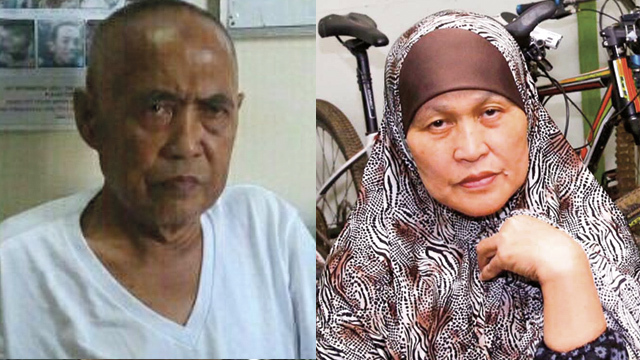


PATRIARCH AND MATRIARCH. Cayamora (L) and Farhana (R) Maute, parents of the notorious Maute Brothers. Sourced photo

The year 2012 was significant. The Mautes led the military to Ustadz Sanusi, one of 7 JI members who sought refuge in Mindanao. The terrorist allegedly involved in the 2005 beheading of 3 Christian schoolgirls in Indonesia was killed inside the compound of the Mindanao State University (MSU) in Marawi. (READ: PH military says Indonesian terrorist killed)

An intelligence report said Sanusi was found in a house there owned by Mohammad Khayyam Maute, one of the many sons of Cayamora and Farhana who would 5 years later wreak havoc in the city they grew up in.

It seemed the military had relaxed on the Maute family after Sanusi’s death in 2012. Little did they know that the sons would soon bring into the country the ideology of a terrorist group even more radical than Al Qaeda.

Omar Khayyam and Abdullah are the known leaders of the so-called “Maute Brothers” of the “Maute Group”, although they prefer the name Dawla Islamiyah. Both are believed to have been radicalized in the Middle East. Omar Khayyam completed Islamic Studies at Al-azhar University in Egypt. Abdullah also finished his Islamic Studies in Jordan, according to intelligence reports.

Omar is believed to be the brains behind the group while Abdullah serves as the commander of its military operations, athough a video shows even Mohammad contributed to this role.

We tell the story of a well-connected family behind a homegrown terrorist group that most effectively spread the ISIS ideology in the Philippines. This account is based on information from the intelligence community and multiple interviews with security officers, local officials, and residents of the two communities they sought to seize – Butig and Marawi City.

Beginnings of the 'Maute Brothers'
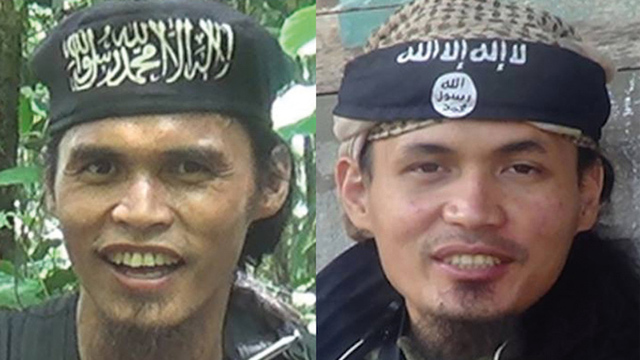

LEADERS. Omar and Abdullah Maute are the known leaders of the so-called Maute Brothers.

It was also about the year 2012 when the Maute brothers began to display their extemist ideology and tendency for violence, according to Marawi residents interviewed by Rappler.

They were believed to be members of a violent clique that started out attacking gays in the city, warning them to “stop what you are doing." Later, the group progressed to killing soldiers.

Samira Gutoc, back then an Autonomous Region in Muslim Mindanao (ARMM) assemblywoman and MSU regent, told Rappler how she asked the local police and military to investigate violence in the university. She said she was horrified to see pictures of “young men in turbans” responsible for attacks against victims who were all Christians.

Residents now say that these were the beginnings of the Maute Group. But the military had relegated them to the sidelines, it appeared, as the following year would become one of the most challenging times for the country.

In between the May 2013 midterm elections, Filipinos attacked Sabah in February, followers of Moro National Liberation Front (MNLF) founder Nur Misuari seized villages in Zamboanga City in September, a massive earthquake hit Bohol in October, and a super typhoon hit Eastern Visayas in November.

Raising the ISIS black flag in Butig

The sons of Cayamora and Farhana regained the attention of the country’s security apparatus in 2014 when they pledged allegiance to the Islamic State (ISIS), the more violent incarnate of Al Qaeda.

But it was in 2016 when they earned their now notorious name "Maute Brothers" after they attacked a military detachment and killed two soldiers in nearby Butig, the hometown of Farhana.

'For me, this is not jihad. They are after power and wealth by destroying the community,' says Mayor Jimmy Pansar of Butig, Lanao del Sur.

At least 4 military operations – Haribon 1, 2, 3 – were launched in Butig against the Maute Brothers in 2016. In April, they mimicked ISIS executions when they beheaded two Christian sawmill workers whom they dressed with orange clothes. In November, they flew the ISIS black flag at the town hall.

The Maute Group would also be blamed for the September 2, 2016 Davao City bombing that killed at least 15 people.

It was in Butig where Abu Sayyaf senior leader Isnilon Hapilon, the so-called prince of ISIS in Southeast Asia, would join the Maute Group in December 2016 to supposedly hatch a plan to establish a caliphate in Central Mindanao, according to the government.

The military demonstrated its force against their combined forces, deploying the brand new fighter jets of the air force for the first time to conduct surgical air strikes.

In the middle of military operations, President Rodrigo Duterte traveled to a town adjacent to Butig to plead to local leaders to shun the ISIS ideology. "Alam ninyo ‘yung Maute, if they are inspired doon sa ISIS, magkaleche-leche ang buhay natin (You know, if the Maute is inspired by ISIS, we will all be in trouble)," Duterte said in a speech there.

But his emissaries to the Maute Group failed to talk them out of their plans.

When the clashes started in Marawi, Duterte immediately declared martial law in Mindanao.
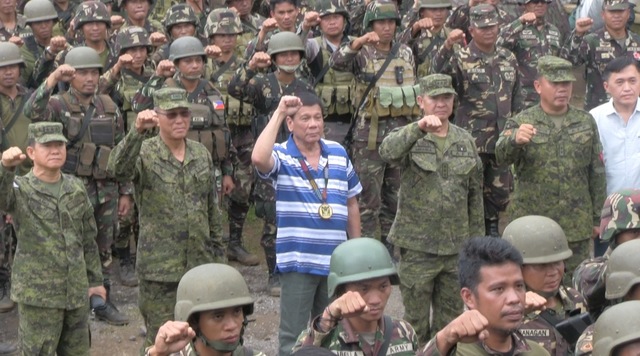


TROOP VISIT. President Rodrigo Duterte visits troops running after the Maute Group in Butig, Lanao del Sur in November 2016. Photo by Carmela Fonbuena/Rappler

ISIS 'grand plan'

The military thought Hapilon was severely wounded in Butig and perhaps dead. But he would show up in Marawi City on May 23. They raided the safe house in Barangay Basak Malutlut, where they found him, but failed yet again to snare him.

What surprised them was the reaction of Marawi residents. The recruits of the Maute Brothers – supposed ISIS cells in the city – sprung out of the streets to conduct simultaneous attacks in the city. (READ: Marawi battle zone: Urban warfare challenges PH military)

While the military ran after the leaders, local politicians and their families took their guns to defend city hall and the capitol from the terrorists who wanted to raise the ISIS black flag there.

A video seized from a safe house in Basak Malutlut shows Hapilon and the Maute Brothers planning an attack on Marawi. Armed Forces chief General Eduardo Año said they wanted to seize the city and declare it an Islamic caliphate on the 1st day of Ramadan. The grand plan, he said, is to replicate how ISIS leader Abu Bakr Al Bhagdadi took the Iraqi city of Mosul in 2014.



PLANNING THE ATTACK. Screenshot of a video the military recovered from a Maute safe house showing them planning an attack in Marawi City.

The video also shows, according to Año, that the Maute Brothers were on top of the operations even as they recognized Hapilon as the ISIS emir.

Año said that while the military raid failed to snag Hapilon on May 23, it succeeded in foiling their plan to seize Marawi City.

The Marawi crisis has entered its 2nd month. On May 25, the Islamic city celebrated its saddest Eid celebration with most of its 200,000 residents away from their homes, some living in squalid evacuation centers.

“This fighting brought by the local militant group robbed us of the chance to observe Ramadan peacefully and stole from us the opportunity to celebrate Eid’l Fitr and to be with our loved ones on the religious occasion,” said Zia Alonto Adiong, the spokesman of the crisis management committee.

As of Saturday, June 24, the clashes have killed at least 69 soldiers, 280 terrorists, and 26 civilians. Many houses have been bombed or burned. (READ: One month of Marawi clashes: Death toll now 375)

Connected but opposed to the MILF

After Sanusi’s death, the Maute family went into hiding in Butig because they were supposedly afraid they would be arrested for coddling the foreign terrorist, according to an intelligence report prepared after the Butig attacks.

The mountainous hometown of Farhana is where Camp Bushra is located, one of the biggest camps of the Moro Islamic Liberation Front (MILF), the country’s dominant Muslim rebel group that has been fighting for self-rule in Mindanao.

'At the core of the Maute Group is the radical ideology supporting ISIS. They will not kill themselves for money or power alone,' a local official tells Rappler.

Butig saw massive military operations in the 2000 all-out war waged by then president Joseph Estrada. It would enjoy relative quiet since the MILF began talks with the government to create a new Bangsamoro region envisioned to replace, and have more powers than, the existing ARMM.

The Maute Brothers would disturb this peace when they brought the war to Butig. The military offensives also destroyed houses, buildings, and government offices, as well as displaced thousands of residents.

The Maute family is well connected to the MILF hierarchy, but they have long opposed its leadership and the peace process it pushed.

Cayamora Maute, an engineer, previously served the MILF engineering bureau, according to an intelligence report. But it’s Farhana who is practically royalty. She belongs to the distinguished political Romato clan, which intermarried with the Mimbantas who ruled the MILF for decades.

The Maute brothers are the first cousins of Azisa Romato, the wife of the late MILF vice chairman for military affairs Abdulaziz Mimbantas. Mohammad Khayyam is also married to a Mimbantas daughter – it was in their house where Sanusi was killed, according to an intelligence report.

In Marawi, son Abdullah Maute is married to a sister of former mayor Pre Salic. Salic and his brother Omar "Solitario" Ali, also a former mayor, are among the politicians the government singled out for helping the Maute Brothers. They are facing charges of rebellion.

The links to influential families grew through marriages with families not only in Butig and Marawi but also in nearby Masiu, where Farhana sought refuge and was arrested at the height of the clashes.

These relations have triggered suspicions against the MILF despite the rebel group having cooperated with the military in its offensives.

But the positions are clear. The MILF has categorically opposed the ISIS ideology that the Maute Group promoted.

The blood ties, however, have allowed the Maute Group to recruit among MILF clans, especially among the “second generation MILF” or the children of its members “do not listen to their elders.”

Recruitment

The Maute Group exploited the growing weariness of young Muslims over the continued failure of government to deliver on its promises pertaining to the peace process.

There were many of them in Butig, Marawi, and other places in Mindanao. Successive disappointments with government made them susceptible to the radical ideology of ISIS and the need to take their own territory where they could establish a caliphate in Mindanao.
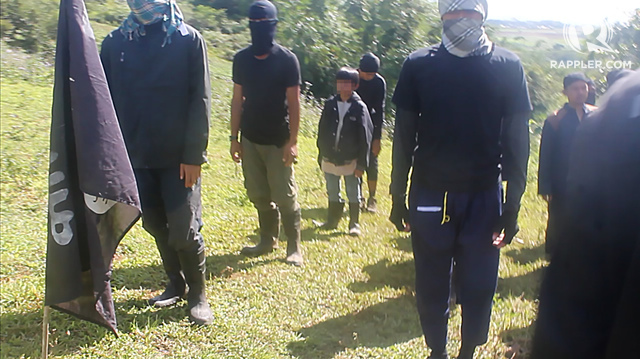


TRAINING. Child soldiers are taught to kill early on. Rappler sourced photo

In Butig and in Marawi, Rappler interviews showed that the recruitment strategy was almost the same. They spoke with residents about their ideology. Those who appeared open to the teachings were invited to discuss the ideology further. At a certain stage they were made to swear on the Koran and vow secrecy.

"Swearing on the Koran is sacred. You can't take your word back," said a Butig resident.

In Marawi, a lot of the recruitment was done on social media. In Butig, where there is no internet, it was face-to-face engagement. It was also in Butig where they brought fighters for training.

They also recruited children based on the promise that they would allow them to study the Koran. They turned them into fighters instead. (READ: I met a Maute soldier. He's a child.)

Butig Mayor Jimmy Pansar said most of the fighters in Butig were not residents. “Karamihan ng recruits from Marawi, Maguindanao, at Balik Islam.” (Most of the recruits were from Marawi, Maguindanao, and Islam converts.)

In Marawi, the fighters of the Maute Group were given a boost by Abu Sayyaf fighters and foreign fighters who took advantage of a Tabligh convention of Sunni Islamic missionaries to fly to Marawi City. Tabligh Jamaat is said to be a movement that calls on Muslims to return to Sunni Islam, the world's largest religious denomination.

The military said the Bangsamoro Islamic Freedom Fighters and the Ansarul Khalifa Philippines of Sarangani, the two other ISIS-linked terrorist groups, planned to reinforce the fighters in Marawi. (READ: 4 PH terror groups link up with pro-ISIS fighters in region)

War for wealth and power?

When Pansar was elected after two Maute attacks in 2016, among the first things he did was meet with the residents of Butig to discourage them from joining the terrorist group.

“After my assumption, I met with religious leaders and stakeholders – in addition to municipal officials and barangay chairman – to explain to the population that what they are doing is wrong. Most of the residents understood that. It’s not jihad, 101% it’s really wrong,” Pansar told Rappler in an interview back in December.

He was 5 months into his term, in November 2016, when the Maute Group succeeded in raising the ISIS black flag in Butig. It’s what the terrorist group also wanted to do in Marawi City.
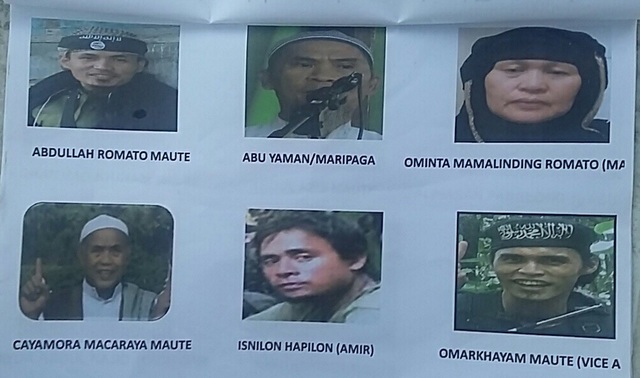


MOST WANTED. These photos of the Mautes are displayed in checkpoints in Lanao provinces.

A common denominator between the group’s biggest attack in Butig and the siege of Marawi City, according to residents, is this: the sitting mayors are not Maute allies.

“For me, this is not jihad. They are after power and wealth by destroying the community,” said Pansar.

The Maute has received foreign funding, mostly believed to have been coursed through Farhana. Malaysia's most wanted terrorist Mahmud Ahmad also channeled at least P30 million ($600,000) to finance the attack, according to Año.

Duterte himself had claimed that narco-politics helped fund the Maute Group, fitting the conflict into the narrative of his war on drugs. Residents are not dismissing this.

Here lies a truth about conflicts in Mindanao. Families join and support armed groups for various reasons – religion, pride, power, and wealth to name a few. It is dangerous to oversimplify the cause of conflict as one or another to fit a narrative that government wants to push.

Even the "emir" of ISIS in Southeast Asia, Isnilon Hapilon of the Abu Sayyaf Group, belongs to an organization that kidnaps foreign hostages to rake in millions of ransom money. Occasionally, it uses the ISIS black flag to up the group's international profile. But the Abu Sayyaf itself has too many factions and Hapilon is known to have kept some ideology despite the banditry of his group.

Peace advocates argue that the Marawi crisis underscores the need to complete the peace process with the MILF to prevent more young Muslims from taking matters into their own hands.

"At the core of the Maute Group is the radical ideology supporting ISIS. They will not kill themselves for money or power alone," a local official told Rappler.

Urgency of peace talks with MILF

Like the young Muslims tired of war, the MILF leadership itself has expressed disappointment over the slow progress of the peace talks under Duterte. But their actions showed commitment to the peace process.

In Butig, the MILF ordered its fighters to give way and not intervene with military operations.

In Marawi, the MILF created "peace corridors" to assist trapped civilians trying to escape the war zone and help secure adjacent towns where the conflict could spill over.

As the battle rages in Marawi City, a new draft for a law that will create the Bangsamoro region has been submitted to Duterte. He is expected to endorse this to Congress when it resumes session in July

Peace advocates argue that the Marawi crisis underscores the need to complete the peace process with the MILF to prevent more young Muslims from taking matters into their own hands.

And while the military is confident they have defeated the terrorists in Marawi, the ISIS threat will not be obliterated even when the fighting in Marawi stops. As ISIS faces defeat and loses territory in the Middle East, the Asian fighters are expected to return and seek refuge back home.

A political solution to the Mindanao problem is urgent. There is no time to waste.

http://www.rappler.com/newsbreak/in-depth/173697-terrorism-mindanao-maute-family-marawi-city

Marawi residents rescued during ceasefire say Maute Group forcing civilians to ‘work’ for them

From InterAksyon (Jun 26): Marawi residents rescued during ceasefire say Maute Group forcing civilians to ‘work’ for them


A joint police and military team guard while conducting a house to house search as part of clearing operations in different sections of Marawi city. REUTERS FILE PHOTO

Some residents of this Mindanao city rescued by government forces from a month-long siege by extremists said the Maute Group had forced them and other civilians trapped in the fighting to “work” for them.

This, besides being used as human shields each time State forces close in on some of the heavily fortified homes where the terrorists had taken positions since the May 23 fighting broke out, prompting President Duterte to declare a 60-day martial law in Mindanao.

Many young males were also conscripted to serve as foot soldiers of the Maute Group that has been seeking full recognition from the Islamic State, according to some of the civilians rescued during the 8-hour “humanitarian pause” declared Sunday by the Armed Forces of the Philippines in deference to Eid’l Fitr.

Soldiers from the Army’s 1st Infantry Battalion rushed to rescue a woman in black, a man wearing striped shirt and carrying a child, in one of several such missions carried out Sunday.

This particular family (their identities are not being revealed to protect them) came from the war zone in Barangay Raja Saduc.

They had been trapped in the fighting that began when hundreds of Maute Group members laid siege to the city to prevent government forces from taking Abu Sayyaf leader Isnilon Hapilon, who had struck an alliance with the Maute brothers and had been tagged the ISIS’ “emir” for Southeast Asia.

On Sunday, the dash for freedom came, as the Army and the Office of the Presidential Adviser for the Peace Process, with some help from the Moro islamic Liberation Front (MILF), set about the hard task of rescuing civilians still trapped in the city heavily damaged by air strikes and fierce fighting.

This particular family that News5 spoke to were immediately given food as they arrived at the safe zone. They said they were inside one of the houses with members of the Maute Group.

“Sama sama kami sa mga rebelde, tapos pag may makita kami sundalo ini-snipe namin. Saka bombahin. Palagi naka bomba plane, halos nadadamay na mga bahay [We were with the militants, and were instructed to snipe at soldiers if we spotted them. Many homes have been damaged by the aerial bombardments].”

The woman said the Maute Group used her for household chores like cooking for them. They wanted to take her along, but she refused, saying she had a family.

“Gusto ng Maute isama ako, pero ayoko dahil may mga anak ako, kawawa naman. Kaya mga binata na lang ang isinama [The Mautes wanted to take me with them but I said, please pity my children, I can’t just leave them. so they took along mostly young men].”.

The young men were given arms, she said, adding that the leader of that particular Maute unit, a man named “Ali,” wanted to take all of them with him.

In one radio interview earlier Sunday, military officials also said some of the young males were being forced to wear the Maute Group’s black uniform, in order to confuse the government troops, and to prepare molotov cocktails to throw at the soldiers.

Civilians debriefed, probed

The military and police continue their rigorous debriefing of civilians rescued from the war zone, amid reports that some extremists have been blending with them and using them as cover.

The authorities also want to determine who are Maute sympathizers and who were just coerced into doing work for the militants.

The past week, the Joint Task Force-Marawi had kept saying the Maute Group is desperate and members are passing themselves off as civilians in order to exit the conflict zone.

The JTF-Marawi also continued to validate reports Sunday that Hapilon had left Marawi, further throwing the Maute Group into disarray.

Lt. Col. Jo-ar Herrera, JTF-Marawi spokesman, said, “I cannot provide details related to his escape; some reports have come out to that effect . The troops on the ground have not heard about him, and there’s information he has left the conflict area. But we continue to validate that.”

He said government forces are still getting information that Omar Maute, one of the two co-founders of the group, is still in the war zone.

There are also reports of conflict brewing among the militants. “Yes, we received information that the leaders are now fighting because of the issue of money; the issue of logistical support and leadership. There’s been a lot of betrayal. It was Isnilon who started the cracks in the leadership,” Herrera said of the ASG leader who managed to control the Mautes.

Emissaries meet Maute leader during truce; Imam tells Muslims to shun extremists’ advances

From InterAksyon (Jun 26): Emissaries meet Maute leader during truce; Imam tells Muslims to shun extremists’ advances


Screen shot of a video released by the Philippine Army on June 18, 2017 shows Abdullah Maute (right) with Abu Sayyaf senior leader Isnilon Hapilon (second from left).

(UPDATE – 4:30 P.M.) MARAWI CITY – Local emissaries met on Sunday with a leader of a militant group loyal to Islamic State, officials said, taking advantage of a short truce in a battle over a southern city occupied by rebels for more than a month.

The eight Muslim leaders, referred to as imams, entered the conflict zone in the heart of Marawi City alongside rescue teams. It was not immediately clear what was discussed.

They reportedly met with the brothers Abdullah and Maddie Maute, who have earlier been speculated to have been killed in the fighting.

Part of the agenda of the emissaries was to persuade the terrorists to release the estimated 200 captive non-combatants who had been caught in the crossfire.

Retired General Dickson Hermoso, who coordinates efforts to free trapped civilians, said a unilateral eight-hour truce by the army to mark the Eid al-Fitr Islamic holiday was extended to enable the talks, details of which he withheld to avoid jeopardizing chances for dialogue.

“We need to balance this because this is very precarious,” Hermoso told reporters.

Col. Edgard Arevalo, Chief of the Armed Forces of the Philippines (AFP) Public Affairs Office, said the group went in “to help trapped civilians in the area. Its not AFP that initiated the meeting.”

The Maute group released some women and children on Sunday and the emissaries had come under fire briefly from rebel snipers.

“We have only established a foothold with the Maute,” Hermoso said. “We hope both sides will again grant us the respite.”

The military had indicated on Saturday that Abdullah Maute had fled from the town and was no longer in the fight even as there was no solid evidence of that, and authorities also believed his brother, Omarkhayam, was among three of the seven Maute brothers killed.

A source familiar with the meeting said the emissaries were from Marawi and were only granted access to Maute because they were of the same “Maranao” clan.

The seizure of Marawi has caused the biggest internal security crisis in decades for the Philippines, and a realization that the long-feared arrival of Islamic State could be a reality.

Images of black-clad fighters and Islamic State flags flying in Marawi has caused alarm in the mainly Roman Catholic nation, and the protracted occupation and presence of foreign fighters suggests the militants may have bigger designs on the southern Philippines than previously imagined.

The daily air strikes were halted on Sunday but small skirmishes took place as rebel snipers fired intermittently on positions held by troops.

Rescue teams tried to reach trapped civilians and recover bodies of dead residents killed in the heart of a city battered for weeks by clashes, air strikes and artillery shelling.

Prof. Antonio Custodio, a military historian, observed that prolonging the martial law situation could result in an incensed civilian population, an increasingly irrelevant civilian government from the point of view of the military, and lead to griping on the part of the soldiers: “You only use martial law to break the armed opposition in order to address [the situation]. In the ideal world, you use that so that the situation will not repeat. But if you extend it, you risk tiring the military, and the military does not want to get tired because, whenever the military gets tired, it starts griping.”

RESCUE AT GROUND ZERO

 Military spokesman Jo-Ar Herrera said troops had not resumed operations after the truce and were holding defensive positions.

“We have reports there were around five people who came out from ground zero,” Herrera told news channel ANC.

“We’re very confident we can rescue more.”

Muslims attended prayers at a Marawi mosque in an emotional gathering.

The violence has displaced some 246,000 people, and killed more than 350, most of them rebels, and about 69 members of the security forces. Twenty-six civilians have been killed but officials believe many more could be dead.

“This is supposed to a day of happiness,” said Imam Aleem Ansari Abdul Malik, who led the prayers.

He reminded Muslims to shun the advances of radical groups.

“This is just a small fire, do not allow the flames to go bigger by joining extremists,” he said.

Conditions for those trapped in Marawi have been dire, with witnesses reporting bodies on streets, limited food and water and a constant threat of being killed by either the militants, or air strikes.

The threat of Islamic State gaining a foothold in the Philippines has been raised by their losses in Syria and Iraq, and intelligence reports that the militants are seeking new bases from which to project their agenda.

Though the military is confident it can retake Marawi soon, the level of the militants’ preparations, combat capability and resilience has created some trepidation about whether their assault could be the beginning of a wider campaign.

Lieutenant Colonel Emmanuel Garcia, head of the Western Mindanao civil-military operations, on Saturday said intelligence indicated that Malaysian operative and extremist fundraiser Mahmud Ahmad had been killed, while Isnilon Hapilon, the Islamic State anointed “emir” of Southeast Asia, had fled.

MARAWI CRISIS | Military reports continuous gains vs terrorists

From InterAksyon (Jun 26): MARAWI CRISIS | Military reports continuous gains vs terrorists

Marines in Marawi City

Members of Philippine Marines cross a road as they reinforce government soldiers fighting the Maute group in Marawi City in southern Philippines May 29, 2017. REUTERS/Erik De Castro

Some 35 days into the military’s violent standoff in the Islamic City of Marawi with elements of the terrorist Maute Group, the government indicates that security forces continue to make headway piling pressure on the remnants still holding out in increasingly constricted enclaves of the city.

The Maute Group has manifested allegiance to the Islamic State of Iraq and Syria (ISIS), and has been joined in Marawi by a band of the Abu Sayyaf Group (ASG) led by its sub-leader Isnilon Hapilon.

Lt. Col. Jo-Ar Herrera, Spokesman of the Joint Task Force Marawi, told journalists: “Definitely, we are winning. In terms of recovery of war material, we have 360 high powered weapons, thousands of rounds of ammunition. Fuel bombs … Several cadavers, including two that appear to be Middle-Eastern in appearance. Now are in the process of conducting investigation of the identities.”

An eight-hour lull was effected in deference to the observance of the Islamic Eid al-Fitre marking the end of the religious period of Ramadan, during which silence permeated throughout and the rare chirping of birds could be heard.

Assistant Secretary Dickson Hermoso of the Office of the Presidential Adviser on the Peace Process, OPAPP, leveraged the tranquil pause to lead a rescue mission to extricate civilian non-combatants.

Among the persons they extracted from the conflict zone were: Lando Albasite, 47 years old;
Jane Palacio, 22; Moan Alabiste, 27; Joy Upong Alabiste, 20; and Joan Alabiste, two years old.

The Maute Group’s followers are said to continue holding Catholic priest Fr. Chito Suganob captive.

After that, hostilities resumed with air strikes and furious exchanges of angry fire, spawning thick smoke above the city.

In the meantime, the military reported having cleared 85 buildings that have been wrested from the control of the terrorists.

Lt. Col. Herrera said among the weapons recovered were sniper rifles, machine guns, rocket-propelled grenades and other anti-tank weapons.

“We are trying to validate intelligence tips that they are experiencing possible leadership problems. Also: Ammunition running short. Attrition of space and limited maneuver room. They are in increasingly constricted defense position. Issues of finances and decision making processes. Some apparently want to just escape because of unforeseen circumstances and situations that did not materialize as planned, but there are others who want to stay behind and fight it out. There are groups who wanted to stay behind. There were also indications of inter-tribal differences that contribute to the weakening of their ranks.”

18 rebel returnees in DavOr, Sarangani receive assistance

From the Mindanao Times (Jun 26): 18 rebel returnees in DavOr, Sarangani receive assistance

THIRTEEN former rebels who surrendered to the different units of 701st Infantry Brigade in Davao Oriential received cash assistance under the Comprehensive Local Integrated Program (CLIP) of the local government of Davao Oriental last week.

Meanwhile, five former members of New People’s Army (NPA) who surrendered to 73rd Infantry Battalion (73IB) received a total of ₱325,000 in financial and livelihood assistance from the Comprehensive Local Integration Program (CLIP) of Sarangani province during a short ceremony held in Manny Pacquiao hotel in General Santos City last week.
 
Capt. Andrew Linao, the civil-military operations officer of 701st Infantry Brigade, told TIMES that each 13 rebel returnee from the halfway house of the local government of Davao Oriental received P65,000 cash.

The surrenderees underwent three months worth of training on alternative learning system, livelihood, gardening and other psychosocial and government interventions.

“We also toured them on the livelihood program of Tesda and livelihood projects on provincial agriculture, specifically livestock and vegetable production,” he said.

The halfway house of the local government of Davao Oriental, together with 701st Infantry Brigade, caters to the needs of rebel returnees. Linao said this is the first of its kind in the country.

He also said that by second week of July they will cater to the second batch, comprising 20 rebel returnees.

The Happy Home started back in 2013 under the leadership of Brig. Gen. Benjamin Madrigal in collaboration with the local government of Davao Oriental.
 
In Sarangani, each returnee was handed P15,000 as immediate assistance and P50,000 as livelihood aid.

“The immediate and livelihood assistance awarded to the former rebels is a successful collaborative effort of the provincial government of Sarangani Province and 73IB in support to the unit’s mission and government’s effort of permanent and peaceful closure of all armed conflict in the country,” Lt. Col. Marion Angcao, commander of 73rd IB, said.
 

Maute Group sets condition for Fr. Chito’s release but frees 5 hostages during humanitarian ceasefire

From the Mindanao Examiner (Jun 26): Maute Group sets condition for Fr. Chito’s release but frees 5 hostages during humanitarian ceasefire

The Maute Group on Sunday declined to release hostaged Catholic priest Fr. Teresito “Chito” Soganub but freed five hostages, including a two-year old girl during the 10-hour humanitarian ceasefire that government declared and was reciprocated by the Maute Group on Eid’l Fitr, the end of the month-long Ramadan.

Freed by Maute Group leader Abdullah Maute to an eight-member team led by an emissary of the Government and Moro Islamic Liberation Front (GPH-MILF) Peace Corridor were Lando Albasite, 47; Moen Albasite, 27; Joana Albasite, 2; Jane Palacio, 22; and Joy Upong, 20.


A police medical team attends to two of five hostages freed by the Maute Group during the humanitarian ceasefire declared by the military and reciprocated by the Maute Group on Sunday, 25 June 2017, in deference to Eid’l Fitr. A policewoman carries two-year old Joana Albasite. MindaNews photo by FERDINANDH B. CABRERA

The team included four Muslim religious leaders who dialogued with the Maute Group for some 90 minutes on how to end the crisis, the emissary told MindaNews.

The Marawi Crisis entered Day 34 on Sunday.

The emissary, a prominent Maranao whose name has been withheld by the GPH-MILF Peace Corridor for security considerations, was the same emissary who negotiated with the ISIS-inspired Maute Group to agree to a humanitarian ceasefire on June 4. The four-hour “humanitarian pause” then led to the rescue of at least 134 residents.

The emissary told MindaNews late Sunday night that Maute had set a condition for the release of Fr. Chito but agreed to free some hostages who were located nearest to their meeting place. The five happened to be the nearest.


Fr. Suganob in the viral video posted in the Facebook account “Native A Mranao,” who credits it to Datumasa Khalid. The video had over 161,000 views and 3,527 shares as of 9 p.m. Tuesday (30 May 2017)

The emissary said the condition set by Maute for the release of Fr. Chito as well as the results of the dialogue with the religious leaders have been relayed to Assistant Secretary Dickson Hermoso of the Office of the Presidential Adviser on the Peace Process, the government’s focal person in the GPH-MILF Peace Corridor. Hermoso, a retired Army Colonel and a member of the government’s Peace Implementing Panel for the GPH-MILF Peace Accord, told MindaNews Monday morning that he had relayed the information to their chair, Irene Santiago.

Santiago told MindaNews Monday morning that these matters would be discussed with Secretary Jesus Dureza, Presidential Adviser on the Peace Process.

President Rodrigo Duterte is hosting an Eid’l Fitr dinner on Tuesday, June 27, in Malacanang, for the peace implementing panels of the MILF, MNLF and the Bangsamoro Transition Commission.

Hostages

MindaNews first learned about the release of hostages from Lt. Gen. Carlito Galvez, chief of the Western Mindanao Command (Westmincom).

When MindaNews clarified his use of “hostages” in his text message, Galvez replied they were, indeed, hostages “kasi kasama sila Maute and Maute rin nag-turn over sa negotiators” (because they were held by the Maute and Maute turned them over to the negotiators).


Journalists await the release of trapped civilians at the processing area in Agus 1, Marawi City on Sunday, 25 June 2017. MIndaNews photo by CAROLYN O. ARGUILLAS

MindaNews verified with the emissary on the status of the five rescued and he confirmed they were hostages and that they were handed over to them because Maute had declined to release the Catholic priest.

“Yung nakukuha namin yun ang trapped civilians” (What we have been getting are trapped civilians, Galvez said, adding ‘trapped civilians’ are those who were “nakapagtago at nakalabas at hindi naging under custody ng Maute” (able to hide and flee and were never under the custody of the Maute). He said 45 civilians were rescued on Saturday.

Galvez said they actually extended the 6 a.m. to 2 p.m. “humanitarian pause” for four more hours or until 6 p.m. for those already inside the conflict zone but the emissary’s team “returned at 4 pm. with five hostages and a cadaver of an Imam, so we lifted the humanitarian pause at 4 p.m.”

The Imam was identified as Hassan B. Ali. The emissary said the Imam passed away apparently due to illness several days ago.

8 hours, 90 minutes, 10 hours

The government on Saturday night declared an eight-hour “humanitarian pause” from 6 a.m. to 2 p.m. Sunday, June 25, in deference to Eid’l Fitr, the end of the month-long Ramadan.

But a series of delays hampered the mission that was expected to have rescued the remaining 300 to 500 residents trapped in the conflict zone since clashes started there on May 23.


Rescue volunteers wait at Agus 1 for the go signal to enter the conflict zone on Sunday, June 25, 2017, during the humanitarian ceasefire. The two teams were unable to enter when the ceasefire ended at 2 p.m. The ceasefire was extended up to 6 p.m. but was lifted at 4 p.m. when the emissarys team returned with five hostages and a cadaver. MindaNews photo by CAROLYN O. ARGUILLAS

The rescue teams took off from the Provincial Capitol compound only at 12:34 noon, with only 90 minutes left of the ceasefire that was supposed to have ended at 2 p.m.

Only Team 3, composed of the emissary and religious leaders, managed to enter the conflict zone. Teams 1 and 2, composed of ten volunteers from the MILF in the GPH-MILF’s Joint Coordinating, Monitoring and Assistance Center (JCMAC) waited at the processing area for rescued residents at Agus 1, along with journalists, for the go signal from Team 3 if they could already get inside the conflict zone.

The emissary arrived at the processing area en route to the conflict zone at 12:57 p.m. or an hour before the supposed 2 p.m. deadline and finally moved to that zone around 1:15 p.m. after asking for megaphones.

Team 3’s mission was not to call out on trapped civilians but to go direct to Maute. It was the role of Teams 1 and 2 to use the megaphones and call on trapped residents and help them leave the area as they did on June 4.

At 1:58 p.m. the sound of mortar fire could be heard, followed by occasional gunburst.

The “humanitarian pause” lapsed at 2 p.m. with Teams 1 and 2 still waiting for a go signal to enter. As Galvez said, it was extended until 6 p.m. but lifted at 4 p.m. when the emissary’s team returned.

In the briefing earlier at the JCMAC office in the Provincial Capitol, compound, Hermoso told Teams 1 and 2 that their main priority is to get the trapped civilians out.

http://www.mindanews.com/top-stories/2017/06/maute-group-sets-condition-for-fr-chitos-release-but-frees-5-hostages-during-humanitarian-ceasefire1/

Campaign for “Letters of Hope” for soldiers and civilians in Marawi City on

From the Philippine Information Agency (Jun 26): Campaign for “Letters of Hope” for soldiers and civilians in Marawi City on

People from other regions and even those living abroad can reach out and offer prayers to soldiers and affected residents in Marawi City through “letters of hope”.

Cabinet Secretary Khal Mambuay-Campong of the Autonomous Region in Muslim Mindanao (ARMM) said a group of private individuals in Luzon started the campaign in coordination with the autonomous region.

“Actually this idea started when a doctor who visited Marawi City launched a donation drive for garments and thank you notes to soldiers in the city fighting the local terror groups,” Sec. Campong, who is from Marawi City, said.

Assisted by colleages from Luzon, Campong backs the campaign and assured to deliver the letters not only for the soldiers but also to civilians affected by the ongoing firefight between government forces and local terror groups.

Rinz Araneta, a teacher from PAREF Woodrose School in Ayala Alabang in Metro Manila said her group has seen the positive impact of this campaign to the soldiers thus extending the campaign to include civilians especially those most affected by the crisis.

The campaign also includes sending messages of hope through the email address mgzaraneta@gmail.com , Araneta said.

“Our letters make their way to our noble soldiers, let us also extend this spirit of love and oneness to those severely affected by this war – our displaced brothers and sisters,” Araneta said.

“Let us send them letters that express love, that give hope, that show or mavbe, even just attempt at understanding,” added Araneta.

As this developed, DepEd’s provincial office in Cavite has also issued a memorandum requesting all the schools to encourage teachers and students to send letters to the victims, Campong said.

It’s an expression of motivation and hope. We, the people of Marawi, need the prayers and words of hope,” she said.

Noting a positive response, Campong said, those interested to send letters to children and parents in Marawi City can send through Araneta’s e-mail address or through drop-off points at Quezon City Science High School and at Veritas Catholic School in Paranaque.

The group of Sec. Campong and Araneta will distribute the collected letters to the evacuation centers in Lanao del Sur and Lanao del Norte by first week of July.

Data from ARMM’s Crisis Management Committee showed that a total of 252,282 individuals or 51,651 families have been displaced by the crisis who are in evacuation centers or are staying with relatives.

http://news.pia.gov.ph/article/view/1661498187296/campaign-for-letters-of-hope-for-soldiers-and-civilians-in-marawi-city-on

PAF to hold entrance exam for recruits on June 28-29

From the Philippine Information Agency (Jun 26): PAF to hold entrance exam for recruits on June 28-29

Are you interested to join the Philippine Air Force?

Interested applicants can have their chance to get in as the Philippine Air Force (PAF) announced the conduct of its entrance examination for the recruitment process of Candidate Soldiers (CS) in the Visayas.

First Lieutenant Jestoni Ortega, acting civil military officer of the PAF’s 560th Air Base Wing based in Mactan, said the entrance examination is scheduled on June 28 and 29 at the Mactan – Benito Ebuen Air Base in Lapu-Lapu City.

Ortega encouraged those who are willing to join the PAF to file their application on or before the scheduled examination.

In order to qualify, an applicant must be at least 18 years of age but not more than 26 years old and a bona fide Filipino citizen. He or she must have taken at least 72 units in college or a graduate under the K-12 program.

A height requirement of at least five feet is set for both male and female applicants.

Air woman Verna Mae Lañada of the public affairs of the PAF’s 560th Air Base Wing, also added that aspiring PAF CS must be mentally and physical fit for military training and must be of good moral character.

Together with the application form, CS aspirants are required to submit two pieces of 2x2 ID pictures,  original and photo copy of the birth certificate authenticated by the Philippine Statistics Authority (PSA) and photocopy of the Transcript of Records (for College and K-12 Graduates) or Certification of Grades for those with at least 72 units taken in college.

Walk-in applicants may be accommodated as long as they bring the complete documents as required.

http://news.pia.gov.ph/article/view/1061498459781/paf-to-hold-entrance-exam-for-recruits-on-june-28-29

Dabawenyos offer care packages for Marawi troops

From the Philippine News Agency (Jun 26): Dabawenyos offer care packages for Marawi troops

From hygiene items to expensive water filter gadgets, Dabawenyos have continued to offer “care packages” and “lifestraw” items for the government troops fighting against terrorists in Marawi’s war zone.

The items are their response to the donation drive initiated by the civil society organizations and the business community in collaboration with the Philippine Army.

The campaign dubbed: “One Love, One Mindanao, Support our Troops Caravan” has collected more than PHP100,000 worth of “care packages” on Sunday, the second day of the event. The campaign runs from June 24 to June 30, 2017.

A care package is a small parcel containing items that are needed by the soldiers deployed in the field. These products are hygienic items, operational items like undergarments, pain relief patches and comfort items like chocolates, cigarettes, among others.

Lt. Col. Ronaldo Valdez, commanding officer of the 10th Civil-Military Operations (CMO) Battalion of the Philippine Army based in Mawab, Compostlea Valley, said the Support for Troops campaign is only one of the series of donation drives launched by the CSOs and the business community.

On June 3, Valdez said they already sent an initial delivery for the soldiers and the displaced civilians in Marawi. This was followed on June 12 wherein the concert for cause resulted to more donations from the public.

He said three truckloads of various goods to include banana, chocolates, rice, water were delivered to the conflict zone. The goods were unloaded at the 103rd brigade based in Lanao del Sur.

“We delivered them straight to the conflict zone,” he stressed. Other civilian and humanitarian groups deliver relief in Iligan through the local government units.

But unlike other donation drives, Valdez said they do not accept cash although two donors insisted on cash - PHP15,000 and PHP30,000 leaving the money to their discretion. “We bought the items for the soldiers,” Valdez said.

The One Love, One Mindanao is a partnership with Robinsons where a donor can buy items available at the space provided at the Robinsons in Abreeza, pay them and drop at the designated box.

Aside from Robinsons, CSOs also launched the LifeStraw for a Hero. Lifestraw is an award winning technology that makes microbiologically contaminated water safe to drink. It filters 1,000 litres to 0.2 microns without the method of pumping and no chemicals added.

This technology is useful to soldiers in the field but it is scarcely used due to limited availability and expensive for an ordinary soldier.

Valdez said a donor can buy the item at R.O.X Philippines, which under the partnership should make the items available.

So far, Valdez said all donation drives are working for their soldiers. “We are lucky we are stationed here (Davao). This is our way of showing solidarity to them. And CSOs wanted to help our troops,” he said.

Hopefully, Valdez said, the Marawi crisis will end soon. If not, Valdez said they are still committed to support their comrades in the field.

http://www.pna.gov.ph/articles/997430

Police intensify security in NorMin

From the Philippine News Agency (Jun 26): Police intensify security in NorMin

The new police regional director, Chief Supt. Timoteo Pacleb, of Northern Mindanao, on Monday ordered to intensify security measures in all checkpoints in the region, both static and mobile.

Pacleb, who randomly inspected a few checkpoints in Cagayan de Oro City and Misamis Oriental Friday afternoon, discovered that some of these were lax than others.

“It must be uniformed and standardized, especially the entry points in the city. There must only be one system that is applied to all entry checkpoints,” he said.

Pacleb ordered that all public passengers must alight from their vehicles, walk in a single line and have themselves and their hand-carried luggage be frisked before returning to the public utility vehicles (buses, jeepneys, vans, etc.). The PUVs themselves must be checked separately.

Cagayan de Oro City Police Office (Cocpo) spokesperson Chief Insp. Mardy Hortillosa said that under the new directive, a checkpoint must be manned by at least eight personnel.

With the Cocpo manpower already stretched, they were given a boost over the weekend by reinforcements from the Malaybalay City-based 403rd Brigade, which sent a battalion-size force who will help man checkpoints, rove around the city and be on call when the need arises.

In a related development, the Bureau of Fire Protection (BFP) 10 has also installed a Haz Mat checkpoint along the national highway at barangay Tablon, Cagayan de Oro City.

All tankers and similar vehicles containing chemicals must be flagged down and inspected by BFP personnel coming from the east and south portion going towards Cagayan de Oro.

A similar checkpoint was earlier set up in Iligan City and west of Misamis Oriental. A week after the Marawi City conflict broke out, the Haz Mat checkpoint in Iligan was able to intercept tons of chemicals believed bomb components.

http://www.pna.gov.ph/articles/997417

Army, PNP intel units checking reports abducted priest still alive

From the Philippine News Agency (Jun 26): Army, PNP intel units checking reports abducted priest still alive

Police and military intelligence units are now validating reports by extricated civilians from Marawi that Catholic priest Teresito "Chito" Suganob is alive and still being held hostage by militants somewhere in Lanao del Sur.

Chief Supt. Reuben Sindac, police regional director for the Autonomous Region in Muslim Mindanao (PNP-ARMM), said the regional intelligence service is coordinating with the local counterparts in the towns surrounding Marawi City in Lanao del Sur.

Lt. Gen. Carlito Galvez, Western Mindanao Command chief, also said in a phone interview that undercover agents are now combing communities in Lanao del Sur for possible safe houses where the priest and other hostages are being kept.

Suganob, lay workers and worshipers were snatched while inside the St. Mary’s Church in Marawi City by Maute and Abu Sayyaf terrorists after they attack Marawi City on May 23.

“We have information from rescued civilians last Sunday that Fr. Chito is still alive," Galvez said, adding it gave Church leaders some hope. "This information is being checked now,” Galvez added.

Reports from Marawi City said the terrorists have forwarded conditions for the release of priest and other captives.

Galvez and Sindac refused to confirm or deny the reported terrorists demands.

Suganob, a priest assigned in Marawi the past 15 years, had aired an appeal in a video uploaded by his captors in the internet, asking President Duterte to call off the offensives.

The request was denied.

http://www.pna.gov.ph/articles/997436

Urban terrain, IED factor makes Marawi fight challenging — Padilla

From the Philippine News Agency (Jun 26): Urban terrain, IED factor makes Marawi fight challenging — Padilla

Filipino soldiers have made significant headway in clearing Marawi City of the remaining Maute Group remnants but fighting in urban terrain with an enemy well versed in the use of improvised explosive devices (IEDs), landmines and snipers has certainly posed significant challenges to the liberating military forces.

Adding to the difficulties is the presence of civilian hostages whom the terrorists have no qualms of using as human shields if they get cornered by troops, Armed Forces of the Philippines (AFP) spokesperson Brig. Gen. Restituto Padilla said over the weekend.

"(Things) are difficult because of the urban terrain (which is the worst form of battlefield) and we are doing this (clearing operations) very carefully because we have compounding issues which are presence of hostages, residents who refused to leave their homes, continued discovery of IEDs (which necessitated) the door-to-door clearing operations being practice by our troops," Padilla stressed.

These factors have made combat in Marawi City very complicated, he said.

These same factors are also present in most Mideast engagements with ISIS and Al-Qaeda terrorists and these contributed greatly to the length of time to neutralize them.

"In the case (in) the Battle of Mosul (in Iraq), it is still ongoing up to now, (having) started October 2016, and it not finished yet (despite) been going on for eight months. In Libya (which conducted operations against) ISIS/Daesh (terrorists) the battle started May 12 and ended only last Nov. 6, so it lasted over six months; in the Battle of Ramadi where American and Iraqi militaries combined to fight the ISIS terrorists, the operation started April and ended only in November 2006 and during the Second Battle of Fallujah (where the Iraqi, American and British forces combined) against Al-Qaeda terrorists, operations lasted Nov. 7 up to Dec. 23, 2004," he added.

Fighting in Marawi City erupted when military forces tried to arrest Abu Sayyaf leader Isnilon Hapilon, the "Emir" of ISIS in Southeast Asia, last May 23.

As of this posting, the death toll in the ongoing fighting is placed at 268 Maute Group terrorists, 66 soldiers and police officers and 26 civilians.

http://www.pna.gov.ph/articles/997381

Reports on troops threatening Marawi women with rape unfounded — DND chief

From the Philippine News Agency (Jun 26): Reports on troops threatening Marawi women with rape unfounded — DND chief

Department of National Defense (DND) Secretary Delfin Lorenzana took exception to reports made by some leftist groups claiming that women in Marawi City are fearful of being raped by troops now deployed there to neutralize the remaining Maute Group terrorists.

"I question the motives and credibility of certain leftist groups and individuals in coming up with a dubious report that Marawi women residents allegedly fear that they will be raped by soldiers in the ongoing military operations in Marawi City," he said in a statement Monday.

Lorenzana also called these efforts counter-productive as these factions are apparently out to worsen the almost six-week conflict with unproven and spurious reports.

Fighting in Marawi City erupted when military forces tried to arrest Abu Sayyaf leader Isnilon Hapilon, the "Emir" of ISIS in Southeast Asia, last May 23.

As of this posting, the death toll in ongoing fighting is placed at 268 Maute Group terrorists, 70 soldiers and police officers and 26 civilians.

"While the nation continues to suffer from the havoc wrought by the ongoing rebellion in Marawi and atrocities in various parts of Mindanao, some factions obviously have a lot of free time on matters other than helping improve the situation," he added.

The DND chief said such accusations are impossible to believe as all military personnel have undergone a series of gender sensitivity trainings under Gender and Development (GAD) program.

"These trainings focus on participation, empowerment, equity, respect for human rights, freedom from violence, and actualization of fullest human potential not just of soldiers but the communities where these soldiers operate as well," Lorenzana stressed.

Also, he said many of these soldiers and other security troops, tarred by these unproven accusations, have already paid the ultimate price in helping to free Marawi City of its Maute Group invaders.

"To this day, close to 70 soldiers and policemen have already paid the ultimate sacrifice in the defense of Marawi City and our people, with many more wounded and in need of serious medical attention," the DND chief pointed out.

Lorenzana said that the groups behind this imaginary reports want the government to fail in its ongoing fight against terrorism in order to advance their selfish motives

He also stressed that these organizations are often silent whenever members of the New People's Army are reported looting, murdering, raping, and destroying public and private properties in the countryside.

"I challenge the organizations where the information originated to present their evidence and lodge a complaint before the proper authorities if they can, and not just throw away accusations like they are reading lines from their same old propaganda for almost five decades now which the Filipino people have grown tired of hearing," Lorenzana concluded.

http://www.pna.gov.ph/articles/997392

House approves proper use of PH flag, rendition of 'Lupang Hinirang'

From the Philippine News Agency (Jun 26): House approves proper use of PH flag, rendition of 'Lupang Hinirang'

The House of Representatives has approved on final reading a bill which seeks to strengthen the rules on the use and display of the country’s national symbols, as well as the proper rendition of the national anthem, “Lupang Hinirang”.

With 212 votes on the affirmative, the lower chamber unanimously approved House Bill 5224, expressly repealing Republic Act No. 8491 or the “Flag and Heraldic Code of the Philippines”.

HB 5224, or the proposed “Revised Flag and Heraldic Code”, confirms the official design of the Philippine flag -- blue, white and red with an eight-rayed golden-yellow sun and three five-pointed stars -- which must be consecrated and honored by the people.

The bill mandates that the Philippine flag be hoisted all throughout the year in front of government institutions and other places such as the Malacañang Palace, Senate, House of Representatives, Supreme 
Court, and the Rizal Monument in Luneta, among others.

The bill declares as Flag Days the period from May 28 (National Flag Day) to June 12 (Independence Day) of each year.

During the Flag Days, all government offices, business establishments, learning institutions, and private homes are obligated to display the Philippine flag and observe proper ceremonies.

As for private buildings and residences, the Philippine flag shall be displayed during the following events: Araw ng Kagitingan -- April 9; Labor Day -- May 1; National Flag Day -- May 28; Independence Day -- June 12; National Heroes Day --- last Monday of August; Bonifacio Day -- November 30; and Rizal Day -- December 30.

All government offices and educational institutions shall observe the flag-raising ceremony every Monday morning and the flag-lowering every Friday afternoon.

HB 5224 also seeks to expand the coverage of government officials wherein the flag shall be flown at half-mast as a sign of mourning on the day of the announcement of the death of the following officials: President or a former President; incumbent and former Vice President; Chief Justice; Senate President; and House Speaker on all buildings and places where the deceased held office.


Furthermore, the flag shall also be flown at half-mast on the day of the official announcement of the death of an incumbent public school teacher on Department of Education (DepEd) schools or district offices where the deceased was assigned to teach.


Meanwhile, the national anthem, “Lupang Hinirang” shall be committed to memory by all students of both public and private educational institutions, and rendered during the flag ceremony.

The bill prescribes the rendition of the "Lupang Hinirang" in accordance with the musical arrangement and composition of Julian Felipe, in 2/4 beat when played; and within the range of 100 to 120 metronome, in 4/4 beat when sang.


HB 5224 also prescribes the national motto, national coat-of-arms, and the great seal.


The National Historical Commission of the Philippines shall be responsible for the strict enforcement of the proposed law.

The bill provides penal consequences subjecting the offender to criminal and/or administrative cases, and shall be penalized by public censure, imprisonment and/or fine.

Under the bill, it shall be unlawful to mutilate, deface, defile, trample on or cast contempt, dishonor or ridicule upon the flag, anthem, seal, motto, coat-of-arms, and other heraldic items and devices.

It is likewise unlawful to use the flag as staff or whip, or as drapery, festoon, tablecloth or as covering for ceilings, walls, statues, motor vehicles, or other objects.

It also prohibits the wearing of the flag, seal, coat-of-arms as part of a costume or as a fashion accessory or design element; or adding any word, figure, picture or advertisement on the flag, seal, coat-of-arms; printing or attaching thereof on articles of merchandise; or using them for other purposes, without the approval of NHCP.

http://www.pna.gov.ph/articles/997407

Gov't forces closing in on Maute group remnants — AFP

From the Philippine News Agency (Jun 26): Gov't forces closing in on Maute group remnants — AFP


The tide is definitely against the remaining Maute group terrorists in Marawi City as the military starts to bring more pressure against the lawless elements.

With the focusing of its combat power, more and more defense positions of the Islamist group are being neutralized, Armed Forces of the Philippines (AFP) public affairs office chief Col. Edgard Arevalo said Monday.

The development is a welcome one as fighting in Marawi City reaches its sixth week.

"We also declared that the AFP is firm in its declaration that it is winning in this battle, as a matter of fact the victory is irreversible, it is just a matter of time before we will be able to complete our mission," Arevalo added.

"Right now the terrorist group is feeling the might of the Armed Forces and (the AFP) is closing in on their (remaining) positions," he further said.

With the shrinking of the Maute group's defensive perimeter, Arevalo said that they have been receiving reports that there is now conflict among the members and the leadership of the lawless elements due to issues of finances and waning logistical support.

"(With these development) there were some members of the Maute group/ISIS group who (have made plans to surrender and desert) but according to reports, they were executed," he added.

The military official added that with the reduction of Maute group combatants some civilian hostages are being forced to fight or carry ammunition and supplies for the terrorists with execution as an alternative for those who will refuse.

Arevalo placed the number of civilians still at the clutches of the bandits to 150 to 200 with the remaining Maute group members at 100 to 120 pocketed at four barangays in Marawi City.

As of this posting, there are 27 civilians executed by the terrorists and 70 troopers and police officers killed in the ongoing operations along with 268 Maute Group combatants neutralized since last May 23.

With this development, the AFP official said they also received reports that Abu Sayyaf leader Isnilon Hapilon, the ISIS "Emir" in Southeast Asia, has already abandoned his companions creating a massive morale problem for the latter.

"We were told by those rescued that Isnilon Hapilon has abandoned his companion from the location, this is subject to validation process but we have received that information that (he) has already deserted his companions," he added.

"But if he has indeed left, the AFP will continue to track him and run after him," Arevalo disclosed.

http://www.pna.gov.ph/articles/997437