National Democratic Front-Eastern Visayas propaganda statement posted to the Communist Party of the Philippines Website (May 1): Rumors over the Abu Sayyaf in EV part of AFP’s conditioning of the public for the Balikatan
Fr. Santiago “Ka Sanny” Salas, Spokesperson
NDFP Eastern Visayas (Region VIII)
1 May 2017
The National Democratic Front-Eastern Visayas today said the Armed Forces of the Philippines is conditioning the public to uncritically accept the US Balikatan military exercises by saying the Abu Sayyaf is in Eastern Visayas. “The NDF-EV reassures the public the that areas under the People’s Democratic Government and the watch of the New People’s Army have so far found zero presence of the Abu Sayyaf,” said NDF-EV spokesperson Fr. Santiago “Ka Sanny” Salas. “We believe the 8th Infantry Division of the Philippine Army is fabricating and hyping reports saying the ports need to be guarded and the Abu Sayyaf have been sighted in Northern Samar, Eastern Samar and Southern Leyte.
“The said provinces have ever-vigilant revolutionary mass bases and platoons and companies of the New People’s Army, thus the NDF-EV believes the presence of the Abu Sayyaf is highly improbable.”
Fr. Salas also said the only ones who would benefit from talk about the Abu Sayyaf in EV would be the US and the AFP. “These bandits would be incredibly stupid to be in Eastern Visayas where it would be more disadvantageous than advantageous for them in many ways. It would be absurd for the Abu Sayyaf to travel a great distance from its home base in Mindanao toward a region it has never before been, and where the NPA is hostile to and effectively crushes counterrevolutionary and bad elements. Only the US and AFP troops stand to benefit most from keeping the people in a state of fear and uncertainty and thus condition their acceptance of the Balikatan war exercises in the region. Moreover, the Abu Sayyaf is a worn-out bogey for increasing US military intervention and troop presence in the Philippines.
“It serves as the cover story to US meddling in the Balikatan and the ASEAN summit, as well as the burning issues in the internal affairs of the Philippines, especially the NDFP-GRP peace talks and the disputes in the South China Sea related to the US-China inter-imperialist rivalry.”
The NDF-EV spokesperson added the only way the Abu Sayyaf is in the region would be if it is with the AFP. “The US Central Intelligence Agency and the AFP made the Abu Sayyaf in the 1990s to divide the Bangsamoro armed struggle for self-determination. Afterwards, their monster furthered its criminal career into piracy and kidnapping for ransom. But it has long been known the AFP and the Abu Sayyaf remain strange bedfellows. Let us remember the lesson of history about the 8th ID’s very own division commander Gen. Romeo Dominguez in 2001, who was sent to the region from Mindanao because of the raging scandal over his widely believed pay-off by the Abu Sayyaf.
“The NDF-EV thus cautions the people to regard the tale of the Abu Sayyaf in Eastern Visayas as very tall indeed. They must expose and oppose this and other sideshows to the trampling of national soveignty and independence through the Balikatan. They must strengthen their anti-imperialist solidarity, assert national sovereignty and independence, stand for the NDFP-GRP peace talks against the sabotage of the US imperialist and its stooges, and march against the Balikatan to demand the ending of US military intervention in the Philippines.”
https://www.philippinerevolution.info/statements/20170501-rumors-over-the-abu-sayyaf-in-ev-part-of-afps-conditioning-of-the-public-for-the-balikatan

Wednesday, May 3, 2017

Dureza expresses alarm over latest attacks by NPAs
From the Philippine News Agency (May 3): Dureza expresses alarm over latest attacks by NPAs
Presidential Adviser on the Peace Process Secretary Jesus Dureza on Wednesday said he was dismayed to continued waging of attacks by the New People's Army (NPA) despite efforts made by the Duterte administration to put an end to the almost five-decade of insurgency.
The NPA, the armed group of the Communist Party of the Philippines -National Democratic Front (NDF) “continue to wage attacks that victimize innocent civilians and inflict damage on the civilian sector,” Dureza said.
“Although a bilateral ceasefire is not yet in place, the public’s common reaction to these incidents questions the sincerity of those whom we talk and deal with across the table. The public also questions their capacity to manage and control their forces on the ground,” Dureza said in a press statement.
According to Dureza, there are even calls now to stop the talks altogether and pursue an all-out military offensive against their armed groups.
“There is no doubt at all that our security forces — the AFP and the PNP — with the support of the civilian communities must and can deal with these contingencies,” he pointed out.
On the other hand, he said, “we who are tasked to seek a peaceful and principled settlement must pursue, with more vigor , these peace engagements with the communist rebels.”
“Our expectation is that our unrelenting efforts in addressing the issues, bridging the ideological divide and finding a common ground may eventually pay off and bring about just, sustainable and enduring peace in the land,” he said.
He admitted that there was no doubt, the task was not easy, taking every necessary step, but they would continue.
“We will not yield in our resolve. We will not be deterred,” he noted.
Peace Panel chairman Secretary Silvestre Bello III said his panel was now preparing for the forthcoming 5th round of talks on May 27 to June 1 in the Netherlands.
The working committees of both sides have been meeting continuously in the country for the purpose.
He said President Duterte’s aspiration is to end this tragedy of Filipinos fighting Filipinos.
“While he boldly deals with those who bring harm to the people, his dream is to bring peace through a just and principled settlement with all rebel groups in the land. Let us all close ranks and stay the course with him,” Bello said.
http://www.pna.gov.ph/index.php/articles/984704
Presidential Adviser on the Peace Process Secretary Jesus Dureza on Wednesday said he was dismayed to continued waging of attacks by the New People's Army (NPA) despite efforts made by the Duterte administration to put an end to the almost five-decade of insurgency.
The NPA, the armed group of the Communist Party of the Philippines -National Democratic Front (NDF) “continue to wage attacks that victimize innocent civilians and inflict damage on the civilian sector,” Dureza said.
“Although a bilateral ceasefire is not yet in place, the public’s common reaction to these incidents questions the sincerity of those whom we talk and deal with across the table. The public also questions their capacity to manage and control their forces on the ground,” Dureza said in a press statement.
According to Dureza, there are even calls now to stop the talks altogether and pursue an all-out military offensive against their armed groups.
“There is no doubt at all that our security forces — the AFP and the PNP — with the support of the civilian communities must and can deal with these contingencies,” he pointed out.
On the other hand, he said, “we who are tasked to seek a peaceful and principled settlement must pursue, with more vigor , these peace engagements with the communist rebels.”
“Our expectation is that our unrelenting efforts in addressing the issues, bridging the ideological divide and finding a common ground may eventually pay off and bring about just, sustainable and enduring peace in the land,” he said.
He admitted that there was no doubt, the task was not easy, taking every necessary step, but they would continue.
“We will not yield in our resolve. We will not be deterred,” he noted.
Peace Panel chairman Secretary Silvestre Bello III said his panel was now preparing for the forthcoming 5th round of talks on May 27 to June 1 in the Netherlands.
The working committees of both sides have been meeting continuously in the country for the purpose.
He said President Duterte’s aspiration is to end this tragedy of Filipinos fighting Filipinos.
“While he boldly deals with those who bring harm to the people, his dream is to bring peace through a just and principled settlement with all rebel groups in the land. Let us all close ranks and stay the course with him,” Bello said.
http://www.pna.gov.ph/index.php/articles/984704
Bomb-carrying man killed
From the Mindanao Times (May 3): Bomb-carrying man killed
DCPO: seized explosive same as EID used in Roxas blast
A SUSPECTED terrorist, said to have transported components of improvised explosive device (IED) into the city, was killed in a shootout with authorities around 3 a.m. yesterday in Barangay Magtuod, Talomo District.
Sr. Supt. Alexander Tagum, Davao City Police Office (DCPO) director, told TIMES that the IED component recovered from the still unidentified perpetrator was similar to the explosive used in the Roxas Night Market bombing incident that killed 15 and injured 69 others last Sept. 2.
Recovered at the crime scene were one live 60mm mortar shell, detonation cord, two pieces blasting caps, a hand grenade, a .38 pistol with three live rounds and two spent cartridges.
Sr. Supt. Alexander Tagum, Davao City Police Office (DCPO) director, told TIMES that the IED component recovered from the still unidentified perpetrator was similar to the explosive used in the Roxas Night Market bombing incident that killed 15 and injured 69 others last Sept. 2.
Recovered at the crime scene were one live 60mm mortar shell, detonation cord, two pieces blasting caps, a hand grenade, a .38 pistol with three live rounds and two spent cartridges.
Tagum said they could not yet establish the identity of the man or his association to any group. But they are not discounting the possibility that the slain man could either be a member of the Abu Sayyaf Group or Maute Group.
The Maute Group was behind the Roxas Night Market while the ASG has been tagged in several bombing incidents in the country. Recently, a suspected ASG members and Police Supt. Maria Cristina Nobleza, the deputy chief of the Crime Laboratory in Davao region, were arrested in Bohol.
Prior to yesterday’s encounter, Tagum said they were alerted on the presence of armed men in the vicinity of Bangkal, Barangay Talomo Proper, Talomo District on Monday night.
Tagum said they received intelligence report that around 6:20 p.m. on Monday, a group of suspicious-looking men boarding a grey Toyota Hilux pick-up with a temporary plate number and a black Honda XRM motorcycle were seen in Bangkal.
A team, composed of members from the DCPO Intelligence Branch and the Special Weapons and Tactics (SWAT), was immediately sent to track down the group in Talomo area.
Police spotted a riding-in-tandem and immediately followed them.
When the police operatives flagged down the motorcycle in Magtuod, the back rider disembarked.
However, the man suddenly pulled a gun and fired toward the operatives. This prompted the agents to fire back.
A team from the Regional Crime Laboratory XI, processing the crime scene, declared the suspect dead.
The suspect reportedly sustained multiple gunshot wounds. However, the details on the wounds he sustained were not immediately released.
The responding Explosive Ordnance Disposal (EOD) and the K9 teams inspected the backpack found to have been carried by the slain suspect. They recovered the IED components.
The cadaver of the unidentified man was brought to the Angel Funeral Parlor.
Tagum said they are still conducting further validation and intelligence build- up to know the other companions of the slain suspect.
“We continue our focus on these terrorist and criminal acts,” Tagum told reporters during the oath-taking ceremony of community volunteers at the Davao City Recreation Center yesterday (see separate story).
Tagum said the presence of the IED components recovered from the suspect “obviously” shows the terrorists have a plan.
Sr. Insp. Artemio Pabuhot Jr., the platoon leader of the DCPO’s EOD and SWAT team, said the recovered IED has the capacity to explode within a 300-meter range.
Pabuhot said it could be exploded using cellphone detonated or manual device.
The Maute Group was behind the Roxas Night Market while the ASG has been tagged in several bombing incidents in the country. Recently, a suspected ASG members and Police Supt. Maria Cristina Nobleza, the deputy chief of the Crime Laboratory in Davao region, were arrested in Bohol.
Prior to yesterday’s encounter, Tagum said they were alerted on the presence of armed men in the vicinity of Bangkal, Barangay Talomo Proper, Talomo District on Monday night.
Tagum said they received intelligence report that around 6:20 p.m. on Monday, a group of suspicious-looking men boarding a grey Toyota Hilux pick-up with a temporary plate number and a black Honda XRM motorcycle were seen in Bangkal.
A team, composed of members from the DCPO Intelligence Branch and the Special Weapons and Tactics (SWAT), was immediately sent to track down the group in Talomo area.
Police spotted a riding-in-tandem and immediately followed them.
When the police operatives flagged down the motorcycle in Magtuod, the back rider disembarked.
However, the man suddenly pulled a gun and fired toward the operatives. This prompted the agents to fire back.
A team from the Regional Crime Laboratory XI, processing the crime scene, declared the suspect dead.
The suspect reportedly sustained multiple gunshot wounds. However, the details on the wounds he sustained were not immediately released.
The responding Explosive Ordnance Disposal (EOD) and the K9 teams inspected the backpack found to have been carried by the slain suspect. They recovered the IED components.
The cadaver of the unidentified man was brought to the Angel Funeral Parlor.
Tagum said they are still conducting further validation and intelligence build- up to know the other companions of the slain suspect.
“We continue our focus on these terrorist and criminal acts,” Tagum told reporters during the oath-taking ceremony of community volunteers at the Davao City Recreation Center yesterday (see separate story).
Tagum said the presence of the IED components recovered from the suspect “obviously” shows the terrorists have a plan.
Sr. Insp. Artemio Pabuhot Jr., the platoon leader of the DCPO’s EOD and SWAT team, said the recovered IED has the capacity to explode within a 300-meter range.
Pabuhot said it could be exploded using cellphone detonated or manual device.
Tagum said he will propose a stricter and stronger counter measure against terrorist and criminals in the city during the emergency conference.
He also said the heightened alert status in the city remain the effect.
Tagum also encouraged residents to report to the police if they noted suspicious-looking individuals in their community.
He also said the heightened alert status in the city remain the effect.
Tagum also encouraged residents to report to the police if they noted suspicious-looking individuals in their community.
Rebs apologize, offer indemnity to civilian hit by IED
From MindaNews (May 3): Rebs apologize, offer indemnity to civilian hit by IED
The National Democratic Front-Southern Mindanao Region has apologized to the family of a civilian who was hit by an improvised explosive device (IED) during an attack on Saturday by the New People’s Army (NPA) on plants owned by Lapanday Foods Corporation in Barangay Mandug.
Larry Buenafe, a fish vendor, was seriously wounded when the rebels detonated the IED on soldiers from Task Force Davao who responded to the attack.
The rebels also offered to give indemnification to Buenafe.
In a statement, NDFP-SMR spokesperson Rubi del Mundo requested third party facilitators like church people, medical practitioners and civil libertarians to facilitate the indemnification.
Citing a report of the the NPA’s 1st Pulang Bagani Battalion, del Mundo said that the rebels carried out the IED attacks against the soldiers in Barangay Tigatto after the NPA unit attacked the LFC box and plastic plants in nearby Barangay Mandug.
“The blaster-operator saw that Mr. Buenafe was far from the target military vehicle and proceeded to detonate the explosives. The shock waves and splinter, however, hit and injured him,” she said.
She said the NDFP-SMR’s order of indemnification was “a unilateral exercise of revolutionary political authority by the People’s Democratic Government that has its own legal and judicial system and rules in accordance with its political principles and circumstances.”
She added the order of indemnification was also in compliance with the Geneva Conventions, the Comprehensive Agreement on Human Rights and International Humanitarian Law, among other codes of conduct by the armed movement.
She maintained the movement ha absolute respect for “human rights and international humanitarian law.”
“It is waging a just war for the genuine emancipation of the majority exploited Filipino people. The punitive action by the NPA-Southern Mindanao against the Lorenzo-owned Lapanday Foods Corporation in Davao City is just and long-demanded by the thousands of peasants, Lumad and workers in Mindanao,” she said.
Dismayed
Presidential Adviser on the Peace Process Jesus Dureza said he was dismayed by the recent NPA attacks while peace talks are “making substantial headway” but remained optimistic they “will not be deterred” despite calls to drop [the talks] and wage an all-out war.
The NPA attacked three businesses run by the Lorenzo family in the city on April 30, leaving Buenafe and three other persons wounded, Lapanday security guard Reynaldo Talamaque and two NPA fighters.
Two NPA members were killed in the attack.
Although there is no bilateral ceasefire yet, Dureza said the attacks made the public question the sincerity of those with whom they are dealing with across the table and doubted their capacity to manage and control their forces on the ground.
He said there have been calls to scrap the peace negotiations and pursue an all-out military offensive against the NPA rebels, a track pursued by previous governments since the group’s founding in 1969.
While the secretary believes the government forces “can deal with these contingencies” with the support of the civilian communities, he maintained that as negotiators, their task is to pursue the talks.
“Our expectation is that our unrelenting efforts in addressing the issues, bridging the ideological divide and finding a common ground may eventually pay off and bring about just, sustainable and enduring peace in the land,” he said.
He reiterated the task is not easy but assured they will continue.
“We will not yield in our resolve. We will not be deterred,” he said.
Labor Secretary and government chief peace negotiator Silvestre Bello III said they are now preparing for the fifth round of talks scheduled for May 27 to June 1 in the Netherlands.
He said the bilateral teams of the government (GRP) and NDF are working to “arrive at a consensus” on contentious provisions of the proposed Comprehensive Agreement on Social and Economic Reforms (CASER) and bilateral ceasefire.
He said their respective committees exchanged drafts and held informal bilateral meetings in the country to discuss the contentious provisions as pointed out during the fourth formal GRP-NDF last April 3 to 7 in the Netherlands.
“Ang report sa akin ni (The report to me by) Nani Braganza, who is chairman of the committee on CASER, mukhang magkakasundo na sila (It seems they are agreeing) and they will submit it to the panel for final approval maybe by May 27 to June 1,” Bello said.
He said draft CASER will be presented in the fifth round of talks in Noorwijk aan Zee, The Netherlands on May 26 to June 2, 2017.
http://www.mindanews.com/peace-process/2017/05/rebs-apologize-offer-indemnity-to-civilian-hit-by-ied/
The National Democratic Front-Southern Mindanao Region has apologized to the family of a civilian who was hit by an improvised explosive device (IED) during an attack on Saturday by the New People’s Army (NPA) on plants owned by Lapanday Foods Corporation in Barangay Mandug.
Larry Buenafe, a fish vendor, was seriously wounded when the rebels detonated the IED on soldiers from Task Force Davao who responded to the attack.
The rebels also offered to give indemnification to Buenafe.
In a statement, NDFP-SMR spokesperson Rubi del Mundo requested third party facilitators like church people, medical practitioners and civil libertarians to facilitate the indemnification.
Citing a report of the the NPA’s 1st Pulang Bagani Battalion, del Mundo said that the rebels carried out the IED attacks against the soldiers in Barangay Tigatto after the NPA unit attacked the LFC box and plastic plants in nearby Barangay Mandug.
“The blaster-operator saw that Mr. Buenafe was far from the target military vehicle and proceeded to detonate the explosives. The shock waves and splinter, however, hit and injured him,” she said.
She said the NDFP-SMR’s order of indemnification was “a unilateral exercise of revolutionary political authority by the People’s Democratic Government that has its own legal and judicial system and rules in accordance with its political principles and circumstances.”
She added the order of indemnification was also in compliance with the Geneva Conventions, the Comprehensive Agreement on Human Rights and International Humanitarian Law, among other codes of conduct by the armed movement.
She maintained the movement ha absolute respect for “human rights and international humanitarian law.”
“It is waging a just war for the genuine emancipation of the majority exploited Filipino people. The punitive action by the NPA-Southern Mindanao against the Lorenzo-owned Lapanday Foods Corporation in Davao City is just and long-demanded by the thousands of peasants, Lumad and workers in Mindanao,” she said.
Dismayed
Presidential Adviser on the Peace Process Jesus Dureza said he was dismayed by the recent NPA attacks while peace talks are “making substantial headway” but remained optimistic they “will not be deterred” despite calls to drop [the talks] and wage an all-out war.
The NPA attacked three businesses run by the Lorenzo family in the city on April 30, leaving Buenafe and three other persons wounded, Lapanday security guard Reynaldo Talamaque and two NPA fighters.
Two NPA members were killed in the attack.
Although there is no bilateral ceasefire yet, Dureza said the attacks made the public question the sincerity of those with whom they are dealing with across the table and doubted their capacity to manage and control their forces on the ground.
He said there have been calls to scrap the peace negotiations and pursue an all-out military offensive against the NPA rebels, a track pursued by previous governments since the group’s founding in 1969.
While the secretary believes the government forces “can deal with these contingencies” with the support of the civilian communities, he maintained that as negotiators, their task is to pursue the talks.
“Our expectation is that our unrelenting efforts in addressing the issues, bridging the ideological divide and finding a common ground may eventually pay off and bring about just, sustainable and enduring peace in the land,” he said.
He reiterated the task is not easy but assured they will continue.
“We will not yield in our resolve. We will not be deterred,” he said.
Labor Secretary and government chief peace negotiator Silvestre Bello III said they are now preparing for the fifth round of talks scheduled for May 27 to June 1 in the Netherlands.
He said the bilateral teams of the government (GRP) and NDF are working to “arrive at a consensus” on contentious provisions of the proposed Comprehensive Agreement on Social and Economic Reforms (CASER) and bilateral ceasefire.
He said their respective committees exchanged drafts and held informal bilateral meetings in the country to discuss the contentious provisions as pointed out during the fourth formal GRP-NDF last April 3 to 7 in the Netherlands.
“Ang report sa akin ni (The report to me by) Nani Braganza, who is chairman of the committee on CASER, mukhang magkakasundo na sila (It seems they are agreeing) and they will submit it to the panel for final approval maybe by May 27 to June 1,” Bello said.
He said draft CASER will be presented in the fifth round of talks in Noorwijk aan Zee, The Netherlands on May 26 to June 2, 2017.
http://www.mindanews.com/peace-process/2017/05/rebs-apologize-offer-indemnity-to-civilian-hit-by-ied/
Feature Story: Army troopers bring health care to the people
From the Philippine Information Agency (May 3): Feature Story: Army troopers bring health care to the people
Once again, a field unit of the Philippine Army (PA) has proven its humanitarian role by extending health care services to the people while providing safety and security to the populace in the countryside.
Through the initiative of the army’s 81st Infantry (SPARTAN) Battalion (81IB), a Civic-Action (CIVAC) program was successfully held on April 26 at its host village, Barangay Bugbuga, Sta. Cruz, Ilocos Sur.
A total of 266 individuals benefitted from the free medical and dental, operation tuli and gupit. A blood-letting program was also successfully held during the CIVAC.
Lieutenant Colonel Eugenio Julio Osias IV, the commander of the army’s 81st Infantry Battalion, said that the CIVAC Program initiated by his unit was just one way of making the health care providers accessible to the individuals residing in Barangay Bugbuga, Sta Cruz town, and its neighboring villages.
“As we mark our eighth anniversary, we will continue the deeds that will make the people feel that they are loved by their Army,” said Osias.
The three-hour activity yielded 28 individuals who availed the dental services, 18 individuals voluntarily donated blood, 29 underwent circumcision, 141 individuals availed medical consultation, and 50 had their new haircut and soothing massage.
Brigadier General Milfredo M. Meligrito, the commander of the 702nd Infantry Brigade, said the 8eight-year existence of 81IB showed its holistic approach to the people it serves.
“The medical mission that the unit initiated had brought an impact especially to its host village, Barangay Bugbuga,” said Meligrito.
Major General Angelito M. De Leon, the commander of the 7th Infantry Division, assured that the army will continue to serve in any means to create a strong bond especially to the community where the unit situated. “The medical mission was made timely,” said De Leon.
The CIVAC program, one of the pre-anniversary activities of the 81IB, was realized with the support of the volunteers from the Ilocos Sur Provincial Health Office represented by the South Ilocos Sur District Hospital of Tagudin, Sta Cruz Municipal Health Office, Philippine Red Cross- Ilocos Sur, Barangay Bugbuga Council, JCI Candon Gold Leaf, KING and KWEEN Massage Therapy Center, and Philippine Army Finance Center Producers Integrated Cooperative (PAFCPIC).
The activity was sponsored by the Department of Health Region 1, Local Government Unit (LGU) of Sta Cruz, Ilocos Sur, PAFCPIC, PhilUSA Corporation, League of Civil Societies- Ilocos Sur, ACDI, and some OFW from Hong Kong.
The army’s 81IB is a field operation unit of the army’s 702nd Infantry Brigade under the command of the army’s 7th Infantry Division based in Fort Magsaysay, Palayan City, Nueva Ecija.
http://news.pia.gov.ph/article/view/381493195853/feature-story-army-troopers-bring-health-care-to-the-people
Once again, a field unit of the Philippine Army (PA) has proven its humanitarian role by extending health care services to the people while providing safety and security to the populace in the countryside.
Through the initiative of the army’s 81st Infantry (SPARTAN) Battalion (81IB), a Civic-Action (CIVAC) program was successfully held on April 26 at its host village, Barangay Bugbuga, Sta. Cruz, Ilocos Sur.
A total of 266 individuals benefitted from the free medical and dental, operation tuli and gupit. A blood-letting program was also successfully held during the CIVAC.
Lieutenant Colonel Eugenio Julio Osias IV, the commander of the army’s 81st Infantry Battalion, said that the CIVAC Program initiated by his unit was just one way of making the health care providers accessible to the individuals residing in Barangay Bugbuga, Sta Cruz town, and its neighboring villages.
“As we mark our eighth anniversary, we will continue the deeds that will make the people feel that they are loved by their Army,” said Osias.
The three-hour activity yielded 28 individuals who availed the dental services, 18 individuals voluntarily donated blood, 29 underwent circumcision, 141 individuals availed medical consultation, and 50 had their new haircut and soothing massage.
Brigadier General Milfredo M. Meligrito, the commander of the 702nd Infantry Brigade, said the 8eight-year existence of 81IB showed its holistic approach to the people it serves.
“The medical mission that the unit initiated had brought an impact especially to its host village, Barangay Bugbuga,” said Meligrito.
Major General Angelito M. De Leon, the commander of the 7th Infantry Division, assured that the army will continue to serve in any means to create a strong bond especially to the community where the unit situated. “The medical mission was made timely,” said De Leon.
The CIVAC program, one of the pre-anniversary activities of the 81IB, was realized with the support of the volunteers from the Ilocos Sur Provincial Health Office represented by the South Ilocos Sur District Hospital of Tagudin, Sta Cruz Municipal Health Office, Philippine Red Cross- Ilocos Sur, Barangay Bugbuga Council, JCI Candon Gold Leaf, KING and KWEEN Massage Therapy Center, and Philippine Army Finance Center Producers Integrated Cooperative (PAFCPIC).
The activity was sponsored by the Department of Health Region 1, Local Government Unit (LGU) of Sta Cruz, Ilocos Sur, PAFCPIC, PhilUSA Corporation, League of Civil Societies- Ilocos Sur, ACDI, and some OFW from Hong Kong.
The army’s 81IB is a field operation unit of the army’s 702nd Infantry Brigade under the command of the army’s 7th Infantry Division based in Fort Magsaysay, Palayan City, Nueva Ecija.
http://news.pia.gov.ph/article/view/381493195853/feature-story-army-troopers-bring-health-care-to-the-people
Puerto Princesa signs commitment to stay alert vs ASG threats
From the Philippine News Agency (May 3): Puerto Princesa signs commitment to stay alert vs ASG threats
A commitment agreement to keep this city safe from threats of the Abu Sayyaf and other communist-terrorist groups was signed here late Tuesday afternoon by various peace and order stakeholders and the leadership of Mayor Luis Marcaida III.
The signing of the commitment was done following a meeting of the City Peace and Order Council (CPOC), a coordination body which plays an important role in maintaining the peace and order in Puerto Princesa.
Marcaida said the commitment holds the Philippine National Police (PNP) office in the city, the Armed Forces of the Philippines’ (AFP) Western Command (WESCOM), business sector, barangay officials, religious sector, and Muslim brothers responsible to ensure that none of the communist-terrorist groups would be able to disturb the peace and order situation in Puerto Princesa by being attentive and ready to act against any situation that poses a risk on the lives of residents.
In an interview with Marcaida shortly before nightfall on Tuesday, he said that despite the WESCOM’s confirmation that reports about the presence of armed ASG members were “confirmed negative, it is still better for everyone to be on alert without let up.”
This should be done to protect the contribution of the tourism industry to Puerto Princesa’s economy, especially since it is a tourism destination in the province and the Philippines.
Marcaida said residents living near the coastal areas of the city, as well as fishermen who frequent the sea, are requested to report suspicious-looking individual, groups, or situations like what was done in Bohol immediately to authorities to prevent untoward incidents from happening here.
“We request our residents who live in the coastal areas, our fishermen, to be constantly on alert to report individuals or situations that do not seem to be normal to our authorities as soon as possible, so we can prevent anything that will disturb Puerto Princesa’s peace and order condition,” said Marcaida.
The Department of Interior and Local Government (DILG), on the other hand, issued a directive to all barangay officials that they are duty-bound to help ensure that are vigilant in their areas against threats from the ASG and other communist-terrorist groups.
The signing of the commitment was done following reports on the third week of April that alleged armed members of the ASG were spotted in southern Palawan, and after the incident in Bohol.
http://www.pna.gov.ph/index.php/articles/984522
A commitment agreement to keep this city safe from threats of the Abu Sayyaf and other communist-terrorist groups was signed here late Tuesday afternoon by various peace and order stakeholders and the leadership of Mayor Luis Marcaida III.
The signing of the commitment was done following a meeting of the City Peace and Order Council (CPOC), a coordination body which plays an important role in maintaining the peace and order in Puerto Princesa.
Marcaida said the commitment holds the Philippine National Police (PNP) office in the city, the Armed Forces of the Philippines’ (AFP) Western Command (WESCOM), business sector, barangay officials, religious sector, and Muslim brothers responsible to ensure that none of the communist-terrorist groups would be able to disturb the peace and order situation in Puerto Princesa by being attentive and ready to act against any situation that poses a risk on the lives of residents.
In an interview with Marcaida shortly before nightfall on Tuesday, he said that despite the WESCOM’s confirmation that reports about the presence of armed ASG members were “confirmed negative, it is still better for everyone to be on alert without let up.”
This should be done to protect the contribution of the tourism industry to Puerto Princesa’s economy, especially since it is a tourism destination in the province and the Philippines.
Marcaida said residents living near the coastal areas of the city, as well as fishermen who frequent the sea, are requested to report suspicious-looking individual, groups, or situations like what was done in Bohol immediately to authorities to prevent untoward incidents from happening here.
“We request our residents who live in the coastal areas, our fishermen, to be constantly on alert to report individuals or situations that do not seem to be normal to our authorities as soon as possible, so we can prevent anything that will disturb Puerto Princesa’s peace and order condition,” said Marcaida.
The Department of Interior and Local Government (DILG), on the other hand, issued a directive to all barangay officials that they are duty-bound to help ensure that are vigilant in their areas against threats from the ASG and other communist-terrorist groups.
The signing of the commitment was done following reports on the third week of April that alleged armed members of the ASG were spotted in southern Palawan, and after the incident in Bohol.
http://www.pna.gov.ph/index.php/articles/984522
Davao mayor orders intensified security measures
From the Philippine News Agency (May 3): Davao mayor orders intensified security measures
Davao City Mayor Sara Duterte-Carpio on Wednesday directed the police and the military to step up security measures in the city after authorities foiled a bomb plot by alleged members of the Abu Sayyaf Group (ASG).
The mayor urged the police and the military to craft a holistic plan to further ensure the safety and security of people in the city.
On Tuesday, the Davao City Police Office (DCPO) tracked down a suspected terrorist. The suspect was killed after shooting it out with police operatives along Magtuod road in Maa, this city. The suspect was identified as alias "Bin Ladin." Two of his companions,identified only as "Saqdat" and "Omar" have escaped the police dragnet.
Aside from the improvised explosive device, police operatives also recovered from Bin Ladin a hand grenade, detonation cord, two pieces of blasting caps and a cal. 38 pistol.
"I told them to come up with a holistic plan to address the concern of terrorism and to ensure that the people are safe," the mayor said.
Based on their investigation, DCPO director Senior Superintendent Alexander Tagum said the suspect came from either Basilan or Sulu.
Benito De Leon, chief of the Davao City Public Safety and Security Command Center, said the mayor wants a review of the city’s security protocol to prevent similar incidents in the future.
http://www.pna.gov.ph/index.php/articles/984672
Davao City Mayor Sara Duterte-Carpio on Wednesday directed the police and the military to step up security measures in the city after authorities foiled a bomb plot by alleged members of the Abu Sayyaf Group (ASG).
The mayor urged the police and the military to craft a holistic plan to further ensure the safety and security of people in the city.
On Tuesday, the Davao City Police Office (DCPO) tracked down a suspected terrorist. The suspect was killed after shooting it out with police operatives along Magtuod road in Maa, this city. The suspect was identified as alias "Bin Ladin." Two of his companions,identified only as "Saqdat" and "Omar" have escaped the police dragnet.
Aside from the improvised explosive device, police operatives also recovered from Bin Ladin a hand grenade, detonation cord, two pieces of blasting caps and a cal. 38 pistol.
"I told them to come up with a holistic plan to address the concern of terrorism and to ensure that the people are safe," the mayor said.
Based on their investigation, DCPO director Senior Superintendent Alexander Tagum said the suspect came from either Basilan or Sulu.
Benito De Leon, chief of the Davao City Public Safety and Security Command Center, said the mayor wants a review of the city’s security protocol to prevent similar incidents in the future.
http://www.pna.gov.ph/index.php/articles/984672
More Abu Sayyaf bandits seen to yield due to intensified military operations
From the Philippine News Agency (May 3): More Abu Sayyaf bandits seen to yield due to intensified military operations
The military commander in the island province of Sulu is confident "that more members of the Abu Sayyaf Group (ASG) will surrender to government authorities."
Brig. Gen. Cirilito Sobejana Jr., commander of Joint Task Force Sulu, on Wednesday said "there are indicators the ASG is now feeling the heat" of the intense military operations against them
“As we speak, there is fighting ongoing,” Sobejana told the Philippines News Agency, but he declined to give details as "this might affect their operations."
The military has intensified its intelligence operation and launched “focused military operations” against the Abu Sayyaf, a "precise tactical offensive" to ensure the safety its more than 20 hostages and to prevent collateral damages.
Last week, two followers of Abu Sayyaf sub-leader Hatib Hajan Sawadjaan surrendered to the authorities amid intense military operations.
Sobejana identified them as Udon Hashim and Haidal Kimar. They also surrendered their high-powered assault rifles.
There are about 18 ASG members who surrendered to the military since January this year, following the order of President Rodrigo Duterte to finish off the ASG within six months.
http://www.pna.gov.ph/index.php/articles/984678
The military commander in the island province of Sulu is confident "that more members of the Abu Sayyaf Group (ASG) will surrender to government authorities."
Brig. Gen. Cirilito Sobejana Jr., commander of Joint Task Force Sulu, on Wednesday said "there are indicators the ASG is now feeling the heat" of the intense military operations against them
“As we speak, there is fighting ongoing,” Sobejana told the Philippines News Agency, but he declined to give details as "this might affect their operations."
The military has intensified its intelligence operation and launched “focused military operations” against the Abu Sayyaf, a "precise tactical offensive" to ensure the safety its more than 20 hostages and to prevent collateral damages.
Last week, two followers of Abu Sayyaf sub-leader Hatib Hajan Sawadjaan surrendered to the authorities amid intense military operations.
Sobejana identified them as Udon Hashim and Haidal Kimar. They also surrendered their high-powered assault rifles.
There are about 18 ASG members who surrendered to the military since January this year, following the order of President Rodrigo Duterte to finish off the ASG within six months.
http://www.pna.gov.ph/index.php/articles/984678
Army steps up intelligence gathering in Samar
From the Philippine News Agency (May 3): Army steps up intelligence gathering in Samar
The Philippine Army here has stepped up intelligence gathering in Eastern Visayas after the foiled attack by the New People’s Army (NPA) at an army detachment in Hilomot village, San Jose de Buan, Samar.
Major Gen. Raul Farnacio, commander of the Army’s 8th Infantry Division, said the attack on Monday dawn is alarming since it took place just five kilometers away from the town center.
At least three armed rebels were killed during the clash while five soldiers were hurt.
Government troops recovered a high powered firearm and grenade. A day after the attack, soldiers found 10 kilograms of explosives near the camp and subversive documents.
“I ordered our soldiers to intensify their intelligence operation to prevent similar attacks. This was a large scale and a well-planned attack; however, the army unit foiled such attempt because of some information given by civilians,” Farnacio said.
Hot pursuit operation against withdrawing rebel troops is still ongoing, concentrating in the mountainous areas of San Jose de Buan town, some 70 kilometers from this city, the provincial capital.
San Jose de Buan is a 4th class town in Samar province with a population of 7,769 people living in 14 villages.
Samar is known to be one of the hotbeds of armed rebels in the country. Several encounters between the army and NPA have been reported in Samar in the past years.
http://www.pna.gov.ph/index.php/articles/984685
The Philippine Army here has stepped up intelligence gathering in Eastern Visayas after the foiled attack by the New People’s Army (NPA) at an army detachment in Hilomot village, San Jose de Buan, Samar.
Major Gen. Raul Farnacio, commander of the Army’s 8th Infantry Division, said the attack on Monday dawn is alarming since it took place just five kilometers away from the town center.
At least three armed rebels were killed during the clash while five soldiers were hurt.
Government troops recovered a high powered firearm and grenade. A day after the attack, soldiers found 10 kilograms of explosives near the camp and subversive documents.
“I ordered our soldiers to intensify their intelligence operation to prevent similar attacks. This was a large scale and a well-planned attack; however, the army unit foiled such attempt because of some information given by civilians,” Farnacio said.
Hot pursuit operation against withdrawing rebel troops is still ongoing, concentrating in the mountainous areas of San Jose de Buan town, some 70 kilometers from this city, the provincial capital.
San Jose de Buan is a 4th class town in Samar province with a population of 7,769 people living in 14 villages.
Samar is known to be one of the hotbeds of armed rebels in the country. Several encounters between the army and NPA have been reported in Samar in the past years.
http://www.pna.gov.ph/index.php/articles/984685
China to work with ASEAN countries for full implementation of DOC
From the Philippine News Agency (May 3): China to work with ASEAN countries for full implementation of DOC
China is willing to work with members of the Association of Southeast Asian Nations (ASEAN) to fully implement the Declaration on the Conduct of Parties in the South China Sea (DOC), a Chinese Foreign Ministry spokesman has said.
In his regular press conference Tuesday, Chinese Foreign Ministry spokesperson Geng Shuang said China is also willing to deepen maritime practical cooperation to arrive at a code of conduct (COC) “based on consensus at an early date”.
”According to the work plan, China and ASEAN countries will finish consultation on the draft framework of the COC in the first half of this year,” Geng told the media.
On the occasion of ASEAN’s 50th anniversary this year, Geng said China will support important consensus in building the ASEAN community, maintaining centrality in regional cooperation and playing a bigger role in international and regional affairs.
”We congratulate it (ASEAN) on its achievements in growth, commend it for its contribution to regional peace, stability, development and prosperity,” he said.
”We believe ASEAN will make greater progress under the concerted efforts of the Philippines as the rotating chair and other ASEAN countries.”
Geng said China took note of the statement of Philippine President Rodrigo Duterte as chair of the 30th ASEAN Summit held last weekend in Manila.
”We have also noted what was mentioned in the chairman's statement about the South China Sea,” he said.
In the final version of the chairman’s statement, President Duterte said the ASEAN countries have reaffirmed the importance of maintaining peace, stability, security and freedom of navigation and over-flight in the South China Sea.
The ASEAN leaders have also underscored the importance of the full and effective implementation of the DOC “in its entirety”.
Geng said the joint efforts of the ASEAN countries have "cooled down" the situation in the South China Sea.
”The situation in the South China Sea has since last year stabilized, thanks to the joint efforts of China and ASEAN countries, including the Philippines. It serves the common interests of all countries in the region,” the Chinese official said.
He said the 30th ASEAN summit reconfirmed the positive changes in the South China Sea where other ASEAN countries, such as Brunei, Malaysia and Vietnam, have territorial claims.
”Going forward, the Chinese side will continue to properly address the South China Sea issue with the Philippines through dialogue and consultation and create an enabling atmosphere for the sound and steady growth of China-Philippines relations and all-round progress in bilateral practical cooperation," he said.
Geng further noted that the concerted efforts made by both Philippines, under President Duterte, and China, under President Xi Jinping, have resulted in the “overall improvement” of the two countries' bilateral relationship.
”Practical cooperation has fully unfolded, producing remarkable results and bringing tangible benefits to people of both countries. It fully proves that good neighborliness and friendly cooperation is the right choice in the fundamental interests of the two countries and two peoples,” the official said.
President Duterte is set to return to Beijing to attend the Belt & Road Forum for International Cooperation on May 14-15, eight months after his first visit in October last year that revived the Philippines-China relations amid the South China Sea issue.
Geng, meanwhile, described President Duterte’s visit to the Chinese naval vessel that docked in Davao City last Sunday as a show of “growing political mutual trust” between the Philippines and China.
”The Chinese side will work with the Philippine side to continue to strengthen mutual trust, properly handle the issue of the South China Sea, deepen practical cooperation and push for the sustained, sound and steady growth of the bilateral relationship for the benefit of the two peoples,” Geng said.
http://www.pna.gov.ph/index.php/articles/984561
China is willing to work with members of the Association of Southeast Asian Nations (ASEAN) to fully implement the Declaration on the Conduct of Parties in the South China Sea (DOC), a Chinese Foreign Ministry spokesman has said.
In his regular press conference Tuesday, Chinese Foreign Ministry spokesperson Geng Shuang said China is also willing to deepen maritime practical cooperation to arrive at a code of conduct (COC) “based on consensus at an early date”.
”According to the work plan, China and ASEAN countries will finish consultation on the draft framework of the COC in the first half of this year,” Geng told the media.
On the occasion of ASEAN’s 50th anniversary this year, Geng said China will support important consensus in building the ASEAN community, maintaining centrality in regional cooperation and playing a bigger role in international and regional affairs.
”We congratulate it (ASEAN) on its achievements in growth, commend it for its contribution to regional peace, stability, development and prosperity,” he said.
”We believe ASEAN will make greater progress under the concerted efforts of the Philippines as the rotating chair and other ASEAN countries.”
Geng said China took note of the statement of Philippine President Rodrigo Duterte as chair of the 30th ASEAN Summit held last weekend in Manila.
”We have also noted what was mentioned in the chairman's statement about the South China Sea,” he said.
In the final version of the chairman’s statement, President Duterte said the ASEAN countries have reaffirmed the importance of maintaining peace, stability, security and freedom of navigation and over-flight in the South China Sea.
The ASEAN leaders have also underscored the importance of the full and effective implementation of the DOC “in its entirety”.
Geng said the joint efforts of the ASEAN countries have "cooled down" the situation in the South China Sea.
”The situation in the South China Sea has since last year stabilized, thanks to the joint efforts of China and ASEAN countries, including the Philippines. It serves the common interests of all countries in the region,” the Chinese official said.
He said the 30th ASEAN summit reconfirmed the positive changes in the South China Sea where other ASEAN countries, such as Brunei, Malaysia and Vietnam, have territorial claims.
”Going forward, the Chinese side will continue to properly address the South China Sea issue with the Philippines through dialogue and consultation and create an enabling atmosphere for the sound and steady growth of China-Philippines relations and all-round progress in bilateral practical cooperation," he said.
Geng further noted that the concerted efforts made by both Philippines, under President Duterte, and China, under President Xi Jinping, have resulted in the “overall improvement” of the two countries' bilateral relationship.
”Practical cooperation has fully unfolded, producing remarkable results and bringing tangible benefits to people of both countries. It fully proves that good neighborliness and friendly cooperation is the right choice in the fundamental interests of the two countries and two peoples,” the official said.
President Duterte is set to return to Beijing to attend the Belt & Road Forum for International Cooperation on May 14-15, eight months after his first visit in October last year that revived the Philippines-China relations amid the South China Sea issue.
Geng, meanwhile, described President Duterte’s visit to the Chinese naval vessel that docked in Davao City last Sunday as a show of “growing political mutual trust” between the Philippines and China.
”The Chinese side will work with the Philippine side to continue to strengthen mutual trust, properly handle the issue of the South China Sea, deepen practical cooperation and push for the sustained, sound and steady growth of the bilateral relationship for the benefit of the two peoples,” Geng said.
http://www.pna.gov.ph/index.php/articles/984561
PHL urges China not to resort to threat, force to settle WPS dispute
From the Philippine News Agency (May 3): PHL urges China not to resort to threat, force to settle WPS dispute
The Philippine government continues to urge China to refrain from the threat or use of force towards Filipino fishermen in the disputed West Philippine Sea (South China Sea).
This, even as the Chinese side has informed the Philippines that investigations did not reveal any reported harassment incidents.
“We have asked them to continue the investigations and to share the results with Philippine authorities,” said acting Department of Foreign Affairs (DFA) spokesman Robespierre Bolivar in a statement.
It was reported that Chinese coast guard had harassed Filipino fishermen near the Union Bank in the West Philippine Sea last March.
Several countries have made competing claims over parts or all of South China Sea, including China, Taiwan, the Philippines, Brunei, Malaysia and Vietnam.
http://www.pna.gov.ph/index.php/articles/984633
The Philippine government continues to urge China to refrain from the threat or use of force towards Filipino fishermen in the disputed West Philippine Sea (South China Sea).
This, even as the Chinese side has informed the Philippines that investigations did not reveal any reported harassment incidents.
“We have asked them to continue the investigations and to share the results with Philippine authorities,” said acting Department of Foreign Affairs (DFA) spokesman Robespierre Bolivar in a statement.
It was reported that Chinese coast guard had harassed Filipino fishermen near the Union Bank in the West Philippine Sea last March.
Several countries have made competing claims over parts or all of South China Sea, including China, Taiwan, the Philippines, Brunei, Malaysia and Vietnam.
http://www.pna.gov.ph/index.php/articles/984633
AFP right on track in eliminating ASG threat
From the Philippine News Agency (May 3): AFP right on track in eliminating ASG threat
The Armed Forces of the Philippines (AFP) on Wednesday expressed confidence that it is capable of meeting the six-month deadline imposed by Gen. Eduardo Año in eliminating the Abu Sayyaf Group (ASG) during his assumption of command last December.
"The AFP is right on track. We have achieved important milestones through deliberate military action backed by intense stakeholder engagements. Besides the neutralization of key terrorist leaders and other lawless elements, the number of firearms and IED (improvised explosive devices) recovered as well as the increasing number of surrenderees and those sending word of wanting to do so is a significant indicator that demoralization has seeped into the enemies ranks," said AFP spokesperson Brig. Gen. Restituto Padilla.
He was referring to the neutralization of ASG sub-leaders Muamar Askali alias "Abu Rami" and Alhabsy Misaya during focused military operations in Bohol and Sulu last April and massive numbers of surrenderees and their firearms in the Western Mindanao area during the past few weeks.
"And it won't be long before we see their demise. All the AFP needs to do is see through the completion of its plans against these bandits," he added.
During Año's assumption as AFP chief, he ordered all military units to focus on the elimination of the ASG especially those assigned in the Western Mindanao area.
He added no efforts will be spared in the allocation of personnel and equipment so that the bandit group will be totally eliminated.
http://www.pna.gov.ph/index.php/articles/984666
The Armed Forces of the Philippines (AFP) on Wednesday expressed confidence that it is capable of meeting the six-month deadline imposed by Gen. Eduardo Año in eliminating the Abu Sayyaf Group (ASG) during his assumption of command last December.
"The AFP is right on track. We have achieved important milestones through deliberate military action backed by intense stakeholder engagements. Besides the neutralization of key terrorist leaders and other lawless elements, the number of firearms and IED (improvised explosive devices) recovered as well as the increasing number of surrenderees and those sending word of wanting to do so is a significant indicator that demoralization has seeped into the enemies ranks," said AFP spokesperson Brig. Gen. Restituto Padilla.
He was referring to the neutralization of ASG sub-leaders Muamar Askali alias "Abu Rami" and Alhabsy Misaya during focused military operations in Bohol and Sulu last April and massive numbers of surrenderees and their firearms in the Western Mindanao area during the past few weeks.
"And it won't be long before we see their demise. All the AFP needs to do is see through the completion of its plans against these bandits," he added.
During Año's assumption as AFP chief, he ordered all military units to focus on the elimination of the ASG especially those assigned in the Western Mindanao area.
He added no efforts will be spared in the allocation of personnel and equipment so that the bandit group will be totally eliminated.
http://www.pna.gov.ph/index.php/articles/984666
Tuesday, May 2, 2017
Five Reasons Why the World’s Longest Communist Revolution is Still Going Strong
From the News Lens (May 2): Five Reasons Why the World’s Longest Communist Revolution is Still Going Strong

Ka (Comrade) Kathryn, a young NPA combatant in Southern Tagalog who has become the face of a new breed of red fighters. Photo Credit: KODAO Productions
Why you need to know: The war in the Philippines is far from over, explains Michael Beltran
The New People’s Army (NPA) is showing no signs of slowing down. The armed component of the world’s longest-running communist revolution celebrated its 48th anniversary on March 29.
NPA is led by the Communist Party of the Philippines (CPP) and was founded a year after the party in 1969. Since then, each president has vowed to quash the rebel forces while the CPP has attributed a nearly 50-year long struggle to support peasants.
The National Democratic Front (NDF), CPP’s political alliance, has been engaged in peace negotiations with the government since the start of President Rodrigo Duterte’s term. Despite some hurdles along the way, the talks have reached unprecedented milestones. The main mission of the talks is to resolve the armed conflict — namely the widespread poverty and injustice.
There have been temporary ceasefires during the talks but armed encounters between the rebels and military have persisted. Being in the spotlight, the NPA has had a unique opportunity to further open up to the public, and public figures are responding. Environment Secretary Gina Lopez said last week that she “loved the NPA, ” which she described as “nice people” that she wanted to work with to safeguard environmental concerns.
According to the CPP, guerrilla fronts have been established in most of the country’s rural areas since 1977, a vast majority of the landscape. By 2013, CPP leadership had declared that the NPA operates in 71 out of 81 provinces.
This number doesn’t come as a surprise. It’s not uncommon for folks in far-flung areas to occasionally share tales of meeting the armed revolutionaries.
NPA spokesperson Ka (the Filipino prefix for “comrade”) Oris has said that the number of tactical offensives increases by the hundreds each year. This is especially true in Mindanao — the southernmost region of the country and a perceived stronghold for the rebels.
Communist parties and revolutionary armies are certainly not passé in the Philippines. A hundred years after Vladimir Lenin led the October Revolution, an armed struggle for liberation and establishing socialism is still very much a thing of the present in the Philippines. Here are five reasons why:
1. Persistent reasons to carry on the fight
Aside from the chokehold American imperialism has on the country, feudalism reigns over the nation’s countryside. There are 13,000 hectares of agricultural land but seven out of 10 farmers are without any land of their own.
Landlordism in its barest and most backward stature is very much at the heart of these feudal systems. I have seen farmers harvesting only once a year, living off sweet potatoes the rest of the time. Their farming tools and methods have been inherited from the Spanish era 400 years ago and do not produce nearly enough for them to avoid hunger.
I have seen sacks of rice and vegetables placed down in front of landlords by tenants who in return receive what amounts to spare change. I have seen flowers, fruits and even children offered in a festive manner to landlords as forced tribute. Land monopolies, landlessness and a destitute peasant class have crystallized the conditions for armed uprisings.
The nation has shown increasingly alarming displays of social inequality. According to the World Bank in 2015, the Philippines has the highest unemployment rate in Southeast Asia. In the last six years, the net worth of the 40 richest Filipino families grew from 14 percent to 24 percent of the GDP, and the total income of the 25 richest individuals in 2016 is equivalent to that of 76 million Filipinos.
It doesn’t take much for marginalized, impoverished and hungry Filipinos to see that “history needs a push.”
2. Strong revolutionary tradition
Contrary to the laid back and hospitable nature of Filipinos, our history is one of constant conflict. Filipinos have been fighting foreign intervention and local elites ever since Magellan arrived in 1521.
Throughout the 300-year Spanish colonial period, more or less 200 revolts of various sizes and aims broke out. The 1986 revolution led by Andres Bonifacio took this a step further by establishing a national network of rebels.
The Spanish were replaced by the American occupation in the early 1900s and early Marxists in the country established the first communist party in 1930. By World War II and the Japanese takeover, the CPP had established an anti-colonial force in the Hukbong Bayan Laban sa Hapon (People’s Anti-Japanese Army), or HUKBALAHAP.
The re-establishment of the CPP in 1968 quickly led to the formation of the NPA a year later. Youngblood of the new CPP took inspiration from the “unfinished revolution” of Bonifacio for national liberation and democracy.
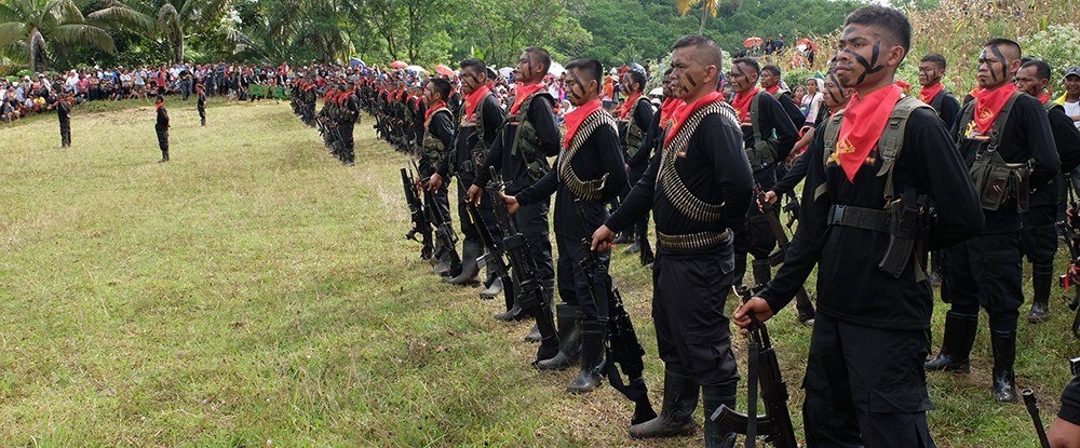
Photo Credit: Boy Bagwis of Pinoy Weekly Full battle gear: Pulang Bagani Battalion kicks off the CPP anniversary in DAVAO.
3. Self-governing in the mountains
One nation, two states — the status of belligerency endorsed by European Parliaments in the 1990s means there are two sovereign entities at war with each other. Essentially, the communists have their own standing army, defined “red areas,” laws, officials and social platforms. The virtual non-existence of any governing body to address concerns of the people coupled with the injustices of feudalism led the CPP to oversee and manage affordable basic services and social systems in the countryside as best it can. Most farmers in these areas identify as part of the People’s Government rather than the one headed from the Presidential Palace in Manila. These are also places where the people make the rules and the government follows.
A few years back, the CPP released a video showcasing a municipality run by the rebels holding an independent election for their town's leader outside of the Philippine government’s mandate.
Areas managed by people's governments over the years have also built social structures to facilitate everyday concerns. Ways on how to improve irrigation are carried out along with increasing food production and security. Literacy programs are also part of the NPA’s tasks while the health and marriage of people are taken into account as well.
Other than the Vatican, the Republic of the Philippines is the only state in the world where divorce is illegal. But the revolutionary movement has its own marriage guidelines that include same-sex unions and divorce.
4. A wealth of supporters
Despite the cancelation of the ceasefire between the NPA and the Duterte administration in February, the two parties say that negotiations can continue even during times of combat. But the truce was still in effect Dec. 26, 2016 — Mao Zedong’s (毛澤東) birthday and the anniversary of the CPP. A communist Christmas if you will, as the occasion was widely and seriously marked in guerrilla fronts nationwide.
During the latest anniversary celebration, the CPP invited the public and their sympathizers to the guerrilla zones, especially a particular one in Mindanao where a grand commemoration would be held. Government officials, nuns and priests, scholars, foreign delegates, artists and farmers were among the 15,000-strong crowd, enjoying music, dance and a festive atmosphere to the theme “People’s War is for People’s Peace.”
This was just one of the guerrilla fronts; another notable one took place in Southern Tagalog, not so far from Manila and drew in over 1,000 people. Ka Diego, a spokesman for the region, and Ka Kathryn, a vocal and iconic persona, called on young people to join the NPA and led the celebrations.
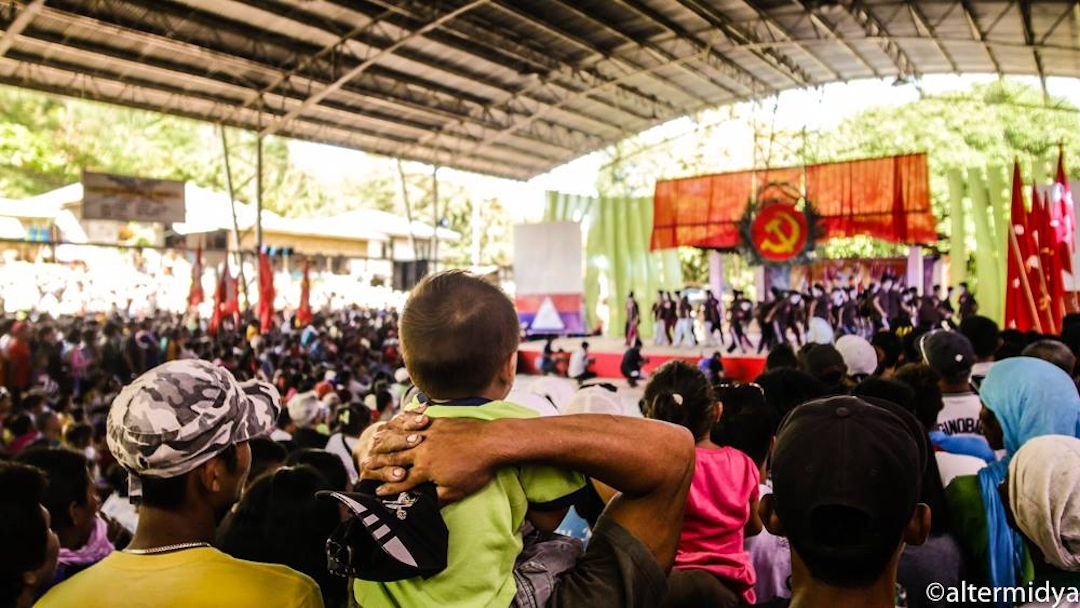
Photo Credit: Altermidya 15,000 attended last year's CPP anniversary on Dec. 26.
5. The Communist Party doesn't stop
Numerous tactical offensives since the start of the year have punished military troops of the government. It has become a common news story to feature NPA units having conducted raids on enemy camps, burning the heavy equipment of maligned large-scale mining companies and so on.
In the cities, NPA members and supporters organized parades of masked men calling on the people to join the revolution. Two parades were held in the past month — unusually frequent for an underground and illegal organization.
Every president since the inception of the NPA has had their own counter-insurgency program with the promise of eradicating the guerrillas. None have really come close to wiping out the movement. The increased rebel activity and capacity to fight over the past few years affirm this. Just one provincial formation of the NPA in northeastern Mindanao successfully launched 181 strikes and operations against military troops.
Winning battles is one thing but the red fighters are apparently even winning the hearts and minds of some of their enemies. Two prisoners of war held by the NPA for three months were recently freed and their reaction was surprising to many. They thanked the guerrillas “for giving us a second chance at life.” “You did not hurt us and freed us without a single scratch,” they said.
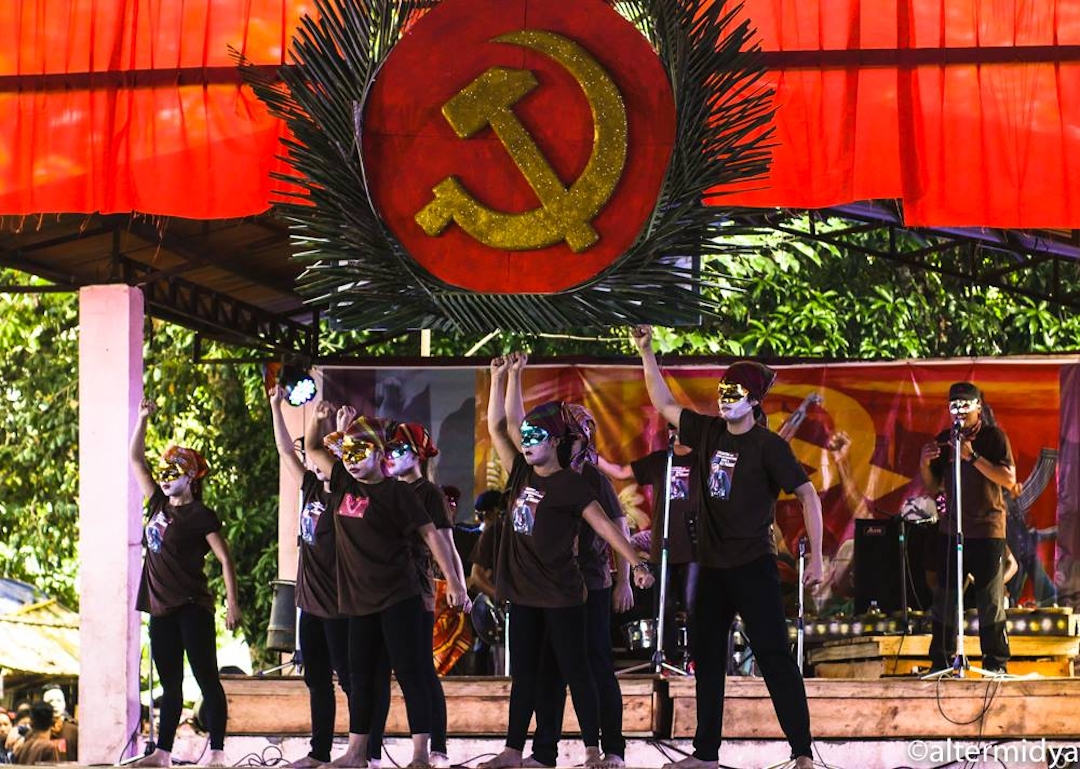
Photo Credit: Altermidya
The war is far from over. No doubt the communists know this. At this rate and with both parties at the negotiating table, the tide may finally turn in their favor.
https://international.thenewslens.com/article/67077
Ka (Comrade) Kathryn, a young NPA combatant in Southern Tagalog who has become the face of a new breed of red fighters. Photo Credit: KODAO Productions
Why you need to know: The war in the Philippines is far from over, explains Michael Beltran
The New People’s Army (NPA) is showing no signs of slowing down. The armed component of the world’s longest-running communist revolution celebrated its 48th anniversary on March 29.
NPA is led by the Communist Party of the Philippines (CPP) and was founded a year after the party in 1969. Since then, each president has vowed to quash the rebel forces while the CPP has attributed a nearly 50-year long struggle to support peasants.
The National Democratic Front (NDF), CPP’s political alliance, has been engaged in peace negotiations with the government since the start of President Rodrigo Duterte’s term. Despite some hurdles along the way, the talks have reached unprecedented milestones. The main mission of the talks is to resolve the armed conflict — namely the widespread poverty and injustice.
There have been temporary ceasefires during the talks but armed encounters between the rebels and military have persisted. Being in the spotlight, the NPA has had a unique opportunity to further open up to the public, and public figures are responding. Environment Secretary Gina Lopez said last week that she “loved the NPA, ” which she described as “nice people” that she wanted to work with to safeguard environmental concerns.
According to the CPP, guerrilla fronts have been established in most of the country’s rural areas since 1977, a vast majority of the landscape. By 2013, CPP leadership had declared that the NPA operates in 71 out of 81 provinces.
This number doesn’t come as a surprise. It’s not uncommon for folks in far-flung areas to occasionally share tales of meeting the armed revolutionaries.
NPA spokesperson Ka (the Filipino prefix for “comrade”) Oris has said that the number of tactical offensives increases by the hundreds each year. This is especially true in Mindanao — the southernmost region of the country and a perceived stronghold for the rebels.
Communist parties and revolutionary armies are certainly not passé in the Philippines. A hundred years after Vladimir Lenin led the October Revolution, an armed struggle for liberation and establishing socialism is still very much a thing of the present in the Philippines. Here are five reasons why:
1. Persistent reasons to carry on the fight
Aside from the chokehold American imperialism has on the country, feudalism reigns over the nation’s countryside. There are 13,000 hectares of agricultural land but seven out of 10 farmers are without any land of their own.
Landlordism in its barest and most backward stature is very much at the heart of these feudal systems. I have seen farmers harvesting only once a year, living off sweet potatoes the rest of the time. Their farming tools and methods have been inherited from the Spanish era 400 years ago and do not produce nearly enough for them to avoid hunger.
I have seen sacks of rice and vegetables placed down in front of landlords by tenants who in return receive what amounts to spare change. I have seen flowers, fruits and even children offered in a festive manner to landlords as forced tribute. Land monopolies, landlessness and a destitute peasant class have crystallized the conditions for armed uprisings.
The nation has shown increasingly alarming displays of social inequality. According to the World Bank in 2015, the Philippines has the highest unemployment rate in Southeast Asia. In the last six years, the net worth of the 40 richest Filipino families grew from 14 percent to 24 percent of the GDP, and the total income of the 25 richest individuals in 2016 is equivalent to that of 76 million Filipinos.
It doesn’t take much for marginalized, impoverished and hungry Filipinos to see that “history needs a push.”
2. Strong revolutionary tradition
Contrary to the laid back and hospitable nature of Filipinos, our history is one of constant conflict. Filipinos have been fighting foreign intervention and local elites ever since Magellan arrived in 1521.
Throughout the 300-year Spanish colonial period, more or less 200 revolts of various sizes and aims broke out. The 1986 revolution led by Andres Bonifacio took this a step further by establishing a national network of rebels.
The Spanish were replaced by the American occupation in the early 1900s and early Marxists in the country established the first communist party in 1930. By World War II and the Japanese takeover, the CPP had established an anti-colonial force in the Hukbong Bayan Laban sa Hapon (People’s Anti-Japanese Army), or HUKBALAHAP.
The re-establishment of the CPP in 1968 quickly led to the formation of the NPA a year later. Youngblood of the new CPP took inspiration from the “unfinished revolution” of Bonifacio for national liberation and democracy.
Photo Credit: Boy Bagwis of Pinoy Weekly Full battle gear: Pulang Bagani Battalion kicks off the CPP anniversary in DAVAO.
3. Self-governing in the mountains
One nation, two states — the status of belligerency endorsed by European Parliaments in the 1990s means there are two sovereign entities at war with each other. Essentially, the communists have their own standing army, defined “red areas,” laws, officials and social platforms. The virtual non-existence of any governing body to address concerns of the people coupled with the injustices of feudalism led the CPP to oversee and manage affordable basic services and social systems in the countryside as best it can. Most farmers in these areas identify as part of the People’s Government rather than the one headed from the Presidential Palace in Manila. These are also places where the people make the rules and the government follows.
A few years back, the CPP released a video showcasing a municipality run by the rebels holding an independent election for their town's leader outside of the Philippine government’s mandate.
Areas managed by people's governments over the years have also built social structures to facilitate everyday concerns. Ways on how to improve irrigation are carried out along with increasing food production and security. Literacy programs are also part of the NPA’s tasks while the health and marriage of people are taken into account as well.
Other than the Vatican, the Republic of the Philippines is the only state in the world where divorce is illegal. But the revolutionary movement has its own marriage guidelines that include same-sex unions and divorce.
4. A wealth of supporters
Despite the cancelation of the ceasefire between the NPA and the Duterte administration in February, the two parties say that negotiations can continue even during times of combat. But the truce was still in effect Dec. 26, 2016 — Mao Zedong’s (毛澤東) birthday and the anniversary of the CPP. A communist Christmas if you will, as the occasion was widely and seriously marked in guerrilla fronts nationwide.
During the latest anniversary celebration, the CPP invited the public and their sympathizers to the guerrilla zones, especially a particular one in Mindanao where a grand commemoration would be held. Government officials, nuns and priests, scholars, foreign delegates, artists and farmers were among the 15,000-strong crowd, enjoying music, dance and a festive atmosphere to the theme “People’s War is for People’s Peace.”
This was just one of the guerrilla fronts; another notable one took place in Southern Tagalog, not so far from Manila and drew in over 1,000 people. Ka Diego, a spokesman for the region, and Ka Kathryn, a vocal and iconic persona, called on young people to join the NPA and led the celebrations.
Photo Credit: Altermidya 15,000 attended last year's CPP anniversary on Dec. 26.
5. The Communist Party doesn't stop
Numerous tactical offensives since the start of the year have punished military troops of the government. It has become a common news story to feature NPA units having conducted raids on enemy camps, burning the heavy equipment of maligned large-scale mining companies and so on.
In the cities, NPA members and supporters organized parades of masked men calling on the people to join the revolution. Two parades were held in the past month — unusually frequent for an underground and illegal organization.
Every president since the inception of the NPA has had their own counter-insurgency program with the promise of eradicating the guerrillas. None have really come close to wiping out the movement. The increased rebel activity and capacity to fight over the past few years affirm this. Just one provincial formation of the NPA in northeastern Mindanao successfully launched 181 strikes and operations against military troops.
Winning battles is one thing but the red fighters are apparently even winning the hearts and minds of some of their enemies. Two prisoners of war held by the NPA for three months were recently freed and their reaction was surprising to many. They thanked the guerrillas “for giving us a second chance at life.” “You did not hurt us and freed us without a single scratch,” they said.
Photo Credit: Altermidya
The war is far from over. No doubt the communists know this. At this rate and with both parties at the negotiating table, the tide may finally turn in their favor.
https://international.thenewslens.com/article/67077
Pag-asa, Kalayaan islands ours; all PH activities there legal – DFA
From the Philippine Daily Inquirer (May 2): Pag-asa, Kalayaan islands ours; all PH activities there legal – DFA
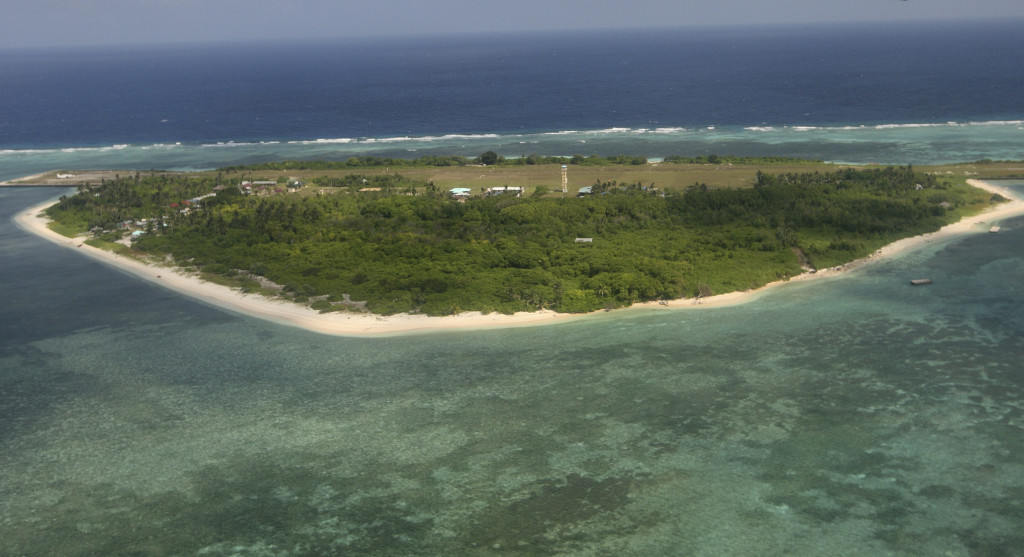
Pag-Asa Island (AP Photo/Rolex Dela Pena, Pool, File)
The Department of Foreign Affairs (DFA) has maintained that Pag-asa Island and the Kalayaan Island Group are part of Philippine territory and any activity in them are perfectly legal.
The pronouncement on Tuesday was in response to Chinese ambassador to the Philippines Zhao Jianhua who claimed that the occupation of and any activity on the islands by the Philippines were illegal.
Foreign affairs spokesperson Robespierre Bolivar said the “Pag-asa Island and the larger Kalayaan Island Group are a municipality of Palawan.”
Bolivar further said, “Any visit of activity we undertake there are part and parcel of our Constitutional mandate to ensure the safety, well-being, and livelihood of our citizens living in this municipality.”
Residents in the area are mostly Filipinos, according to Bolivar.
On Monday, Zhao was asked by reporters on the April 21 incident where a C-130 aircraft bearing Philippine secretary of defense Delfin Lorenzana and the top military brass was reportedly harassed by the Chinese military as the plane headed for Pag-asa Island.
The Chinese envoy to the Philippines said that it was common practice to warn aircraft that “intrude” in their territory.
He was further quoted as saying that the Philippine occupation of Pag-asa Island as well as the construction of structures on the island were illegal, although he assured Filipinos that China — as a policy — would negotiate to resolve the matter peacefully
President Duterte previously directed the defense secretary to repair and upgrade existing facilities and structures on Pag-asa Island as he ordered the military to occupy Philippine-inhabited islands and reefs on the West Philippine Sea to assert the country’s sovereignty over them.
https://globalnation.inquirer.net/155974/pag-asa-kalayaan-islands-ours-all-ph-activities-there-legal-dfa
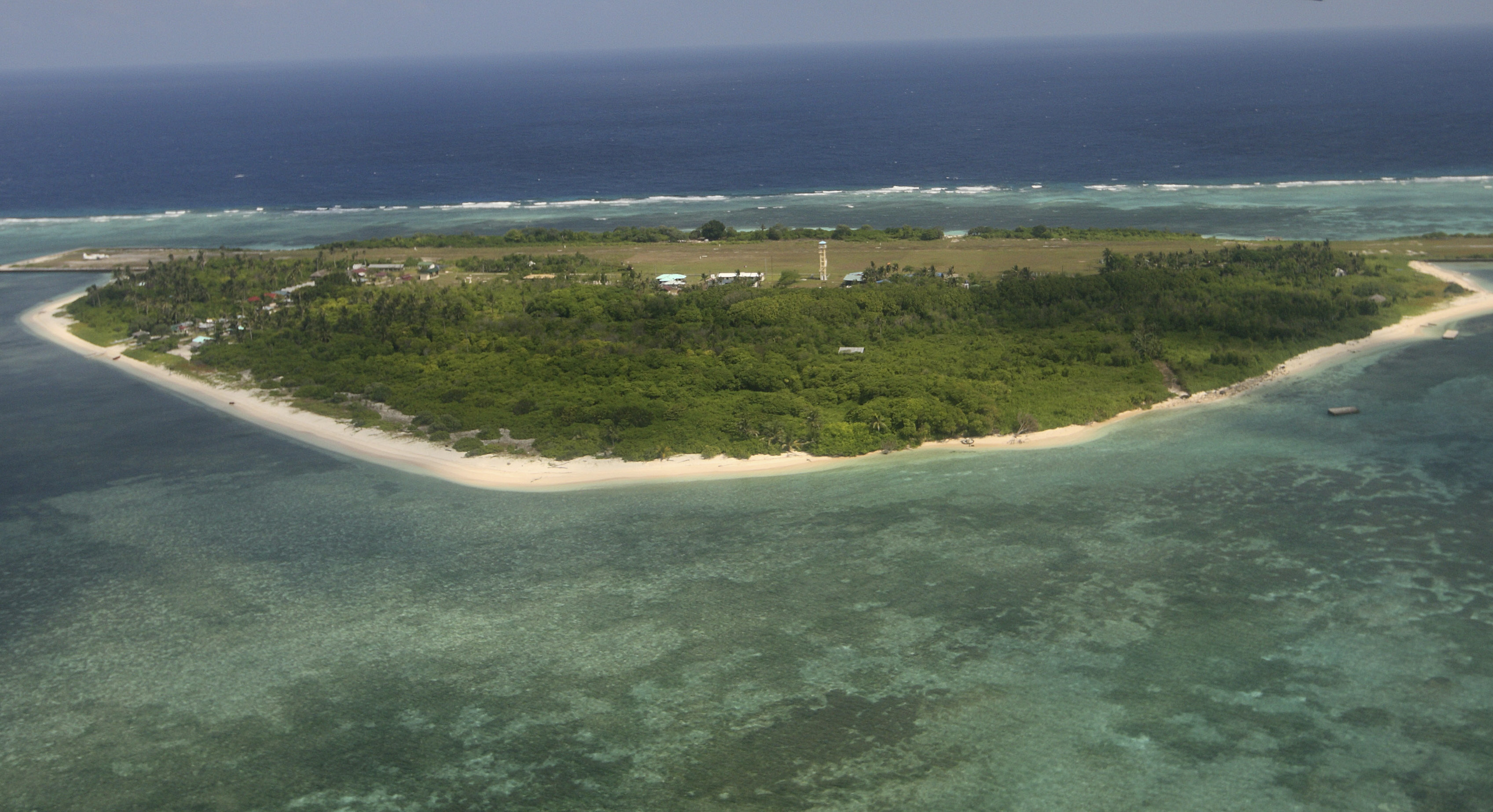
Pag-Asa Island (AP Photo/Rolex Dela Pena, Pool, File)
The Department of Foreign Affairs (DFA) has maintained that Pag-asa Island and the Kalayaan Island Group are part of Philippine territory and any activity in them are perfectly legal.
The pronouncement on Tuesday was in response to Chinese ambassador to the Philippines Zhao Jianhua who claimed that the occupation of and any activity on the islands by the Philippines were illegal.
Foreign affairs spokesperson Robespierre Bolivar said the “Pag-asa Island and the larger Kalayaan Island Group are a municipality of Palawan.”
Bolivar further said, “Any visit of activity we undertake there are part and parcel of our Constitutional mandate to ensure the safety, well-being, and livelihood of our citizens living in this municipality.”
Residents in the area are mostly Filipinos, according to Bolivar.
On Monday, Zhao was asked by reporters on the April 21 incident where a C-130 aircraft bearing Philippine secretary of defense Delfin Lorenzana and the top military brass was reportedly harassed by the Chinese military as the plane headed for Pag-asa Island.
The Chinese envoy to the Philippines said that it was common practice to warn aircraft that “intrude” in their territory.
He was further quoted as saying that the Philippine occupation of Pag-asa Island as well as the construction of structures on the island were illegal, although he assured Filipinos that China — as a policy — would negotiate to resolve the matter peacefully
President Duterte previously directed the defense secretary to repair and upgrade existing facilities and structures on Pag-asa Island as he ordered the military to occupy Philippine-inhabited islands and reefs on the West Philippine Sea to assert the country’s sovereignty over them.
https://globalnation.inquirer.net/155974/pag-asa-kalayaan-islands-ours-all-ph-activities-there-legal-dfa
Informant gets P1.1-M for death of Abu leader
From the Visayan Daily Star (May 2): Informant gets P1.1-M for death of Abu leader
An informant got richer by P1.1 million for the neutralization and death of Abu Sayyaf leader Joselito Milloria in Bohol last week.
Maj. Gen. Jon Aying, 3rd Infantry Division commander, who supervises Army units stationed in Negros Island Region, Western and Central Visayas, including Bohol, said the reward of P1 million, which came from President Rodrigo Duterte, and a counterpart of P100,000 given by Governor Edgar Chatto, was recently received by the informant, whose identity he has withheld for security reasons, from the AFP Central Command.
The discovery of the presence of Abu Sayyaf bandits in Bohol, led to a series of armed skirmishes between ASG bandits, troopers of the 47 th Infantry Battalion, 33rd Division Reconnaissance Company and the police, and led to the death of six terrorist group members, including the two ASG leaders.
Aying attributed their successful campaign against ASG bandits to timely information relayed to them by Boholanos.
President Duterte ordered the military and police to “finish the game” and hunt down the ASG remnants. A police official and her lover, a member of the Abu Sayyaf terrorist group, were also intercepted by 3ID troopers at a checkpoint, following the death of Milloria and two others.
The series of encounters in Bohol also caused alarm to nearby island provinces that are known tourist destinations.
Aying allayed fears about spillover of violent extremism to other areas of the Visayas, including the Negros Island Region, saying that they have not received such reports, as of this time.
“But still, we are working hard to verify if there are really vulnerable people or communities. If there are, then we have to apply our approach in preventing violent extremism,” said Aying, who led the celebration of the 43rd founding anniversary of the 3rd Infantry Division here, with Maj. Gen. Harold Cabreros, Army vice-commander, as guest of honor and speaker.
Aying also stressed that there is no ASG supporter or collaborator in their areas of operation.
Cabreros commended the 3ID troops, under the leadership of Aying, for a job well done.
http://www.visayandailystar.com/2017/May/02/topstory3.htm
An informant got richer by P1.1 million for the neutralization and death of Abu Sayyaf leader Joselito Milloria in Bohol last week.
Maj. Gen. Jon Aying, 3rd Infantry Division commander, who supervises Army units stationed in Negros Island Region, Western and Central Visayas, including Bohol, said the reward of P1 million, which came from President Rodrigo Duterte, and a counterpart of P100,000 given by Governor Edgar Chatto, was recently received by the informant, whose identity he has withheld for security reasons, from the AFP Central Command.
The discovery of the presence of Abu Sayyaf bandits in Bohol, led to a series of armed skirmishes between ASG bandits, troopers of the 47 th Infantry Battalion, 33rd Division Reconnaissance Company and the police, and led to the death of six terrorist group members, including the two ASG leaders.
Aying attributed their successful campaign against ASG bandits to timely information relayed to them by Boholanos.
President Duterte ordered the military and police to “finish the game” and hunt down the ASG remnants. A police official and her lover, a member of the Abu Sayyaf terrorist group, were also intercepted by 3ID troopers at a checkpoint, following the death of Milloria and two others.
The series of encounters in Bohol also caused alarm to nearby island provinces that are known tourist destinations.
Aying allayed fears about spillover of violent extremism to other areas of the Visayas, including the Negros Island Region, saying that they have not received such reports, as of this time.
“But still, we are working hard to verify if there are really vulnerable people or communities. If there are, then we have to apply our approach in preventing violent extremism,” said Aying, who led the celebration of the 43rd founding anniversary of the 3rd Infantry Division here, with Maj. Gen. Harold Cabreros, Army vice-commander, as guest of honor and speaker.
Aying also stressed that there is no ASG supporter or collaborator in their areas of operation.
Cabreros commended the 3ID troops, under the leadership of Aying, for a job well done.
http://www.visayandailystar.com/2017/May/02/topstory3.htm
Subscribe to:
Posts (Atom)