Friday, January 29, 2016

Bayan taunts US ambassador on Mamasapano, expulsion from Bolivia

From the Philippine Daily Inquirer (Jan 29): Bayan taunts US ambassador on Mamasapano, expulsion from Bolivia
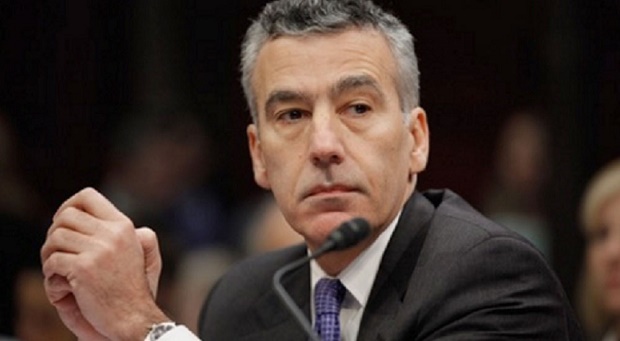
US Ambassador to the Philippines Philip Goldberg. AFP FILE PHOTO

US Ambassador to the Philippines Philip Goldberg. AFP FILE PHOTO

Militant group Bagong Alyansang Makayaban (Bayan) on Friday hit US ambassador Philip Goldberg for his statements on the Mamasapano incident, saying it is not the first time that the envoy involved himself in a country’s local operations.

“Goldberg is one to speak of legal framework. He was previously expelled from Bolivia also for interfering in that country’s internal affairs,” Bayan spokesperson Nato Reyes said in a text message to media.

It was in 2008 when Bolivian President Evo Morales declared Goldberg “persona non grata” from his country. Morales accused Goldberg of “conspiring against democracy and seeking the division of Bolivia.”

READ: New US envoy acceptable to PH, says Del Rosario

Goldberg, in a television interview, said the support America offered during the controversial Mamasapano operation was “within the legal framework” of the Philippines and the United States.

It was earlier revealed that the US provided intelligence and humanitarian and medical evacuation during the botched covert operation, which succeeded in killing international terrorist Zulkifli bin Hir (alias Marwan) but resulted in the deaths of more than 60 people.

READ: US involvement questioned

“The US JSOTFP’s (Joint Special Operations Task Force – Philippines’) direct participation in a combat operation, in a domestic police operation in Mamasapano, is not covered by any existing agreement, contrary to what Amb. Goldberg is claiming,” Reyes said.

“The VFA (Visiting Forces Agreement) and the [Philippine] constitution do not allow such direct involvement. What happened in Mamasapano was illegal and [a] violation of our sovereignty,” he added.

Reyes said the US cannot “invoke” its “war on terror” to violate Philippine laws.
“In Mamasapano, Filipino lives were sacrificed because of the US obsession to get Marwan. The US was not concerned at all with the chain of command, the peace process, civilian casualties, and the resulting carnage. All they wanted was confirmation of Marwan’s death,” he explained.

“That is why we can never let a foreign government take the lead in any domestic operation. Their interests are not identical to ours,” he said.

The role of the US in the Mamasapano operation has long been questioned by critics of the US and the Aquino administration.

While Goldberg has insisted that the US was not involved in the planning and execution of the operation, testimonies during Senate hearings assert that the US provided real-time intelligence support, training and equipment to the Philippine National Police’s Special Action Force (SAF).

The US was also responsible for the identification of Marwan through DNA testing.

Senate Minority Leader Juan Ponce Enrile asked why the US provided intelligence on a “purely police matter.” He added that the VFA only covers military cooperation between the two countries.

“This is something that the government must explain, why they have allowed a police matter to include US participation. I’m not saying that I’m correct, but this has to be looked into,” Enrile said during the last hearing. CDG

READ: Bayan seeks FBI’s help to uncover US role in Mamasapano

On January 25, 2015, 44 members of the Philippine National Police’s Special Action Force (SAF) were killed in the hunt for Malaysian terrorist Zulkifli Abdhir, aka “Marwan,” in Mamasapano, Maguindanao province. Their mission may have succeeded, but one year later families of the slain SAF44 and affected civilians today continue to seek justice from a government which allegedly broke chain of command and poorly handled the mission. Visit the INQUIRER tribute site at inquirer.net/mamasapano.
 

MILF's Iqbal: 'If one wants to enjoy life, never spend it as a negotiator'

From InterAksyon (Jan 29): MILF's Iqbal: 'If one wants to enjoy life, never spend it as a negotiator'


Center for Humanitarian Dialogue Philippines senior program manager Camilo Montesa, Government peace negotiating panel chairperson Professor Miriam Coronel-Ferrer, European Union Ambassador Franz Jessen, and MILF peace negotiating panel chairman Mohagher Iqbal at the book launch of Journey to the Bangsamoro. Photographed by Tricia Aquino, InterAksyon.com

"If one wants to enjoy life, never spend it as a negotiator."

This was how Moro Islamic Liberation Front (MILF) peace negotiating panel chairman Mohagher Iqbal opened his speech at the launch of "Journey to the Bangsamoro", a compilation of three books about the history of the peace process between the Philippine government and the MILF, on Monday at the Shangri-la Hotel in Makati City.

The EU, with the MILF and the center for Humanitarian Dialogue, launched the publication together.

'Not easy'

"Negotiation is never fun. It isn't easy," Iqbal said. "I confess that there are far more bitter memories of the negotiations than the good ones ... The good ones can be counted on our fingers."

The two sides had been working on the peace process for over 17 years, in negotiations that had been disrupted by the rise of the hostile breakaway group Bangsamoro Islamic Freedom Fighters in 2011; the storming of Lahad Datu, Sabah, by followers of the late Sultan of Sulu Jamalul Kiram III in 2013; and the standoff in Zamboanga City between members of the Moro National Liberation Front (MNLF) and government troops in the same year.

Iqbal also recalled a time when, as acting chair of the MILF peace panel from 1999 to 2000, he witnessed government troops opening fire on "the fringes" of Camp Abubakar, even as a government negotiator insisted that there was no plan to enter the MILF's camp.

But, perhaps, the most infamous of them all was the battle in Mamasapano, which unraveled exactly a year ago, where 44 commandos of the police's Special Action Force (SAF), 18 MILF fighters, and five civilians were killed in SAF's pursuit of Malaysian terrorist Zulkifli bin Hir, alias Marwan, and two local cohorts.

GPH peace negotiating panel chairperson Professor Miriam Coronel-Ferrer, on the other hand, acknowledged that critics might frown upon the choice to launch "Journey to the Bangsamoro" on the first anniversary of the Mamasapano debacle.

Affirm commitment to end the conflict

But for those involved in the peace process, she said, "Today is the best day to affirm the commitment of both parties to end the conflict and achieve the needed social, economic, and political reform that will sustain the peace and bring about happier beginnings and endings in the lives of the people."

She pointed out that it was also on January 25, two years ago, that the last annex that sealed the Comprehensive Agreement on the Bangsamoro was signed: the one on normalization, and the addendum on Bangsamoro waters.

It was difficult to find an "inclusive and pragmatic solution" that addressed the concerns of the Bangsamoro as well as the diverse needs of the affected population.

"The talks were characterized by hard bargaining," Ferrer said. Add to that the complications of the aforementioned events, particularly Mamasapano.

Battle of Mamasapano

"That it happened after the agreement indicates that, if negotiations are difficult, more so the implementation, as we have seen in different parts of the world that have gone through the same politically negotiated agreements," she said. "But ... the fact that we were able to achieve agreement despite all the previous disruptive events also manifests that difficulties are not insurmountable. With determination and support from many sectors, these difficulties may cause setbacks, yes, but not the collapse of a generally healthy process."

Unfortunately, Iqbal acknowledged, the culmination of all that effort – the Bangsamoro Basic Law (BBL) – would be forgotten in the final days of President Benigno Aquino III's administration.

"Chances are high that it will not pass at all," Iqbal said. "If it will not pass in these three days, I don't think it will ever pass at all."

Ferrer said the congressional hearings on the BBL had to give way to the hearings on the Mamasapano tragedy, and the involvement of the MILF in the fight affected public perception negatively.

45 public hearings

Nevertheless, both chambers had already conducted 45 public hearings at the committee level on the BBL. They had also spent "millions in taxpayers' money", as well as numerous session days, on the same.

"Legislators who say that the bill is being rushed have all the opportunity to correct whatever perceived flaws they have on the draft law, since these are all within their powers," she said. "But they cannot accomplish the task if they are not inside the session hall during the deliberations."

She pointed out that Presidential Adviser on the Peace Process (OPAPP) Secretary Teresita Quintos-Deles was in talks with the MNLF in Jeddah to see how elements of the peace agreement with the MNLF which had not been fully implemented could "find realization in the BBL."

"So at no other time in the history of these difficulties, this conflict, have we found this right moment for the convergence of both the MNLF and MILF," Ferrer said.

Peaceful transformation

She warned that not passing the BBL would mean "scuttling" an initiative where the MNLF and the MILF could work together "for peaceful transformation of the region under the Bangsamoro government."

The BBL would have settled the government's conflict with the MILF, allowing government troops to deal more effectively with "other groups" in the region, as well as the dispute over the West Philippine Sea.

"If we lose another year, or even more, in bringing about the turnaround in Muslim Mindanao, we set back the socioeconomic programs, the reconciliation measures, and the decommissioning of weapons and combatants of the MILF and other armed groups. We might lose the hearts and minds of many of the people there, especially the youth, and increase the risk of radicalization," Ferrer added.

"And that's the one we want to arrest by making sure that moderation prevails. And that's what the MILF has shown us: the kind of moderate leadership and a moderate path that will allow them to achieve the historical aspirations," she underscored.

Peace and stability vital for EU

European Union Ambassador Franz Jessen stressed that peace and stability in Mindanao is vital for the EU, given that it affects the decisions made by businessmen who would want to invest in the Philippines.

Despite the seriousness of the subject, Iqbal and Ferrer were able to exchange pleasantries, with the latter calling him "ever the poker-faced negotiator, the hardest one to read among the members of the panel" who carried his team "through the joys and travails" of the journey.

For his part, Iqbal called his counterpart "steely" and "committed to overcome all the trials, tribulations, and obstacles along the way."
http://www.interaksyon.com/article/123435/milfs-iqbal-if-one-wants-to-enjoy-life-never-spend-it-as-a-negotiator

Radicals may ride on death of BBL, says House leader

From the Philippine Daily Inquirer (Jan 28): Radicals may ride on death of BBL, says House leader

Mindanao solons in the House of Representatives lamented the failure of Congress to pass the proposed Bangsamoro basic law (BBL), raising fears the death of the bill would only fuel the radicalization of the Islamic faith.

Deputy Speaker Pangalian Balindong on Thursday led a press conference with Maguindanao and Cotabato City Rep. Bai Sandra Sema and Sulu Rep. Tupay Loong.

Balindong, who represents Lanao del Sur, said “there is no more room for hope in my heart” and that he has “closed all hopes for peace.”

“What will take place after this, I cannot say; history will be our judge,” Balindong said.

He said Congress’ failure to pass the BBL, now called the Basic Law for the Bangsamoro Area of Responsibility, may fuel the radical secessionist movement in Mindanao, especially at the wake of the Islamic State of Iraq and Syria (ISIS).

“The non-approval of the BBL would be a good recipe for radicalization. If we speak of radicals and militants, they usually thrive on situations like this. If the BBL is not approved, then they will try to ride on the situation,” Balindong said.

He compared the influence of ISIS to electricity, which cannot be seen but can certainly be felt.

“We don’t see now the ISIS, or how they are organized, of if there are ISIS in our areas. But you can feel their presence,” Balindong said of the reported influence of the radical group in Mindanao.

Balindong said it will now take a miraculous political will to pass the BBL just before Congress takes its break on Feb. 5.

“Maybe political will can take the place of [a] miracle. If there’s a political will, it could happen,” Balindong said.

“But I certainly don’t believe in miracles,” he added.

For his part, Loong, a former commander in the Moro National Liberation Front (MNLF), said the failure in passing the BBL may only fuel the ongoing secessionist movement led by the MNLF and its breakaway group the Moro Islamic Liberation Front (MILF), and another splinter group the Bangsamoro Islamic Freedom Fighters (BIFF).

“To be honest, there is still a certain war, although we are discussing this Bangsamoro basic law, there are certain armed elements fighting. The BIFF and the MNLF is the biggest group fighting against government,” Loong said.

“I’m afraid this would result again into a certain war, because we cannot control the people fighting for peace, fighting for justice and for their own interests,” Loong added.

Loong said he would leave it up to the next administration to take up the cause for a more politically autonomous Bangsamoro region.

Balindong, who is finishing his last term, said he would leave it to the next batch of lawmakers to take up the Bangsamoro cause.

But he said he could not be sure if the next administration would be as sincere in pursuing peace as the Aquino government.

Balindong lamented the death of the BBL which took 17 years of negotiations to come to a peace agreement with the MILF.

“I’m not saying wala akong tiwala sa (I have no faith in the) next administration… We’re not sure if the next administration would adopt the policy of the present administration,” Balindong said.

Loong said if reelected he would refile the bill in Congress.

In a privilege speech Wednesday night, Balindong cited the lack of quorum and the Mamasapano incident for causing the failure of Congress to pass the administration’s pet piece of legislation.

READ: House leader gives up hope on BBL passage: We failed next generation

Balindong said his colleagues seemed not eager in passing the bill because they skip sessions. He also said his fellow congressmen and women are the ones who express bias and hatred against their Muslim counterparts.

He also said the Jan. 25, 2015 Mamasapano incident, a botched antiterror raid where 67 persons died in a firefight between the Special Action Force (SAF) policemen and MILF, derailed the prompt passage of the bill.

In the same press conference, Balindong reiterated his statement, saying some representatives seemed to have “vested interests” in opposing the BBL.

“There are colleagues who have a mindset against the Muslims, maybe because of vested interests in our area. When we started hearings on the BBL, maganda ang takbo namin (the flow went well). There was optimism all around. Pero towards the end, lalo na (especially) when the Mamasapano (happened), nag-iba situation (the situation changed),” Balindong said.

“We would not identify the people who display bias, but this is a mindset. We cannot deny that,” he added.

The BBL seeks to implement the government peace deal with the MILF in creating a more politically autonomous Bangsamoro region.

While her two colleagues were passionate about their statements, Sulu Rep. Sema has only a few words to explain her disappointment.

Sema, the wife of MNLF Chairman of the Central Commitee Muslimin Sema, seemed to be holding back tears.

“I did not prepare my speech. I’m sad, disappointed and frustrated,” Sema only said.

http://newsinfo.inquirer.net/759677/radicals-may-ride-on-death-of-bbl-says-house-leader

Court denies Palparan’s plea for bail, again

From the pro-CPPNDF online propaganda publication Bulatlat (Jan 29): Court denies Palparan’s plea for bail, again

palparan 2

Retired Maj. Gen. Jovito Palparan failed to get the court to grant him temporary release.

A Bulacan court denied retired Maj. Gen. Jovito Palparan Jr.’s motion for reconsideration for his motion to bail from kidnapping and serious illegal detention cases filed against him in relation to the disappearance of two students of the University of the Philippines (UP) in 2006.

 In a decision dated Jan. 22, Bulacan Regional Trial Branch 15 Judge Alexander Tamayo said Palparan’s motion for the court to reconsider its Dec. 14 ruling did not present anything new or compelling grounds and “merely lifted from the summary findings of the court in evaluating the weight of the evidence presented for purposed of bail.”

Tamayo said that the prosecution had presented strong evidence on the charges against him, and that it is now up to Palparan to refute them.

He added that for purposes of bail, Palparan’s testimony alone cannot overturn the strong evidence presented by the prosecution.

  On Nov. 5 last year, Palparan took the witness stand and said that they “cleared” villages that were “infested” with New People’s Army members as part of the government counterinsurgency program.

He admitted that the clearing operations included physically disappearing the “infestation.”

 The next trial date is set on Feb. 4.

http://bulatlat.com/main/2016/01/29/court-denies-palparans-plea-for-bail-again/

Military camp to rise in Zamboanga City

From the Sun Star-Zamboanga (Jan 29): Military camp to rise in Zamboanga City

THE Department of National Defense (DND) has allocated P50 million for the construction of a military facility in the Zamboanga siege area.

The military facility is to be constructed in the village of Rio Hondo that will take charge of the security measures in the villages and the neighboring areas.

The village of Rio Hondo along with Mariki, Sta. Barbara, and Sta. Catalina have been dubbed as "ground zero" area as it was the center of the fighting between the government forces and Moro National Liberation Front (MNLF) members during the 21-day September 2013 siege.

Ground zero means the central point in an area of fast change or intense activity, according to the Merriam-Webster.

Mayor Ma. Isabelle Climaco-Salazar said the National Government has already finalized the acquisition of the Mindeva property in the village of Rio Hondo where the military base will be constructed.

Salazar said the property cost of P50 million will be funded by the National Government through the DND in coordination with the Department of Public Works and Highways.

She said the groundbreaking ceremony will take place soon with DND Undersecretary Alexander Pama, who is also the executive director for the National Disaster Risk Reduction and Management Council (NDRRMC) leading the rites.

The military facility forms part of the Zamboanga City Roadmap to Recovery and Reconstruction plan intended to improve the overall environment of the communities affected by the siege.

http://www.sunstar.com.ph/zamboanga/local-news/2016/01/29/military-camp-rise-zamboanga-city-454411

Abu Sayyaf tagged in Sulu videoke bar blast

From the Philippine Star (Jan 29): Abu Sayyaf tagged in Sulu videoke bar blast


No one was reported injured from the videoke bar blast in Jolo, Sulu. Google Earth

Suspected Abu Sayyaf bandits slipped in an improvised bomb into a videoke bar which exploded Thursday night in a village in Jolo, Sulu, according to security official.

Brig. Gen. Alan Arrojado, commander of the Joint Task Group Sulu (JTGS), said the blast only damaged the videoke bar which belonged to former Talipao town vice mayor Mijan Hashim in Barangay Bus-bus. No one was reported injured from the blast.

Police investigation disclosed that two unidentified men entered the establishment with a baggage but hurriedly left on board a motorcycle.

Arrojado said employees of the videoke bar could not identify the suspects who left the baggage inside which contained improvised explosive device (IED).

Authorities believed the IED was remotely detonated through a mobile phone.

Responding personnel of the explosive ordnance disposal (EOD) team recovered from the blast site debris of cellphone and electrical wire believed to be parts of the IED.

The explosion occurred despite heightened security following a bomb attempt on the patrol car of the 6th Maneuver Platoon of the police’s Provincial Public Safety Company (PPSC) Wednesday at Kasalamatan Street, Barangay San Raymundo.

Military also foiled another bomb plot in the downtown of Isabela City, Basilan Wednesday when intelligence units tracked suspected bombers trying to slip off IED near the cathedral.

The suspects on board a motorcycle were forced to abandon the IED near a bazaar and escaped.
Responding police and military EOD teams defused the bomb concealed in a cooking pot.

http://www.philstar.com/nation/2016/01/29/1547617/abu-sayyaf-tagged-sulu-videoke-bar-blast

Meet the small-town mayor risking her life to fight for peace in rural Philippines

From Quartz (Jan 28): Meet the small-town mayor risking her life to fight for peace in rural Philippines


A teenage recruit of the New Peoples Army (NPA), back in 2004. (Reuters)

A half-built concrete road connects the little town of Matuguinao with the outside world. It cuts through the rugged hills and lush rainforest of Samar, the easternmost island of the Philippines, where infrastructure is scarce and 45% of the population lives in poverty.

Before the road opened in 2011, the only way Matuguinao’s 6000 inhabitants could reach the nearest neighboring town Gandara was by boat.

An army checkpoint a few miles inland bears evidence of the importance of this road, built with the help of the military. It leads to one of the last strongholds of the National People’s Army (NPA), a 47-year-old communist guerilla organization—long forgotten by the rest of the world.

One afternoon this summer, Melissa Dela Cruz, the mayor of Matuguinao, was having a busy day. About four barangay captains—or village chiefs—all of them women, were gathered at her wooden house, which also functions as her office. They were representing about 100 people from far-flung villages who had arrived in Mataguinao the night before, fleeing gun fighting between the NPA and the Armed Forces of the Philippines.
 
“In Matuguinao we have natural calamity and man-made calamity,” Dela Cruz told Quartz, rather humorously. “Living things are dying, plants and people.” Man-made calamity here is endless, but warring government forces and communist guerrillas both claim to be doing what’s best for the region’s civilians.

Dela Cruz was born in Matuguinao but left the town as a teenager to pursue university studies in Cebu City, the country’s second largest, where she graduated in accountancy and law. In 2010, her father, then-mayor of Mataguinao, was assassinated while campaigning for a second-term. So Melissa decided to resign from her job, go home and run in her father’s place.

“I try to treat the NPA and the military as partners,” she says of her role today.

“The military has a right to defend institutional order, and I have to trust in the intervention of our government. But the NPA helps to maintain peace and order in the far-flung barangays. They keep crime under control and help the people a lot.”
 
Created in 1969 as an armed wing of the Communist Party of the Philippines, the NPA once saw itself as a sort of successor of the “original” people’s army —the Hukbalahap, a resistance group against the Japanese occupation during World War II. This “new” people’s army sought to overthrow through armed struggle the US-backed dictatorship of Ferdinand Marcos, in a favor of a socialist state.

In the 1990s, the NPA lost much of its foreign aid and support. There are now only about 3,000 NPA cadres in the country, according to latest military figures—far from its estimated peak of 25,000 in the 1980s. Still, the NPA survived, and continues to thrive in the thick jungle of Samar.
 
Two-thirds of Samar’s 1.8 million population live off subsistence fishing and agriculture, with almost half living in poverty—the country’s average is 25%, according to 2014 data from the Philippine National Anti-Poverty Commision.

Samar is also ground zero for East Asia’s famous typhoons, such as Haiyan, which in 2013 displaced almost a million people in the Philippines, with Samar bearing the brunt of destruction. Such weather-related challenges pose difficulties for the region to attract much-needed private investments.

This opens a vacuum ready to be filled by armed groups, which provide protection against petty crime, such as cattle rustling or domestic violence. In Samar, the NPA fills a quasi-governmental role. “When typhoon Ruby hit us in 2014, the NPA helped us to rebuild our houses,” Melissa says.

Captain Andrew Linao of the Philippines Army sees it slightly differently. “The NPA is very much embedded in the communities, and that’s why it’s difficult to defeat them,” Linao tells Quartz. “Very often members of the village councils are relatives of NPA cadres, or NPA themselves.”

Captain Linao confirmed to Quartz that the 8th Division of the Armed Forces of the Philippines, which ostensibly controls these hinterlands of Samar, is currently trying to gain territory in Matuguinao; hence, the gunfight in the villages. For this and other spates of violence and intimidation, locals are unhappy with the Army.
 
“The NPA is not the root of our problems,” Melinda Díaz, the leader of one of the evacuated barangays, tells Quartz. “The problem is the military which accuses us of supporting them. They go to our houses, demand we answer questions we don’t know the answer to, or drag us to their barracks.”

“For decades people here have endured many abuses by the military officers in the name of fighting the NPA. Trust won’t be built overnight,” says Dela Cruz.

Despite a new military program called Oplan Bayanihan designed to build support networks in villages, the outlook is not good. In March, Dela Cruz’s strongest local political ally, Alfredo Díaz, was gunned down by a paramilitary group allegedly connected with the army. A few months later, guerilla NPA fighters shot dead a sleeping two-year-old while attempting to kill someone else in town.

“I am aware that my destiny might be just as my father’s,” says Melissa. “But the barangay leaders relied on me to take his place.” And what she and her constituents demand now is nothing more than a conflict-free space in which to build their lives.

“We don’t care about either of the sides,” she says. “They fight; they are enemies. We just want to be left at peace."

Authorities eye extortion in Maguindanao bus bombing attempt

From the Philippine News Agency (Jan 29): Authorities eye extortion in Maguindanao bus bombing attempt

Authorities eye extortion as the motive in the foiled bombing attempt of a bus unit plying the Cotabato City-Gen. Santos City Thursday afternoon in Shariff Aguak, Maguindanao.

Prior to the bombing attempt, the bus firm, Husky Bus Company, has received extortion demand from a certain Abu Saddab who heads the group called “ISM,” according to Carlo Manalo, the bus firm’s Cotabato station head.

Manalo said he does not know what “ISM” means but said the group has been asking PHP2 million monthly protection money so the firm’s units will be spared from bombings.

Manalo said he received the demand through text messages an hour after the bombing attempt in Shariff Aguak Thursday morning.

He said the sender sent more messages, threatening to blow up any of its buses near a bridge so it will fall into the river or ambush its units using rifle grenades or set off improvised bombs loaded with 60 mm mortars with two kilos of cut nails inside the bus.

The bus firm’s officer said he reported everything to the local police in Cotabato City and Maguindanao.

Chief Inspector Camerlo Mungkas, Maguindanao police provincial office spokesperson, said civilians at the bus terminal noticed a grey back pack left unattended in one of the terminal benches at about 12:45 p.m.

Mungkas said police were alerted and cordoned off the area until Army bomb experts arrived and successful deactivate the IED.

Col. Lito Sobejana, military’s 601st Infantry Brigade commander, said bomb experts recovered a 60 mm mortar with an attached MK-2 fragmentation grenade, a container with gasoline and black explosive powder with a mobile phone.

Further investigation showed the mobile phone has several missed calls, indicating the bomber tried, but failed, to set off the IED.

Sobejana, quoting witnesses, said a man with a grey backpack boarded the bus in Cotabato City and alighted at Shariff Aguak public terminal at the town’s public market.

He said the man was last seen standing as the Husky bus left for Isulan, Sultan Kudarat en route to Gen. Santos City.

No one has claimed responsibility in the attempt.

Chief Inspector Mungkas has appealed to the public, especially to commuters, to alert the local police any suspicious item in the bus or anyone acting suspiciously.

He also appealed to the bus management to avoid pick-up passengers in between terminals as precautionary measures. He also suggested to bus inspectors and conductors to check all baggages that passengers carry with them.

Husky Bus Company, the lone bus firm plying the Cotabato-Maguindanao-Gen. Santos route has been subjected to several bombings in the past which authorities blamed on extortion gangs.

http://www.pna.gov.ph/index.php?idn=2&sid=&nid=2&rid=851848

22 drug users arrested in South Cotabato raid; guns, grenades seized

From the Philippine News Agency (Jan 29): 22 drug users arrested in South Cotabato raid; guns, grenades seized

Seventeen persons have been arrested by police and military authorities during anti-illegal drug raid in a village here known to be “shabu” capital of South Cotabato.

Senior Inspector Bernie Faldas, Sto. Nino town police chief, said police and military forces, armed with arrest and search warrants issued by Judge Marlo Brasales of 1st MCTC-Norala-Tboli-Sto. Nino, raided the village of Ambalgan where shabu trade “was open and publicly peddled.”

The raid was conducted at 11 a.m. and also resulted in the confiscation of 13 sachets of suspected methamphetamine hydrochloride, more known as “shabu,” firearms, a hand grenade, mobile phones, drug money and other shabu paraphernalia.

”We have been closely watching this village where shabu tiangge exists,” Faldas told reporters.

Elements of Philippine Drug Enforcement Agency, National Bureau of Investigation and the Army’s 27th Infantry Battalion, joined the raid.

Senior Inspector Dennis Madriaga, police chief of nearby Norala town, said Barangay Ambalgan served as the source of illegal drugs that proliferate in his area of operation and in nearby towns in South Cotabato.

The raid in Sto. Nino came after police operatives in Banga, about seven kilometers from Barangay Ambalgan, arrested five men, including four minors, during a raid in Barangay San Vicente, Banga, South Cotabato.

Senior Inspector Marvin Duadua, Banga town police chief, said the arrest of Joe Marquez Antonio and four minors revealed that they secure drug supply in Barangay Ambalgan.

Barangay Ambalgan has been known as drug producers in South Cotabato where shabu worth PHP25 million was confiscated in the same village last year.

Most of the 22 arrested persons in today’s raid were all positive of illegal drug use, Faldas said.

http://www.pna.gov.ph/index.php?idn=2&sid=&nid=2&rid=851945

Troops told to stay focus on mission after IED exploded in Jolo, Sulu

From the Philippine News Agency (Jan 29): Troops told to stay focus on mission after IED exploded in Jolo, Sulu

The government troops are directed to stay focus on their mission in pursuing the Abu Sayyaf Group (ASG) brigands in Sulu province.

Brig. Gen. Alan Arrojado, Joint Task Group Sulu commander, issued the order on Friday after suspected ASG brigands have detonated an improvised explosive device (IED) in Jolo, the province’ capital town.

Arrojado said the improvised bomb explosion occurred around 7:35 p.m. Thursday inside a videoke bar in Sitio Basabasa, Barangay Bus-Bus, Jolo.

Arrojado said no one was either killed or injured during the explosion at the videoke bar owned by former Vice Mayor Mijan Hasim of Talipao, Sulul.

The videoke bar is located adjacent to the Gate 1 of Camp General Teodulfo Bautista, which houses the Joint Task Group Sulu headquarters.

Arrojado said two unidentified motorcycle-riding customers were seen to have entered the establishment prior to the explosion.

He said they left 30 minutes later and “subsequently and IED exploded.”

He said the responding troops have recovered from the blast site parts of cellular phone believed to be the triggering device, wires and explosive particles.

He said the incident could be part of the diversionary effort by the ASG brigands to confuse and misled the troops “especially now that the operating troops are closing in on the known ASG lairs.”

The government forces are continuously tracking down the ASG brigands in Sulu aimed to neutralize the group.

http://www.pna.gov.ph/index.php?idn=2&sid=&nid=2&rid=851944

Army condemns NPA for using school children, teachers as human shield in Comval town

From the Philippine News Agency (Jan 29): Army condemns NPA for using school children, teachers as human shield in Comval town

The Armed Forces of the Philippines (AFP) here criticized the New People’s Army (NPA) over an incident where rebels used the school premises as cover and the children and teachers as shields in Compostela Valley town.

Elements of 46th Infantry Battalion, while conducting their Peace and Development Outreach Program in Barangay Anitapan, Mabini town, Compostela Valley on Tuesday were fired upon by the NPA rebels belonging to Guerrilla Front 2 of the Southern Mindanao Regional Committee who have positioned themselves inside the school premises in the place.

10th Infantry Division commander Major General Rafael Valencia said the soldiers did not retaliate from the firing of the NPAs for fear they might hit the teachers and children at the school premises.

There were no casualties reported on the government side after four minutes of indiscriminate firing from the side of the rebels but the incident had caused trauma to teachers and students, Valencia said.

“We strongly condemn this cowardly act of the NPA,” Valencia said, as he challenged the group Save our School Network (SOS-Network) to also look into the matter.

SOS-Network has been advocating for the protection of Lumad schools in Mindanao and has been accusing the Armed Forces of the Philippines (AFP) of occupying school premises in villages during the conduct of military operations.

The SOS, Valencia said, should “conduct an investigation on this incident since they claim to be protecting the schoolchildren and teachers away from conflict and should castigate the NPAs of their violations.”

The army’s 1001st Brigade also called on the rebels “not to use the schoolchildren as human shield and not use the schools as cover."

The brigade, in a statement on Friday, also assured NPAs that their rights will be respected by the soldiers if they wish to return back to the folds of the law or may be captured during encounters.

“NPAs are encouraged to return back to the folds of the law and go back to their communities and families to live peaceful lives.”

The brigade added that grievances can be addressed and the local government units (LGUs) and other stakeholders are willing to assist them to live productive lives in their respective communities.

http://www.pna.gov.ph/index.php?idn=2&sid=&nid=2&rid=851923

Army to recruit 180 soldiers in Eastern Visayas

From the Philippine News Agency (Jan 29): Army to recruit 180 soldiers in Eastern Visayas

The Philippine Army 8th Infantry Division (8ID) will start accepting applicants for Candidate Soldier Course (CSC) on February 1.

The next batch of trainees will be composed of 18 females and 162 male applicants. The 8th Division Training School will be in charge of the overall training requirements to effectively hone them to be topnotch soldiers, loved and appreciated by the people.

An applicant must be a natural-born Filipino citizen; with 72 units in college, or with any certification of vocational courses and should be at least 18 to 26 years old; at least 5 feet tall; single and without child; and of good moral character.

He or she should have taken the Armed Forces of the Philippines Service Aptitude Test (AFPSAT) with a score of at least 45 or Philippine Army Aptitude Test Battery with a score of at least 80 and passed the pre-qualifying physical fitness test and physical medical exam; and must be physically and mentally fit for military training.

Aspirants must bring the following documents: Transcript of Records (Original Copy); College or High School Diploma (Original Copy); Birth Certificate (NSO Copy) with original receipt; Marriage Contract of Parents (NSO Copy) with original receipt; AFPSAT result with dry seal (If possible attach code number).

Interested applicants may visit the office of the Assistant Chief of Staff for Personnel, G1 here with Hotline number 09778033918 or visit 8th Division Public Affairs Facebook account (Dpao stormtroopers) with hotline number 09067689682.

http://www.pna.gov.ph/index.php?idn=2&sid=&nid=2&rid=851925

3rd ID remains committed to human rights while clearing last NPA pockets

From the Philippine News Agency (Jan 29): 3rd ID remains committed to human rights while clearing last NPA pockets

The Capiz-based 3rd Infantry Division assured the public that it remains committed to observing human rights in the process as it continues to eliminate the last pockets of New people's Army(NPA) resistance.

Brig. Gen. Harold Cabreros, 3rd Infantry Division commander, in a statement Thursday said all units under his command will adhere to Human Rights, International Humanitarian Law and the Rule of Law which serve as the guiding principle of Internal Peace and Security Program “Bayanihan.”

The 3rd Infantry Division operates in the Western Visayas

“We have to secure and advance our gains and remain focused in accomplishing our mission. We will enhance our partnership with our stakeholders in order to cultivate culture of peace that will renounce armed violence,” Cabreros stressed.

Earlier, the 3rd Infantry Division announced that it has "neutralized" 77 NPA bandits during operations in the Western Visayas in 2015.

This can be broken down into 67 rebels who voluntarily surrendered to government troops after realizing the futility of their actions; six captured during joint military-police law enforcement operation and four killed during encounters.

These figures come from the unit's assessment of 2015'sInternal Peace and Security Operations (IPSO).

IPSO data also showed that 44 of the surrendered rebels came from Panay while 23 are from Negros Island.

http://www.pna.gov.ph/index.php?idn=1&sid=&nid=1&rid=851841

Free WiFi project in public areas in selected regions eyed under DILG-PAMANA

From the Philippine News Agency (Jan 29): Free WiFi project in public areas in selected regions eyed under DILG-PAMANA

Free WiFi internet access in public places in selected regions is among the pipeline projects under the Department of the Interior and Local Government (DILG)-PAyapa at MAsaganang PamayaNAn (PAMANA) program this year.

PAMANA is the national government’s convergence program that extends development interventions to isolated, hard-to-reach and conflict-affected communities, ensuring that they are not left behind.

“Internet access has become a multi-sectoral need. It cuts across ages and backgrounds in life – from young students to workers. Providing free WiFi internet access democratizes access to information and interconnectivity and opens doors for opportunities,” said DILG Secretary Mel Senen S. Sarmiento on Friday.

He said that the minute details of the project are being ironed out together with other initiatives under DILG-PAMANA this 2016.

“Among eligible projects are those that are anchored on the goal of high-impact regional and sub-regional economic integration, connectivity and development.

These projects may include infrastructure and non- infrastructure projects that would involve: connectivity systems; basic services for economic development; agricultural services and industry investments; economic investments in conflict-affected areas in Mindanao and Indigenous People (IP) Areas; and disaster-preparedness, environmental and climate change adaptation interventions.

According to the DILG-PAMANA Project Management Office, the targeted regions for the free WiFi project are Cordillera Administrative Region (CAR), V, VIII, IX, X, XI, XII, and XIII.

The project will be in cooperation with the Office of the Presidential Adviser on the Peace Process (OPAPP) and the Department of Science and Technology (DOST)-Information and Communications Technology Office (ICTO).

DILG-PAMANA’s contribution to the whole PAMANA project of the government is providing targeted interventions and adopting strategies and approaches to improve local government institution capacities, in view of fostering sub-regional development, reducing poverty, and promoting peace and social cohesion in conflict-affected and conflict-vulnerable areas.

With a number of national line agencies as implementing partners, PAMANA remains as the government’s flagship program for conflict-vulnerable and conflict-affected areas in the country — covering all existing peace tables and agreements.

http://www.pna.gov.ph/index.php?idn=1&sid=&nid=1&rid=851871

Navy wants to place Marcelino under its custody

From the Philippine News Agency (Jan 29): Navy wants to place Marcelino under its custody

The Philippine Navy (PN)asked the Department of Justice (DOJ) to place Lt. Col. Ferdinand Marcelino, who was implicated in Php 320-million drug bust, under the navy's custody to ensure the marine officer's safety.

Col. Edgard Arevalo, PN spokeperson, said the request was done to ensure Marcelino's safety while under detention during the pendency of the preliminary investigation.

"As a former Director of the Special Enforcement Division where neutralized criminal syndicates and contributed to the prosecution and conviction of prominent individuals, his life is in peril. To ensure his safety, the Navy leadership finds it appropriate to detain him at a Philippine Navy detention facility," he added.

"Since Lt. Col. Marcelino is in the active service, he is subject to military law. Thus, we need to place him under confinement at our detention facility while facing investigation before a body tasked to determine his liability under the Articles of War," Arevalo stressed.

The PN spokesperson said that in making the request, the navy relied on the provisions of Section 3c, Executive Order Number 106, series of 1937, which mandates that Armed Forces of the Philippines personnel arrested by the police or other law enforcement agencies for alleged commission of a crime should deliver the offender to the nearest AFP authorities.

"We reiterate that the Philippine Navy does not tolerate misdeeds among its personnel. If anyone of us is accused of committing an offense, we will actively participate in ensuring that there will be an unhampered conduct of investigation. As such, we undertake to present the aforementioned Navy Officer at anytime when so ordered by the Department of Justice, the Office of the City Prosecutor of Manila, or any court of law," he added.

"That said, we are affording to him the constitutional guarantee to be presumed innocent unless otherwise proven following due process that he is likewise entitled to," Arevalo pointed out.

Marcelino and 33-year-old Chinese national Yan Yi Shou were arrested by Philippine Drug Enforcement Agency agents at Felix Huertas corner Batangas Streets in Sta. Cruz, Manila last Jan. 21.

Around 64 kilograms of "shabu" worth Php320 million were seized.

http://www.pna.gov.ph/index.php?idn=&sid=&nid=&rid=852001