Propaganda statement posted to the National Democratic Front Website (May 25): Aquino distorts facts on peace talks with the NDFP
Luis G. Jalandoni
Chairperson, NDFP Negotiatiang Panel
Out-going President Benigno S. Aquino III distorts the facts in saying that it was not his regime but the NDFP that walked out of the peace talks.
On February 26, 2013 when both sides were discussing the proposed truce and cooperation between the Aquino government and the National Democratic Front of the Philippines, Aquino’s delegation of special representatives, led by his Political Adviser walked out of the negotiations. Whereafter, Norwegian Special Envoy Ture Lundh called him and Prof. Jose Maria Sison, Founding Chairman of the Communist Party of the Philippines to a sidebar meeting. Ambassador Lundh proposed a reconvening after the GPH delegation walk-out.
In a second side bar meeting, Prof. Sison informed the GPH Political Adviser and Ambassador Lundh that his delegation was willing to reconvene. But the GPH Political Adviser said he had to leave the meeting and consult his principal. Ambassador Lundh likewise said he had to consult his principal. In that manner, the meeting to discuss the Special Track to negotiate truce and cooperation between the Aquino regime and the NDFP broke off.
The Special Track was meant by Prof. Sison and the NDFP to supplement and reinforce, not eliminate, the regular track that would continue the negotiations on social and economic reforms, political and constitutional reforms and end of hostilities, after the completion of the Comprehensive Agreement on Respect for Human Rights and International Humanitarian Law.
Prior to this walk-out by the Aquino regime’s delegation, President Aquino’s Presidential Adviser on the Peace Process, Secretary Teresita Deles and GPH Negotiating Panel Chairperson Alexander Padilla sabotaged the GPH-NDFP peace negotiations. On February 15, 2011 they declared the Framework Agreement of the peace negotiations, The Hague Joint Declaration “a document of perpetual division”. Subsequently, Alexander Padilla declared the Joint Agreement on Safety and Immunity Guarantees (JASIG), which guarantees safety and immunity to all participants in the peace negotiations, from both Parties, “inoperative” and thereby sought to justify the illegal detention of NDFP consultants.
Furthermore, Alexander Padilla, during the negotiations on February 25, 2013, insisted that “land reform and national industrialization” are “ideologically charged concepts” and therefore not acceptable to the GPH.
Secretary Deles and Padilla refused to respect and comply with the Comprehensive Agreement on Respect for Human Rights and International Humanitarian Law (CARHRIHL). Instead of releasing political prisoners, the Aquino regime illegally arrested hundreds more, ballooning the number to more than 500. Padilla declared that the CARHRIHL was an NDFP propaganda document.
In a final effort to achieve some kind of peace agreement with the Aquino regime, the NDFP worked with a GPH delegation led by former Agrarian Reform Secretary, Hernani Braganza to forge a Draft peace agreement, soon after the Mamasapano fiasco, but the group of Mr. Braganza was rebuffed by Secretary Deles and President Aquino.
With all these facts, among others that can be cited, how can outgoing President Aquino, say that it was not his regime, but the NDFP that walked out of the peace talks? The Aquino regime has consistently sabotaged the peace negotiations and became obsessed with trying to destroy the revolutionary movement of the people by military force and psywar under Oplan Bayanihan.
http://www.ndfp.org/aquino-distorts-facts-peace-talks-ndfp/

Sunday, May 29, 2016

CPP/NDF: CPP welcomes Duterte’s plan to release political prisoners
Communist Party of the Philippines propaganda statement posted to the National Democratic Front website (May 25): CPP welcomes Duterte’s plan to release political prisoners
Information Bureau | Communist Party of the Philippines
Press Release April 25, 2016

The Communist Party of the Philippines (CPP) welcomes the plan of incoming GRP president Rodrigo Duterte to free political prisoners “as a show of confidence” to boost peace talks with the National Democratic Front of the Philippines (NDFP).
In interviews yesterday, Duterte said he can release political prisoners and NDFP consultants as soon as talks have started. He said, all charges against the prisoners will be dropped.
“Incoming GRP President Rodrigo Duterte’s plan to release political prisoners will certainly be a cordial act that will surely help invigorate peace negotiations between the GRP and the NDFP,” said the CPP.
“While the revolutionary forces are amenable to incoming GRP president Duterte’s plan to effect the release of all prisoners once talks are resumed, he can also take the option of ordering the release of key peace consultants of the NDFP prior to formal resumption of talks, especially those who will be playing a critical role in preparations and actual negotiations,” said the CPP.
“Such an act of goodwill shall not go unreciprocated by the revolutionary forces.”
The CPP further explained that the release of nearly 600 political prisoners, including the 18 peace consultants of the National Democratic Front of the Philippines (NDFP), “will also be an act of justice, as they are being detained unjustly as a result of the offensive of trumped up charges unleashed by the military and police over the past several years.”
The CPP pointed out that “most of the political prisoners being detained by the AFP and PNP are peasant activists, as well as organizers among workers, urban poor, youth and women, who have been charged with unbailable crimes such as illegal possession of firearms and explosives, murder and others.”
“Even as incoming president Duterte plans to release political prisoners, the CPP urges him to revoke the AFP/PNP legal offensive of filing trumped up charges against activists in the legal arena that makes a mockery of the GRP’s justice system.”
“Over the past years, there has been a growing number of aboveground activists who have been harassed by military and police intelligence operatives,” said the CPP. “Not a few of them have chosen to go underground and join the revolutionary armed struggle or seek refuge in areas under the sway of the New People’s Army.”
http://www.ndfp.org/cpp-welcomes-dutertes-plan-release-political-prisoners/
Information Bureau | Communist Party of the Philippines
Press Release April 25, 2016
photo: abs-cbn.com
The Communist Party of the Philippines (CPP) welcomes the plan of incoming GRP president Rodrigo Duterte to free political prisoners “as a show of confidence” to boost peace talks with the National Democratic Front of the Philippines (NDFP).
In interviews yesterday, Duterte said he can release political prisoners and NDFP consultants as soon as talks have started. He said, all charges against the prisoners will be dropped.
“Incoming GRP President Rodrigo Duterte’s plan to release political prisoners will certainly be a cordial act that will surely help invigorate peace negotiations between the GRP and the NDFP,” said the CPP.
“While the revolutionary forces are amenable to incoming GRP president Duterte’s plan to effect the release of all prisoners once talks are resumed, he can also take the option of ordering the release of key peace consultants of the NDFP prior to formal resumption of talks, especially those who will be playing a critical role in preparations and actual negotiations,” said the CPP.
“Such an act of goodwill shall not go unreciprocated by the revolutionary forces.”
The CPP further explained that the release of nearly 600 political prisoners, including the 18 peace consultants of the National Democratic Front of the Philippines (NDFP), “will also be an act of justice, as they are being detained unjustly as a result of the offensive of trumped up charges unleashed by the military and police over the past several years.”
The CPP pointed out that “most of the political prisoners being detained by the AFP and PNP are peasant activists, as well as organizers among workers, urban poor, youth and women, who have been charged with unbailable crimes such as illegal possession of firearms and explosives, murder and others.”
“Even as incoming president Duterte plans to release political prisoners, the CPP urges him to revoke the AFP/PNP legal offensive of filing trumped up charges against activists in the legal arena that makes a mockery of the GRP’s justice system.”
“Over the past years, there has been a growing number of aboveground activists who have been harassed by military and police intelligence operatives,” said the CPP. “Not a few of them have chosen to go underground and join the revolutionary armed struggle or seek refuge in areas under the sway of the New People’s Army.”
http://www.ndfp.org/cpp-welcomes-dutertes-plan-release-political-prisoners/
US naval, air maneuvers become ‘new normal’ in Asia Pacific
From the Philippine Daily Inquirer (May 28): US naval, air maneuvers become ‘new normal’ in Asia Pacific
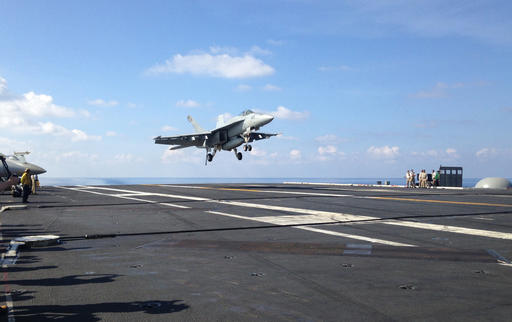
In this Friday, April 15, 2016 file photo, an FA-18 jet fighter lands on the USS John C. Stennis aircraft carrier in the South China Sea while U.S. Defense Secretary Ash Carter visited the aircraft carrier during a trip to the region. AP
American ships and fighter jets maneuvering across the South China Sea and the Sea of Japan represent the “new normal” in U.S.-Pacific relations despite rising tensions with China and Moscow.
U.S. moves in recent months have led to angry protests from China and Russia, which contend the Obama administration is fueling unrest in the Asia Pacific and conducting illegal and unsafe transit in the region. U.S. military leaders defend the operations and say they will continue to exercise freedom of navigation, and may do so more frequently as time goes on.
The escalating rhetoric reflects efforts by China and Russia to show military superiority in an increasingly crowded and competitive part of the world. And it sets up a tense game of political brinksmanship as leaders from the two countries and the U.S. thrust and parry across the military and diplomatic fields of play.
The military maneuvers have shadowed President Barack Obama’s “pivot to Asia,” a decision early in his tenure to try to focus the relationship with Pacific partners on economics and trade.
“We’re at a moment when China, Iran and Russia are all testing us, engaging in reckless behavior and forcing policy makers with the question of how far we push and when,” said Derek Chollet, a former assistant defense secretary for international affairs and now a senior adviser at the German Marshall Fund. “We’re for freedom of navigation and following the rules, and to an extent we are pushing back against changing the rules.”
Adm. John Richardson, chief of naval operations, said that for the first time in 25 years, the U.S. is facing competition for maritime superiority as China and Russia build up their navies.
China’s island development in the South China Sea has inflamed regional tensions, including with nations that have competing claims to the land formations. Most fear that Beijing, which has built airfields and placed weapons systems on the man-made islands, will use the construction to extend its military reach and perhaps try to restrict navigation.
Three times in the past seven months, U.S. warships deliberately have sailed close to one of those islands to exercise freedom of navigation and challenge the claims.
In response, China has deployed fighter jets and ships to track and warn off the American ships, and accused the U.S. of provocative action.
Twice this year, Defense Secretary Ash Carter has flown to U.S. aircraft carriers in the South China Sea with reporters, sending a message that the U.S. will not cede navigational rights. He plans to return to the area next week for an annual Asian national security conference.

“China has taken some expansive and unprecedented actions in the South China Sea, pressing excessive maritime claims contrary to international law,” Carter said Friday during a speech to graduates at the U.S. Naval Academy. “The result is that China’s actions could erect a Great Wall of self-isolation, as countries across the region – allies, partners, and the unaligned – are voicing concerns publicly and privately, at the highest levels.”
Similarly, Russian attack planes buzzed a U.S. Navy warship in international waters in the Baltic Sea last month, and last week Moscow lodged a formal protest about a U.S. reconnaissance flight over the Sea of Japan.
The U.S. says its missions are meant to underscore the rights of the U.S. and others to traverse the region freely and to block efforts by any nation to unlawfully extend their boundaries or territorial rights.
“To the degree that we could advocate more strongly, we need to do enough of these things so that advocacy is well understood,” Richardson said in an Associated Press interview. “Certainly if you wanted to dial those up in frequency, well I think that we can support that.” The U.S. is establishing “a new normal level of activity or interaction” that comes with Russia’s and China’s “return to great power competition.”
Richardson noted that freedom of navigation operations happen hundreds of times a year in the backyards of friends and foes.
“Even though there’s a tremendous amount of visibility on the South China Sea right now, it is important to keep those in context,” he said. “We do these around the world against a lot of these excessive claims.”
Under the Law of the Sea, a country can claim up to 12 nautical miles beyond its coastline. In some cases countries try to claim more than that.
In other cases, countries try to restrict what others can do within the 200-mile exclusive economic zone that’s allowed under international law. For example, they may require advance notice of a flight or ship passage within that zone or prohibit certain military activities there.
The Pentagon releases an annual report that lists the countries where the U.S. has conducted freedom of navigation operations, but includes no details.
U.S. military officials said that at least 80 percent are done by ships, but U.S. aircraft also conduct flights to challenge excessive airspace claims.
The most frequent U.S. operations are in the narrow Strait of Hormuz, where hundreds of times a year ships pass through territorial waters claimed by Iran and Oman. Both countries try to restrict movement through the strait, but international law allows innocent passage.
The Iranian military often hails U.S. ships and tells them to leave. The two sides essentially follow a script, as the U.S. ship continues on its way.
In other places around the globe, including portions of India or large swaths of the South American coast, U.S. ships routinely sail within claimed territorial waters or refuse to provide advance requests for transit. Often the operations go unnoticed or trigger no reaction or protest.
In some cases, U.S. officials said, countries are only aware of the operation after the Pentagon releases the annual report.
According to the 2015 report, the U.S. formally conducted freedom of navigation operations as a way of challenging excessive claims made by 13 countries during the budget year ending Sept. 30.
http://globalnation.inquirer.net/139740/us-naval-air-maneuvers-become-new-normal-in-asia-pacific
In this Friday, April 15, 2016 file photo, an FA-18 jet fighter lands on the USS John C. Stennis aircraft carrier in the South China Sea while U.S. Defense Secretary Ash Carter visited the aircraft carrier during a trip to the region. AP
American ships and fighter jets maneuvering across the South China Sea and the Sea of Japan represent the “new normal” in U.S.-Pacific relations despite rising tensions with China and Moscow.
U.S. moves in recent months have led to angry protests from China and Russia, which contend the Obama administration is fueling unrest in the Asia Pacific and conducting illegal and unsafe transit in the region. U.S. military leaders defend the operations and say they will continue to exercise freedom of navigation, and may do so more frequently as time goes on.
The escalating rhetoric reflects efforts by China and Russia to show military superiority in an increasingly crowded and competitive part of the world. And it sets up a tense game of political brinksmanship as leaders from the two countries and the U.S. thrust and parry across the military and diplomatic fields of play.
The military maneuvers have shadowed President Barack Obama’s “pivot to Asia,” a decision early in his tenure to try to focus the relationship with Pacific partners on economics and trade.
“We’re at a moment when China, Iran and Russia are all testing us, engaging in reckless behavior and forcing policy makers with the question of how far we push and when,” said Derek Chollet, a former assistant defense secretary for international affairs and now a senior adviser at the German Marshall Fund. “We’re for freedom of navigation and following the rules, and to an extent we are pushing back against changing the rules.”
Adm. John Richardson, chief of naval operations, said that for the first time in 25 years, the U.S. is facing competition for maritime superiority as China and Russia build up their navies.
China’s island development in the South China Sea has inflamed regional tensions, including with nations that have competing claims to the land formations. Most fear that Beijing, which has built airfields and placed weapons systems on the man-made islands, will use the construction to extend its military reach and perhaps try to restrict navigation.
Three times in the past seven months, U.S. warships deliberately have sailed close to one of those islands to exercise freedom of navigation and challenge the claims.
In response, China has deployed fighter jets and ships to track and warn off the American ships, and accused the U.S. of provocative action.
Twice this year, Defense Secretary Ash Carter has flown to U.S. aircraft carriers in the South China Sea with reporters, sending a message that the U.S. will not cede navigational rights. He plans to return to the area next week for an annual Asian national security conference.
In this April 5, 2016 file photo provided by China’s Xinhua News Agency, guests attend the completion ceremony for the construction of a lighthouse on Zhubi Reef of Nansha Islands, known as the Spratly Islands, in the South China Sea. The words in this photo read “China Nansha Zhubi Lighthouse”. AP
“China has taken some expansive and unprecedented actions in the South China Sea, pressing excessive maritime claims contrary to international law,” Carter said Friday during a speech to graduates at the U.S. Naval Academy. “The result is that China’s actions could erect a Great Wall of self-isolation, as countries across the region – allies, partners, and the unaligned – are voicing concerns publicly and privately, at the highest levels.”
Similarly, Russian attack planes buzzed a U.S. Navy warship in international waters in the Baltic Sea last month, and last week Moscow lodged a formal protest about a U.S. reconnaissance flight over the Sea of Japan.
The U.S. says its missions are meant to underscore the rights of the U.S. and others to traverse the region freely and to block efforts by any nation to unlawfully extend their boundaries or territorial rights.
“To the degree that we could advocate more strongly, we need to do enough of these things so that advocacy is well understood,” Richardson said in an Associated Press interview. “Certainly if you wanted to dial those up in frequency, well I think that we can support that.” The U.S. is establishing “a new normal level of activity or interaction” that comes with Russia’s and China’s “return to great power competition.”
Richardson noted that freedom of navigation operations happen hundreds of times a year in the backyards of friends and foes.
“Even though there’s a tremendous amount of visibility on the South China Sea right now, it is important to keep those in context,” he said. “We do these around the world against a lot of these excessive claims.”
Under the Law of the Sea, a country can claim up to 12 nautical miles beyond its coastline. In some cases countries try to claim more than that.
In other cases, countries try to restrict what others can do within the 200-mile exclusive economic zone that’s allowed under international law. For example, they may require advance notice of a flight or ship passage within that zone or prohibit certain military activities there.
The Pentagon releases an annual report that lists the countries where the U.S. has conducted freedom of navigation operations, but includes no details.
U.S. military officials said that at least 80 percent are done by ships, but U.S. aircraft also conduct flights to challenge excessive airspace claims.
The most frequent U.S. operations are in the narrow Strait of Hormuz, where hundreds of times a year ships pass through territorial waters claimed by Iran and Oman. Both countries try to restrict movement through the strait, but international law allows innocent passage.
The Iranian military often hails U.S. ships and tells them to leave. The two sides essentially follow a script, as the U.S. ship continues on its way.
In other places around the globe, including portions of India or large swaths of the South American coast, U.S. ships routinely sail within claimed territorial waters or refuse to provide advance requests for transit. Often the operations go unnoticed or trigger no reaction or protest.
In some cases, U.S. officials said, countries are only aware of the operation after the Pentagon releases the annual report.
According to the 2015 report, the U.S. formally conducted freedom of navigation operations as a way of challenging excessive claims made by 13 countries during the budget year ending Sept. 30.
http://globalnation.inquirer.net/139740/us-naval-air-maneuvers-become-new-normal-in-asia-pacific
‘Reds in Duterte gov’t to draw massive demoralization in military, police ranks’
From the Daily Tribune (May 28): ‘Reds in Duterte gov’t to draw massive demoralization in military, police ranks’
A former high ranking police official has cautioned the incoming Duterte government of demoralization among the ranks of the police and the military following its decision to include Communist Party of the Philippines-New People’s Army (CPP-NPA) in the Cabinet.
“That is a big mistake. It will demoralize the PNP (Philippine National Police) and the AFP (Armed Forces of the Philippines) and that will be very dangerous,” former Constabulary chief retired Maj. Gen. Ramon Montano stressed.
“The military and police ranks will surely react negatively to having communists in the government. They have been putting their lives and limbs fighting the insurgents, many lives have been lost,” he told the Daily Tribune.
Montano, who fought the Rebolusyonaryong Alyansang Makabansa (RAM) that launched several military uprisings against the late President Corazon Aquino, stressed Duterte may face a similar situation if he appoints communists in the government.
Then led by Lt. Col. Gregorio Honasan, the RAM and the Young Officers Union (YOU), then headed by Capt. Danilo Lim, tried several times to overthrow the Cory Aquino administration.
“That is very dangerous. Remember that former President Cory Aquino was faced by several military uprisings after giving amnesty to Joma (CPP founder Jose Maria Sison),” warned Montano.
“He (Duterte) should be very careful in dealing with the communist,” he said, adding “their (communists) main goal is to topple government.”
Montano expressed hopes that Duterte would reconsider his pronouncements.
“We are seeing very divisive pronouncements by Digong. I just hope that he would reconsider those for the country to move forward under his term,” he stressed.
The former Constabulary chief stressed he is advocating “peace to all” but maintained that such should be done without sacrificing the morale of the uniformed services.
Casiño, Mariano on Reds’ shortlist
Former Bayan Muna party-list Rep. Teodoro Casiño confirmed that he is on the National Democratic Front of the Philippines (NDFP) list of nominees for Cabinet posts in the Duterte administration.
“All I know is I am being considered for something... It is very good that President-elect Duterte is very open-minded and for sure, he knows our track record when we were still the at the House of Representatives. We are incorruptible and principled men,” he told a radio interview.
According to Casiño, he will carefully consider the policy direction of the incoming president, especially if he is offered a position in the Duterte Cabinet.
Duterte, a self-proclaimed socialist, has earlier offered four departments to the Communist Party of the Philippines: Department of Agrarian Reform (DAR), Department of Environment and Natural Resources (DENR), Department of Social Welfare and Development (DSWD) and the Department of Labor and Employment (DoLE).
Casiño said he believes Duterte will pick members of his official family “based on the integrity and competence of the appointee.”
Meanwhile, the NDF has also nominated former Anakpawis partylist Rep. Rafael Mariano as DAR secretary NDF spokesman Fidel Agcaoili yesterday confirmed.
Mariano is the chairman of the Kilusang Magbubukid ng Pilipinas (KMP), a militant farmers’ group.
The Kilusang Magbubukid ng Pilipinas welcomed the NDF nomination of Mariano, saying it “is based on KMP’s resolute and militant struggle for genuine land reform.”
KMP secretary general Antonio Flores stressed that in the absence of land reform law, “Duterte should seriously consider the NDF’s nomination of Ka Paeng (Mariano) to effect significant policy changes in the agrarian front.”
http://www.tribune.net.ph/headlines/reds-in-duterte-gov-t-to-draw-massive-demoralization-in-military-police-ranks
A former high ranking police official has cautioned the incoming Duterte government of demoralization among the ranks of the police and the military following its decision to include Communist Party of the Philippines-New People’s Army (CPP-NPA) in the Cabinet.
“That is a big mistake. It will demoralize the PNP (Philippine National Police) and the AFP (Armed Forces of the Philippines) and that will be very dangerous,” former Constabulary chief retired Maj. Gen. Ramon Montano stressed.
“The military and police ranks will surely react negatively to having communists in the government. They have been putting their lives and limbs fighting the insurgents, many lives have been lost,” he told the Daily Tribune.
Montano, who fought the Rebolusyonaryong Alyansang Makabansa (RAM) that launched several military uprisings against the late President Corazon Aquino, stressed Duterte may face a similar situation if he appoints communists in the government.
Then led by Lt. Col. Gregorio Honasan, the RAM and the Young Officers Union (YOU), then headed by Capt. Danilo Lim, tried several times to overthrow the Cory Aquino administration.
“That is very dangerous. Remember that former President Cory Aquino was faced by several military uprisings after giving amnesty to Joma (CPP founder Jose Maria Sison),” warned Montano.
“He (Duterte) should be very careful in dealing with the communist,” he said, adding “their (communists) main goal is to topple government.”
Montano expressed hopes that Duterte would reconsider his pronouncements.
“We are seeing very divisive pronouncements by Digong. I just hope that he would reconsider those for the country to move forward under his term,” he stressed.
The former Constabulary chief stressed he is advocating “peace to all” but maintained that such should be done without sacrificing the morale of the uniformed services.
Casiño, Mariano on Reds’ shortlist
Former Bayan Muna party-list Rep. Teodoro Casiño confirmed that he is on the National Democratic Front of the Philippines (NDFP) list of nominees for Cabinet posts in the Duterte administration.
“All I know is I am being considered for something... It is very good that President-elect Duterte is very open-minded and for sure, he knows our track record when we were still the at the House of Representatives. We are incorruptible and principled men,” he told a radio interview.
According to Casiño, he will carefully consider the policy direction of the incoming president, especially if he is offered a position in the Duterte Cabinet.
Duterte, a self-proclaimed socialist, has earlier offered four departments to the Communist Party of the Philippines: Department of Agrarian Reform (DAR), Department of Environment and Natural Resources (DENR), Department of Social Welfare and Development (DSWD) and the Department of Labor and Employment (DoLE).
Casiño said he believes Duterte will pick members of his official family “based on the integrity and competence of the appointee.”
Meanwhile, the NDF has also nominated former Anakpawis partylist Rep. Rafael Mariano as DAR secretary NDF spokesman Fidel Agcaoili yesterday confirmed.
Mariano is the chairman of the Kilusang Magbubukid ng Pilipinas (KMP), a militant farmers’ group.
The Kilusang Magbubukid ng Pilipinas welcomed the NDF nomination of Mariano, saying it “is based on KMP’s resolute and militant struggle for genuine land reform.”
KMP secretary general Antonio Flores stressed that in the absence of land reform law, “Duterte should seriously consider the NDF’s nomination of Ka Paeng (Mariano) to effect significant policy changes in the agrarian front.”
http://www.tribune.net.ph/headlines/reds-in-duterte-gov-t-to-draw-massive-demoralization-in-military-police-ranks
5 hurt in Abu kidnap try in Sulu
From the Daily Tribune (May 30): 5 hurt in Abu kidnap try in Sulu
Five persons, including a lady doctor who was reportedly receiving threats from the terrorist the Abu Sayyaf group, were wounded during a foiled kidnapping in Sulu province Saturday, the military said yesterday.
Maj. Filemon Tan Jr., spokesman for the military’s Western Mindanao Command (Westmincom), identified the lady doctor as Marian Lao.
“There have been reports that the lady doctor has been receiving kidnap threats from the Abu Sayyaf Group (ASG), but due to the presence of the duty escorts, the foiled kidnapping was averted,” said Tan.
According to Tan. Lao and her three security escorts, whose identities were not released, were inside her clinic at the capital town Jolo when the two assailants barged inside.
Without motivation, the suspects, armed with .45 caliber pistols, shot at Lao and her security escorts, one of them a policeman.
“Upon hearing the gun fires, the duty sentinel of the PNP station at the other side of the road responded to the crime scene, prompting the suspect to also shoot the policemen who was also was wounded in the process,” Tan said.
The two assailants immediately boarded a blue Honda Wave 125 motorcycle and fled toward unknown direction.
“The two security escorts suffered multiple gunshot wounds, while the lady doctor and the PNP personnel were hit on the left shoulder and lower left leg, respectively,” Tan said.
Tan said that the victims were immediately brought by the responding authorities to Camp Teodulfo Hospital in Barangay Bus-Bus, Jolo, Sulu for medical treatment.
Tan said that the victims were later airlifted to Camp Navarro General Hospital in Zamboanga City for further medical attention.
The foiled kidnapping happened amid the intensified military operations against the Abu Sayyaf to rescue about a dozen hostages, including foreigners.
http://www.tribune.net.ph/nation/5-hurt-in-abu-kidnap-try-in-sulu
Five persons, including a lady doctor who was reportedly receiving threats from the terrorist the Abu Sayyaf group, were wounded during a foiled kidnapping in Sulu province Saturday, the military said yesterday.
Maj. Filemon Tan Jr., spokesman for the military’s Western Mindanao Command (Westmincom), identified the lady doctor as Marian Lao.
“There have been reports that the lady doctor has been receiving kidnap threats from the Abu Sayyaf Group (ASG), but due to the presence of the duty escorts, the foiled kidnapping was averted,” said Tan.
According to Tan. Lao and her three security escorts, whose identities were not released, were inside her clinic at the capital town Jolo when the two assailants barged inside.
Without motivation, the suspects, armed with .45 caliber pistols, shot at Lao and her security escorts, one of them a policeman.
“Upon hearing the gun fires, the duty sentinel of the PNP station at the other side of the road responded to the crime scene, prompting the suspect to also shoot the policemen who was also was wounded in the process,” Tan said.
The two assailants immediately boarded a blue Honda Wave 125 motorcycle and fled toward unknown direction.
“The two security escorts suffered multiple gunshot wounds, while the lady doctor and the PNP personnel were hit on the left shoulder and lower left leg, respectively,” Tan said.
Tan said that the victims were immediately brought by the responding authorities to Camp Teodulfo Hospital in Barangay Bus-Bus, Jolo, Sulu for medical treatment.
Tan said that the victims were later airlifted to Camp Navarro General Hospital in Zamboanga City for further medical attention.
The foiled kidnapping happened amid the intensified military operations against the Abu Sayyaf to rescue about a dozen hostages, including foreigners.
http://www.tribune.net.ph/nation/5-hurt-in-abu-kidnap-try-in-sulu
Awash With Cash: The Duterte Government's Inheritance From Aquino
From The Diplomat (May 27): Awash With Cash: The Duterte Government's Inheritance From Aquino (By By Prinz P. Magtulis)
Many of Duterte’s policy plans would not be possible without the fiscal discipline practiced by his predecessor.
Many of Duterte’s policy plans would not be possible without the fiscal discipline practiced by his predecessor.
Ironic as it may seem considering his campaign platform, investors have welcomed the eight-point economic agenda of the incoming president of the Philippines, Rodrigo Duterte, in which he vowed to continue and maintain the current macroeconomic policies of the outgoing government.
This is, by no means, a marked shift from his campaign promise, “Change is Coming,” under which he criticized the outgoing leader Benigno Aquino III for failing to lift up the lives of the more than a quarter of Filipinos still in poverty. This was despite the country’s much-touted fastest six-year economic growth since the 1970s.
Under Aquino, the Philippines achieved no small feat. Once dubbed the “Sick Man of Asia,” the economy grew 6.9 percent in the first three months of 2016 to surpass all major Asian nations, including China. But perhaps the best achievement for the past six years is how the government put its fiscal house in order. From a high of nearly 5 percent of gross domestic product (GDP), the deficit dropped to only 0.9 percent last year.
In fact, since 2011, Aquino has been criticized more for not spending enough to support the economy than for breaching deficit targets early in the year, something his predecessors had consistently done. His government, in contrast, has fallen below spending caps for the past five years, while recording double-digit revenue growth during the same period.
As a result, the Philippines not only gained a number of credit rating upgrades that lowered borrowing costs for its consumers and investors, it also allowed the budget to become an “indispensable tool” for economic growth, according to Florencio Abad, the budget secretary. And data supports this.
For instance, the government was able to bridge the decades-long classroom gap under the education portfolio, whose budget has risen by nearly three-fold. A social welfare program granting cash to the poorest families in exchange for keeping their children at school and mothers healthy was expanded to cover 4.4 million families, up from just 800,000 in 2010. And despite the archipelago’s continued infrastructure woes, Aquino should also be credited for achieving an infrastructure-to-GDP ratio of 3.3 percent last year, the highest since 1991.
Finance Secretary Cesar Purisima said the next leader will inherit a better Philippines. The national outlay would give credence to this; the Aquino administration’s fiscal discipline was unprecedented. To an extent, Duterte’s own promises even hinge on the fact that, compared with 2010, the new president has more funds now at his disposal upon taking over. He could not have made those promises without knowing the money is already there. And even if Duterte could, as populist as he may be, without the financial basis he was bound to fail — raising more revenue and fiscal reforms immediately will not necessarily and automatically translate to better collections.
Aquino himself had six years to reform the budget. He raised more revenue in a matter of two years, but it took him almost his entire presidency to balance it out with just enough — not too much, not too little — spending.
Consider Duterte’s promise of annual infrastructure spending equivalent to 5 percent of GDP, a level the World Bank has suggested. Even the prospect of it would have been nearly impossible a decade ago, with the deficit reaching the roof and debt accounting for 70 percent of economic output. People would have criticized the government shelling out money on capital formation they cannot eat on their dining tables at a time when social services were also suffering.
Another example is the promise to reform the tax system. Last year, there was a proposal to lower the income tax rates, considered the second highest in Southeast Asia and going as high as 32 percent. Aquino opposed it. That cost him some political capital, which Duterte is now taking advantage of. Part of his economic agenda is to revisit the tax system, a good move indeed. But doing so is only possible because of rising revenues that have consistently beaten GDP growth. Otherwise, the proposal would have been catastrophic. The Department of Finance estimates that lowering income tax rate to 25 percent– which is what Duterte’s team wanted — would cost up to 316 billion pesos ($6.8 billion). That represents more than 76 percent of the education budget this year.
Even Duterte’s anti-crime platform has Aquino to thank. His election promise to increase police pay to help him on his anti-drug campaign will need funds, and a government awash with cash will work on Duterte’s favor. This year, the salaries of state workers were increased through Aquino’s order. That just represented the first of four scheduled increases under a bill that failed to pass before Congress adjourned for the elections. We can only hope that next administration would continue that as well.
Globally, the Philippine economy shines as one that has avoided the moral hazard of central bank help. Unlike its neighbors in Japan, South Korea, Thailand, and Singapore, the Bangko Sentral ng Pilipinas has kept policy rates steady for 13 straight meetings, noting that the economy does not need monetary support. On its most recent meeting in May, the central bank took note of a healthy consumption base and strengthening state spending as reasons for the local economy’s resilience.
Making growth felt and denting poverty would require the government to spend more. But it would serve Duterte — and the Philippines — well if fiscal discipline were maintained. His transition team has announced an overhaul of revenue agencies as a way to raise more income. But they should do more than this and enact new tax policies. The International Monetary Fund has said tax administration measures could only add revenues worth half a percent of GDP. At current levels, that would not even be enough to build more roads and bridges, while making sure the poor have jobs and food on the table.
[Prinz Magtulis is a journalist covering fiscal policy in the Philippines. He holds a master’s degree in public administration from the Catholic University of Korea.]
US Military Leadership In Asia: Regional Role, Global Reach - Insights from John Melkon
From The Diplomat (May 29): US Military Leadership In Asia: Regional Role, Global Reach - Insights from John Melkon (By Mercy A. Kuo)
The Rebalance author Mercy Kuo regularly engages subject-matter experts, policy practitioners and strategic thinkers across the globe for their diverse insights into the U.S. rebalance to Asia. This conversation with John Melkon – Director of the Center for the Study of Civil-Military Operations at the United States Military Academy at West Point, former Strategic Operations Officer for the U.S. Department of Defense and U.S. Army Special Forces Officer, a decorated veteran of Operation Enduring Freedom in Afghanistan who previously served in Asia in a wide range of strategic roles with a current research focus on the Functional Concept for Engagement and Security Force Assistance in the Asian-Pacific Region – is the 45th in “The Rebalance Insight Series.” The views expressed in this article are those of John Melkon and do not reflect the official policy or position of the Department of the Army, Department of Defense or the U.S. Government.
Where does Asia fit in U.S. military strategy?
The U.S. has engaged Asia since the late 1700s, and U.S. interests in the region have been fairly consistent over two centuries. Generally, America has sought to protect its citizens and allies, support trade and economic opportunity, and promote universal democratic ideals. Modern Asia is a paramount priority for the U.S. Military. With over one-third of the global population, a majority of the established and emerging great powers and most of the nuclear states, it commands a critical focus. Recognizing these challenges, and the administration’s desire to pivot away from Middle Eastern conflicts, the Defense Department and the Joint Chiefs of Staff began to implement a “rebalance” since 2011-12. We must accept the reality that a rebalance strategy could take decades to fully implement. To support this we must engage our regional partners and ensure persistent progress and momentum that develops support for shared goals, cooperation, and an assertive U.S. role in the region.
With numerous flashpoints across Asia, what is the primary role of U.S. military leadership in Asia?
I believe that the answer to your question is actually contained within. It is leadership – clear and simple. We must be prepared to demonstrate to our regional allies the U.S. capacity and commitment to implement a strategy that maintains defense security, economic prosperity, and democratic values in Asia. In my discussions with allied representatives, support for the rebalance is solid, but varied opinions among the range of allies and partners, and growing concerns for our interactions with China as of late, makes consistent clarity of policy and continued implementation vital. Defense leaders must focus on some absolutely essential priorities: strengthening engagement with established allies, emerging partners and even possible competitors, reaffirming military presence with an increase in regional distribution and designing sustainable operational capabilities and implementing modern investments in our forces and technologies. But the solution is beyond just defense. Our national security leaders across all domains must confidently demonstrate U.S. resolve and ability to remain a force for stability in the region.
Explain the importance of civil-military relations with Asian counterparts.
The importance is recognized and written right in to our National Security Strategy where we “lead with all instruments of U.S. power, leveraging our strategic advantages in diplomacy, development, defense, intelligence, science and technology.” It also addresses the rebalance to Asia and the Pacific through “increased diplomacy, stronger alliances and partnerships, expanded trade and investment, and a diverse security posture.” We must ensure that we strike a balance between honoring our defense commitments to allies while simultaneously cooperating/competing with China. Beyond defense we need to consider how to address other key issues that pose potential pitfalls to the latter. These include enforcing free navigation of the seas and supporting international law solutions for the sovereignty of Asian states, addressing the manipulation of currencies and tariffs to create unfair trade advantages and protecting against cyberwar, technology and the theft of intellectual property. Solutions to these civil-military conflicts will require dedicated and earnest engagement and multilateral solutions for all involved states.
How does Asia’s strategic relevance factor into the education and training of future officers at West Point?
Various departments offer specialized courses in Asian areas of interest including History, Politics and Geography. Within our Foreign Language Department we have a robust program with a Chinese Language and an East Asian Studies inter-disciplinary major. Superintendent Robert L. Caslen is firmly committed to the importance of these programs and held various meetings with colleagues at Peking University and the People’s Liberation Army University of Science and Technology during his January visit to China. Our Center was founded to build upon the strengths of the Academy’s core curriculum and promote critical thinking to address the broad spectrum of challenges our graduates will face in military service. In the past several years we have sent our cadets for summer academic experience working with Civil-Military Operations staffs in U.S. Forces Korea, to observe Humanitarian Operations experiences in the Philippines, and to intern with researchers from the Asia-Pacific Center for Security Studies to better understand the strategic environment.
How should the next U.S. commander in chief articulate the role of U.S. military leadership in Asia?
Regardless of who assumes the presidency, I think we will be witness to real changes in how defense strategy is formed. Since 1996 the Department of Defense has convened a Quadrennial Defense Review (QDR) to analyze strategic objectives and potential military threats. Critics have charged that the unclassified process, its bottom-up focus and a need for consensus and concurrence have watered down the product. In addition, the statutory language of the QDR required that it be unconstrained by resources, which challenged defense leaders to speak candidly about strategy-resource tradeoffs. This disparity is the heart of one of the main criticisms of the rebalance. The House Service Armed Services Committee, in its Defense Authorization Act for 2017, proposed replacing the QDR with a Joint Chiefs produced classified National Military Strategy. The change would provide a new construct for the development of military plans that would also guide capability development and resource investments. Whoever presides over that process will have to make hard choices on what resources can be pledged to meet challenges in Asia.
[Mercy A. Kuo is an advisory board member of CHINADebate and was previously director of the Southeast Asia Studies and Strategic Asia Programs at the National Bureau of Asian Research.]
http://thediplomat.com/2016/05/us-military-leadership-in-asia-regional-role-global-reach/
The Rebalance author Mercy Kuo regularly engages subject-matter experts, policy practitioners and strategic thinkers across the globe for their diverse insights into the U.S. rebalance to Asia. This conversation with John Melkon – Director of the Center for the Study of Civil-Military Operations at the United States Military Academy at West Point, former Strategic Operations Officer for the U.S. Department of Defense and U.S. Army Special Forces Officer, a decorated veteran of Operation Enduring Freedom in Afghanistan who previously served in Asia in a wide range of strategic roles with a current research focus on the Functional Concept for Engagement and Security Force Assistance in the Asian-Pacific Region – is the 45th in “The Rebalance Insight Series.” The views expressed in this article are those of John Melkon and do not reflect the official policy or position of the Department of the Army, Department of Defense or the U.S. Government.
Where does Asia fit in U.S. military strategy?
The U.S. has engaged Asia since the late 1700s, and U.S. interests in the region have been fairly consistent over two centuries. Generally, America has sought to protect its citizens and allies, support trade and economic opportunity, and promote universal democratic ideals. Modern Asia is a paramount priority for the U.S. Military. With over one-third of the global population, a majority of the established and emerging great powers and most of the nuclear states, it commands a critical focus. Recognizing these challenges, and the administration’s desire to pivot away from Middle Eastern conflicts, the Defense Department and the Joint Chiefs of Staff began to implement a “rebalance” since 2011-12. We must accept the reality that a rebalance strategy could take decades to fully implement. To support this we must engage our regional partners and ensure persistent progress and momentum that develops support for shared goals, cooperation, and an assertive U.S. role in the region.
With numerous flashpoints across Asia, what is the primary role of U.S. military leadership in Asia?
I believe that the answer to your question is actually contained within. It is leadership – clear and simple. We must be prepared to demonstrate to our regional allies the U.S. capacity and commitment to implement a strategy that maintains defense security, economic prosperity, and democratic values in Asia. In my discussions with allied representatives, support for the rebalance is solid, but varied opinions among the range of allies and partners, and growing concerns for our interactions with China as of late, makes consistent clarity of policy and continued implementation vital. Defense leaders must focus on some absolutely essential priorities: strengthening engagement with established allies, emerging partners and even possible competitors, reaffirming military presence with an increase in regional distribution and designing sustainable operational capabilities and implementing modern investments in our forces and technologies. But the solution is beyond just defense. Our national security leaders across all domains must confidently demonstrate U.S. resolve and ability to remain a force for stability in the region.
Explain the importance of civil-military relations with Asian counterparts.
The importance is recognized and written right in to our National Security Strategy where we “lead with all instruments of U.S. power, leveraging our strategic advantages in diplomacy, development, defense, intelligence, science and technology.” It also addresses the rebalance to Asia and the Pacific through “increased diplomacy, stronger alliances and partnerships, expanded trade and investment, and a diverse security posture.” We must ensure that we strike a balance between honoring our defense commitments to allies while simultaneously cooperating/competing with China. Beyond defense we need to consider how to address other key issues that pose potential pitfalls to the latter. These include enforcing free navigation of the seas and supporting international law solutions for the sovereignty of Asian states, addressing the manipulation of currencies and tariffs to create unfair trade advantages and protecting against cyberwar, technology and the theft of intellectual property. Solutions to these civil-military conflicts will require dedicated and earnest engagement and multilateral solutions for all involved states.
How does Asia’s strategic relevance factor into the education and training of future officers at West Point?
Various departments offer specialized courses in Asian areas of interest including History, Politics and Geography. Within our Foreign Language Department we have a robust program with a Chinese Language and an East Asian Studies inter-disciplinary major. Superintendent Robert L. Caslen is firmly committed to the importance of these programs and held various meetings with colleagues at Peking University and the People’s Liberation Army University of Science and Technology during his January visit to China. Our Center was founded to build upon the strengths of the Academy’s core curriculum and promote critical thinking to address the broad spectrum of challenges our graduates will face in military service. In the past several years we have sent our cadets for summer academic experience working with Civil-Military Operations staffs in U.S. Forces Korea, to observe Humanitarian Operations experiences in the Philippines, and to intern with researchers from the Asia-Pacific Center for Security Studies to better understand the strategic environment.
How should the next U.S. commander in chief articulate the role of U.S. military leadership in Asia?
Regardless of who assumes the presidency, I think we will be witness to real changes in how defense strategy is formed. Since 1996 the Department of Defense has convened a Quadrennial Defense Review (QDR) to analyze strategic objectives and potential military threats. Critics have charged that the unclassified process, its bottom-up focus and a need for consensus and concurrence have watered down the product. In addition, the statutory language of the QDR required that it be unconstrained by resources, which challenged defense leaders to speak candidly about strategy-resource tradeoffs. This disparity is the heart of one of the main criticisms of the rebalance. The House Service Armed Services Committee, in its Defense Authorization Act for 2017, proposed replacing the QDR with a Joint Chiefs produced classified National Military Strategy. The change would provide a new construct for the development of military plans that would also guide capability development and resource investments. Whoever presides over that process will have to make hard choices on what resources can be pledged to meet challenges in Asia.
[Mercy A. Kuo is an advisory board member of CHINADebate and was previously director of the Southeast Asia Studies and Strategic Asia Programs at the National Bureau of Asian Research.]
http://thediplomat.com/2016/05/us-military-leadership-in-asia-regional-role-global-reach/
Special Report: Central Command
From Tempo (May 28): Special Report: Central Command
ORIGINALLY identified as Visayas Command following the mold of other geographical commands e.g. SOLCOM for Southern Luzon Command, EastMinCom for Eastern Mindanao Command etc. Perhaps it is the Cebuano to over abbreviate the dialect for purposes of speed, above title is better recognized under the shorter Cent-Com.
Currently led by the able leadership of Lt/General Nicanor Vivar, the command’s area of responsibility stretches several Central Visayas Regions, or if my figures are correct, 16 provinces, nine Chartered Cities, 39 Cities, and 369 municipalities. This includes the seas surrounding the regions as Tanon Strait dividing Cebu Province from Negros.
Cent-Com counts on the support of not only Philippine Army units in many provinces e.g. the Headquarters in Camp Lapu-Lapu Cebu City, Camp Leon Kilat in Tanjay Negros Oriental etc. but to include Philippine Navy and Philippine Air Force personnel and assets to support the principal task of providing security and national defense to our people and the territory.
This includes augmenting law and order with the police, and during typhoons, calamities and disasters, provide human assistance and response. Under the soft-spoken Lt/Gen. Vivar, a Philippine Military Graduate of Sandigan Class 1982, he has seriously adopted the “AFP Transformation Map”, by institutionalizing a collective pursuit of performance excellence via a scorecard system in the Cent-Com.
Part of Lt/Gen. Vivar’s visioning is to fulfill the requirement of convening a truly “Multi-Sectoral Advisory Board” (MSAB) to be a “big brother” over Cent-Com in its long term objective to eventually be “fully mission capable” to accomplish the over-all objective of establishing a credible AFP defense force.
MSAB is chaired by: Archbishop Jose Palma, George Aznar, Minerva BC Newman, Vicente Colina, Nonoy Tirol, Col. Clarence Martinez (Ret), Edgar Detoya, Maria Dianne Rallon, Olivia Luces, Michael Mendoza, Professor Helen Solito, and Tyrone Tan. Mabuhi to the new group who will be the “transparency mechanism” of Cent-Com to the people, and the people’s mirroring to Cent-Com.
http://www.tempo.com.ph/2016/05/28/opinion/specialreport/central-command/
Currently led by the able leadership of Lt/General Nicanor Vivar, the command’s area of responsibility stretches several Central Visayas Regions, or if my figures are correct, 16 provinces, nine Chartered Cities, 39 Cities, and 369 municipalities. This includes the seas surrounding the regions as Tanon Strait dividing Cebu Province from Negros.
Cent-Com counts on the support of not only Philippine Army units in many provinces e.g. the Headquarters in Camp Lapu-Lapu Cebu City, Camp Leon Kilat in Tanjay Negros Oriental etc. but to include Philippine Navy and Philippine Air Force personnel and assets to support the principal task of providing security and national defense to our people and the territory.
This includes augmenting law and order with the police, and during typhoons, calamities and disasters, provide human assistance and response. Under the soft-spoken Lt/Gen. Vivar, a Philippine Military Graduate of Sandigan Class 1982, he has seriously adopted the “AFP Transformation Map”, by institutionalizing a collective pursuit of performance excellence via a scorecard system in the Cent-Com.
Part of Lt/Gen. Vivar’s visioning is to fulfill the requirement of convening a truly “Multi-Sectoral Advisory Board” (MSAB) to be a “big brother” over Cent-Com in its long term objective to eventually be “fully mission capable” to accomplish the over-all objective of establishing a credible AFP defense force.
MSAB is chaired by: Archbishop Jose Palma, George Aznar, Minerva BC Newman, Vicente Colina, Nonoy Tirol, Col. Clarence Martinez (Ret), Edgar Detoya, Maria Dianne Rallon, Olivia Luces, Michael Mendoza, Professor Helen Solito, and Tyrone Tan. Mabuhi to the new group who will be the “transparency mechanism” of Cent-Com to the people, and the people’s mirroring to Cent-Com.
http://www.tempo.com.ph/2016/05/28/opinion/specialreport/central-command/
Army trooper survives suicide attempt
From the Manila Times (May 28): Army trooper survives suicide attempt
AN Army trooper, allegedly beset with family problems, tried to commit suicide by pulling the trigger of a .45 caliber pistol on his temple while having a drinking session with some friends in a remote village in Sta. Catalina town in Negros Oriental on Friday.
Senior Supt. Harris Fama, Negros Oriental Provincial Police (NORPO) director, identified the trooper as Private First Class (PFC) Christian Burgos, detailed with the Philippine Army’s 79th Infantry Battalion.
He is being observed at the Dumaguete City Hospital after surviving the attempted suicide.
http://www.manilatimes.net/army-trooper-survives-suicide-attempt/264683/
AN Army trooper, allegedly beset with family problems, tried to commit suicide by pulling the trigger of a .45 caliber pistol on his temple while having a drinking session with some friends in a remote village in Sta. Catalina town in Negros Oriental on Friday.
Senior Supt. Harris Fama, Negros Oriental Provincial Police (NORPO) director, identified the trooper as Private First Class (PFC) Christian Burgos, detailed with the Philippine Army’s 79th Infantry Battalion.
He is being observed at the Dumaguete City Hospital after surviving the attempted suicide.
http://www.manilatimes.net/army-trooper-survives-suicide-attempt/264683/
Bello being sent to Oslo for peace talks
From Malaya (May 30): Bello being sent to Oslo for peace talks
DAVAO City Mayor Rodrigo Duterte has directed incoming Labor Secretary Silvestre Bello III to go to Oslo, Norway to hold preliminary talks with the National Democratic Front and start working on a framework agenda for the resumption of peace talks with the Communist Party of the Philippines.
Bello served as government peace negotiator with communist rebels under the Arroyo administration.
Duterte, in an interview with media late Saturday, said Bello would also accompany Jose Ma. Sison, CPP founding chairman, on his possible return to Manila.
He said he is prepared to give Sison a safe conduct pass after he formally assumes the presidency on June 30.
He said he is also looking at giving passes to other CPP leaders who are detained, like CPP chairman Benito Tiamzon and CPP secretary Wilma Austria who, he said, are participants in the peace negotiations.
Duterte said he may even agree to the release of all the political prisoners if his government and communist group could come up wit a “perfect agreement” that will “enhance and not jeopardize” the country and the lives of the Filipinos.
He also called on the New People’s Army, the communist’s armed group, not to seize spare policemen who are doing their jobs, like investigating crimes.
He made the call following recent abduction of policemen in some provinces for the NPA to try them supposedly for alleged crimes against the people.
http://www.malaya.com.ph/business-news/news/bello-being-sent-oslo-peace-talks
DAVAO City Mayor Rodrigo Duterte has directed incoming Labor Secretary Silvestre Bello III to go to Oslo, Norway to hold preliminary talks with the National Democratic Front and start working on a framework agenda for the resumption of peace talks with the Communist Party of the Philippines.
Bello served as government peace negotiator with communist rebels under the Arroyo administration.
Duterte, in an interview with media late Saturday, said Bello would also accompany Jose Ma. Sison, CPP founding chairman, on his possible return to Manila.
He said he is prepared to give Sison a safe conduct pass after he formally assumes the presidency on June 30.
He said he is also looking at giving passes to other CPP leaders who are detained, like CPP chairman Benito Tiamzon and CPP secretary Wilma Austria who, he said, are participants in the peace negotiations.
Duterte said he may even agree to the release of all the political prisoners if his government and communist group could come up wit a “perfect agreement” that will “enhance and not jeopardize” the country and the lives of the Filipinos.
He also called on the New People’s Army, the communist’s armed group, not to seize spare policemen who are doing their jobs, like investigating crimes.
He made the call following recent abduction of policemen in some provinces for the NPA to try them supposedly for alleged crimes against the people.
http://www.malaya.com.ph/business-news/news/bello-being-sent-oslo-peace-talks
DPWH hosting Duterte’s office in Davao City
From Tempo (May 29): DPWH hosting Duterte’s office in Davao City
With the establishment of a Malacanang in the South, Mindanao will no longer be considered the backdoor of the Philippines as it will highlight southern Philippines as the “new front door with economic partners in countries like Brunei, Malaysia, and Indonesia.”
With the establishment of a Malacanang in the South, Mindanao will no longer be considered the backdoor of the Philippines as it will highlight southern Philippines as the “new front door with economic partners in countries like Brunei, Malaysia, and Indonesia.”
This was the assessment of Davao chief information officer Leo Villareal after he confirmed Friday that incoming president Rodrigo Duterte will also be holding office at the Department of Public Works and Highways (DPWH) depot located at Panacan District here.
According to Villareal, the East ASEAN Growth Area (EAGA), which is composed of Brunei Darassalam, Indonesia, Malaysia, and the Philippines (BIMP), is expected to “grow by leaps and bounds with the opening of Mindanao as the new gateway to the Philippines.”
“New infrastructure projects, trade and business opportunities, and partnerships are likely to flow into Mindanao with the assumption of the Mayor (Duterte) of the presidency and the presence of a presidential office right here in Southern Philippines,” he said.
Villareal also averred that Duterte and the corresponding economic growth and peace that would come to the island will boost the morale of MIndanaoans, who have been languishing in the shadows of previous national leaders, many of whom hail from Luzon.”
“The people of Mindanao will no longer be considered second class citizens and we will now be respected the our counterparts in Luzon,” said Villareal.
He said Malacanang in the South will also “decongest bureaucratic processes because transactions that concern Mindanao and the Visayas may now be directly acted upon (by Duterte) with expediency here.”
“Crucial and timely decisions can now be made here and this will be of great help to the economy,” Villareal said.
Foremost among the projects that would be immensely facilitated by the presence of a presidential office in this city would be the creation of a Mindanao-wide train system.
“That dream of Mindanaoans to have a railway system in the island will finally be realized because the President will be able to frequently monitor the progress of the project from his office in Panacan,” Villareal noted.
And as economic growth is spurred by the president’s presence in Mindanao, Villareal underscored that “the process of forging lasting peace with the communist insurgents and Moro rebels will be expedited.”
“Having a Malacanang in the South is another gesture by (Duterte) to the Left and Muslim rebels that the new president is sincere in talking peace with them,” he said.
http://www.tempo.com.ph/2016/05/29/news/main/dpwh-hosting-dutertes-office-in-davao-city/
According to Villareal, the East ASEAN Growth Area (EAGA), which is composed of Brunei Darassalam, Indonesia, Malaysia, and the Philippines (BIMP), is expected to “grow by leaps and bounds with the opening of Mindanao as the new gateway to the Philippines.”
“New infrastructure projects, trade and business opportunities, and partnerships are likely to flow into Mindanao with the assumption of the Mayor (Duterte) of the presidency and the presence of a presidential office right here in Southern Philippines,” he said.
Villareal also averred that Duterte and the corresponding economic growth and peace that would come to the island will boost the morale of MIndanaoans, who have been languishing in the shadows of previous national leaders, many of whom hail from Luzon.”
“The people of Mindanao will no longer be considered second class citizens and we will now be respected the our counterparts in Luzon,” said Villareal.
He said Malacanang in the South will also “decongest bureaucratic processes because transactions that concern Mindanao and the Visayas may now be directly acted upon (by Duterte) with expediency here.”
“Crucial and timely decisions can now be made here and this will be of great help to the economy,” Villareal said.
Foremost among the projects that would be immensely facilitated by the presence of a presidential office in this city would be the creation of a Mindanao-wide train system.
“That dream of Mindanaoans to have a railway system in the island will finally be realized because the President will be able to frequently monitor the progress of the project from his office in Panacan,” Villareal noted.
And as economic growth is spurred by the president’s presence in Mindanao, Villareal underscored that “the process of forging lasting peace with the communist insurgents and Moro rebels will be expedited.”
“Having a Malacanang in the South is another gesture by (Duterte) to the Left and Muslim rebels that the new president is sincere in talking peace with them,” he said.
http://www.tempo.com.ph/2016/05/29/news/main/dpwh-hosting-dutertes-office-in-davao-city/
Duterte to free Tiamzons
From the Manila Times (May 29): Duterte to free Tiamzons
Incoming President Rodrigo Duterte said Sunday he would seek an early start to peace talks with communist rebels and free detained guerrilla chieftains when he takes office on June 30.
He also offered safe passage for Jose Maria Sison, the founder of the insurgency who fled to European exile nearly 30 years after the failure of initial attempts to end one of Asia’s longest armed insurgencies.
Duterte is betting on his close friendship with Sison, his former university teacher, to bring a swift political settlement to a rebellion that has killed about 30,000 people by official count and impoverished vast swathes of the country.
He added that Benito Tiamzon and his wife Wilma, the detained alleged leaders of the Communist Party of the Philippines and its armed wing, the New People’s Army, will also be let out to take part in the peace talks.
President Benigno Aquino 3rd revived peace talks soon after taking office in 2010 but shelved them in 2013, accusing the rebels of insincerity in efforts to achieve a political settlement.
The talks got bogged down after the communists demanded the release of scores of their jailed comrades whom they described as “political prisoners,” which the Aquino government rejected.
Duterte, who met a rebel emissary in Davao 10 days ago, said he will be sending out two members of his Cabinet to Norway for preparatory meetings with the exiled rebel leaders.
Norway had acted as go-between in failed peace talks between the Aquino government and the rebels.
“I have commissioned them to go to Oslo… to go there for the framework and agenda that (we) will talk about,” the mayor said.
He said the two Cabinet emissaries will then “maybe accompany Jose Maria Sison home.”
Should his emissaries be able to hammer out an agreement, “then I will release all the political prisoners,” Duterte added.
http://www.manilatimes.net/duterte-to-free-tiamzons/264919/
Incoming President Rodrigo Duterte said Sunday he would seek an early start to peace talks with communist rebels and free detained guerrilla chieftains when he takes office on June 30.
He also offered safe passage for Jose Maria Sison, the founder of the insurgency who fled to European exile nearly 30 years after the failure of initial attempts to end one of Asia’s longest armed insurgencies.
Duterte is betting on his close friendship with Sison, his former university teacher, to bring a swift political settlement to a rebellion that has killed about 30,000 people by official count and impoverished vast swathes of the country.
“I will… give him (Sison) a safe-conduct pass,” the mayor said at a midnight news conference.
President Benigno Aquino 3rd revived peace talks soon after taking office in 2010 but shelved them in 2013, accusing the rebels of insincerity in efforts to achieve a political settlement.
The talks got bogged down after the communists demanded the release of scores of their jailed comrades whom they described as “political prisoners,” which the Aquino government rejected.
Duterte, who met a rebel emissary in Davao 10 days ago, said he will be sending out two members of his Cabinet to Norway for preparatory meetings with the exiled rebel leaders.
Norway had acted as go-between in failed peace talks between the Aquino government and the rebels.
“I have commissioned them to go to Oslo… to go there for the framework and agenda that (we) will talk about,” the mayor said.
He said the two Cabinet emissaries will then “maybe accompany Jose Maria Sison home.”
Should his emissaries be able to hammer out an agreement, “then I will release all the political prisoners,” Duterte added.
http://www.manilatimes.net/duterte-to-free-tiamzons/264919/
Suspected NPAs attack Davao Oriental town hall, police station
From the Philippine Daily Inquirer (May 29): Suspected NPAs attack Davao Oriental town hall, police station
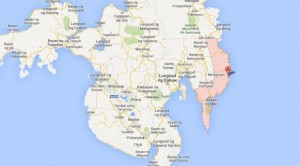
Suspected New People’s Army rebels simultaneously attacked the municipal hall and the police headquarters of Governor Generoso town in Davao Oriental on Sunday evening.
Capt. Rhyan Batchar, spokesperson of the military’s 10th Infantry Division, confirmed the 8 p.m. attack.
“We still do not have the complete details right now, but the firefight is still ongoing,” Batchar told the Philippine Daily Inquirer.
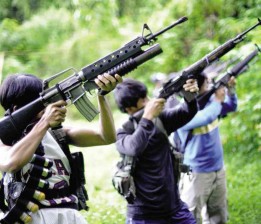
Batchar said government forces have been fighting back and have been trying to push the rebels out.
The province of Davao Oriental is a known hotbed of the communist insurgency in the country and is one of the focus areas of the military’s counter-insurgency operations.
Incoming President Rodrigo Duterte earlier vowed to pursue and accelerate the peace negotiations to finally put an end to the conflict.
Duterte said that the ongoing conflict has already caused too much damage not just to the military and the rebels but also to the civilians.
http://newsinfo.inquirer.net/788071/suspected-npas-attack-davao-oriental-town-hall-police-station
Suspected New People’s Army rebels simultaneously attacked the municipal hall and the police headquarters of Governor Generoso town in Davao Oriental on Sunday evening.
Capt. Rhyan Batchar, spokesperson of the military’s 10th Infantry Division, confirmed the 8 p.m. attack.
“We still do not have the complete details right now, but the firefight is still ongoing,” Batchar told the Philippine Daily Inquirer.
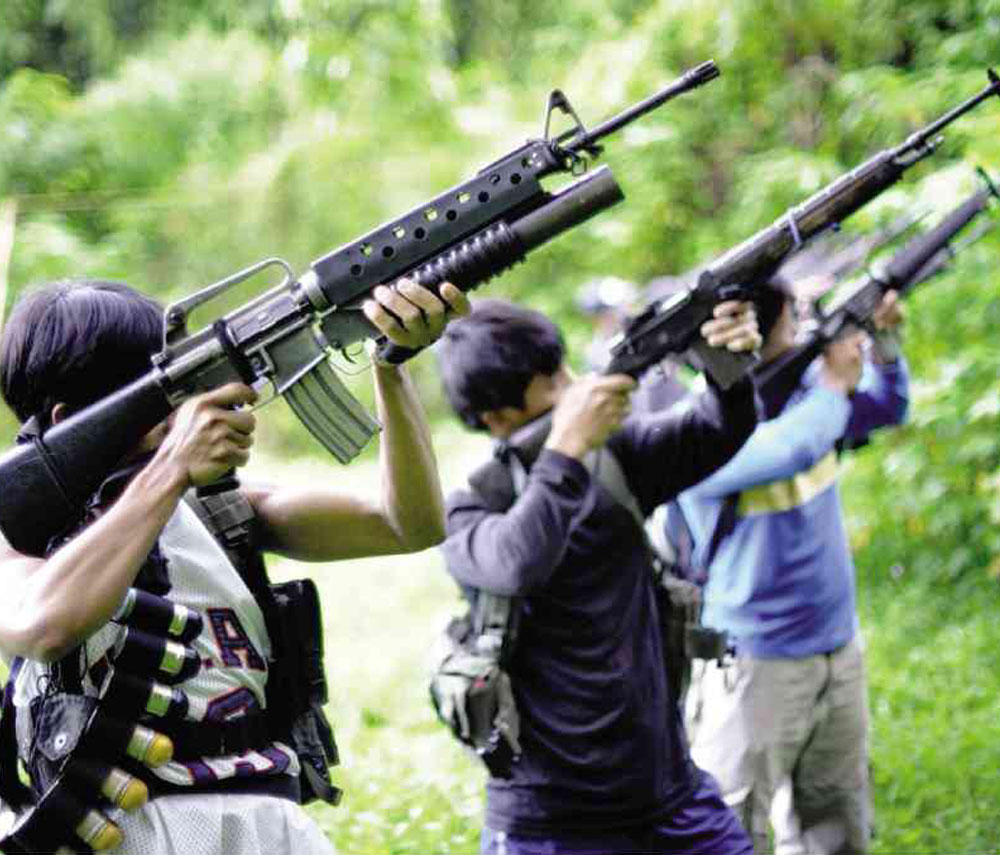
New People’s Army. FILE PHOTO
Batchar said government forces have been fighting back and have been trying to push the rebels out.
The province of Davao Oriental is a known hotbed of the communist insurgency in the country and is one of the focus areas of the military’s counter-insurgency operations.
Incoming President Rodrigo Duterte earlier vowed to pursue and accelerate the peace negotiations to finally put an end to the conflict.
Duterte said that the ongoing conflict has already caused too much damage not just to the military and the rebels but also to the civilians.
http://newsinfo.inquirer.net/788071/suspected-npas-attack-davao-oriental-town-hall-police-station
Clashes continue in Lanao Del Sur
From the Manila Times (May 29): Clashes continue in Lanao Del Sur
Sporadic clashes between security forces and jihadists continue in Lanao del Sur, one of five provinces under the troubled Autonomous Region in Muslim Mindanao.
Various sources said at least two jihadists were killed in clashes that erupted last week, but are still continuing in the town of Butig, where military forces were trying to flush out the group of Abdullah Maute, which is fighting for an Islamic caliphate in the volatile region.
Military propaganda claimed that more than 20 jihadists were killed in the battle, but troops had not recovered the bodies of those slain in the fighting. The reports cited raw intelligence from villagers.
It was unknown if there were government soldiers killed in the gun battle, but ground troops were being supported by artillery fire and aerial bombardment by aging OV-10 aircraft from the Philippine Air Force.
Gov. Bombit Adiong of Lanao del Sur has not issued any statement on the fighting, but the regional government has begun relief operations in many villages where civilians had evacuated for fear of being caught in the crossfire or mistaken for members or supporters of the jihadist group.
Just this year, jihadists beheaded two brothers – Salvador and Makol Hanobas – who were accused by Maute’s group of being government spies. There were among six sawmill operators seized by gunmen in April in the province. The others – Julieto Hanobas, Alfredo Anoos, Gabriel Permites and Adones Mendez – were freed unharmed following negotiations by their Muslim employer.
Members of the jihadist group Ansarul Khilafah also captured and decapitated another man in Sarangani province after he was accused of being a police spy.
http://www.manilatimes.net/clashes-continue-in-lanao-del-sur/264892/
Sporadic clashes between security forces and jihadists continue in Lanao del Sur, one of five provinces under the troubled Autonomous Region in Muslim Mindanao.
Various sources said at least two jihadists were killed in clashes that erupted last week, but are still continuing in the town of Butig, where military forces were trying to flush out the group of Abdullah Maute, which is fighting for an Islamic caliphate in the volatile region.
Maute, leader of the so-called Islamic State Ranao, is said to be coddling Indonesian and Malaysian militants in the province.
It was unknown if there were government soldiers killed in the gun battle, but ground troops were being supported by artillery fire and aerial bombardment by aging OV-10 aircraft from the Philippine Air Force.
Gov. Bombit Adiong of Lanao del Sur has not issued any statement on the fighting, but the regional government has begun relief operations in many villages where civilians had evacuated for fear of being caught in the crossfire or mistaken for members or supporters of the jihadist group.
Just this year, jihadists beheaded two brothers – Salvador and Makol Hanobas – who were accused by Maute’s group of being government spies. There were among six sawmill operators seized by gunmen in April in the province. The others – Julieto Hanobas, Alfredo Anoos, Gabriel Permites and Adones Mendez – were freed unharmed following negotiations by their Muslim employer.
Members of the jihadist group Ansarul Khilafah also captured and decapitated another man in Sarangani province after he was accused of being a police spy.
http://www.manilatimes.net/clashes-continue-in-lanao-del-sur/264892/
Numerous kidnapping, terror attempts crippled with establishment of ESSCom, ESSZone
Posted to the Borneo Post Online (May 29): Numerous kidnapping, terror attempts crippled with establishment of ESSCom, ESSZone
LAHAD DATU: Datuk Seri Najib Tun Razak said the government’s move to establish the Eastern Sabah Security Command here had succeeded in crippling and preventing numerous kidnapping and terrorism attempts.
The prime minister brought to mind the Lahad Datu intrusion in February 2013 which claimed the lives of 10 Malaysian security personnel and a member of the public, during which 67 intruders were also killed.
Since the incident, he said, various effective and comprehensive initiatives had been taken and innovations put in place to safeguard Sabah.
“The impact of the intrusion necessitated the establishment of ESSCom and Eastern Sabah Security Zone to enhance Sabah’s security against hostile threats,” he said.
Najib said this while officiating at the ground-breaking ceremony for the helicopter forward operating base (FOB) yesterday.
The prime minister stressed that safeguarding the country, in this regard, Sabah, was not the responsibility of the security forces alone but also the people in the state.
Precisely, he said, there must exist among the local people three pertinent values.
Firstly, unity and solidarity; secondly, love for country or patriotism, including serving as ‘eyes and ears’ for the security forces.
Thirdly, Najib said, the people should not be ‘the enemy within’ and betray the country by colluding with the enemy.
“Regretfully while we were fighting to death in defending the sovereignty of Sabah from terrorists, certain individuals could meet with parties that were linked to the intruders in Lahad Datu,” he said.
Meanwhile, the Defence Ministry in a statement yesterday said RM90 million had been set aside for the FOB project which would be implemented early next month on 0.48ha at Lahad Datu Airport.
The statement said the base involving a shelter and apron would be able to accommodate six helicopters.
The FOB would function as a transit centre and provide support to the Malaysian Armed Forces in their operations involving all types of helicopters as well as an operation centre to counter potential attacks and external threats.
A cabinet meeting on Aug 12, 2015 had called for the ministry to urgently build a helicopter detachment infrastructure as a forward operating base to strengthen security in the state.
The FOB would also improve defence preparedness and security in the areas within ESSCom which was established in March 2013, said the statement. — Bernama
http://www.theborneopost.com/2016/05/29/numerous-kidnapping-terror-attempts-crippled-with-establishment-of-esscom-esszone/
LAHAD DATU: Datuk Seri Najib Tun Razak said the government’s move to establish the Eastern Sabah Security Command here had succeeded in crippling and preventing numerous kidnapping and terrorism attempts.
The prime minister brought to mind the Lahad Datu intrusion in February 2013 which claimed the lives of 10 Malaysian security personnel and a member of the public, during which 67 intruders were also killed.
Since the incident, he said, various effective and comprehensive initiatives had been taken and innovations put in place to safeguard Sabah.
“The impact of the intrusion necessitated the establishment of ESSCom and Eastern Sabah Security Zone to enhance Sabah’s security against hostile threats,” he said.
Najib said this while officiating at the ground-breaking ceremony for the helicopter forward operating base (FOB) yesterday.
The prime minister stressed that safeguarding the country, in this regard, Sabah, was not the responsibility of the security forces alone but also the people in the state.
Precisely, he said, there must exist among the local people three pertinent values.
Firstly, unity and solidarity; secondly, love for country or patriotism, including serving as ‘eyes and ears’ for the security forces.
Thirdly, Najib said, the people should not be ‘the enemy within’ and betray the country by colluding with the enemy.
“Regretfully while we were fighting to death in defending the sovereignty of Sabah from terrorists, certain individuals could meet with parties that were linked to the intruders in Lahad Datu,” he said.
Meanwhile, the Defence Ministry in a statement yesterday said RM90 million had been set aside for the FOB project which would be implemented early next month on 0.48ha at Lahad Datu Airport.
The statement said the base involving a shelter and apron would be able to accommodate six helicopters.
The FOB would function as a transit centre and provide support to the Malaysian Armed Forces in their operations involving all types of helicopters as well as an operation centre to counter potential attacks and external threats.
A cabinet meeting on Aug 12, 2015 had called for the ministry to urgently build a helicopter detachment infrastructure as a forward operating base to strengthen security in the state.
The FOB would also improve defence preparedness and security in the areas within ESSCom which was established in March 2013, said the statement. — Bernama
http://www.theborneopost.com/2016/05/29/numerous-kidnapping-terror-attempts-crippled-with-establishment-of-esscom-esszone/
Subscribe to:
Posts (Atom)