Friday, April 6, 2018

Carlito Galvez Jr is next AFP chief

From Rappler (Apr 6): Carlito Galvez Jr is next AFP chief


President Rodrigo Duterte has picked Lieutenant General Carlito Galvez Jr, who was among the generals on the ground during the Marawi siege, to lead the military

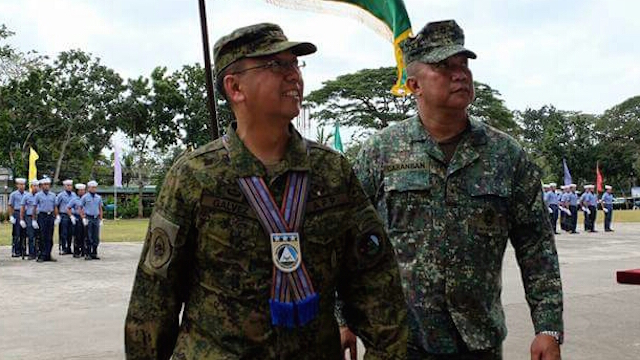
NEW CHIEF. Westmincom Chief Carlito Galvez Jr (left) will be the new AFP chief of staff. File photo by Richard Falcatan

NEW CHIEF. Westmincom Chief Carlito Galvez Jr (left) will be the new AFP chief of staff. File photo by Richard Falcatan

Western Mindanao Command (Wesmincom) chief Lieutenant General Carlito Galvez Jr will be the next Armed Forces of the Philippines (AFP) chief, Malacañang announced on Thursday, April 5.

Presidential Spokesman Harry Roque told this to reporters during a sudden press briefing in the Palace grounds on Thursday evening.

Galvez will take the place of AFP chief General Rey Leonardo Guerrero, who is retiring on April 24, after Duterte extended his term by 4 months. Galvez is set to retire in December.

Roque also said Galvez will take his oath as new AFP chief on April 18, also the date when incoming Philippine National Police chief Oscar Albayalde will take his oath.


The 55-year-old officer brings to the post a rich combat and administrative experience dealing with threat groups in some conflict areas in the country, as the Duterte administration strives to implement a 4-year-old peace deal with the Moro Islamic Liberation Front.

As Westmincom chief, Galvez was among the generals on the ground during the Marawi siege.

Before Westmincom, Galvez had served as the commander of the 6th Infantry Division based in Maguindanao. He was then tasked to protect the government's ceasefire with the MILF based in the province, and to deal with various peace spoilers such as the MILF breakaway group, the Bangsamoro Islamic Freedom Fighters (BIFF).

He is a member of the Philippine Military Academy Class of 1985.

https://www.rappler.com/nation/199642-carlito-galvez-jr-armed-forces-philippines-chief

AFP plans biz protection oplan vs NPA offensives

From the often pro-CPP online publication the Davao Today (Apr 4): AFP plans biz protection oplan vs NPA offensives


Armed Forces of the Philippines-Eastern Mindanao Command public information officer Major Ezra Balagtey during the AFP-PNP press conference on Wednesday, April 4, 2018. (Kath M. Cortez/davaotoday.com)

The Armed Forces of the Philippines-Eastern Mindanao Command urged businessmen to coordinate with the military and other local authorities after the recent reported burning of heavy equipment allegedly by the New People’s Army (NPA) in three areas in Davao City.

AFP-EMCs public information officer Major Ezra Balagtey, in a press conference on Wednesday, said they are trying to develop the Investment Protection and Security Operation Mechanism (IPSOM) to protect construction companies in the region.
 
On March 31, suspected NPA fighters burned down one bulldozer and a backhoe in Sitio Sta. Maria in Barangay Fatima, Paquibato District; four dump trucks and one backhoe owned by the Leonard Trucking Services in Purok 4, Sitio Saudan and Purok 14, Sitio Quarry in Barangay Callawa, Buhangin District; and one backhoe in Purok 8, Barangay Dalagdag in Calinan District.

Balagtey said that under the IPSOM, AFP units will coordinate with construction firms for any threats in their respective construction areas.
 
Gains in peace talks

For its part, Presidential Adviser on the Peace Process Jesus Dureza last Monday lashed at the NPA for the senseless destruction of heavy equipment in Davao City.

“The act unnecessarily squanders whatever gains we have been quietly getting lately in our common effort with the rebels to return to the negotiating table,” said Dureza.

In response, National Democratic Front of the Philippines chief peace negotiator Fidel Agcaoili said Dureza should direct any complaints through the proper channels instead of using these as a scapegoat for difficulties in resuming stalled negotiations.

Agcaoli refuted Dureza saying “what about, the continuing killings of NPA fighters, even those unarmed and undergoing medical treatment the continuing arrests, detention, threats and harassment of open legal activists and even UN rapporteurs, and the terror attacks against communities, occupation of schools and public places like health centers that have led to forcible displacements of tens of thousands of residents?

NDFP also said the Joint Monitoring Committee under the CARHRIHL (Comprehensive Agreement on Respect for Human Rights and International Humanitarian Law) can address complaints raised by the Philippine government against the NPA.

Challenge to NDFP

Meanwhile, in his privileged speech during the City Council’s regular session on Tuesday, Councilor Danilo Dayanghirang challenged the NDFP to review its “strategy and methodology” in advancing their struggle.

Dayanghirang said “I hope the leadership of the NDFP and the NPA will review its methodology, its strategy to advance what they are fighting for. We have the same purpose and that is to elevate and emancipate the life of Filipino people from poverty.”

He proposed that instead of destroying properties, the NDFP should allow progress and parallel to that is to participate in the electoral process.

NDFP’s Fidel Agcaoili clarified that the NPA unit operating in the area has not yet issued any statement regarding the incident.

“First of all, we here have not yet seen any statement of the concerned command regarding the incidents referred to by the good councilor. If indeed these incidents were done by the concerned command, we suggest that he look into the reasons cited behind them,” said Agcaoili in a message sent to Davao Today.

Agcaoili urged the councilor to “look deeper” in the situation of exploited Filipinos and why they joined the armed revolution.

“The semifeudal and semi-colonial social system has been with us for more than a century. Our people have suffered so much despite the good intentions of well-meaning people to institute reforms. yet the ruling classes of big landlords, compradors and corrupt high government officials have refused to heed the peoples demand for change. So the people have no other recourse but rely on their own efforts to bring about radical social change in the country,” said Agcaoili.

He maintained that the stalled peace talks between the government and the NDFP is supposed to address the roots of the armed conflict in the country.

“Precisely, the peace negotiations,” Agcaoili added, “are meant to address the roots of the armed conflict, forge agreements that would bring about basic social, economic and political reforms, and lay the foundation for a just and lasting peace in the country.”

http://davaotoday.com/main/politics/afp-plans-biz-protection-oplan-vs-npa-offensives/

Año tells communists: You cannot demand peace, yet do violence

From the Manila Bulletin (Apr 5): Año tells communists: You cannot demand peace, yet do violence  

In the wake of the Holy Week attacks allegedly perpetuated by communist rebels in Davao City, Department of the Interior and Local Government (DILG) officer-in-charge (OIC) Eduardo M. Año asked them to show genuine sincerity if they want to pursue the peace talks with the government.


Gen. Eduardo Año (AP Photo/Bullit Marquez, File / MANILA BULLETIN)
He also demanded that the rebel groups should stop all forms of hostilities, extortion activities and burning of construction or farm equipment and instead build mutual trust with the government to achieve genuine peace.

“You cannot demand peace yet do violence. Peace negotiations require an enabling environment for your side and the government panel to hear out each other and arrive at sincere agreements,” Año said.

He insisted that there is no use talking peace if government forces and civilians are dying with the rebel groups continuing to commit lawlessness.

Such move by the rebel forces according to Ano is contrary to getting back to the peace table since talking peace needs confidence-building measures.

The DILG Chief urged the NDF-CPP-NPA (National Democratic Front – Communist Party of the Philippines – New People’s Army) “to reciprocate the sincerity of the government and others concerned such as the Royal Norwegian Government and at least 60 members of the House of Representatives both calling for President Duterte to revive peace talks.”

Nonetheless, Ano assured that with or without peace talks, the Duterte administration welcomes with open arms all rebels who will lay down their arms and return to mainstream society.

He added that “among the proof of the government’s sincerity is the DILG’s Enhanced-Comprehensive Local Integration Program (E-CLIP).”

The E-CLIP facilitates the mainstreaming of former NPA rebels and Militia ng Bayan as productive citizens. The program also compensates and remunerates all turned-in firearms.

A former rebel gets an immediate assistance in the amount of P15,000 for mobilization expenses, livelihood assistance in the amount of P50,000, skills training, shelter and legal assistance, among others.

For the past three years, the DILG has provided financial assistance to hundreds of former communist rebels. P59.68-million has been utilized for immediate assistance to 471 former rebels, while 459 got livelihood assistance, 361 with reintegration assistance, and 132 were given firearm renumeration.

Forty-five million pesos was also spent on construction of halfway houses for rebel-surrenderees in nine provinces: Kalinga and Mountain Province, Masbate, Negros Oriental, Northern Samar, Sarangani, Sultan Kudarat, South Cotabato, and North Cotabato.

A halfway house is a temporary residence that serves as the processing center for former rebels. It could be a new structure that is established in provinces or highly urbanized cities that have expressed the need for such facility.

Just recently the President approved the release of almost half a billion pesos to support the E-CLIP, enough to support the more than 1,000 expected surrenderees for 2018.

“We call on the families, relatives and friends of rebels to help us convince them to go down from the mountains and take this life-changing opportunity,” he noted.

As for the police and soldiers, the DILG manages the KIA/WIA (Killed-in-Action/Wounded-in-Action) One Stop Assistance Program Management that oversees the delivery of harmonized and streamlined government packages for the beneficiaries of battle or duty casualties of the Philippine National Police and the AFP.

https://news.mb.com.ph/2018/04/05/ano-tells-communistsyou-cannot-demand-peace-yet-do-violence/

Thursday, April 5, 2018

Counterterrorism Yearbook 2018: Southeast Asia

From the Australian Strategic Policy Institute (ASPI)//The Strategist (Nov 4): Counterterrorism Yearbook 2018: Southeast Asia


Last year’s Marawi crisis represents the most significant terrorism development in Southeast Asia since the 2002 Bali bombings. Despite expectations that the rollback of Islamic State (IS) forces in the Middle East would see a return of fighters to Southeast Asia, the group’s capacity to occupy an entire city—and to repel Philippines conventional forces for five months—was unforeseen.

The Marawi model has injected new enthusiasm into the small fringe of militant Southeast Asian Islamists who operate in remoter parts of the Philippines and Indonesia. It also demonstrated the possibilities of a command and control model whereby IS commanders direct local forces from offshore locations.

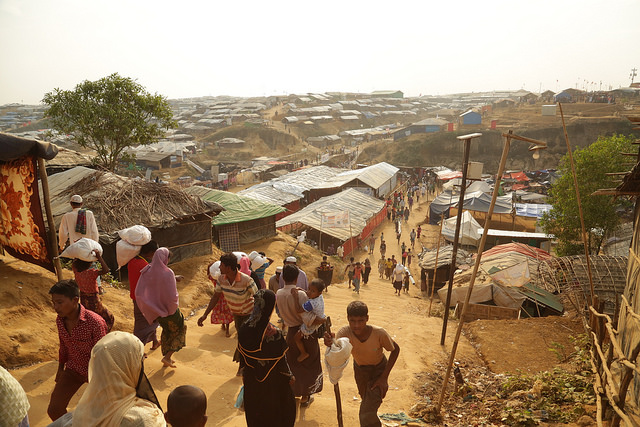
The Marawi crisis was swiftly followed by the August Rohingya crisis. This has left a smouldering and tragic humanitarian disaster, with some 700,000 Rohingya now sheltering in tent cities on Myanmar’s western border with Bangladesh and no quick solutions in sight.

There are legitimate fears that the resentment sown by this example of what UN Secretary-General António Guterres has called ethnic cleansing will breed a new generation of terrorists and ready recruits for IS.

Both these situations are serious, warranting close attention from regional governments. The good news is that so far, it would seem, Marawi at least has spurred unprecedented levels of counterterrorism (CT) discussion among regional governments, and there’s at least some evidence of an increase in practical cooperation.

The Philippines, Indonesia and Malaysia have instituted coordinated patrols in the Sulu Sea in an effort to net militants seeking to leave by boat from the southern Philippines. Australia recently hosted a sub-regional defence ministers’ meeting on counterterrorism that saw ASEAN countries agree to link intelligence databases on terrorism suspects. Australia continues to push for closer cooperation and more capacity building, as evidenced at the last month’s ASEAN summit in Sydney.

In the case of the Rohingya, stonewalling by Myanmar’s government continues despite ASEAN’s pressure and the personal efforts of Malaysia’s Prime Minister Najib Razak and Indonesia’s President Joko Widodo. Myanmar’s scheme to repatriate the Rohingya has been met with skepticism and little uptake to date.

But here there’s some consolation. The Islamist group ARSA (Arakan Rohingya Salvation Army), which mounted the attacks on police posts that triggered Myanmar’s scorched-earth retribution, appears to hold limited political objectives. They aspire more to winning a better deal for the Rohingya than to linking with the IS global caliphate.

This makes ARSA’s struggle more akin to Thailand’s 14-year-old southern insurgency, which has largely remained focussed on the issue of local autonomy, and largely remained disconnected from IS goals elsewhere in Southeast Asia, which include launching attacks on Westerners.

Beyond the Rohingya and Marawi crises, Malaysia, Singapore and Indonesia each continue to develop their CT legislative frameworks and security arrangements. Singapore, the region’s acknowledged CT leader, experienced its first case of self-radicalisation and has moved quickly to strengthen its counter-radicalisation programs, as well as arrangements for crowd security.

Singapore’s situation is easier, however, than those of Indonesia and Malaysia, whose security forces must operate over more dispersed geography, with larger populations and more complex political challenges posed by their predominantly Muslim societies.

Indonesia’s political leaders are walking a fine line between accommodating the demands of an increasingly pious, and in some respects, less tolerant Islamic society, while also acting to firmly crack down on the groups who seek to tear at Indonesia’s delicate social fabric, or worse, to carry out actual violence.

The former motivation saw the sentencing and imprisonment of former Jakarta mayoral candidate Basuki Tjahaja Purnama (‘Ahok’) for blasphemy. The latter saw the passing of a an illiberal bill (known as ORMAS) giving Indonesia’s executive government powers to outlaw any community group deemed to be espousing principles inconsistent with the state ideology of Pancasila. This bill was subsequently used to ban the extremist organisation Hizbut Tahrir Indonesia.

Indonesia also continues to work on significantly strengthening its primary counterterrorism legislation, although the bill is currently held up as politicians and military officers wrangle over a larger role for the TNI in Indonesian CT. Meanwhile, the Australian-trained and highly effective police CT outfit, Detachment 88, continues to maintain an effective surveillance net over many of Indonesia’s potential militants.

Malaysia also continues to fine-tune its CT arrangements, opening a large-scale counter-messaging centre in cooperation with the government of Saudi Arabia while boosting the numbers of its CT police force. Malaysia continues to disrupt plots and apprehend terrorists en route to or from conflicts such as Marawi or the Middle East.

Elsewhere in Southeast Asia, Thailand’s southern insurgency continues to take lives, but hasn’t escalated beyond the southern border provinces, as was feared after the 2016 Queen’s Birthday attacks.

In sum, the picture for terrorism in Southeast Asia remains dynamic and concerning, but there are positive signs that Southeast Asian governments are treating the issue with increasing seriousness and diligence.

Joma to Duterte: Drop terror tag bid vs Reds

From ABS-CBN (Apr 5): Joma to Duterte: Drop terror tag bid vs Reds


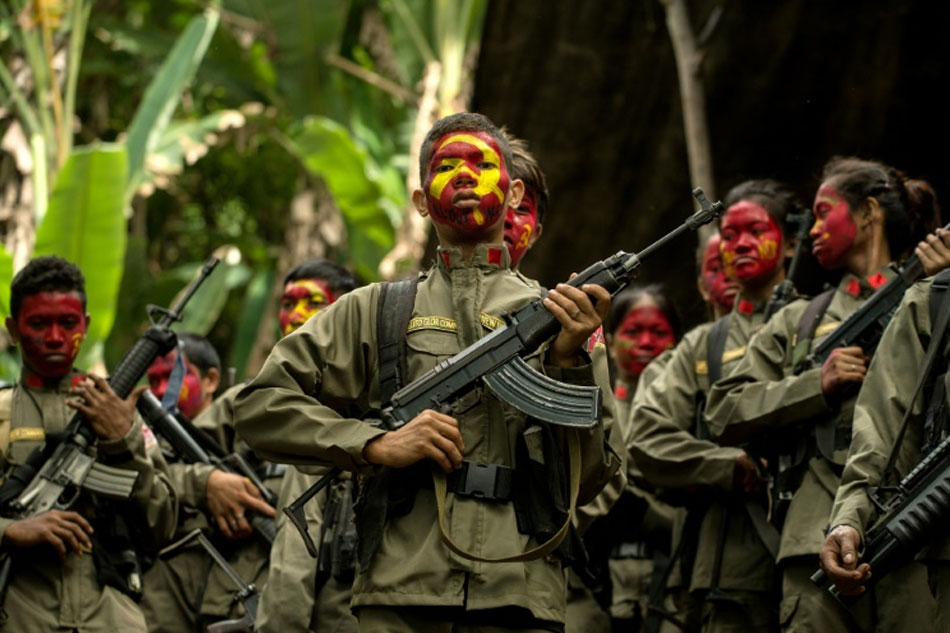
FILE PHOTO: Guerrillas of the New People's Army (NPA) stand in formation in the Sierra Madre mountain range, located east of Manila, July 30, 2017. Noel Celis, AFP

The Duterte administration should withdraw its bid to declare communist guerrillas as terrorists before fanning hopes of reviving stalled peace talks with the group, their exiled leader Jose Maria Sison said Thursday.
Duterte on Wednesday asked his Cabinet to work on resuming peace negotiations with the National Democratic Front of the Philippines (NDFP), the umbrella organization of the communist movement, 4 months after he called off talks.
The Department of Justice, however, has a pending petition before a Manila court to cite the NDFP's political wing, the Communist Party of the Philippines, and its armed wing, New People’s Army, as terrorist organizations.

The petition is "a problem" because it has banned NDFP communist consultants from the 2 organizations from participating in peace negotiations, said Sison, founder of the CPP.

"That kind of obstacle or hindrance must be dealt with properly in a timely manner," the Netherlands-based Sison said in an interview with ANC.

"If the GRP (government of the Republic of the Philippines) side is really serious in aiming for the big results, which is the attainment of peace and even truce or ceasefire in the meantime... the obstacles and hindrance should be done away with," he added.

TRUCE, REVOLUTIONARY TAXES

Duterte, who was Sison's student at a Manila university in the 1960s, earlier promised to end the decades-old communist rebellion. The President, however, abandoned peace efforts in November, complaining of repeated rebel attacks.

The President said he would resume the talks if the rebels stop collecting "revolutionary taxes" from businesses and torching equipment of construction firms.

Sison said the rebels will "gladly" enter a ceasefire agreement so peace talks could resume if "what was promised since a long time ago by President Duterte -- the amnesty and release of the political prisoners -- is fulfilled."

The NDFP and the government, he added, should discuss Duterte's offer of providing support to the rebels if they stop collecting revolutionary taxes.

The government and the communists have been in on-again, off-again negotiations since 1986. Norway has brokered some talks.

The communist insurgency has stunted economic development in several resource-rich provinces, just as Moro separatist rebellions have plagued large parts of the south of the Catholic-majority country.

http://news.abs-cbn.com/news/04/05/18/joma-to-duterte-drop-terror-tag-bid-vs-reds

Philippine Maoist rebels reject preconditions for peace talks

From Reuters (Apr 5): Philippine Maoist rebels reject preconditions for peace talks

Philippine Communist guerrillas are willing to resume peace talks with the government after President Rodrigo Duterte revived the idea but reject any preconditions, their leader said on Thursday.

Duterte campaigned in 2016 on a promise to end the nearly 50-year Maoist rebellion, which has killed more than 40,000 people, by finding a political solution but he abandoned peace efforts in November complaining of repeated rebel attacks.

On Wednesday, he ordered his cabinet to work on a truce to enable talks. It was not immediately clear what prompted the change of heart.
Jose Maria Sison, founder and leader of the Communist Party of the Philippines (CPP) who has been living in exile in the Netherlands since the late 1980s, said the two sides can resolve any differences during negotiations.

“There should be no preconditions on the resumption of peace talks,” Sison said in a radio interview, adding both sides should “bring different positions on issues to the table in order to thresh out the differences and arrive at agreements”.

Jesus Dureza, a presidential adviser, said in a radio interview there should be no attacks from either side before talks resume and the rebels had to stop their practice of extortion.

These were not conditions, he said, only moves to create an “enabling environment”.

The New People’s Army has attacked mines, plantations, construction and other businesses and collected “revolutionary taxation” to finance its rebellion.

Duterte’s spokesman, Harry Roque, said the president also wanted the rebels to drop their plan to join a coalition government because “that is absolutely not on the bargaining table”.

Sison said both sides must comply with previous agreements and “remove all obstacles and hindrances to the peace negotiations” without identifying any issues.

The government and the communists’ political wing, the National Democratic Front, have been in on-again, off-again negotiations since 1986. Previous agreements have fallen apart when the government re-arrested rebels who served as consultants in the talks.

The mainly Roman Catholic Philippines is also fighting several Muslim insurgencies in the south.

A military spokesman, Brigadier-General Bienvenido Datuin, said the army would support the government’s peace initiative but “will continue performing our mission and mandate of protecting the people and security the state”.

Defense and military officials also doubt how much control political leaders abroad have on their fighters at home after attacks during peace negotiations last year.

https://www.reuters.com/article/us-philippines-rebels/philippine-maoist-rebels-reject-preconditions-for-peace-talks-idUSKCN1HC0LK

Abu terrorist not yet off the hook – DND

From the Manila Times (Apr 5): Abu terrorist not yet off the hook – DND

Despite his surrender to the military, Abu Sayyaf sub-leader Nhurhassan Jamiri still needs to face the law for “capital offenses,” according to the Department of National Defense (DND).

DND Secretary Delfin Lorenzana on Wednesday said justice should be served those who were victimized by the terrorist Abu Sayyaf Group (ASG) that is based in Basilan province in southern Mindanao.

Lorenzana pointed out that all members of the ASG without exception are accountable for kidnapping and other crimes.


“We will not [let them off the hook]. We still must look at the capital offenses they had committed. We cannot let them escape [from those offenses]. We have to serve justice to those who were killed, those they kidnapped, those they beheaded. We cannot just let them walk freely with those offenses,” he said in a chance interview.

Lorenzana said operations by the Armed Forces of the Philippines in Jolo in Sulu province, also in Mindanao, had forced Jamiri to escape to Malaysia, where he was recently caught.

“He was being chased there [Malaysia]. They [Philippine military authorities] thought that he was killed there but he was not and maybe, [he]found out that the President [Rodrigo Duterte] was willing to offer some benefits to [him]if [he returns]to the fold of the law,” he told reporters.

Last week, Jamiri, along with his 13 of his followers, surrendered to Joint Task Force Basilan and turned over 10 high-powered firearms, 40 assorted ammunition magazines and 651 pieces of live ammunition.

Prior to the surrender, President Duterte went to Sulu to meet the Abu Sayyaf rebels who had given up fighting and even committed benefits such as housing.

The same commitment was made too to communist New People’s Army (NPA) rebels who had also turned themselves in to the military.

http://www.manilatimes.net/abu-terrorist-not-yet-off-the-hook-dnd/390462/

‘Bangsamoro Basic Law ready for signing into law by June’

From the Philippine Star (Apr 5): ‘Bangsamoro Basic Law ready for signing into law by June’


The proposed Bangsamoro Basic Law (BBL) will be ready for signing into law when Congress adjourns sine die on June 1, Senate Majority Leader Vicente Sotto III said yesterday.

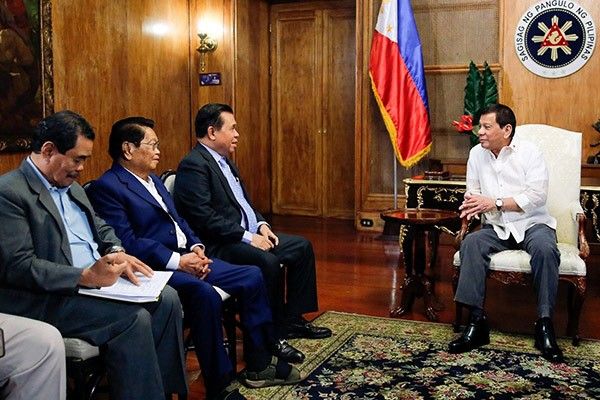
Sotto and Senate President Aquilino Pimentel III were set to meet with President Duterte and members of the Bangsamoro Transition Commission (BTC) last night to discuss the BBL.

Sotto said the timetable for the approval of the BBL is among those expected to be taken up.

Sen. Juan Miguel Zubiri, chairman of the Senate sub-committee on local government for the BBL, said the Senate should approve the measure on May 23.  

If both houses approve the proposed BBL before June 1, Sotto said the President would have until July 22 to go over the bill so he could report it out during his State of the Nation Address (SONA) on July 23.


“Hopefully (it will be signed before the SONA). It would be ideal. It will be a good development even for the peace process,” Sotto said.

While the President could certify the BBL as an urgent measure, Sotto said it would not affect the debates at the Senate. He said deliberations on the measure are expected to be lengthy due to various concerns raised by several senators.

Sotto said certifying a bill as urgent would remove only the three-day rule before it could be approved on third reading after second reading.

In a letter to Pimentel on Monday, Presidential Legislative Liaison Office Secretary Adelino Sitoy conveyed the President’s directive for him to urge Congress to hasten the passage of the Bangsamoro bill.

On the same day, Duterte in a speech said he is “racing against time” to pass the BBL.

“I gave my solemn promise and… I am working hard to meet the deadline,” Duterte assured members of the Moro Islamic Liberation Front, BTC and government negotiating panel.

https://www.philstar.com/nation/2018/04/05/1802840/bangsamoro-basic-law-ready-signing-law-june

MILF welcomes presence of US forces in southern Philippines

From the Arab News (Apr 4): MILF welcomes presence of US forces in southern Philippines
  • Moro Islamic Liberation Front (MILF) Chairman Al-Hajj Murad Ebrahim speaks to Arab News
  • US forces are “quite visible” in the island provinces of Mindanao
 
http://www.arabnews.com/node/1279101/world

Philippines: Unexploded Ordnance Slow Return of Marawi Residents

From BenarNews (Apr 4): Philippines: Unexploded Ordnance Slow Return of Marawi Residents

180404-ph-marawi-620.jpg

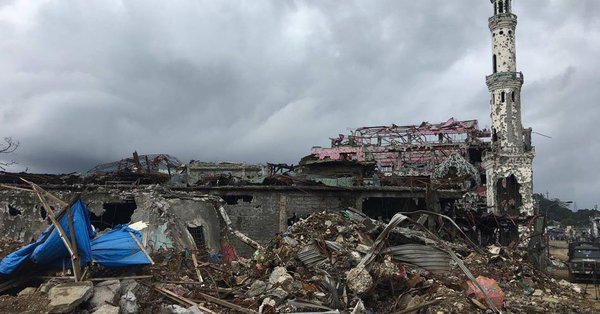
A woman gathers a few copies of the Quran from her ruined home in the southern Philippine city of Marawi, April 4, 2018.
Richel V. Umel/BenarNews

Almost 1,000 displaced Filipino families have been allowed back into battle-scarred Marawi city to check their homes under tight military security over the past few days, but unexploded bombs strewn amid the rubble have limited their movements.

On Wednesday, BenarNews reporters and journalists from other media outlets accompanied some of the families that have been trickling into the former war zone in batches since April 1.

The Philippine gave them permission to venture back inside so they could pick through the debris for whatever was left of their previous lives, five months after a siege by Islamic State-linked militants and an ensuing battle with government forces destroyed the scenic southern city.

The families and reporters were packed into private vehicles that snaked through the city’s “main battle area.”

No one was permitted to stray. Reporters who joined the first batch on Wednesday were allowed to observe, but were told to respect the grieving returnees.

A woman in a traditional Muslim garb was visibly upset as she gathered tattered copies of the Quran from her home in Tulali, a village in Marawi. Around her was a wall that had been painted a vibrant pink. Now, bullet holes pockmarked it.

“This is too painful,” the grieving woman told BenarNews. She was too distraught to say her name.

Troops armed with assault rifles patrolled nearby streets, while others stationed themselves inside the ruined homes, their outlines framed by gaping holes in the walls.


Philippine troops guard hundreds of residents who were allowed to visit their ruined homes in the southern city of Marawi, April 4, 2018. [Richel V. Umel/BenarNews]

Troops recover human remains

Apart from Tulali, the military allowed the 979 families to enter two other villages, said Maj. Gen. Roseller Guanzon Murillo, who is with the Army’s 1st Infantry Tabak Division and commands Joint Task Force Ranao.

But the military explosive ordnance and disposal team and the engineering brigade were also on constant lookout after finding many unexploded bombs in the debris.

“To date, these include eight unexploded ordnance, one 60-millimeter mortar, one hand grenade and six 40-millimeter rounds of ammunition,” Murillo said.

Since the fighting ended in late October, the military so far had recovered 1,178 unexploded bombs and 323 improvised explosive devices, he said. Only 17 of the more than 70 bombs dropped by the military, but which did not explode, have been recovered.

And troops were still recovering human bodies, with eight skeletal remains retrieved this week alone, he said.

Ordnance-clearing teams were slowly combing through the rubble, and hoped to finish it by the end of June, “although it does not mean 100-percent clear,” Murillo said.

Meanwhile, the military was continuing to ask civilian residents of nearby areas to turn over unregistered firearms to the army, as a precaution against violence breaking out, he added.

Fighting broke out in May 2017 when the military moved to arrest Isnilon Hapilon, the acknowledged leader of Islamic State (IS) in the Philippines, who spotted hiding out in Marawi, a lakeshore community considered the center of Islam in the predominantly Catholic Philippines.

But Hapilon, backed by local militants from the Maute group and Southeast Asian and Middle Eastern fighters, repulsed the troops, provoking a battle that dragged on for five months and saw the militants engage the Philippine military in vicious urban warfare.

The siege ended in October after troops killed Hapilon and the rebellion’s other leaders. Officials said 1,200 people, most of them militants, died in the fighting.

The battle, however, forced Marawi’s 200,000 residents to flee into overcrowded evacuation camps, where sanitation became a major challenge.

Col. Generoso Ponio, the local army brigade commander, said the military was continuing to monitor fresh recruitment efforts by those militants who had escaped from Marawi.

“We are calling the civilians and other organizations not to allow themselves to be infiltrated and recruited by the terrorists,” Ponio said.

https://www.benarnews.org/english/news/philippine/philippines-militants-04042018130853.html

Counterterrorism Yearbook 2018: the Philippines

From the Australian Strategic Policy Institute (ASPI)//The Strategist (Apr 5): Counterterrorism Yearbook 2018: the Philippines


The Philippines is now the site of the greatest terrorism threat in Southeast Asia. That much is clear from the dramatic developments in the southern island of Mindanao during 2017. For some five months, a group of pro-Islamic State (IS) jihadists captured and held parts of the city of Marawi in the province of Lanao del Sur.

That prompted a massive counteroffensive by the Philippines military that included extensive bombing of the city. Apart from Filipino fighters, jihadists from elsewhere in the region and the Middle East also took part in the battle. Casualties exceeded a thousand, and more than 300,000 people were displaced.

This was the most significant jihadist operation in Southeast Asia since the 2002 Bali bombings and it was the first time that a Southeast Asian city had been taken by Islamists. Like the Bali attack, Marawi has captured the attention of jihadists globally, and has inspired emerging extremists.

IS media outlets in the Middle East have begun featuring Marawi in their videos and online publications, urging jihadists from across the globe to join the cause in Mindanao. There are already signs that dozens, perhaps hundreds, of prospective fighters have left for the southern Philippines or are seeking to go there.

The Marawi conflict has exposed the low competence of Philippines security services in combatting armed jihadists in urban settings, as well as the failures of President Rodrigo Duterte’s government in managing the propaganda fallout. There’s a high likelihood that Mindanao will entrench itself as the centre of pro-IS extremism in Southeast Asia, helping jihadists from around the region to gain the skills needed to escalate operations in their own countries.

Fighting broke out between the jihadists and government forces in Marawi on 23 May 2017, after Philippines military units discovered Isnilon Hapilon—the IS emir in Southeast Asia and a commander of the local Abu Sayyaf Group (ASG)—hiding in the city. Up to 500 jihadists from ASG and other Mindanao-based militants from the Maute Group launched operations against army and police facilities, quickly taking strategic sites. The distinctive black flags of IS were soon displayed in many parts of the city.

Government spokesmen boasted that the jihadists would quickly be defeated. But it soon became apparent that they grossly underestimated the difficulty of the task. The Hapilon–Maute forces were well entrenched in a part of the city that featured fortified buildings and tunnels—a product of the frequent clan conflicts (rido) in that part of Mindanao.

The jihadists were well armed and adept at ambushing and sniping at Philippines government soldiers. Alarmed at the rising casualty rate, the Philippines defence forces evacuated the population and began large-scale bombing of the city, causing extensive destruction of buildings and infrastructure. By July 2017, journalists who beheld the devastation began referring to Marawi as ‘the Mosul of Southeast Asia’.

Not until mid-August could the defence forces claim to have gained the upper hand in the battle, confining the jihadists to a few neighbourhoods in one corner of the city. Still, the task of defeating the militants proved difficult, and Philippines soldiers had to conduct the sort of intensive street-by-street urban warfare that they had little expertise in.

On 16 October, the government announced that Isnilon Hapilon and key Maute leaders had been killed in firefights. Eventually, on 23 October, exactly five months after the beginning of the battle, the Philippines military was able to declare that Marawi had been cleared of jihadists.

Despite the eventual defeat of the jihadists, the battle for Marawi was in many ways a strategic and propaganda success for pro-IS forces in the region. The ability of the Hapilon–Maute fighters to seize and control a major city for almost half a year, and to withstand the Philippines Army’s counterattack, won them valuable regional and international credibility in jihadist circles.

The presence of as many as a hundred US advisers to the army, as well as US and Australian intelligence support, added to the propaganda dividend for the jihadists, allowing them to cast the battle as not just a local conflict, but also as part of a broader global Muslim–Christian contest.

Moreover, the jihadists succeeded in drawing the Philippines defence forces into a massive overreaction that has alienated the local Muslim population and added to the already deep levels of resentment towards Manila’s handling of Islamic issues. Most of the damage to buildings and infrastructure in Marawi resulted from the defence forces’ bombardment, not from jihadist actions. This allowed the jihadists to portray the Philippines government, rather than themselves, as the source of suffering and destruction.

But, above all else, Marawi showed that the southern Philippines, with its porous borders, tenuous government control over large land areas, and corrupt and inept security services, is the most favourable site in the region for training jihadists and mounting major operations.

At a time when IS in Syria and Iraq is shrinking rapidly after a succession of military defeats, Mindanao stands as one of the more promising new theatres of activity. This elevated profile was evident when the Philippines received cover-story status in the IS Rumiyah magazine in June 2017, the first time that Southeast Asia had so featured. Similarly, editions 3 and 4 of the Inside the Caliphate videos from the IS Al-Hayat Media Centre were also devoted to Marawi and Mindanao.

Although there has been no serious resumption of IS-related violence in Mindanao since late 2017, the long-demonstrated regenerative capacities of Filipino jihadism suggests that Marawi-style operations are unlikely to be a one-off phenomenon.

NPA attacks thwarted in four provinces over Holy Week, AFP claims

From GMA News Online (Apr 3): NPA attacks thwarted in four provinces over Holy Week, AFP claims

The Armed Forces of the Philippines (AFP) on Tuesday said that it managed to thwart the planned atrocities of the New People's Army in four provinces during the Holy Week.

Even if the NPA was able to conduct a series of attacks during the Holy Week, AFP Public Affairs Office chief Lieutenant Colonel Emmanuel Garcia said that government troops have also managed to successfully thwart other planned attacks in Misamis Oriental, Davao Del Norte, Camarines Norte, and Quezon Province.

"These legitimate and intelligence-driven military operations led to the neutralization of five CPP-NPAs and confiscation of five assorted firearms and six improvised explosive devices," Garcia said in a statement.

The AFP also strongly condemned the atrocities committed by NPA members during the Holy Week, saying that one of the attacks resulted in the deaths of two NPA members who surrendered to government forces.

"Despite declaring a halt to their tactical offensives for the holidays, four atrocities were launched by NPA terrorists targetting government troops as well as civilians and properties," Garcia said.

Garcia said that NPA rebels ambushed two NPA rebels who recently surrendered in Montevista, Compostela Valley and the soldiers who accompanied them.

"The attack also endangered the lives of a barangay captain and a councilor who assisted the two former rebels. We believe that their former members are in possession of some knowledge that will expose the CPP-NPA-NDF," he added.

The rebels also burned construction equipment which include give units of backhoe, four dump trucks, and one bulldozer in Davao City.

The said equipment, amounting to millions of pesos, were intended for the construction of a bypass road in Buhangin District, said Garcia.

Such action, according to Garcia, manifested that the "CPP-NPA-NDF is anti-development and anti-progress."

"Such atrocities against the people and terroristic activities against communities only show their true color and reinforce their terror tag," Garcia said.

The AFP has also recorded two attacks in the form of harassment in military detachments in Pigcawayan, Cotabato on March 28 and T'boli, South Cotabato on March 29. There was no casualty on the government side during the two incidents while one M-16 rifle was recovered in Pigcawayan.

The AFP, meanwhile, reiterated its call to the communist rebels to "wake up" and "join the mainstream society and work for peace and progress."

"We call on the public to be more vigilant and report to our units on the ground any presence of terrorists and criminals in their communities. The CPP-NPA-NDF respects no occasion, religious or not, in their conduct of armed atrocities," Garcia added.

http://www.gmanetwork.com/news/news/nation/648766/npa-attacks-thwarted-in-four-provinces-over-holy-week-afp-claims/story/

Barangay chairman, bodyguard killed in North Cotabato ambush

From the Philippine Star (Apr 4): Barangay chairman, bodyguard killed in North Cotabato ambush


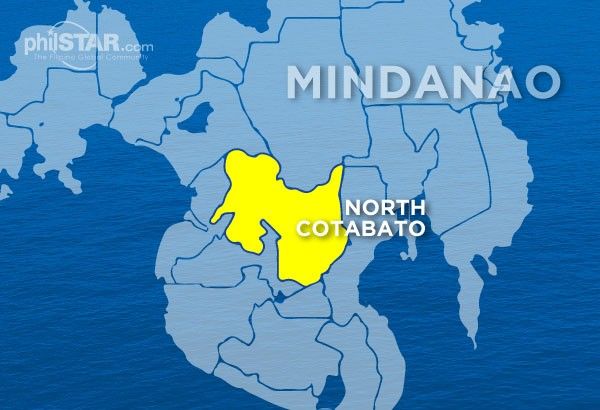
A barangay chairman and his security escort were killed in an ambush Tuesday in Carmen, North Cotabato.

The 56-year-old Joaquin Segumban, chairman of Barangay Tonganon in Carmen, and Joey Gamutia, 57, were on their way home from the municipal center when gunmen fired at their vehicle, killing them both on the spot.

The suspects immediately escaped on motorcycles parked nearby.
 
Chief Inspector Aldrin Gonzalez, spokesman of the Police Regional Office-12, said personnel of the Carmen municipal police are still investigating on the incident.

The slain barangay chairman was known to be supportive of the crackdown on illegal narctocis and was also active in helping the local police and the military monitor the movements of Islamic State-inspired militants in Carmen.

More than 20 members of the outlawed Bangsamoro Islamic Freedom Fighters, which uses the black Islamic State flag, were killed by pursuing soldiers in a spate of encounters in Carmen early this year.

PH, Australia complete 2nd maritime security engagement

From the Philippine News Agency (Apr 5): PH, Australia complete 2nd maritime security engagement


Officers of the Philippine and Royal Australian Navies pose for posterity photo on Monday during the closing ceremony of the 21-day 2nd Combined Maritime Security Engagement (MSE) at the Naval Station Romulo Espaldon in Zamboanga City. (Photo courtesy: Naval Forces Western Mindanao PIO)

The Philippine Navy (PN) and Royal Australian Navy (RAN) have completed the conduct of the 21-day 2nd Combined Maritime Security Engagement (MSE) in Mindanao, a top Navy official said Wednesday.

Rear Adm. Rene Medina, Naval Forces Western Mindanao (Navforwem) commander, said the closing ceremony was held at the Naval Station Romulo Espaldon in this city on Monday.

Medina said the MSE, held from March 13 to April 2, involved the deployment of vessels from the navies of both countries.

He said Navforwem’s Naval Task Force 61 had utilized the BRP-Gregorio del Pilar (FF15); BRP-General Mariano Alvarez (PS-38); BRP Felix Apolinario (PC-395), BRP Filipino Flojo (PC-386); and BRP-Florencio Inigo (PC-393), while the water assets from the RAN were the HMAS Broome (ACPB-90) and HMAS Launcestaun (ACPB-94).

The vessels patrolled the Area of Operations of Joint Task Forces Tawi-Tawi, Sulu, and Basilan during the 21-day MSE, said Medina.

The MSE, he said, is part of the government’s anti-piracy and anti-terrorism campaign to help curb the security threats affecting the islands of Mindanao.

The joint engagements were seen as one of the major factors in the decreasing number of kidnapping incidents in Western Mindanao, the Navy official said.

Last year, not a single kidnapping was recorded within the Navforwem area of responsibility through the effort of both local and international agencies.

For their part, RAN officials appreciated the professionalism and skills shown by their Filipino counterparts. They also emphasized that the engagement help develop operational concepts and enhanced interoperability in handling threats faced by both countries in the maritime sphere.

The closing ceremony on Monday was attended by Lt. Col. Judd Finger, the Commander of Joint Task Group 629 as the keynote speaker, and Capt. Joe Anthony Orbe, Naval Task Force 61 acting commander, who represented Medina.

The PN and RAN successfully held their 1st Combined PN-RAN Maritime Security Engagement from Nov. 10 until Dec. 1 last year. The focus of the patrol was the Sulu Sea.

Medina said the activity has enhanced the Maritime Cooperation with other regional navies and continues to secure the maritime domain of the Sulu Sea.

http://www.pna.gov.ph/articles/1030867

Manhunt launched vs killers of IP rep in North Cotabato

From the Philippine News Agency (Apr 5): Manhunt launched vs killers of IP rep in North Cotabato

Authorities are pursuing a communist hit squad who shot dead an Indigenous People Municipal Representative (IPMR) and wounded two others Wednesday in Magpet, North Cotabato.

Supt. Bernard Tayong, spokesperson for North Cotabato, identified the slain victim as Magpet IPMR Antonio Takinan, 50, who sat as an appointed member of the town council in concurrent position.


Takinan’s two injured colleagues were identified as Robello Tambunan, 62, IP representative of Barangay Tagbac, and Rene Soriano, 50, an escort.

Tayong said the victims were on their way home from a town council session onboard two separate motorcycles when tailed and fired upon by motorcycle-riding members of the New People’s Army (NPA) along the road.

The attackers sped off towards the interiors of the town following the incident.

Recovered by responding policemen from the ambush site were empty shells from M16 rifles and .45 caliber pistols.

Tayong said that Takinan, prior to his death, was a staunch critic of the NPA group operating in the area under a certain Commander Rosete.

http://www.pna.gov.ph/articles/1030928