Wednesday, December 11, 2013

US-Philippines Struggle to Reach Troop Basing Deal

From The Diplomat (Dec 11): US-Philippines Struggle to Reach Troop Basing Deal
(by Carl Thayer)

On November 8 Super Typhoon Haiyan (Yolanda) struck the central Philippines with devastating effect. The U.S. offered immediate assistance in disaster relief and the next day U.S. Marines began deploying to the Philippines.

At a press conference on November 25, Philippines Secretary for Foreign Affairs Albert del Rosario stated that the U.S. response demonstrated the need for the early conclusion of a new agreement covering the U.S. military presence in the Philippines.

Rosario said, “What [we have seen] in Central Philippines as a result of this typhoon, and the assistance provided in terms of relief and rescue operation… demonstrates the need for this framework agreement that we are working out with the United States for increased rotational presence.”

A week later, he reported: “We’re looking to have the remaining issues discussed. As we speak there is a fifth round that’s taking place in the United States. So we’re hopeful that there will be a final conclusion in the signing.”

Currently, U.S. forces rotate through the Philippines under the terms of the 1999 Visiting Forces Agreement. These include between 500 and 600 troops in the southern Philippines, and U.S. service personnel who participate in three major annual joint exercises, the Balikatan series, Cooperation Afloat and Readiness and Training (CARAT), and the Amphibious Landing Exercise (Phiblex).

The 29th Balikatan exercise was held in April 2013 with a primary focus on humanitarian assistance/disaster relief (HA/DR). Thirty U.S. aircraft, including a squadron of F-18s, three naval ships and 8,000 Filipino and American troops took part.

Del Rosario announced at the start of the exercise that the Philippines needed to secure its borders and protect its territorial integrity. He said Balikatan was not only an important contribution to prepare U.S. and Philippine armed forces to work together but also to build the Philippines’ own capacity to defend itself. He added that it was vital for the Philippines to have more U.S. forces rotate throughout the year and not just when planned exercises were being held.

Back in April of this year, with tensions running high on Korean peninsula, del Rosario and Defense Secretary Voltaire Gazmin announced that the Philippines was prepared to allow U.S. forces to use Philippine bases in the event of war in Korea. They argued that the Mutual Defense Treaty was reciprocal, it called on the U.S. to defend Philippines while the Philippines had an obligation to assist the U.S.

Balikatan 2013 was followed by four rounds of bilateral discussions on a framework agreement for an increased US military rotational presence. At the first round, held in Manila from August 13-14, discussion focused on a detailed legal agreement covering an increased temporary rotational presence involving U.S. ships, aircraft, Marines and the use of Philippine military facilities, including Subic Bay.

Immediately following the first round, in a significant development, General Martin Dempsey, Chairman of the Joint Chiefs of Staff, and General Emmanuel Bautista, Chief of the Armed Forces of the Philippines, issued a Joint Vision Statement for Security Cooperation during talks in Washington. The Joint Vision Statement was billed as a partnership for the twenty-first century.

The Joint Statement declared: “We expect a robust, balanced and responsive partnership…[through] mutually beneficial bilateral military training exercises and operations, provided by an increased rotational and temporary presence of US military forces operating from Armed Forces of the Philippines-controlled facilities.”

With respect to maritime disputes, the Joint Statement agreed to resolve them through direct talks and through multilateral venues such as ASEAN, “in a manner that protects the interests of all who value unimpeded commerce transiting through the maritime domain, while deterring those who would restrict it or act in a manner that might place it at risk.”

The Philippines and the U.S. agreed to establish a “joint force posture that assures freedom of navigation and provides for common defense of each nation’s sovereign territory.”

The second round of bilateral talks were held in Manila on August 30 during the visit of U.S. Defense Secretary Chuck Hagel. One reported sticking point is the length of the deal; the U.S. suggested a ten to twenty year period while the Philippines preferred a much shorter length of time.

The third round was held in Washington, DC from September 13-18. The draft framework agreement under discussion reportedly included five provisions: scope; agreed installations/AFP facilities; prepositioning of defense equipment, supplies, and materiel; ownership; and security.

At fourth round, held on October 3, the talks quickly reached an impasse over the issue of Philippines access to temporary facilities to be built by the U.S. to support its rotational forces and joint use of U.S. military equipment.

According to Defense Secretary Gazmin, the talks foundered on U.S. resistance to full Philippines control and access the temporary facilities. According to Gazmin, “we want access to both [US constructed temporary facilities]. It should not be limited to them. We want equal opportunity and equal access.”

If the fifth round of bilateral negotiations prove successful, it is likely that the U.S. rotational presence in the Philippines will pick up markedly in 2014. In the meantime, both sides are currently planning for the Balikatan 2014 exercise series.

[Carl Thayer is Emeritus Professor at The University of New South Wales and Director of Thayer Consultancy. He is a Southeast Asia regional specialist who taught at the Australian Defence Force Academy, Asia-Pacific Center for Security Studies, Australian Command and Staff College, and Centre for Defence and Strategic Studies, Australian Defence College.]

http://thediplomat.com/2013/12/us-philippines-struggle-to-reach-troop-basing-deal/

NPA, human rights group claim Comval tribal leader killed by AFP troops

From the pro-CPP Davao Today (Dec 10): NPA, human rights group claim Comval tribal leader killed by AFP troops

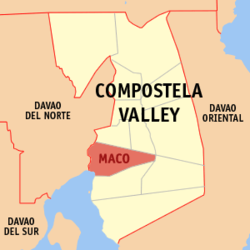
250px-Ph_locator_compostela_valley_maco

The New People’s Army and a human rights group claimed government troops killed an indigenous leader in Maco, Compostela Valley last week.

The human rights group Karapatan also said the soldiers hid the body in a funeral parlor in another town before neighbors who searched for him found out the next day.

Karapatan’s secretary general Hanimay Suazo  said Pedro Tinga, a 57-year old Mansaka tribal leader in Barangay Malamodao, was killed in an operation by the Philippine Army’s Alpha Company of the 71st Battalion last Friday.

She said reports from their quick-response team reveal that residents of Malamodao last saw Tinga harvesting peanuts in his farm.

The NPA’s Comval Davao Gulf Sub-Command also condemned the killing and denied the death was due to their armed encounter with the AFP.

In a statement, the NPA spokesperson Daniel Ibarra said the military operations “left a civilian dead, the detention of three others, and the dislocation of hundreds more in Maragusan and Maco towns since November 18 up to December 6.”

The NPA identified the detained civilians as Dodong Camporemundo, Orong Gabriel and Abla Bakud, all residents of Purok 2, Brgy. Malamodao.

The NPA said aerial bombings by the soldiers resulted to evacuation of farmers in Brgys. Teresa and New Barili.

In Karapatan’s documentation, residents heard gunfire and bombings in Brgy. Malamodao forcing them to flee.

“Few minutes later, (a) volley of gunfire erupted then paused for several minutes. Then another round of volume fire that lasted for about 30 minutes (came) before the arrival of two helicopters that bombed the area six times,” the statement said.

Farmers ran down from their farms for safety but “were put on hold by the military… they were only allowed to go home at around 3pm with military escorts,” the report said.

One farmer whom Karapatan identified as “Paco” said he did not see Tinga coming with them.

Witnesses told Karapatan they went searching for Tinga until Saturday.

They said when they learned that the military carried a dead body the night before and brought it to a funeral parlor in the next town, they went to search for the body.

“They went to the funeral and found out that the dead body was Pedro Tinga himself. He sustained multiple gunshot wounds in the frontal area of his body that caused his death,” the report added.

The NPA also scored Malamodao Brgy. Captain Edgar Reyabonansa whom the AFP pressured “to gag the victim’s family and prevent them from pursuing charges against the enemy.”

“Indeed, the blatant cover-up and a host of human rights abuses in the last few weeks manifested the AFP’s character as harbinger of injustice and implementer of the hideous policy of neutralization under the Oplan Bayanihan,” Ibarra said in their statement.

Meanwhile, the Armed Forces of the Philippines Eastern Mindanao Command claimed their troops killed four NPAs in Barangays Teresa and Malamodao in separate encounters Wednesday and Friday mornings.

The statement said three NPAs were killed in Brgy. Teresa including two “females” while another NPA was killed in Malamodao.

The NPA refuted the AFP saying there were no casualties on their side as their “punitive actions” against the 66th Infantry Battalion, 71st IB, and Division Reconnaisance Company units resulted in the killing of 20 soldiers and wounding of 14 more.

According to Karapatan, Tinga figured in the campaign of farmers and small scale miners who were dislocated after Typhoon Pablo and affected by the Apex Mining operations.

“They have been trying so hard to rebuild their farms so that they can cope up with their daily sustenance… but the shameless elements of the 71st IBPA destroyed what the people had rebuilt as the military showered their farms with bullets and bombs,” Suazo said.

Suazo said residents and the group Indug Katawhan will stage a funeral protest on Wednesday, a day after Human Rights Day.

Karapatan said Tinga is the 26th victim in Southern Mindanao under the “Oplan Bayanihan counterinsurgency program of Aquino.”

Maco is a first-class municipality in Compostela Valley with a population of 72,000 lying 84 kilometers away from Davao City.

http://davaotoday.com/main/2013/12/10/npa-human-rights-group-claims-comval-tribal-leader-killed-by-afp-troops/

MNLF: Part of privilege speech of Nur P. Misuari to the delegates of the 40th Session of the Islamic Council of Foreign Ministers (ICFM)

Posted to the Facebook page of Nur Misuari (Dec 8): Part of privilege speech of Nur P. Misuari to the delegates of the 40th Session of the Islamic Council of Foreign Ministers (ICFM)

Part of the historic 15 pages hand written privilege speech of the MNLF Founding Leader and Chairman of the Central Committee of the MNLF - Professor Nur P. Misuari to the delegates of the 40th Session of the Islamic Council of Foreign Ministers (ICFM) in Conakry, Republic of Guinea.

May Allah keeps us steadfast in his path with utmost sincerity! — in Conakry, Guinea.


https://www.facebook.com/photo.php?fbid=668332139877203&set=a.188564007854021.41920.185093644867724&type=1&theater

Filipino judge acquits 3 Indonesia terror suspects

From the Philippine Daily Inquirer (Dec 10): Filipino judge acquits 3 Indonesia terror suspects

A Philippine judge has acquitted three Indonesian terror suspects and ordered their deportation, saying they were illegally arrested for carrying guns and explosives at a southern seaport nine years ago.

Judge Eleuterio Bathan said the three men were arrested by police without warrants in December 2004 after arriving by ferry in Zamboanga city. He said the explosives, grenade and pistol seized from them could not be used as evidence because they were found in an illegal search. A copy of the Monday ruling was seen Tuesday by The Associated Press.

The men had pleaded innocent in the long-running court case in 2008.

Bathan ordered the deportation of the Indonesians, who were suspected by police of being members of a regional terror group.

http://globalnation.inquirer.net/93829/filipino-judge-acquits-3-indonesia-terror-suspects

MNLF: Chairman Misuari to Attend Conarkry 40th OIC CFM and 5th Iraq OIC Think Tank Forum

Posted to  the MNLF Website (Dec 9): Chairman Misuari to Attend Conarkry 40th OIC CFM and 5th Iraq OIC Think Tank Forum


MNLF HAS LISTED BIG DELEGATION TO ATTEND 4OTH OIC COUNCIL OF FOREIGN MINISTERS (CFM) MEETING IN CONAKRY, 6-8 SAFAR 1435H

In response to the invitation of the Government of Republic of Guinea through the General Secretariat of the Organization of Islamic Cooperation (OIC) to Chairman Prof. Nur Misuari of the Moro National Liberation Front (MNLF) to attend the 40th Session of the Council of Foreign Ministers of the OIC scheduled in Conakry, Republic of Guinea, from 6-8 Safar 1435H (December 9-11, 2013), the MNLF has listed a full battery charged delegation composed of thirty three members.
The big number MNLF delegation headed by Chairman Misuari is tasked to attend both the 40th Session of the OIC Council of Foreign Minsiters and the anticipated sidelined technical meeting of the Ministerial Tri-Partite Review of the September 2, 1996 MNLF-OIC-GRP Jakarta Peace Agreements,
It is recalled that the Philippine Aquino government showed no respect to the 1996 peace agreement forged under the Ramos government. It decided to terminate the peace process with the MNLF that decided immediately to revert back to pursue its original objective of struggling for freedom and independence for the Bangsamoro homeland of Mindanao, Sulu and Palawan (MINSUPALA), including North Borneo. While actively conducting a successful series of peaceful campaigns for complete independence and national self-determination for the Bangsamoro people in Jolo, Basilan, General Santos and Davao since August up to September, 2013, the scheduled MNLF peace rally in Zamboanga City was blocked by the local government.
The total suppression of the MNLF members to conduct their fundamental human rights to peaceful assembly by the Climaco government, and worse, the harassment, arrest and imprisonment of some MNLF members triggered the 19-day September war between the mostly Visayan soldiers of the colonial Armed Forces of the Philippines (AFP) and the MNLF freedom fighters led by Ustaj Khabier Malik. Similar to the 1974 AFP-MNLF war and burning of entire town of Jolo, the AFP soldiers burned around 10,160 houses and mosques during the AFP-MNLF war in Zamboanga City that resulted in a catasthropic humanitarian disaster.The United Nations (UN), OIC, European Union (EU) and concerned humanitarian and peace advocate NGOs had to pressure both the Aquino government and MNLF to end the bloody war, resulting to a big number of human and material losses.
After the AFP-MNLF war in Zamboanga City, the OIC General Secretariat appealed to both the Philippine government and the Moro National Liberation Front to continue the peace process by re-scheduling the holding of the Tri-partite Review meeting from November 4, 2013 to be conducted simultaneously with the 40th OIC CFM conference in ConakryDecember 9-11, this year.
Thus, the Conakry 40th OIC ICFM conference and the outcome of the sidelined meeting of the MNLF-OIC-GRP Ministerial Tri-Partite Committee is crucial to the freedom struggle of the Bangsamoro people launched actively again by the MNLF.
CHAIRMAN MISUARI INVITED BY OIC THINK TANKS GROUP FORUM IN IRAQ
On  another development towards the enhancement of the OIC as a global Islamic organization to conform with the modern trend of rapid development in all fields of endeavour, Chairman Prof. Nur Misuari has been in advance invited to attend the "5th Think Tanks Forum of the OIC Countries" scheduled in Bagdad, capital city of the Republic of Iraq, on 21-22 February, 2014.
The global forum is organized and hosted by the Iraqi Group of Strategic Studies in cooperation with TASAM (Turkish Asian Center for Strategic Studies. The official invitation to the MNLF Chairman to attend the progressive global forum for all OIC member states and Muslim communities is facilitated by Dr. Torham M Al Mufti, Minister of Communications and Provincial Affairs, Republic of Iraq.
Chairman Misuari has still to response to the invitation and to send the offical listing of the MNLF delegation to the OIC Think Thank Forum.

MILF: Editorial -- Hard-earned Annex

Editorial posted to the MILF Website (Dec 9): Hard-earned Annex

With all fairness and objectivity, the Annex on Power-sharing is the most contentious of the three annexes to the Framework Agreement on the Bangsamoro (FAB) so far signed.  In terms of time and efforts, not to state of the tense moments, spent by the parties, this Annex is the most difficult of all, the FAB included.
  
Imagine, more than one year, to be exact from July 2012 to December 2013,  had been spent by the parties to overcome their divergent positions leading to the final inking of the agreement; and if not for the excellent facilitation of the Malaysian facilitator, Tengku Dato’ Ab’Ghafar bin Tengku Mohammed, the outcome would not end well. This was not known until the last minutes of the last day of the 42nd GPH-MILF Exploratory Talks in Kuala Lumpur on December 8. Actually, the talks were set for four days only, but the parties have to extend for one more day hoping to settle the last hitches of the Annex.

Several factors contributed to the signing of this Annex. First, the parties are committed to finish and sign this agreement without delay, but the MILF would not sacrifice quality of the agreement with the need to finish it. To reinforce their commitment, President Benigno Aquino III sent two of his most trusted cabinet members, Sec. Teresita “Ging” Deles and Edwin Lacierda, to back up and give moral support to the GPH peace panel. The MILF reciprocated by also sending three of its most senior members to join the MILF peace delegation. Second, the two peace panels are evenly matched, so that what determined the outcome of their verbal tussle is their focus to solve the Bangsamoro Question anchored on the facts of history and the reality of the present. These are added-on factors to the “Straight Path policy” of President Aquino and the consistency and pragmatism of the MILF. Third, the two parties, in no small way, listen to the wisdom of the international community, represented in a modest way in the presence of the International Contact Group (ICG) whose membership comes from Turkey, Japan, the United Kingdom, and Saudi Arabia (for states) and Muhammadiyah, Conciliation Resources (CR), Centre for Humanitarian Dialogue (CGD), and now Community of Saint’Egidio, replacing The Asia Foundation (TAF), for the international non-government organizations (INGO). And fourth, the prodding and push exerted by the friends of the peace process way back home, including civil society organizations (CSOs) and various stakeholders contributed a lot to this success.

Modesty aside, the Annex on Power-sharing is a class of its own. It can be open for scrutiny and we are optimistic that honest minds will have difficulty criticizing it. It is not a perfect agreement, because there had never been a perfect agreement in all times. It can only be surpassed when the agreement is about granting independence to the Bangsamoro, which has never been part of the agenda since 1997. The single agenda agreed by the parties was and still is: “How to solve the Bangsamoro Problem,” now refined into “Question”.

For the fault-finders, however, they are the breed that never sees good things in life, because they see the world as ugly and unfit for living. In their refined nature, they are the idealists whose utopian state would never happen, because there is no such thing, except in the mind. This is a world of imperfection, and as such, one has to struggle in all spheres of life not to achieve utopian perfection in this life but to install justice to every collective human endeavor and relationship. The Annex on Power-Sharing is one such product of struggle – it resonates with justice, not create a world of illusion that is merely confined to the fantasy of the imagination.

http://www.luwaran.com/index.php/editorial/item/706-hard-earned-annex

MILF: CBCS holds consultations for Unity and Solidarity among Moro Traditional Leaders in Mindanao

From the MILF Website (Dec 10): CBCS holds consultations for Unity and Solidarity among Moro Traditional Leaders in Mindanao


The Consortium of Bangsamoro Civil Society (CBCS) held consultations with Moro traditional leaders on December 1 at the Al Nor Convention Center, Cotabato City.

“This program is an initiative of CBCS in trying to address the disunity among Bangsamoro people especially on the part of our leaders,” said Abdulnasit Benito, CBCS Project Officer.
  
He went on to say that under this program entitled ‘Mindanao Solidarity Project 2’ in partnership with Centre for Humanitarian (CHD) Dialogue with support from  the Australian Agency for International Development (AusAID), there were series of consultations in Mindanao and in Metro Manila that has targeted various sectors.

“In our past consultations we reached the groups of the academe, professionals, and religious leaders and now we are consulting traditional leaders,” he said. “Bangsamoro Unity and Solidarity; Laying Foundation towards Transition Governance” was the theme of the activity.

The Chairperson of the CBCS Guiamel M. Alim delivered the welcome and opening remarks. Alim extends his greetings and recognized the presence of guest speakers and the participants. He was very happy for the positive response of the participants for being part of the program in finding ways on how unity and solidarity of the Moro people can be achieved. 
 
Alim recognized that the present traditional leaders are important pillars in the Moro society. He said “If you remove these pillars the foundation becomes weak [but] where are they in the peace making?” Alim had challenged the traditional leaders such as the datus and sultans to come out and speak about their stand on the present conditions of Moro people. The traditional leaders according to him could make a difference if they want but if not they cannot be forced to do so.

The following challenges were pointed out by Alim as important roles of traditional leaders: “First, do they have a conscious organize efforts? Second; do they have clear political agenda for peace for the Bangsamoro? And thirdly, do they have a collective and strong determination and political will to pursue peace in Mindanao?”

Alim said “among the pillars of Bangsamoro, how can they [datu, sultan and bae] become an instrument in bringing peace and development in the Bangsamoro?
CBCS Chairman Alim mentioned several actions on how traditional leaders can contribute for the unity and solidarity among them:

1.    The sultan and datu, traditional leaders can actively campaign in building unity and solidarity among Bangsamoro;

2.    They should support the ongoing peace process, the Framework Agreement on the Bangsamoro (FAB), or support the review of Final Peace Agreement (FPA);

3.    Recommend specific policies to the Bangsamoro Transition Commission (BTC) for inclusion in the drafting of Bangsamoro Basic Law (BBL);

4.    Help lobby for the passage of BBL in congress.

5.    Campaign for inclusion of additional areas for the Bangsamoro before the conduct of plebiscite;

6.    Work for electoral reforms in the Bangsamoro;

7.    Help draft a Bangsamoro development and peace agenda; and

8.    Participate in running the transition and the regular government of the Bangsamoro.

Alim concluded his statements in the following key points by asking the participants. He said, “As respected traditional leaders, where do you want to see your role in the present political situation? As peace builders, what work can you play for peace? As collective identity (i.e. traditional leaders), what do you want to do as important stakeholders in the peace process?”

“We in the CBCS believe that one important key to peace in the Bangsamoro homeland is the unity of the Moro people. We also believe that our traditional leaders are not merely stakeholders but they are important pillars of the Bangsamoro society; without them the foundation will not become strong, and we further believe that if the traditional leaders wish, they can be instrumental in building peace in the Bangsamoro,” he stressed.

The administrative officer of CBCS Ismael G. Kulat recognizes the important role of traditional leaders as among of the major pillars of the society. He explained that since traditional leaders are part of the pillars of society, even in a little capacity as a small group, the sultans and datus could play many roles to become part of the process in finding solutions for the unity and solidarity among Bangsamoro.

Kulat had admitted that there is disunity among Moro tribes, the Moro fronts, and Moro political leaders. 
“That is why we’ve gathered here today because we want to inform and include you in our initiatives for the unity and solidarity of our people,” he said. “In our present situation, we cannot wait for another day to come to do this thing because these are the current realities,” Kulat lamented.

The Sultan sa Dimaigal Datukaka Camsa, at the same time a Shariah Court Judge was also invited. He talked on “The Emerging Political Realities, The Need for Unity and Solidarity in the Bangsamoro and Recommendations/Ways Forward”.

Datu Camsa admitted that change in political system is not only a problem of the Moros but the entire Muslim nations. Datu Camsa also enumerated the causes of this change that brought negative impact specifically the traditional leaders and the Muslim Ummah in general.

He asked the participants, “What should be done in order to get out of this dilemma? There are no other solutions except to go back to our own customs and traditions.”

Datu Camsa shared some approaches to address the bottlenecks facing the Moro people. “The Moros should have Education, Organization, Power/Authority, Wealth, Territory, Laws, and Religion (Islam),” he narrated.

Among the speakers who spoke was Dr. Hadja Bai Bing D. Bacar, the Provincial Agrarian Reform Officer II of Maguindanao and President of the Maguindanaon Professionals and Employees Association of the Philippines (MAPEA).

Dr. Bacar clearly defined the role of women based on the Islamic teachings. “It is not bad if we participate in the development, it’s not forbidden by the Qur’an,” Dr Bacar said.

Dr Bacar focused on the social solidarity issues. She said that social solidarity is one of the principles of Islam for people to have quality of life and acquire standard of living. “Solidarity among Muslims in a Shariah-based relation is enjoined by Allah, the Almighty; the Qur’an and in the Sunnah (tradition or practices) of the Holy Prophet Mohammad (PBUH). Islam is a religion of brotherhood, kindness, cooperation and solidarity,” Dr Bacar told the participants.

“Social solidarity in Islam is a requirement for Muslims where they can achieve permanent peace and happiness, goodwill, and security,” she pointed out.

Another speaker was Datu Norodin Oyod of Taviran, DOS, Maguindanao. He said, “Achieving unity and solidarity among Moros is very hard unless all the pillars that were mentioned a while ago by Chairman Guiamel Alim are met.”

He encouraged his fellow sultans and datus to actively involved by sharing their ideas or suggestion for the crafting of the BBL. Datu Oyod said that he is willing to become part of the lobby mission group to the congress in support to the passage of the BBL.

“We need to have one direction [for our advocacy] so that we could have strong campaign in support to the peace process. We need strong leaders because that is the prerequisite of a strong government,” he said.
Datu Oyod is very optimistic that unity can be achieved. He said “the unity that we’re aiming for is possible; we will use our charisma as traditional leaders to influence our constituents in working for peace.”

Included in the program were the messages of commitments of the sultans and datus of Sultan Kudarat, Maguindanao represented by Datu Nasser Ayunan Lidasan; Mohamad Sali Datudakula VIII of Zamboanga Sibugay; Datu Emilio Quirod represented the Davao region; and Datu Emilton Abedin,  “Datu sa Suguda Buayan” Koronadal, South Cotabato.

The last part of the consultation program was the syntheses by Chairman Alim.  There were two major challenges in unity and solidarity between and among traditional leaders which he mentioned, first, “How to pursue a new model of leadership without losing the status of being descendants of traditional leaders? And secondly, where do you want to use your influence?”

Signing of support and commitment by the participants for unity and solidarity of the Bangsamoro people was the main part of the program.

The traditional leaders who participated in the consultations on unity and solidarity organized by the CBCS came from different  Moro communities in Davao region, Central Mindanao comprising Maguindanao, North Cotabato and Cotabato City; SocSarGen area (South Cotabato, Sarangani & General Santos City), Northern Mindanao such as Lanao areas, and Western Mindanao.

 http://www.luwaran.com/index.php/welcome/item/707-cbcs-holds-consultations-for-unity-and-solidarity-among-moro-traditional-leaders-in-mindanao

MILF: Lanao del Sur town holds peace advocacy on FAB

From the MILF Website (Dec 11): Lanao del Sur town holds peace advocacy on FAB


A committee of the Moro Islamic Liberation Front (MILF) in Kapatagan, Lanao del Sur in coordination with the Chairman of Barangay Bakikis and the principal of Bakikis High School jointly conducted peace advocacy on the Framework Agreement on the Bangsamoro on the 17th of November 2013 at Bakikis Elementary School Campus.
  
Barangay Bakikis has a mixture of Moro and a non-Moro population. The non-Moro residents belong mostly to the Cebuano tribe who settled in the area and constitute the minority.

The speakers delved on the gains of the GPH-MILF peace process and the recognition and support afforded to the Moro Front by the international community; and the sympathy for its cause that motivates the Front to pursue its aspiration for self-determination.

The audience constituting various sectors such as farmers, fishermen, professionals and other stakeholders manifested their interest on the discussions about the provisions of the FAB especially on the signed revenue generation and wealth sharing annex. Other things that attracted the interest of the participants are the present development taking place at the peace negotiation and the foreseen restoration of just peace, tranquility and freedom once Bangsamoro government is establish.


Some settlers in attendance asked for an assurance for the protection of their rights and security under the envisioned Bangsamoro Government. A senior officer of the Committee on Information cited Article VI of the FAB, Section 1 which enumerated the basic rights of all citizens residing within the Bangsamoro territory. Those rights guaranteed the security and protection of all residents in the Bangsamoro regardless of religion, tribal affiliation, etc. The officer also mentioned Section 2 of same the article which states that vested property rights shall be recognized and respected.

After the activity wound up the team left for Cotabato City.    

http://www.luwaran.com/index.php/welcome/item/709-lanao-del-sur-town-holds-peace-advocacy-on-fab

MILF: MILF sets the record straight on the Marawi Incident

From the MILF Website (Dec 10): MILF sets the record straight on the Marawi Incident

The Moro Islamic Liberation Front (MILF) deeply regrets that an unfortunate incident had to occur on December 5, 2013 in Marawi City involving officials of the Philippine National Police (PNP) and MILF-BIAF forces in Lanao del Sur.
  
In light of the inaccuracy of media reports on the incident, the MILF is constrained to set the record straight.

The incident was triggered by the arbitrary apprehension and subsequent detention of three MILF-BIAF members at a police station after an operation conducted by the PNP on December 1, 2013 in Banggolo, Marawi City.

The three MILF-BIAF members, Johani Cader, Misron Borodan and Tony Rapors, are also members of Task Force Ittihad, a special unit under the Ad Hoc Joint Action Group (AHJAG) mandated by the GRP-MILF Tripoli Agreement on Peace of June 2001 to interdict criminal elements.

One of the three arrested MILF-BIAF members, Repors, was released but the other two, Cader and Borodan, were kept under police detention for possessing handguns despite presenting their credentials as bonafide  members of the MILF and AHJAG and rationalizing the possession of such handguns, which were concealed, as necessary for the tasks that they are undertaking.

The attempts by the established ceasefire bodies, the Coordinating Committee on Cessation of Hostilities (CCCH), the Local Monitoring Team (LMT), the AHJAG, and the International Monitoring Team (IMT), including appeals made by the MILF Vice-Chairman Alim Pangalian Sulayman who is based in Ranao, to the Lanao del Sur Provincial PNP Director, Police Senior Superintendent Nixon Babul Mukhsan, to expedite the safe release of the detained MILF-BIAF members were ignored and even rebuffed.

Superintendent Mukhsan not only did not entertain the appeal for release of the two but reportedly issued a provocative statement unbecoming of a government police official saying to the effect that he is not covered by the ceasefire agreement and therefore does not recognize the ceasefire bodies.

It is against this backdrop that the assault was made on the PNP Marawi City Police Station by some MILF forces who decided on their own to free the detained MILF-BIAF members.

Unfortunately, there were some casualties on the part of the PNP and the Marawi City Police Chief, Police Superintendent Christopher Wilan Panapan, was taken into custody by the MILF forces when they withdrew after successfully rescuing the two detainees. A police, by the name of Malik, was also killed when he tried to fire upon the MILF forces. Malik is reported to be a brother-in-law of the chief of police.

Through the intercession of the ceasefire bodies and upon the express order of the BIAF High Command, Chief of Police Panapan was later released by the MILF unit that held him in custody at Nusa Island, Balindong, Lanao del Sur.

He was released unharmed to MILF Commissioner Madid Sheik of the Bangsamoro Transition Commission (BTC) and who is also the former Chair of the MILF CCCH on December 6, 2013 , just a few hours after the police chief was held in custody.

This incident does not in any way adversely affect the on-going negotiations between the negotiating panels of the MILF and the GPH that are now focused on completing the last two Annexes to the Framework Agreement on the Bangsamoro (FAB), which are Power Sharing and Decommissioning.

However, it behoves both Parties not to allow similar incidents to happen. It is the better part of discretion on the part of the GPH, however, to assign police and military personnel in the conflict-affected areas who are well familiar with the peace process, and not those whose personal judgment and agenda run counter to the aim of both the MILF and the GPH at resolving the Bangsamoro Question.

http://www.luwaran.com/index.php/welcome/item/708-milf-sets-the-record-straight-on-the-marawi-incident

MILF: MILF 105th Base Command holds advocacy in Sarangani province

From the MILF Website (Dec 9): MILF 105th Base Command holds advocacy in Sarangani province


The MILF 105th Base Command held advocacy on November 30 somewhere in    Sarangani Province where more than 300 people attended.
  
The gathering was aimed at providing updates on the progress of the peace talks and the annexes on the Framework Agreement on the Bangsamoro (FAB).

The confirmation and validation of the status of the membership with the 105th Base Command in the province were also made by the Front’s hierarchy in the area.

The participants came from the municipalities of Kiamba, Maasim in Sarangani: Palimbang, Sultan Kudarat, Davao del Sur, cities of General Santos and Cotabato City, and Datu Saudi in Maguindanao. 

In coordination with the GPH Coordinating Committee on the Cessation of Hostilities (CCCH), some MILF members brought with them their firearms for the security of the activity.

Aside from the staff of the 105th Base Command led by its administrative officer, MILF CCCH Consultant Omar Bayao and the MILF-CCCH Chairman, Abbas Salung also graced the occasion. Both officials gave updates on the current GPH-MILF peace talks.

Local members of Social Welfare Committee (SWC); political committee, and the Agency for Youth Affairs (AYA) and local government units (LGUs) also attended. 

The activity also affirmed the legitimacy of the 105th Base Command members after their records were thoroughly validated.

Aside from the GPH CCCH, the program was also coordinated with the International Monitoring Team (IMT).

http://www.luwaran.com/index.php/welcome/item/704-milf-105th-base-command-holds-advocacy-in-sarangani-province

MILF: MILF, gov’t sign Annex on Power-sharing

From the MILF Website (Dec 8): MILF, gov’t sign Annex on Power-sharing


The Moro Islamic Liberation Front (MILF) and the Philippine government signed today the Annex on Power-sharing at the Palace of the Golden Horses in Selangor, Malaysia, after a year and-a-half year of hard bargaining.
  
The 12-page agreement has been viewed as the heart of the negotiation of four annexes on the 2012 Framework agreement on the Bangsamoro, which included transitional arrangement and modalities, wealth sharing and revenue generation agreements, and normalization. Only the latter remained to be discussed by the parties.

Mohagher Iqbal, chair of the MILF negotiating panel, said the Annex on Power Sharing of the FAB defines in details the power relations between the Central Government and the Bangsamoro Government, which delineates the reserved, exclusive and concurrent powers and intergovernmental relations of both existing governments.

“With the signing of the power sharing accord,” Iqbal said it has encouraged both Parties to conclude the annex on normalization for the comprehensive peace agreement in order to put a closure to the four (4) decades Mindanao conflict and age- old Bangsamoro question.

The peace process which began since 1997 has established several mechanisms on cessation of hostilities that included the Malaysian-led International Monitoring Team (IMT and its various components to support the Parties in managing the conflict while the peace talks are on going to enable them to focus on finding a political solution to the conflict in Mindanao.

The Parties committed to give peace a chance with the signing of the agreement and to continue to campaign for peace and engage all stakeholders in a consultation in support of the peace process.

Both Prof. Miriam Coronel-Ferrer, chair of the government peace panel, and chair Iqbal, have expressed their thanks to the Malaysian facilitator and government and all those involved in the peace negotiation for their unstinted support, especially members of the International Contact Group (ICG).

The Parties commit to resume the peace negotiation early January 2013 to finish the annexes of the FAB in order to complete the comprehensive peace agreement for a just and lasting peace.

The Mindanao conflict has claimed the lives of about 15,000 and a million of people displaced during the height of the armed conflict between the armed forces of the government and the freedom fighters of the Bangsamoro people since 1970.

The signing was witnessed by three government officials namely Secretary Teresita “Ging” Deles, Secretary Edwin Lacierda, and Assistant Secretary Danilo Francia. Several members of the MILF Central Committee also witnessed the signing.

Regional Governor Mujib Hataman also came to Kuala Lumpur alongside Deles but to observe the peace talks but had to leave this morning for Manila for an important prior commitment.

http://www.luwaran.com/index.php/welcome/item/703-milf-gov’t-sign-annex-on-power-sharing

Propaganda war heats up in Mindanao

From the Manila Times (Dec 11): Propaganda war heats up in Mindanao

Communist rebels have strongly denied military reports that it killed four insurgents in the town of Maco in Compostela Valley in southern Philippines.

Daniel Ibarra, a spokesman for the New People’s Army, branded the reports attributed to Eastern Mindanao Command chief Lt. Gen. Ricardo Rainier Cruz III as “preposterous.”

“There is no truth to the preposterous claim made by Eastern Mindanao Command Commander Lt. Gen. Rainier G. Cruz, III that in their Bayanihan, they have prevailed against the NPA by killing 4 New People’s Army guerillas in Maco town, Compostela Valley. The enemy has pursued its atrocious military operations in separate incidents of strafing and bombing that left a civilian dead, the detention of three others, and the dislocation of hundreds more in Maragusan and Maco towns since November 18 up to December 6.”

“While hiding its savage deeds against the masses, the AFP is engaging in a futile attempt to reverse the real score in the battlefield. In contrast to the AFP’s indiscriminate aerial bombing and strafing that did not distinguish combatants from civilians, the NPA triggered command detonated explosives, harassed and ambushed legitimate targets from enemy units in four separate punitive actions over the last three weeks. The AFP suffered a total of 34 casualties, with 20 killed and 14 wounded after NPA units under the Comval Davao Gulf Sub-regional Command launched a series of tactical offensives meant to punish the fascist 71st Infantry Battalion, 66th IB, and Division Reconnaissance Company all under the 10th ID-Eastern Mindanao Command of the AFP,” Ibarra said.

Ibarra also provided a list of all civilians and peasants allegedly branded as rebels by the military and eventually killed by troops in Compostela Valley.

“Indeed, the blatant cover-up and a host of human rights abuses in the last few weeks manifested the AFP’s character as harbinger of injustice and implementer of the hideous policy of neutralization under the Oplan Bayanihan. The masses can only rely in the revolutionary justice, time and again , dispensed by the NPA through its punitive actions against legitimate targets in the AFP and the US-Aquino regime,” he said.

The human rights group Karapatan also lambasted and accused the military of murdering innocent civilians and human rights violations in areas covered by the Eastern Mindanao Command.

Hanimay Suazo, Secretary-General of  Karapatan, said the government’s anti-insurgency campaign’s Oplan Bayanihan breeds gross human rights violations, extra-judicial killings, enforced disappearances, aside from militarization.

“These killings continue because the President (Benigno Aquino 3rd) permits his armed forces to do it,” she said, citing the alleged murder by the military of Pedro Tinga, a Mansaka tribal council member, in the village of Malamudao in Maco town this month. She accused the 71st Infantry Battalion as behind the killing of Tinga.

But Captain Alberto Caber, public affairs chief of the Eastern Mindanao Command, strongly denied all Ibarra and Suazo’s allegations and branded them as a “propaganda.”

“Ang recruits naman talaga ng NPA ay sibilyan, kahit sino at lalo na ang mga magsasaka, bata, matanda at basta magagamit nila. Pinapagulo lang ng Karapatan ang bayan natin, binubulag nila ang mga mamamayan sa katotohanan. Ang Karapatan ang siyang tagapagtanggol ng NPA. Malinaw na nakikinabang ang Karapatan sa extortion actiovities ng NPA,” Caber said.

Cruz also denied the accusations and praised civilians in Compostela Valley and other areas covered by the Eastern Mindanao Command for supporting the military and police and the government’s efforts in bringing peace and development to the province through Bayanihan.

“Kami ay lubos na nagpapasalamat sa mga residente sa kaniolang regular na pagre-reportsa kasundaluhan at pulis sa presensya ng mga NPA sa kanilang lugar. Sa ating Bayanihan, tayo ay magtatagumpay laban sa extortion activities ng NPA. Ako ay nananawagan sa mga rebeldeng binulag ng maling paniniwala na bumalok sa ating pamahalaan at mag bagong buhay kasama ang inyong mga mahal na pamilya, anak, kapatid at magulang at kaakibat ninyo kami sa pagbabagong buhay,” he said.

“At sa mga nagpipilit naman sa marahas na pamamaraan, hangga’t meron Republika ng Pilipinas, ang military operations ay hindi titigil laban sa NPA sa pagtatanggol sa demokrasya at kaligtasan ng bawa’t isang mamamayan. Mandato ng AFP at PNP na pangalagaan ang mamamayang Pilipino. Inuulit namin na sana ay bumalik na kayo sa ating lipunan at makiisa sa hinahangad na kapayapaan para sa kaayusan ng ating bayan,” Cruz added.

The NPA has been fighting for decades for the establishment of a separate state in the country.

http://manilatimes.net/propaganda-war-heats-up-in-mindanao/59720/

Army's 6th ID assures transparency in lumber smuggling probe

From the Philippine Star (Dec 11): Army's 6th ID assures transparency in lumber smuggling probe

The Army’s 6th Infantry Division on Tuesday assured to make public the result of its probe on the foiled attempt by soldiers to sneak out undocumented lumbers from Alamada town in North Cotabato last month using military trucks.

Major Gen. Romeo Gapuz, commander of 6th ID, told reporters that they chose not to speak on the issue the past weeks so as not to complicate the separate investigations being initiated by a local Board of Inquiry (BOI) and the national headquarters of the Philippine Army.

Gapuz, who graduated from the Philippine Military Academy in 1981, was referring to last month’s bloody interception by the Alamada municipal police of 6th ID soldiers transporting two truckloads of Lawaan flitches from Alamada to Midsayap town, also in North Cotabato.

Two soldiers escorting the lumbers, cut from timbers harvested without permit in a tropical rainforest in Alamada, were shot and wounded by policemen for refusing to disarm.

Gapuz has denied insinuations he was involved in the lumber smuggling attempt.
“I have never, in my whole life as an officer, issued an illegal order to my subordinates,” Gapuz said.

Gapuz said he is already retiring from the military service in May next year and, by common sense thus, he would never perpetrate an offense that could affect his ambition of bowing out from the military service untainted with any record of misbehavior.

He said the soldiers who figured in the alleged lumber smuggling attempt have been subjected to questioning by officers tasked to determine their culpability.

“We’ll just have to wait for the result of the investigation. I hope the people will not unduly conclude that our silence on the issue the past days was because we are trying to `whitewash’ the incident. We’ don’t do that,” Gapuz said.

Gapuz said soldiers, once charged with violating the Philippine Army’s Code of Conduct, are already assumed “guilty” and will have to prove their innocence in the proper military forum if they are to assert their right to due process.

“That’s virtually not the same with how civilian courts work, where the accused is presumed innocent, unless proven otherwise,” Gapuz said.

Gapuz said he will submit a report on the incident to North Cotabato Gov. Emmylou Talino-Mendoza, who had earlier asked the Department of Environment and Natural Resources to investigate on the controversy and prosecute the culprits.

http://www.philstar.com/nation/2013/12/11/1266853/armys-6th-id-assures-transparency-lumber-smuggling-probe

MILF: People with 'honest minds' will approve of power-sharing deal

From the Philippine Star (Dec 11): MILF: People with 'honest minds' will approve of power-sharing deal

The Moro Islamic Liberation Front (MILF) is confident that the annex on power-sharing can stand the scrutiny of “honest minds” even as it admitted that the deal is not perfect.

“Modesty aside, the Annex on Power-sharing is a class of its own. It can be open for scrutiny and we are optimistic that honest minds will have difficulty criticizing it,” the MILF said in an editorial posted on its website luwaran.com.

“It is not a perfect agreement, because there had never been a perfect agreement in all times,” it added.

The group, nevertheless, acknowledged that the annex, which it described as “hard-earned,” will have its critics.

“For the fault-finders, however, they are the breed that never sees good things in life, because they see the world as ugly and unfit for living,” the MILF editorial read.

“This is a world of imperfection, and as such, one has to struggle in all spheres of life not to achieve utopian perfection in this life but to install justice to every collective human endeavor and relationship. The Annex on Power-Sharing is one such product of struggle,” it added.
Under the power-sharing deal, a Bangsamoro ministerial cabinet will be formed and will be appointed by a chief minister and a Bangsamoro Council of Leaders.

At least 50 members will constitute the legislative assembly of the Bangsamoro ministerial government.

The central government will continue to exercise authority on key aspects like foreign policy, defense and external security, coinage and monetary policy, citizenship, postal service and naturalization.

The Bangsamoro and central government will exercise concurrent powers on penology and penitentiary, land registration, social security and pension, administration of justice and human rights.

The Bangsamoro government will be given exclusive powers on economic and cultural exchanges, budgeting, banking, land management, agriculture, sports and other matters.

MILF said the power-sharing annex is “the most contentious” and “most difficult” of the three annexes to the Bangsamoro framework agreement.

The group said the signing of the annex was made possible by the efforts of the negotiators from panels, the Malaysian facilitator, the international community and civil society.

The wealth-sharing was signed by the government and MILF panels last July while discussions on the normalization annex have been slated for January.

The government has welcomed the signing of the power-sharing deal and is optimistic that a final peace compact will be signed soon.

Followers of Moro National Liberation Front (MNLF) founder Misuari, however, have warned that the deal could trigger fresh attacks.

MNLF spokesman Absalom Cerveza earlier claimed that the signing of the power-sharing annex had prodded their group to aspire for an independent state.

“Certainly, that would lead to another war. They can sign everything. If they want to continue then let the war continue,” Cerveza said.

http://www.philstar.com/headlines/2013/12/11/1266862/milf-people-honest-minds-will-approve-power-sharing-deal

Army partners with school alumni association in outreach program

From the Philippine Information Agency (Dec 10): Army partners with school alumni association in outreach program

The 41st Infantry (Partner for Peace) Battalion, Philippine Army in partnership with 503rd Infantry Brigade dental team and the Holy Spirit Academy of Bangued (HSAB) Batch ’96 sponsored another outreach program at Baay Elementary School in barangay Tumalip, here last week.


This is now the fourth outreach project of the 41st Battalion headed by Lt.Col. Danilo Domingo and the Holy Spirit ladies headed by Ms. Jofelyn Padilla, the batch president, and the 503rd Brigade dental team headed by 1Lt. Jacobo B. Siblawon since they forged their partnership early this year.

One hundred twenty four  children  benefited from the free feeding activity, 30 pupils and parents availed of free dental services,66 pupils and parents availed of haircut services, 15 parents availed of free therapy/massage, and 27 parents availed of free manicure/pedicure.

The HSAB ladies not only gave gifts and free feeding to the children but also made fun with them as they played parlor games with the children with the parents and teachers.
This project was also participated by the Technical Education Skills Development Authority (TESDA) with their volunteers led by Jerome Bagani who conducted the free massage/therapy.

Christine L. Domingo, the head teacher of Baay Elementary School,  thanked the organizers and all the volunteers for their thoughtfulness and generosity in delivering the basic services to the people of Barangay Tumalip.

Domingo  also assured  of the Army’s continuing efforts in bringing the basic social services in partnership with various stakeholders in the province especially to the far flung and conflict- affected areas within its area of operation.

http://news.pia.gov.ph/index.php?article=111386138351